 Best
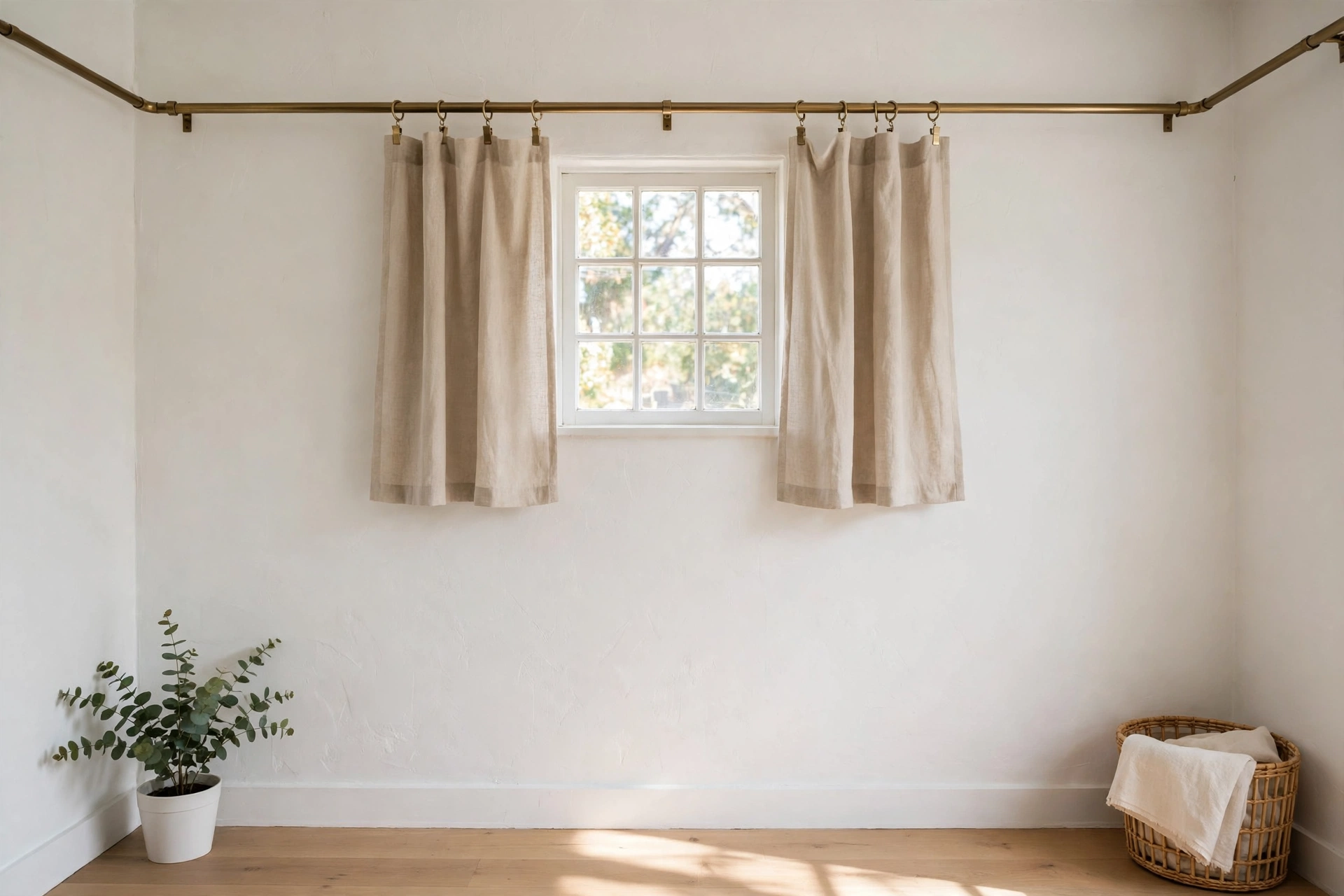
Best Curtains for Small Windows
A small window looks larger when the rod, length, and fabric are sized to the wall, not just to the glass. This guide matches short, cafe, sheer, and floor-length options to narrow windows, small rooms, and rented homes.
The best curtains for small windows are light, slim, and hung to the wall rather than to the glass, so the window reads larger than it is. A narrow window needs proportion first: a rod set high and wide, a fabric that does not pile up at the sides, and a length that suits the wall below it.
That proportion changes with the room. A small bedroom window needs a different answer from a small window in a living room nook, and a window above a desk needs a different length from a window on a bare wall.
Small window picks by job
Sheer voile suits a dark small room, blackout-lined panels suit a small bedroom window and sleep, and short light-filtering panels suit a small window above furniture. The picks below are grouped by job, not by maker.
As an Amazon Associate, we earn from qualifying purchases.
| Pick | Type | Lining | Best for |
|---|---|---|---|
| 1 | Sheer voile panels | Unlined | A dark small room that needs daylight |
| 2 | Linen-look panels, floor length | Unlined | Making a small window look taller |
| 3 | Cotton cafe panels | Unlined | Street-facing privacy at eye level |
| 4 | Blackout-lined panels | Blackout lining | A small bedroom window and sleep |
| 5 | Thermal-lined panels | Thermal lining | A drafty small window |
| 6 | Short light-filtering panels | Unlined | A small window above furniture |
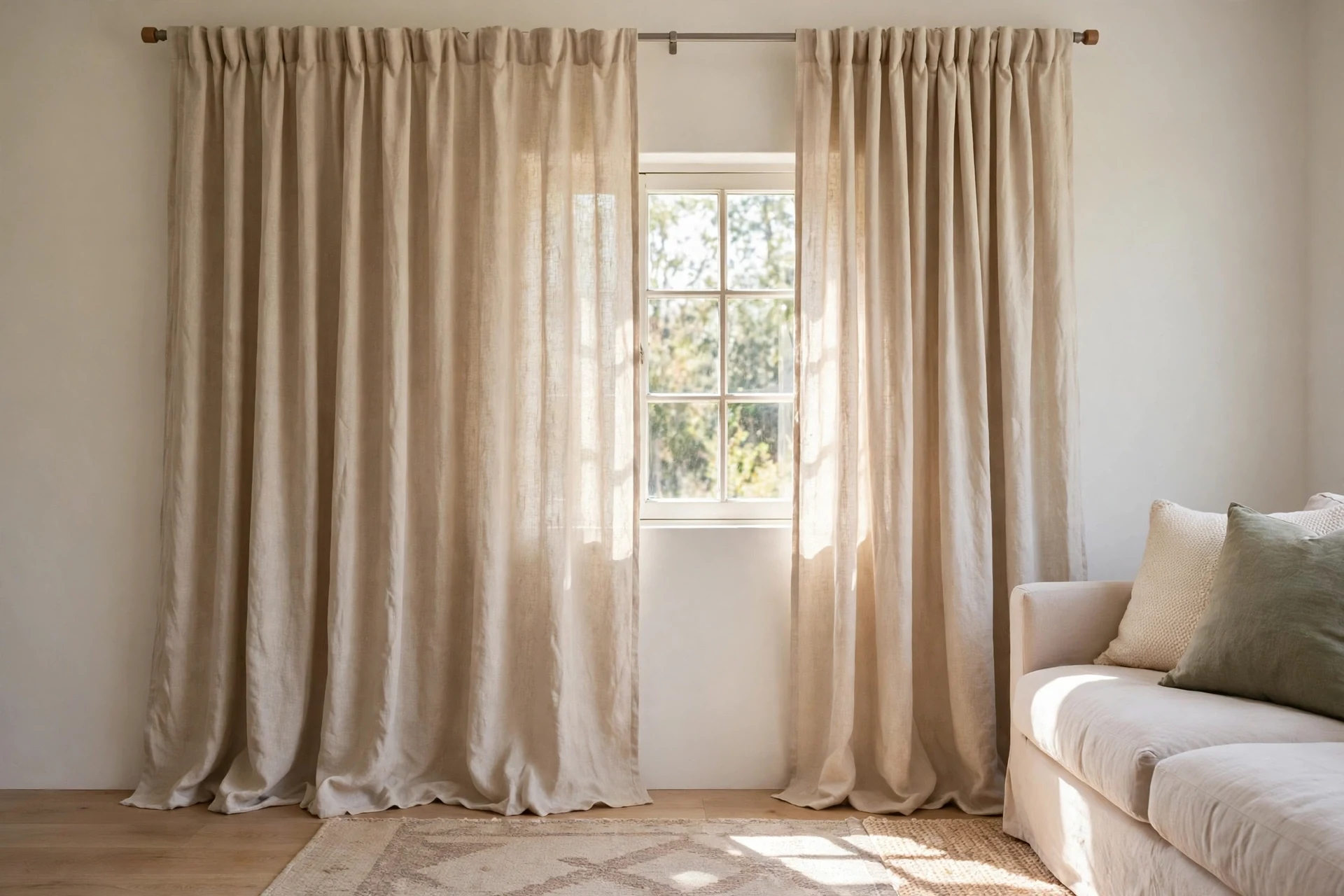
1. Sheer voile panels: best for a dark small room that needs daylight
- Best for: A dark small room where the window is the main light source.
- Key features: Voile weave that filters light, unlined fall, slim heading that stacks narrow.
- Pros: Keeps daylight coming in, softens the view, stacks narrow, so little glass is covered when open.
- Cons: Gives daytime privacy only, needs a second layer for evening cover, pale voile shows marks sooner.
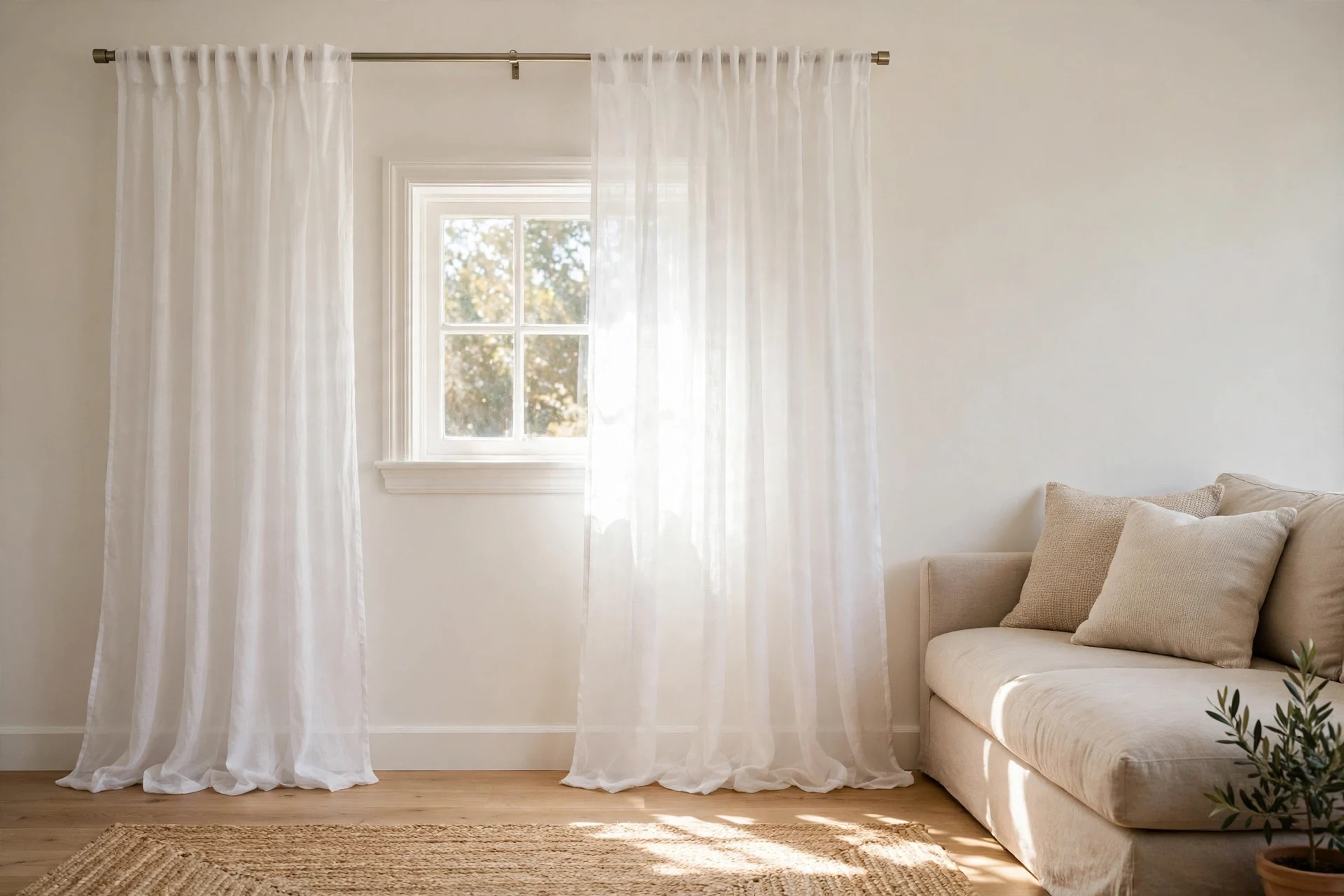
2. Linen-look panels, floor length: best for making a small window look taller
- Best for: A small window on a bare wall where a long, light drop can stretch the eye upward.
- Key features: Linen-look weave with a relaxed texture, unlined fall, floor-length drop.
- Pros: Long vertical line makes the window read taller, light fabric keeps the room bright.
- Cons: Needs wall space below the window, gives soft light control, not darkness.
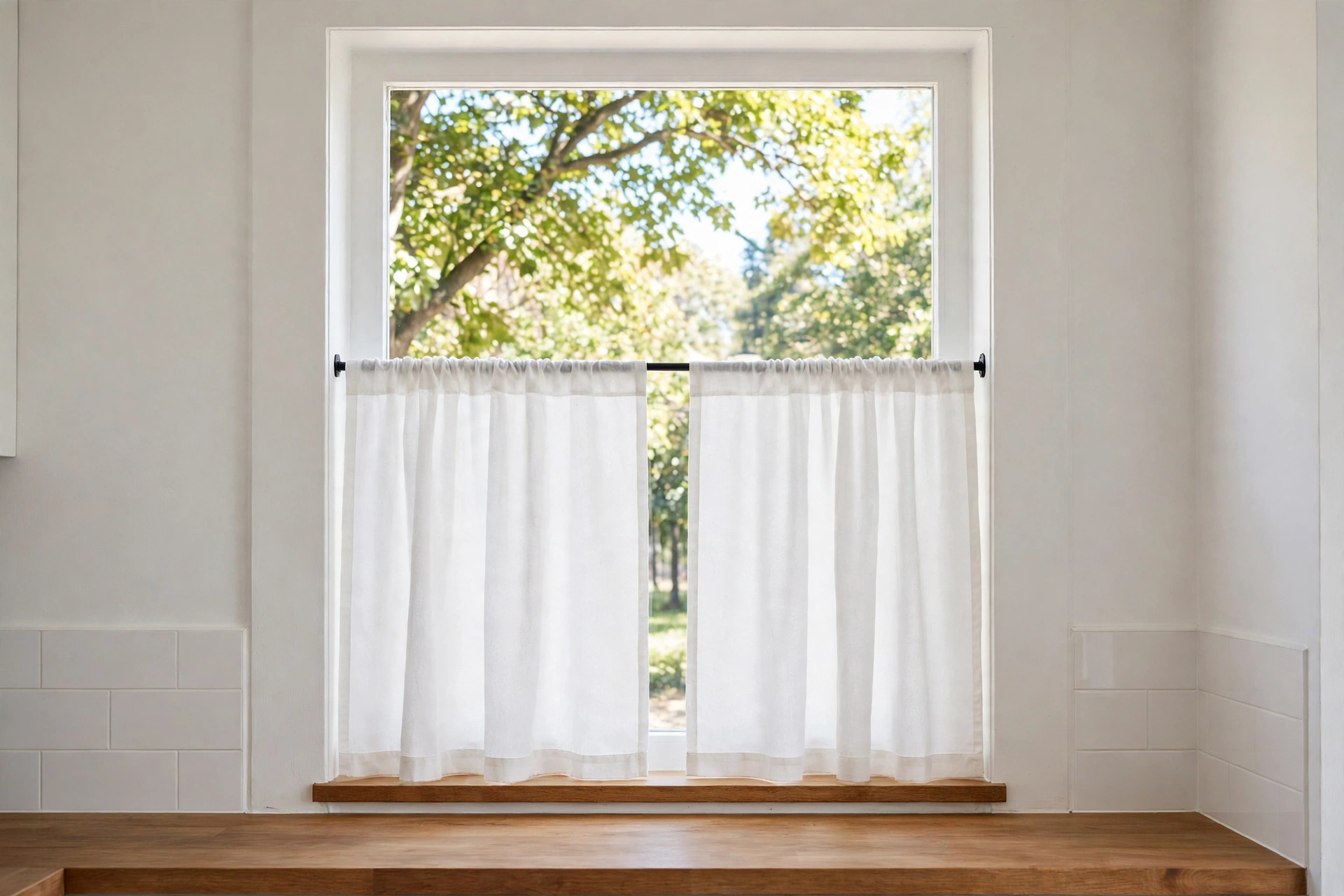
3. Cotton cafe panels: best for street-facing privacy at eye level
- Best for: A street-facing small window where passersby see in at eye level but light from above is welcome.
- Key features: Cotton face, tier length covering the lower half of the window, rod-pocket or clip-ring heading.
- Pros: Blocks the sightline where it matters, leaves the top open for daylight, short length keeps the wall light.
- Cons: Gives no cover above the rod line, needs the rod at the right height, cotton needs regular washing.
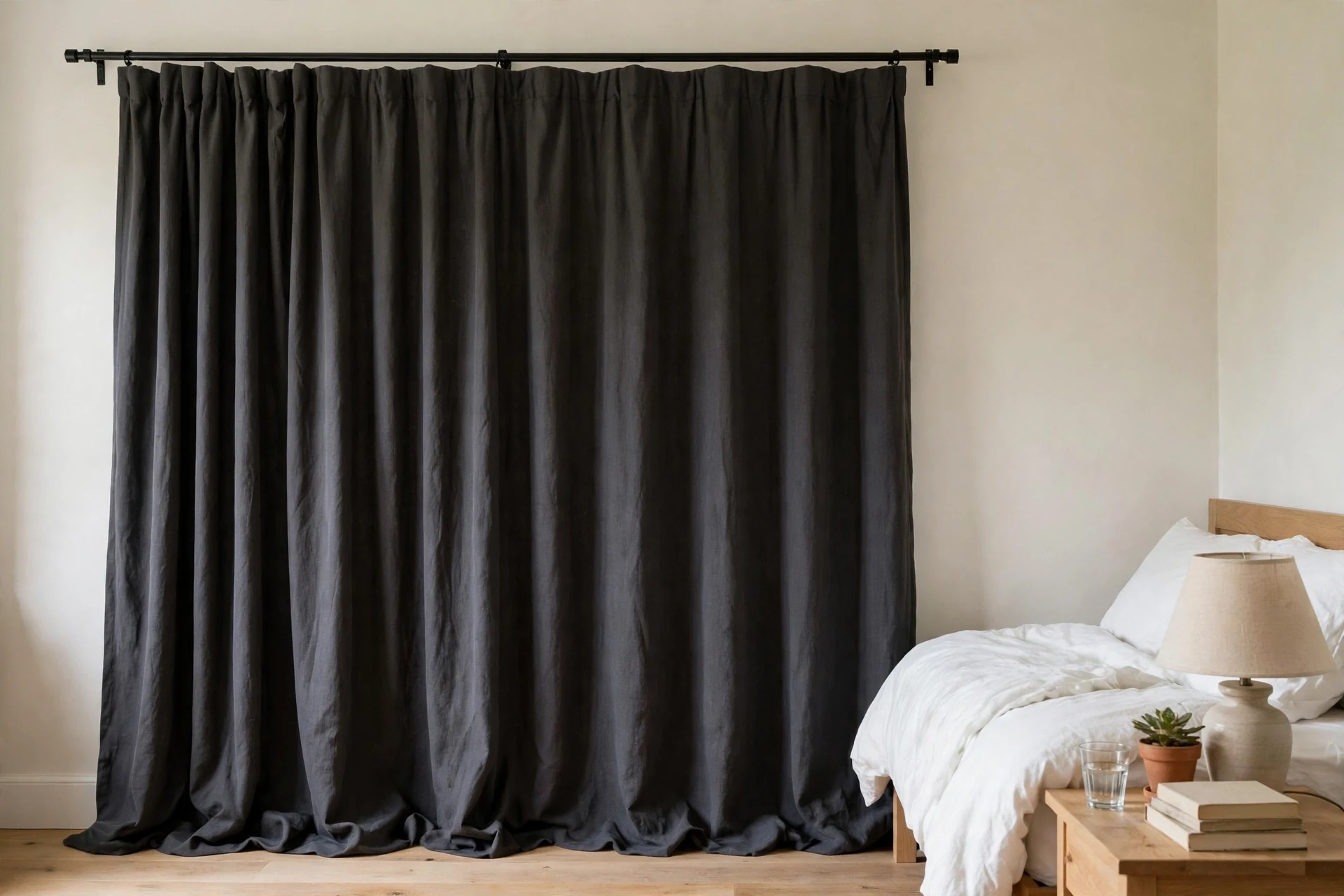
4. Blackout-lined panels: best for a small bedroom window and sleep
- Best for: A small bedroom window where morning sun or street light breaks sleep.
- Key features: NICETOWN plain face fabric with a sewn-in black liner, full shading blackout, grommet heading, 52 by 90 inches, 2 panels, closed coverage overlapping the frame.
- Pros: Strongest darkness of any small window pick, plain face keeps a small room calm, full night privacy.
- Cons: Heaviest pick here, so rod and brackets must be firm, needs full closed coverage or light leaks at the edges.
5. Thermal-lined panels: best for a drafty small window
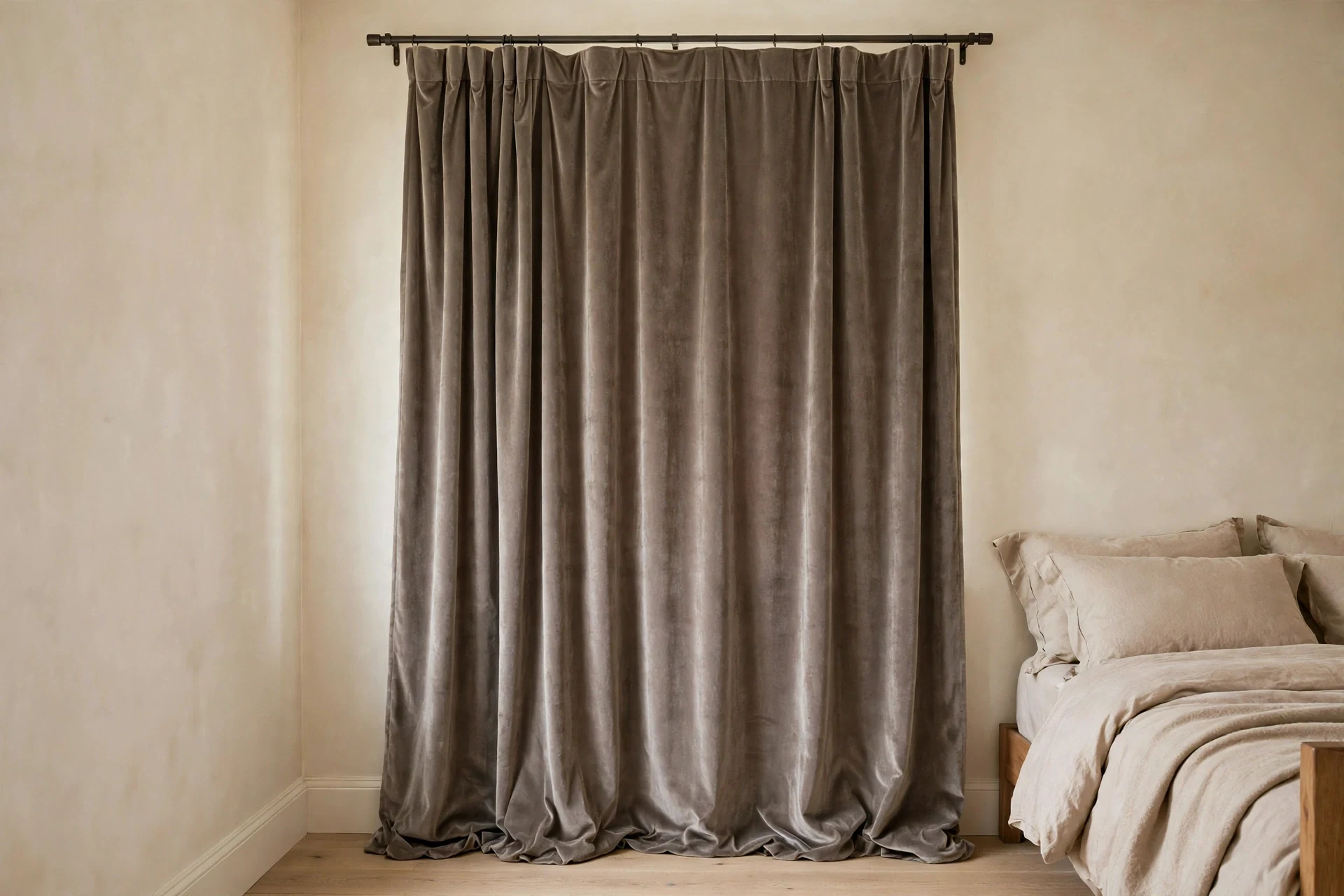
- Best for: A small window that lets in a draft or chills the room beside it.
- Key features: Face fabric with a thermal lining, fuller fall from the lining, heading that closes fully across the glass.
- Pros: Softens drafts at the window and helps the room hold warmth, fuller folds give the window presence.
- Cons: Heavier than an unlined panel, adds stack width when open, dims daylight more than an unlined panel, so it suits a bedroom more than a bright living room by day.
6. Short light-filtering panels: best for a small window above furniture
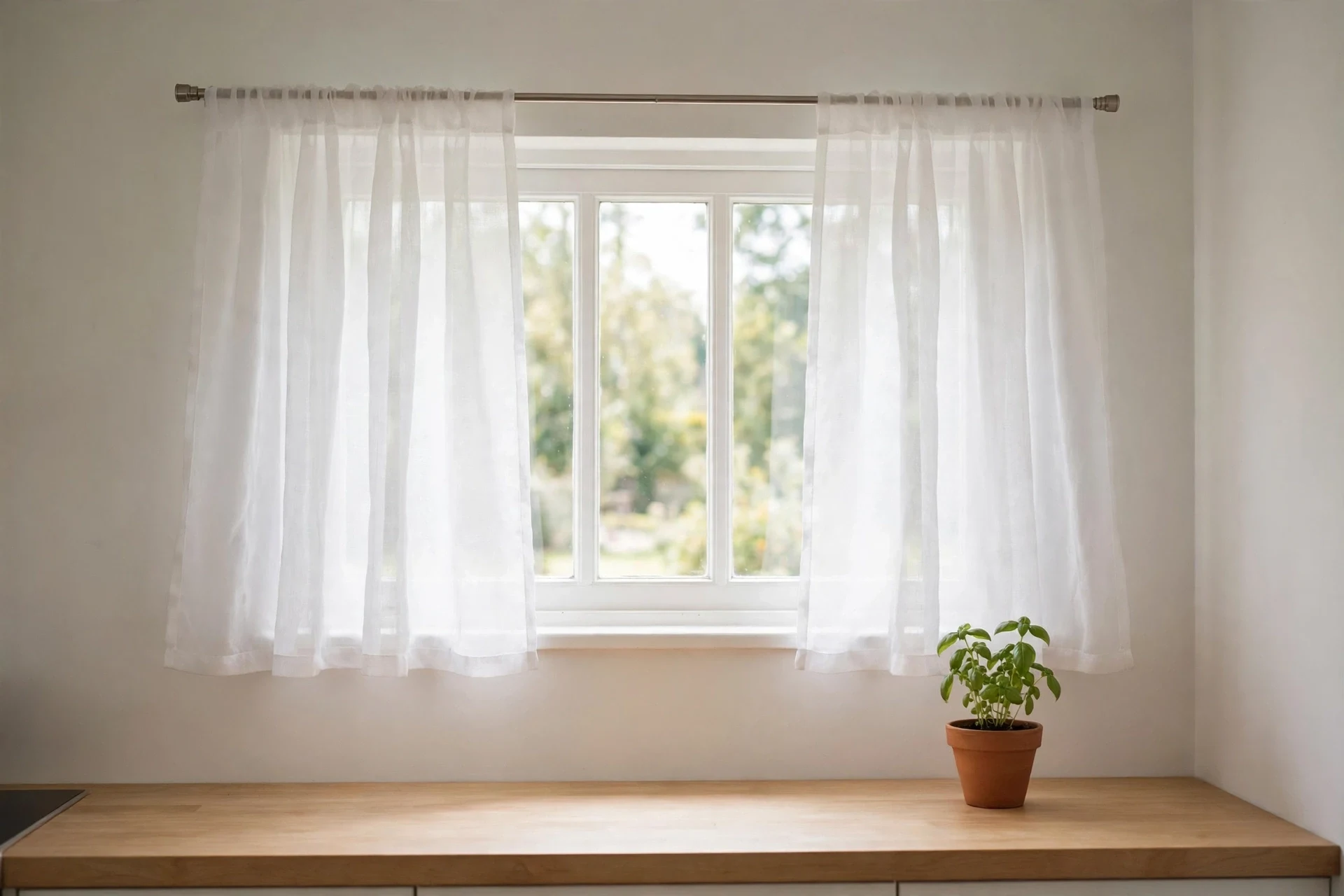
- Best for: A small window above a desk, a sink unit, or a radiator shelf, where a long drop would pool or catch.
- Key features: Light-filtering weave, short drop clearing the furniture below, slim heading, washable face, check the care label.
- Pros: Keeps the space below the window usable, filters daylight without shutting it out, easy to take down and wash.
- Cons: Gives no tall-window illusion, needs care with heat clearance below, soft privacy, not full cover.
Choose a short length (24, 30, or 36 inches) on the page.
Why a small window needs proportion first, not bulk
A small window fails when the curtain is sized to the glass alone, because a panel that just covers the glass frames a small shape and leaves it looking smaller. Proportion fixes that by sizing the curtain to the wall: the rod, the length, and the stack all work on the wall around the window, so the eye reads a larger dressed window instead of a small bare one.
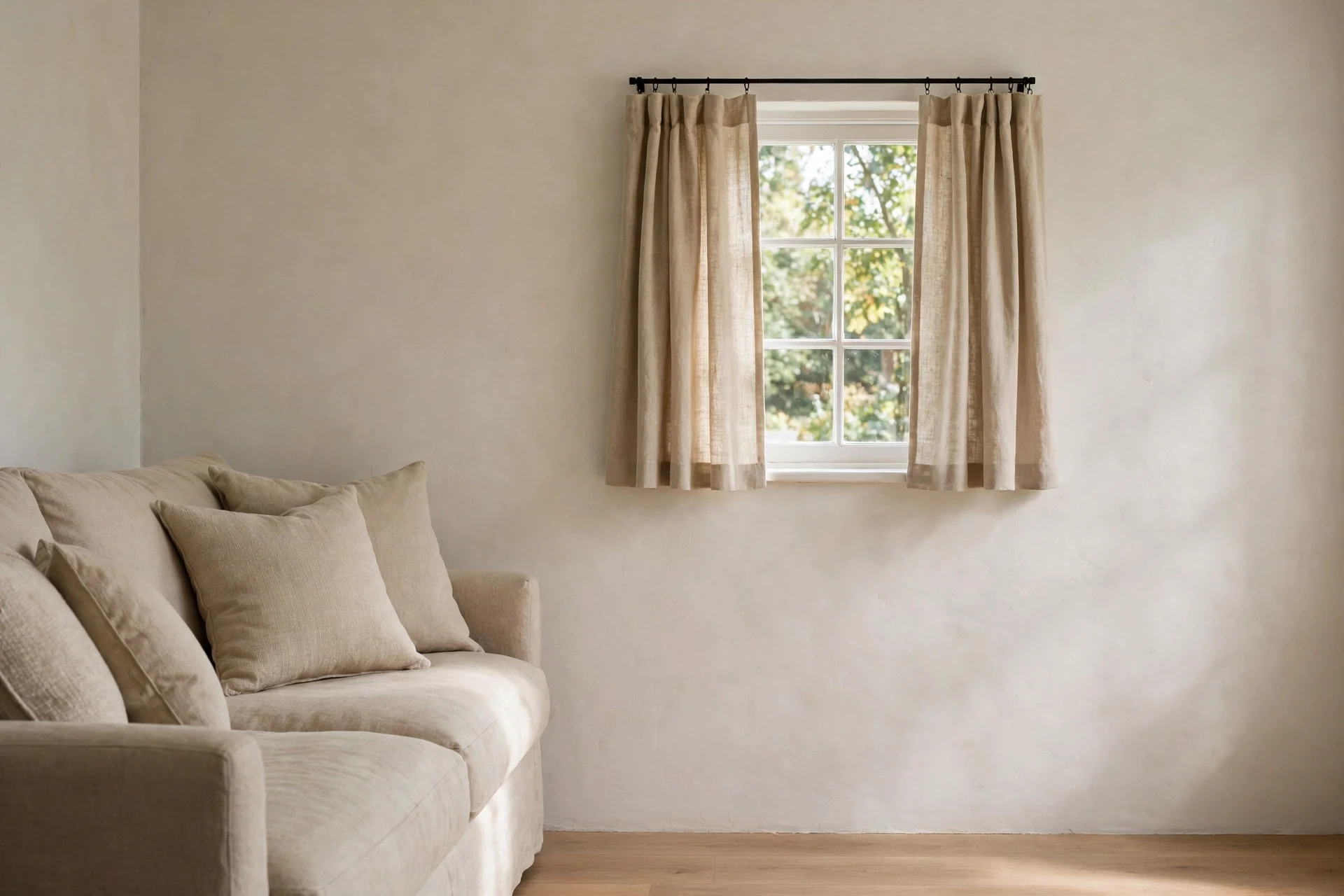
Start with the job, then the look. A window that needs daylight wants a light fabric and a narrow stack, so the glass stays mostly clear when open. For the full range of curtain types, see Best Window Curtains.
For an awkward or off-center small window, curtains matched to the wall paint make the window visually disappear instead of drawing attention to it, which suits a window that fights the room's layout.
Hanging high and wide without swallowing the wall
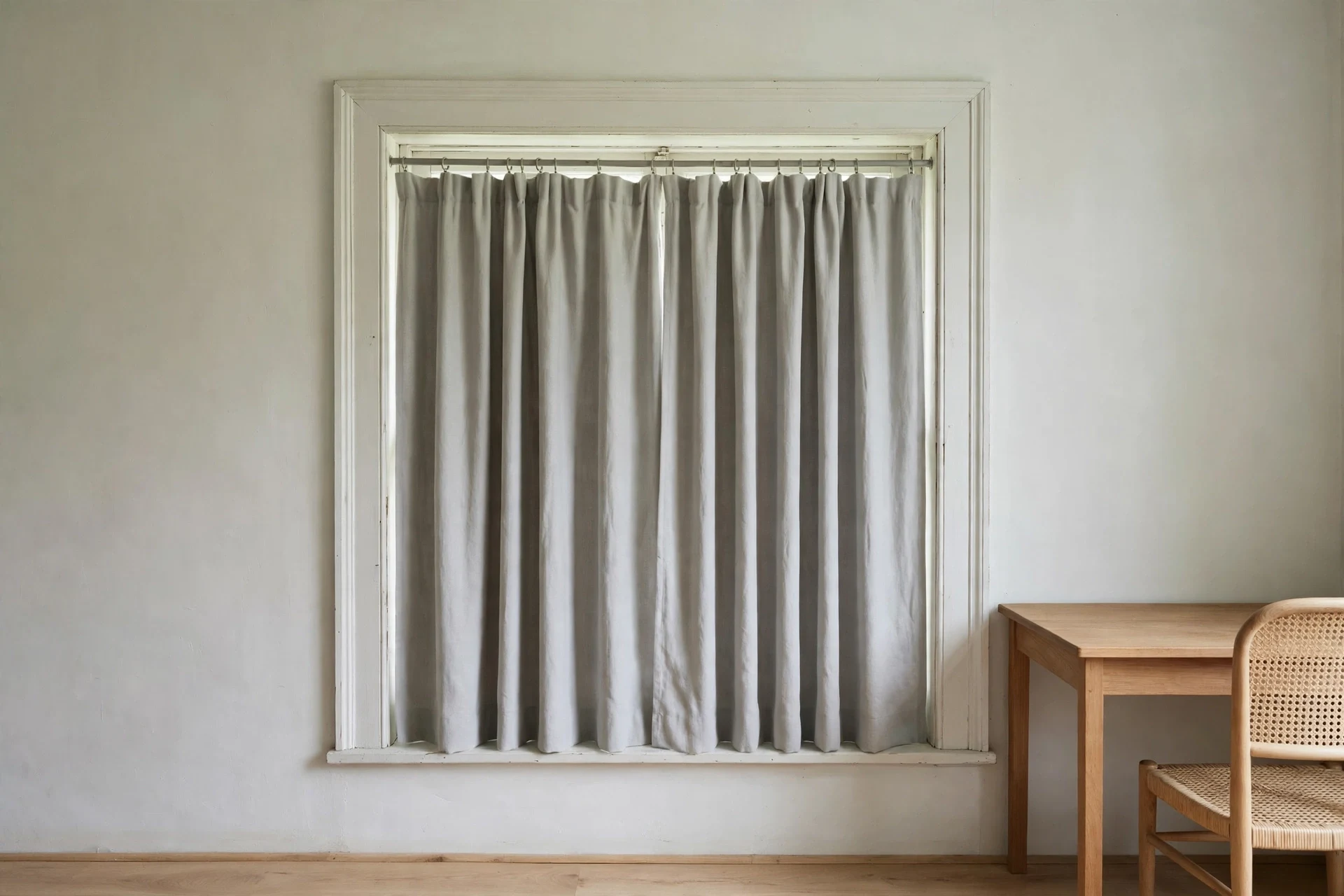
Hang the rod high and wide, and a small window looks larger, because the curtain frames more wall than glass. Set the rod well above the frame, close to the ceiling where the wall allows, and let it run well past the frame on each side, so the open panels stack on the wall instead of on the glass.
A rod that runs too far past a narrow window can swallow a short wall, crowd a corner, or clash with a door frame, a shelf, or a picture rail.
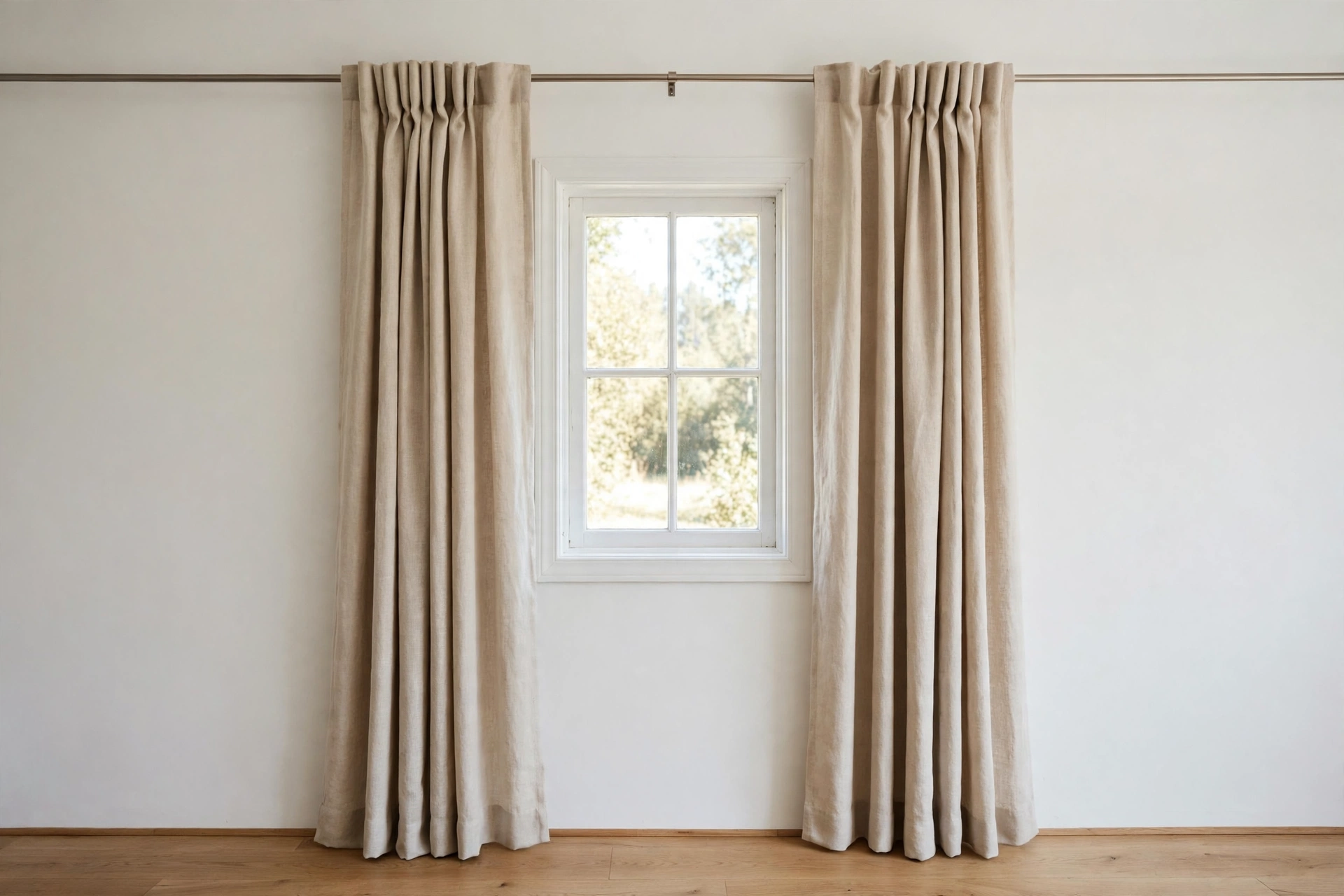
Where a corner or a door frame leaves room on one side only, let that side carry the stack and keep the other side short, rather than forcing symmetry the wall cannot hold. Fix brackets firm and level, with a center support on a wider span. For hanging steps, see How to Hang Curtains.
For small windows, hang the rod 8 to 12 inches above the frame and 8 to 12 inches past each side, so the window reads wider and taller without swallowing the wall.
Floor length on a small window: when it lifts the room and when it fights it
Floor length lifts a small window when the wall below it is bare, because one long vertical line from near the ceiling to the floor makes the window and the wall read taller together.
Floor length fights the room when the space below the window is already in use. A panel that falls behind a desk, over a radiator, across a bench seat, or into a walkway will bunch, catch, and collect dust. Measure your own drop from rod to end point, because the right length depends on your window and ceiling height.
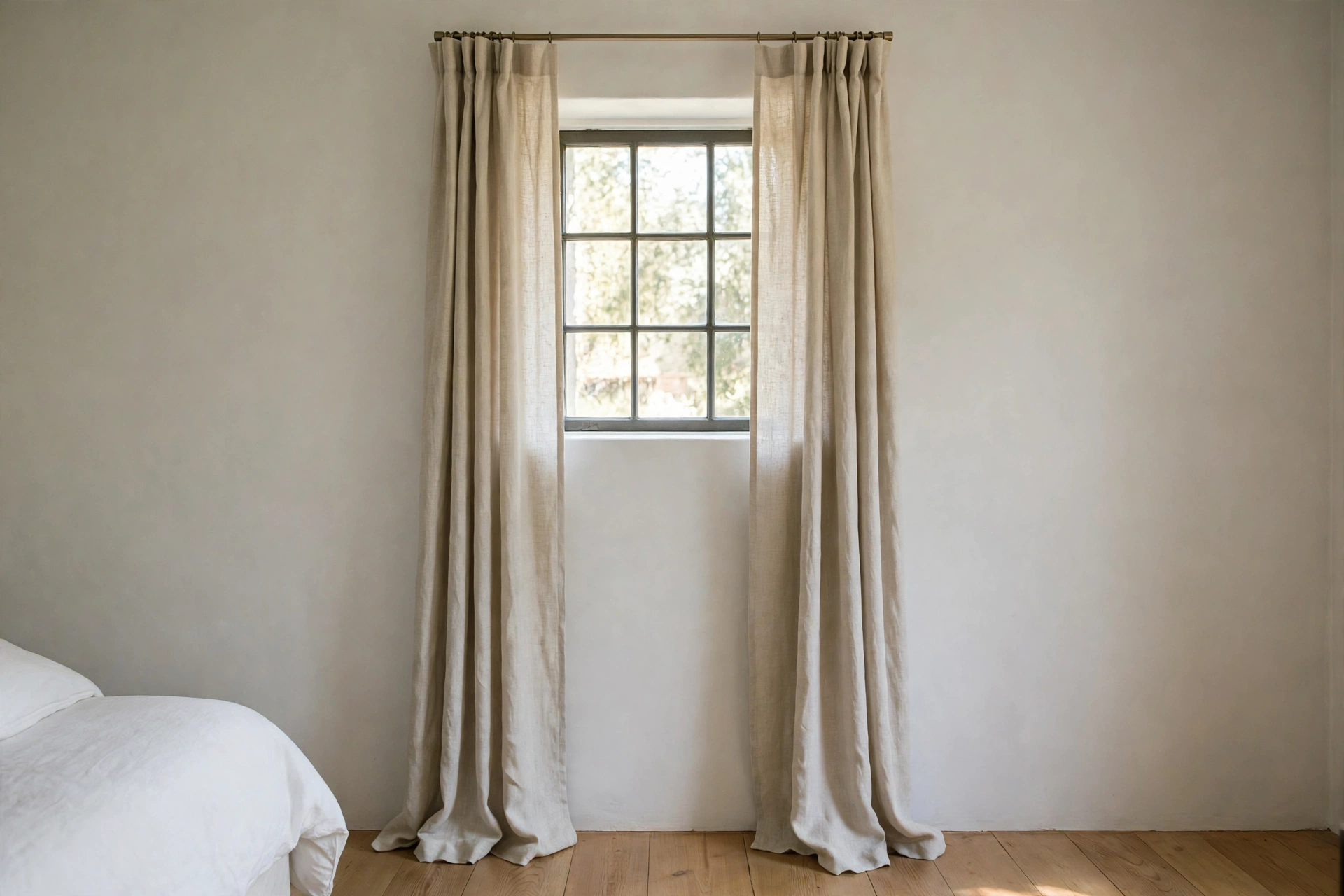
Never choose floor length by habit alone. Choose it where the wall below is free and the fabric is light.
For a very short window, under 24 inches, a valance plus floor-length panels works as one tall treatment: the valance covers the rod-to-window gap and the panels drop to the floor, so the eye reads height instead of a small window.
Short lengths that suit a small window
Short lengths suit a small window when the wall below it is spoken for. A sill-length panel ends at the sill and keeps the wall below clear, which suits a window above a desk, a bench, or a kitchen unit. An apron-length panel falls just below the sill and gives a slightly softer finish without reaching furniture or a radiator.
Short does not mean careless. A short panel still needs a rod set at the right height, a heading that slides or stays as the room needs, and enough total width for soft folds when closed.
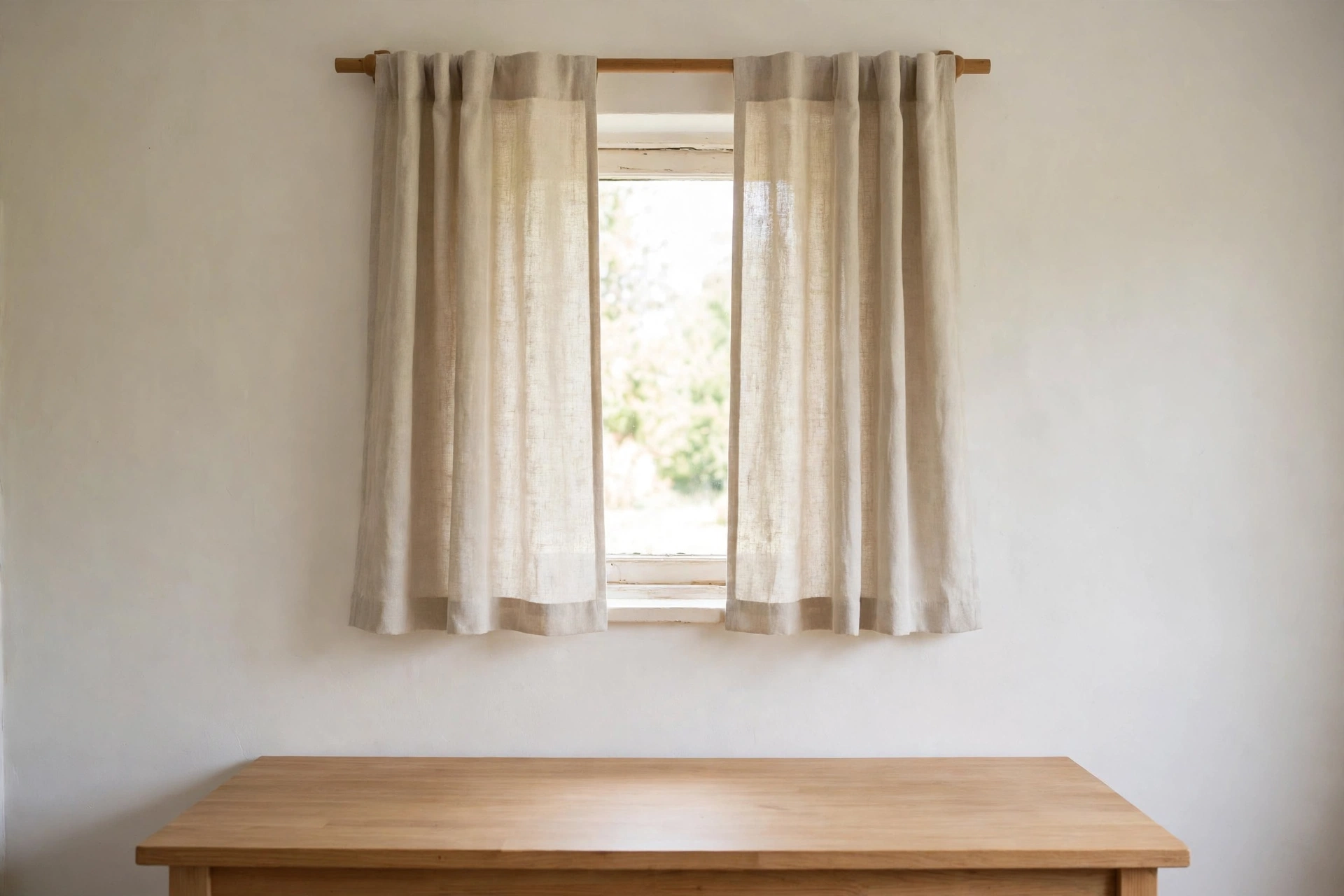
Check the finished length on the listing, because heading and hem change where the panel actually ends. For a bathroom window, steam and splashes change the choice, and that job belongs to the bathroom guide. For length choices in general, see Curtain Sizes.
A Roman shade on a small window should be ordered 2 to 3 inches wider than the frame on each side and mounted above the frame, so the shade conceals the frame and reads wider.
Tie-up shades tie at different heights to adjust light and privacy through the day, which suits a small window where a fixed panel would be too much or too little.
Cafe and tier panels for privacy at eye level
Cafe panels, also called tier panels, cover the lower half of a window and leave the upper half open, so they give privacy where people actually look in while keeping daylight from above. A cafe rod sits at the height that blocks that sightline, usually around the middle of the window, and the panel hangs from that rod to the sill.
Getting the rod height right is the whole trick. Set it too low and the sightline stays open above the panel. Set it too high and the panel covers glass that could have given light.
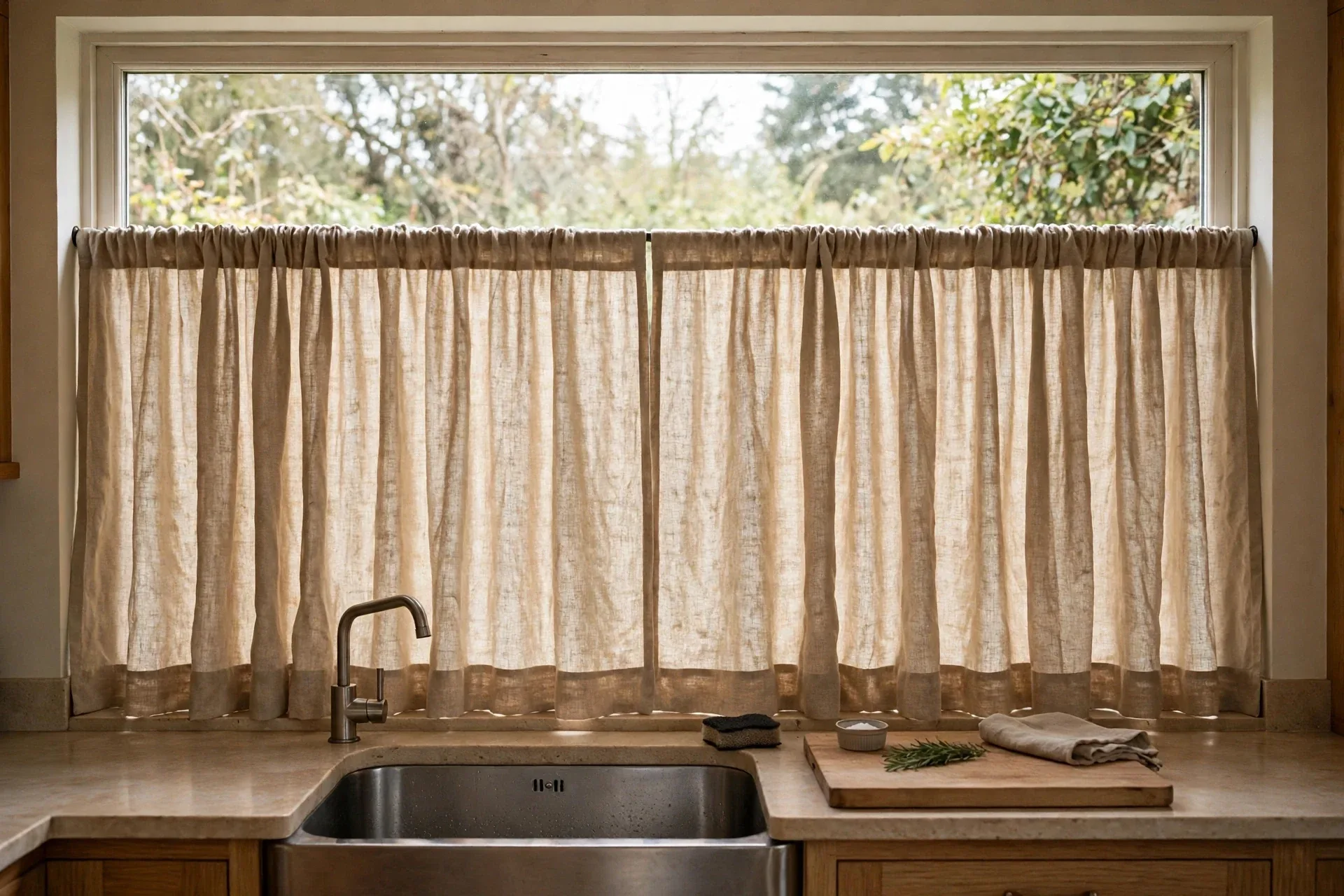
Stand outside at the distance a passerby would stand, or ask someone else to stand there, and check where eyes actually land. Then set the rod just above that line.
Hourglass curtains stretch fabric over the full window, gathered and tied in the middle, letting in light while dressing the whole window, which suits a small window that needs both privacy and brightness.
One panel or a pair: settling the narrow window question
A narrow window asks a simple question with no single answer: one panel or a pair. One panel suits the narrowest windows, because a pair split in the middle can leave a gap, double the stack, and double the hardware on a rod that has little room to spare. A single panel drawn to one side gives a clean line, one stack, and full closed coverage when drawn across, and it suits a window where the stack has room on one side only, such as a window beside a corner or a door frame.
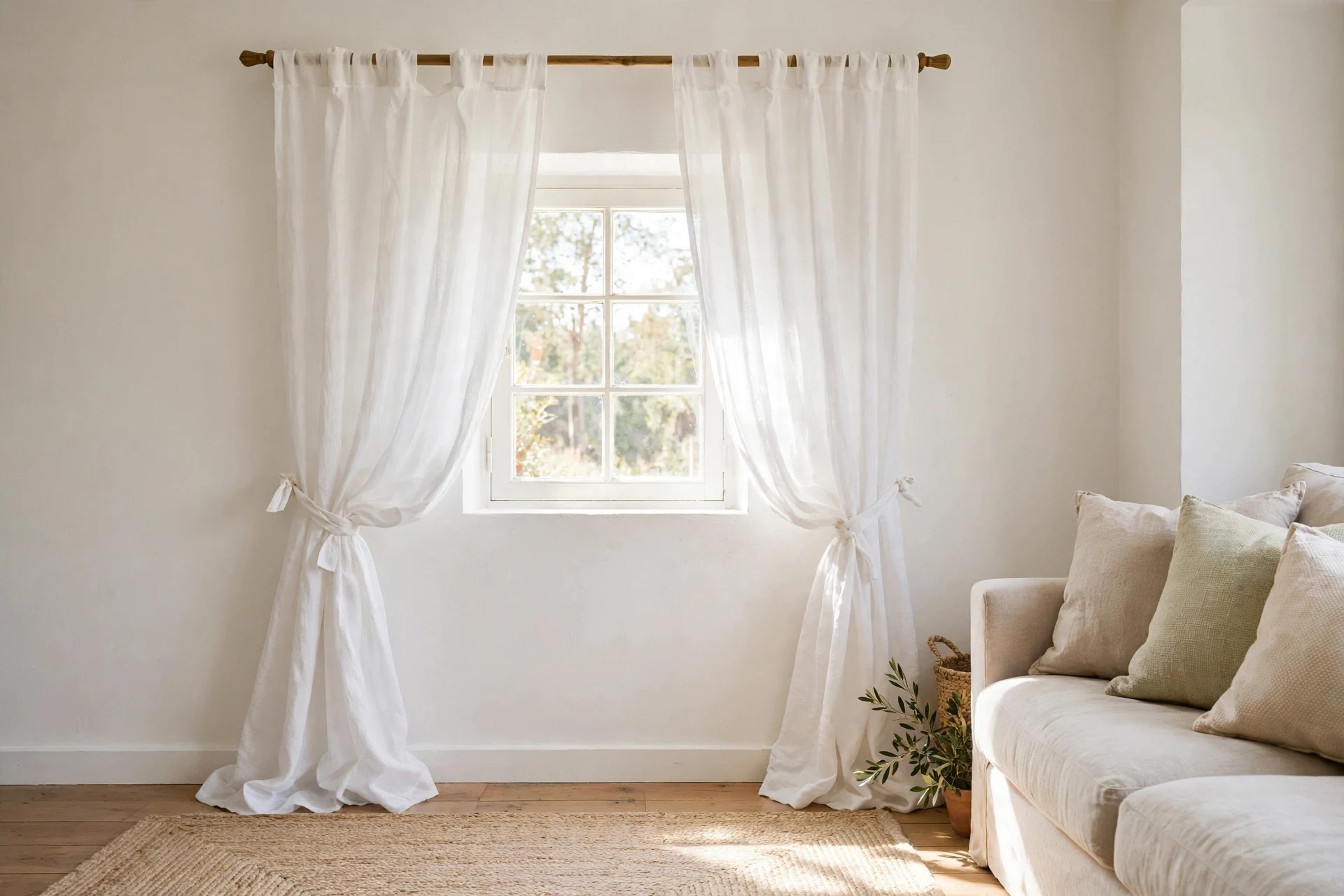
A pair suits a narrow window when symmetry matters more than stack width, or when the panels will stay mostly closed. Two panels meeting in the middle give an even fall, and each panel carries half the width, so each stack is smaller than a single full-width stack. Order by total closed width, not by panel count alone.
Slim headers, light fabrics, and fullness on a narrow rod
A narrow rod leaves no room for a bulky header, so the header choice decides whether a small window looks neat or crowded. A slim rod-pocket heading sits close to the rod and stacks narrow, which suits a panel that mostly stays in place. A slim grommet or ring heading slides freely and suits a panel drawn daily, but rings add a little stack width, so check the total stack before you fix the rod.
Light fabrics help the header do its job.
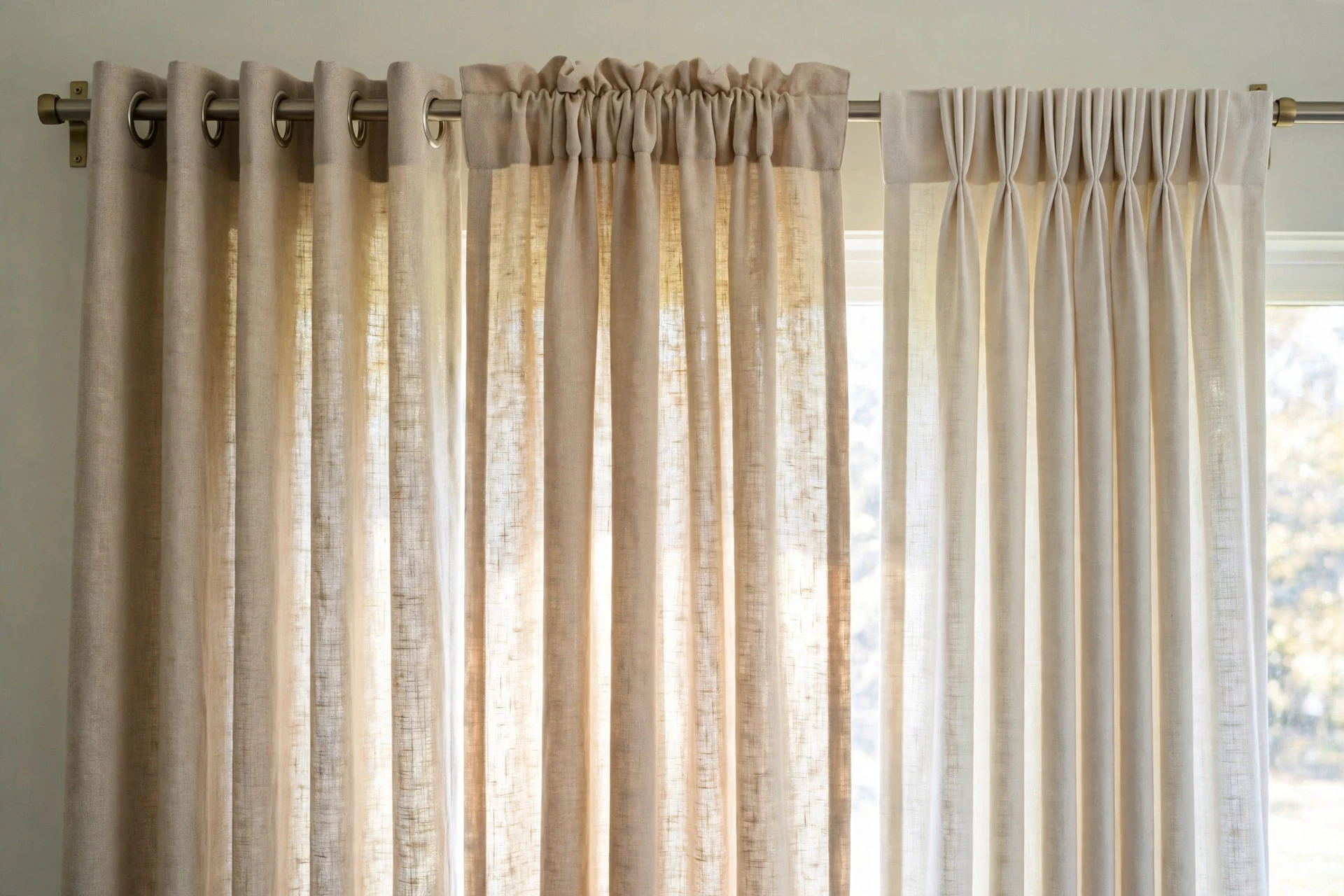
Voile, sheer linen, light cotton, and linen-look weaves fall softly and stack narrow, while velvet and heavy lined fabrics fall in deep folds and stack wide. Fullness is the last piece. A small window still needs enough fabric for soft folds when closed. Aim for total panel width well beyond the rod width, enough for gentle folds when closed and a narrow stack when open.
Horizontal stripes cut a small window in half visually and make it look wider but shorter, the opposite of what a small window needs, so keep stripes vertical on a narrow window.
Privacy without bulk in a small room
Privacy on a small window is a layering problem, not a weight problem. A sheer layer by day gives soft daytime privacy while keeping light, and a closable layer at night gives full cover when the room is lit from inside.
Night privacy is where small windows catch people out. A sheer that looks private by day turns see-through at night when the room light is on and the street is dark. If the room is used at night, plan the night layer from the start: a closable panel, a cafe tier at eye level, or a blind behind the curtain.
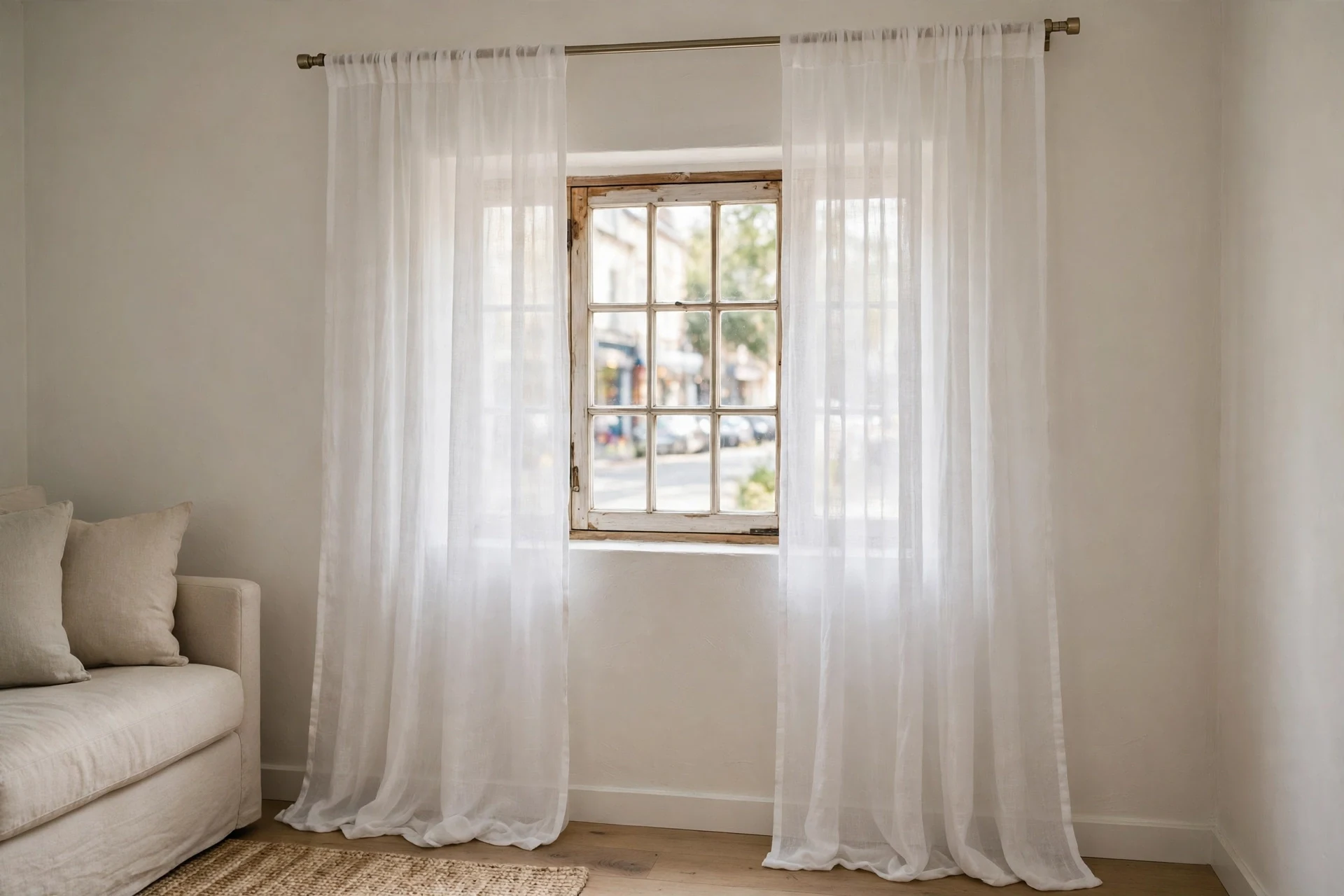
Do not rely on a sheer alone for a bedroom window at night. For the full darkness job, see Best Blackout Curtains. Color and pattern also carry privacy weight without adding bulk. A pale, plain panel keeps a small room bright, while a bold pattern on a small window can dominate a small wall. If the room already has pattern, a plain panel is the calmer pick.
Printed roller shades work as a statement option on a small window: bold geometric, abstract, or nature prints act as decor while controlling light, without fabric bulk.
Macrame curtains give knotted texture with partial screening plus openness and light filtering, which suits a bohemian room where a flat panel would look too plain.
Light in a small room: keeping the window bright
Light is the scarcest resource in a small room, and the curtain must protect it. Keep the open stack off the glass, choose a light fabric, and favor pale colors that reflect daylight rather than absorb it. A white, cream, or pale gray panel keeps the room brighter than the same panel in a dark color, and a sheer layer keeps it brighter still.
Direction changes the light job. A south-facing small window gets strong sun for part of the day, and a light-filtering panel or a sheer plus a closable layer handles glare without shutting the room away.
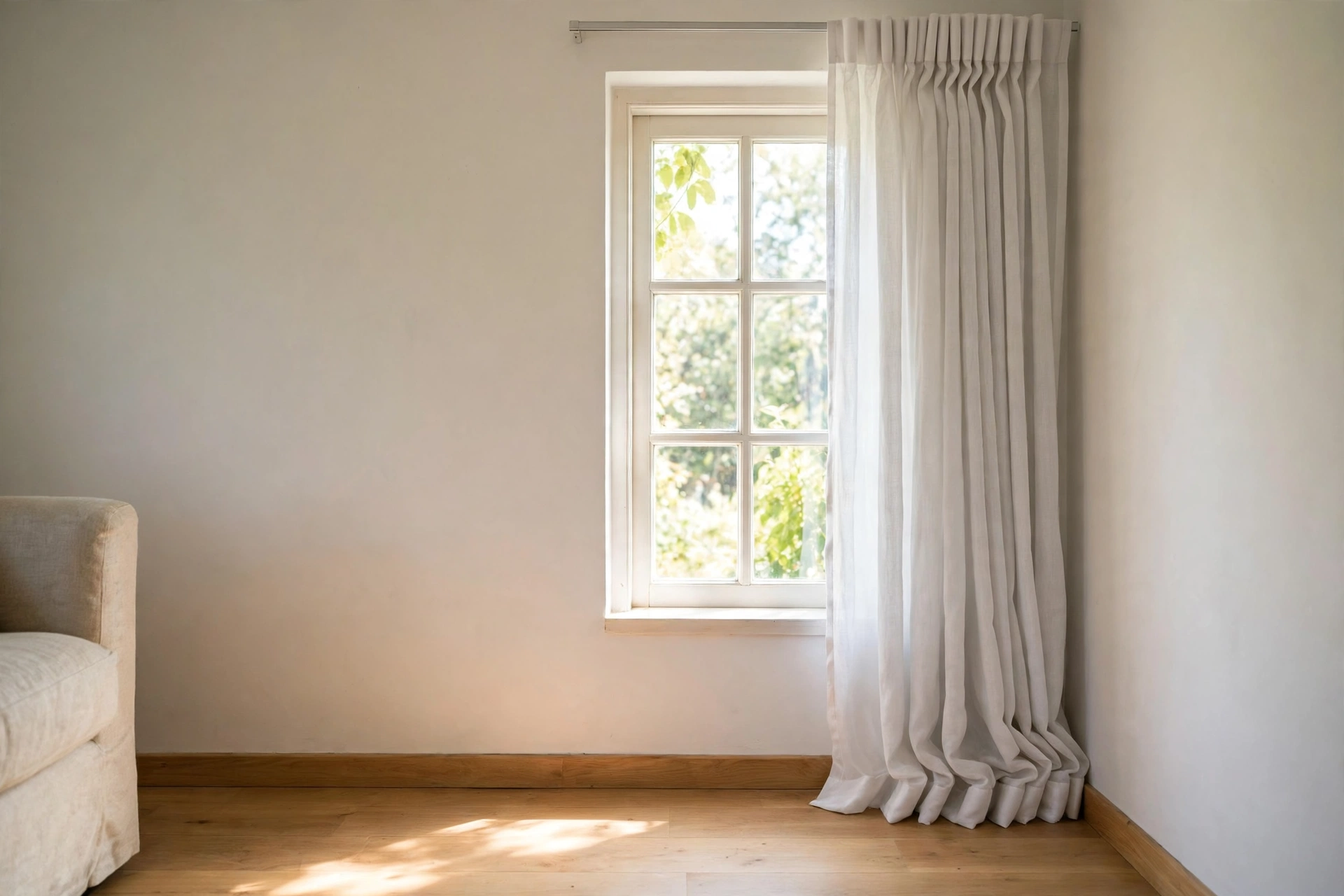
A west-facing window gets low evening sun that can glare straight into the room, so a closable layer for the evening hours matters more than a heavy fabric all day. For living room light, see Best Curtains for Living Room, and for a soft light fabric, see Best Sheer Curtains.
No-drill hanging for small windows in rented homes
Rented homes often forbid drilling, and a small window is where no-drill hanging works best, because the spans are short and the panels are light. A tension rod fits inside the frame and suits a cafe tier or a short light panel, provided the frame is firm and the rod is sized to grip without slipping. A spring rod in a shallow frame, or a heavy panel on a light tension rod, will slip and fall, so match the rod to the panel weight and check the grip before you hang the full set.
Other no-drill routes suit different frames. Adhesive hooks and brackets hold a light rod on a smooth wall or frame, but they need a clean surface, a curing time, and a weight limit the panel must respect. For hanging steps in general, see How to Hang Curtains.
Mistakes that shrink a small window further
The first mistake is hanging the rod just above the frame and just past it, which frames the small glass exactly and leaves it looking smaller than it is. The second is choosing a heavy, dark fabric for a small, dark room, which adds a wall of fabric where light is already scarce. The third is letting the open stack cover the glass, so the window gives light only through a slit in the middle.
Other mistakes show up after ordering. A panel ordered by title rather than by finished length can end mid-wall or pool on furniture. A pair ordered as two narrow panels can gap at the center when closed.
Checks to run before you order for a small window
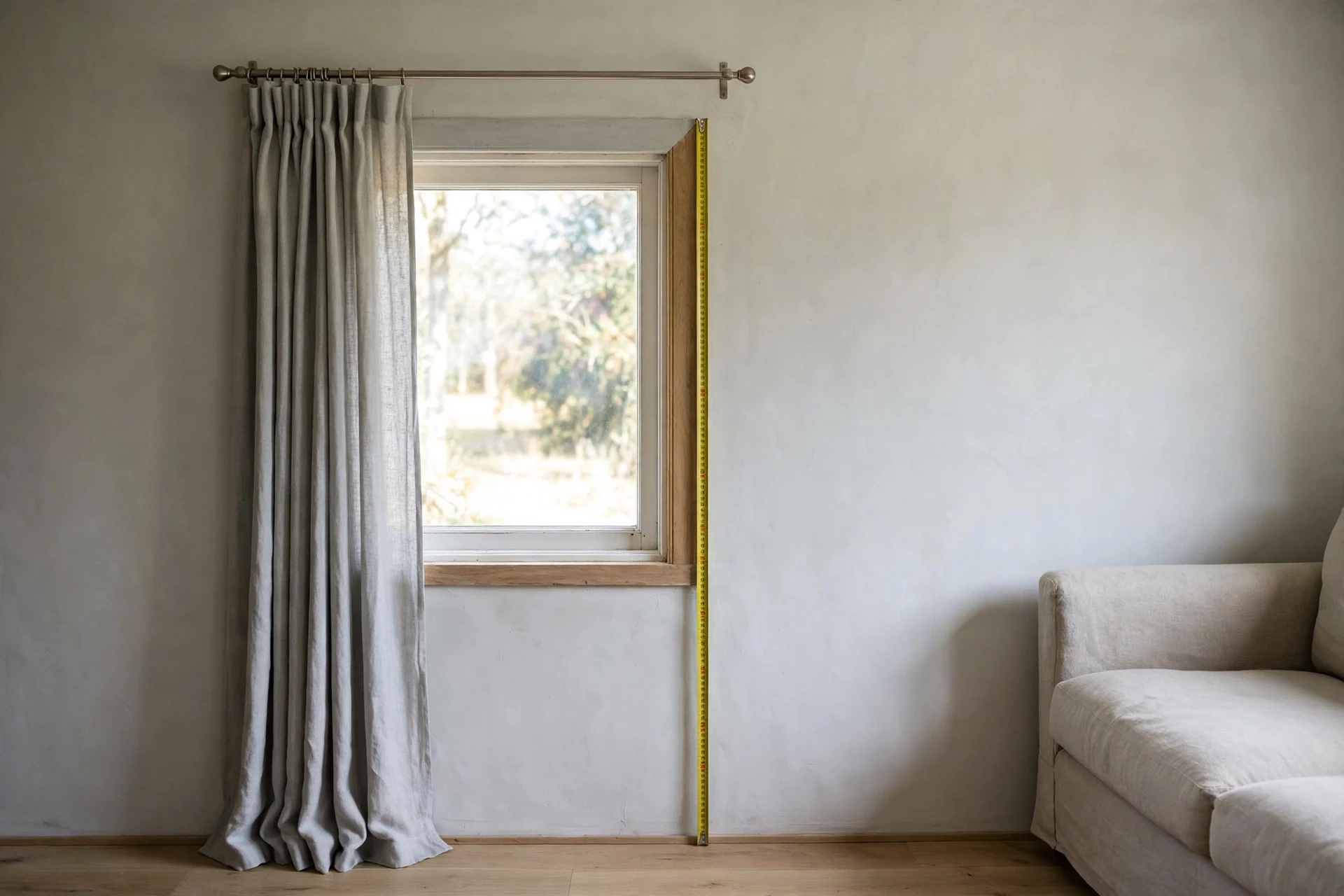
Start with the window itself, not the panel. Measure the glass, the frame, the wall on each side, the height to the ceiling, and the space below the window, in that order, and write the numbers down before you shop. For measuring steps, see How to Measure for Curtains.
Then match the panel to the job. Confirm the light job first: daylight, soft filtering, room darkening, or blackout, and whether that result comes from the fabric alone or from a lining.
Confirm the privacy job next: daytime only, or night as well, and whether a cafe tier, a sheer, or a closable panel carries it. Then confirm the fabric, the lining, the heading, the total closed width, the finished length, and the care label on the listing, and check that the rod and brackets suit the panel weight. For a drafty window, see Best Thermal Insulated Curtains, and for a small bedroom window, see Best Curtains for Bedroom and the bedroom guides.
Frequently asked questions about small window curtains
Most small window questions come down to proportion, length, and panel count. Get the rod, the length, and the stack right, and the rest follows.
Should curtains for small windows be floor length or short?
Floor length suits a small window on a bare wall, where a long light drop makes the window read taller. Short lengths suit a small window above furniture, a desk, or a radiator shelf, where a long drop would pool or catch.
How high should the rod sit above a small window?
The rod should sit well above the frame, close to the ceiling where the wall allows, so the curtain frames more wall than glass and the window reads taller.
How far past the window should the rod extend?
The rod should run well past the frame on each side, so the open panels stack on the wall instead of on the glass.
Is one panel or a pair better for a narrow window?
One panel suits the narrowest windows and windows with stack room on one side only, because it gives one stack and full closed coverage. A pair suits a narrow window where symmetry matters or the panels stay mostly closed, because each stack is smaller and the fall is even.
What fabric suits a small window best?
Light and medium fabrics suit a small window best, because they fall softly and stack narrow. Voile, sheer linen, light cotton, and linen-look weaves keep a small room bright, while heavy fabrics stack wide and can cover glass even when open. If the room needs darkness or warmth, choose the lining for that job and keep the face fabric as light as the job allows.
Can cafe curtains give privacy without blocking light?
Cafe curtains give privacy at eye level while leaving the upper half of the window open for daylight, so they suit a street-facing small window well.
Do blackout curtains suit small windows?
Blackout curtains suit a small bedroom window where sleep comes first, because they give darkness and full night privacy. They suit a small living room less well when closed by day, because they darken a room that may already be short of light.
How do I hang curtains on a small window without drilling?
A tension rod inside the frame suits a cafe tier or a short light panel in a rented home, provided the frame is firm and the panel is light. Test any no-drill route empty, then with one panel, before trusting it with the full set, and never hang a heavy panel on a light tension rod.
What can I use instead of curtains on a small window?
Frosted glass film, shutters, or blinds give privacy without fabric on a small window. Frosted film suits a rented home because it peels off, shutters suit a window that needs adjustable light through the day, and blinds suit a narrow frame where a fabric panel would add bulk.
For other curtain types, see Best Window Curtains.
This guide is research-based curation: we compared maker specifications, published reviews, and current prices. Read how we choose.