 Best
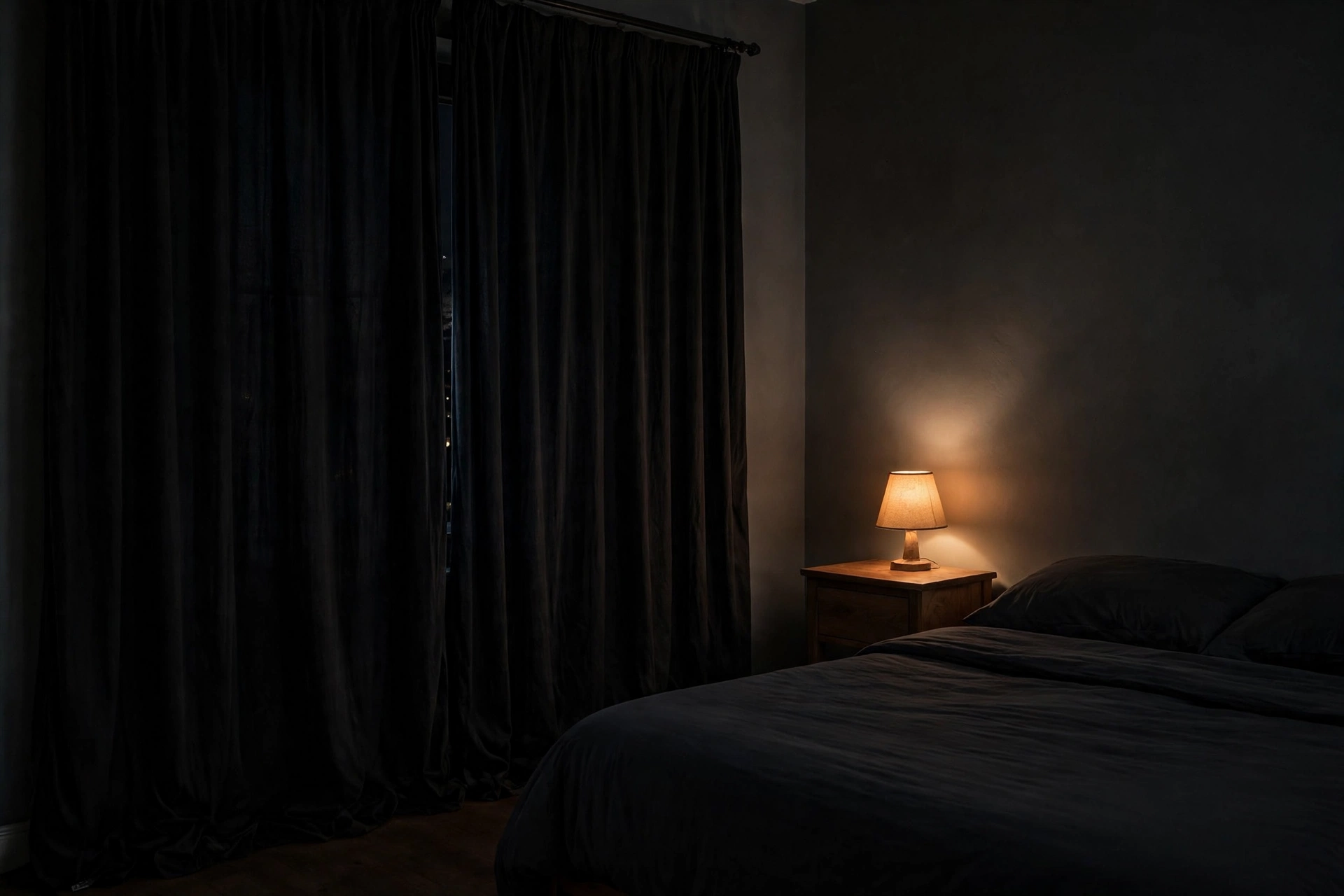
Best Curtains for Bedroom
A bedroom guide to curtains that help you sleep, covering blackout panels, liners, rods, color, fabric and day-to-night layering.
A bedroom curtain has one job above all: it should help the room feel dark, private and calm at night, and pleasant during the day. Sleep depends on the whole window set-up, not on one panel alone.
This guide starts with the sleep job, then builds the set-up around it: panel, liner and rod together, plus color, fabric, layering and care. For deeper detail on darkness alone, see Best Blackout Curtains. For warmth at the window, see Best Thermal Insulated Curtains.
Our bedroom picks
The picks below cover sleep and privacy (Pick 1 for light sleepers, Pick 2 for shift workers), plus a soft-looking blackout option (Pick 3), a tailored look (Pick 4), a simple set for a spare room (Pick 5), and a day layer (Pick 6). For a street-facing bedroom, use Pick 1 or Pick 2 as the front blackout panel, with Pick 6 as the sheer at the glass, on a double rod. Read the best-for line first. Check panel count (one panel or a pair), size, lining, and care label on the listing before you order.
As an Amazon Associate, we earn from qualifying purchases.
Comparison at a glance: bedroom curtains
| Pick | Best for | Key feature |
|---|---|---|
| NICETOWN Thermal Insulated Grommet Blackout Curtains | a light sleeper who wakes at early sun or streetlight and wants a dark room with a simple hang. | triple-weave style blackout fabric; thermal-insulated design for a drafty window; grommet top for a standard… |
| Deconovo Blackout Curtains | a shift worker who sleeps during the day and needs a set-up that stays dark through the day. | blackout fabric with a layered build; rod pocket top; machine… |
| MIULEE Blackout Linen Curtains | a bedroom that should feel relaxed and textured, not heavy, while still blocking morning light. | faux linen face fabric with a blackout build behind it; grommet top; soft neutral colors for wood, white… |
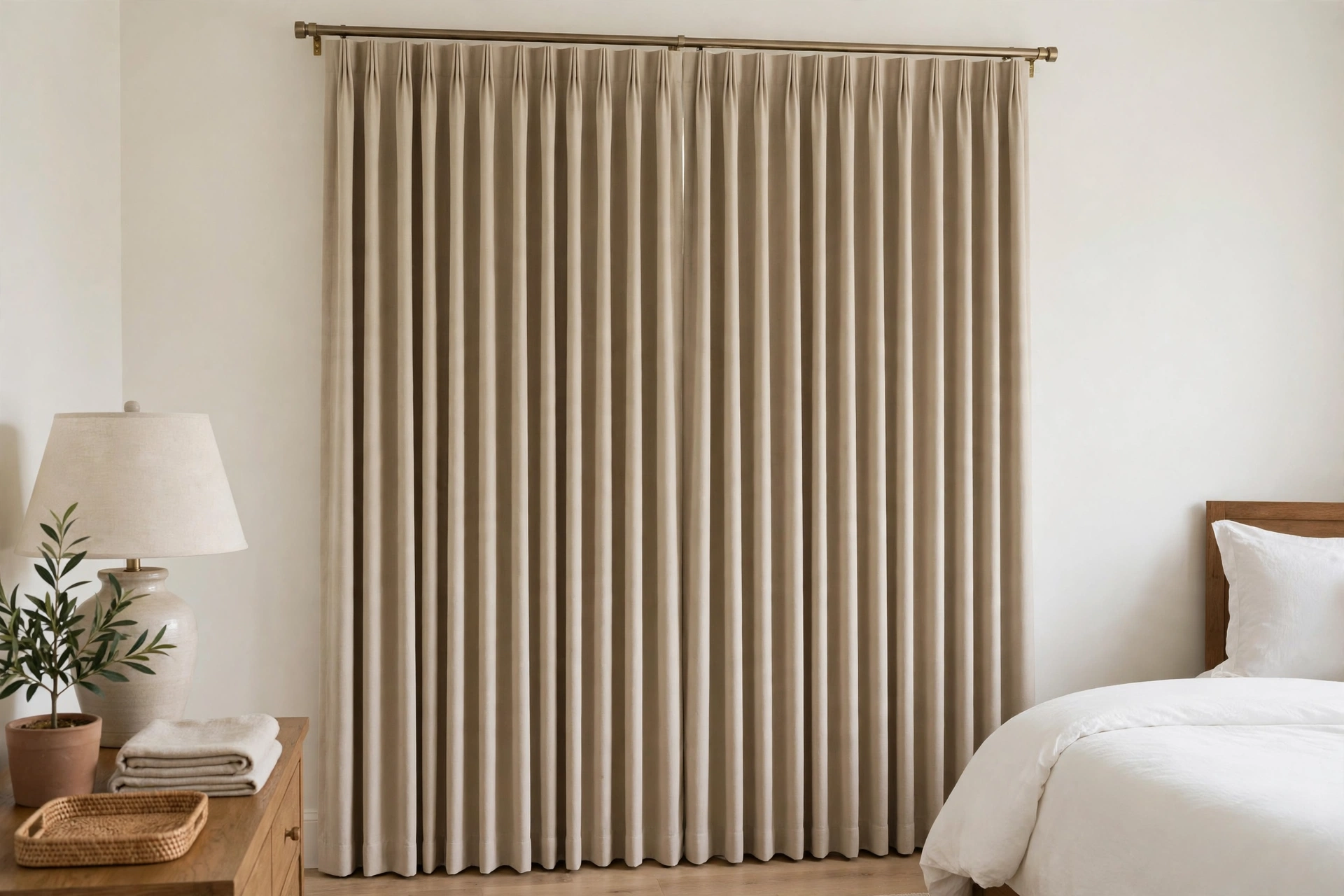
| Vision Home Blackout Pinch Pleated Curtains | a main bedroom where you want structured folds and a finished look, with blackout lining sewn in. | linen-blend face fabric with a blackout lining sewn in; pinch pleat heading for a rod or track with rings and… |
| SimpleHome Grommet Blackout Curtains | a spare bedroom, a rental bedroom, or a first blackout set where a simple, easy hang matters most. | grommet top that slides straight onto a rod; blackout fabric made to cut light and give evening privacy;… |
| RYB HOME Linen Sheer Curtains | the day layer in a layered set-up, paired with a blackout front panel for night. | lightweight linen-textured sheer that filters daylight into a soft glow; rod pocket and back tab styles, so… |
1. NICETOWN Thermal Insulated Grommet Blackout Curtains - Best for light sleepers
- Best for: a light sleeper who wakes at early sun or streetlight and wants a dark room with a simple hang.
- Key features: triple-weave style blackout fabric; thermal-insulated design for a drafty window; grommet top for a standard rod; a wide range of colors and sizes on the listing.
- Pros: strong darkness when hung wide and to the floor; simple grommet hang suits daily use.
- Cons: lighter colors may let in more light if the lining is thin, so with a pale panel check the lining, not the color, since a true blackout lining keeps a pale panel dark; heavy panels need a sturdy rod on a wide window.
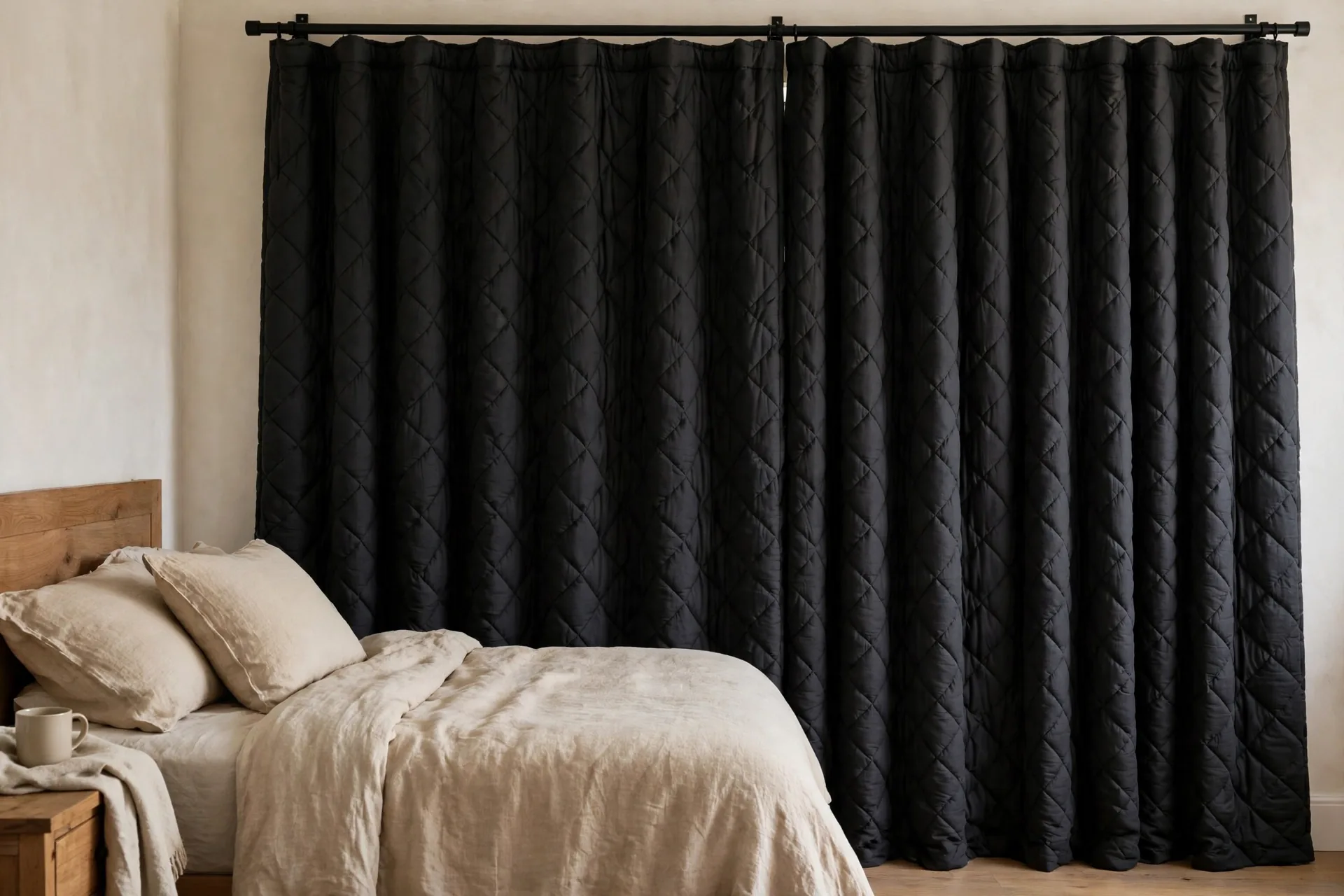
2. Deconovo Blackout Curtains - Best for shift workers sleeping in daylight
- Best for: a shift worker who sleeps during the day and needs a set-up that stays dark through the day.
- Key features: blackout fabric with a layered build; rod pocket top that hangs straight and stays put; machine washable fabric on many listings, so check the care label.
- Pros: daytime darkness without a fussy heading; simple heading that needs no adjustment between sleeps.
- Cons: lighter shades may show more light if the lining is thin, so check the lining, not the shade, since a true blackout lining keeps a pale panel dark; needs full width and floor length, so measure with care.
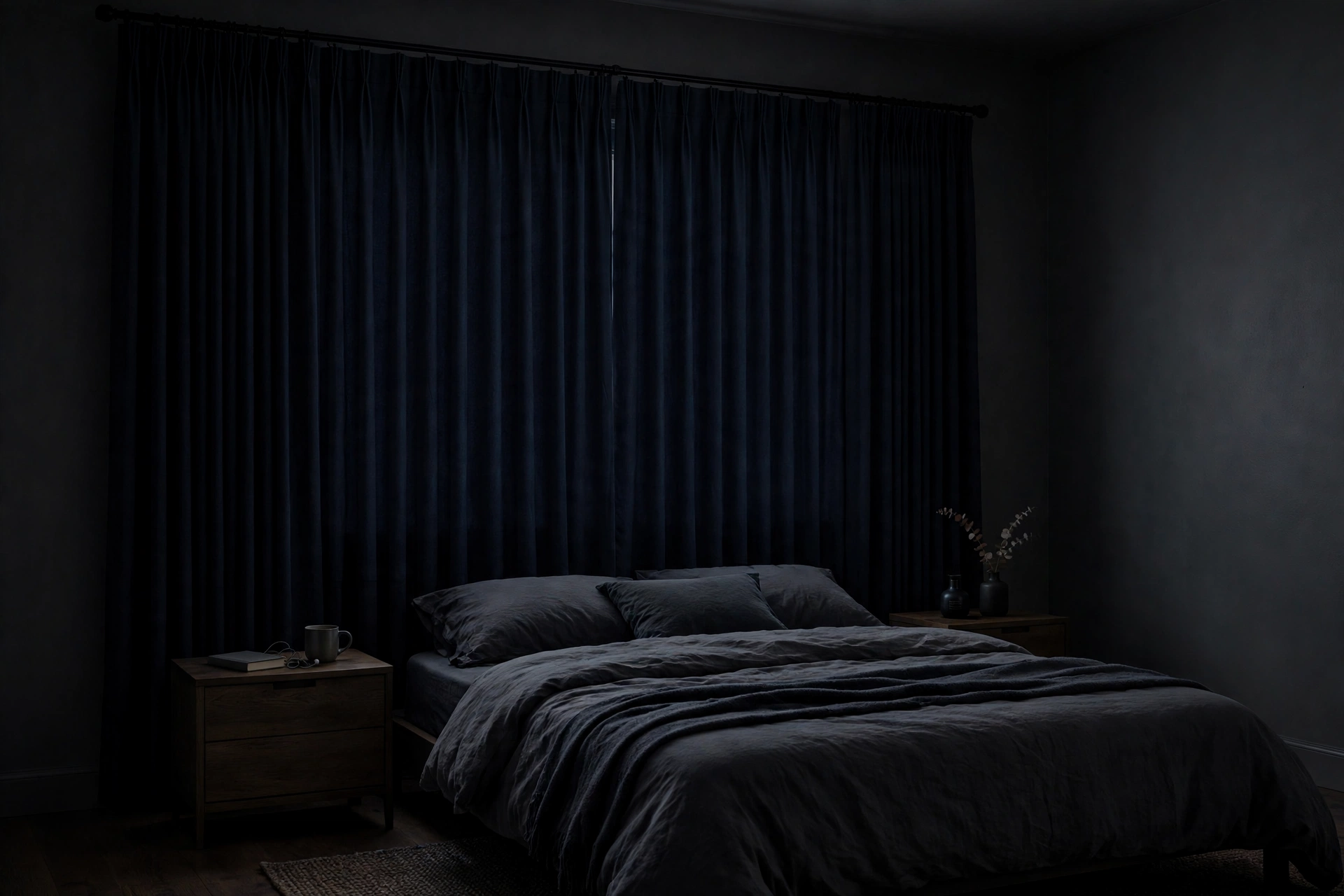
3. MIULEE Blackout Linen Curtains - Best for a soft-looking bedroom that still needs darkness
- Best for: a bedroom that should feel relaxed and textured, not heavy, while still blocking morning light.
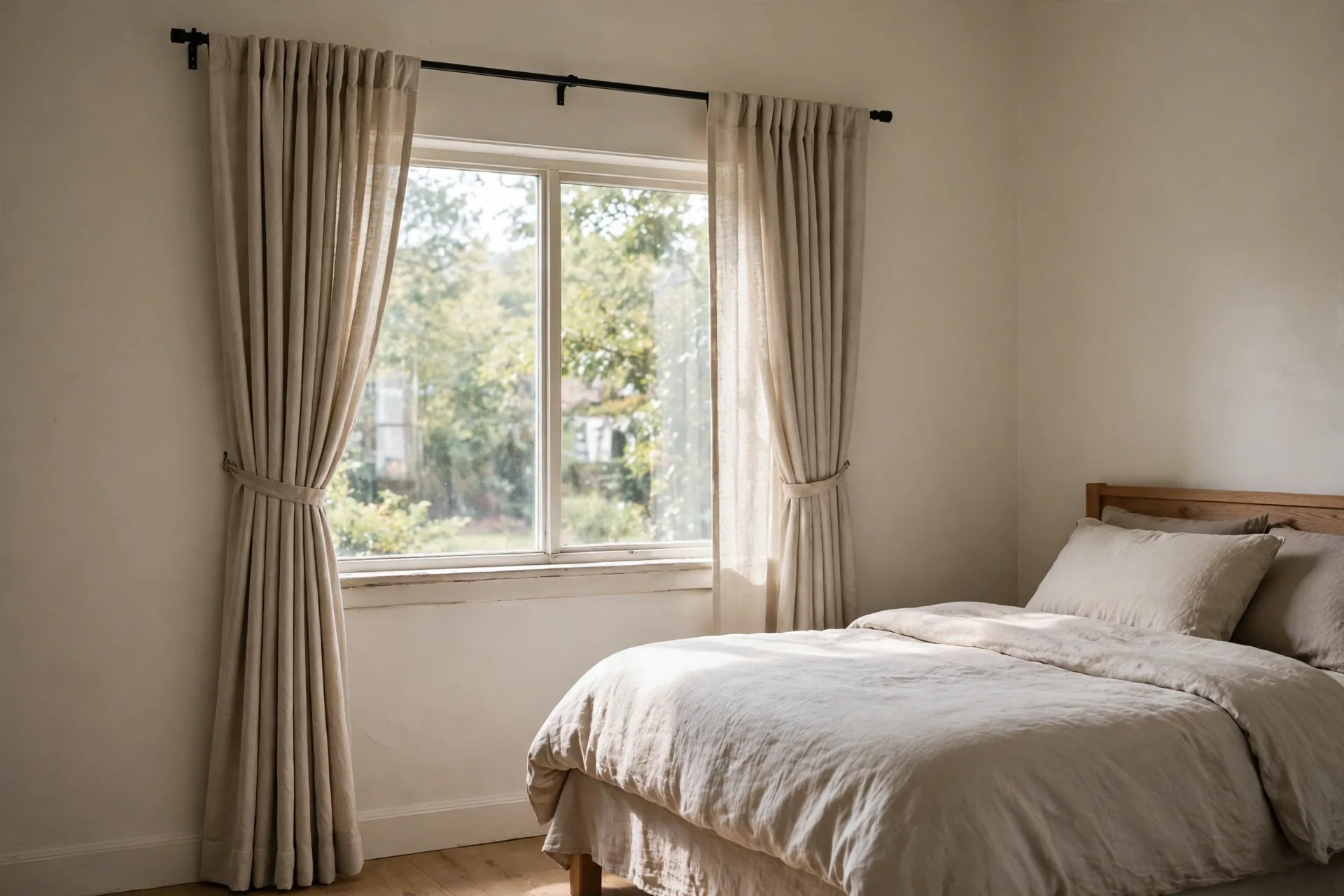
- Key features: faux linen face fabric with a blackout build behind it; grommet top; soft neutral colors for wood, white bedding and pale walls.
- Pros: linen look softens a heavy-panel room; blackout build gives real sleep darkness.
- Cons: linen-look fabric can wrinkle and may need steaming; screen color can differ from room color.
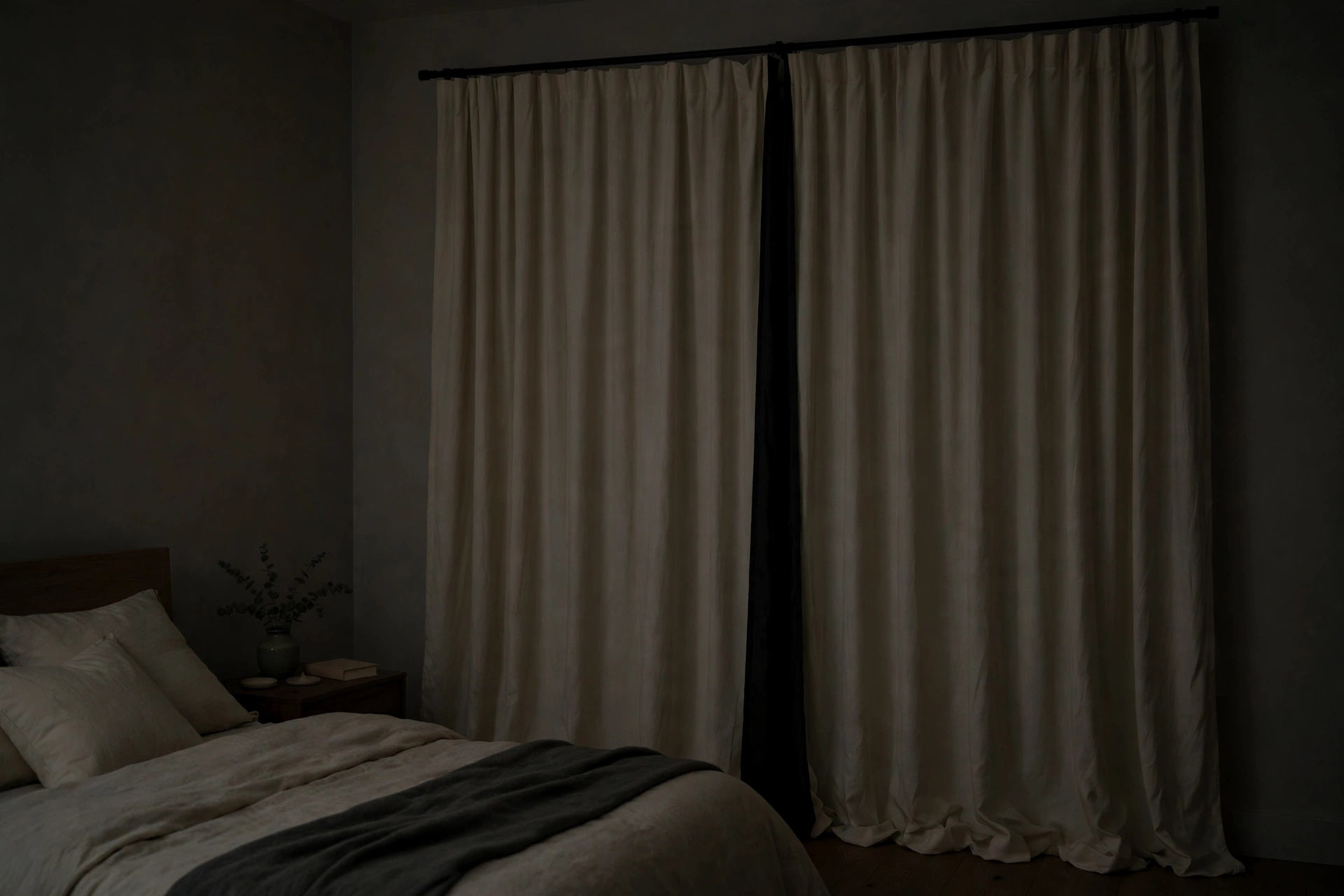
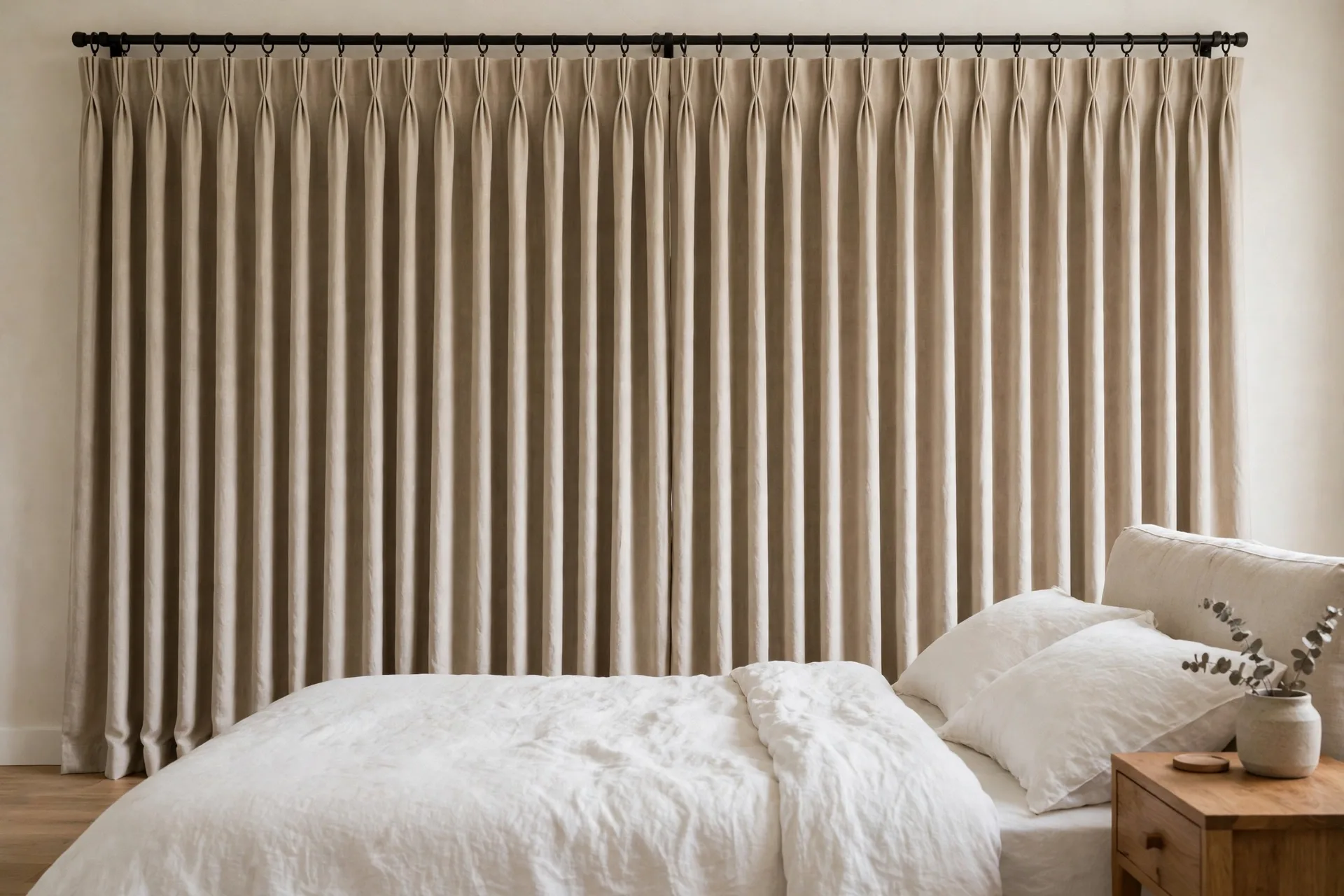
4. Vision Home Blackout Pinch Pleated Curtains - Best for a tailored bedroom look
- Best for: a main bedroom where you want structured folds and a finished look, with blackout lining sewn in.
- Key features: linen-blend face fabric with a blackout lining sewn in; pinch pleat heading for a rod or track with rings and hooks.
- Pros: sewn-in lining needs no separate liner; pinch pleats give a tidy finish.
- Cons: needs rings and hooks, so check the heading fits your rod or track; structured panels need more washing care.
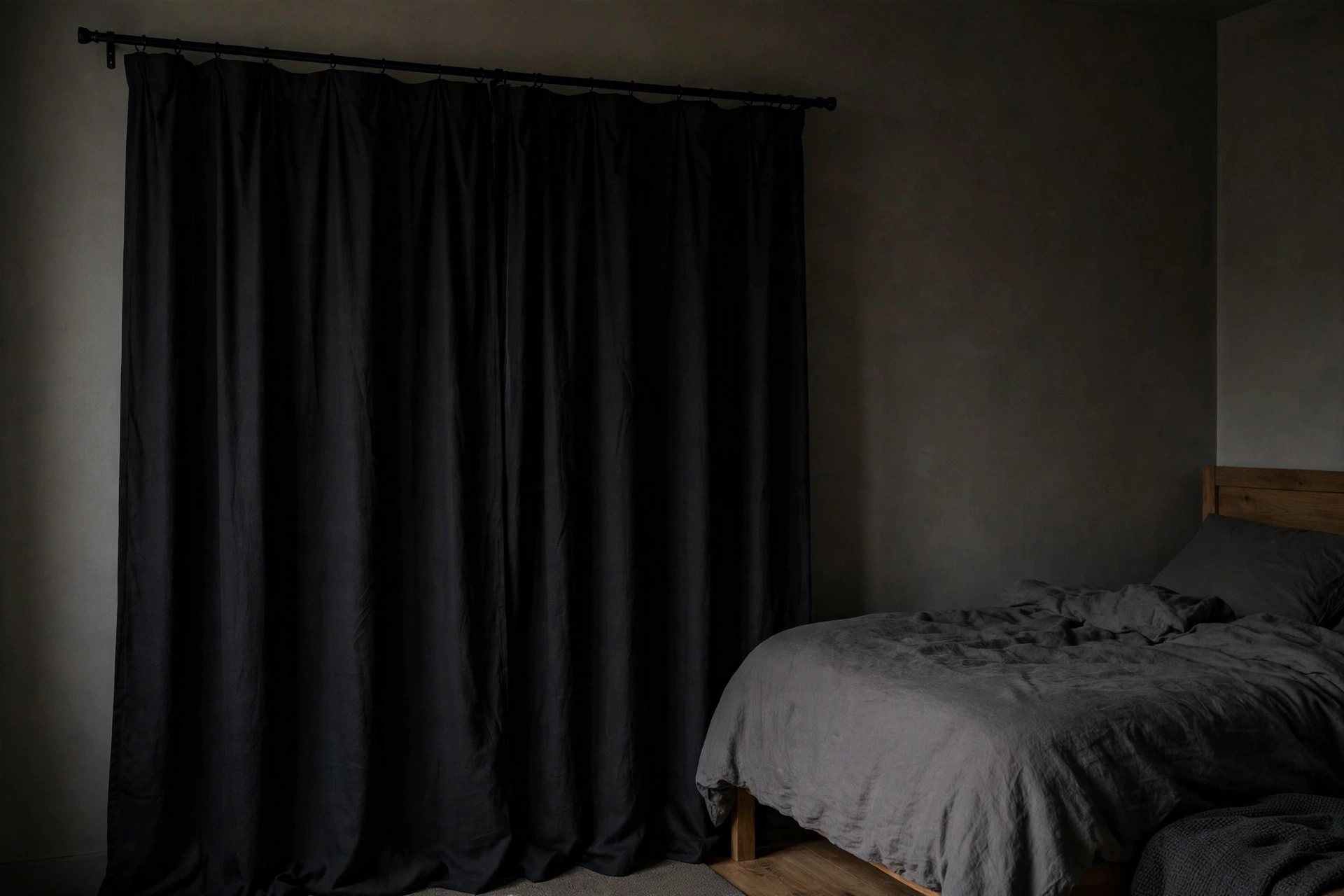
5. SimpleHome Grommet Blackout Curtains - Best for a spare room or a first blackout set
- Best for: a spare bedroom, a rental bedroom, or a first blackout set where a simple, easy hang matters most.
- Key features: grommet top that slides straight onto a rod; blackout fabric made to cut light and give evening privacy; plain colors that work in most spare rooms.
- Pros: simple grommet hang, like Picks 1 and 3, with no extra hardware; plain, simple panel for a spare room.
- Cons: plain look may feel too simple for a main bedroom; needs careful measuring to avoid light gaps.
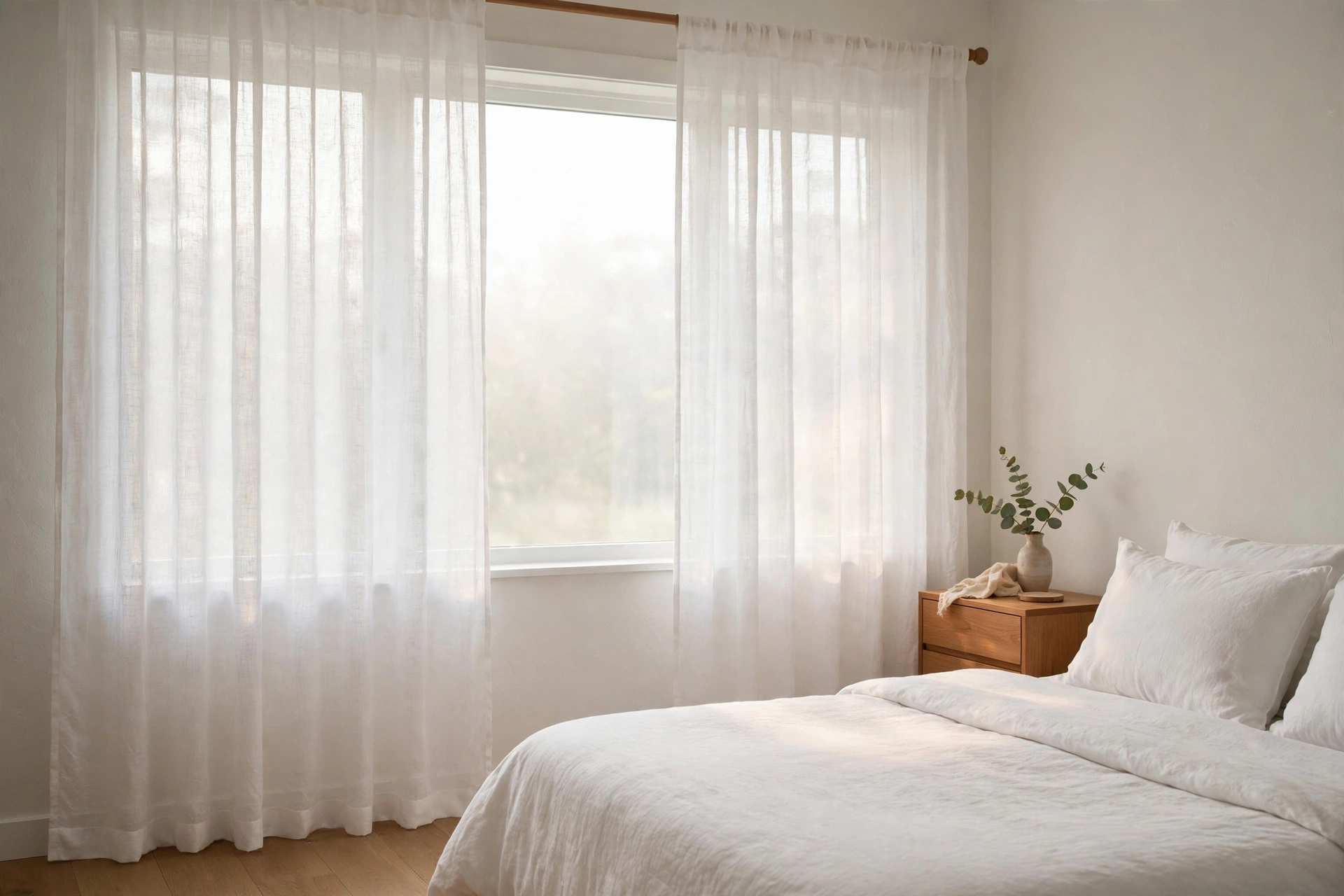
6. RYB HOME Linen Sheer Curtains - Best as the day layer in a layered bedroom
- Best for: the day layer in a layered set-up, paired with a blackout front panel for night.
- Key features: lightweight linen-textured sheer that filters daylight into a soft glow; rod pocket and back tab styles, so check the heading that fits your double rod.
- Pros: daytime privacy without shutting out daylight; softens a plain blackout panel.
- Cons: no real darkness on its own, so it must pair with a blackout layer; little privacy at night, so close the front panel.
For the room-by-room starting point behind these picks, see Best Window Curtains, the main guide for window curtains as a whole.
Use the best-for line, measure your window, and check size, lining and care label before you order.
What bedroom curtains should do first
Bedroom curtains should first block the light that wakes you, then give privacy after dark, then soften the room. Style should follow those three jobs, not lead them.
Start by naming the light problem in your room. Early sun, a streetlight, passing headlights, and daylight during a day sleep all call for different levels of darkness, and a bright street-facing room needs a stronger plan than a room with little direct light.
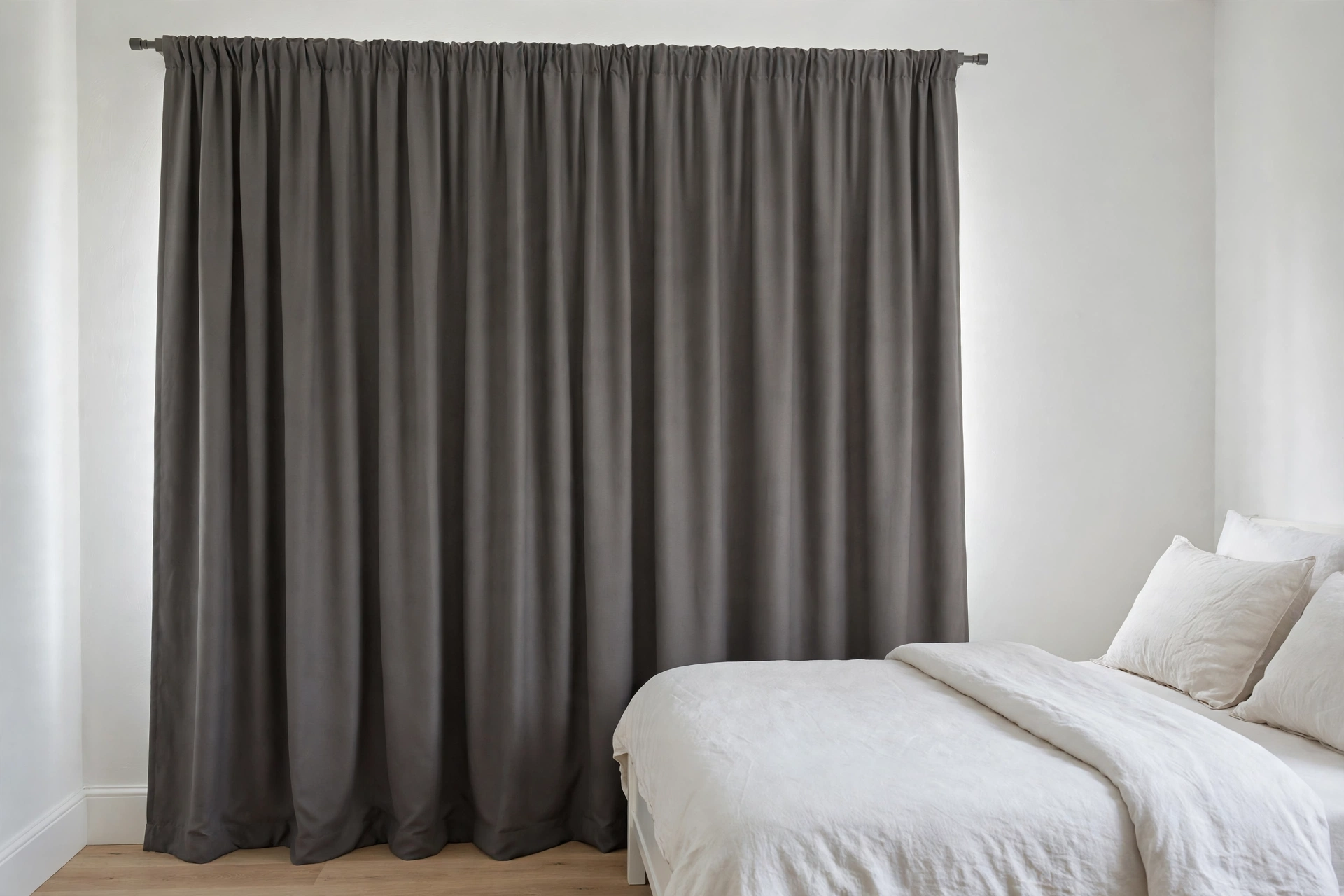
Privacy is the second test. A sheer alone can screen the view in daylight, but once bedroom lights are on at night, people outside can often see in, so many bedrooms need a solid closing layer for the evening. The third test is how the room feels by day: a lined panel in a soft color, paired with a sheer, can keep the room bright in daylight and dark at night.
Three sleep jobs that change the pick
The three jobs are a light sleeper, a shift worker, and a street-facing bedroom. The right bedroom curtain depends on who sleeps in the room and what disturbs that sleep. A light sleeper wakes at small changes in light.
For this job, darkness is the priority, and so are the edges. A blackout panel or liner helps only if the panels meet in the middle, reach the floor, and extend past the sides of the window. Check the listing for a blackout lining rather than trusting a dark color alone.
A shift worker sleeps while it is light outside. For this job, daytime darkness matters most, and the set-up must work without fuss. A simple grommet panel that slides shut in one motion suits tired hands better than a fussy heading. Pair it with a sheer for daytime hours between sleeps, when the room is used in daylight, so the room does not feel shut away all day. At night, close the blackout panel, because a sheer alone gives little privacy once bedroom lights are on.
A street-facing bedroom faces lamps, traffic and neighbors. For this job, privacy and light control matter together. A sheer layer gives daytime privacy, and a blackout front layer gives full privacy and darkness at night, on a double rod. Two more rooms use the same jobs. A guest room suits a soft neutral blackout panel, such as Pick 3, which feels relaxed without giving up darkness. A child's room often needs a light sleeper's darkness, plus washable fabric and no loose cords in reach: choose a cordless or wand-operated option, check the listing for cordless operation before ordering, and keep any cords out of reach. A street-facing bedroom needs the same layered set-up rather than a separate pick: use Pick 1 or Pick 2 as the front blackout panel on a double rod, with Pick 6 as the sheer at the glass, plus a wrap-around rod and a center overlap to seal the sides. The layered hang is covered in How to Hang Curtains.
The full bedroom set-up: panel, liner and rod
The best bedroom result comes from a panel, a liner and a rod chosen as one set-up, not as three separate buys.
The panel is the face you see, setting color, texture and style. A linen-look panel feels light and relaxed, velvet feels warm and cocooning, and polyester panels are often the easiest to care for. The liner does much of the sleep work: a blackout liner blocks light through the fabric, while a standard lining adds body and some privacy but not the same darkness. A separate liner can save a panel you already like. The rod decides how well the set-up closes: a short rod leaves side gaps, and a sagging rod will not close cleanly, so match the rod to the panel weight, use a center support on a wide window, and use a double rod for a layered window.
Buy in this order: decide the darkness level, pick the liner that gives it, choose a panel you like in a fabric that suits that liner, then choose a rod strong enough to carry both. Skip the separate liner step when the pick already has a blackout lining sewn in, as Picks 3 and 4 do. Use a separate liner only for unlined or standard-lined panels. No rod or liner is picked by brand in this guide: rods and liners are chosen by weight and window, so use the set-up above (a double rod for layering, a sturdy rod for heavy panels) and check the rod listing for its weight rating.
Blackout or room-darkening: which label fits your sleep
A blackout label fits sleepers who need the room as dark as possible. A room-darkening label fits sleepers who want softer light and privacy without full darkness.
Blackout means the fabric or lining is made to block light through the material itself. Room-darkening cuts down a lot of light but does not promise the same darkness, and a dark color alone does not turn a room-darkening panel into a blackout panel.
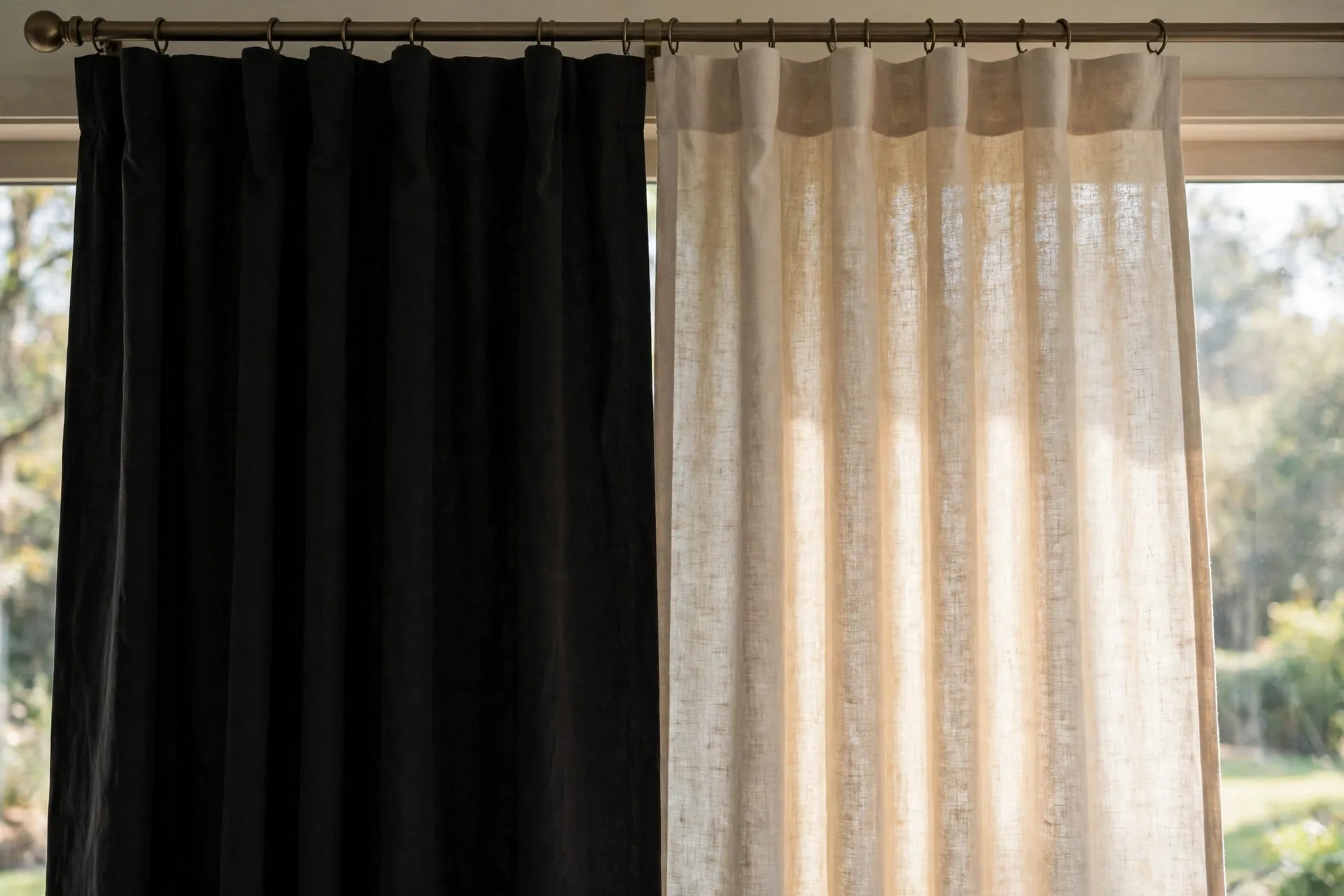
If you wake at dawn, sleep in daylight, or face a streetlight, choose blackout. If you like waking with some daylight, room-darkening may suit you better. If you are unsure, blackout with a sheer layer is the safer pair. The blackout guide linked in the introduction gives the full comparison.
Color and fabric choices that help a room feel restful
Soft, muted colors help a bedroom feel restful. Deep, calm colors can do the same job in a different way.
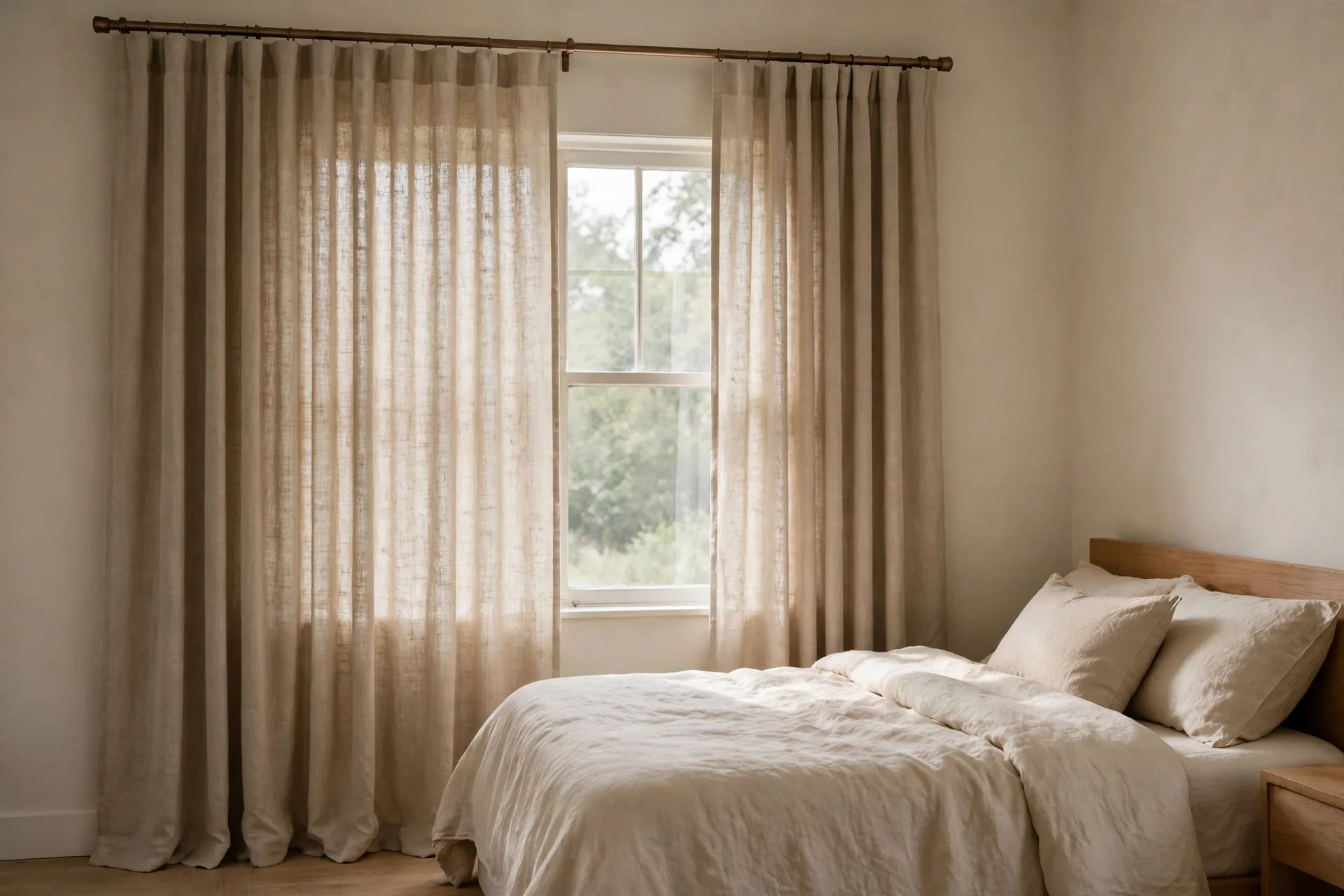
Soft neutrals such as ivory, oatmeal, beige, taupe, soft gray and warm white suit most bedrooms, keeping a small room feeling open and pairing with most bedding. Muted blue and sage green also read as calm without feeling cold.
Deep colors such as navy, charcoal, forest green and deep plum create a cocooning feel in larger rooms. Very bright colors, such as vivid red or bright yellow, tend to energize a room, so keep those for cushions or art rather than a full window of fabric.
Fabric shapes the feel as much as color. Cotton suits relaxed bedrooms, linen blends feel natural and airy but crease, velvet feels rich and warm, and polyester blends are practical and often easy to wash. Silk looks elegant but needs more care. Test color in your own light before you commit: a swatch viewed in morning light and evening lamplight tells you more than a screen photo.
Layering for day use without losing night darkness
Layering gives one window two moods: soft daylight and privacy by day, full darkness at night.
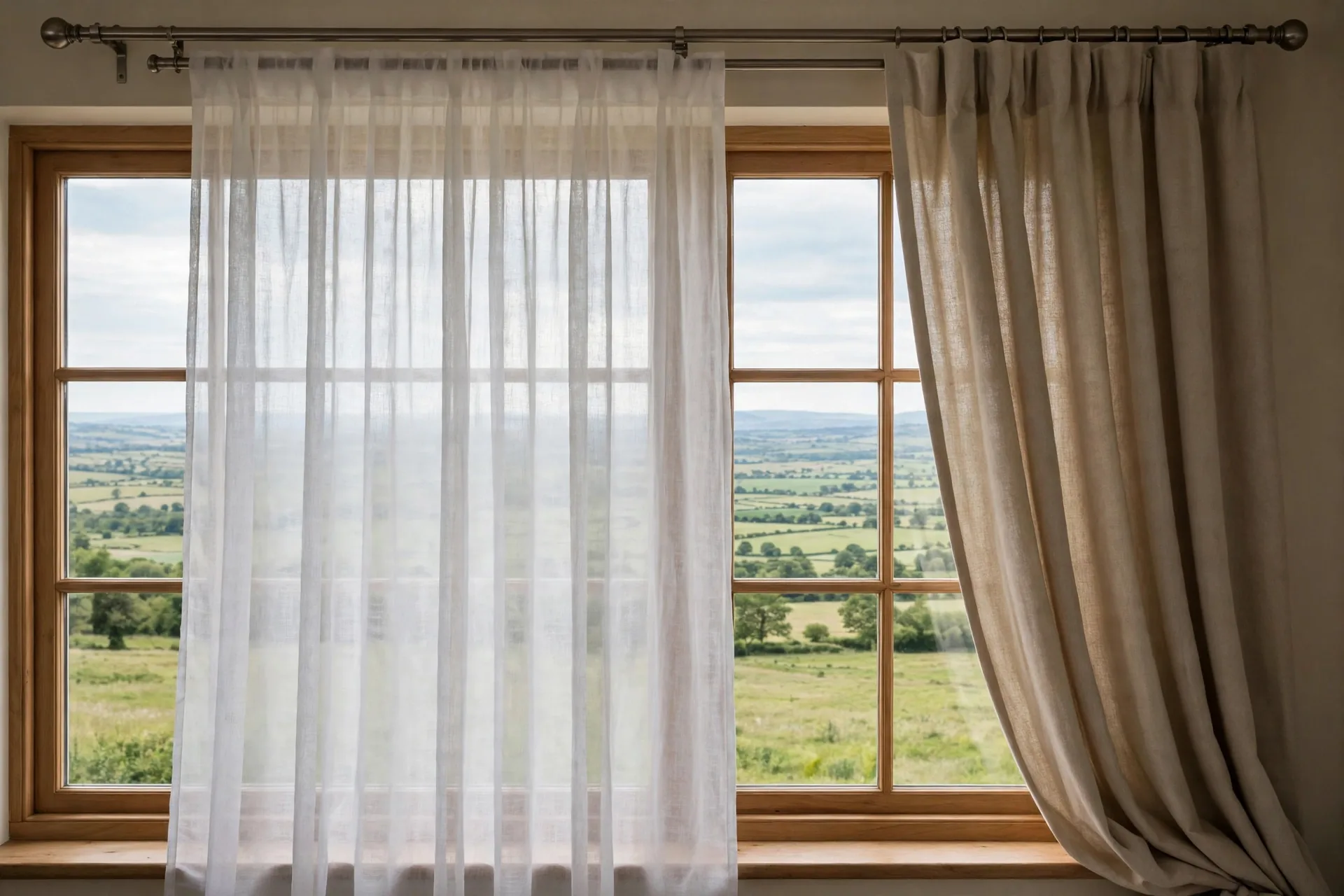
The usual order is a sheer closest to the glass and a heavier or blackout panel on the room side, on a double rod or double track. By day, close the sheer and open the front panel for filtered light and daytime privacy. At night, close the front panel for darkness and full privacy.
A white or ivory sheer softens harsh sun, screens the street view in daylight, and keeps the room feeling open. A sheer alone is not a sleep solution, since it lets in light and gives little privacy once bedroom lights are on, so treat it as the day layer. For more on sheer fabrics, see Best Sheer Curtains.
Keep colors close: a white or pale sheer with a soft or deep front panel usually looks calmer than two competing patterns. If you use a pattern, keep it to one layer and leave the other plain.
How to measure and hang for fewer light leaks
If a rod is already hung, measure it first. If no rod is hung yet, hang the rod higher and wider first, as the linked hang guide explains, then measure from the rod position, not just the window glass.
For width, order total panel width of about 2 times the rod width for standard fullness, so the closed panels meet and overlap slightly in the center, with fullness in the folds. When closed, curtains must cover the full rod span and overlap in the middle.
When open, they bunch at the sides and do not cover the full rod, so do not judge closed coverage by the open look. For length, floor length suits most bedrooms, while sill length suits a window above a bed, a desk or a radiator.
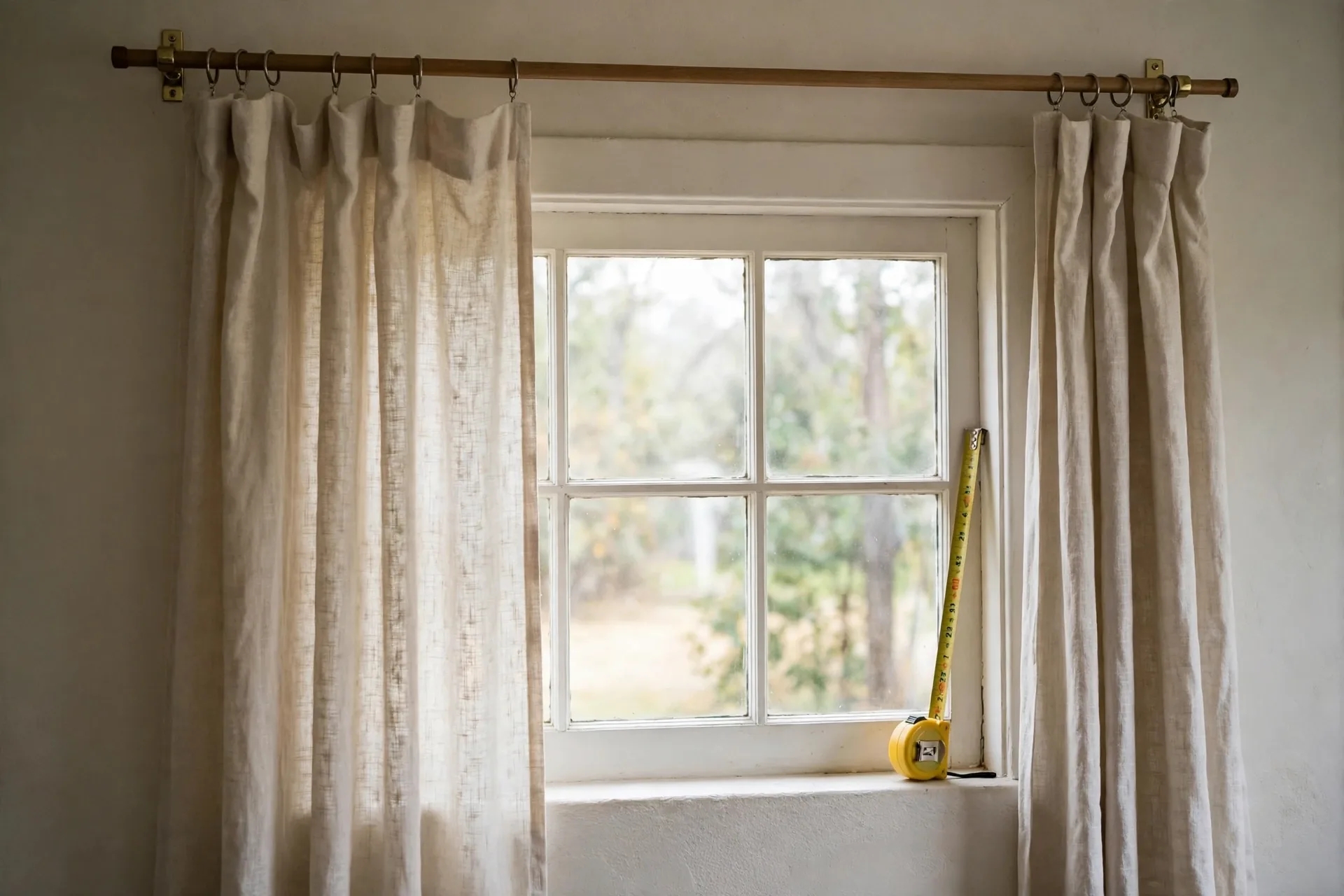
Hang the rod above the frame and wider than the frame, so the panels sit past the glass when closed and clear it fully when open. For measuring detail, see How to Measure for Curtains. For hanging detail, see How to Hang Curtains.
After hanging, check the closed curtains in the dark for leaks at the top, sides, center join and floor. A wider rod, a longer panel, a center overlap, or an added liner can each close a different leak.
Care that keeps bedroom curtains working well
Vacuum panels with a soft brush head every few weeks to keep dust out of the folds, and shake panels outside before washing. Bedroom curtains last longer and keep working better with simple, regular care.
Always follow the care label, since velvet, silk and lined panels often need different care from plain polyester or cotton. The care symbols explained by GINETEX under the international ISO 3758 care labeling standard show the wash, dry and iron limits at a glance.
Many polyester and cotton panels can be machine washed on a gentle cold cycle. Put grommet panels in a large mesh bag so the rings do not mark the drum, dry on low heat or hang to dry, and rehang while slightly damp so the folds fall back into shape. Steam a hanging panel to remove fold lines, and keep a hot iron away from plastic rings and coated linings.

If the liner is separate, wash it apart from the face panel if the label allows it, and check it after washing for stiffness or peeling, which can reopen light gaps. A sewn-in lining cannot be washed apart, so follow the panel's own label instead.
Mistakes that leave a bedroom bright at night
Buying by color alone is the first mistake: a dark panel without a blackout lining can still let light through, while a pale panel with a true blackout lining can keep a room dark. The wrong panel is rarely the only problem. Fit and habit cause most bright bedrooms.
Ordering too little width is the second mistake: panels that just meet in the middle leave a center gap. Order enough width for overlap and folds, and hang the rod wide enough for the panels to sit past the glass. Hanging too low and too narrow is the third mistake, leaving light at the top and sides, so hang higher and wider. Leaving the sheer as the only night layer is the fourth mistake: sheers are for day, so close the solid layer every night. Skipping the post-hang check is the last mistake: check after dark and fix each leak with width, length, overlap or a liner.
Bedroom curtains for allergies and dust mites
For an allergy-prone bedroom, the best curtain is one that can be washed often and dried fully, in a fabric that does not hold dust in deep pile or heavy folds. A washable cotton or polyester panel, taken down and washed on a gentle cold cycle when it looks dusty, will suit an allergy sufferer better than a heavy velvet or a panel that can only be dry cleaned, whatever its color or price.
Keep the room itself in the plan. Damp air lets dust mites thrive, so air the bedroom, keep bedding and curtains from staying damp, and wash panels before they smell stale rather than waiting for a set date. If washing the curtain is not enough, a roll-up shade that wipes clean can replace fabric at that window, with a washable panel kept for rooms where fabric matters more.
Read labels with care: the OEKO-TEX STANDARD 100 label for textiles tested for harmful substances shows a fabric has been tested for harmful substances, and curtains fall under its home-textile class, but that testing does not by itself mean a fabric is allergen-free. If allergy is the reason for the purchase, confirm washability and fabric on the listing first, and treat any label as one check among several, not as a promise.
Bedroom noise: softening sound, not blocking it
Bedroom curtains soften noise, but they do not block it, and the difference decides whether a buyer ends up satisfied. Heavy fabric and layers absorb sound energy, so a lined blackout panel over a sheer takes the edge off voices, echo inside the room, and sharp street sounds, and the room feels calmer at night even though the street is still audible.
Different noises respond differently.
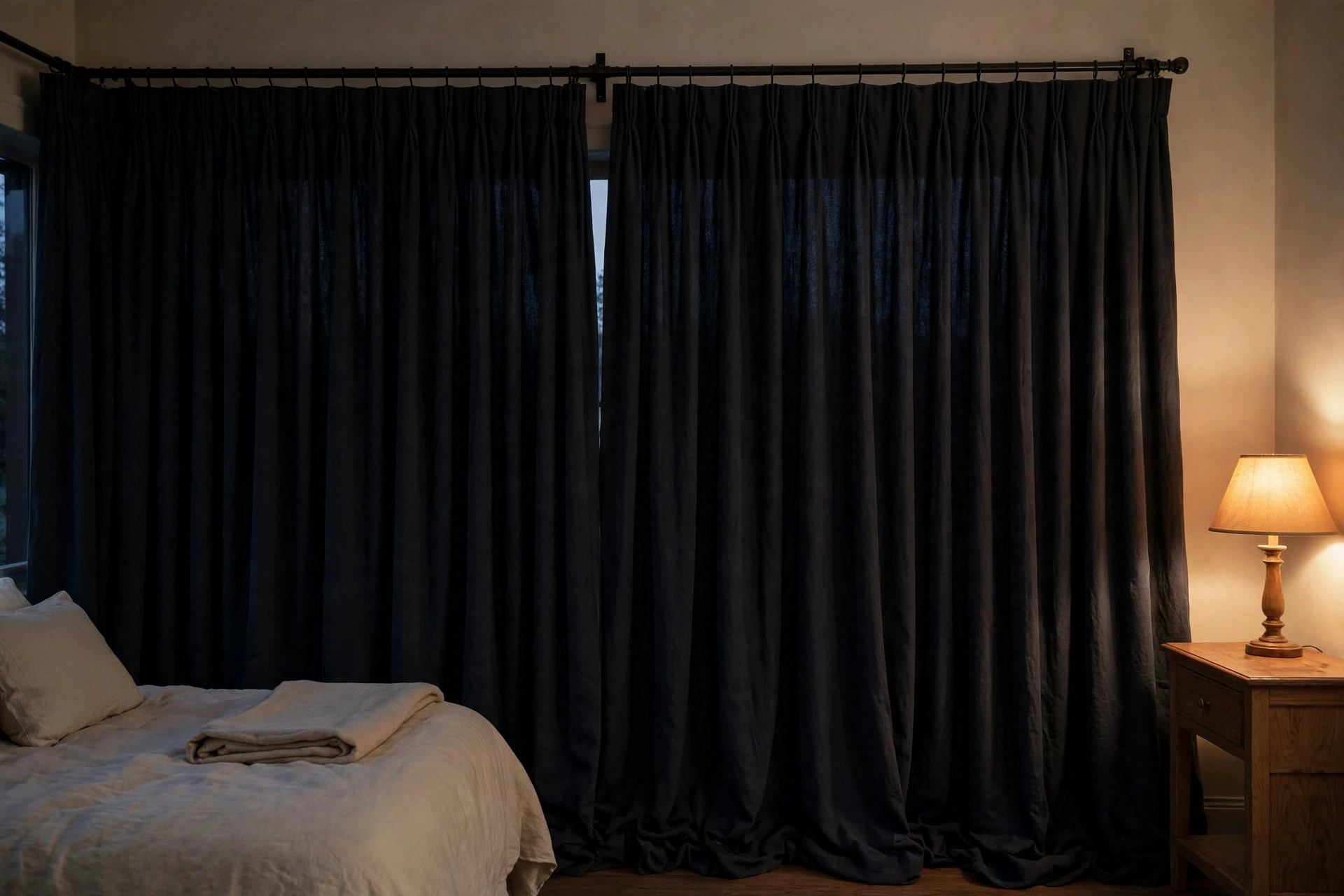
Voices and echo soften most, because they are higher sounds that fabric absorbs well, while low traffic rumble softens least, because it travels through the frame and the wall as much as through the air. More mass and more layers help across the board: a dense lined panel beats a thin unlined one, and a panel plus a liner beats either layer alone.
When noise is the main complaint, check the window and the wall before buying heavier curtains. A worn seal, a loose sash, or thin single glazing lets in more sound than any curtain can absorb, and sealing or reglazing that window will do more for sleep than a second heavy panel on a leaking frame.
Bedroom heat and cold: getting sleep temperature right
A bedroom sleeps best cool at night and warm enough in winter that cold air does not wake you, and curtains help on both sides of that balance. A cool room suits sleep, so a bedroom that overheats needs shade by day and air at night, while a cold bedroom needs a lined, floor-length panel hung close to the wall to hold warmth in.
Use the open-and-close rhythm for temperature as well as light: open curtains on sunny winter mornings to let sun heat in and close them at dusk to trap it, and in summer keep sun-facing curtains closed through the heat of the day and open the window at night when the air cools, as described in the energy guidance on window coverings from the U.S. Department of Energy. A lined panel close to the glass helps most in winter, while a light backing helps most in summer, so a room that suffers both ways may need a mid-weight lined panel rather than the heaviest winter set.
Watch the radiator rule in a cold bedroom too: a floor-length panel that blocks a radiator warms the curtain instead of the room, so use a sill length that clears the vent there and keep the thermal panel for windows with clear wall below them.
Waking with daylight: the light-filtering bedroom
Not every sleeper wants full darkness, and a bedroom for someone who likes waking with daylight needs a different set-up from a blackout room. A light-filtering panel or a sheer-only window lets morning light build gently, keeps the room bright through the day, and still gives daytime privacy, which suits a room that faces a garden or a quiet street rather than a lamp.
Choose the fabric by how much morning light the room actually gets.
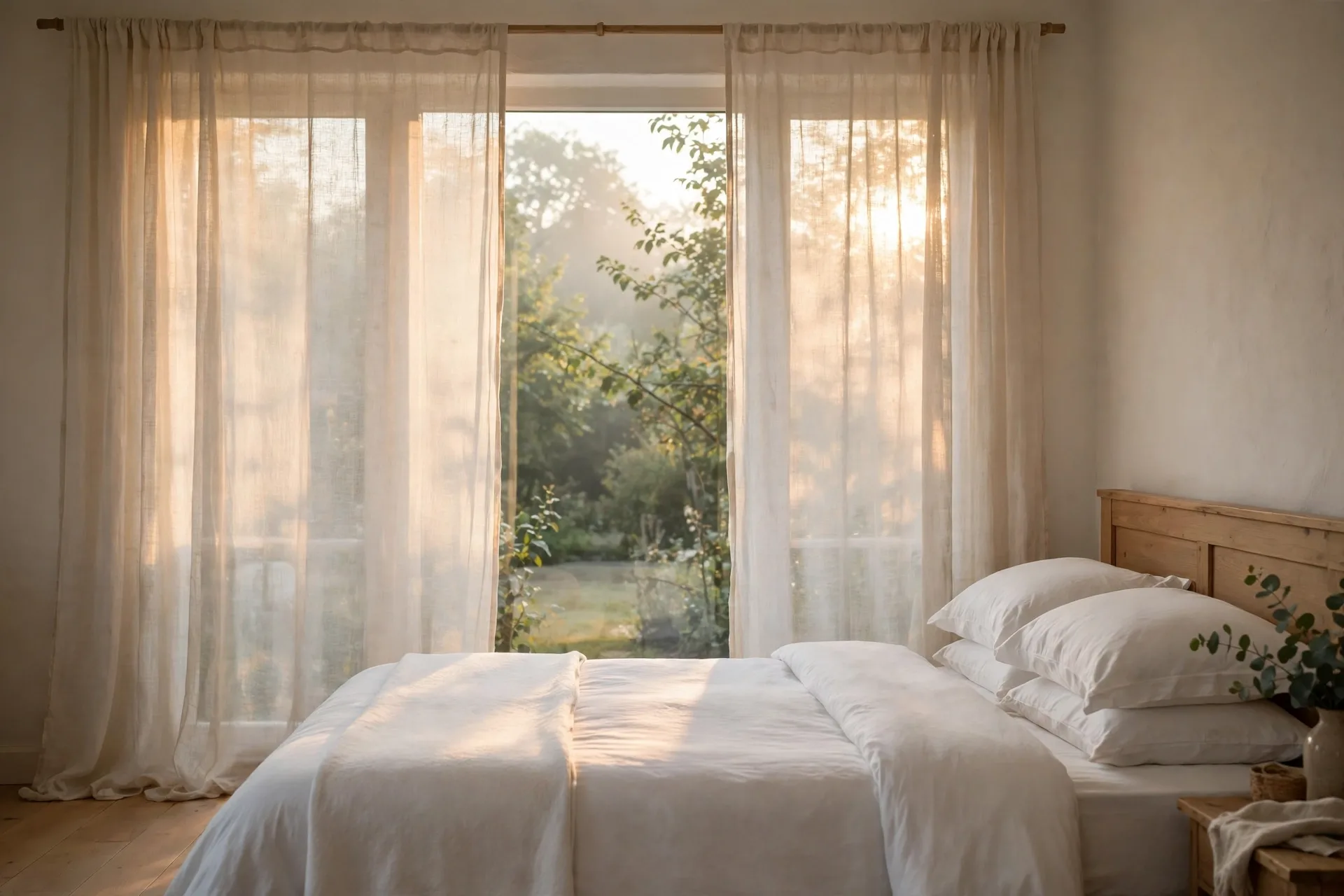
A light-filtering linen blend softens a bright east window without shutting it out, while a plain sheer suits a dimmer room that needs every bit of daylight it can get, and both pair with a room-darkening layer for nights when a streetlight or a neighbor's light makes sleep harder. Test the fabric in your own morning light before committing, since a screen photo hides how much glow a weave lets through.
Keep the blackout option in reserve rather than ruling it out. A light-filtering day layer on a double rod with a blackout front panel gives both mornings: light filtering when you want to wake with the sun, and full darkness on nights when you need it, without buying two separate windows.
Which way your bedroom window faces
The direction a bedroom window faces changes which curtain it needs, because it decides when light arrives and how strong it is. An east-facing window catches sunrise head-on, so early light is the problem there even in a room that feels dim by afternoon, while a window on the streetlight side stays lit all night and needs its darkness plan built around lamps rather than sun.
Season changes the picture too. Sunrise arrives earlier and stronger in summer on an east window, and later and lower in winter, so a set-up that copes in January may leak badly in June, and a streetlight that matters little in bright summer evenings dominates a dark winter night. Check the room at the time you actually sleep, not at midday, and check it again in a different season if the room is new to you.
Match the fix to the direction: an east room wants a blackout layer that closes fully before dawn, a streetlight-side room wants side and top gaps closed as well as the fabric itself, since lamp light slips around edges, and a north-facing room that gets little direct sun can often manage with room-darkening and a lighter fabric that keeps the room from feeling shut away.
A blackout roller or blind under the curtain
For the darkest possible bedroom, a blackout roller or blind fitted inside the frame under the curtain beats a liner alone, because it closes the glass itself while the curtain dresses the room. The blind handles darkness, the curtain handles softness and side coverage, and together they leave far fewer gaps than either layer manages on its own.
Fit the blind first and the curtain around it.
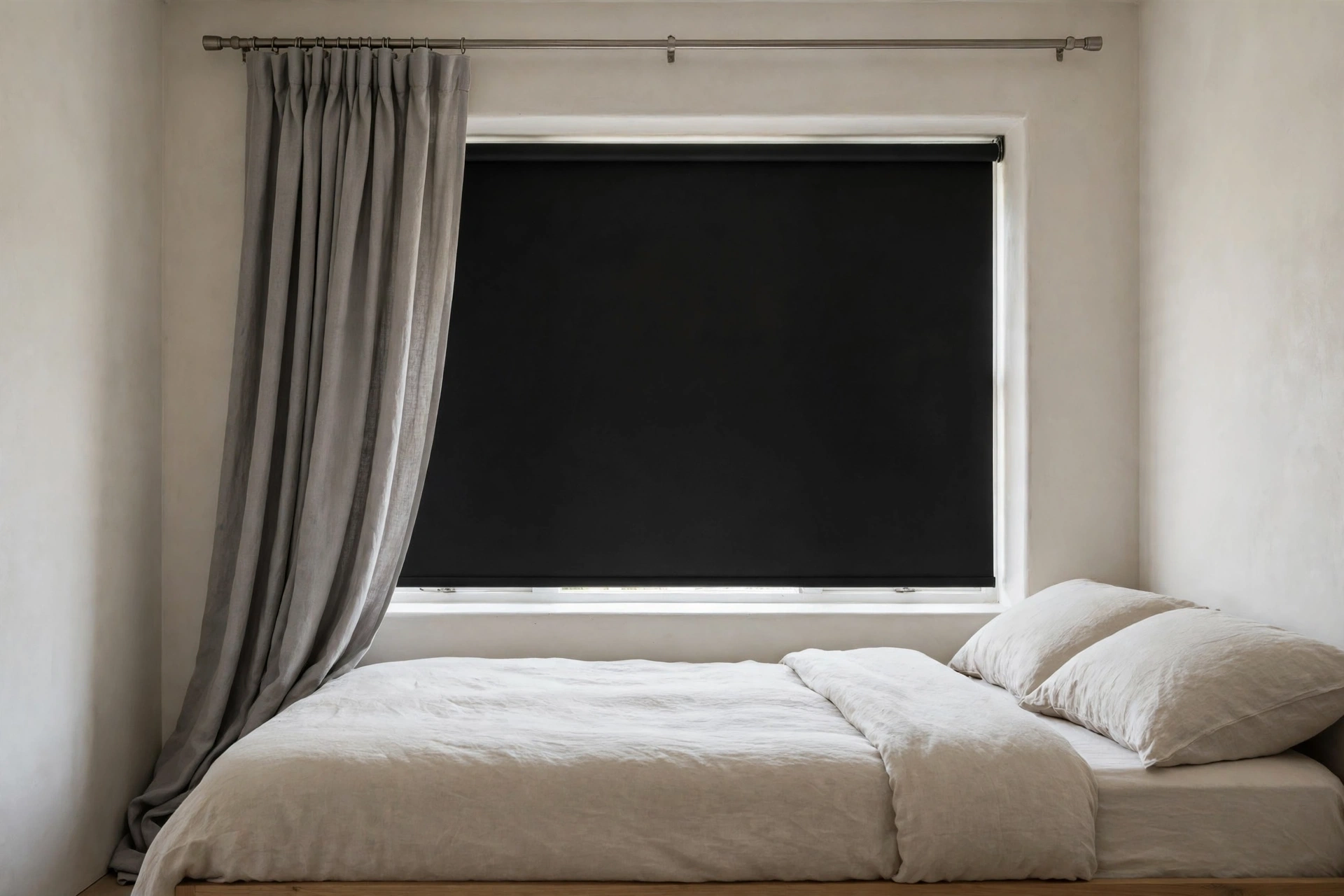
Measure the recess for the blind, choose a blackout roller for a plain dark drop or a blackout blind for a softer pleated look, and hang the curtain rod high and wide over both, so the curtain covers the blind's edges and the wall around the frame. A blind that is too narrow for its recess, or a curtain rod too short to cover it, leaves the very light strips the combination was meant to close.
Use this layer where darkness matters most: a shift worker's room, a streetlight-side room, or a room with an awkward window where a curtain alone cannot seal the edges. In a room that only needs softer light, a liner or a room-darkening panel is enough, and the extra layer is money and hardware spent for darkness the sleeper does not need.
Ceiling mounts and top-gap hardware for bedrooms
A ceiling track or a ceiling-mounted rod closes the top gap that a wall rod often leaves, and that top gap is one of the main light leaks in a bedroom. Hanging the curtain from the ceiling itself means there is no space above the rod for dawn light or lamp light to spill over, and the panel can run floor to ceiling for a clean, tall look.
Ceiling tracks suit wide windows and rooms where a wall rod cannot sit high enough, since the track follows the ceiling line and the panels slide past each other without a center bracket blocking them. Return rods, which bend back to the wall at each end, do a similar job on a wall rod by closing the side gaps, and a cornice or valance board fixed above a wall rod closes the top gap in rooms where a ceiling mount is not practical.
Check the ceiling and the weight before choosing. A ceiling track needs solid mounting into the ceiling structure, not just plaster, and a heavy lined panel needs a track and anchors rated for its weight, so confirm both on the hardware listing and hang a single panel to test the slide before committing the whole window.
A child's room in depth: cribs, naps and day sleep
A child's room needs darkness for naps and day sleep as well as night sleep, which makes its curtain plan stricter than a guest room's. A blackout panel that closes fully, with side and center gaps sealed, helps a child settle for a daytime nap when the house is bright, and the same darkness that helps at night helps again at midday.
Safety comes before darkness in the order of decisions.
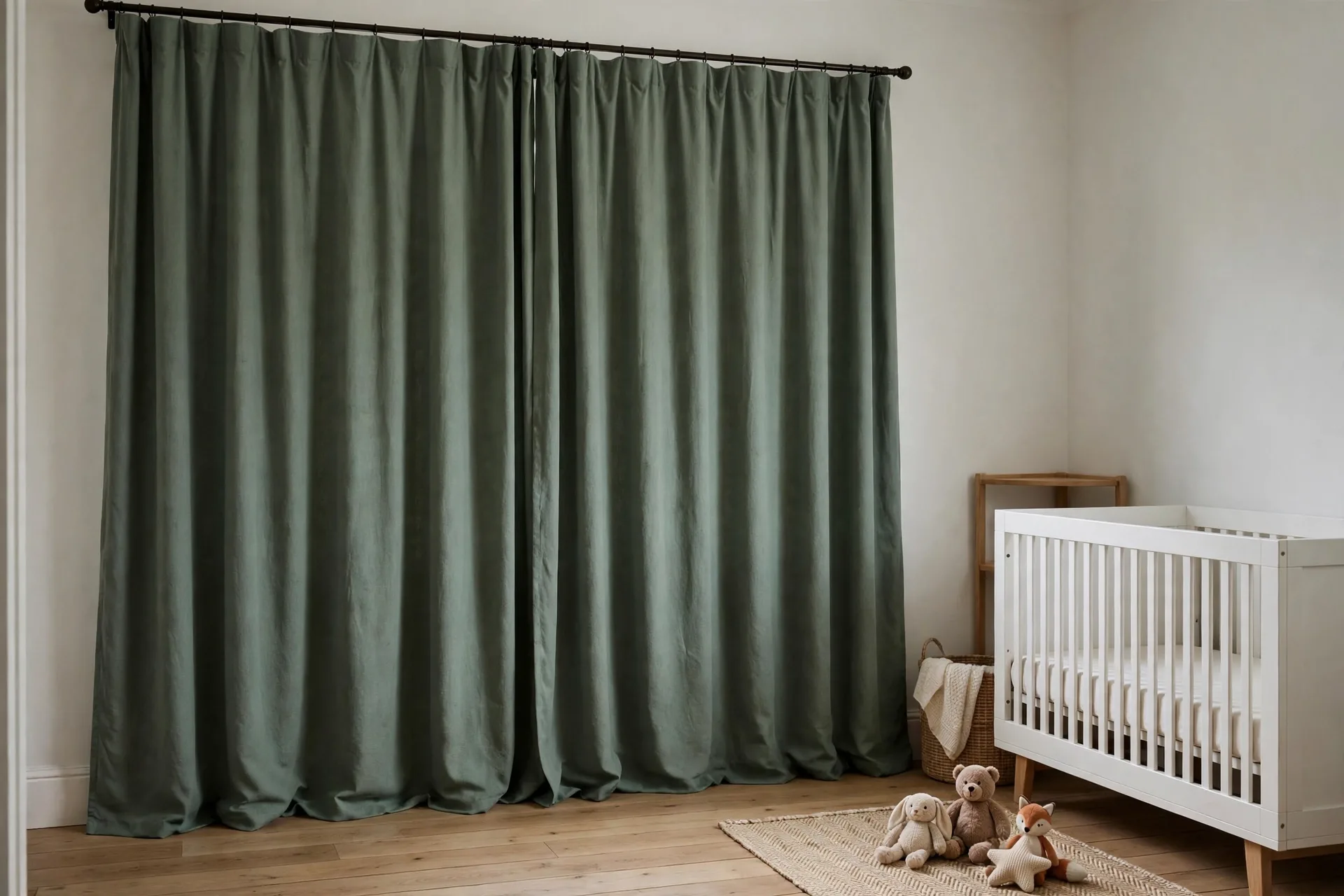
The safety guidance on window covering cords from the U.S. Consumer Product Safety Commission calls cordless the safest option when young children are present, and advises moving cribs, beds and furniture away from windows and window covering cords. Place the crib on another wall wherever the room allows, choose a cordless or wand-operated panel, and keep any remaining cords short, anchored and out of reach.
Keep the fabric practical and the look welcoming. A washable panel survives spills and sticky hands better than a dry-clean-only fabric, and a soft color or a gentle pattern keeps the room feeling like a child's room rather than a dark box, while the blackout lining underneath does the sleep work unseen.
A guest room needs less: it is used a few nights at a time, often with the curtains open during the day, so a soft neutral blackout panel that feels welcoming and gives a dark night without a complicated set-up is enough. Spend accordingly: the main bedroom and the child's room deserve the best darkness and the sturdiest hang in the house, while a spare room can take a simpler panel. For the blackout side of a child's room, see Best Blackout Curtains.
Condensation behind closed bedroom curtains
Closed bedroom curtains can trap moisture against cold glass overnight, because the room stays warm and damp from breathing and bathing while the glass behind the fabric stays cold. Morning mist on the glass is common, but water pooling on the sill or dark marks on the frame mean the routine needs changing.
Air the room and open the curtains during the day so the glass warms and dries, and wipe the sill and frame when you find water sitting there.
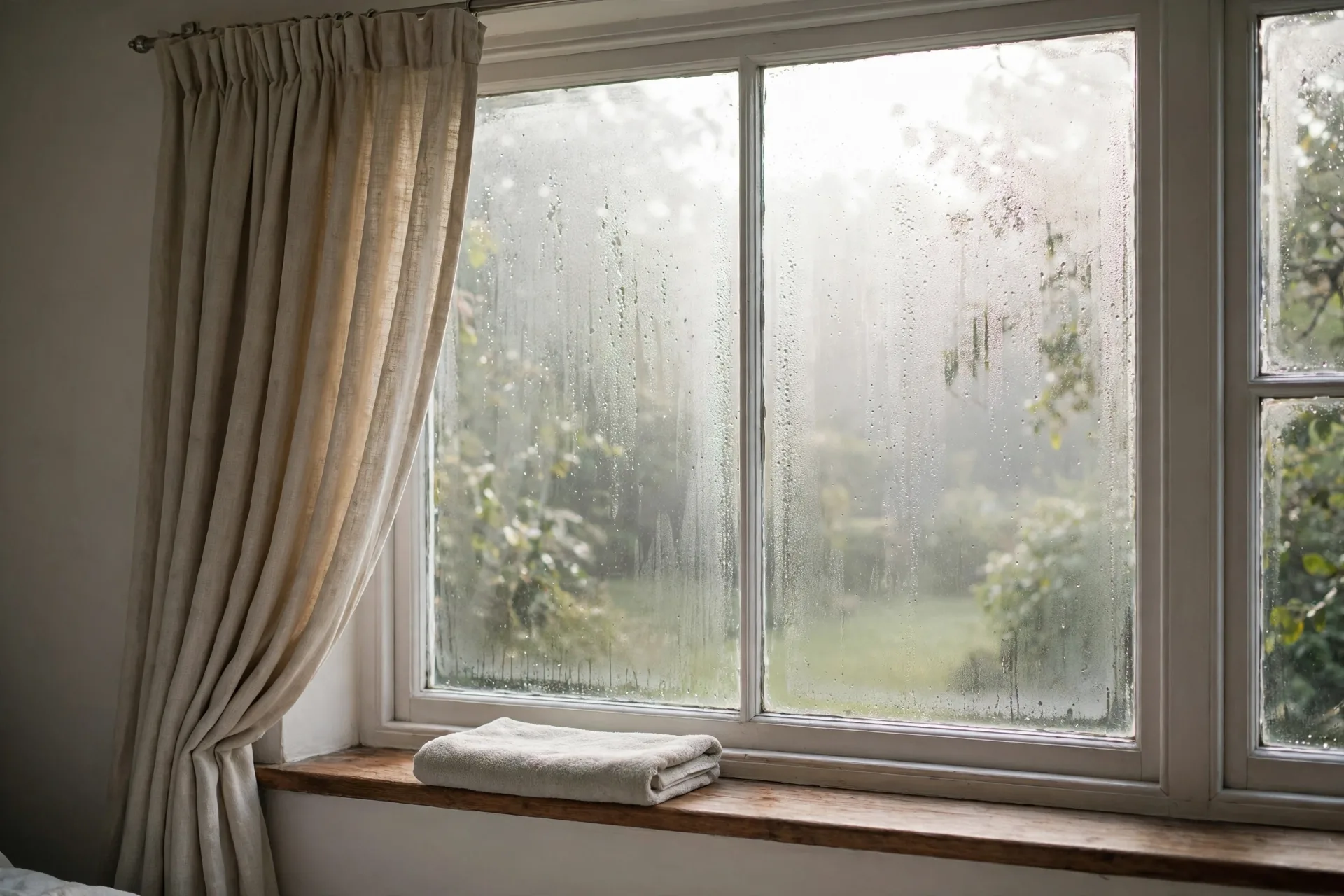
Bedrooms are damp rooms by nature, so a panel that stays shut for days in a room that is never aired will grow mold behind it whatever fabric it is made from.
If one window keeps condensing while others stay dry, look beyond the curtain: a failed window seal, a room with no ventilation, or a radiator blocked by a long panel can each keep that glass cold and wet, and fixing the cause will do more than swapping the fabric.
Patterns, prints and bedroom style
Color sets the mood of a bedroom, but pattern and styling decide whether the window looks finished, and a plain panel is not the only restful choice. Small, quiet patterns such as a subtle stripe, a small floral, or a tone-on-tone texture add interest without waking the eye, while large, high-contrast prints suit a bigger room better, where the pattern has space to breathe and does not crowd the bed.
Keep pattern to one layer when layering: a patterned front panel pairs with a plain sheer, and a patterned sheer pairs with a plain front panel, so the two layers do not compete. A valance across the top softens a tall window and hides the rod, and tiebacks give a daytime look by holding panels to the sides, but both should leave the night close untouched, since a tieback left in place or a valance that blocks the top edge will reopen the very gaps a blackout set-up works to close.
For a minimal bedroom, a panel track is the quietest option: flat panels that slide on a track, with no folds or pleats to fuss over, suit a modern room and a wide window alike. Choose the styling that matches how the room is used, not just how it photographs, and test a patterned swatch in morning and lamplight before ordering a full window of it.
Motorized, smart and wand operation for bedrooms
Motorized, smart and wand operation earns its place on wide bedroom windows and windows that are hard to reach, where pulling a heavy panel by hand every night is a chore that gets skipped. A motorized track or rod closes a wide set of panels evenly with one control, a wand lets a child-safe panel slide without cords, and a smart control lets the panels close on a schedule, so the room is dark before bedtime without anyone remembering to draw them.
Choose the control by the window, not by novelty.
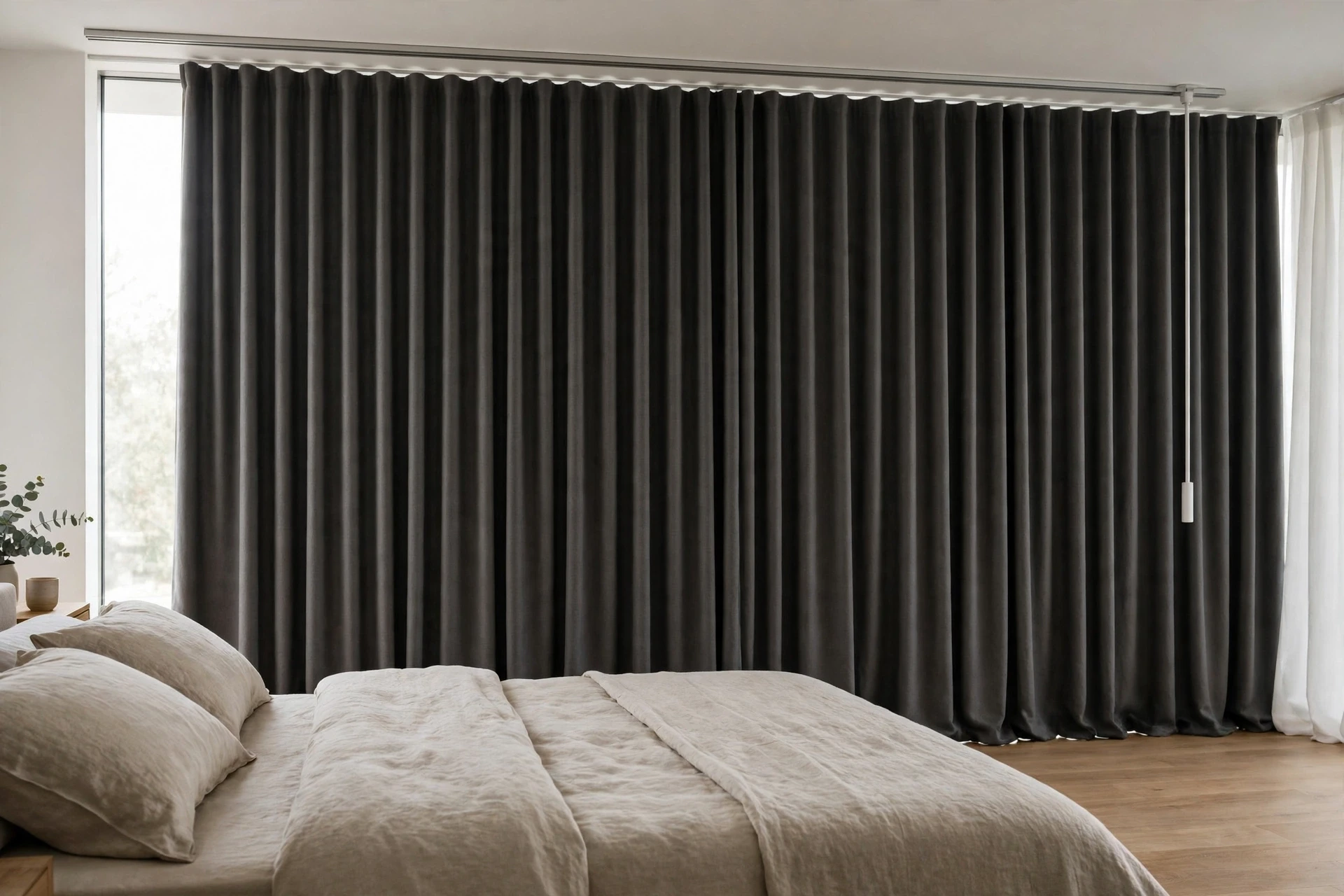
A wand suits a single window a child uses, a motor suits a wide or high window where the panel is heavy, and a scheduled control suits a shift worker whose sleep hours change with a schedule. Check power, weight rating and what happens if the power fails before ordering, since a motor that cannot be moved by hand leaves the window stuck when it matters.
Keep a manual habit as backup. Even a motorized set-up should close fully, overlap in the middle, and seal at the sides, and a quick check after dark will catch a panel that stops short, a track that sticks, or a schedule that closed the panels before the sun left the room.
Why darkness helps sleep
Darkness helps sleep because light is the signal the body uses to tell day from night. When evening light fades and the bedroom goes dark, the body takes that as the cue to wind down, and when light leaks in through a gap, that cue weakens, so sleep comes later and feels lighter.
The mechanism behind that cue is the body clock, the daily rhythm that light exposure sets. Light reaching the eyes influences circadian rhythms and sleep, and evening light can hold back melatonin, the night-time sleep signal, and shift the clock later, as described in the expert consensus recommendations on light exposure, circadian rhythms and sleep. A dark bedroom removes that evening light signal, which is why a blackout panel helps even a sleeper who does not wake at every flash of light.
Use that knowledge when choosing, not as a medical promise. Curtains cannot fix a sleep problem on their own, and anyone with ongoing sleep trouble should talk to a clinician, but for a healthy sleeper, a room that goes properly dark at bedtime gives the body clock the clearest night signal the window can offer.
Bedroom budget tiers: spare room or main bedroom
Bedroom curtains are best budgeted by how much the room is slept in, not by buying the same panel for every window in the house. The main bedroom, where sleep happens every night, deserves the strongest darkness, the best hang and the most durable fabric, while a spare room that hosts guests a few nights a year can take a simpler panel without harming anyone's sleep.
Work through the house in sleep order.
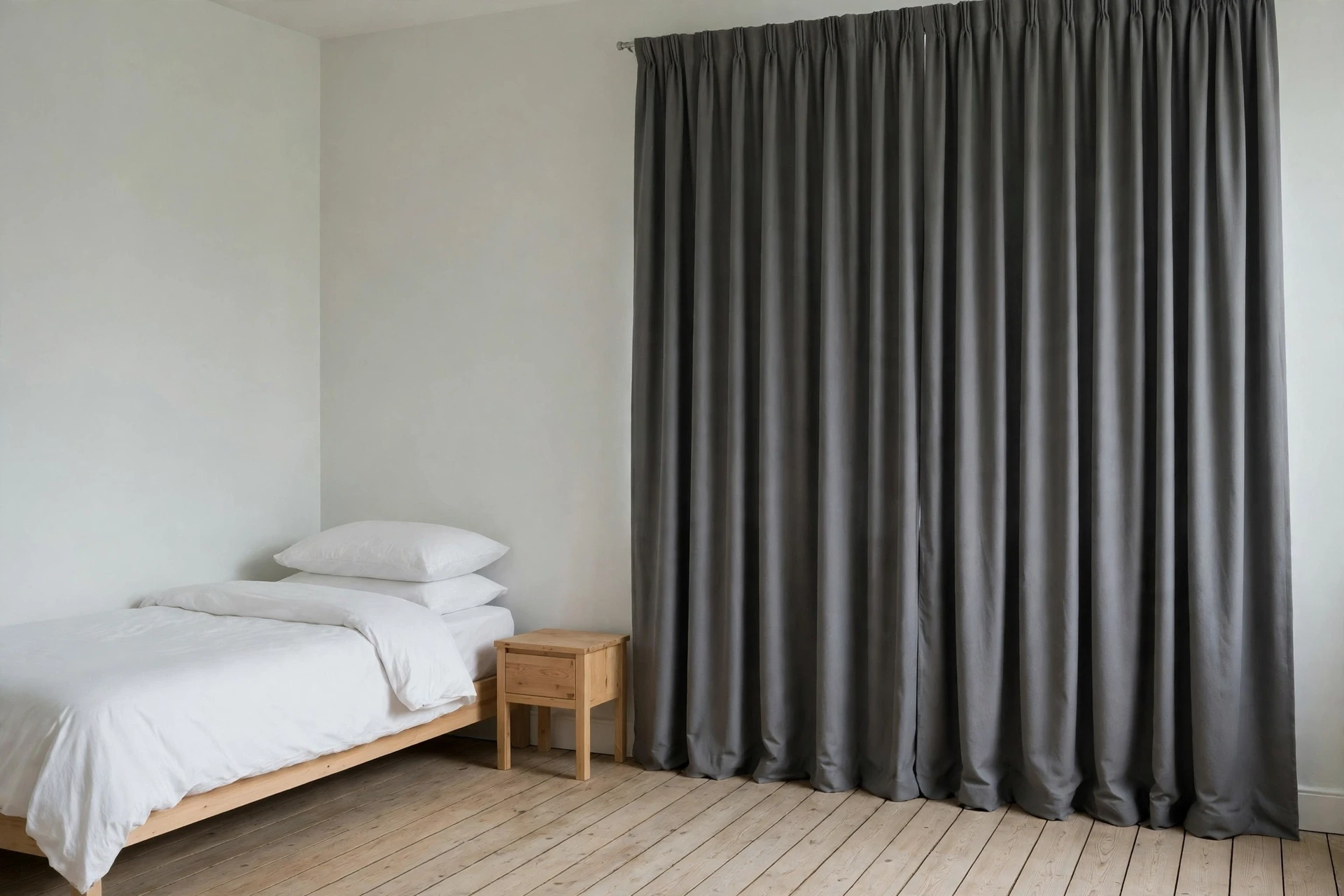
Dress the main bedroom and any child's room first, with lined blackout panels and sturdy rods, then the rooms used often, and finally the spare rooms, using simpler panels there. That order puts the money where broken sleep costs most, and it keeps a whole-house project affordable without leaving the most important window until last.
Count the whole set-up, not just the panel, when comparing rooms. A lined panel, a liner where needed, a double rod for layering, and a ceiling track or return rod for sealing gaps all add to the cost of one window, so a room that needs layering and sealing will cost more than a room that needs a single panel, even before fabric is chosen.
Frequently asked questions about bedroom curtains
Most bedroom questions come down to darkness, sleep, and keeping light out at the edges.
Should bedroom curtains be blackout?
Blackout suits most bedrooms where sleep matters. Room-darkening suits a room with soft light where you like waking with some daylight. If you sleep in daylight, face a streetlight, or wake easily, choose blackout and pair it with a sheer for day use.
What color curtains are best for a bedroom?
Soft neutrals, muted blue and sage green suit most bedrooms. Deep navy, charcoal and forest green suit a larger room or a cocooning mood. Very bright colors tend to energize a room, so save them for accents, and test a swatch in your own light.
Should bedroom curtains touch the floor?
Floor length suits most bedrooms: panels that end at the floor look finished and leave no light strip at the bottom. Puddled panels, with fabric pooling on the floor, collect dust and can trip, while sill length suits a window above a bed, a desk or a radiator.
Do bedroom curtains help with street noise?
Heavier fabric and layers can soften sound, since mass absorbs some sound, but curtains do not block noise fully. If noise is your main problem, treat curtains as one softening layer, and look at the window seal and glazing as well.
Can I add a blackout liner to curtains I already own?
Yes, in many cases. A separate blackout liner hung behind a panel you like can add darkness without replacing the whole window. Check how it attaches, whether it fits your rod or track, and whether it can be removed for washing.
Are sheer curtains enough for a bedroom?
Sheers alone are not enough for sleep: they filter daylight and give daytime privacy, but they let in light and give little privacy at night once bedroom lights are on. Use a sheer as the day layer, with a blackout panel in front for night.
How do I stop light leaking around blackout curtains?
Start with fit: hang the rod higher and wider than the frame, use floor-length panels, and overlap the panels in the center. Then check after dark at the top, sides, center and floor, and add a liner, widen the rod, or lengthen the panel to close the leak you find.
How often should I wash bedroom curtains?
Vacuum with a soft brush every few weeks, and wash when they look dusty or smell stale. Many polyester and cotton panels wash on a gentle cold cycle, but always follow the care label: velvet, silk and lined panels often need gentler care or dry cleaning.
This guide is research-based curation: we compared maker specifications, published reviews, and current prices. Read how we choose.