 Best
Best Green Curtains
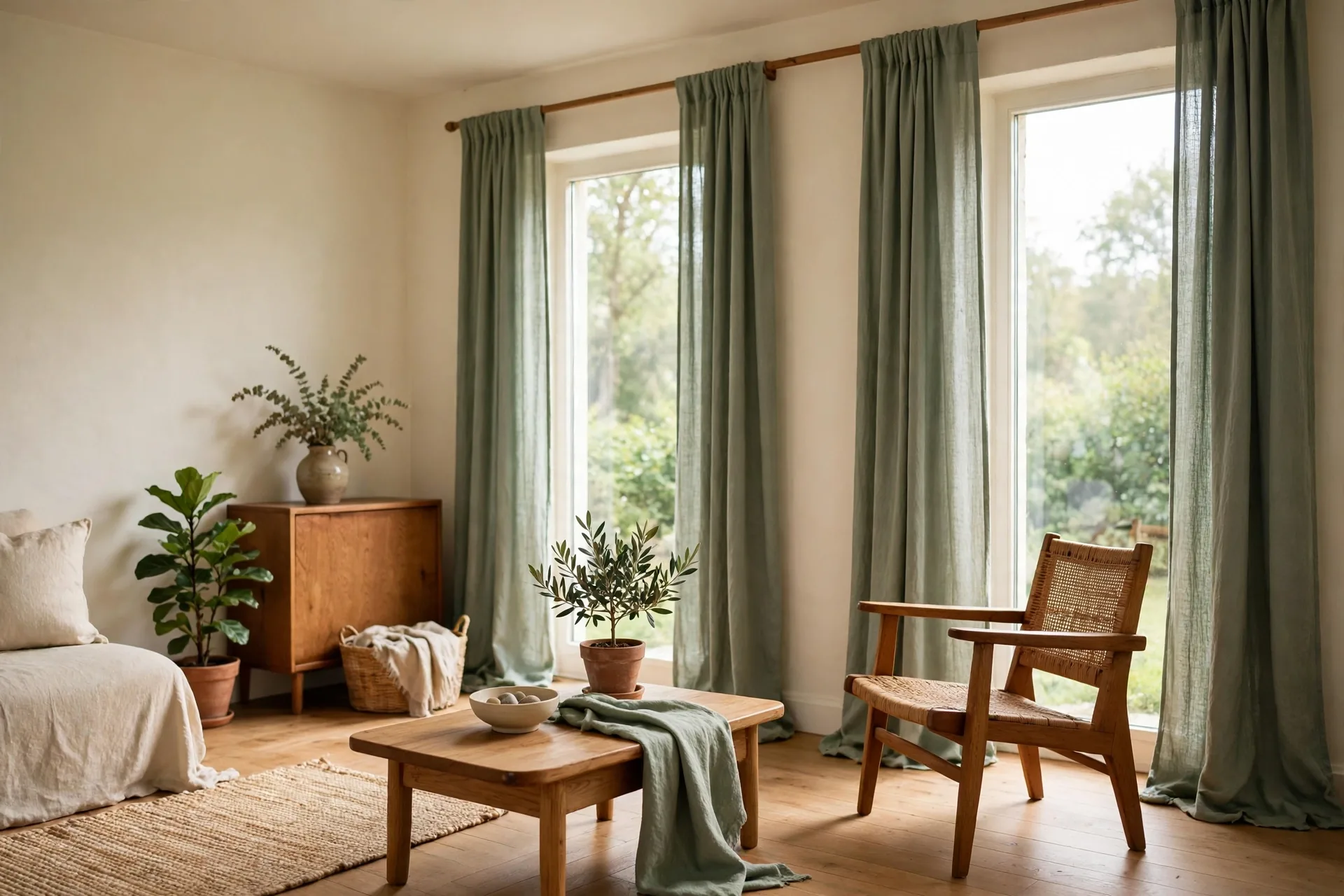
Green curtains range from soft sage to deep emerald, and the shade changes the room more than the fabric does. This guide tells the four greens apart, then pairs each with walls, wood, and light levels.
Green curtains cover more ground than any other color family except blue. Sage is soft and restful, olive is earthy and grounded, forest is deep and traditional, and emerald is rich and dramatic, and each one changes a room in a different direction. This guide tells the four greens apart first, then pairs each shade with cream walls, wood, and gray stone, and finishes with the rule that matters most for the deep greens: when forest green needs a lighter wall or a sheer layer, and when it can stand on its own.
Green curtains by job: the shortlist
The six picks below cover the jobs green does most often: restful sleep in sage, grounded living in olive, formal drama in forest, rich darkness in emerald, soft daylight in sage sheer, and glare control in olive. Each pick names its shade, its lining, and the job it suits, because with green, the shade and the lining together decide the result.
As an Amazon Associate, we earn from qualifying purchases.
| Pick | Type | Lining | Best for |
|---|---|---|---|
| 1 | Sage green blackout panels | Blackout lining | A bedroom that needs darkness with a calm color |
| 2 | Olive green linen-look panels | Unlined | A living room that wants an earthy, grounded color |
| 3 | Forest green velvet panels | Lined | A formal dining room that can carry drama |
| 4 | Emerald green blackout panels | Blackout lining | A media room or bedroom that wants rich color and darkness |
| 5 | Sage green sheer panels | Unlined | A bright room that wants a soft green glow by day |
| 6 | Olive green blackout linen panels | Blackout lining | A home office that needs full glare control and privacy |
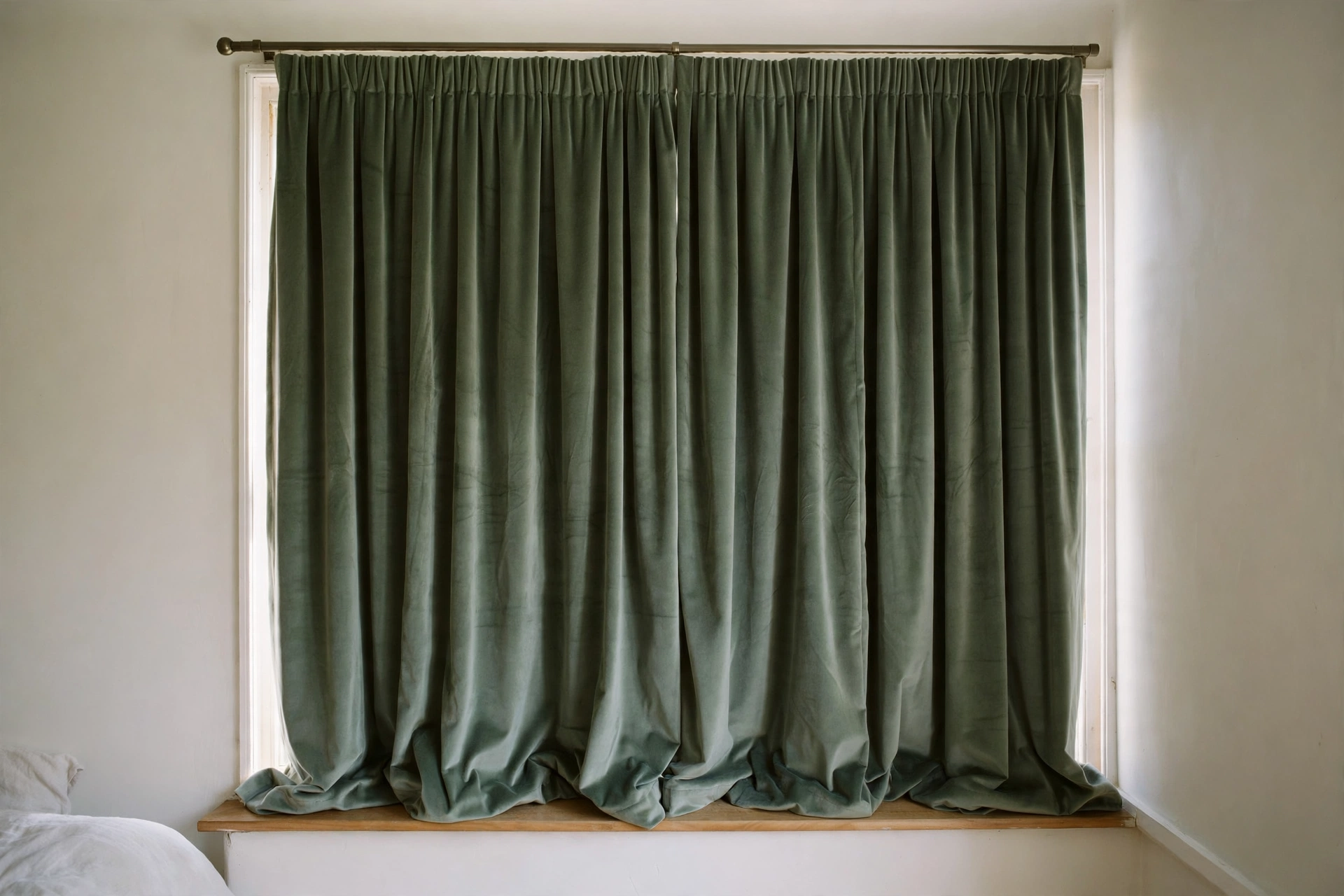
1. Sage green blackout panels: best for a bedroom that needs darkness with a calm color
- Best for: A bedroom with white or cream walls, where the panels must stay calm by day and fully dark at night.
- Key features: Sage green face, blackout lining, calm color with a dark result, sold as a pair.
- Pros: Calm color keeps the bedroom restful by day, blackout lining gives darkness for sleep, sage suits white and cream walls.
- Cons: Light face shows marks sooner than olive or forest, sage can look gray in dim light, check the listing for the exact light-blocking claim before ordering.
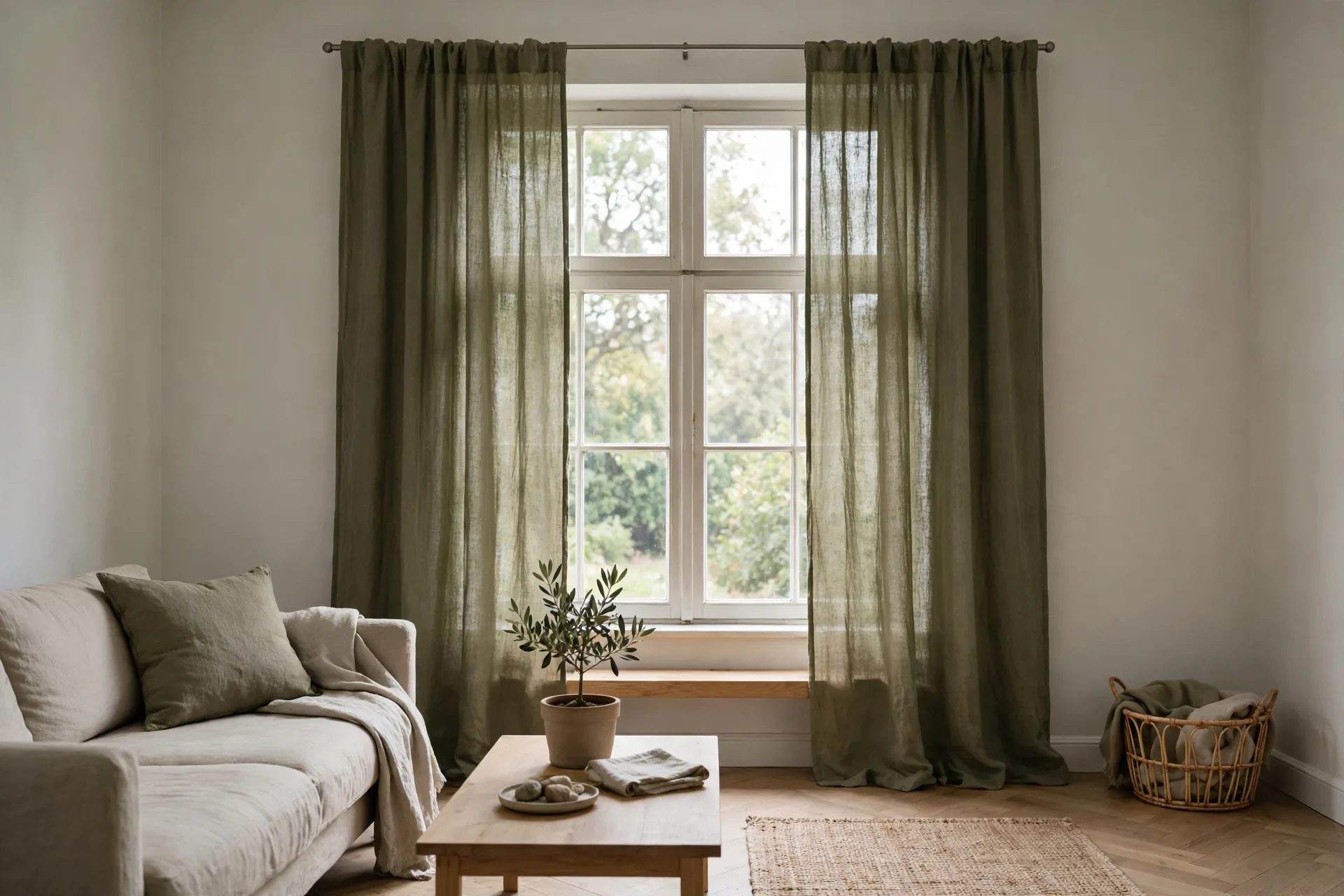
2. Olive green linen-look panels: best for a living room that wants an earthy, grounded color
- Best for: A living room with leather or dark wood and warm walls, where daytime privacy is enough.
- Key features: Olive green linen-look fabric, unlined, visible slub texture, earthy tone.
- Pros: Earthy tone grounds a room with leather or dark wood, texture adds interest without a print, olive suits cream and warm wood.
- Cons: Unlined panels give daytime privacy only, olive can look muddy against a cool gray wall, linen-look fabric wrinkles after washing.
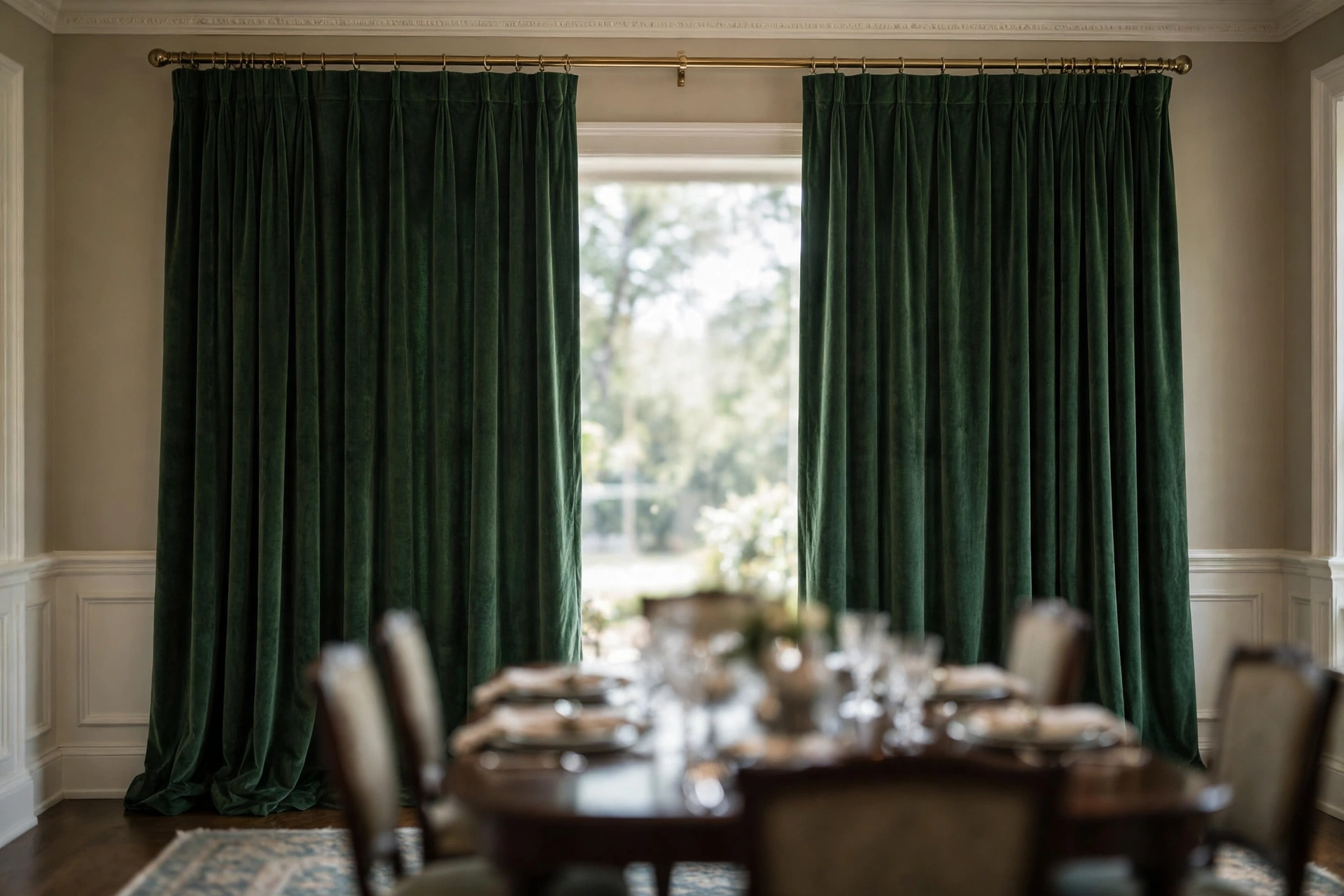
3. Forest green velvet panels: best for a formal dining room that can carry drama
- Best for: A formal dining room with brass and dark wood, large enough to carry a heavy lined velvet.
- Key features: Forest green velvet, lined, heavy drape, soft pile.
- Pros: Depth and formality no flat fabric can match, pile suits a formal dining room, forest green pairs with brass and dark wood.
- Cons: Heavy fabric needs a strong rod, forest velvet shows lint and pet hair, not a good choice for a small or dim room.
4. Emerald green blackout panels: best for a media room or bedroom that wants rich color and darkness
- Best for: A media room or bedroom with brass or marble accents, where rich color and darkness belong together.
- Key features: Emerald green face, blackout lining, rich saturated color with a dark result, sold as a pair.
- Pros: Rich color gives drama and darkness together, blackout lining blocks street light, emerald suits brass and marble accents.
- Cons: Saturated color dominates a small room, emerald can look dated with the wrong metals, check the listing for the exact light-blocking claim before ordering.
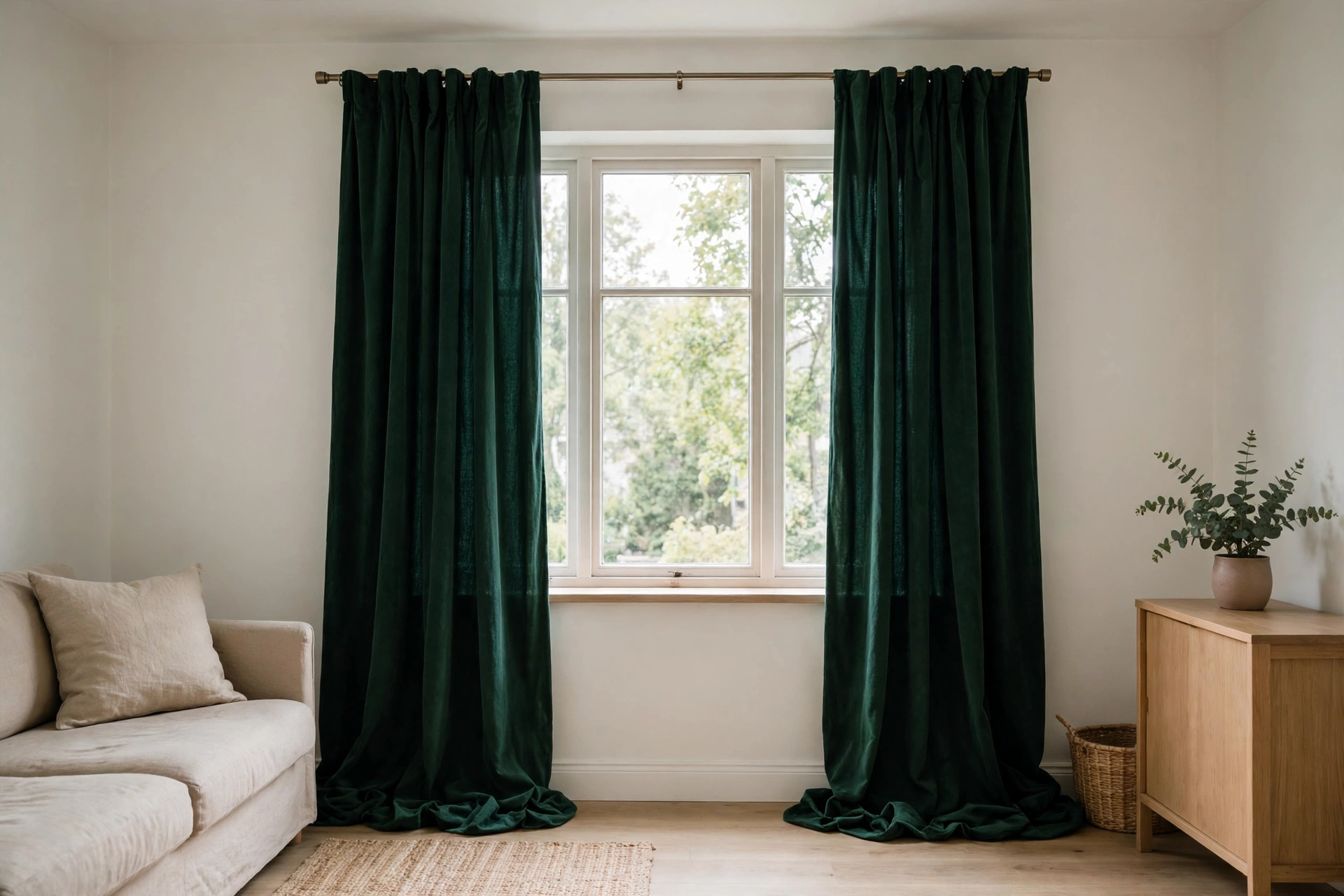
5. Sage green sheer panels: best for a bright room that wants a soft green glow by day
- Best for: A bright room with white or pale walls that wants a soft green glow by day, layered for evening privacy.
- Key features: Sage green sheer fabric, unlined, soft light-filtering, light drape.
- Pros: Soft green glow by day, keeps a bright room bright, sage sheer suits white and pale walls.
- Cons: No privacy at night with lights on, sage sheer can look washed out in strong sun, layer with a heavier panel for evening privacy.
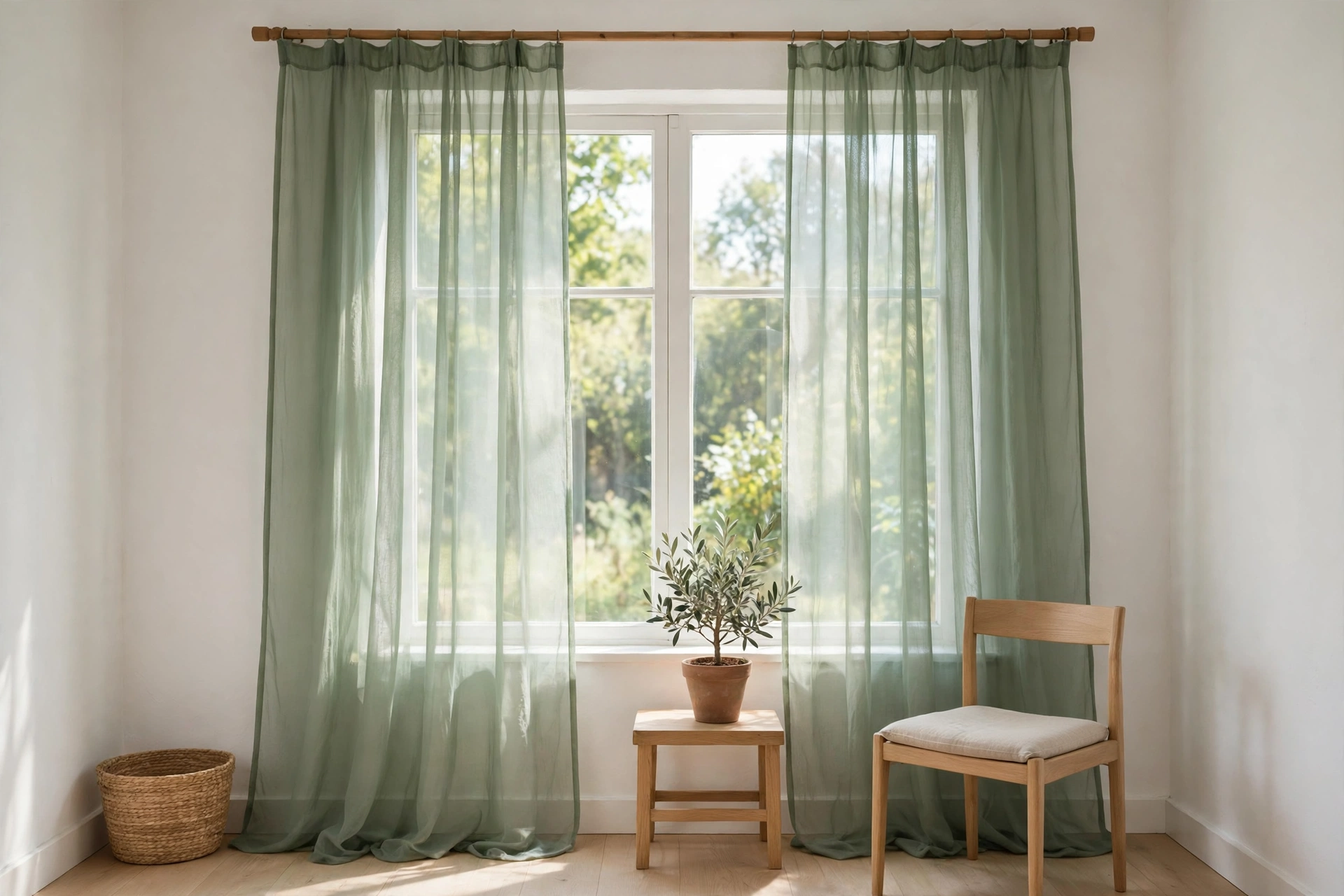
6. Olive green blackout linen panels: best for a home office that needs full glare control and privacy
- Best for: A home office with wood desks and cream walls, where screens need full glare control and privacy day and night, in a room with enough light that olive stays olive.
- Key features: Olive green linen-blend face (30% linen, 70% polyester) with a blackout coated lining, 100% blackout, machine washable cold, pinch pleat hang, 2 panels, 40 by 108 inches, hooks and rings included, clip rings one of 4 hanging options.
- Pros: Full glare control for screens, olive tone suits wood desks and cream walls, blackout lining gives privacy day and night.
- Cons: Blackout darkens the office more than room-darkening would, pinch pleat needs hooks and rings, olive can look muddy in dim light.
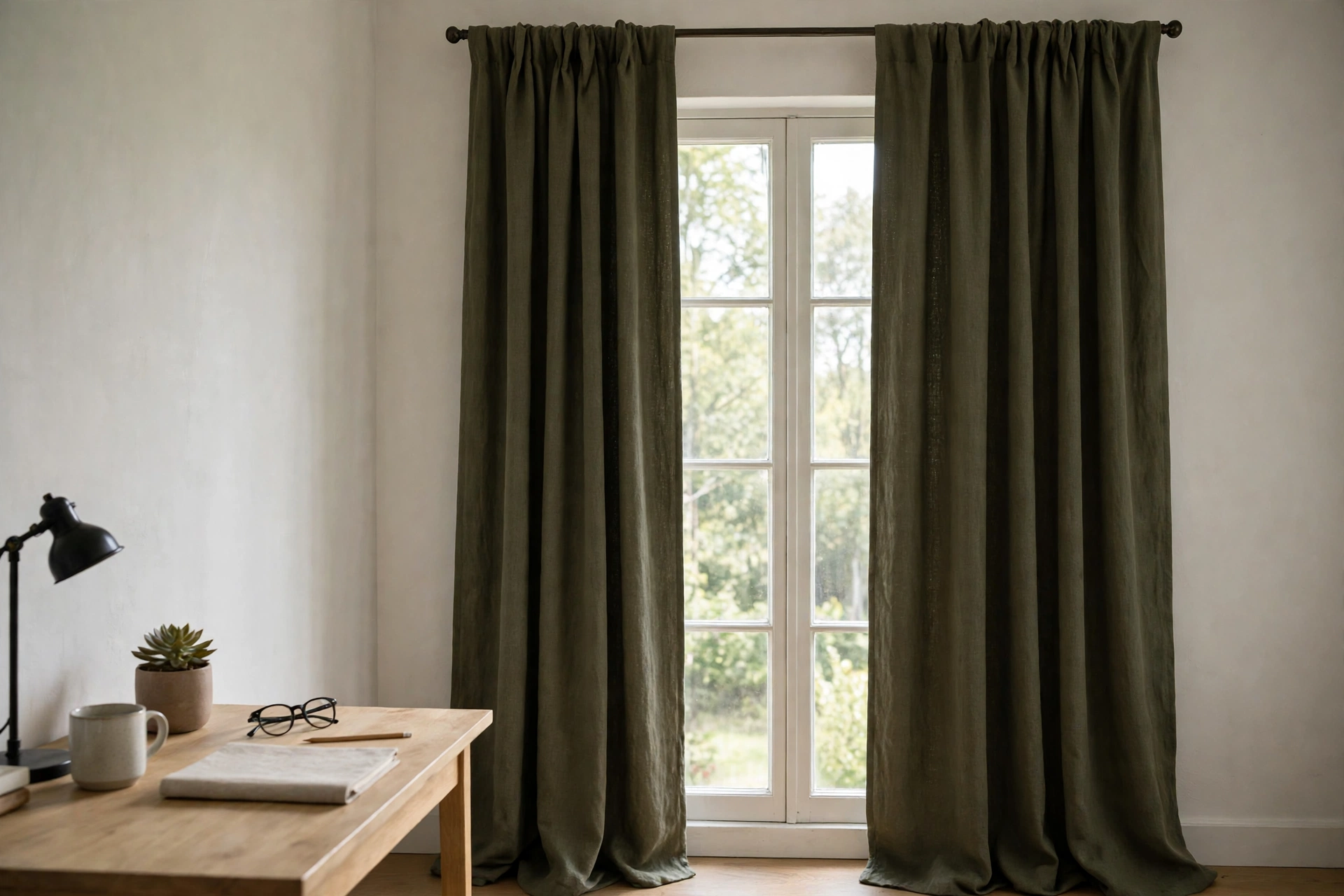
Sage, olive, forest, and emerald: telling the four greens apart
Start by naming the green you actually want, because the four main greens behave like four different colors. Sage is the softest green: muted, gray-green, and restful. It suits a bedroom, a bathroom, or any room that should feel calm. Olive is the earthiest green: yellow-based, grounded, and warm. It suits a living room, a home office, or a den with leather and dark wood. Forest is the deepest traditional green: dark, rich, and formal. It suits a dining room, a library, or a formal living room with dark wood and brass. Emerald is the richest green: saturated, jewel-toned, and dramatic. It suits a single accent window in a neutral room, and it overwhelms a room when used everywhere.
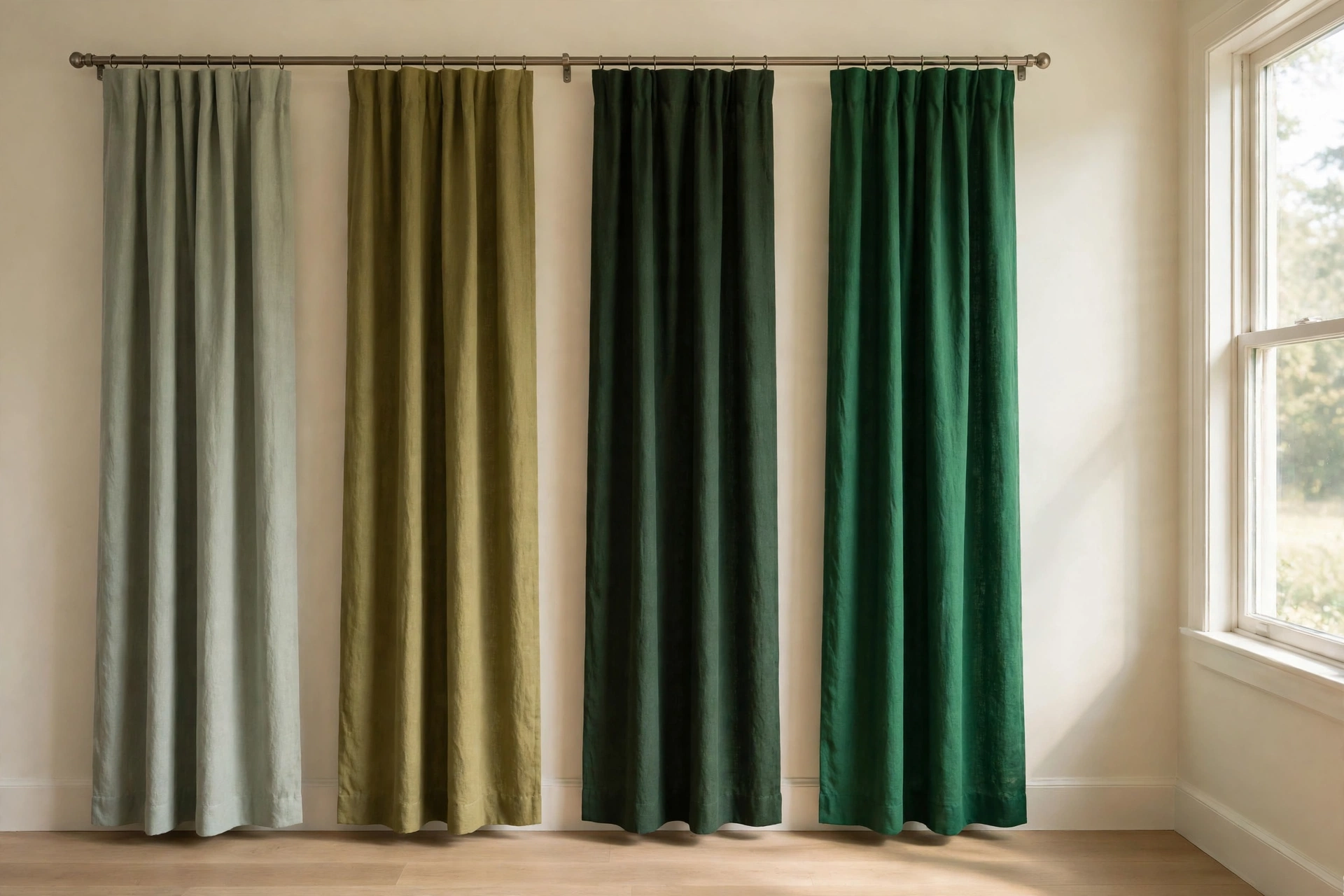
Depth changes the room as much as the shade does. A sage panel reflects light and adds air, so it suits a small or dim room that forest would shrink. An olive panel adds warmth and weight without darkness, so it suits a room that needs grounding. A forest panel absorbs light and adds formality, so it needs a room with daylight and light walls to balance it. An emerald panel adds energy and drama, which suits a formal room that feels flat, and suits nothing that already feels busy.
The fastest way to tell the greens apart at home is the daylight test. Hold the fabric against the wall in morning light and again in evening light, because green shifts with the light more than most colors. Sage can look gray in dim light, olive can look muddy under cool lamps, forest can look black in a dim room, and emerald can look louder under warm light. A sample in your own room, at two times of day, settles the shade faster than any name on a listing.
Mint and celadon sit beyond sage as lighter greens: brighter, cooler light greens that suit bathrooms and sunrooms, where their freshness suits the room. They wash out in strong sun, so they need a lining or a shaded window to hold their color.
Sage as a neutral: the green that behaves like gray
Sage can stand in for gray wherever gray feels cold. Its gray content quiets the green until the curtain reads as a soft neutral with a hint of leaf, so it suits rooms that want calm without chill. Pair it with warm white walls and trim, a greige sofa, and light wood, and the room stays pale and restful while the window still holds color. Sage asks little of the room around it, which is why it works in rooms where a stronger green would argue with the furniture.
That in-between nature makes sage the easy pick for a room that already holds both warm wood and cool white trim, or for a room where you have not yet settled the palette. It sits beside beige and gray sofas alike, and brass warms it while matte black keeps it quiet. The one pairing to skip is a second strong color fighting it for attention: give sage plain neighbors and it repays you with a room that feels finished.
Green with plants and wood: the botanical room
A green curtain feels most at home in a room that already holds leaves and wood. Sage beside potted plants and pale oak reads as one garden note, not as a color choice, and the cream wall behind it keeps the room bright. Set a leafy plant near the window and the curtain stops looking like fabric and starts looking like part of the planting. Olive works the same way beside darker wood and leather, while forest suits a room where the wood is dark and the plants are large. A beige sofa and warm brass nearby finish the room, so the planting feels settled rather than staged.
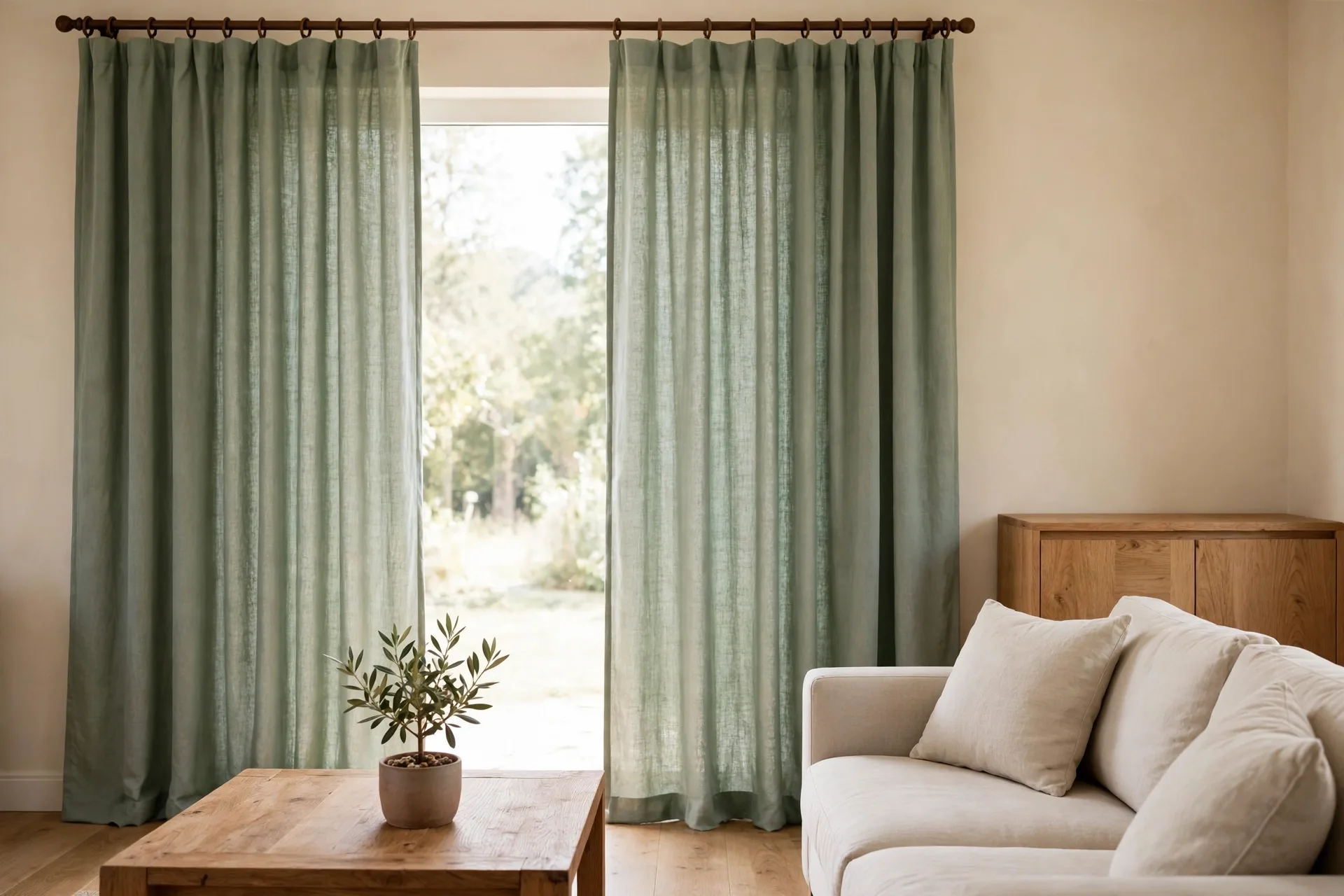
Let the wood set the green. Honey oak and walnut carry olive and forest, because the warm wood and the earthy green pull in the same direction. Pale ash and whitewashed boards carry sage, because both keep the room feeling light. Dark mahogany and walnut carry forest and emerald, because dark wood and deep green strengthen each other and the room turns formal. Read the tone of the wood, not just its presence, before choosing the green.
Stone cools the room, so it suits the blue-leaning greens best. A cool emerald or a teal-edged forest against gray stone looks crisp and modern, while a yellow-leaning olive against the same stone can look muddy. In a room with gray stone floors or a gray stone fireplace, lean blue-leaning or neutral sage and let the stone set the temperature. A warm touch nearby, such as brass or warm wood, bridges olive and stone when the room already holds both.
Hardware is the last choice, not the first. A matte black rod sharpens green and suits a modern room, while an aged brass rod warms it beside wood and cream walls. Pick the hardware once the green is set, so the rod finishes the room instead of fighting it.
Green as a garden view: framing what is outside the window
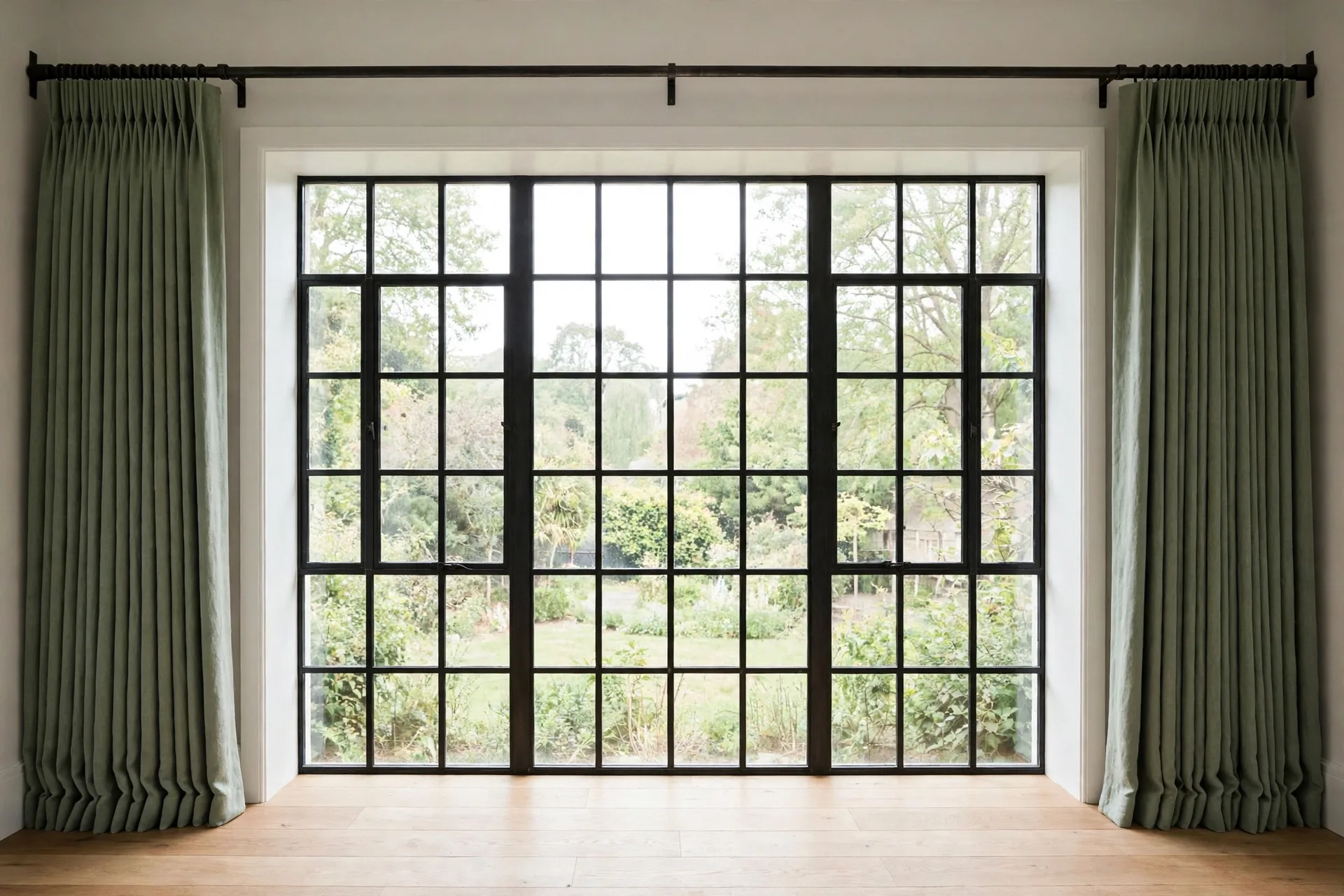
When the window looks onto a garden, the green curtain has a partner outside the glass, and the view does half the work. A solid sage or olive panel frames the planting without competing with it, so the eye moves from the curtain to the leaves and back. Keep the curtain quiet in that room: the garden already supplies the pattern, the movement, and the change through the seasons. A heavy print beside a real garden only argues with it.
Sheer or solid is the choice that decides how much of the view survives. A sage sheer keeps the garden visible all day while it softens the light, and it suits a window you look through more than you dress. A solid panel, drawn to the sides, frames the view like a border and closes for privacy at night. In winter, when the garden turns bare, a deeper olive or forest holds the room together until the leaves return.
Green in a bedroom: restful sage and the blackout question
Sage earns its place in a bedroom because it stays calm in daylight and still takes a blackout lining well. A sage blackout panel gives darkness for sleep with a restful color by day, and it suits white or cream walls. An olive panel gives a warmer, earthier calm beside warm wood furniture. Forest or emerald brings drama, but it needs a pale wall and a sheer layer to stay bright in the morning. Pale walls and light bedding keep the calm from turning dark, even with a deep green on the window.
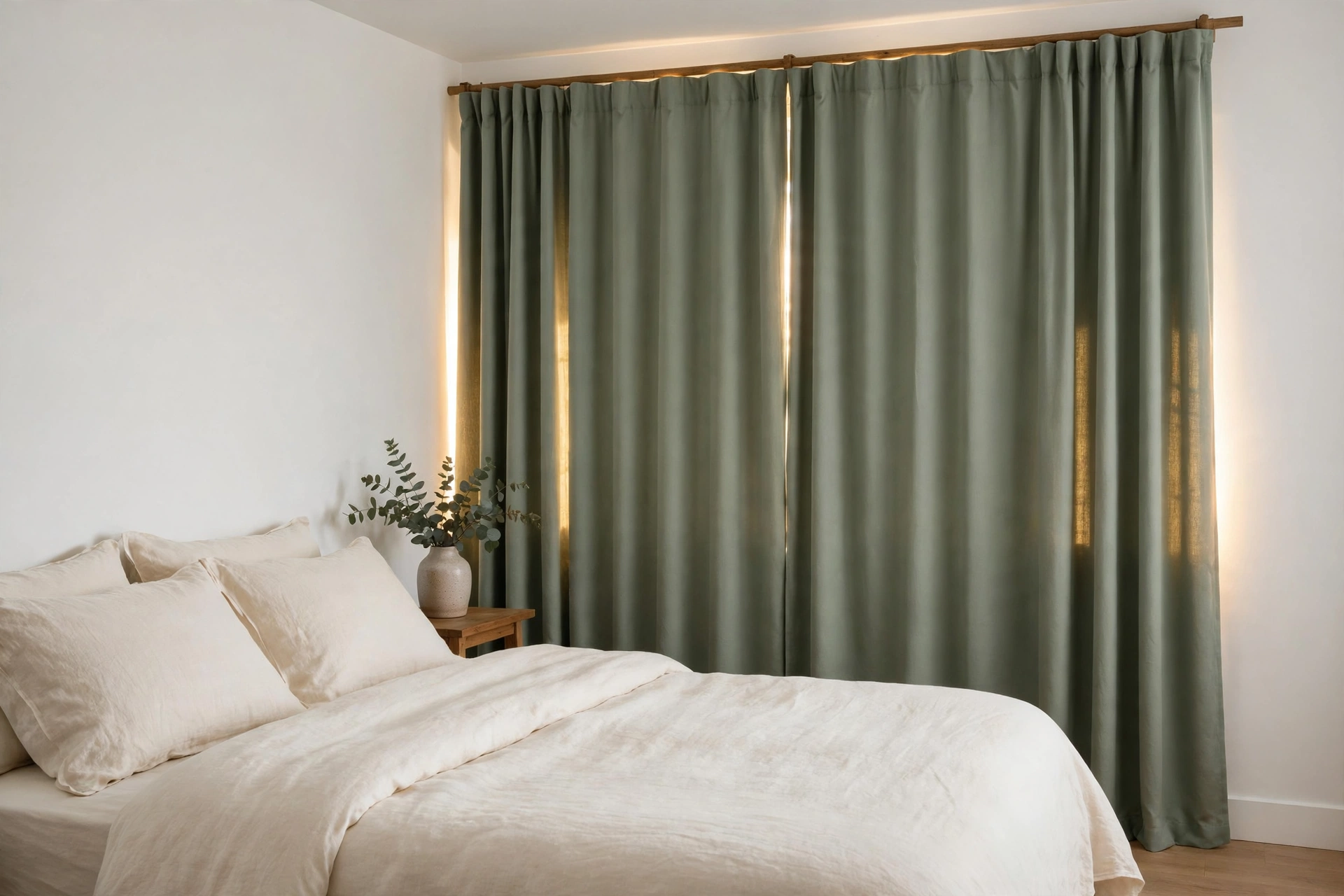
Sleep darkness is a lining decision, not a shade decision. A bedroom facing street lights or early sun needs a blackout lining, whatever shade hangs there. A bedroom facing a quiet garden may need only a room-darkening panel, and the softer drape is worth the trade. Choose the lining by the light outside the window, then choose the shade by the look you want. The best curtains for bedroom guide covers sleep darkness in more depth, and the same idea holds there.
Bedding sets the last note in the room. White sheets and a white duvet keep the window crisp beside any green. Cream bedding adds warmth beside a cool green, and gray bedding sits quietly beside sage. Keep the bedspread a clear step away from the curtain shade, so the bed and the window read as two separate parts of the room instead of one green block.
Green in a living room and dining room: olive ease and emerald drama
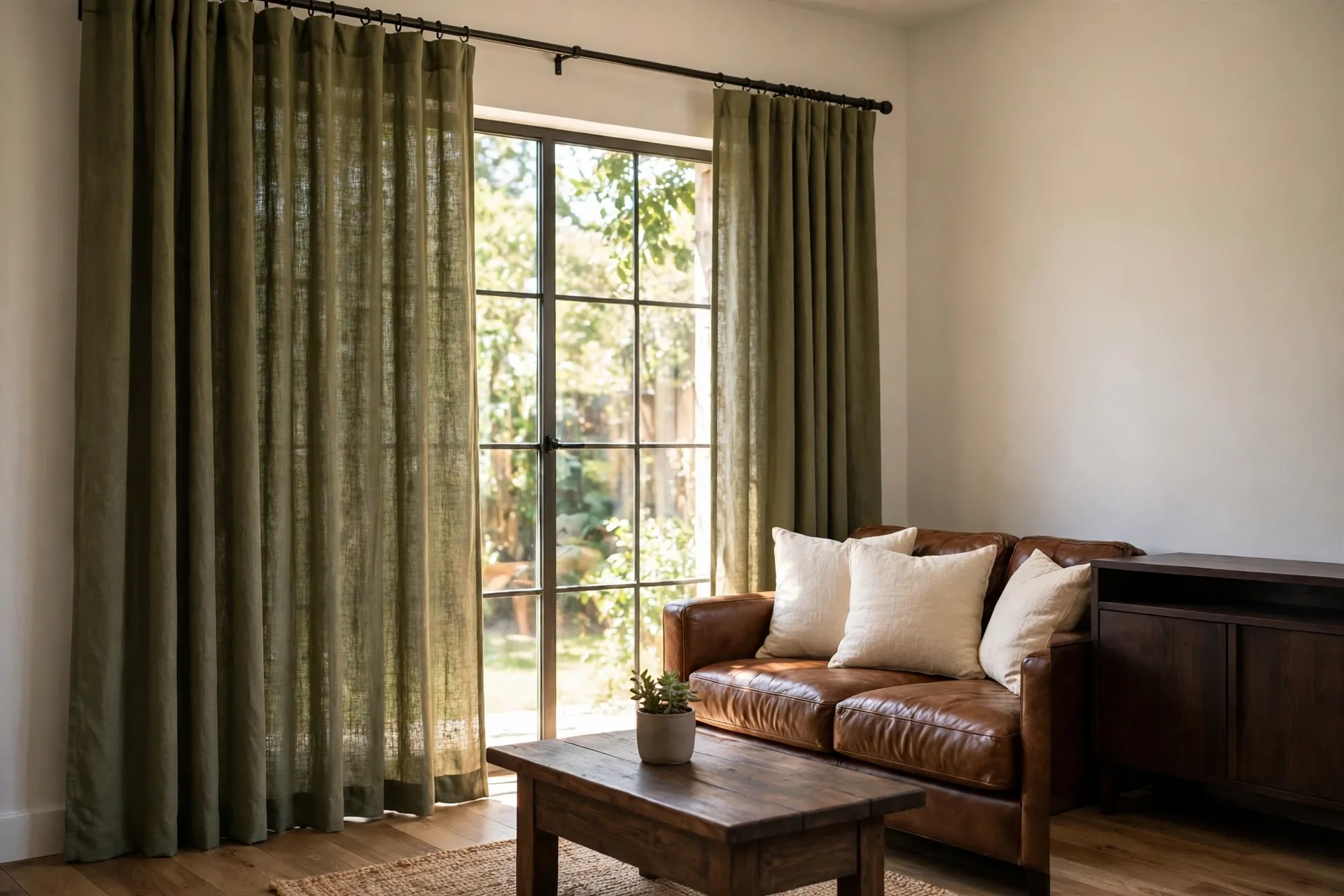
A living room uses green as ease. An olive linen-look panel gives a living room an earthy, grounded color and a natural texture, and it suits leather sofas, dark wood, and cream walls. A sage panel gives a softer, calmer living room, and it suits a gray or beige sofa. The living room pick should be the one that makes the sofa and the rug look deliberate, not the one that shouts loudest. The best curtains for living room guide covers how a living room's light changes the fabric choice, and the same thinking applies to green.
A dining room uses green as drama. A forest velvet panel gives a formal dining room depth and tradition, and it pairs with brass, dark wood, and candlelight. An emerald panel gives a dining room jewel-toned richness, and it suits a room with marble or brass accents. The dining room is used mostly in the evening, so the deep green's light absorption matters less here than in a living room, and the drama matters more. Keep the walls light, hang the panels wide, and the dining room keeps its formality without feeling closed.
The dining room mistake is buying a living room sheer for a room that needs drama, or a bedroom blackout for a room that needs only evening atmosphere. A dining room rarely needs blackout, and it rarely needs a sheer alone. A lined velvet or room-darkening panel gives the dining room weight and presence, and the lining keeps the fabric hanging well. Match the panel to the room's real use, not to the shade you liked in a photo.
Forest and emerald without darkness: the lighter wall or sheer layer rule
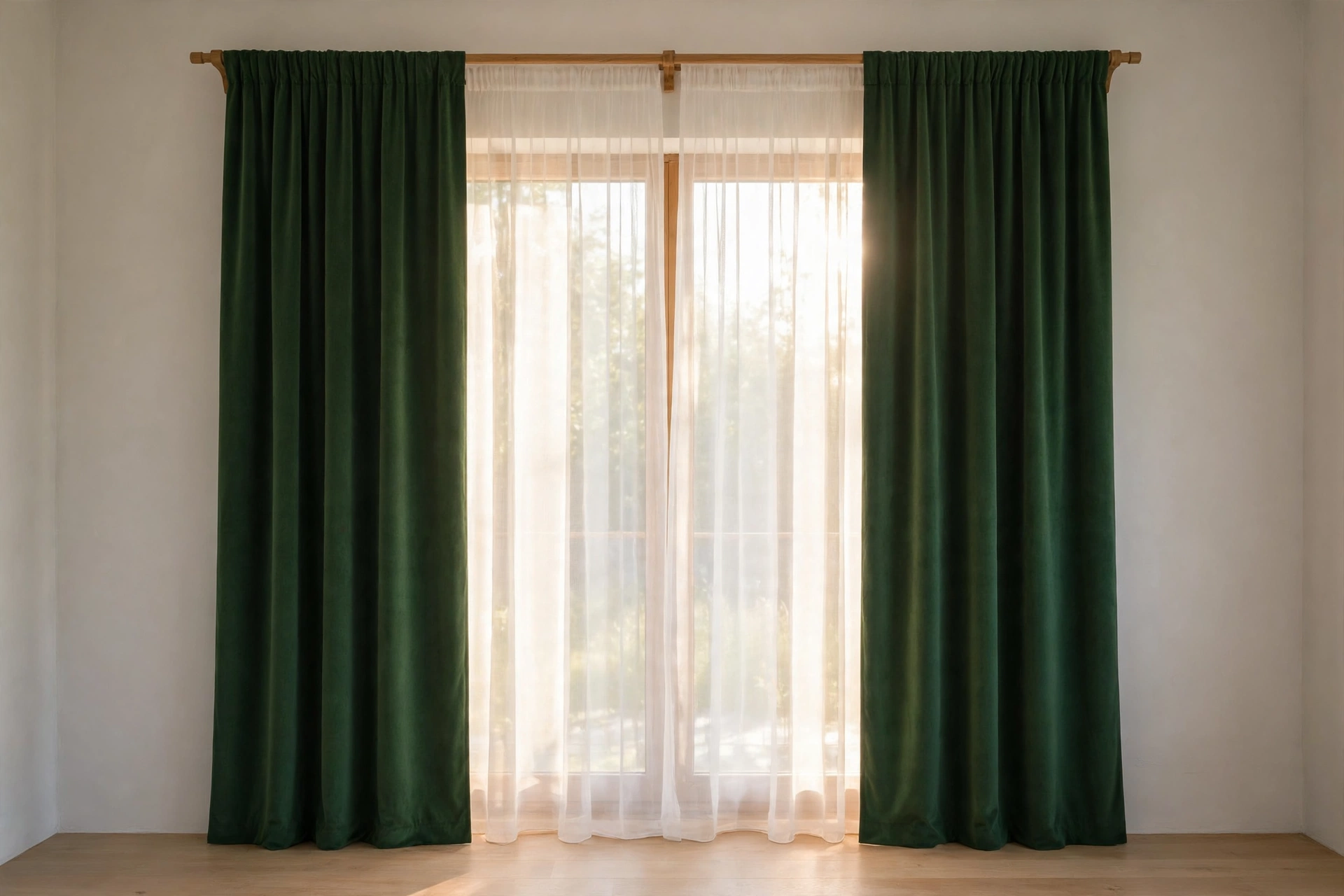
Forest and emerald are the greens most likely to darken a room, and this section is the rule that keeps them from doing it. A forest or emerald panel absorbs light instead of reflecting it, so a room with dark walls, dark floors, or little daylight can feel closed once the panels go up. The rule is simple: a deep green needs either a lighter wall or a sheer layer, and ideally both. A light wall gives the deep green something to contrast with, so the green reads as a frame rather than a wall. A sheer layer gives the room daylight when the heavy panels are open, so the room never feels closed during the day.
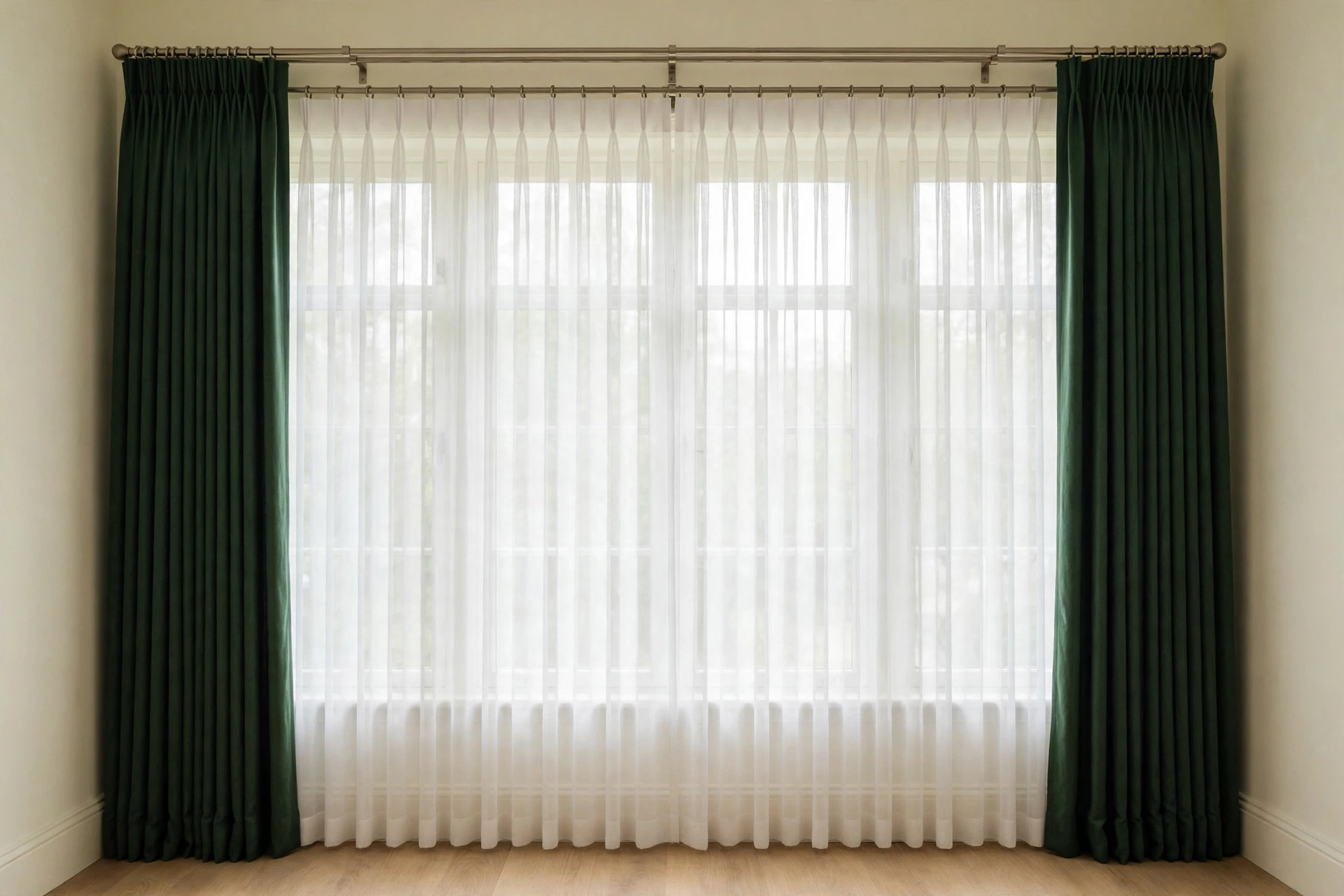
The lighter wall does not have to be white. Cream, pale sage, light gray, and warm beige all work, as long as the wall is clearly lighter than the curtain. The contrast is what matters, not the specific color. A forest curtain against a pale sage wall gives a layered, tonal pairing, while a forest curtain against a dark green wall gives a single dark mass. Move the wall at least two clear steps lighter than the curtain, and the deep green gains its frame.
The sheer layer does the same work from inside the window. A white or sage sheer behind a forest velvet panel lets daylight through when the velvet is open, and the sheer keeps the window feeling large. In a dining room used mostly in the evening, the sheer matters less, because the room is lit by lamps anyway. In a living room used all day, the sheer matters more, because the room lives in daylight. Hang the deep green panels wide and high as well, so the fabric stacks clear of the glass, and the window itself stays as large as possible.
Green light levels: sheer freshness, room-darkening calm, and blackout rest
A green curtain can glow, soften, dim, or darken, and the lining picks which one you get. A sage sheer lets daylight through with a soft green tint and gives daytime privacy only, and it turns see-through at night once the lamps are on. A light-filtering panel takes the edge off strong sun while the room stays bright, which suits a living room that never needs darkness. A room-darkening panel cuts glare and most daylight, which suits a home office or a television room. A blackout panel gives the darkest result, which suits a bedroom or a media room.
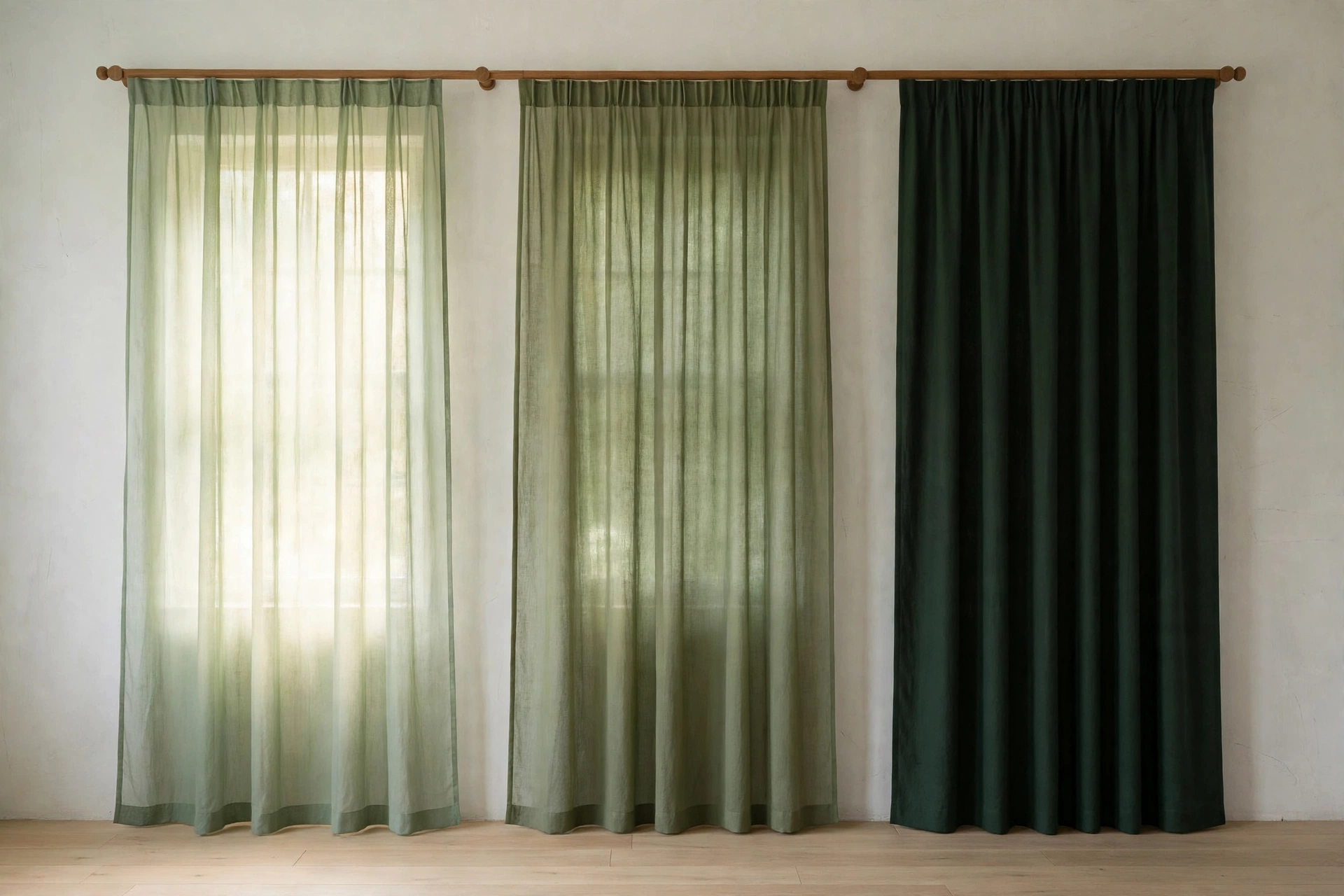
Do not judge darkness by depth. An unlined forest panel can let through far more light than a sage panel with a blackout lining sewn in, because depth changes the look while the lining changes the light. Before ordering, read the listing for the lining and the light-blocking claim, and treat the shade as a separate choice. The best blackout curtains guide walks through lining types, and the best sheer curtains guide spells out where sheers stop working after dark.
Some rooms need two light levels, and layering is how to get them. Hang a sage sheer on its own rod behind an olive blackout panel, and the room stays fresh by day and dark once the heavy panels close. The sheer also keeps the room from feeling shut in while the heavy panels stand open. Two layers cost more than one, but they cost less than replacing a single layer that only does half the job.
Green by undertone: yellow-based warmth and blue-based cool
Every green leans one way, and the lean decides what it sits beside. Olive and warm sage lean toward yellow, so they sit well with cream walls, honey wood, leather, and brass. Emerald and forest with a teal edge lean toward blue, so they sit well with white walls, gray stone, and cool metal. A sage that sits between the two can go either way, which is why it suits rooms that already hold both warm and cool pieces. Check the lean in daylight and again under the lamps, because green shifts with the light more than most colors do.
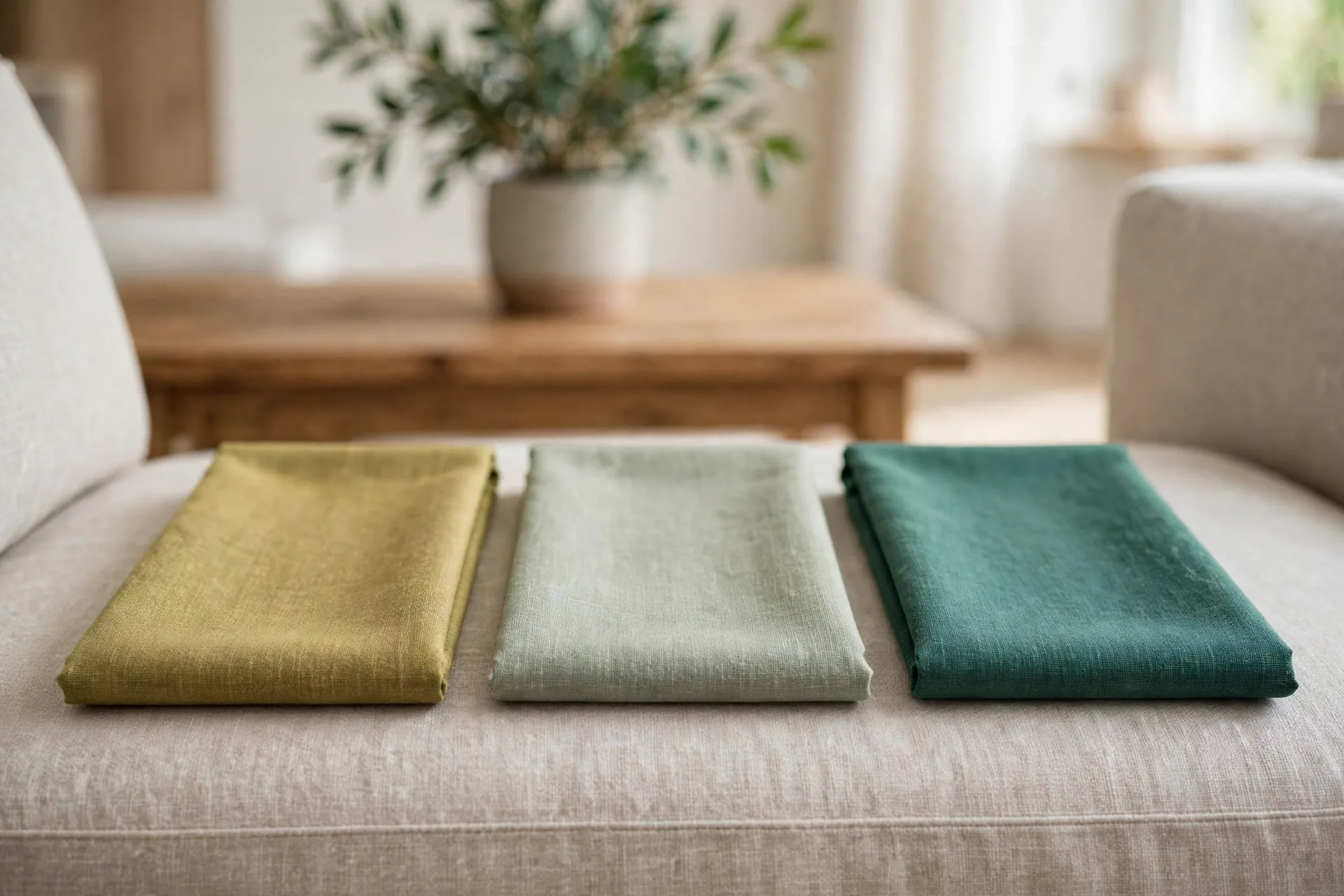
Try the lean at home before you commit. Pin a swatch to the wall, lay it on the floor beside the sofa, and look at it in morning light and again under the lamps at night. Warm olive beside a cream wall looks settled, while the same olive beside a cool gray wall can turn muddy. A blue-leaning emerald beside gray stone looks crisp. When the room already mixes warm and cool pieces, a middle sage steadies the pairing because its gray content quiets the lean on both sides.
The costliest slip is buying the curtain in the exact green of the wall or the sofa. With no gap between the two surfaces, the window sinks into the wall and the room loses its edges. Give the curtain a clear step of distance: a forest curtain against a sage wall, or a sage curtain against a forest sofa, frames the window on purpose. Match the shade exactly and the pairing looks like a slip, not a choice.
Lamps move green too, so check the shade under lamplight as well as daylight. Warm bulbs keep olive and sage warm through the evening, while neutral bulbs keep emerald true without pushing it warm or cold.
Green fading, washing, and sun: keeping sage soft and forest deep
Sun fades green slowly, and each shade shows it in its own way. Watch the fold edges first, because they catch the most sun and fade before the flat of the panel does. Sage drifts toward gray, olive loses warmth and turns muddy, forest turns dull and grayish, and emerald loses its richness fastest because its strong dye shows change sooner. A lining takes the sun instead of the face fabric, so lined panels hold their shade longer. Catching the fade early matters, because a panel faded at one edge cannot be washed back to its first color.
A few habits slow the fade more than any product. Turn the panels around now and then, so one fold edge does not take all the sun. In a strong sun window, hang a sheer liner between the glass and the curtain, since the liner shields the face fabric. Wash only as the care label directs, and read the GINETEX care symbols on the label before the first wash, since the symbols, not habit, say whether the fabric can go in the machine and how hot the water may be. Wash green panels with like colors, because dye moving in the wash dulls a green faster than sun does.
Velvet and linen-look ask for different care. Brush green velvet softly for lint and pet hair, and keep a hard vacuum head off the pile, which marks easily. Linen-look cloth wrinkles after washing, so use a gentle cycle with a low iron or a steamer. A fabric with the OEKO-TEX STANDARD 100 label has passed tests for harmful substances, a reassuring mark on a bedroom curtain that hangs beside the bed, and the label page sets out what the mark covers. It grades safety, not quality, and it promises nothing about fading, so read it beside the care label rather than instead of it.
Patterned green: botanicals, stripes, and texture without a jungle
A green curtain already says garden, so a loud print on top of it can shout. Keep a botanical small and quiet, or tone on tone, and let it sit in a room that is otherwise plain. A stripe is the safest green pattern: it adds height, it pairs with solid sofas, and it rarely fights the wall. A quiet geometric in green and cream suits a modern room, as long as the green in the print stays close to the green already in the room. When the room already holds plants and wood, a plain green panel lets those pieces speak instead of the curtain.
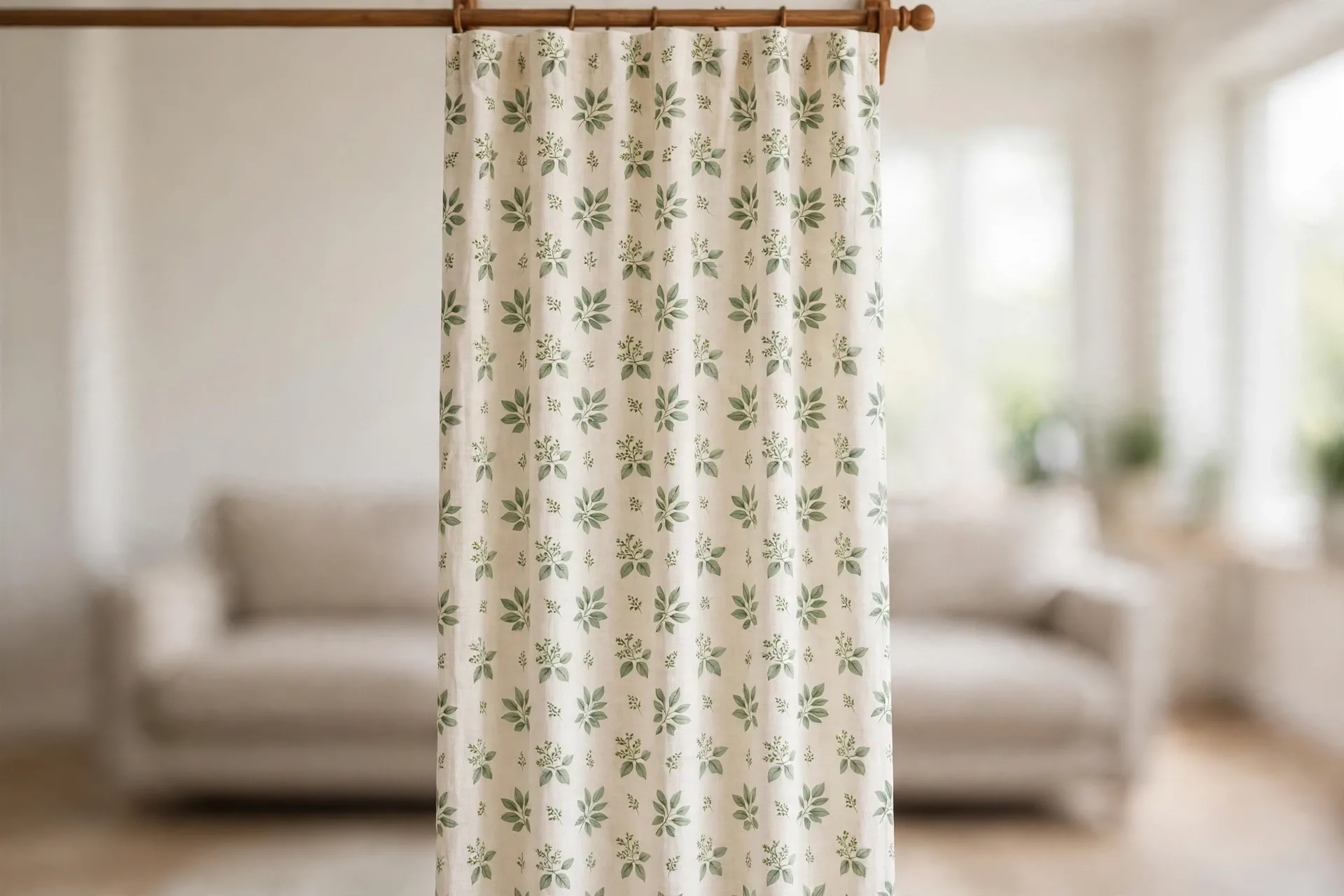
When the room needs interest without a print, let the cloth do it. A linen-look weave, a velvet pile, or a soft slub gives the eye something to notice up close and calm from across the room, without adding a second idea. A sheer layer adds its own softness, because daylight filtered through it warms the wall behind. When the sofa or the rug already carries a pattern, texture wins over print for the curtain, because two patterns in one room compete.
Keep one pattern in the room and let the rest stay plain. A plain room can carry a patterned green curtain well, while a busy room needs a solid green curtain with texture doing the work instead. Bright lime is the green to watch: across a whole window in a main room it reads like a highlighter, and it suits almost nothing except a child's room or one deliberate pop of accent. Muted greens, from sage to forest, suit a home far better than bright lime.
Bouclé is one more texture to know: a nubby looped cloth that warms a sage or olive room without any print at all.
Rods, fullness, and length for green panels
Measure the rod before you measure the curtain. Fix it above the frame and let it run past the frame on both sides, so open panels gather clear of the glass and closed panels cover the frame edge to edge. A rod that ends at the frame edge makes the window look smaller than it is. Aim for total panel width of 1.5 to 2 times the rod width for a standard look, 2 to 2.5 times for a full look, 2.5 to 3 times for pinch pleat, and 2 to 2.5 times for sheer, so the folds stay full when the panels close. Floor length is the default for a living room or bedroom, while sill length suits a small or utility window.
A grommet heading slides freely for daily use, while a rod-pocket heading suits a panel that mostly stays in place.
Green mistakes that make a room look dated or muddy
Check the undertone first. Olive against a cool gray wall turns muddy, so a gray room needs a blue-leaning green or a neutral sage instead. Deep greens cause the next regret: forest or emerald in a small or dim room, without a pale wall or a sheer layer, drinks the light the room cannot spare. And a curtain in the exact green of the wall or the sofa flattens the room, so give the curtain a clear step of distance and the room regains its edges.
Bright lime belongs on an accent, not across a whole window, because in a main room it reads like a highlighter. Darkness is the next misread: an unlined forest panel in a bedroom that needed blackout, or a blackout sage panel in a living room that only needed daylight. Set the lining by the job first, then pick the shade. And never buy green from a photo alone, because green moves more than most colors between a screen, shop light, and home light, so a sample checked morning and evening saves the most common regret.
Panels that end at the glass make the window look pinched. Hang them a little wider than the frame and a little higher than the top, and the window gains presence. The how to hang curtains guide walks through rod placement, and the how to measure for curtains guide gives the widths to order, so the panels you buy fill the space they hang in.
Two ordering slips catch buyers at the end. Count the panels: one panel where the window needs two leaves half the glass bare. And remember that a rod-pocket top takes a few inches of drop against a grommet top, so measure the finished drop from the rod or a floor-length panel can land short.
Frequently asked questions about green curtains
The questions people ask most about green curtains cover shade, pairing, and light, with the detail in the guide above.
What color curtains go with green walls?
Cream and white are the safest choices with green walls, because they brighten the room without competing. A green curtain one clear step lighter or darker than the wall gives a layered tone-on-tone pairing, and beige warms a yellow-based green wall. Avoid an exact green match, which looks flat, and avoid a second strong color that fights the wall.
Do forest green curtains make a room look dark?
Yes, they can, especially in a small, dim, or dark-walled room, because forest absorbs light. Give a forest panel a lighter wall, a sheer layer for daytime light, and panels hung wide and high so the fabric stacks clear of the glass. A small or dim room usually looks better with sage or olive, and forest suits a room with daylight and light walls.
Are green curtains good for a bedroom?
Yes, green is one of the best bedroom colors, because it reads as calm and natural. A sage blackout panel gives darkness for sleep with a restful color by day, while an olive panel gives a warmer, earthier calm. Add light bedding and a light wall so the calm does not turn dark, and buy the lining for the job, not just the shade.
What goes with sage green curtains?
Cream walls, white trim, light wood, and gray stone all suit sage green, and brass hardware warms it nicely. Sage pairs with beige and gray sofas, and with white or cream bedding in a bedroom. Sage is the most flexible green, because its gray content softens its undertone in both warm and cool rooms.
Do green curtains fade in sunlight?
Yes, slowly, and emerald fades fastest in strong sun. A lining slows the fading, a sheer liner adds a shield, and rotating the panels now and then spreads the exposure. Wash green panels with like colors, since dye transfer in the wash dulls a green faster than sun does. Velvet needs a soft brush for lint, while linen-look fabric needs a gentle wash cycle.
Are olive green curtains warm or cool?
Olive is a warm green, because it leans toward yellow. It suits cream walls, warm wood, leather, and brass, and it can look muddy against a cool gray wall. If the room is cool and gray, a neutral sage or a blue-based green usually sits better than olive.
What color sofa goes with green curtains?
An olive curtain pairs with a beige or brown leather sofa, a sage curtain pairs with a gray or beige sofa, and a forest curtain pairs with a dark wood or brass-accented room. A green sofa pairs best with a green curtain one clear step lighter or darker, so the two do not merge. A patterned sofa needs a solid green curtain, because two patterns in one room compete.
Are green curtains good for a kitchen or bathroom?
Yes, with the right fabric. A washable cotton or polyester green panel suits a kitchen or bathroom, because it handles moisture and frequent washing. Avoid velvet in a damp room, and avoid a light sage in a room where splashes mark easily. A sage or olive cafe panel gives privacy at eye level without blocking the top of the window.
What is the difference between sage and olive green curtains?
Sage is a soft, muted, gray-green that reads as calm and cool, while olive is a warmer, earthier, yellow-based green that reads as grounded. Sage suits a bedroom or a calm room, olive suits a living room or a den with leather and dark wood. Sage is the safer green for a room that mixes warm and cool elements, because its gray content softens its undertone.
This guide is research-based curation: we compared maker specifications, published reviews, and current prices. Read how we choose.