 Best
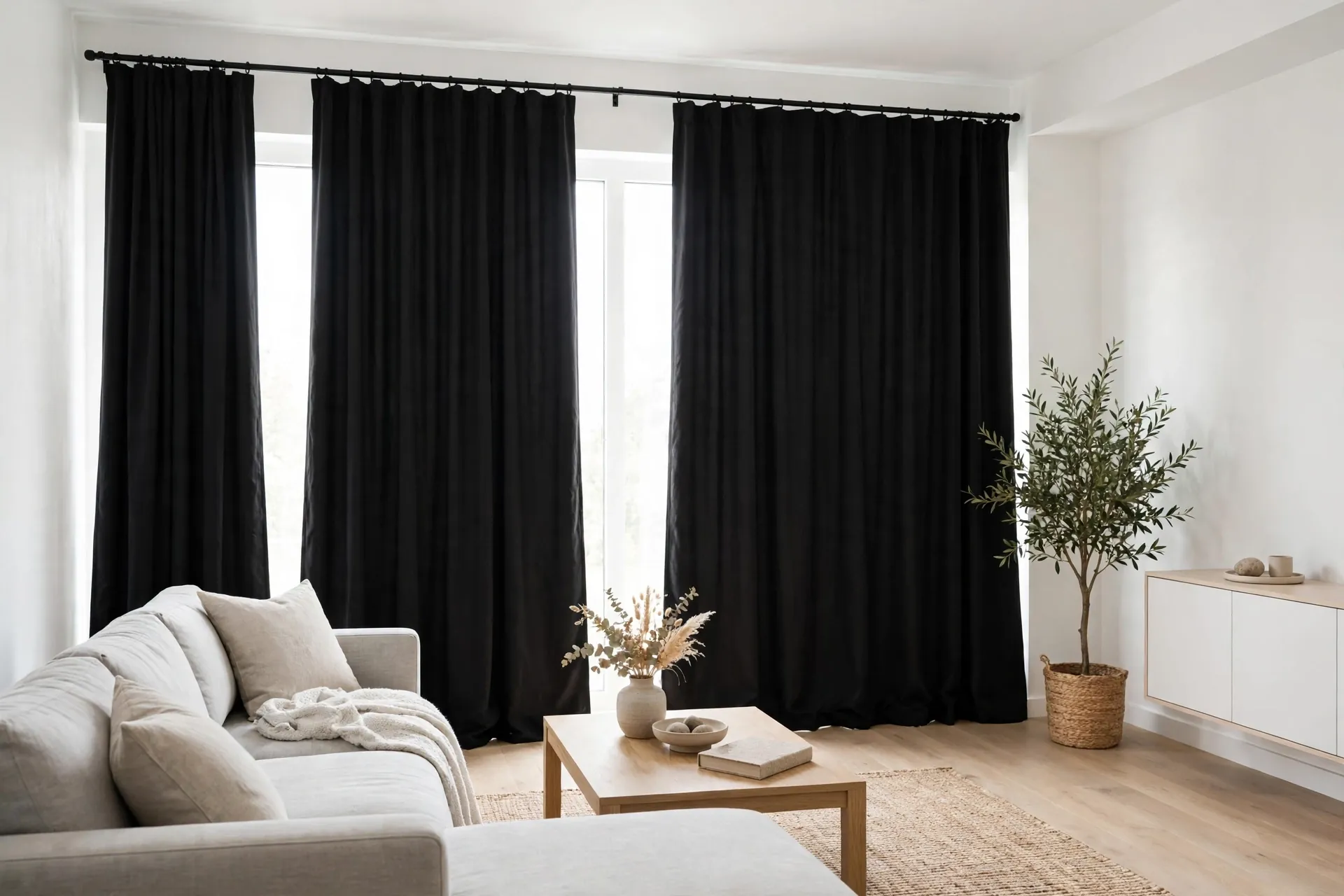
Best Black Curtains
Black curtains give drama and darkness no other color can match, but they can also close a room in. This guide shows when black works, how to hang it, and how to keep it looking black.
Black curtains are the boldest choice in the curtain aisle, and the most misunderstood. Most buying advice treats black as if it were only a blackout color, but black comes in sheers, light-filtering panels, room-darkening velvets, and true blackouts, and each one behaves differently in a room. This guide separates black the color from blackout the function, then shows when black works, when it shrinks a room, and how to hang and care for it so the drama stays and the gloom never arrives.
Black curtains by job: the shortlist
The six picks below cover the jobs black does most often: sleep darkness, media-room glare control, black as a daylight accent, heat control in a sunny window, privacy at eye level, and texture without shine. Each pick names its construction and lining, because with black, the construction decides the light level, not the color.
As an Amazon Associate, we earn from qualifying purchases.
| Pick | Type | Lining | Best for |
|---|---|---|---|
| 1 | Black blackout panels | Blackout lining | A bedroom that must stay dark for sleep |
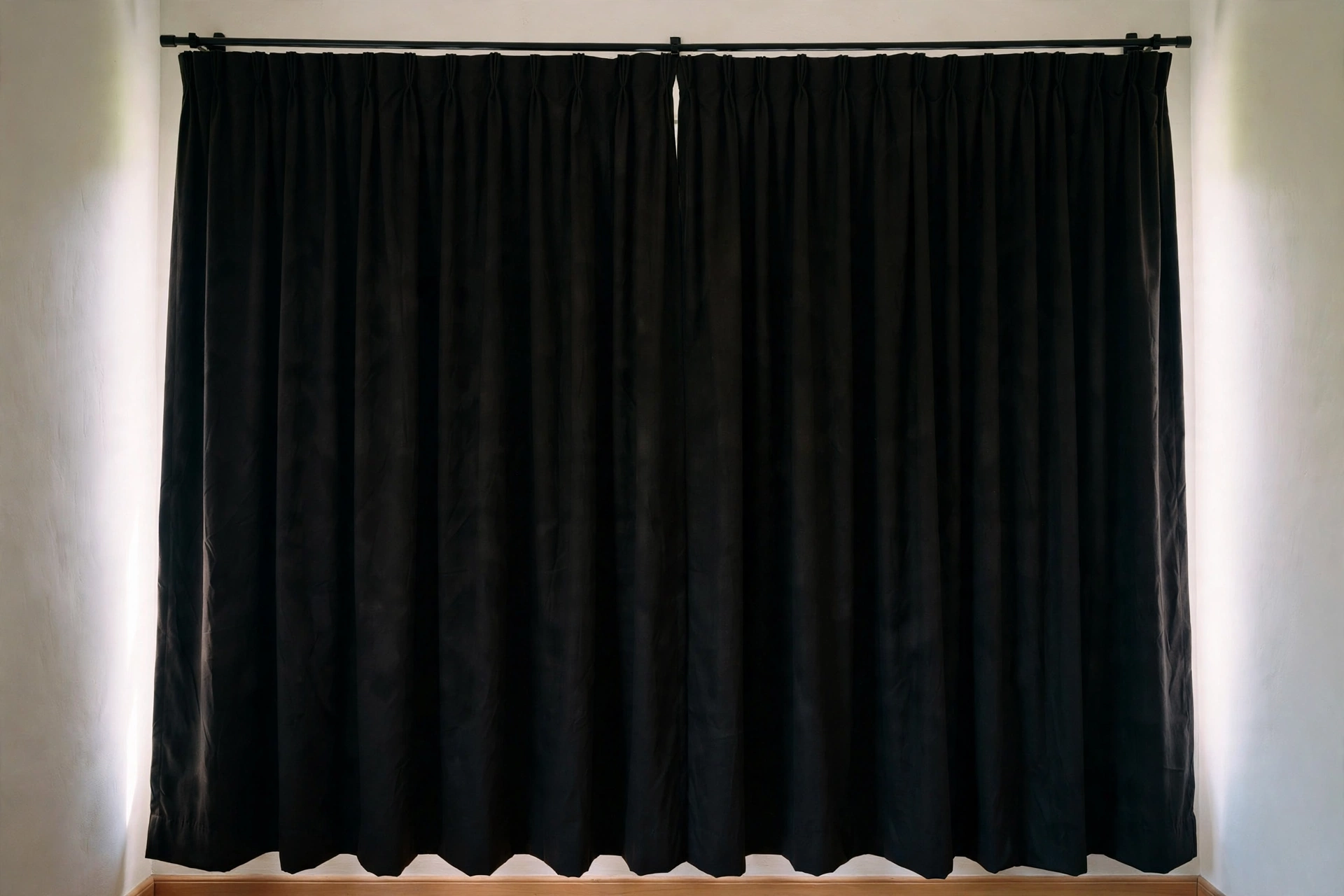
| 2 | Black room-darkening velvet panels | Unlined, heavy velvet | A media room that needs glare control with drama |
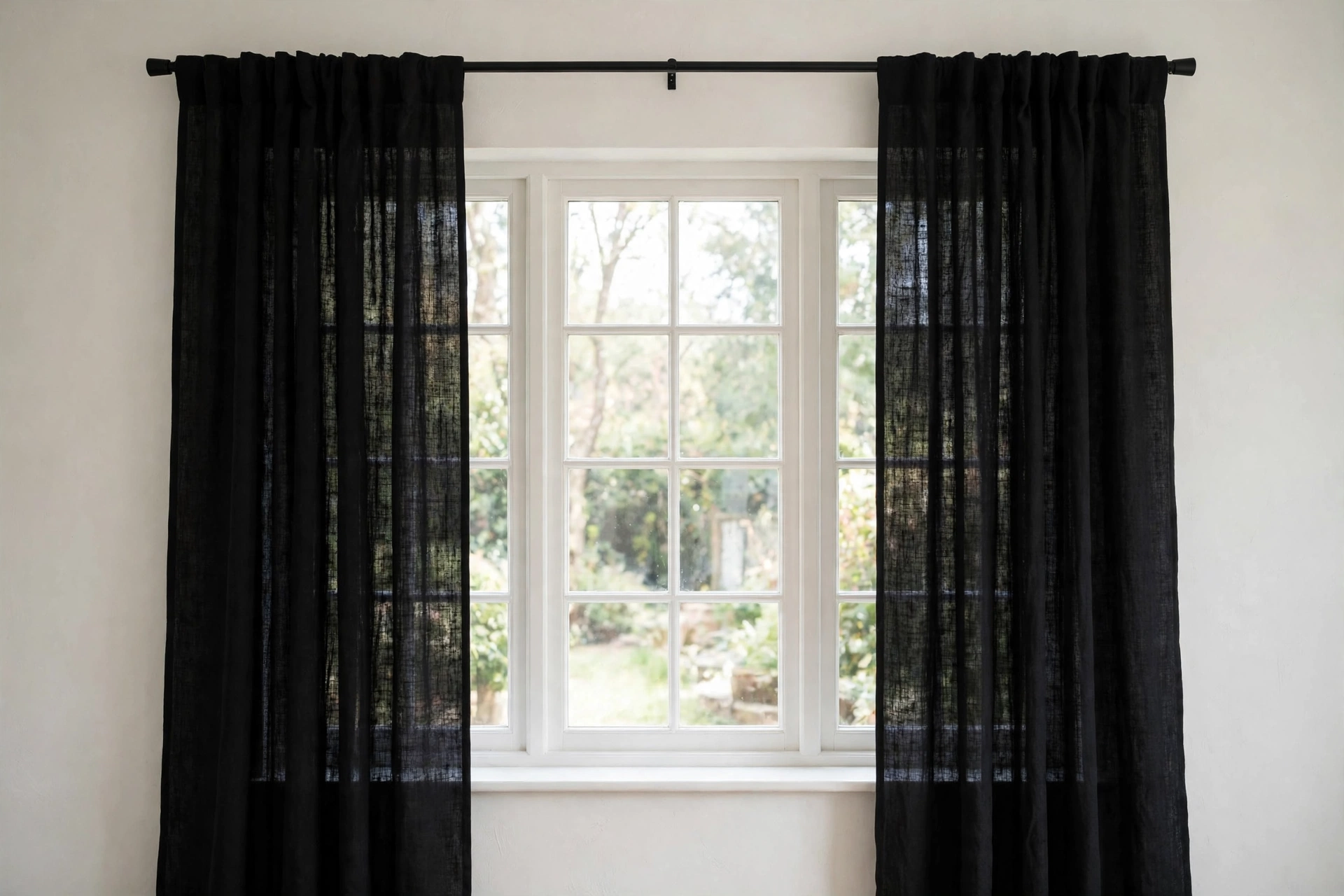
| 3 | Black sheer panels | Unlined | A living room that wants black as an accent without losing daylight |
| 4 | Black thermal blackout panels | Thermal blackout lining | A sunny window that needs heat control as well as darkness |
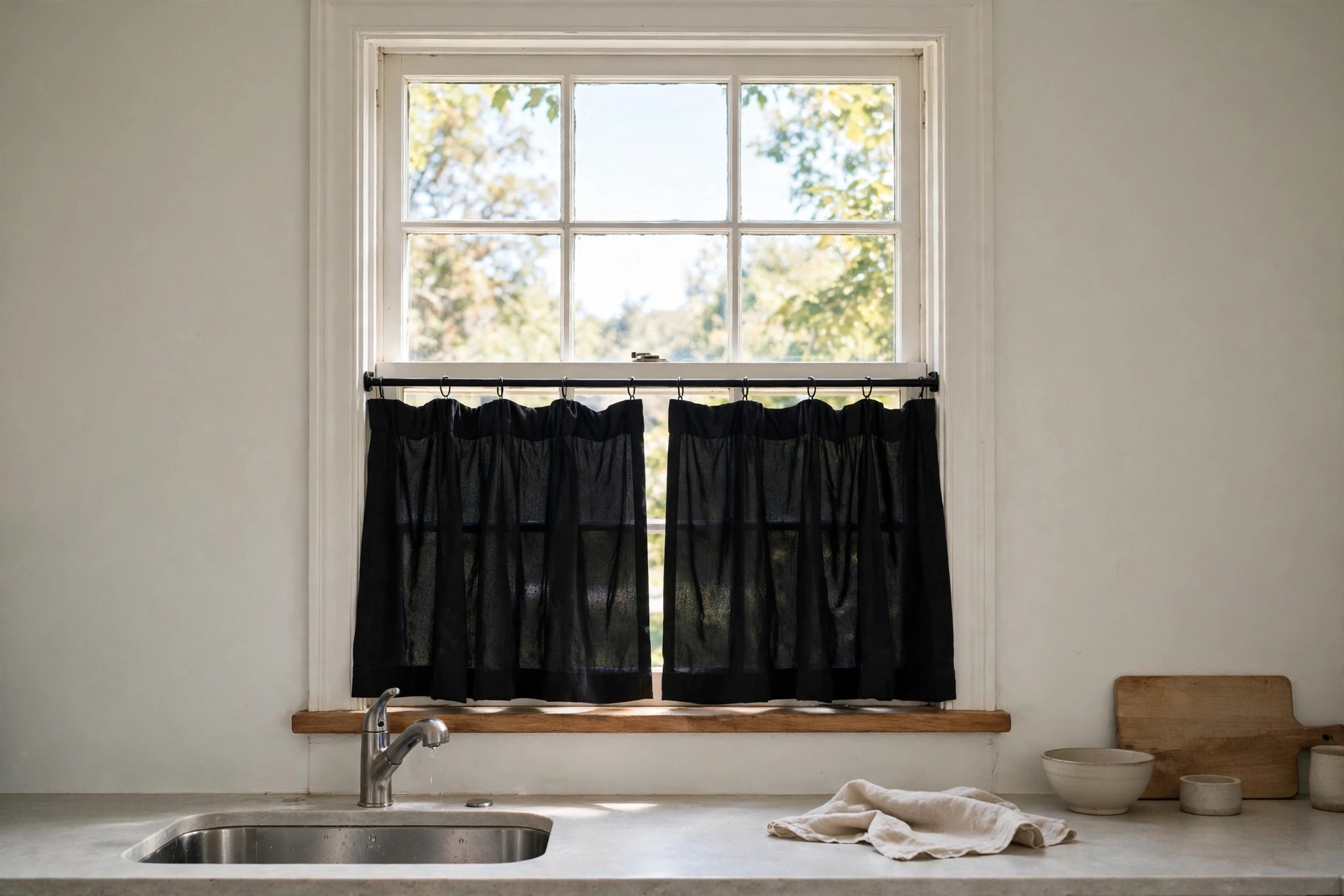
| 5 | Black short tier panels | Blackout tier | A kitchen or bathroom window that needs privacy at eye level |
| 6 | Black linen-look panels | Unlined | A modern living room that wants texture without shine |
1. Black blackout panels: best for a bedroom that must stay dark for sleep
- Best for: A bedroom with street light outside, where deepest darkness matters more than a light daytime look.
- Key features: Black face, blackout lining, darkest result in this shortlist, sold as a pair.
- Pros: Deepest darkness for sleep, black face hides the lining edge, suits a bedroom with street light outside.
- Cons: Heavy look by day in a small room, black shows lint and pet hair, check the listing for the exact light-blocking claim before ordering.
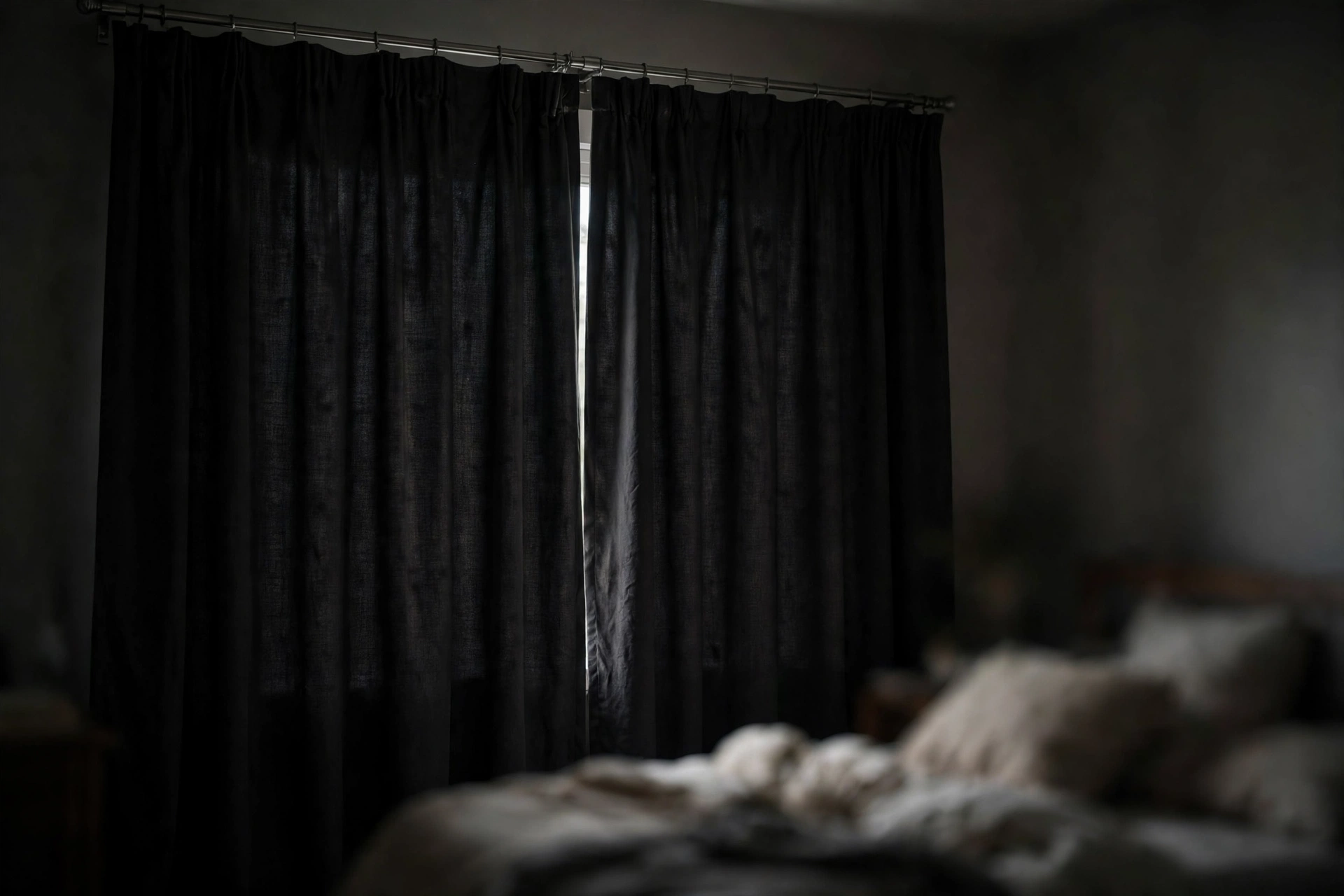
2. Black room-darkening velvet panels: best for a media room that needs glare control with drama
- Best for: A media room where glare and echo need taming and full blackout is not required.
- Key features: Black velvet, unlined, heavy drape, room-darkening result from the fabric weight alone.
- Pros: Velvet pile kills glare and softens sound in a media room, dramatic drape, no stiff lining to change the fall.
- Cons: Unlined velvet is room-darkening, not blackout, heavy fabric needs a strong rod, velvet collects lint and pet hair.
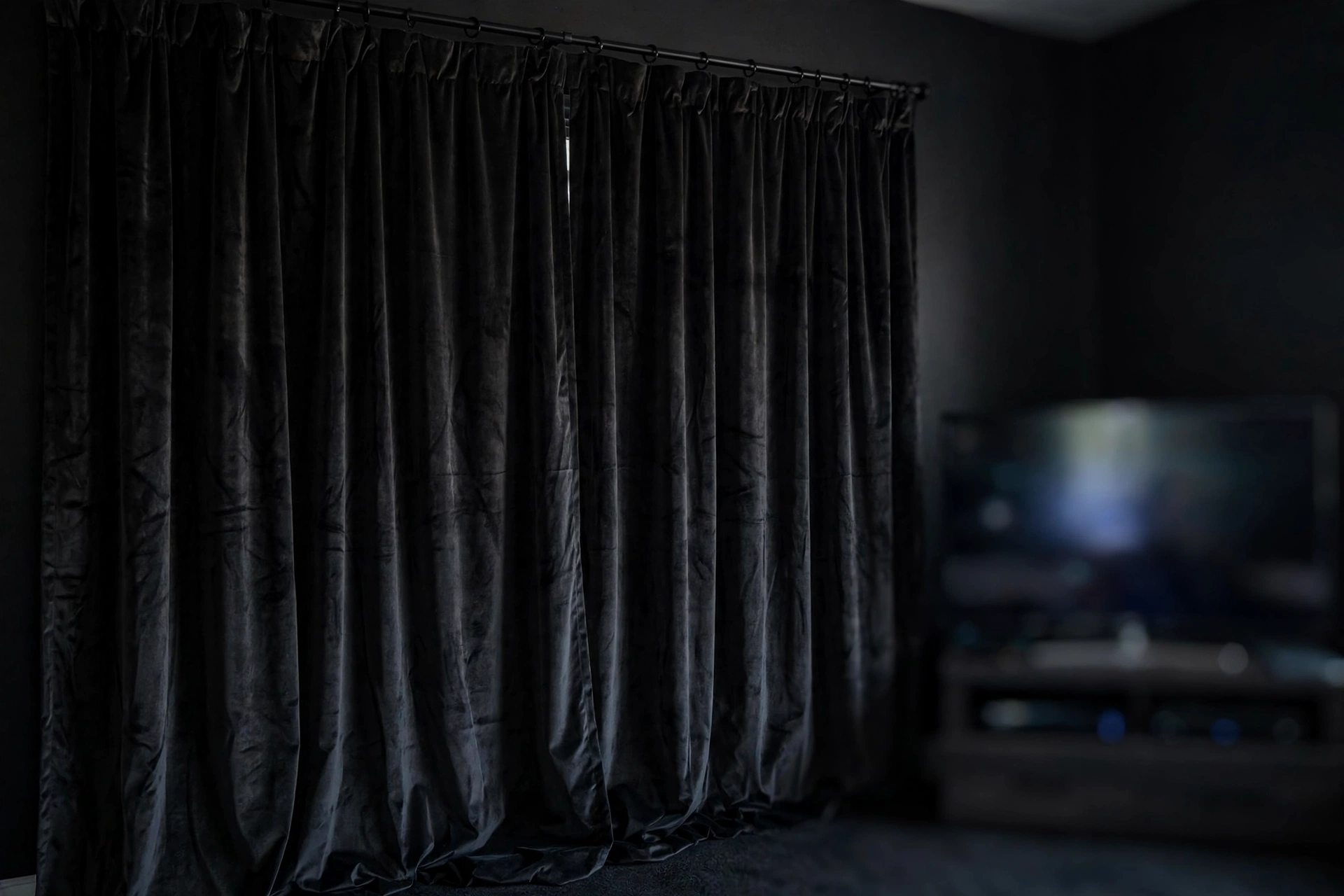
3. Black sheer panels: best for a living room that wants black as an accent without losing daylight
- Best for: A bright living room that wants black as an accent, layered with a heavier panel for night privacy.
- Key features: Black sheer fabric, unlined, soft light-filtering, light drape.
- Pros: Black reads as a pattern from a distance, keeps the room bright, softens a stark white room without darkening it.
- Cons: No privacy at night with lights on, black sheer can look gray in strong sun, layer with a heavier panel for evening privacy.
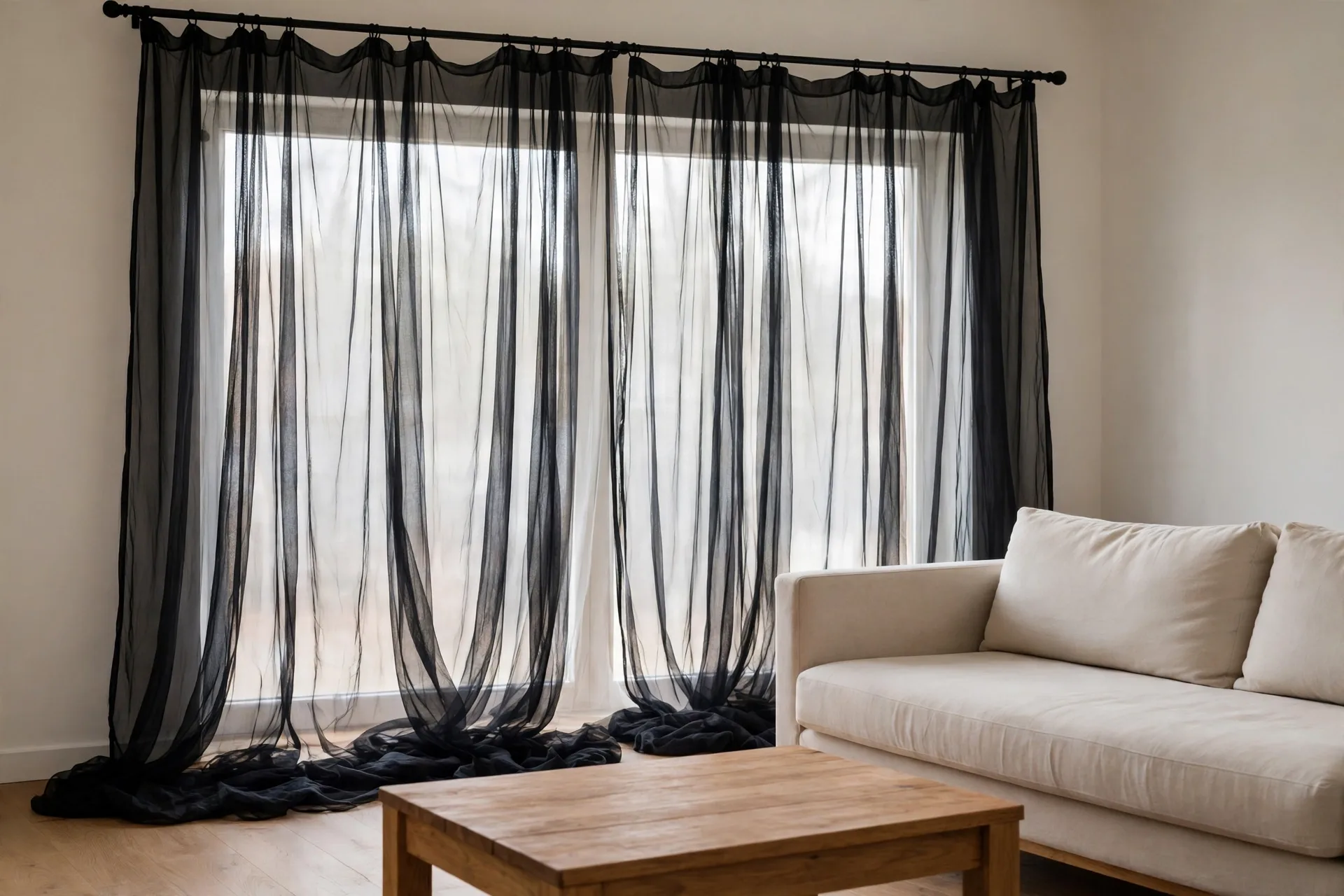
4. Black thermal blackout panels: best for a sunny window that needs heat control as well as darkness
- Best for: A sunny west-facing window where heat control matters as much as darkness, on a rod rated for the heaviest panels here.
- Key features: Black face, thermal blackout lining, insulating construction, reflective backing facing the glass on lined types.
- Pros: Thermal lining helps a sunny window stay cooler, blackout lining gives darkness, suits a west-facing room.
- Cons: Heaviest panels in this shortlist, black face absorbs heat without the lining, check the listing for the lining construction before ordering.
5. Black short tier panels: best for a kitchen or bathroom window that needs privacy at eye level
- Best for: A kitchen or bathroom sink window where only the lower half needs cover and the top stays open to light.
- Key features: Black blackout tier panels, water-repellent polyester face, rod pocket hang, 26×24 inches per panel, 2 panels.
- Pros: Privacy where it matters without blocking the top of the window, black reads as a crisp accent in a white kitchen, short length suits a sink or bath window.
- Cons: No privacy above the tier, short black panels can look stubby on a tall window, blackout tier darkens more than a sheer tier would.
6. Black linen-look panels: best for a modern living room that wants texture without shine
- Best for: A modern living room that wants texture and a matte face, with daytime privacy only.
- Key features: Black linen-look fabric, unlined, visible slub texture, matte face.
- Pros: Texture breaks up the black so it does not read as a flat slab, matte face suits a modern room, lighter than velvet on the rod.
- Cons: Unlined panels give daytime privacy only, linen-look fabric wrinkles after washing, check the listing for the fiber content.
When black works: the rooms and light that carry it
Black works best where it has room to breathe and light to play against. A large room with generous windows carries black easily, because the dark fabric reads as a frame rather than a wall. A room with light walls and light floors carries black well too, because the contrast is the point: the black panels become the strongest shape in the room, and everything else looks brighter beside them. A room with strong daylight can also carry black, because the daylight keeps the room from feeling closed even when the panels are drawn.
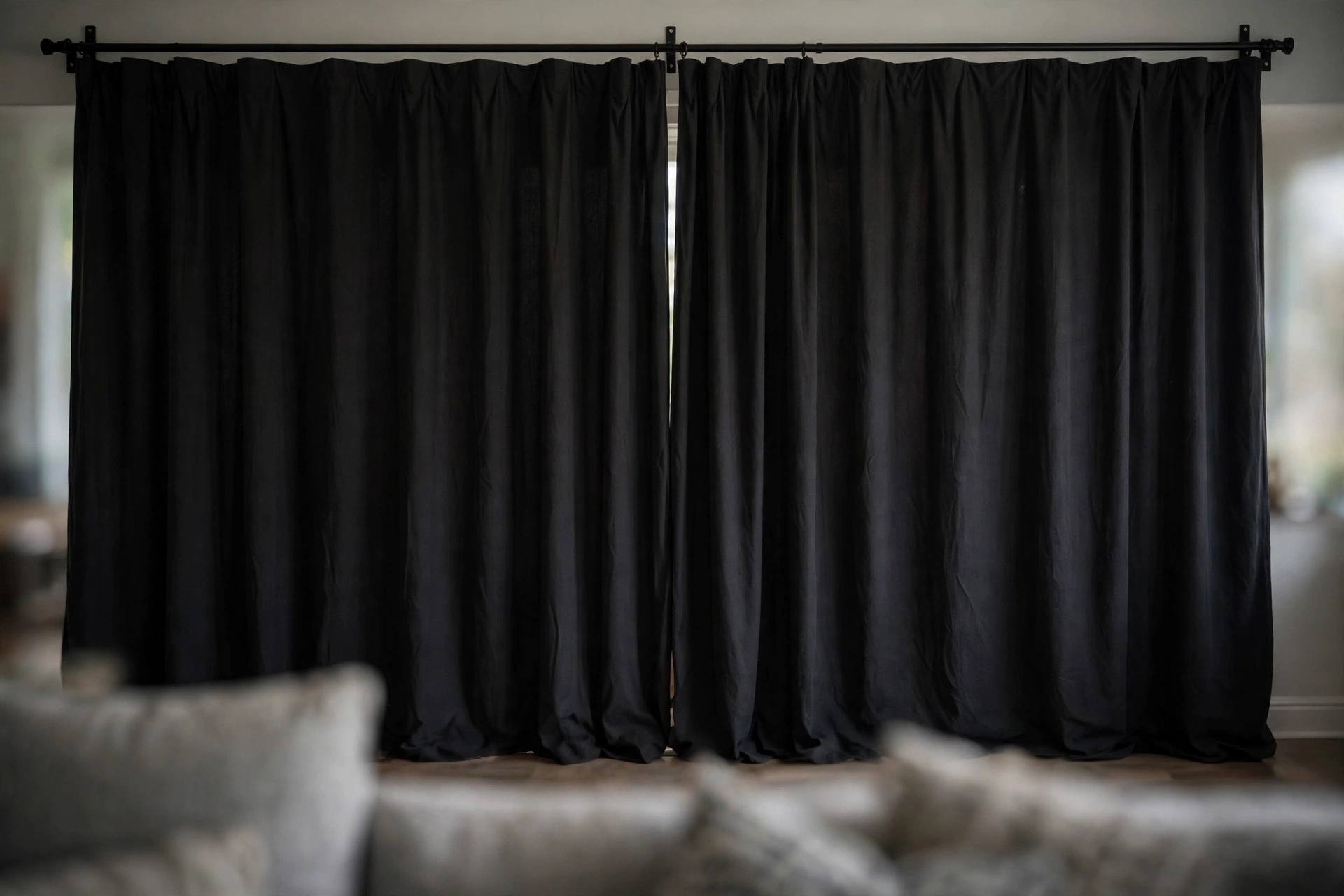
Black also works where darkness is the job. A bedroom that faces street lights, a media room with a television, and a home theater corner all benefit from black's ability to absorb stray light. In these rooms, black is not decoration first, it is function first, and the drama is a bonus. A black velvet panel in a media room, for example, cuts glare and softens the room's sound at the same time, which no pale fabric can do.
The common thread is contrast and purpose. Black works when the room gives it something to contrast with, light walls, light floors, or bright daylight, and when the room has a reason for darkness, sleep, viewing, or focus. When both are present, black looks intentional and expensive. When neither is present, black looks like a dark patch on the wall, and that is where the warnings in the next section come in.
When black shrinks a room: small, dim, and low-ceiling warnings
Black shrinks a room by absorbing the light the room cannot spare. A small room with one window feels smaller once black panels go up, because the dark mass pulls the walls inward. A dim room, such as a north-facing room with little direct sun, feels darker still, because black reflects almost no light back into the space. A low ceiling makes it worse, because the dark fabric sits closer to eye level and the room loses its sense of height.
The warning signs are easy to spot before you buy.
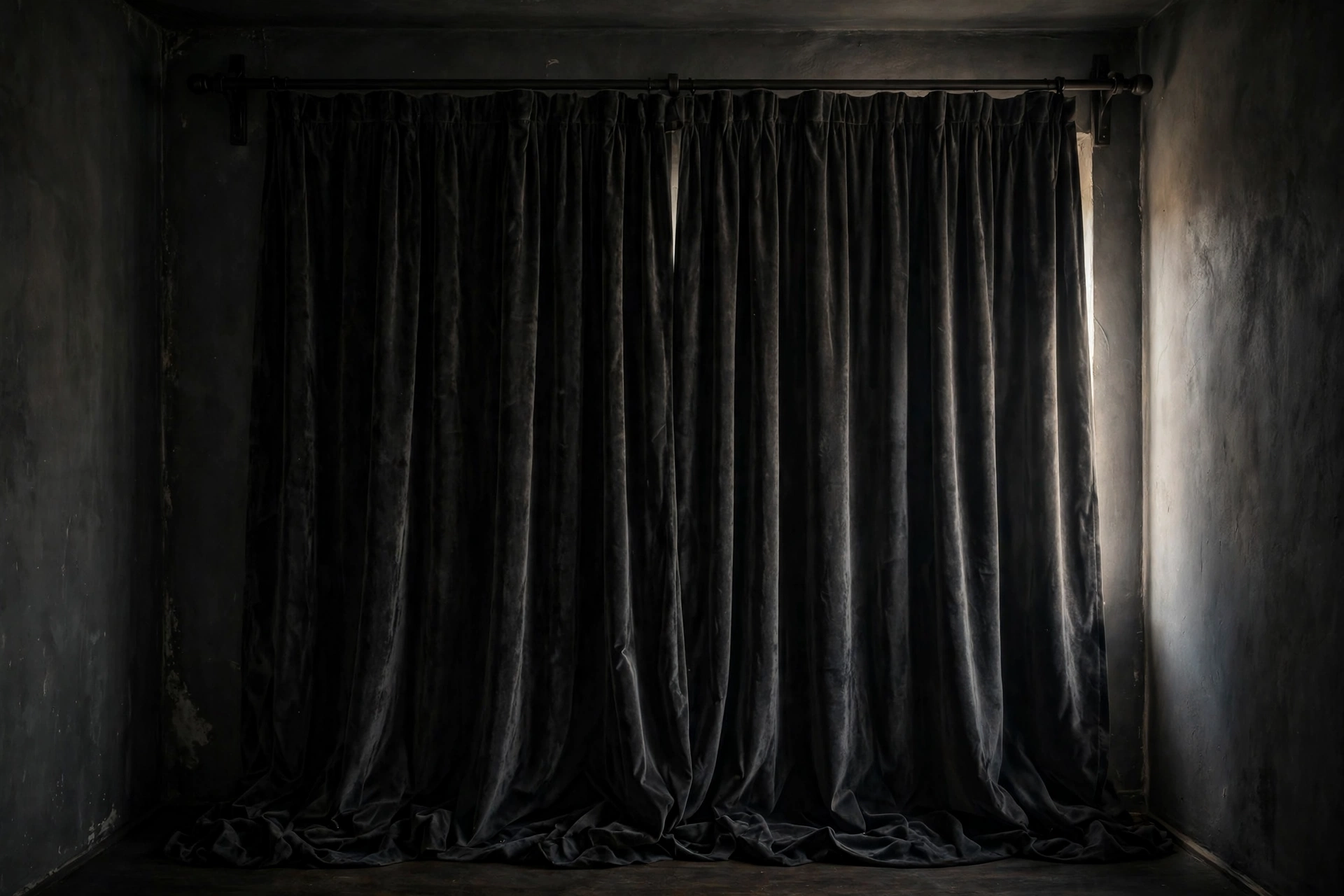
If the room already feels dark on a cloudy day, black will make it darker. If the window is the room's only light source, black panels that cover the glass when open will cut that light further. If the walls and floors are also dark, there is nothing left to contrast with, and the room can feel like a cave. Any one of these signs calls for caution, and two or more call for a different choice, such as a black sheer, a black accent layer, or a lighter color altogether.
There is also a middle path that keeps black without the shrink. Use black only on one window, not every window in the room, and keep the other windows light. Use a black sheer, which reads as black from a distance but lets daylight through. Or use black as a short tier, which covers only the lower half of the window and leaves the top open to light. These half measures are honest compromises, not failures, and they suit rooms that love the look of black but cannot carry the full weight of it.
Hanging black wide and high: the frame that stops the cave effect
Hanging is where black either becomes a frame or becomes a cave, and the difference is width and height. Hang the rod wider than the window frame, so the panels stack clear of the glass when open, and the window itself stays as large as possible. Hang the rod higher than the top of the frame, so the eye travels up and the ceiling feels taller. These two moves cost nothing, and they matter more for black than for any other color, because every inch of glass covered by black fabric is an inch of light lost.
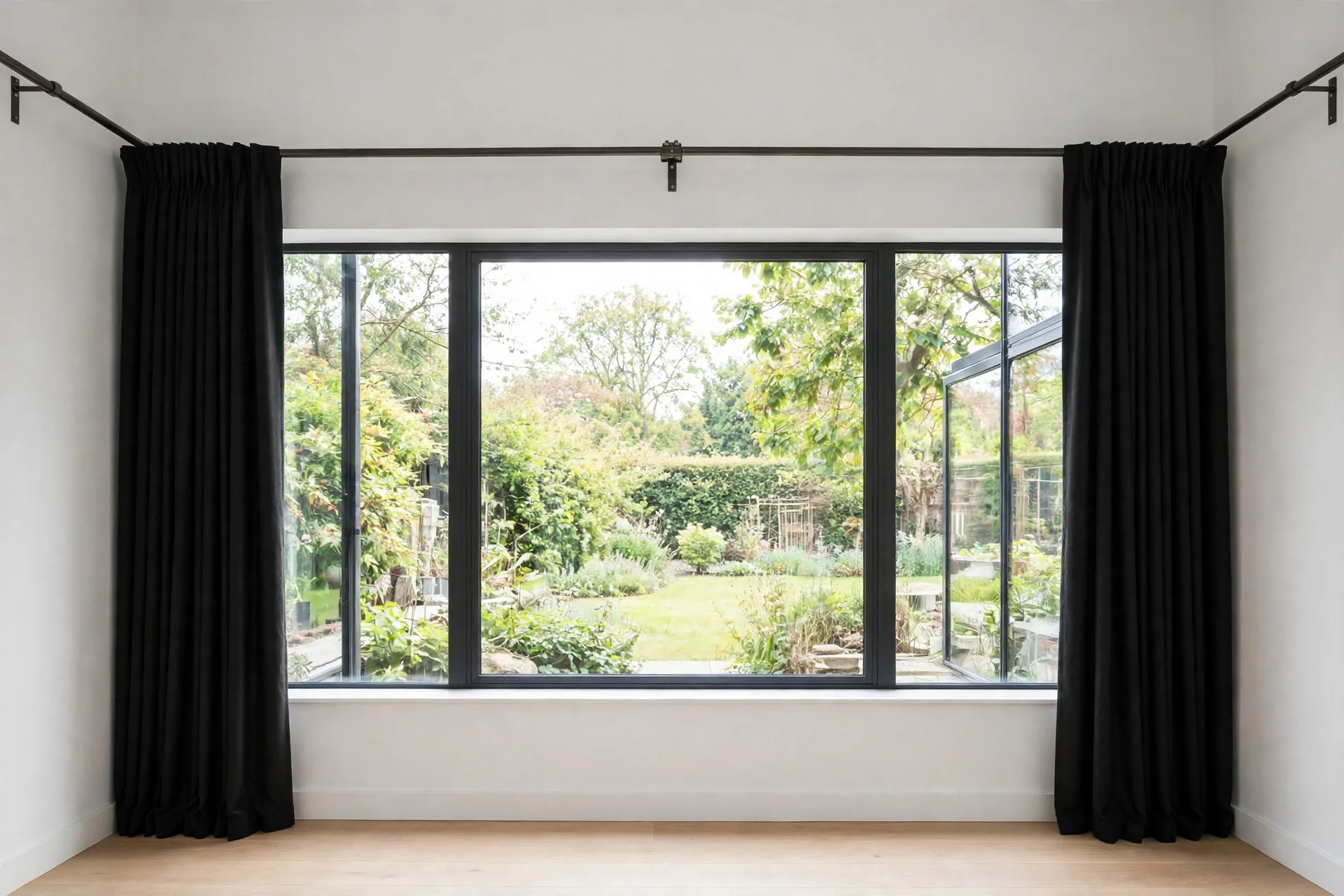
The rod itself matters too. Black panels are often heavy, especially velvet and thermal-lined types, so the rod must be strong enough to hold them without sagging, and the brackets must be fixed into solid wall, not just plaster. A sagging black panel looks worse than a sagging pale one, because the dark fabric shows every droop. Check the rod's rating and the bracket anchors before hanging, and use a center support on a wide span.
Inside the frame, the details finish the job. A wrap-around rod, which curves back to the wall at each end, closes the side gaps where light leaks around the panels, and it matters most in a bedroom where darkness is the point. A sheer layer behind the black panels gives daytime light when the heavy panels are open, so the room never feels closed during the day. The how to hang curtains guide covers rod placement and bracket mounting, and the how to measure for curtains guide covers the widths to order, so the panels you buy actually fill the space they are hung in.
One heading check matters before ordering: a rod-pocket top eats a few inches of drop compared with a grommet top, because the pocket itself sits above the fall. Measure the finished drop from the rod, not from the top of the pocket, or a panel ordered to the floor can end up short.
Black and light: blackout, room-darkening, and sheer black
Black is not the same as blackout, and this confusion causes more bad purchases than any other black mistake. A black sheer lets in plenty of light and gives daytime privacy only. A black light-filtering panel softens sun while keeping the room bright. A black room-darkening panel, such as heavy unlined velvet, cuts glare and most daylight but does not give full darkness. Only a black panel with a blackout lining gives the darkest result, and even then, light can leak around the edges unless the panels are hung wide and the side gaps are closed.
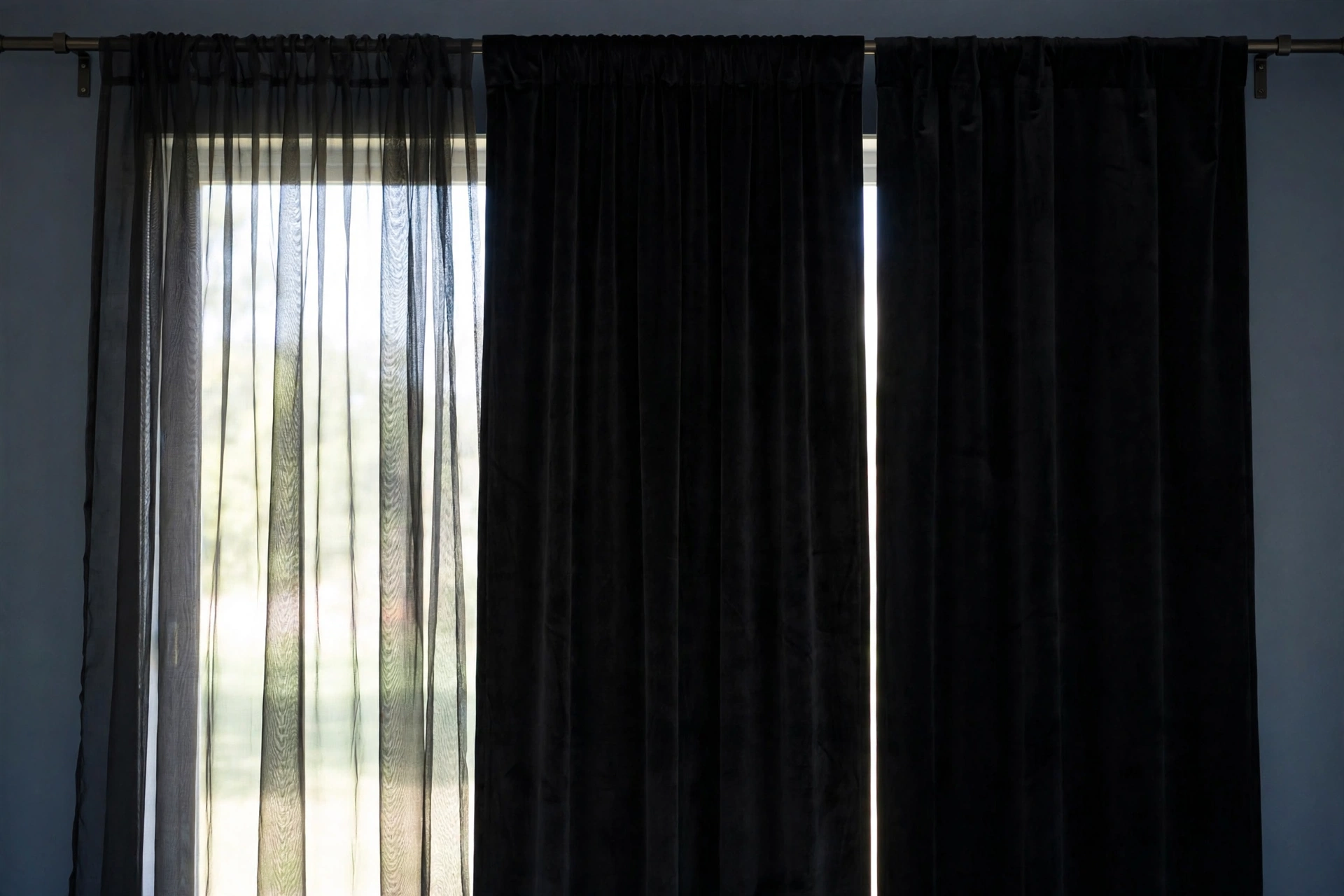
The practical rule is to buy the lining for the job and the color for the look, as two separate decisions. If the job is sleep, buy a blackout lining and let the black face be the bonus. If the job is glare control in a media room, a heavy velvet without a lining may be enough, and the softer drape is worth the trade. If the job is a black accent in a bright living room, a black sheer gives the look without losing the light. The best blackout curtains guide explains how lining types differ, and the best sheer curtains guide covers what sheers can and cannot do at night.
One more black light trap is the pale blackout claim in reverse. A pale panel with a blackout lining blocks light just as well as a black one, so a buyer who needs darkness does not have to buy black. Conversely, a black panel without a lining does not block light just because it is black. Judge every panel by its lining and its listing claim, never by its color alone.
Black with white walls, wood floors, and warm metals
Black's best partners are the lightest and warmest elements in the room. White walls give black its sharpest contrast, and the pairing suits a modern room, a monochrome scheme, or a room that needs a strong focal point. Cream walls soften the contrast slightly and suit a warmer room, but they need a warm metal or warm wood nearby to keep the black from looking cold. Wood floors, especially warm oak or walnut, ground black panels and stop the room from feeling stark, because the wood's warmth balances the black's severity.
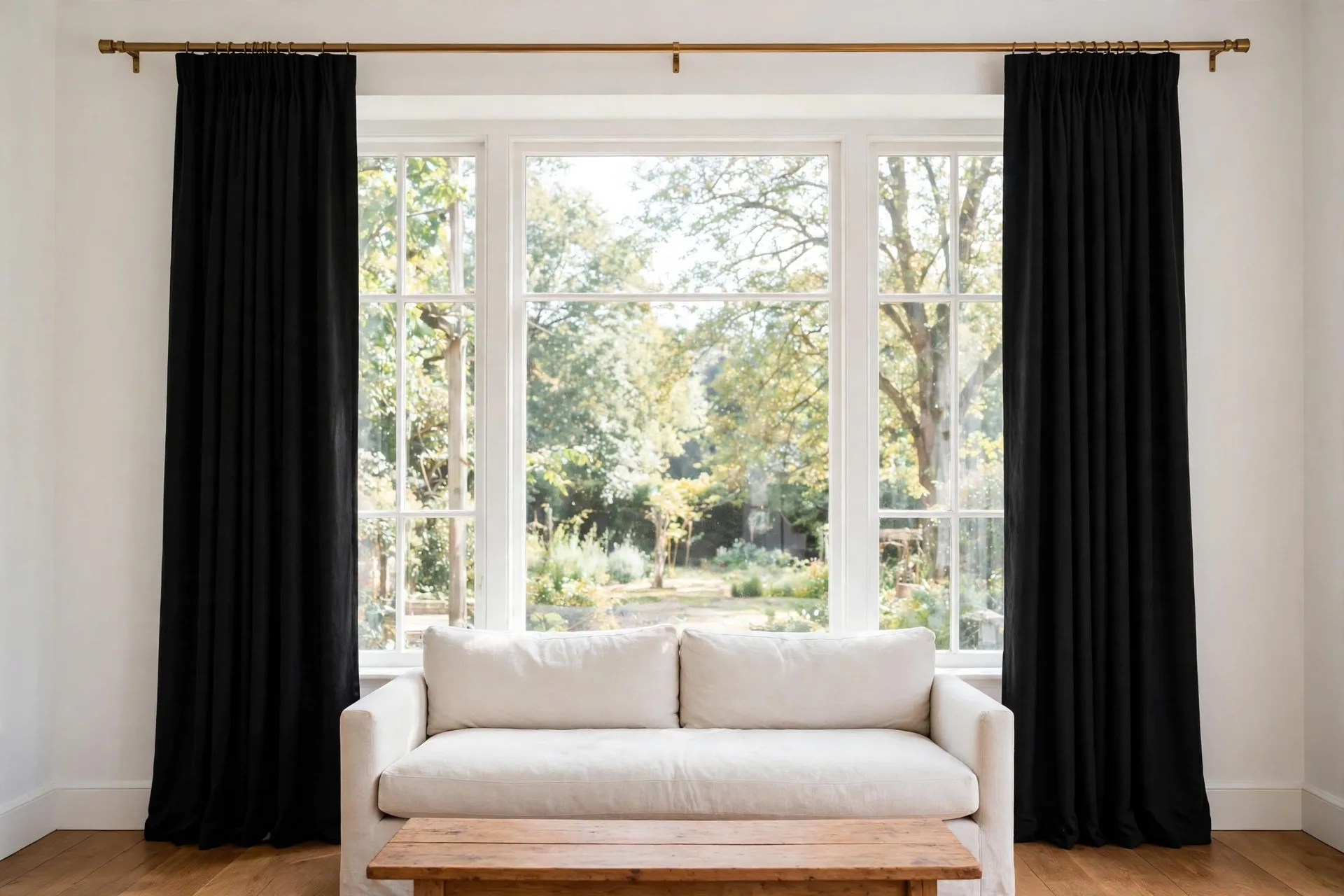
Warm metals are black's best hardware choice. Brass, aged gold, and bronze rods warm a black panel and suit a traditional or formal room, while matte black rods suit a modern room and keep the look quiet and continuous. Chrome and brushed nickel suit a cool, modern room, but they can make a black room feel clinical if nothing warm balances them. The rod is a small detail, but it is the detail the eye meets first at the top of the curtain, so it sets the temperature for the whole window.
The pairing to avoid is black on black on black: black walls, black panels, and black furniture together leave the room with no contrast and no rest for the eye. If the walls are already dark, a black curtain needs a light element nearby, such as white trim, a light rug, or a pale sofa, to keep the room from closing in. One dark element can be dramatic; three dark elements are usually just dark.
Black in a bedroom: sleep darkness without a gloomy day room
A bedroom is where black earns its keep, because darkness helps sleep, as set out in healthy-sleep guidance from the National Institutes of Health, and black gives the deepest darkness of any face color. A black blackout panel, hung wide with side gaps closed, blocks street light and early morning sun better than a pale panel with the same lining, because the black face absorbs the stray light that sneaks around the edges. For a light sleeper or a shift worker, that edge absorption is a real advantage, not just a look.
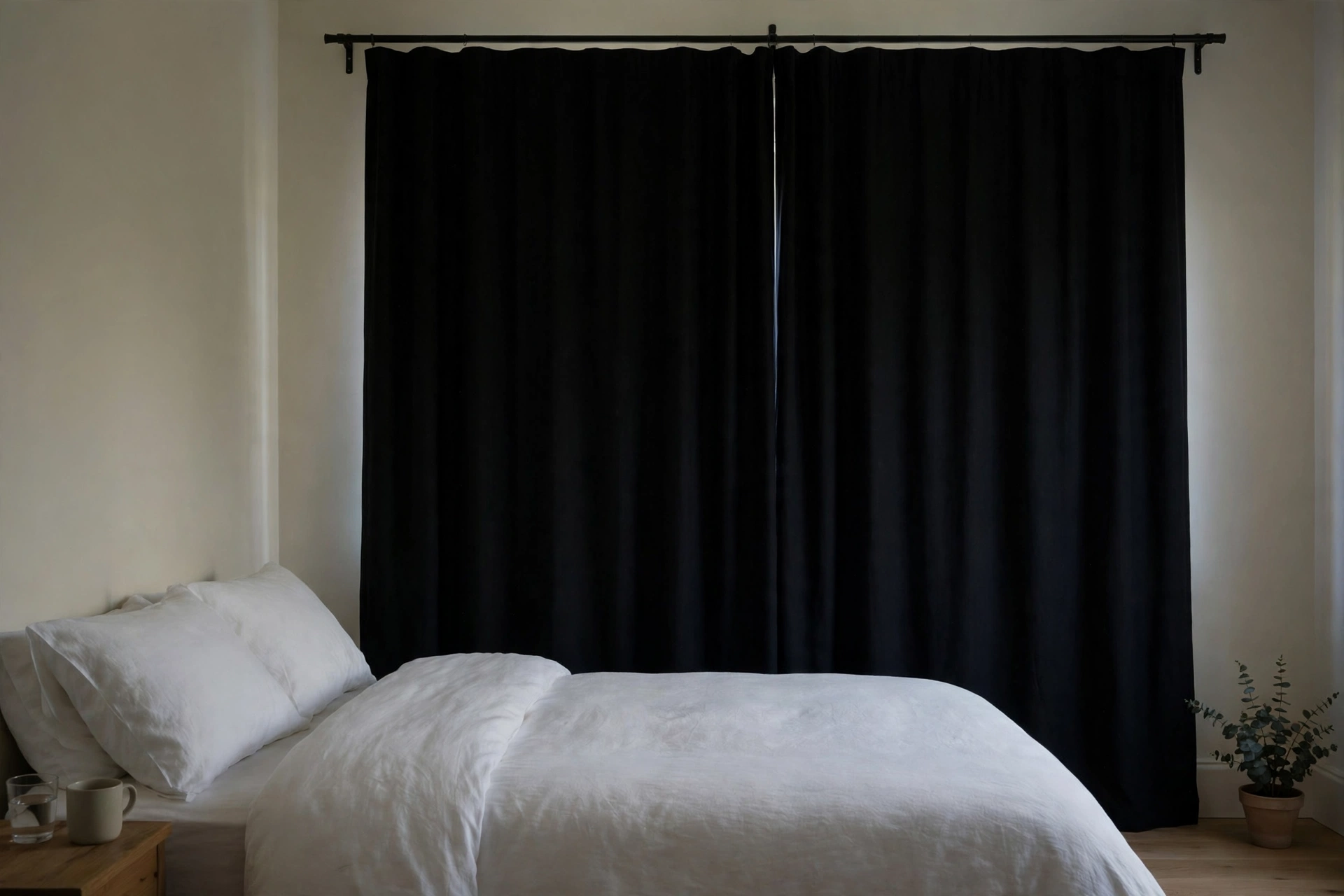
The risk is a gloomy day room. A bedroom that is dark at night should still feel pleasant in the morning, and black panels drawn all day will not do that. The fix is a sheer layer behind the black panels: open the black panels in the morning, leave the sheer closed, and the room gets soft daylight with daytime privacy. Tiebacks help too, because they hold the black panels clear of the glass and keep the window feeling large. The best curtains for bedroom guide covers sleep darkness in more depth, and the same layering idea applies there.
Bedding and wall color finish the bedroom balance. White or cream bedding beside black panels looks crisp and intentional, and it keeps the room from feeling like a cave. A light wall color does the same work at a larger scale. If the bedroom walls are already dark, black panels need a light ceiling and light bedding to keep the room livable, or the bedroom will feel dark at every hour, not just at night.
Black in a living room and media room: drama with daylight control
A living room uses black differently from a bedroom, because the room must work by day and by evening. A black linen-look panel gives a modern living room texture and drama without the weight of velvet, and it suits a room with light walls and a pale sofa. A black sheer gives the same room a black accent without losing daylight, and it suits a room where the black is decoration rather than function. The living room pick should be the one that makes the sofa and the rug look deliberate, not the one that darkens the room the family lives in.
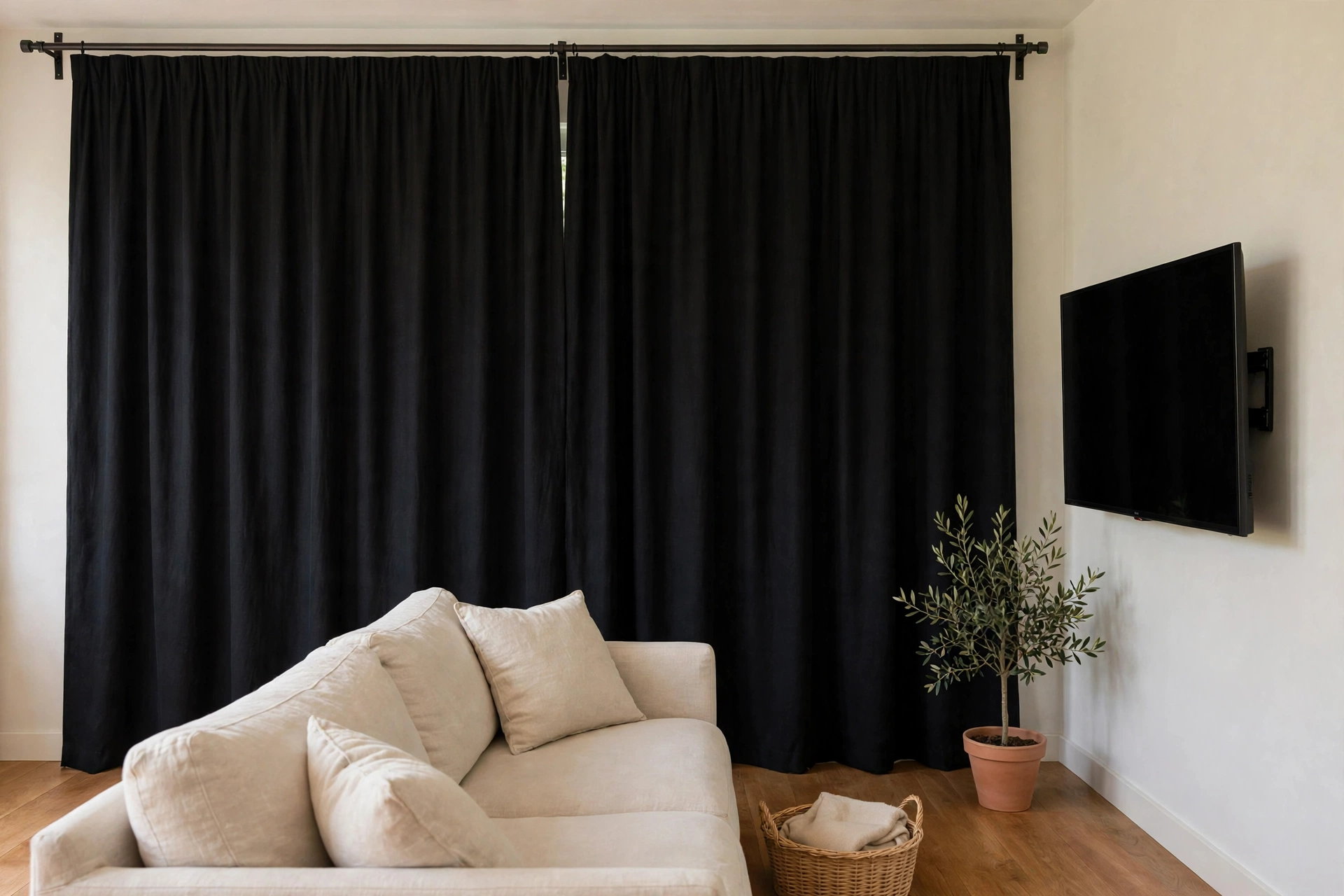
A media room is black's natural home. A black velvet panel cuts screen glare, absorbs stray light, and softens the room's sound, all at once. The room is meant to be dark when in use, so black's light absorption is a feature, not a flaw. The best curtains for living room guide covers how a living room's light changes the fabric choice, and a media corner follows the same logic with darkness as the priority.
The living room mistake is buying bedroom blackout panels for a room that never needs darkness. A blackout panel in a bright living room feels heavier than the room needs, and it costs more than a room-darkening or sheer panel that would do the job. Match the lining to the room's real job: blackout for sleep and viewing, room-darkening for glare, sheer for accent. The color stays black in all three, but the room feels completely different.
A home office is another room where black earns its keep. A black blackout panel cuts screen glare through the working day, and a plain black panel gives a neutral backdrop on video calls, with no pattern to distract. Keep the panel matte rather than shiny, so it does not catch light on camera.
Dust, lint, and pet hair on black: the routine that keeps it clean
Black shows dust, lint, and pet hair more than any other curtain color, and this is the price of the drama. It does not attract more dust than a pale curtain, but every speck is visible against the dark fabric. A buyer who hates lint rollers should know this before ordering, not after hanging. A household with pets, especially light-colored pets, will see hair on black panels daily, and that is a routine to accept, not a defect to fix.
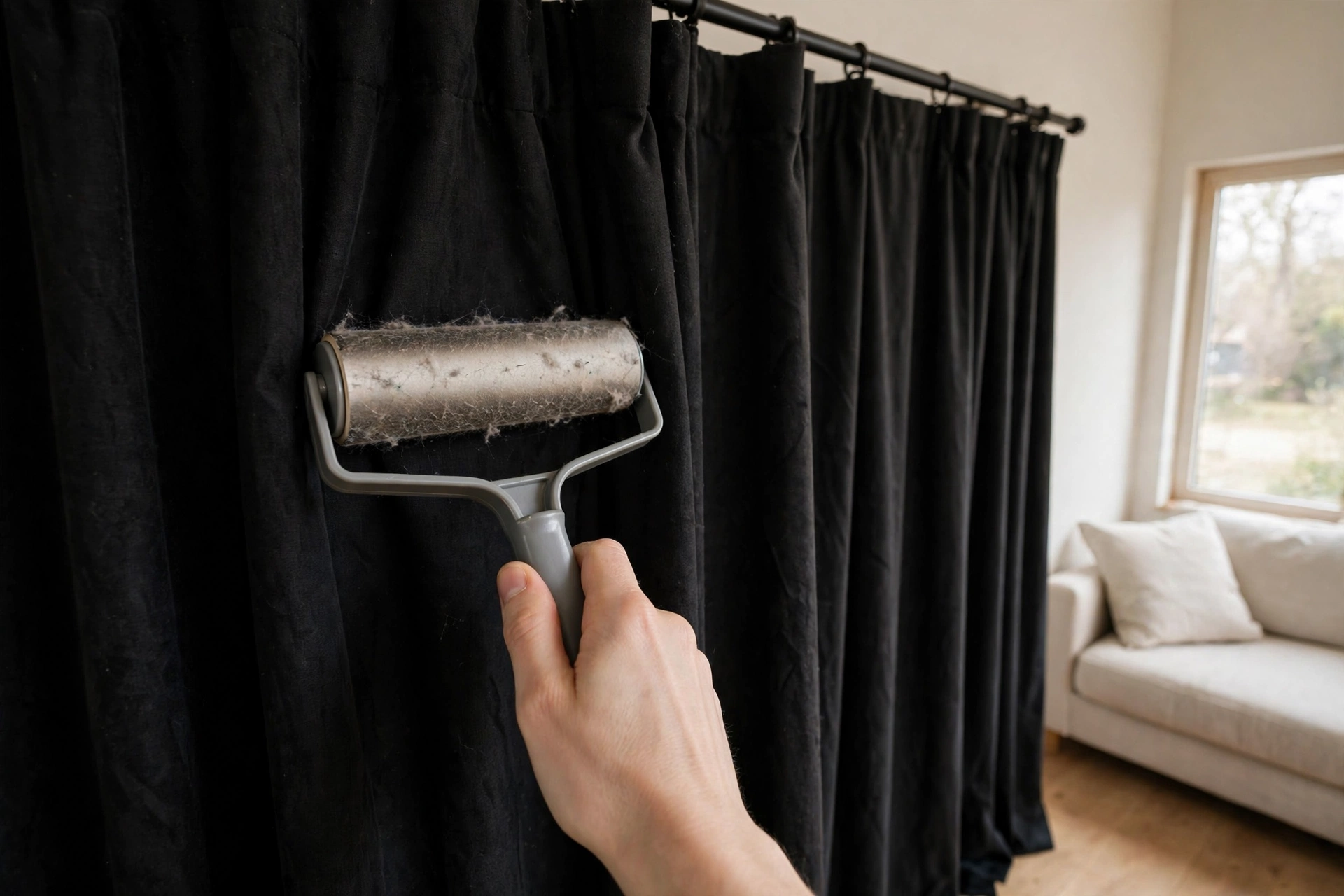
The routine itself is simple. A weekly shake outside or a vacuum with a brush head removes most dust, and a lint roller handles pet hair between washes. Velvet needs a soft brush rather than a hard vacuum head, because the pile marks easily. Wash only as the care label directs, and check the GINETEX care symbols on the label before the first wash, since the symbols, not habit, say whether the fabric can be machine washed, and at what temperature.
Fabric choice changes how much work black demands. A smooth, tightly woven face shows less lint than a velvet pile, and a linen-look slub hides dust better than a flat black face. If low maintenance matters more than drama, a smooth black panel is the honest pick, and a velvet panel is the pick for a buyer who accepts the upkeep. Neither choice is wrong, but the upkeep should be chosen, not discovered.
Fading and heat: keeping black black in a sunny window
Black fades in sun, and the fading shows first at the folds, where the fabric catches the most light. The color shift runs toward brown or reddish tones, and it is more noticeable on black than on any other color, because there is no pattern to hide behind. A lining slows the fading, because the lining takes the brunt of the sun instead of the face fabric. Rotating the panels now and then, so the same fold edge does not always face the sun, helps too. If the window gets strong direct sun, a sheer liner between the glass and the curtain adds a further shield.
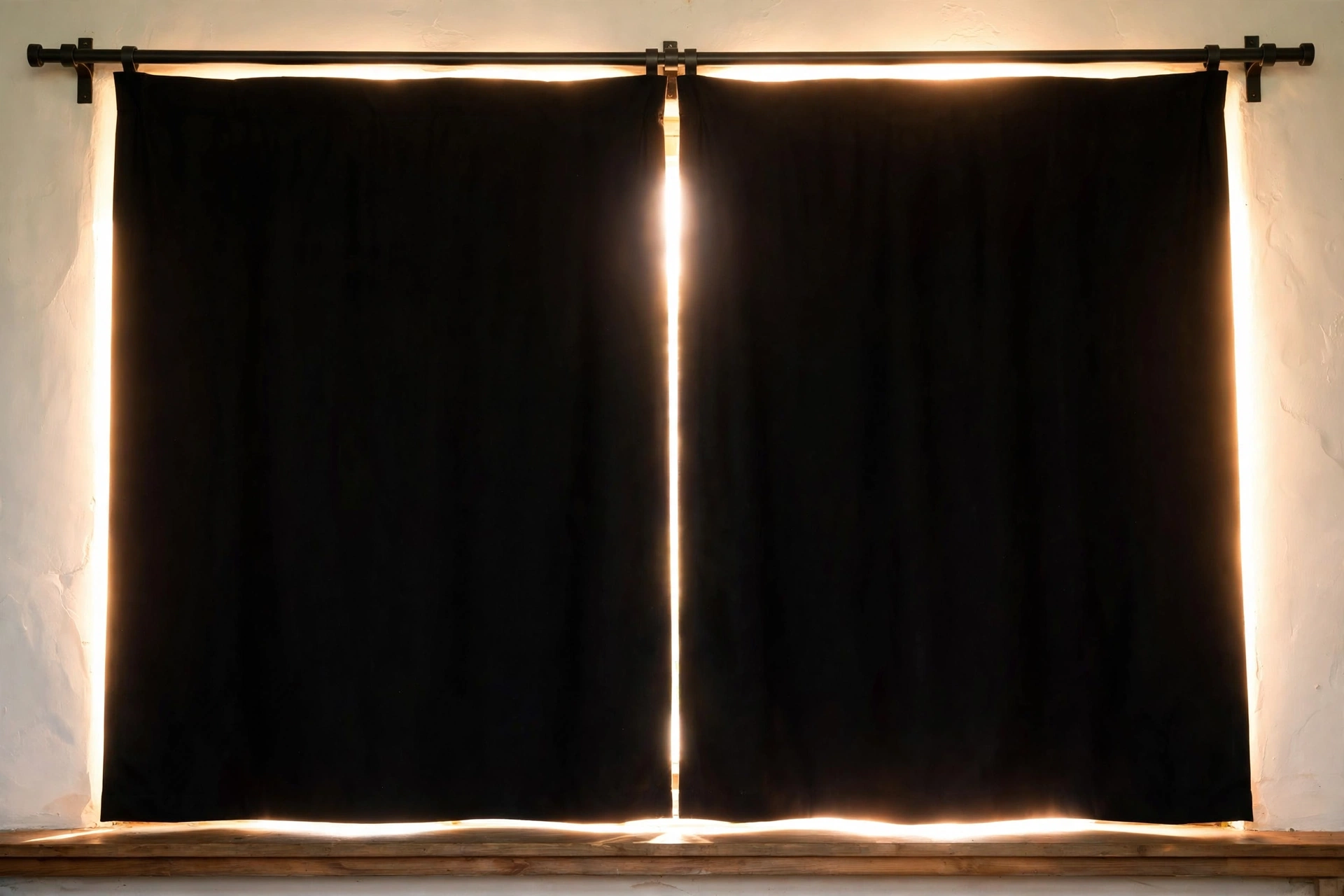
Heat is black's other sunny-window problem. Black fabric absorbs visible light and heat, so a black panel in direct sun gets hotter than a pale one, and the room behind it can feel warmer. A thermal lining with a light or reflective backing facing the glass helps, because the backing bounces heat back instead of letting the black face absorb it. Closing the panels during the hottest part of the day also helps, and it is the same habit energy guidance on window coverings from the U.S. Department of Energy recommends for any window covering in summer.
When a fabric carries the OEKO-TEX STANDARD 100 label, it has been tested for harmful substances, which is a useful check for a bedroom curtain that hangs close to where you sleep. The OEKO-TEX STANDARD 100 label explains what the label covers. It is not a quality grade and it does not say the fabric will not fade, but it is a solid safety check to look for alongside the care label.
Black mistakes that turn drama into gloom
The most common black mistake is buying blackout when the room needs only an accent, and ending up with a dark, heavy room that never needed darkness. The second is hanging black panels exactly as wide as the glass, so the fabric covers the window even when open and the room loses light all day. The third is pairing black with dark walls and dark furniture, leaving the room with no contrast. The fourth is ignoring the lint routine, and living with panels that look dusty a week after washing. The fifth is judging darkness by color alone, and buying an unlined black panel for a bedroom that needed a lining.
A last black mistake is forgetting the ceiling. A white ceiling is the cheapest way to keep a black room feeling tall, because it reflects light back down even when the walls are dark. A dark ceiling with black panels closes the room from above as well as from the sides, and few rooms can carry that. Keep the ceiling white, hang the panels high, and the room keeps its height even when the curtains are black.
Frequently asked questions about black curtains
The questions people ask most about black curtains cover darkness, lint, and scale, with the detail in the guide above.
Do black curtains make a room look smaller?
Yes, they can, especially in a small, dim, or low-ceiling room, because black absorbs light instead of reflecting it. Hang the panels wide and high so the fabric stacks clear of the glass, keep the walls and ceiling light, and add a sheer layer for daytime light. These three moves stop black from closing the room in, but a very small or very dim room usually looks better with a lighter color or a black sheer.
Are black curtains the same as blackout curtains?
No. Black is a color, and blackout is a lining and a function. A black sheer lets in plenty of light, a black room-darkening panel cuts glare but does not give full darkness, and only a black panel with a blackout lining gives the darkest result. Judge every panel by its lining and its listing claim, never by its color alone.
Do black curtains make a room hotter?
A black panel in direct sun gets hotter than a pale one, because black absorbs more heat. A thermal lining with a light or reflective backing facing the glass helps, and closing the panels during the hottest part of the day helps too. In a sunny west-facing window, a thermal blackout panel is the honest pick, not an unlined black panel.
Do black curtains show dust and pet hair?
Yes, more than any other color, because every speck is visible against the dark fabric. Black does not attract more dust, but it shows what lands on it. A weekly shake or vacuum with a brush head, plus a lint roller for pet hair, keeps black panels looking clean. A smooth face shows less lint than velvet pile.
Will black curtains fade in the sun?
Yes, slowly, starting at the folds, and the color can shift toward brown or reddish tones. A lining slows the fading, a sheer liner adds a shield, and rotating the panels now and then spreads the exposure. Polyester fabrics generally resist sun fading better than natural fibers, so check the listing for the fiber content on a sunny window.
Can you use black curtains in a small bedroom?
Yes, if the room has decent daylight and the panels are hung wide and high with light walls and light bedding. A small bedroom with little daylight usually looks better with a lighter color, or with black used on one window only. The test is simple: if the room already feels dark on a cloudy day, black will make it darker.
Do black sheer curtains give privacy?
By day, yes, from outside, because the sheer softens the view in. At night, no, because interior light makes the sheer see-through from outside. A black sheer is a daylight accent and a daytime privacy layer, not an evening privacy solution. Layer it with a heavier panel for night privacy.
What color walls go best with black curtains?
White walls give the sharpest contrast and suit a modern room, cream walls soften the contrast and suit a warmer room, and light gray walls give a calm monochrome look. Dark walls with black curtains usually leave the room with no contrast, so a dark-walled room needs a light element nearby, such as white trim or a pale sofa, to carry black panels.
Are black curtains good for a media room?
Yes, black is the natural media-room choice. A black velvet or blackout panel cuts screen glare, absorbs stray light, and softens the room's sound. The room is meant to be dark when in use, so black's light absorption is a feature here, not a flaw.
This guide is research-based curation: we compared maker specifications, published reviews, and current prices. Read how we choose.