 Best
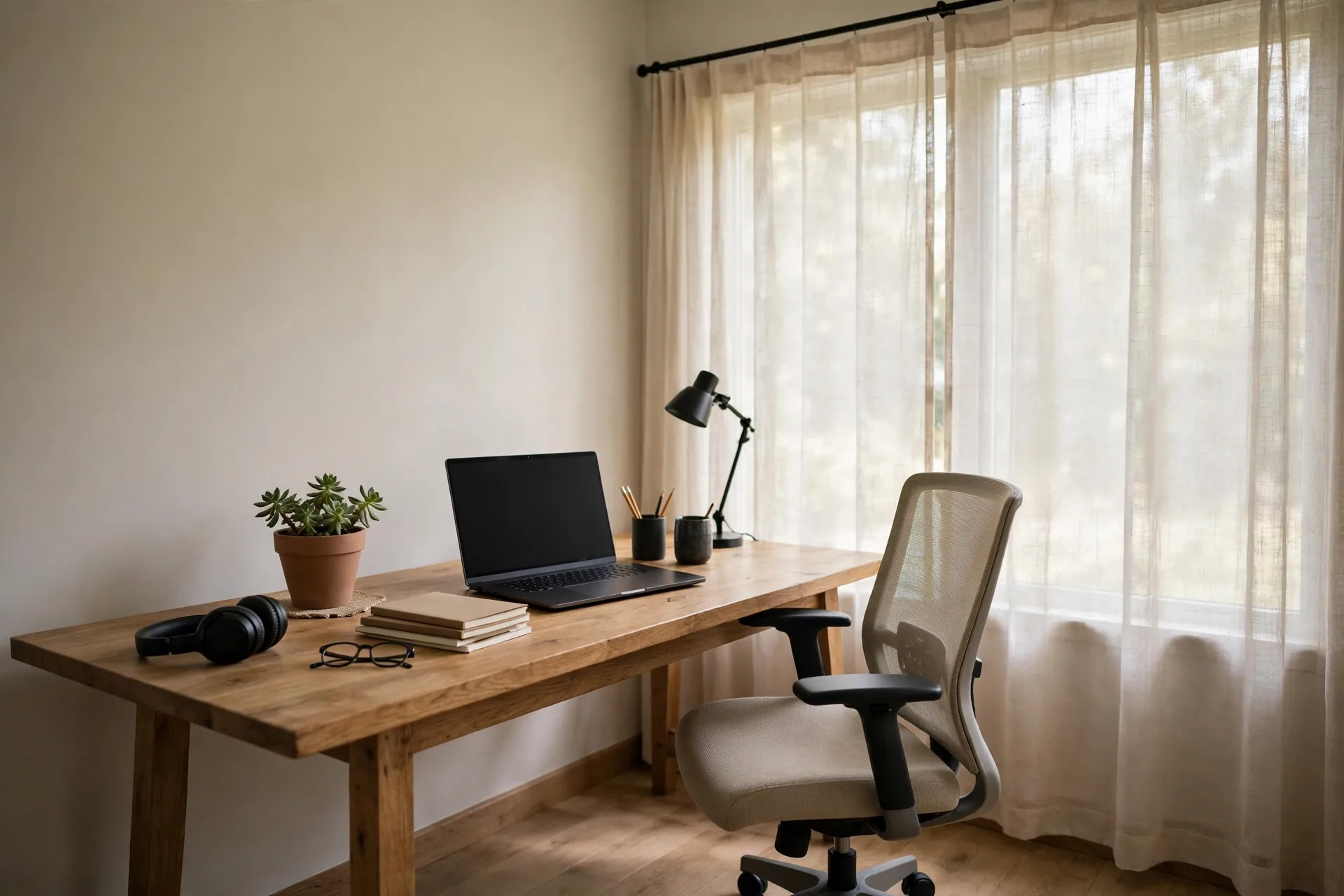
Best Curtains for Home Office
A home office curtain has a workday job: cut screen glare, keep daylight, give privacy for calls, and open and close without a fight. This guide sorts light levels, color on camera, and rods by that job.
The best curtains for home office work are the ones that tame the screen first and decorate second. A panel that softens direct sun, keeps the room bright enough to work in, and gives a calm background on a video call will serve a workday better than a beautiful panel that leaves you squinting at a washed-out monitor. Choose by light level, privacy, and how often the panels move, then choose color.
A home office is used in daylight, often for long stretches, and often with a camera on. A bedroom panel can shut light out and stay shut. An office panel must handle morning and afternoon sun, a call at short notice, a street outside, and a desk near the glass, all without turning the room into a dark box. This guide covers glare without darkness, light levels at a desk, color on camera, privacy, rods for daily use, and what to avoid.
Home office picks by workday job
Light-filtering linen-blend panels suit all-day desk work, blackout-lined panels suit bright rooms where calls need glare shut out, and layered sheer and room-darkening panels suit video calls by day and privacy at night. The picks below are grouped by workday job, not by brand. Check fabric, lining, heading, and care label on the listing for the panel you choose.
As an Amazon Associate, we earn from qualifying purchases.
| Pick | Type | Lining | Best for |
|---|---|---|---|
| 1 | Light-filtering linen-blend panels | Unlined | All-day desk work in soft daylight |
| 2 | Semi-sheer privacy panels | Unlined | Street-facing offices |
| 3 | Room-darkening thermal-lined panels | Thermal lining | Sun-facing desks with afternoon glare |
| 4 | Layered sheer and room-darkening panels | Sheer layer plus room-darkening layer | Video calls by day and privacy at night |
| 5 | Blackout-lined panels | Blackout lining | Bright rooms where calls need glare shut out |
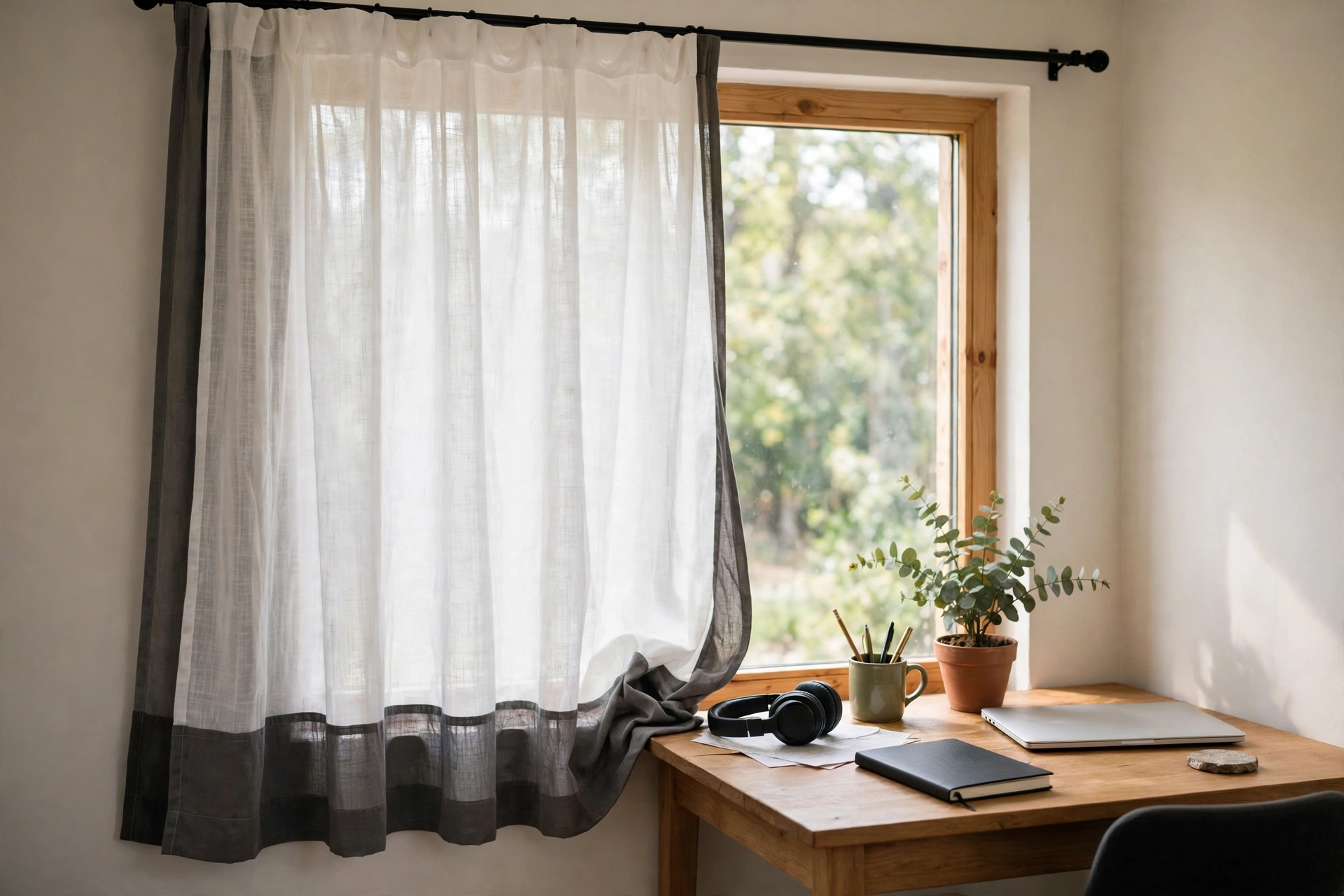
| 6 | Light-filtering polyester panels on grommets | Unlined | Desks where panels open and close many times a day |
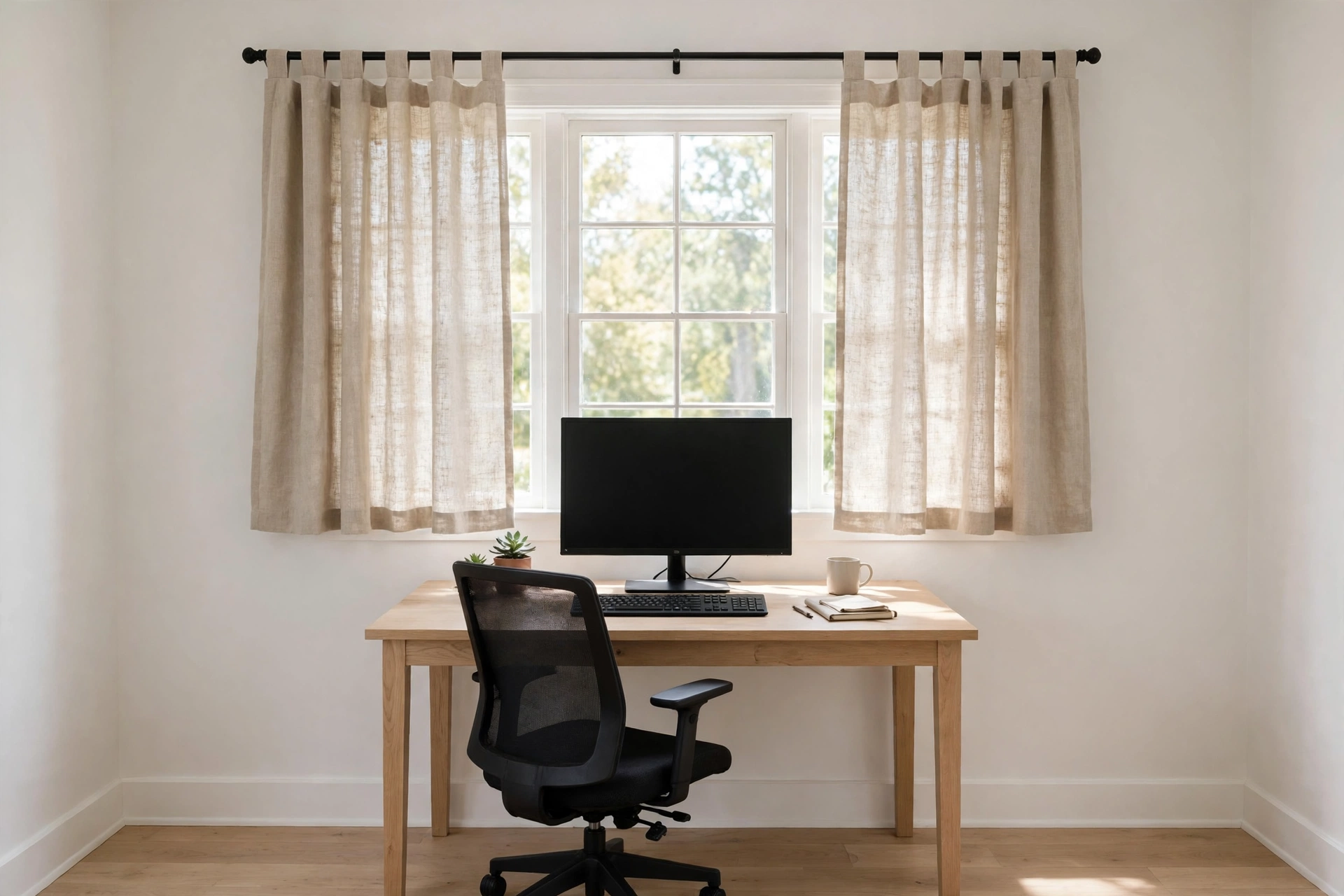
1. Light-filtering linen-blend panels: best for all-day desk work in soft daylight
- Best for: A desk used all day, where soft daylight matters and harsh sun needs softening rather than blocking.
- Key features: Linen-blend weave, light-filtering semi-sheer fall, grommet heading that draws easily, soft, natural texture, plain color, 52 by 45 inches, 2 panels, sill-length fall.
- Pros: Keeps the room bright, softens direct sun, calm, natural look on camera.
- Cons: Little privacy at night when room lights are on, no real glare control in a sun-blasted window alone, linen blends wrinkle and need care as the label directs.
2. Semi-sheer privacy panels: best for a street-facing home office
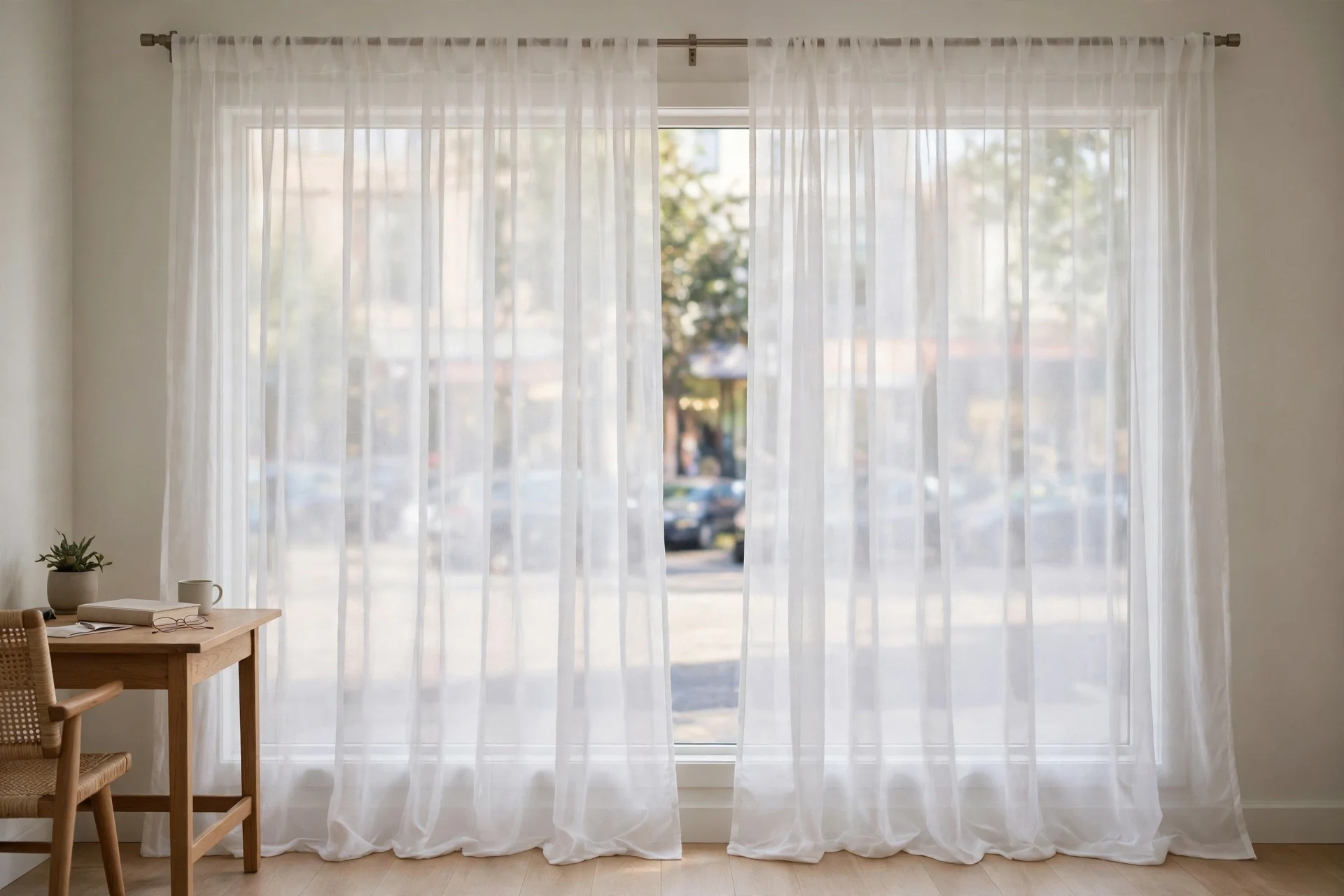
- Best for: A ground floor or street-facing office where passers-by can see in by day and daylight still matters.
- Key features: Semi-sheer woven fabric, denser weave than a plain sheer, plain color, full window coverage when closed.
- Pros: Stronger daytime privacy than a thin sheer, daylight still comes through, soft light for calls.
- Cons: Privacy fades at night with lights on inside, does not block strong glare alone, needs a second layer for evening cover.
3. Room-darkening thermal-lined panels: best for a sun-facing desk with afternoon glare
- Best for: A desk facing sun for part of the day, where glare and heat at the window both need taming.
- Key features: Room-darkening face fabric, thermal lining behind it, plain, mid-tone color, heading that lets panels draw fully shut.
- Pros: Cuts glare more firmly than a sheer, helps soften heat and drafts at the window, steadier light for calls.
- Cons: Room grows dim when panels are fully closed, heavier than an unlined panel, so the rod must suit the weight, check the care label before washing.
4. Layered sheer and room-darkening panels: best for video calls by day and privacy at night
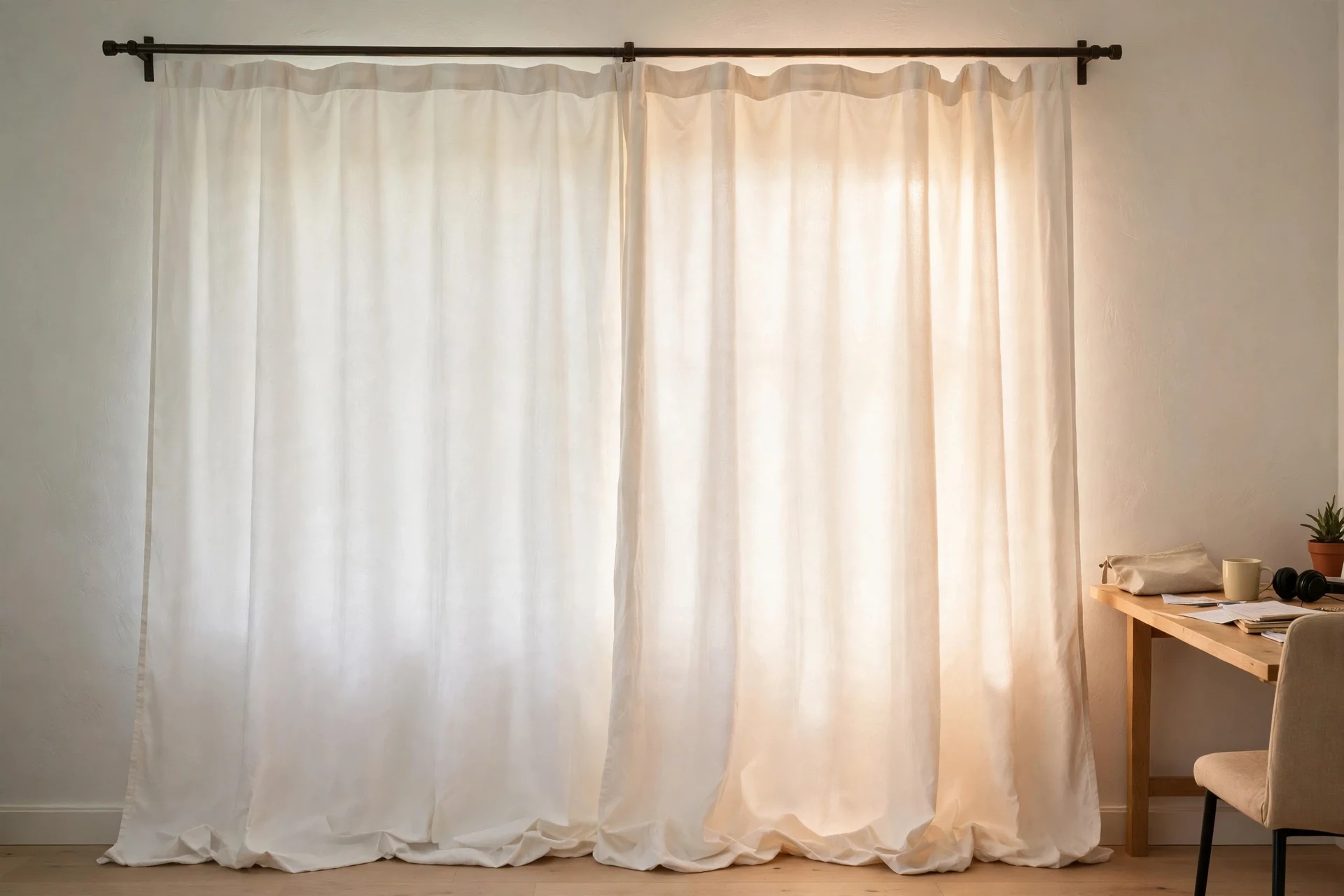
- Best for: An office that needs soft daylight and a calm call background by day, plus real privacy after dark.
- Key features: Sheer layer and room-darkening layer sewn into one two-layer panel, grommet heading, plain Winter White color, thermal insulation woven in
- Pros: Daylight through the sheer layer by day, room-darkening layer dims glare and gives evening privacy, hangs on a single rod, so no double track is needed.
- Cons: Layers cannot be drawn separately, so the sheer cannot stay up alone while the dark layer closes, two layers stack wider when open, the panel must close fully for evening privacy.
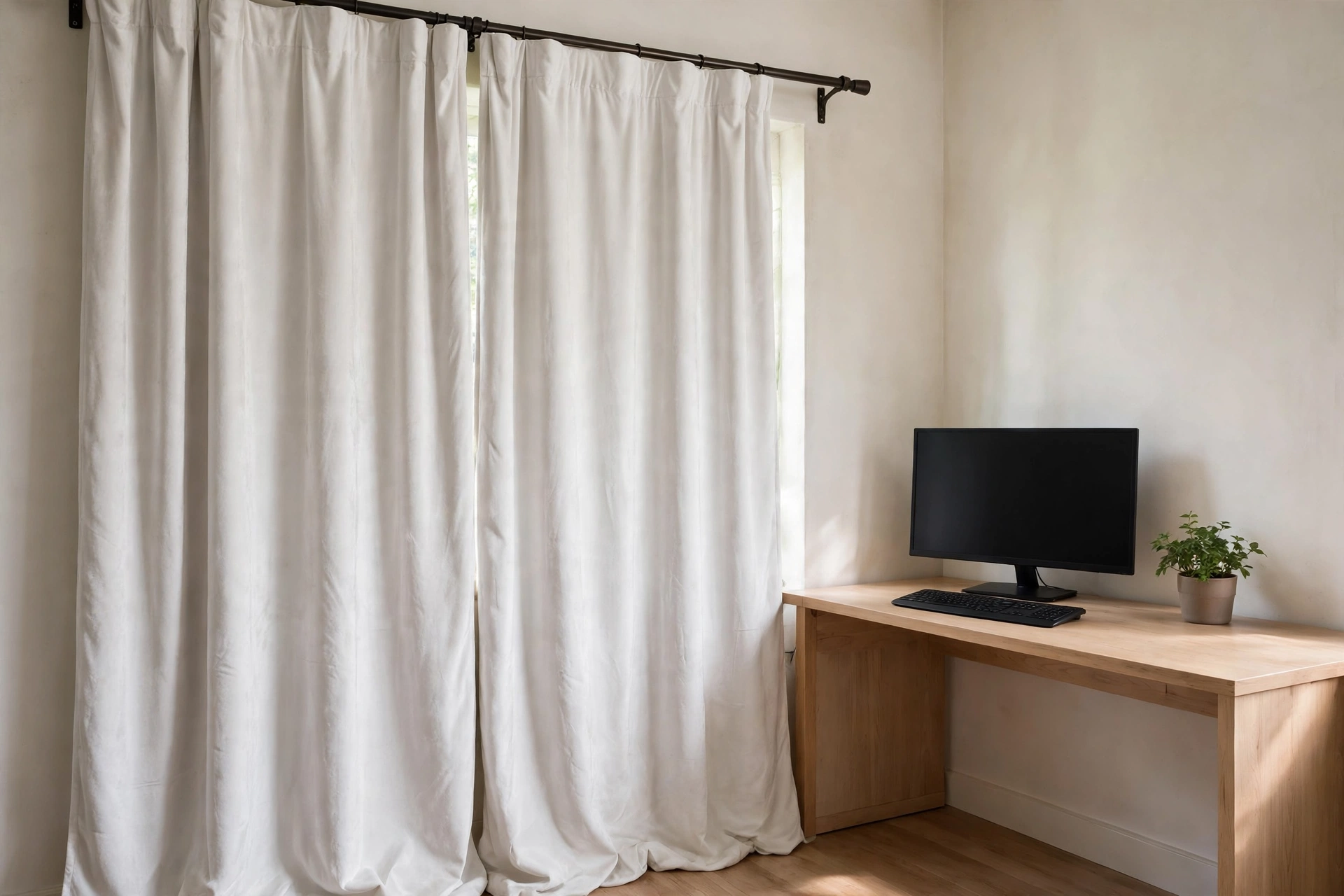
5. Blackout-lined panels: best for a bright room where calls need glare shut out
- Best for: A very bright room, or a call schedule that falls in the harshest sun, where only a firm light block will do.
- Key features: Velvet face with a blackout lining, thermal insulated, noise reducing, full window plus frame coverage when closed, heading that draws fully shut.
- Pros: Firmest glare control of the picks here, clean, plain background on camera, strong evening privacy.
- Cons: Room goes dark when closed, so use it for calls and glare hours rather than all day, heaviest pick here, so rod and brackets must be firm, light can still leak at edges if coverage is short.
6. Light-filtering polyester panels on grommets: best for desks where panels open and close many times a day
- Best for: A desk by the window where panels move with the sun, for calls, and for breaks, many times a day.
- Key features: Light-filtering polyester fabric, grommet heading, plain color, easy slide on the rod.
- Pros: Slides freely with one hand, keeps daylight while softening sun, polyester care is often simpler than linen care, as the label directs.
- Cons: Less natural texture than a linen blend, little night privacy alone, no firm glare block in a sun-blasted window.
Glare control that leaves daylight in the room
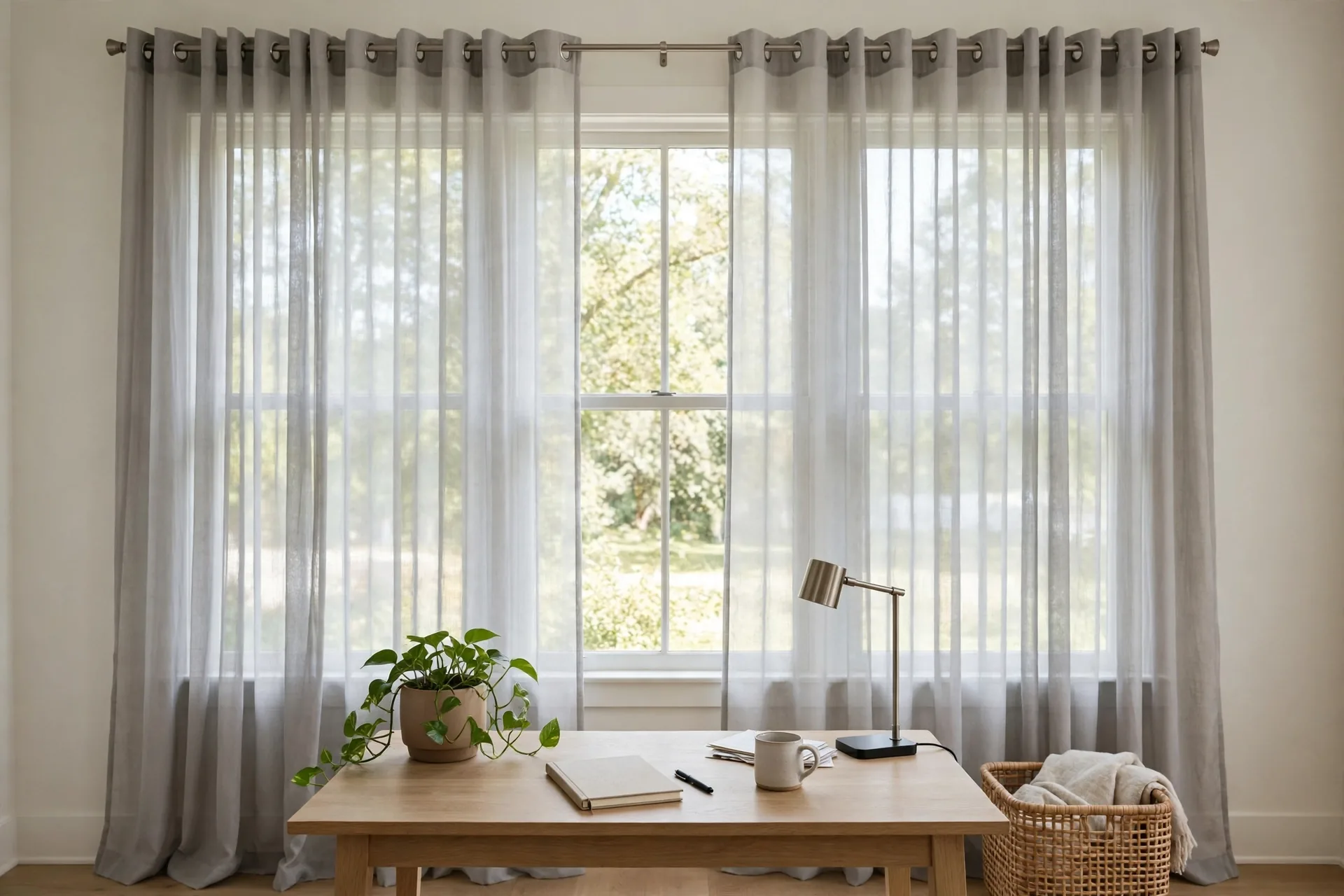
Glare control in a home office means softening the bright patch that hits the screen and the eyes, not shutting the room down. Direct sun makes a bright stripe on the monitor and forces squinting, while bright sky behind a chair makes a face hard to see on a call. A sheer or light-filtering layer spreads that light instead of blocking it, so the room stays bright and the harsh edge goes.
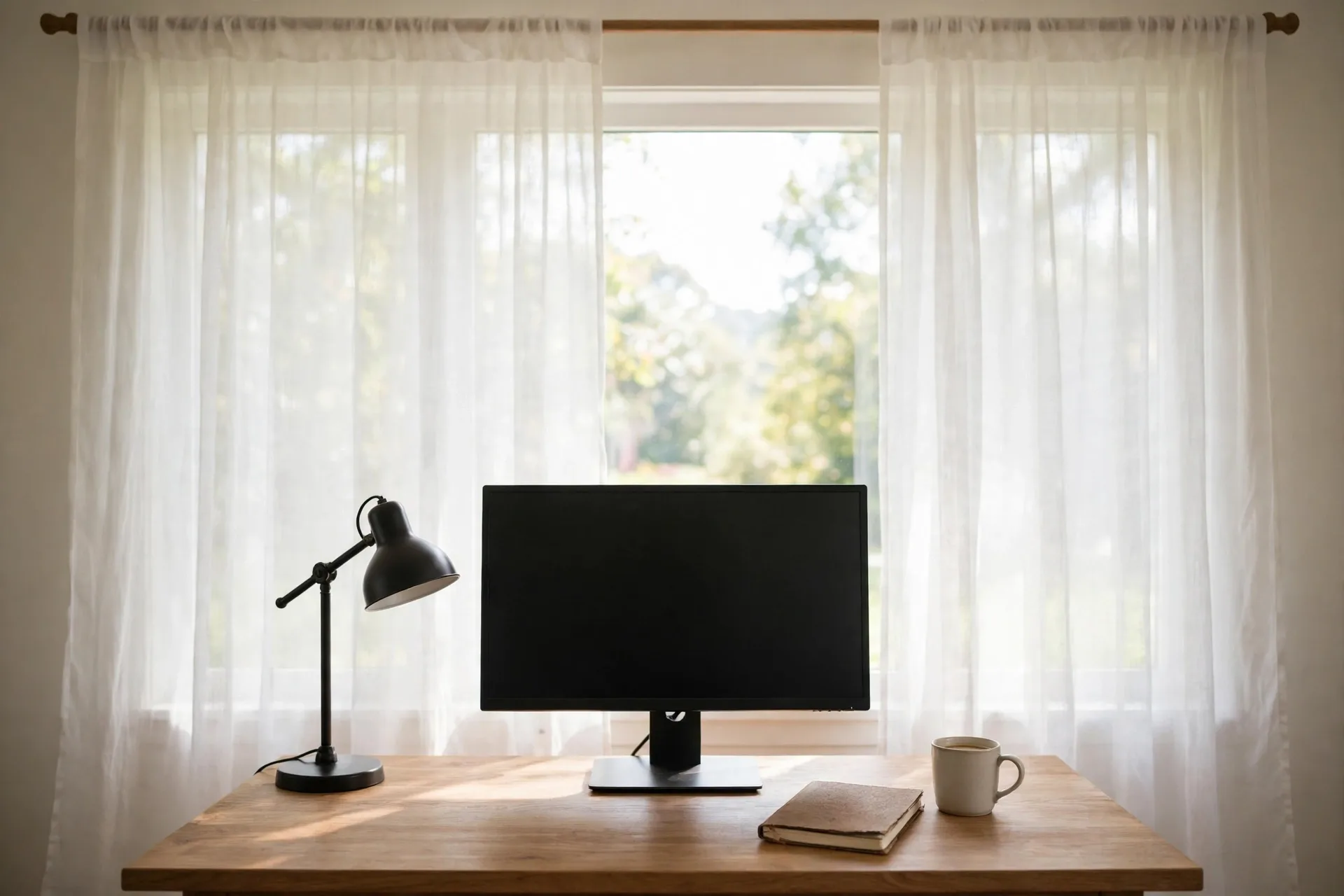
Try the light at the hours you actually work before you buy. A panel that feels fine in the morning can fail in the afternoon, so sit at the desk, look at the screen, and note when the bright patch appears and when it moves off. That timing tells you whether a soft layer will do. A layered set handles this best, because the sheer stays up all day and the heavier layer closes only for the glare hours. Coverage matters as much as weave, so hang the rod past the frame and choose width that closes fully. For measuring steps, see How to Measure for Curtains.
A cold window behind a desk is a comfort problem curtains help with: a lined panel softens drafts and cold air at the desk, though it does not insulate the way glazing does.
Sheer, light-filtering, and blackout: what each one does at a desk
Sheer, light-filtering, and blackout panels sit on a scale from bright to dark, and the right point depends on the desk, not on a label. A sheer panel lets most daylight through in softened form. It eases harsh sun, keeps the room bright, and blurs shapes from outside by day, but it does not stop strong glare or give night privacy. For sheer curtains, see Best Sheer Curtains.
A light-filtering panel sits one step darker.
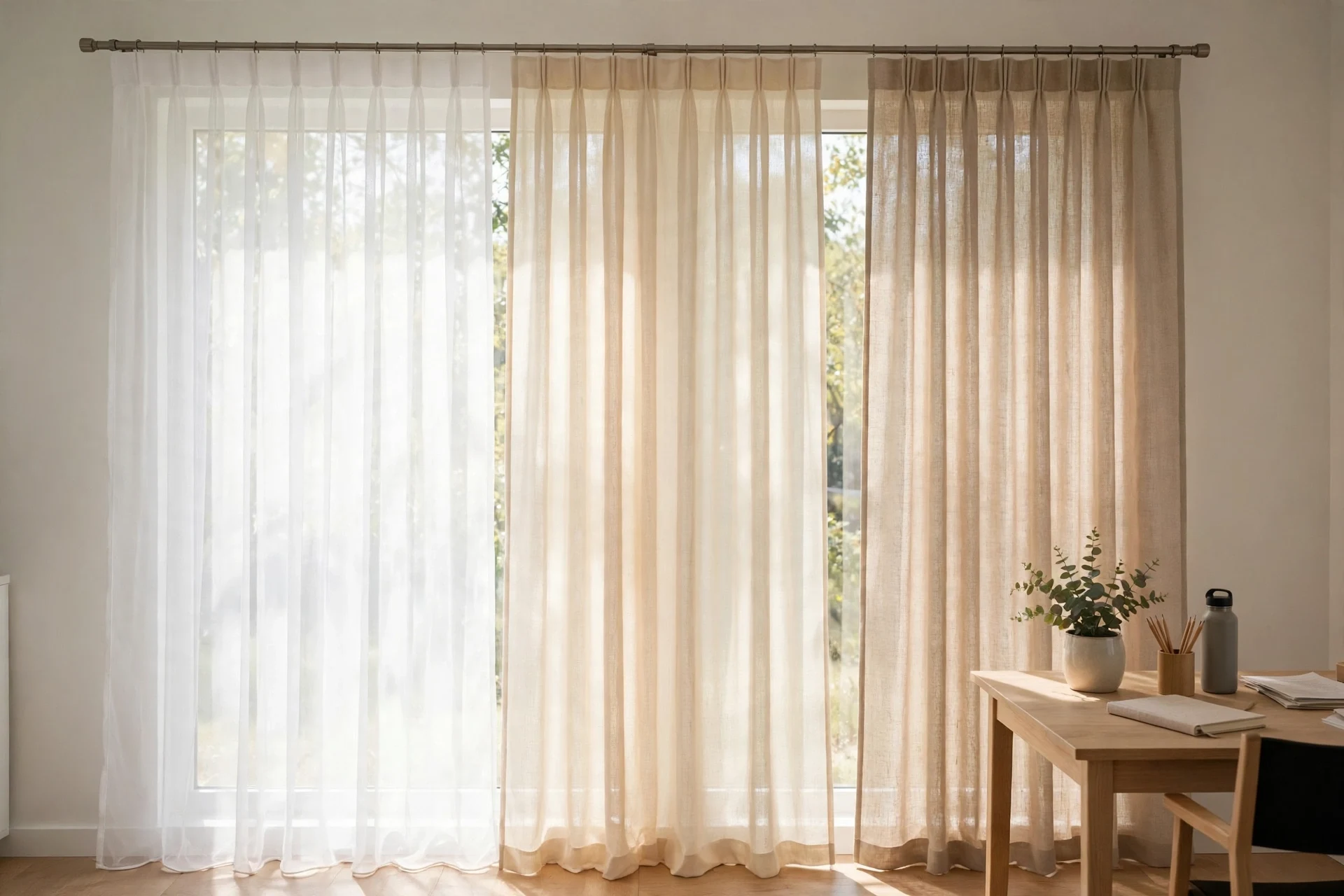
It still lets daylight through, but it cuts more of the harsh edge, so it suits a desk that gets direct sun for part of the day. A room-darkening panel dims daylight firmly and gives stronger glare control and evening privacy, but the room will feel dim when it is fully closed. A blackout panel blocks most light through the fabric itself. It suits a bright room or a call that cannot wait for the sun to move, but it is a poor all-day choice, because a room closed off from daylight all day feels flat and tiring to work in. Match the level to the worst hour, then plan how the panel opens again, and confirm the lining on the listing, because these labels are used loosely.
Pitch black at a desk needs added light, so pair a blackout panel with a ring light or a monitor bar to avoid eye strain when the room goes dark.
Color and pattern that stay calm on camera
Color on camera works best when it is plain, mid-tone, and quiet behind you. A solid panel in a soft gray, warm beige, muted sage, or gentle navy gives a clean background that does not pull attention away from your face. It also photographs steadily through the day, because it does not flare in bright light or turn muddy in dim light the way a very pale or very dark panel can. Keep the panel plain where calls matter, because a bold print, a strong stripe, or a shiny finish competes with your face on a small video window.
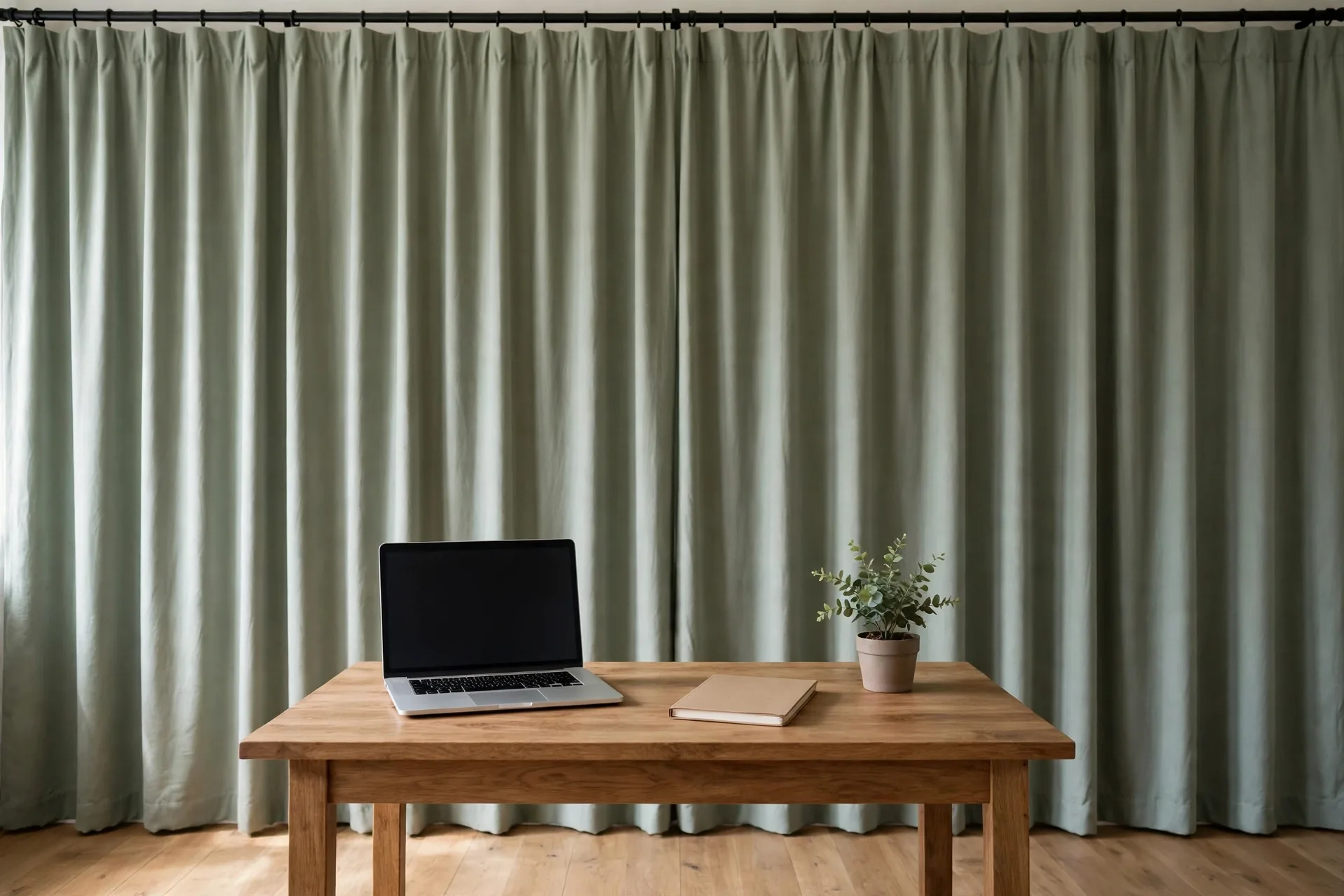
Very pale panels can blow out on camera, especially with a window nearby, and leave your face in shadow by comparison. Very dark panels can make a face look flat if the room light is weak, and they show dust sooner. A mid-tone plain panel avoids both ends, and a small, quiet texture adds depth without drawing the eye. Test color on camera before you commit to a full set, by hanging a swatch or one panel and looking at a test recording in daylight and in evening light. For living room color thinking, see Best Curtains for Living Room.
Busy patterns can shimmer on low-quality webcams, an effect called moire, and bright whites or neons can confuse webcam auto-exposure and darken the face. Calm, mid-tone panels avoid both problems.
Privacy for a street-facing home office
Privacy in a street-facing office is a daytime job first and a night job second, and the two need different answers. By day, a semi-sheer or light-filtering panel blurs shapes from outside while daylight still comes in, which suits a desk that faces a sidewalk or a road. By night, that same panel fails, because room lights turn the glass into a view in. A room-darkening or blackout layer, closed fully, is what gives evening privacy, so a street-facing office used after dark needs a second layer or a closing panel, not a sheer alone.
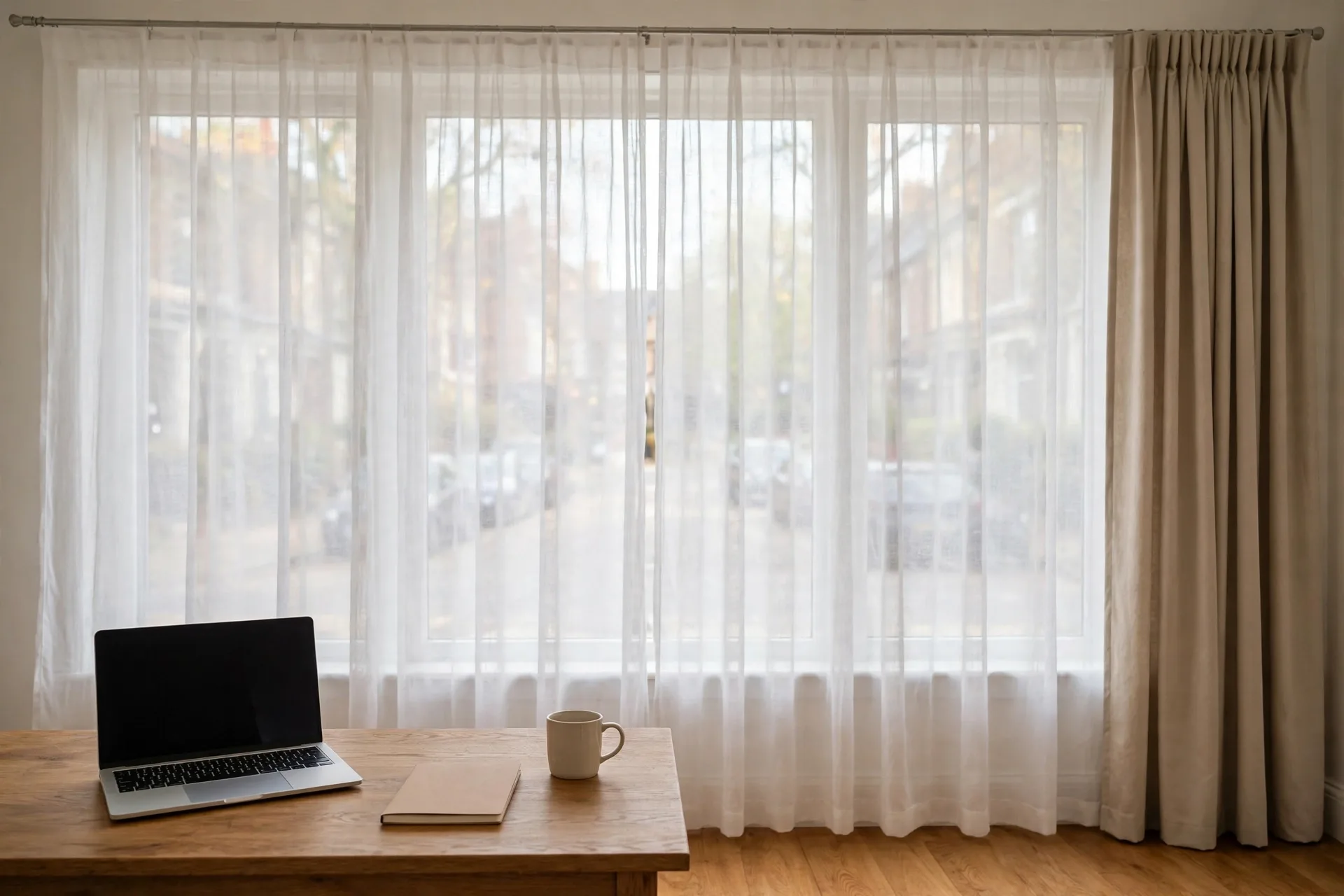
Check privacy from outside, not from the desk. Stand on the sidewalk or in the garden at the hours you work, with the room lights as you use them, and look in. Pay attention to the edges. A panel that covers the glass but stops short of the frame leaves a sightline at the side, and a center gap leaves a sightline straight to the desk. Full closed coverage, with the rod past the frame, closes those gaps.
Heavy fabric also helps calls in another way: velvet or thick thermal fabric absorbs empty-room echo, so the voice sounds richer on calls instead of hollow.
Rods and tracks that open and close every day
An office rod earns its keep by sliding smoothly, many times a day, without catching, sagging, or needing two hands. A grommet heading slides most freely and suits panels that move with the sun and with calls. A back tab heading gives a clean fall with less sliding ease. A rod-pocket heading grips the rod and suits a panel that mostly stays in place, which is a poor fit for an office panel that must move often. Choose the heading for the movement, not just the look.
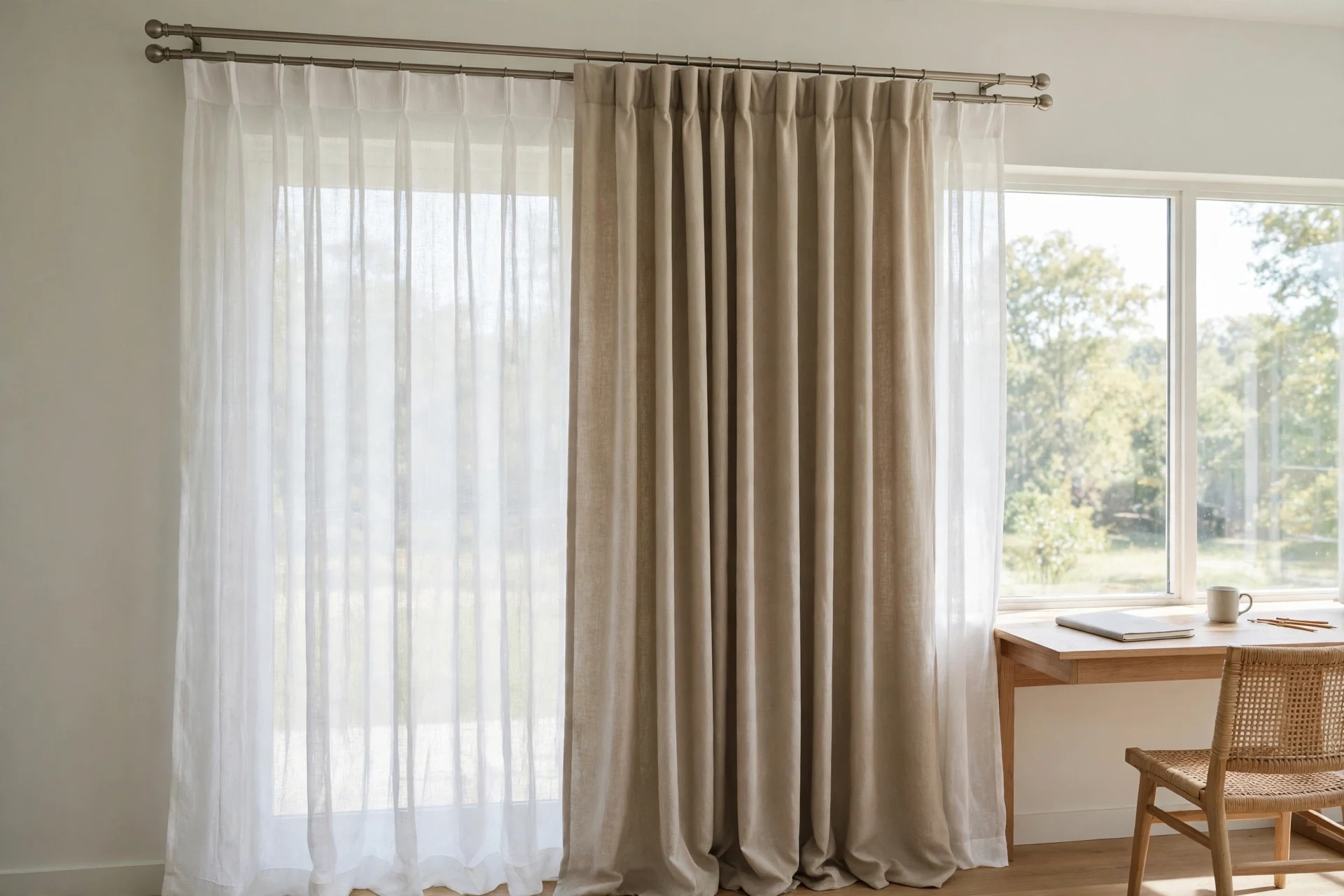
Rod strength still matters, even for light panels. A layered set is heavier than a single sheer, and a Best Thermal Insulated Curtains layer or blackout layer is heavier again. Choose a rod rated for the full set, fix brackets into solid wall or proper anchors, and add a center support on a wide span, so the rod stays straight as panels slide. Leave stack space past the frame on each side, so open panels clear the glass. For hanging steps, see How to Hang Curtains.
For offices, hang the rod 6 to 12 inches above the frame and 8 to 12 inches past each side, with the open stack fully clear of the glass, so the panel never eats into daylight at the desk.
What to avoid in a home office window
Full blackout all day is the first thing to avoid in a home office. A blackout panel closed from morning to evening cuts glare, but it also cuts daylight, and a day spent under artificial light in a closed room feels flat and tiring. Use blackout for the harsh hours and for calls that need it, then open the room again.
Shiny fabrics are the second thing to avoid where calls matter.
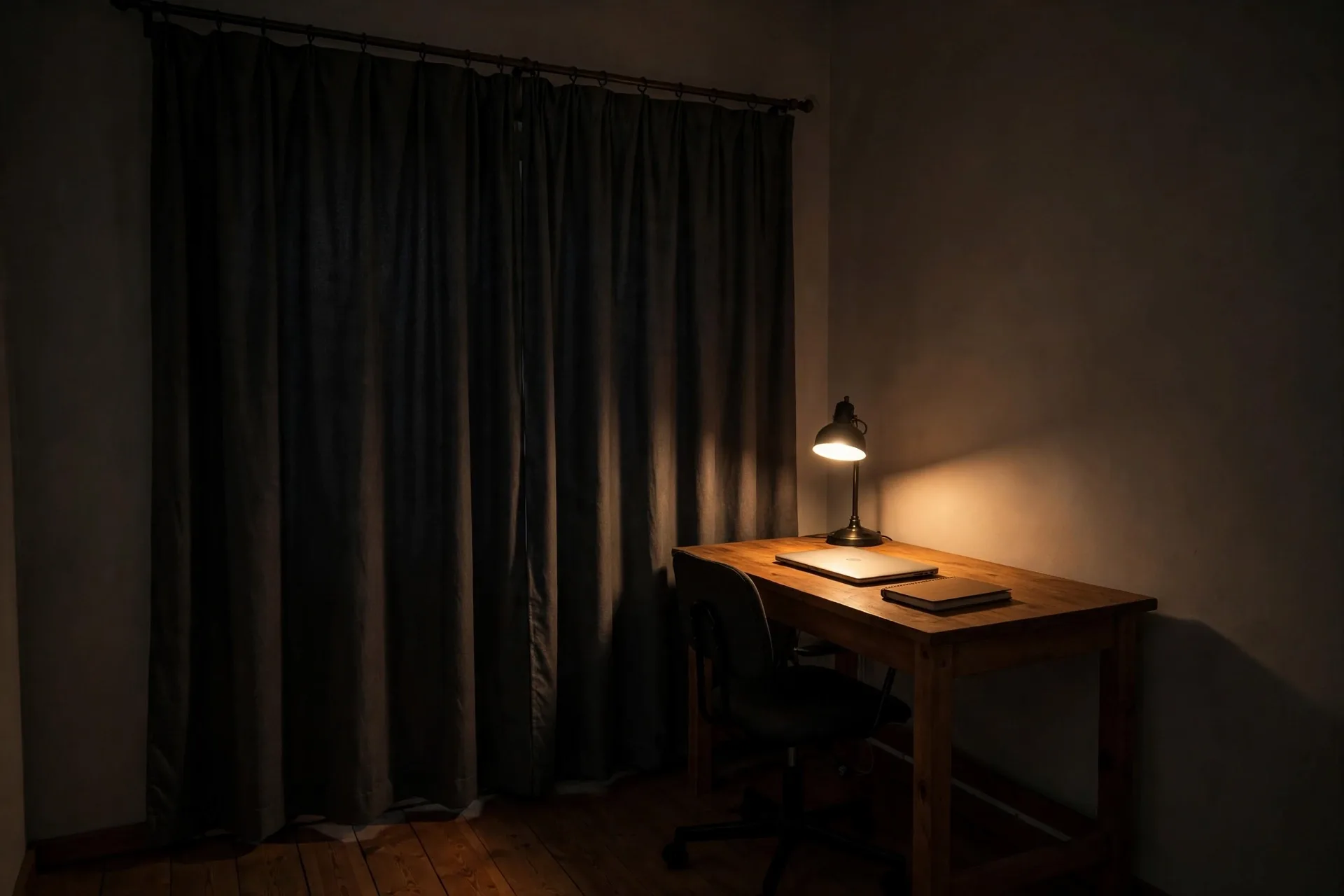
A satin sheen, a metallic thread, or a glossy finish catches light and can flare on camera, and it can throw a bright patch onto the screen as the sun moves. A matte, plain fabric photographs steadily and stays calm behind you, while a very busy print competes with your face on a small video window. A panel that cannot move easily is the third thing to avoid. A rod-pocket panel that grips, a rod that bows under a layered set, or a panel that stacks over the glass when open will fight you several times a day, and the light job will fail even though the fabric is right. Avoid a short panel that leaves the lower glass bare where privacy matters, and a long panel that pools around chair wheels. Length should clear the floor and the chair path, as set out in Curtain Sizes.
Care, cords, and shared or rented workspaces
Care in an office matters because the panels move daily and gather dust from a room that is used all day. Vacuum panels gently with a soft brush head to keep dust from dulling the color, and follow the care label on the panel you bought for washing. Polyester panels often wash more simply than linen blends, but only the label on your panel settles the method. Check the care symbols on the label, using the GINETEX and ISO 3758 care symbol guidance, rather than guessing from a general washing rule. If a listing names a textile safety label, check what it covers on the listing. OEKO-TEX STANDARD 100 label, for example, means the textile was tested for harmful substances.

Cords need a plain safety rule. Keep cords, loops, and chains out of reach of children and pets, use the safety devices supplied with the hardware, and favor cordless or wand operation where children share the home. Shared and rented workspaces need a lighter touch. If two people share one office, check glare at both seats, because one desk can sit in sun while the other sits in shade. If drilling is not allowed, use hardware that fits brackets already in place, and do not hang a heavy layered set on a light tension rod.
A room divider curtain gives a physical work boundary in a shared room: separating work from living space, which helps the workday start and end even when the desk stays put.
New curtains can carry a chemical smell or sizing residue, so air panels out or wash them before first use, following the care label.
Checks to run before you order home office curtains
Start with the workday, not the fabric. Note the harsh sun hours, the call hours, and whether the office faces a street. That record picks the light level. Next, check the window from outside at day and at night, with room lights as you use them, so privacy is judged honestly rather than guessed from the desk. Then measure the window and the rod space, using How to Measure for Curtains and How to Hang Curtains, and leave rod space past the frame for the open stack and for full closed coverage.
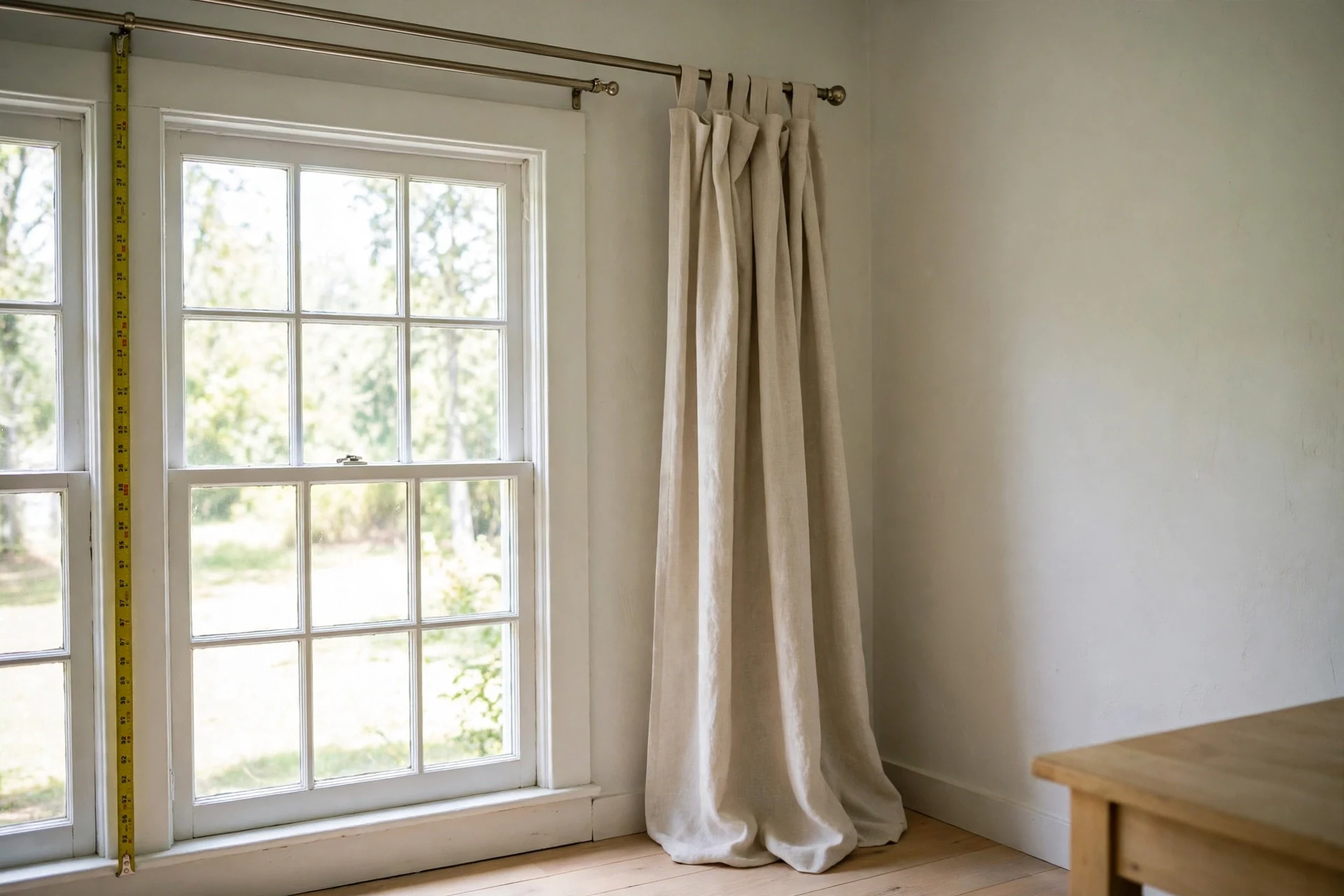
Then check the listing line by line. Confirm fabric, lining, heading, total panel width, and finished length, and confirm the rod and brackets suit the full set, including any second layer. Order a swatch where one is offered, and test it on camera in daylight and in evening light, and against the screen at the harsh hour. A swatch check catches a color that flares on video and a weave that lets glare through, before a full set is ordered. For the full range of curtain types, see Best Window Curtains.
Frequently asked questions about home office curtains
Most home office questions come down to glare, privacy, and color on camera. Get those three right for the hours you work, and the rest follows.
Are blackout curtains good for a home office?
Blackout curtains are good for a home office only for the hours that need them. They give the firmest glare control and strong evening privacy, but a room closed off from daylight all day feels flat to work in. Use blackout for harsh sun hours and for calls that need glare shut out, and pair it with a sheer or light-filtering layer for the rest of the day. For blackout curtains, see Best Blackout Curtains.
What curtains reduce screen glare without making the room dark?
Light-filtering curtains reduce screen glare without making the room dark. They spread direct sun into softer light, so the bright stripe leaves the monitor while daylight stays in the room. A sheer layer does the same job more lightly, and a room-darkening layer does it more firmly for a sun-facing desk. If glare is strong for only part of the day, a layered set lets the sheer carry the day and the heavier layer close only for the harsh hours.
What color curtains look best on video calls?
Plain, mid-tone curtains look best on video calls. Soft gray, warm beige, muted sage, and gentle navy give a calm background that does not pull attention from your face and does not flare in bright light. Avoid very pale panels that can blow out on camera, very dark panels that can flatten a face in weak light, shiny fabrics that flare, and busy prints that compete with your face on a small video window.
Do sheer curtains give enough privacy for a home office?
Sheer curtains give daytime privacy, not night privacy. By day, a sheer blurs shapes from outside while daylight comes in, which suits many offices. At night, room lights turn the glass into a view in, and a sheer alone will not cover that. A street-facing office used after dark needs a closing layer, such as a room-darkening or blackout panel, closed fully.
Should home office curtains be light-filtering or room-darkening?
Light-filtering suits a desk that needs daylight all day with softened sun, while room-darkening suits a desk that faces strong sun or needs stronger evening privacy. Many offices suit both, layered: light-filtering or sheer by day, room-darkening closed for glare hours and after dark. Choose by the worst sun hour at your desk, not by the label alone, and confirm the lining on the listing.
What is the best heading for curtains that open and close every day?
A grommet heading is the best heading for curtains that open and close every day. Grommets slide freely on the rod with one hand, which matters when panels move with the sun and with calls. A back tab heading gives a clean fall with less sliding ease, and a rod-pocket heading grips the rod and suits a panel that mostly stays in place.
How do I keep a home office bright while blocking a street view?
Keep a home office bright while blocking a street view with a semi-sheer or light-filtering layer by day and a closing layer at night. The day layer blurs the street view while daylight comes through, and the night layer closes fully when room lights are on. Check privacy from outside at day and at night, and make sure closed panels cover the full frame, because a side gap or a center gap leaves a sightline straight to the desk.
For other curtain types, see Best Window Curtains.
This guide is research-based curation: we compared maker specifications, published reviews, and current prices. Read how we choose.