 Best
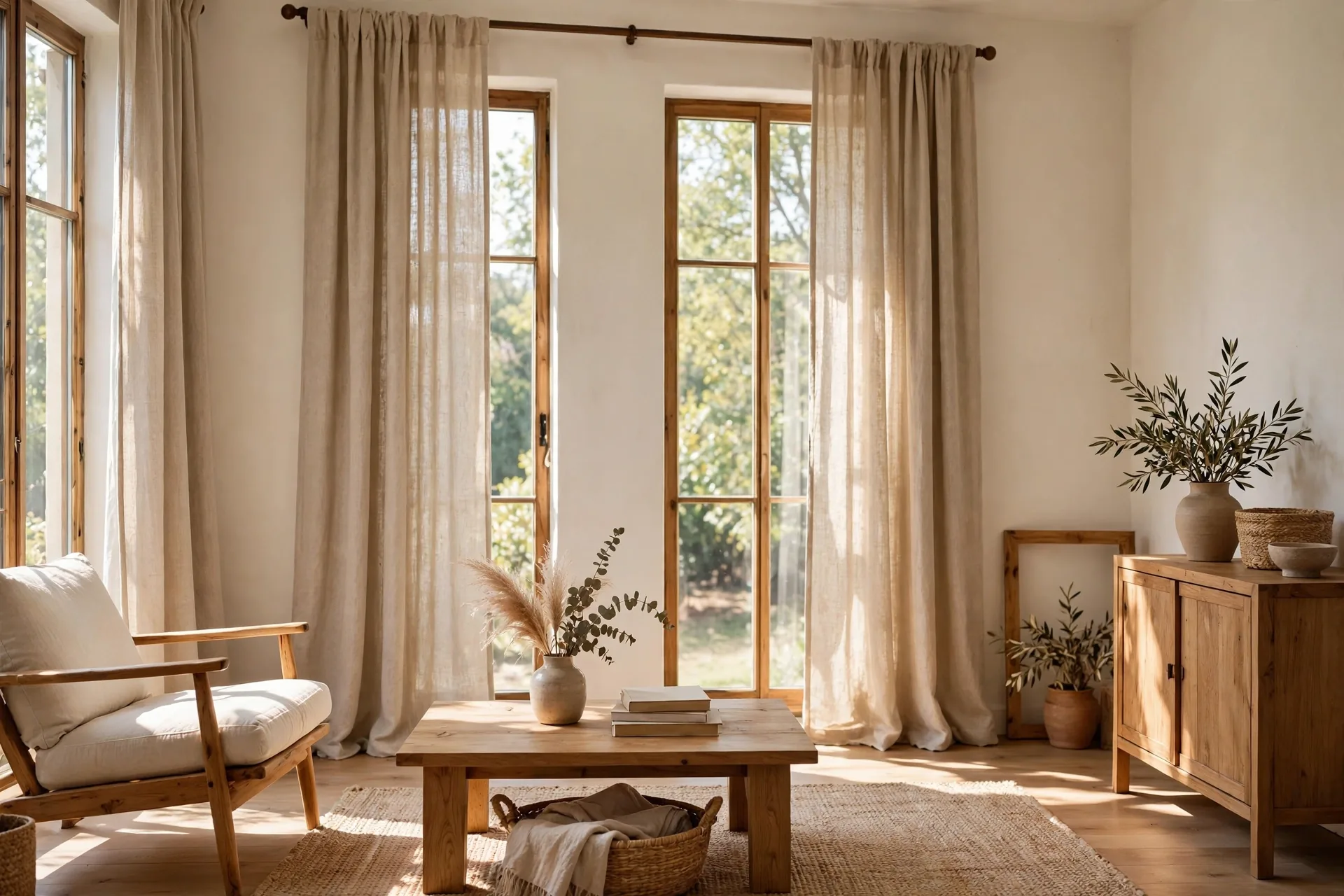
Best Beige Curtains
Beige looks simple until it meets your wall, when it can turn yellow, gray, or washed out. This guide sorts the undertone test, the fabrics, and the light jobs by room.
The best beige curtains are the ones whose undertone matches your room, because beige is never just beige: a warm beige glows beside wood and cream walls, a cool beige steadies a gray room, and a greige, the gray and beige blend, sits between the two. Test the undertone against your wall in daylight and lamplight before you order, and the rest of the choice, fabric, light job, and length, falls into place.
Beige is the most forgiving curtain color and the easiest to get wrong, because it sits so close to the wall color that a small undertone difference shows up large across a full window. This guide sorts the warm, cool, and greige test, the way beige behaves in different light, the fabrics that carry it best, the light jobs from sheer to blackout, the rooms that suit it, the pairings that lift it, and the cleaning that keeps it from looking dirty.
Beige curtain picks by job
Blackout beige suits bedrooms that must stay dark, sheer beige suits bright rooms that need soft light, and linen beige suits living rooms that need warmth without darkness. The picks are grouped by the job each one does, not by brand. Check the undertone, the lining, the finished length, and the care label on the listing for the panel you choose.
As an Amazon Associate, we earn from qualifying purchases.
| Pick | Type | Light job | Best for |
|---|---|---|---|
| 1 | Nanspring Birch Beige Linen Curtains | Light filtering | A living room that needs warmth without darkness |
| 2 | Amazon Basics Room Darkening Blackout Window Curtains | Blackout | A bedroom that must stay dark |
| 3 | MIULEE Butter Cream Sheer Curtains | Sheer | A bright room that needs soft light |
| 4 | Rinwoc Linen Blackout Curtains | Room darkening with thermal lining | A cold window |
| 5 | LAMIT Beige Leaf Pattern Linen Curtains | Light filtering with pattern | A plain room that needs quiet detail |
| 6 | JINCHAN Linen Cafe Curtains | Light filtering, short length | A kitchen window |
1. Nanspring Birch Beige Linen Curtains: best for a living room that needs warmth without darkness
- Best for: A living room where beige should warm the room and soften daylight, without shutting it out.
- Key features: Linen-blend face with natural texture, light-filtering fall, plain warm or greige undertone, easy drape.
- Pros: Warms a room without darkening it, natural texture suits wood and plain walls, good daytime privacy for a light-filtering panel.
- Cons: Wrinkles more than polyester, limited night privacy alone, undertone must be checked against the wall before ordering.
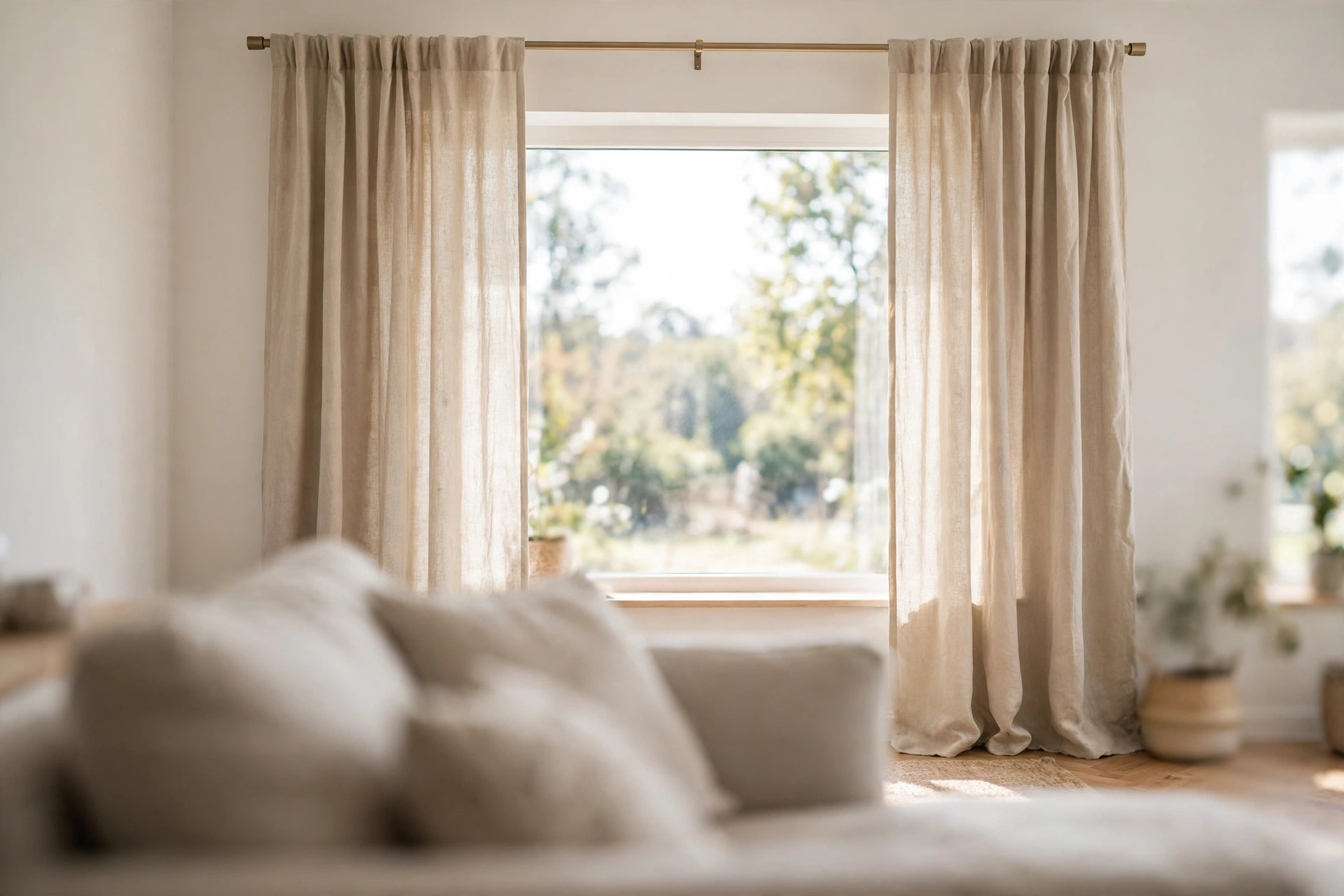
2. Amazon Basics Room Darkening Blackout Window Curtains: best for a bedroom that must stay dark
- Best for: A bedroom where sleep comes first, with beige that keeps the room calm instead of turning it into a dark box.
- Key features: Blackout lining behind a beige face, plain color, full closed coverage, heavier fall.
- Pros: Strong darkness for sleep, beige keeps a bedroom soft where a dark color would feel heavy, good night privacy.
- Cons: Heavier than unlined panels, so the rod and brackets must suit the weight, check the care label before washing.
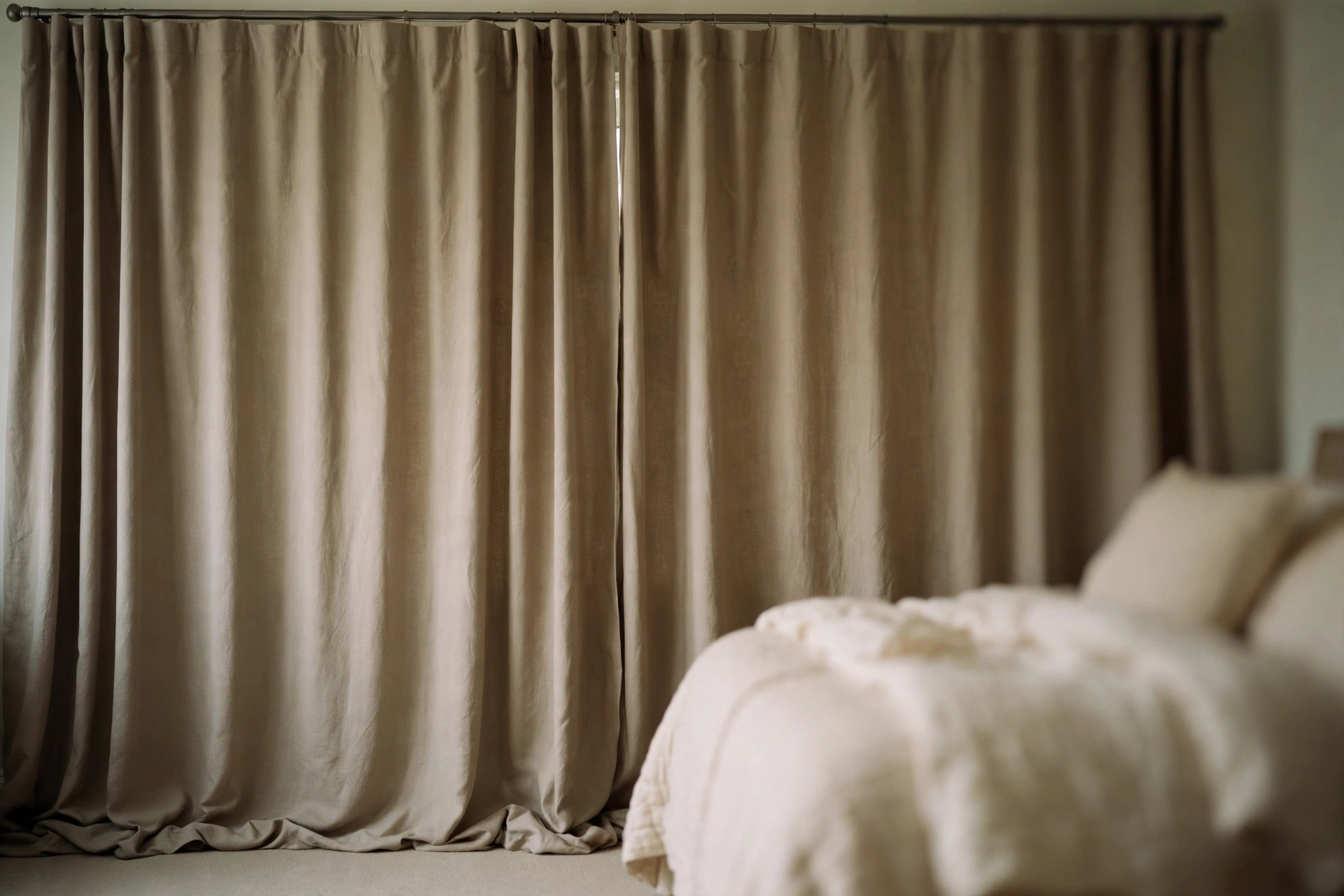
3. MIULEE Butter Cream Sheer Curtains: best for a bright room that needs soft light
- Best for: A bright living room or sunroom where the job is softening glare, not blocking light, with a warm tint to the daylight.
- Key features: Sheer voile face, light airy fall, soft butter cream tint, gentle daytime privacy.
- Pros: Keeps the room bright while taming glare, makes a room feel larger and airier, light fabric draws easily.
- Cons: Little privacy at night once indoor lights are on, no real darkness alone, pale beige shows marks sooner than a deeper shade.
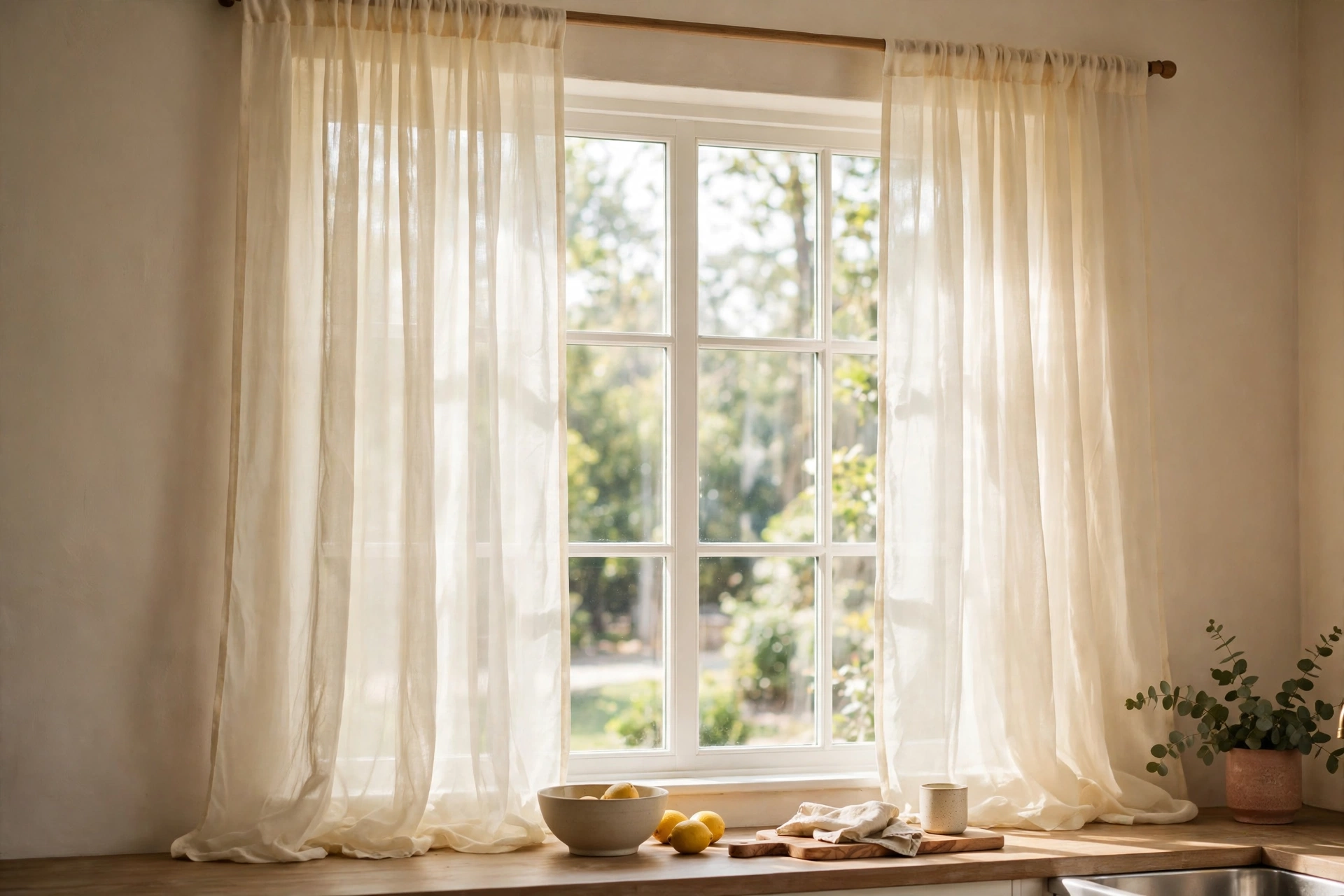
4. Rinwoc Linen Blackout Curtains: best for a cold window
- Best for: A window that feels cold in winter or hot in summer, where beige must work as well as it looks.
- Key features: Thermal lining behind a beige face, room-darkening fall, fuller folds when closed, heavier weight.
- Pros: Softens cold air and heat at the glass alongside its light job, fuller drape, beige keeps a lined panel from looking heavy.
- Cons: Heavier than unlined panels, so check the rod rating, lining adds care steps, follow the care label for the lining.
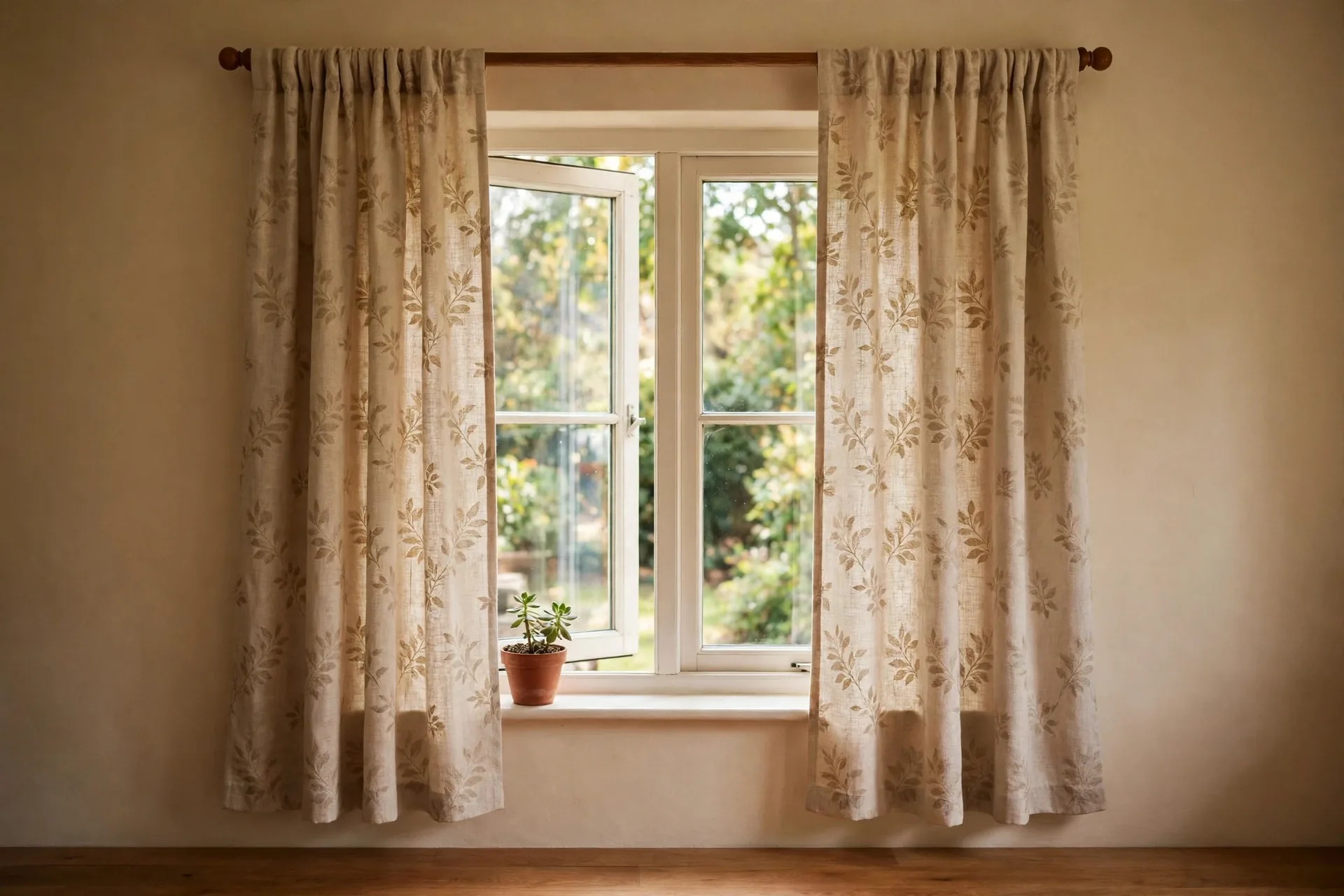
5. LAMIT Beige Leaf Pattern Linen Curtains: best for a plain room that needs quiet detail
- Best for: A plain room with plain walls and plain furniture, where a solid beige panel would disappear and the window needs quiet interest.
- Key features: Beige ground with a leaf jacquard pattern, light-filtering fall, pattern scaled to the room, plain wall pairing.
- Pros: Adds detail without a strong color, pattern hides small marks better than a solid pale panel, suits rooms that feel flat.
- Cons: Pattern must be checked at full size, because a small swatch hides a large repeat, a bold pattern fights a patterned room, so keep the room plain.
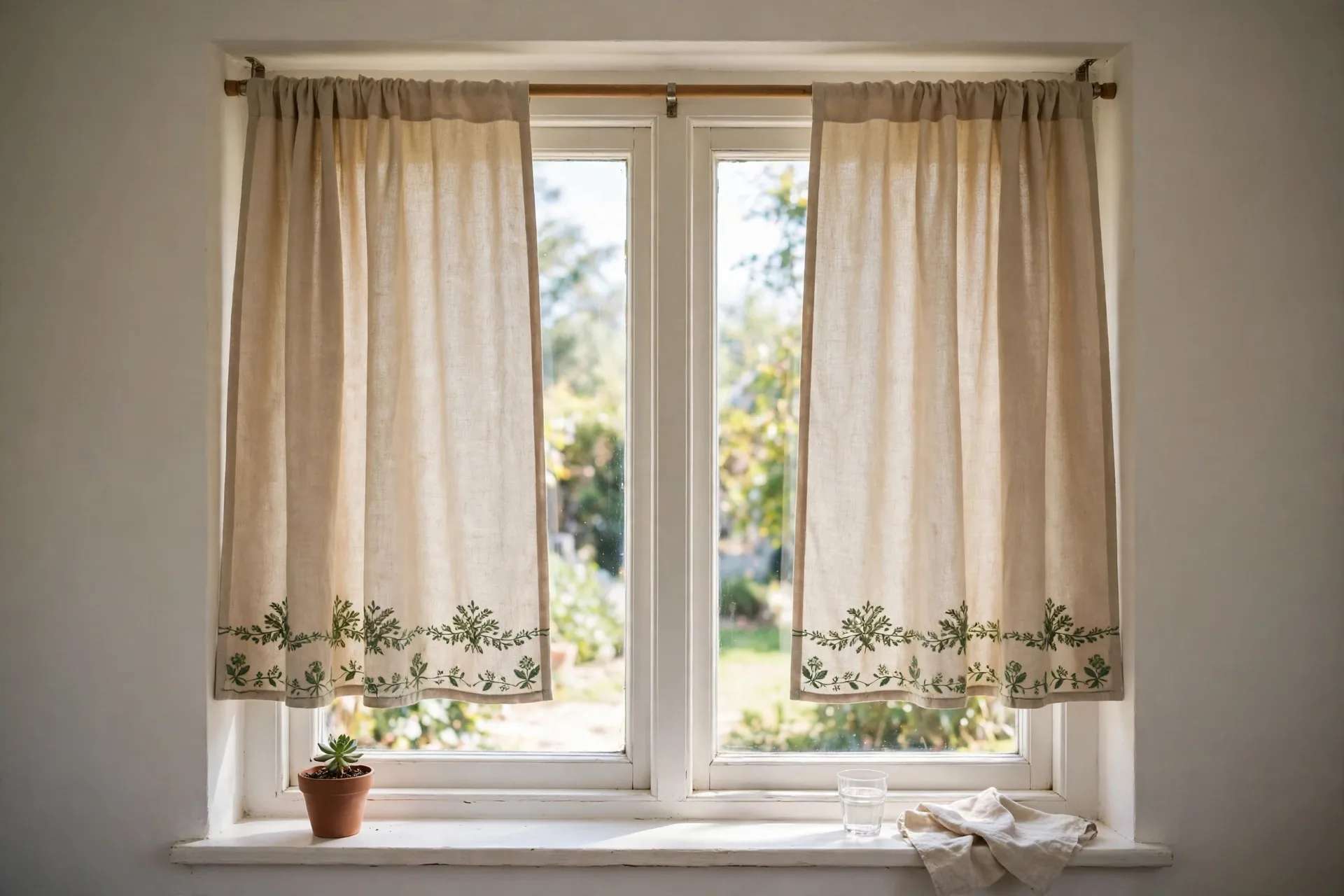
6. JINCHAN Linen Cafe Curtains: best for a kitchen window
- Best for: A kitchen window where the job is privacy at eye level with daylight above, and the fabric must wash often.
- Key features: Short cafe length ending at or just below the sill, washable fabric, beige ground with a green floral embroidered border, privacy at eye level.
- Pros: Keeps daylight above the panels, easy to wash, leaves the sill and the sink area free.
- Cons: Limited privacy at night, no darkness alone, short panels suit casual rooms better than formal ones.
The beige undertone test
Beige has an undertone, a hint of another color underneath the beige, and the undertone decides whether the panel matches your room. A warm beige leans yellow, gold, or pink, and it glows beside wood, cream walls, and warm lighting. A cool beige leans gray or green, and it steadies a gray room, a north-facing room, and cool daylight. A greige sits between the two, a true gray and beige blend, and it suits rooms that mix warm and cool elements, such as gray walls with wood floors.
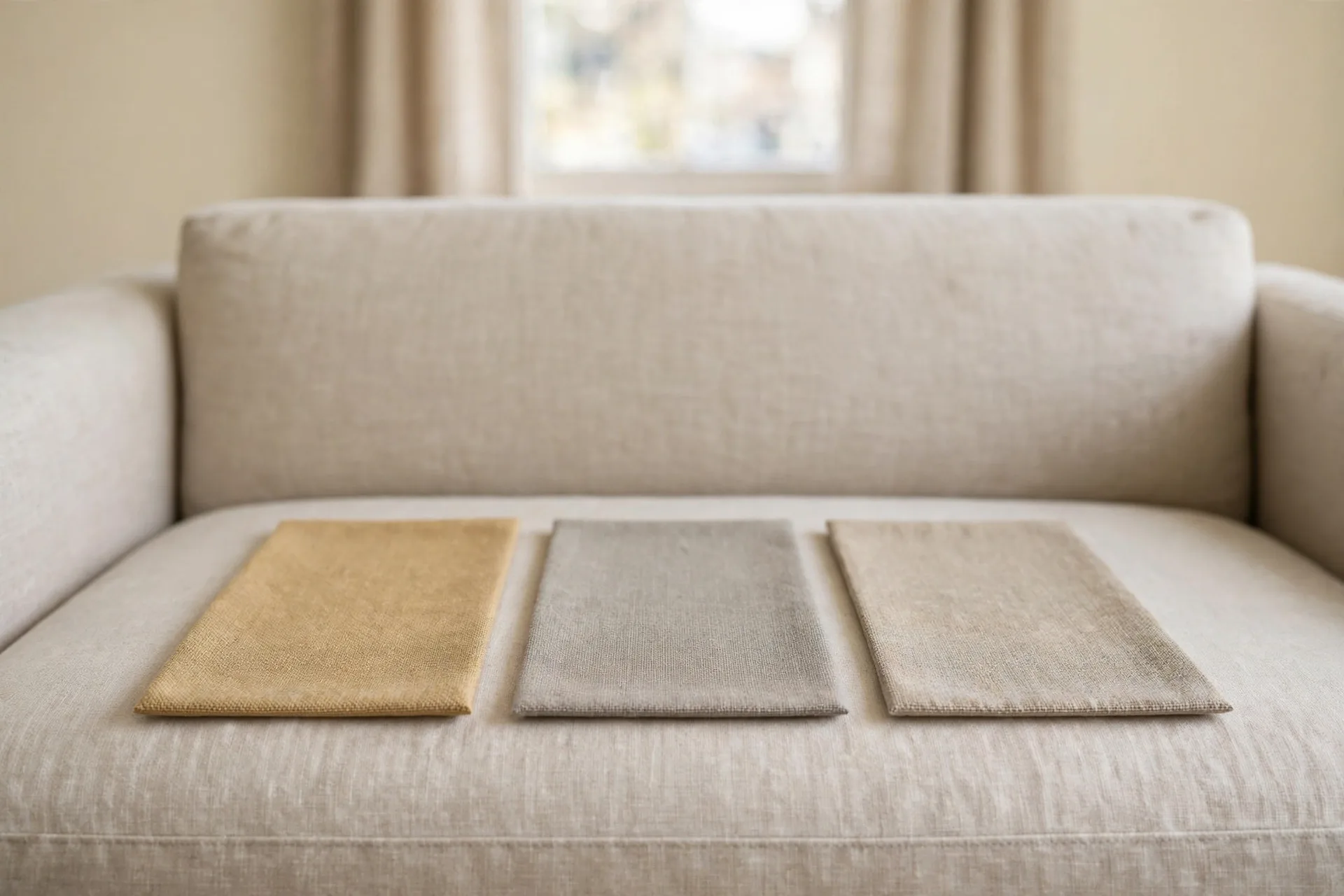
Test the undertone with a swatch, not with a screen, because screens shift beige toward yellow or gray and hide the undertone entirely. Hold the swatch against the wall, the floor, and the largest piece of furniture in the room, and look at it in daylight and in lamplight, because a beige that matches at noon can turn yellow under warm lamps or gray under cool daylight. The test takes minutes and saves a full window of wrong beige, so run it before ordering, and order the full set only after the swatch passes in both lights.
Beige in daylight, lamplight, and against your wall
Beige changes with the light in the room, more than a strong color does, because it is pale enough for the light to tint it. North-facing daylight is cool, and it pulls a warm beige toward gray and a cool beige toward blue-gray, so a north room suits a warm beige that holds its warmth. South-facing daylight is warm, and it pulls a warm beige toward yellow, so a south room suits a cooler beige or a greige that stays steady. East light is warm in the morning and neutral by afternoon, while west light is warm and strong in the evening, so a room used mostly in the evening suits a cooler beige that does not turn yellow under the low sun.
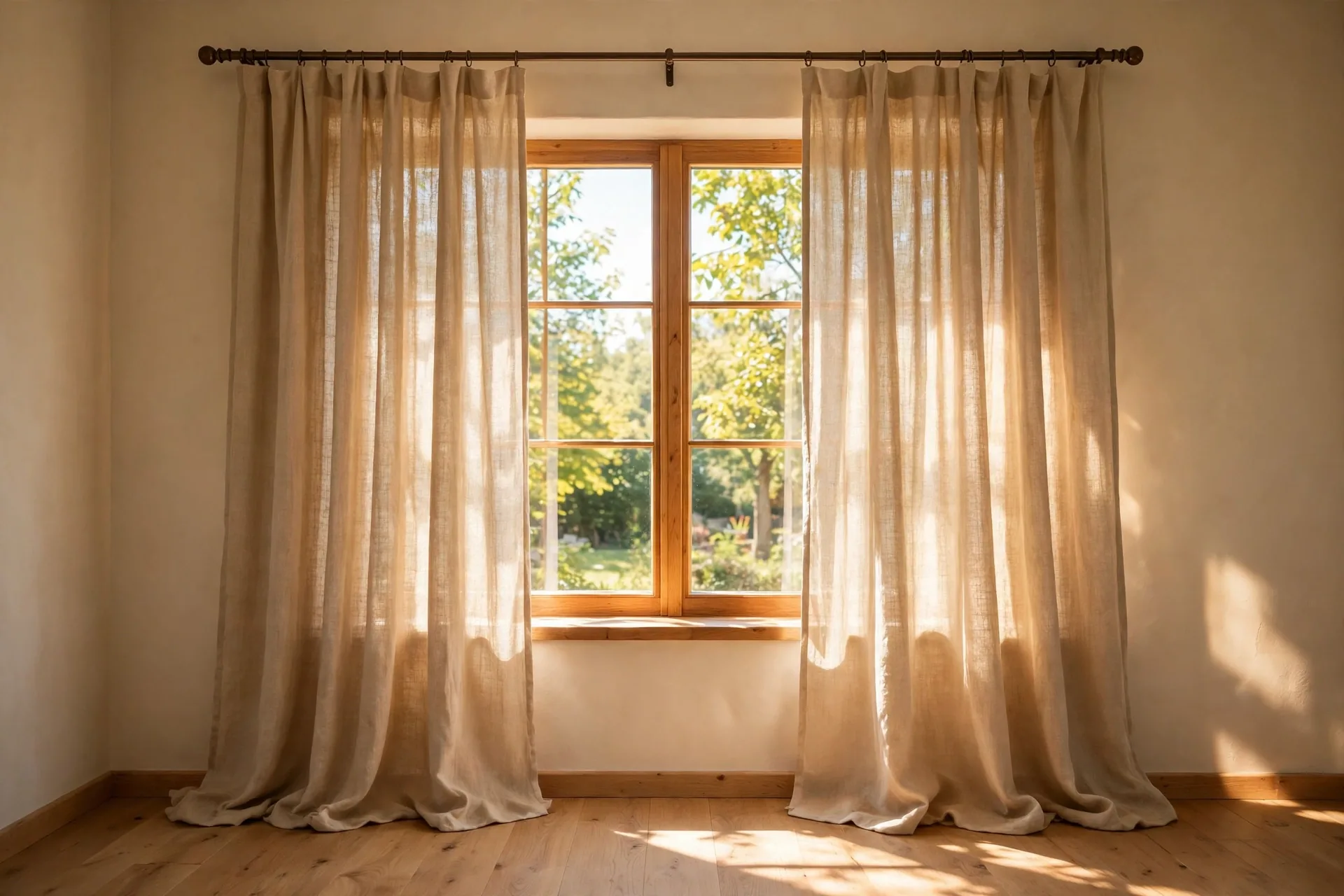
Lamplight changes beige again: warm lamps pull beige toward gold, and cool lamps pull it toward gray, so check the swatch under the lamps the room actually uses at night. Against the wall, beige needs a step of difference from the wall color, or the window disappears into the wall; a beige panel a shade deeper or lighter than the wall, or with a texture the wall lacks, keeps the window visible. A beige panel that matches the wall exactly looks like an unfinished wall, not a dressed window.
Beige fabrics side by side
Linen-blend beige gives the most natural texture, with a soft slub and a relaxed drape, and it suits living rooms and bedrooms where texture matters more than a crisp fall. It wrinkles more than polyester, and it needs a gentler wash, so it suits rooms where a few creases will not bother you. Cotton beige gives a cleaner, smoother fall than linen, with easy washing and a casual feel, and it suits kitchens and everyday rooms where the panels wash often.
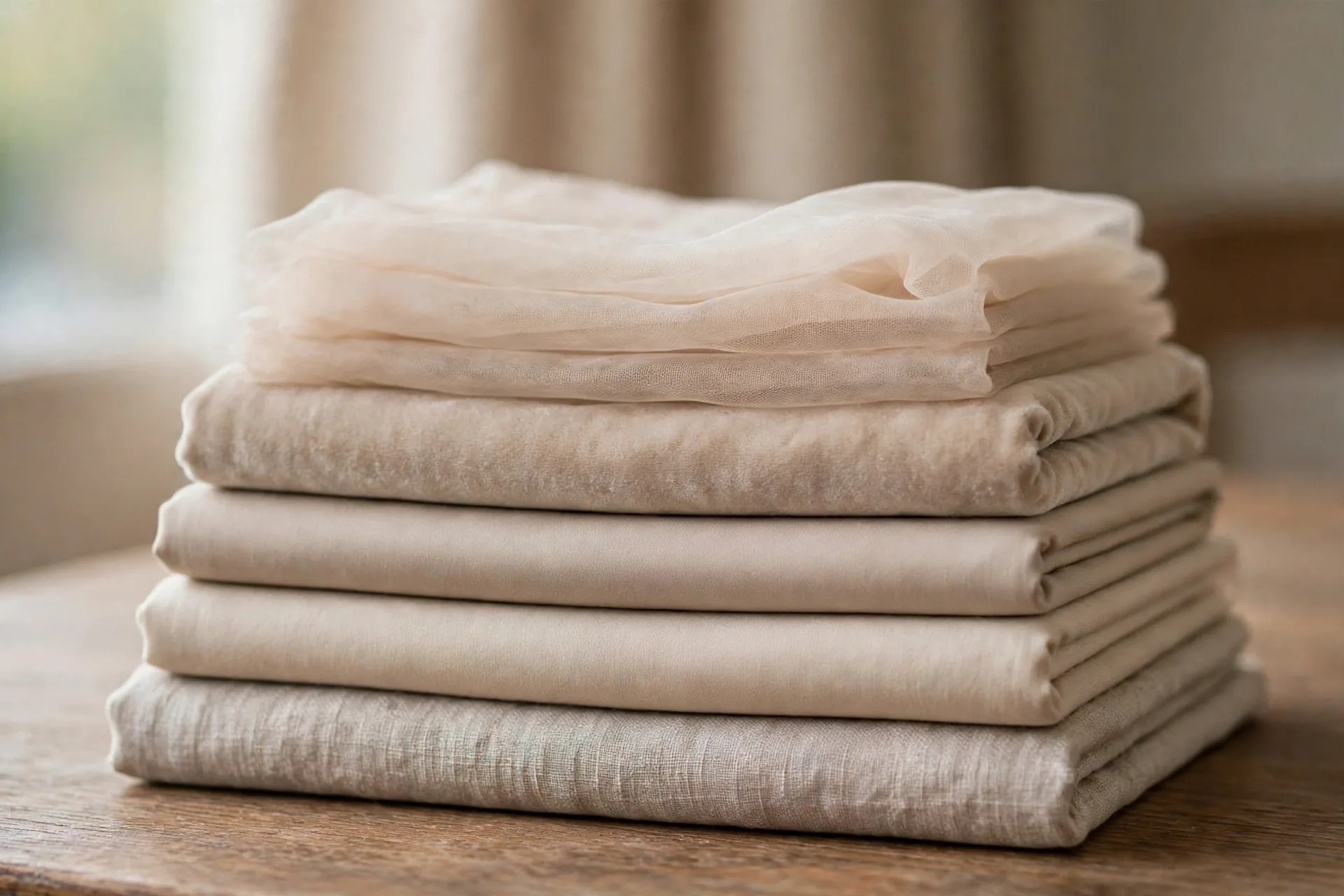
Polyester beige gives the easiest care of the three, with wrinkle resistance, steady color in sun, and a simple wash, and it suits busy homes, rentals, and rooms where the panels open and close daily. Its risk is a flat or shiny look where the weave is too smooth, so check the texture on a swatch before ordering. Velvet beige gives depth and richness no flat fabric matches, because the pile catches light from different angles, and it suits a formal room where the window should feel dressed. It is heavier, needs a stronger rod, and traps dust, so it suits dry formal rooms better than kitchens or bathrooms. For fabric detail across types, see Best Linen Curtains for linen behavior.
Beige by light job
Sheer beige suits a bright room where the job is softening glare, not blocking light, because a sheer beige tints the daylight warm and keeps the room bright. For the sheer job in full, see Best Sheer Curtains. Light-filtering beige suits a living room where the job is warmth, soft privacy, and glare control together, because it dims daylight without shutting it out and gives daytime privacy from the street. Room-darkening beige suits a bedroom or a media room where the job is strong dimming without full blackout, because it cuts most daylight and gives evening privacy, while keeping the room softer than a blackout panel would.
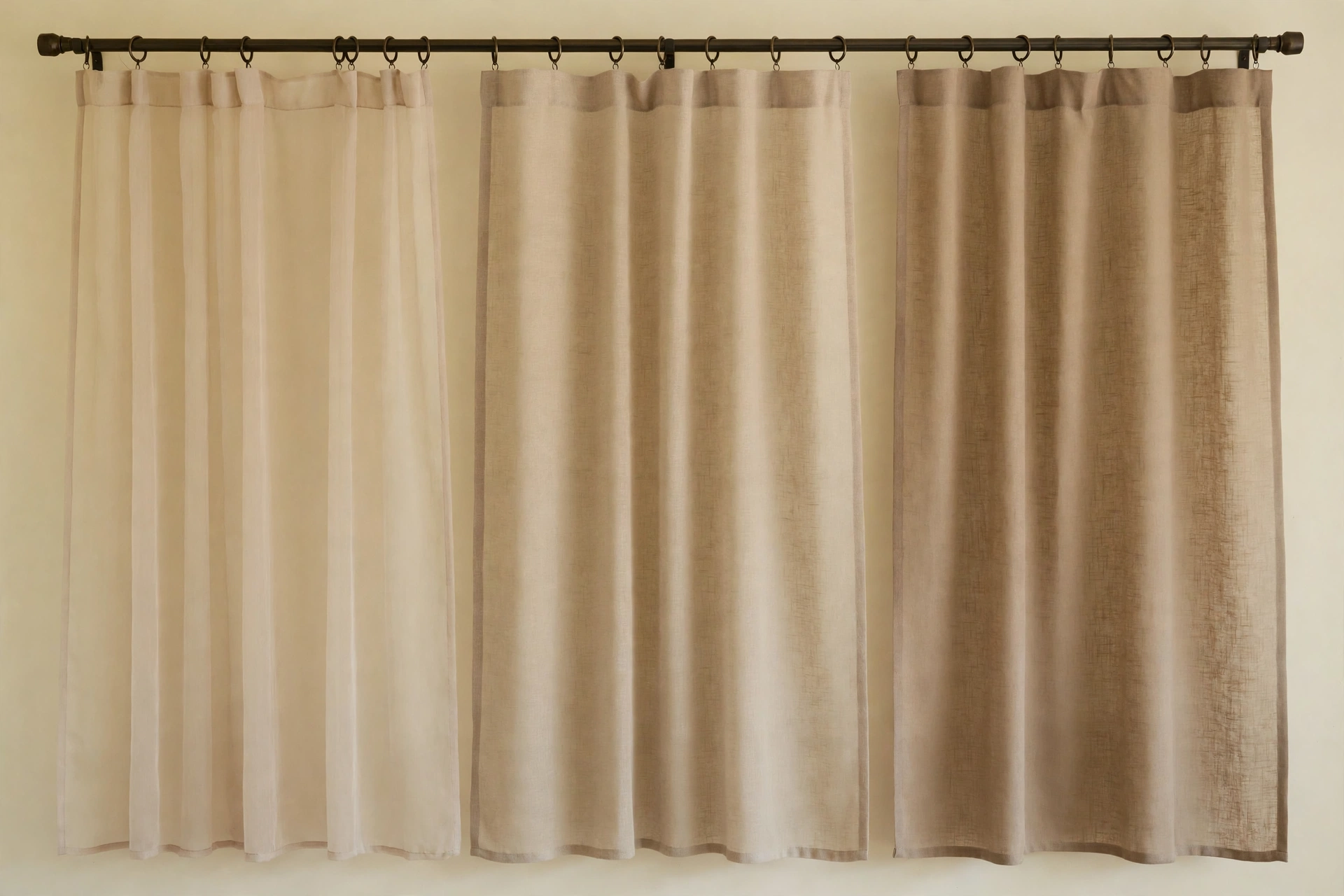
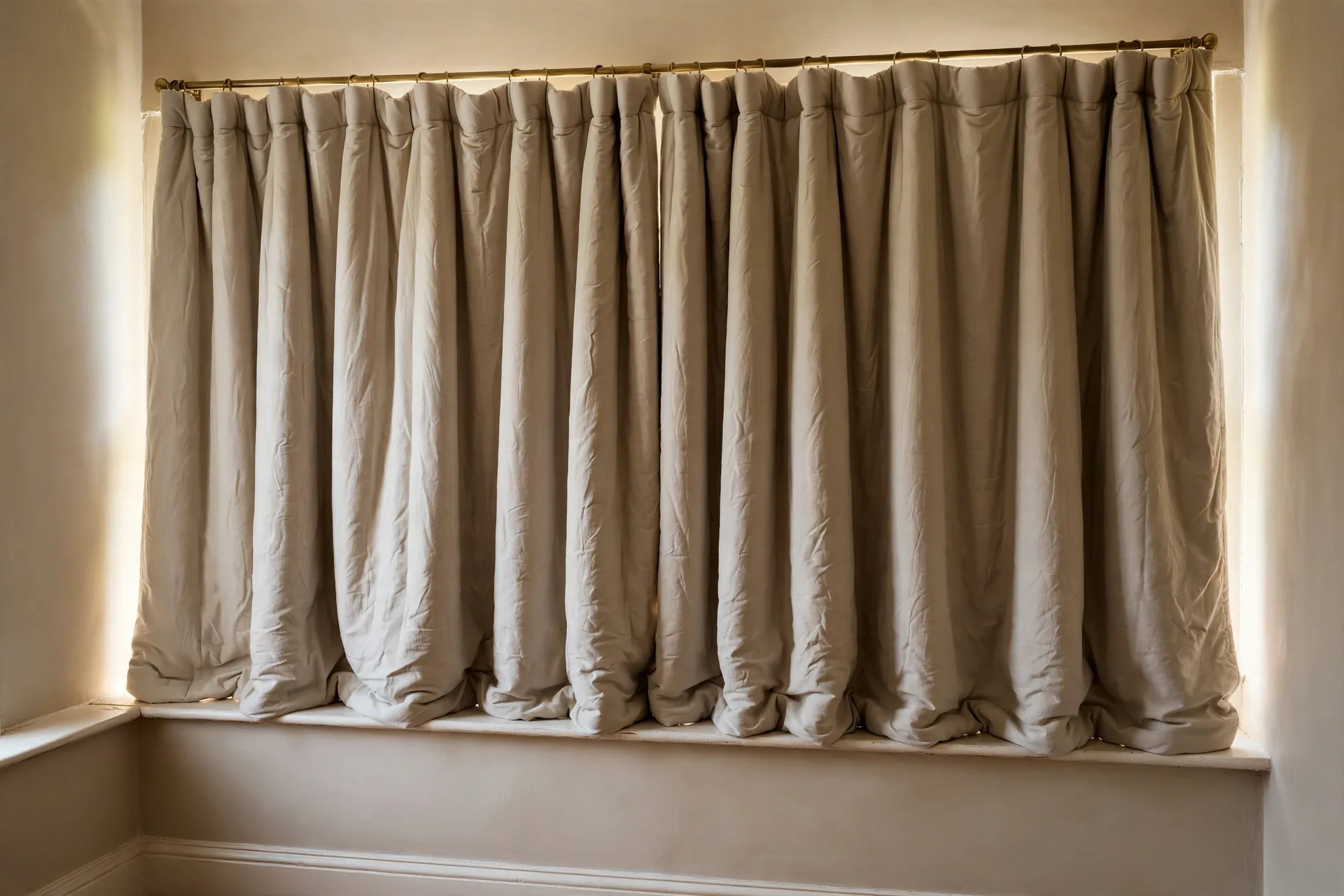
Blackout beige suits a bedroom where sleep comes first, because the blackout lining behind the beige face gives full darkness while the beige face keeps the room calm. For the full darkness job, see Best Blackout Curtains. Thermal-lined beige suits a cold window, because the lining adds warmth help alongside its light job. For the full warmth job, see Best Thermal Insulated Curtains. Match the light job to the room before the fabric, because a sheer in a bedroom and a blackout in a bright living room both fail the room, whatever the beige.
Two checks help when buying blackout beige. First, look at the backing from the side, because a cheap blackout panel can have a shiny plastic-like backing that looks low-end once hung. Second, check the edges, because light passes through the edges even when the face blocks well, so the panel must close fully and overlap the frame to give real darkness.
A dual-layer beige panel is worth knowing by name, because it pairs a blackout layer with a sheer overlay in one heading. Draw the sheer alone for soft daylight, draw the blackout layer for evening privacy and darkness, and use tiebacks to hold the layers where you want them through the day.
Beige by room
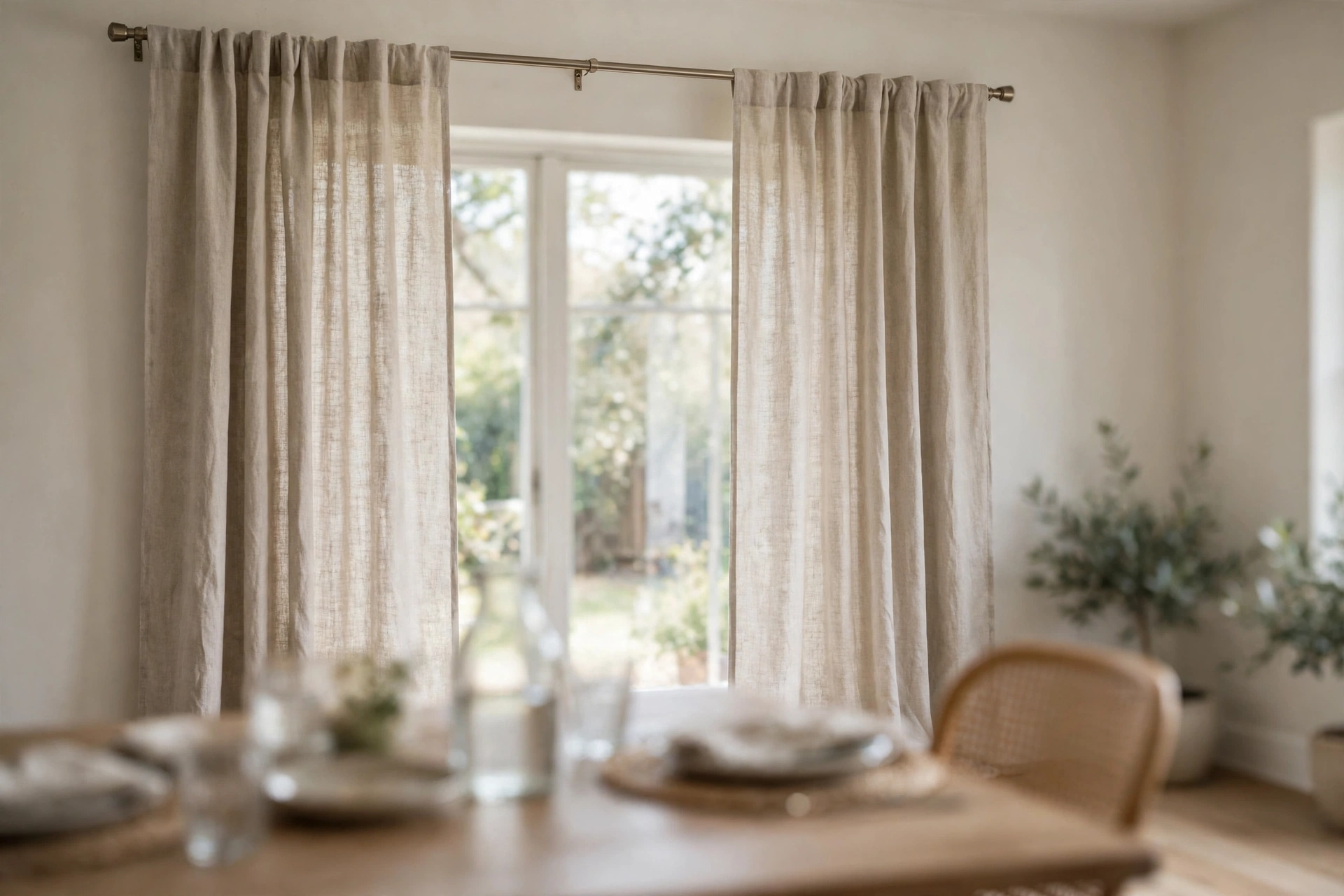
A living room suits light-filtering linen-blend beige, because the living room job is warmth, soft daylight, and daytime privacy together, and a linen texture suits wood, plain walls, and mixed furniture. A bedroom suits blackout beige, because sleep needs darkness and beige keeps the bedroom calm where a dark color would feel heavy. A dining room suits a linen or light-filtering beige, because meals feel better in soft, even light than in harsh glare, and beige suits wood tables and plain walls. For room-wide bedroom advice, see Best Curtains for Bedroom, and for living room direction and color, see Best Curtains for Living Room.
A kitchen suits short washable beige, because steam, splashes, and cooking smells reach the fabric, and a short panel leaves the sill and the sink area free. A bathroom suits a washable beige only where the room dries well, because a damp bathroom marks pale fabric fast, and a short panel suits a bathroom window better than a floor-length one. A home office suits a light-filtering beige, because it tames glare on a screen without darkening the room, and a plain beige does not distract on video calls.
Room shapes change the beige choice too. A small room suits a sheer or lightweight linen beige, while a dark or heavy beige can close a small room in. A bay window suits beige panels held with tiebacks, so the shape stays open by day. A corner-wrapped window suits one treatment carried around the corner, and several windows on one wall suit one treatment across all of them, so the wall reads as one unit. A high-ceiling room suits a rod set near the ceiling with floor-length panels, so the height is used rather than cut off.
Rods, fullness, and length for beige panels
Hang beige wide and high, because a beige panel that stops at the frame edge can look small against the wall. Set the rod 4 to 6 inches above the frame and extend it past the frame on each side, so the open panels stack clear of the glass and the closed panels cover the frame. Aim for total panel width of 1.5 to 2 times the rod width for a standard look, 2 to 2.5 times for a full look, 2.5 to 3 times for pinch pleat, and 2 to 2.5 times for sheer, so the folds stay full when closed rather than stretching flat. Floor length is the default for a living room or bedroom, because it gives beige its calm, settled fall, while sill length suits a small or utility window where a long panel would get in the way.
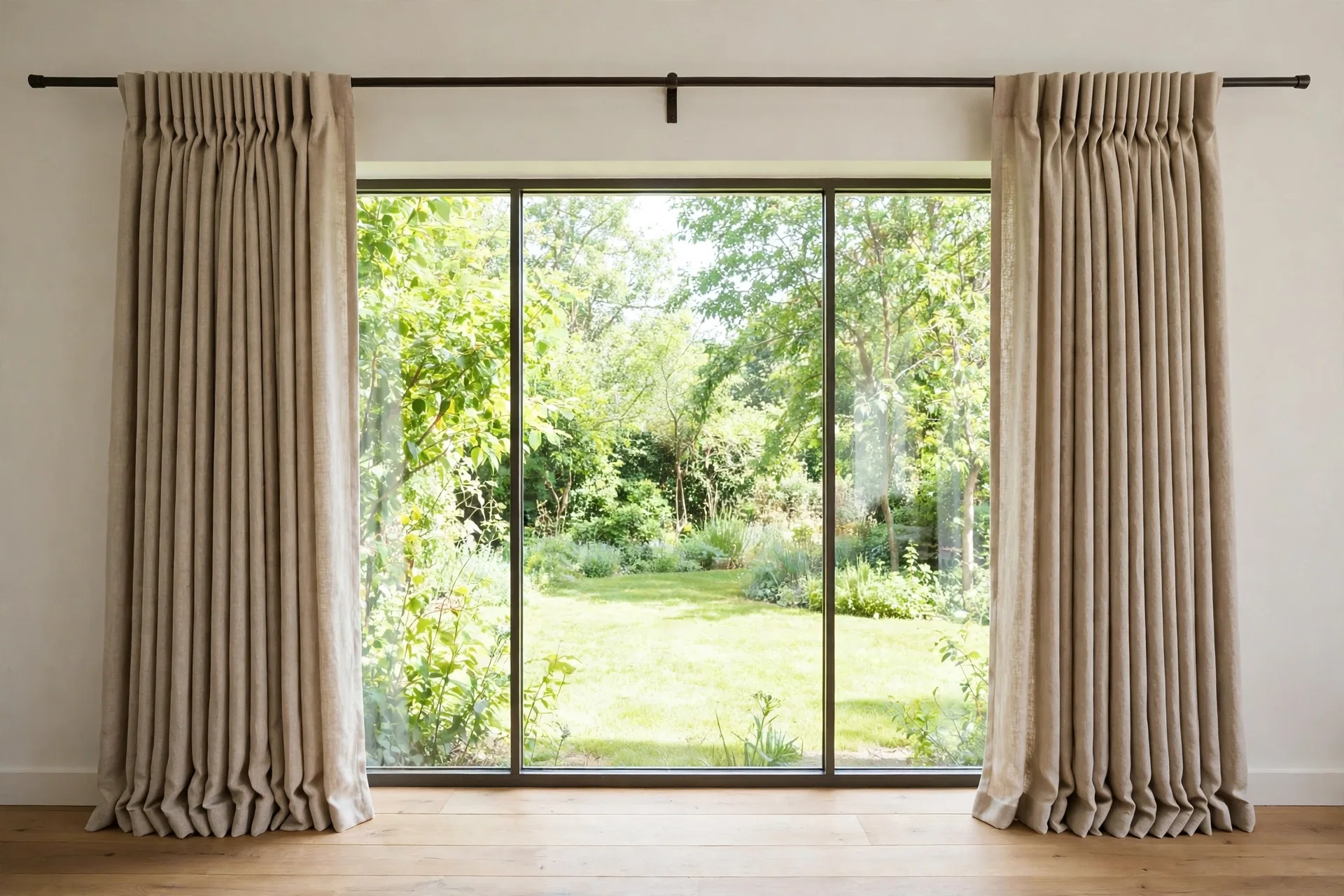
A grommet heading reads as modern and slides freely for daily use, while a rod-pocket heading reads as classic and suits a panel that mostly stays in place.
What to pair with beige
Beige pairs with wood first, because wood tones and beige tones share warmth, and a beige panel beside oak, walnut, or pine furniture looks settled rather than matched. Beige pairs with gray walls well where the beige is greige or cool, because the shared gray undertone ties the wall and the window together without a clash; a warm beige against a cool gray wall is the pairing that most often looks wrong, so check the undertone. Beige pairs with navy and deep green as contrast, because a dark accent, in cushions, a rug, or a chair, gives a beige room the depth a beige-only room lacks.
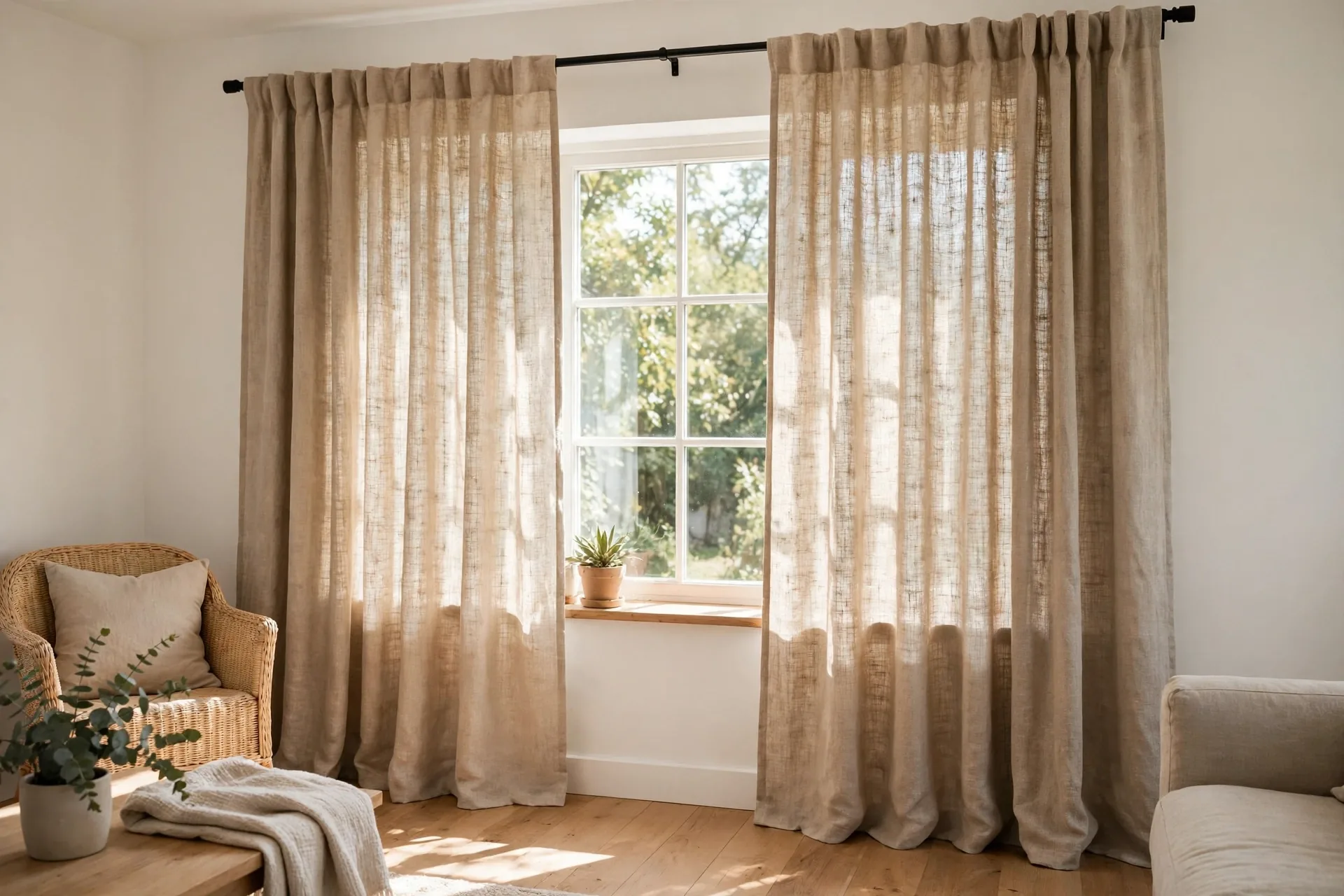
Beige pairs with cream walls where the panel is a step deeper than the wall, so the window stays visible, and with white trim where the panel is warm enough to stand against the crisp white. Pattern pairs with beige where the pattern is small and regular, on cushions or a rug, while the panel stays plain, because two patterns fight and one quiet pattern lifts a plain room. Keep one contrast in the room, not three, because beige does its best work as the calm ground, not as one of several competing colors.
Panel patterns can stay quiet too. A two-tone beige panel, lighter at the top and darker at the bottom, grounds the room without a bold print. An ombre beige that fades to slate blue adds gentle movement, a checked beige adds order, and an embroidered beige adds texture without a bold pattern. Keep the panel pattern to one idea, and let cushions or a rug carry any second pattern.
Sofas set the pairing too. A cream or white sofa keeps a layered neutral room, with texture and darker pillows to stop it looking flat. A beige sofa works tonally, with mixed shades and textures such as linen, bouclé, or wool to keep it from blending into one block. A gray sofa pairs best with a cooler beige or greige, while an olive or sage sofa suits a warm beige. A brown or cognac leather sofa takes a warm beige well, and a navy sofa needs balancing with cream walls, light rugs, warm wood, and brass so the dark sofa does not dominate the room.
Beige, white, and gray curtains each suit a different room. Beige is warm and cozy, and forgiving of light dust, so it suits a lived-in room. White is brighter and airier, but needs more upkeep to stay bright. Gray is cooler, more structured, and more modern, so it suits a room that wants a crisp, tailored feel. Pick the color temperature first, then the shade.
Keeping beige clean
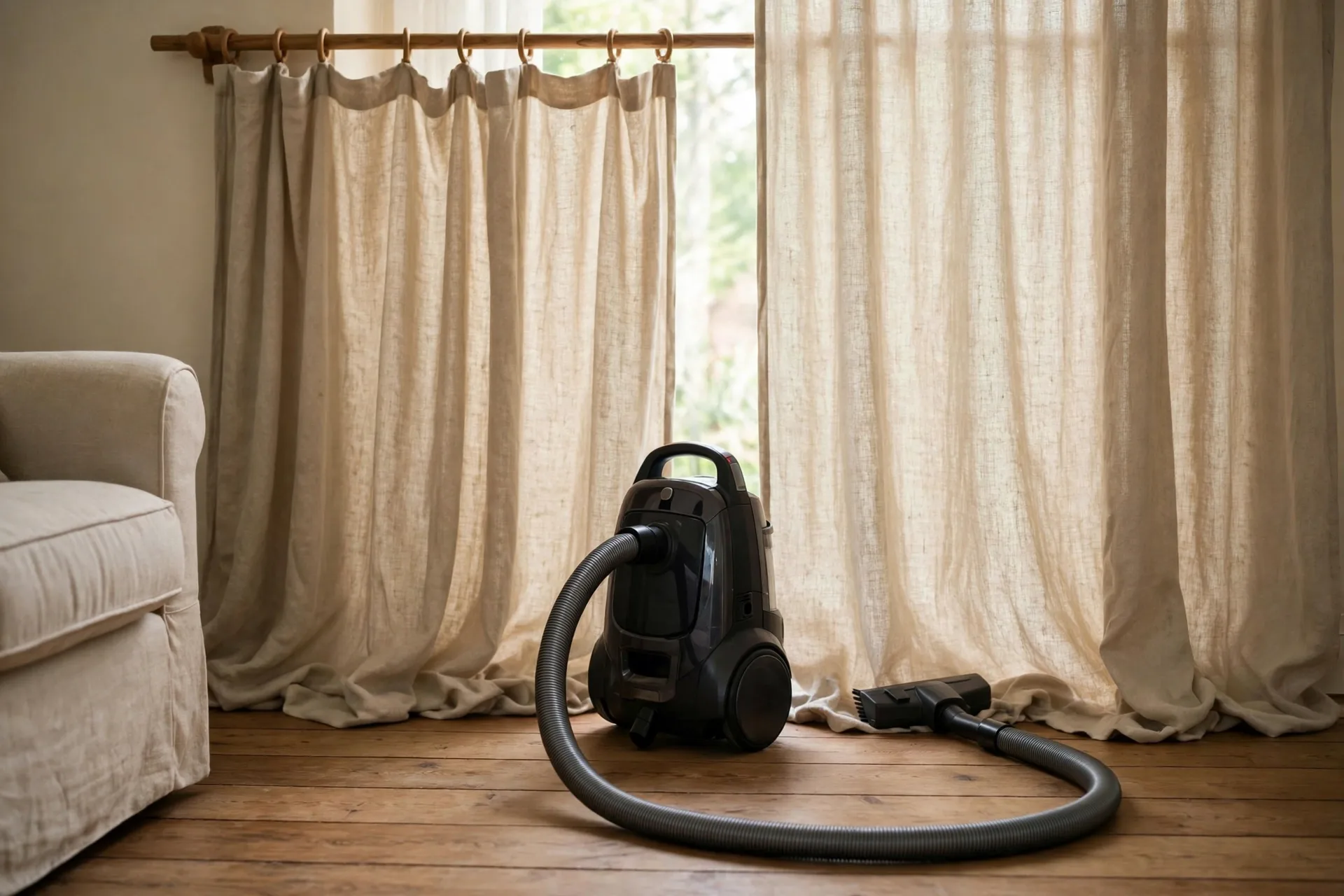
Beige shows marks sooner than a deeper color, so a beige room needs a cleaning habit, not just a wash day. Vacuum panels gently with a soft brush head between washes, because dust dulls pale beige faster than it dulls a dark panel, and the dullness reads as dirt. Blot spills at once and never rub them, because rubbing spreads a mark across pale fabric and can leave a larger stain than the spill itself. Wash by the care label, not by habit, because linen, cotton, and polyester beige wash differently, and a hot cycle can yellow a pale panel or shrink it. Before the first wash, run a colorfast test on a hidden area, so a dye that runs is found on a hem, not across the whole panel.
Yellowing is the beige problem to watch: sun, heat, and harsh detergent all yellow pale fabric over time, so rotate panels where one window gets far more sun than the other, wash in cool water with a mild detergent, and dry out of direct sun where you can. A beige panel that has yellowed unevenly, bright at the folds and yellow at the face, has had too much sun on one side, and a lining behind it slows that fading.
Beige mistakes that turn a room flat or dirty
The most common beige mistake is ordering from a screen, which hides the undertone and gives a panel that turns yellow or gray against the wall. The second is matching the wall exactly, which makes the window disappear into the wall instead of dressing it. The third is choosing a sheer for a bedroom or a blackout for a bright living room, which fails the room whatever the beige, because the light job was never matched to the room.
Other mistakes follow from care: washing a linen beige on a hot cycle, which yellows and shrinks it; hanging a pale beige in a damp bathroom, where it marks fast; and choosing a bold pattern for a patterned room, where the pattern fights the room instead of lifting it. A further mistake is a flat, shiny polyester with no texture, which reads as cheap beside wood and plain walls, where a linen texture would have carried the room. Each of these is avoidable at the swatch stage, which is why the undertone test comes before anything is ordered.
Frequently asked questions about beige curtains
Most beige questions come down to undertone, light, and cleaning, and to what beige pairs with.
What undertone of beige curtains should I choose?
Choose a warm beige for a room with wood, cream walls, or warm lighting, because warm beige glows beside those elements. Choose a cool beige for a gray room or a north-facing room, because cool beige steadies cool daylight. Choose a greige, the gray and beige blend, for a room that mixes warm and cool elements, such as gray walls with wood floors. Test a swatch against the wall in daylight and lamplight before ordering.
Do beige curtains make a room look bigger?
Beige curtains can make a room feel larger, because a pale panel reflects light and blends with a pale wall instead of cutting the wall into blocks. The effect works best where the beige is close to the wall color but a step deeper or lighter, so the window stays visible, and where the panels hang floor length, which draws the eye upward.
Do beige curtains go with gray walls?
Beige curtains go with gray walls where the beige is greige or cool, because the shared gray undertone ties the wall and the window together. A warm beige against a cool gray wall often looks wrong, because the yellow undertone clashes with the gray, so check the undertone with a swatch before ordering.
Are beige curtains hard to keep clean?
Beige curtains show marks sooner than deeper colors, but they are not hard to keep clean with a habit: vacuum gently between washes, blot spills at once, wash by the care label in cool water with a mild detergent, and dry out of direct sun. Yellowing from sun, heat, and harsh detergent is the main risk, and a lining behind the panel slows it.
Do beige curtains block light?
Beige curtains block light only as much as their light job allows: sheer beige softens glare, light-filtering beige dims daylight, room-darkening beige cuts most daylight, and blackout beige blocks it. The beige color itself does not block light; the fabric density and the lining do, so choose the light job for the room, not the color.
What color walls go with beige curtains?
Beige curtains suit cream, white, gray, and soft green walls well, because those walls share beige's calm ground, and they suit wood-paneled rooms where the wood gives the warmth. Against a beige wall, choose a panel a step deeper or lighter than the wall, so the window stays visible instead of disappearing into the wall.
Are beige curtains out of style?
Beige curtains are not out of style, because beige is a neutral ground, not a trend color, and it suits rooms from traditional to modern. What dates a beige room is a flat, shiny fabric with no texture, or a beige that has yellowed, so choose a textured fabric and keep it clean, and the room stays current.
Can beige curtains go in a kitchen?
Beige curtains suit a kitchen window as short cafe panels in a washable fabric, because they give privacy at eye level, keep daylight above, and wash often. A floor-length beige panel suits a kitchen poorly, because steam, splashes, and cooking smells reach it and the sill area stays busy.
Linen or polyester beige: which is better?
Linen-blend beige is better where texture matters most, as in a living room or bedroom, because its natural slub and relaxed drape carry the room. Polyester beige is better where easy care matters most, as in a busy home or a rental, because it resists wrinkles, holds color in sun, and washes simply. Check the texture on a swatch, because a flat shiny polyester reads as cheap beside wood.
For other curtain types, see Best Window Curtains.
This guide is research-based curation: we compared maker specifications, published reviews, and current prices. Read how we choose.