 Best
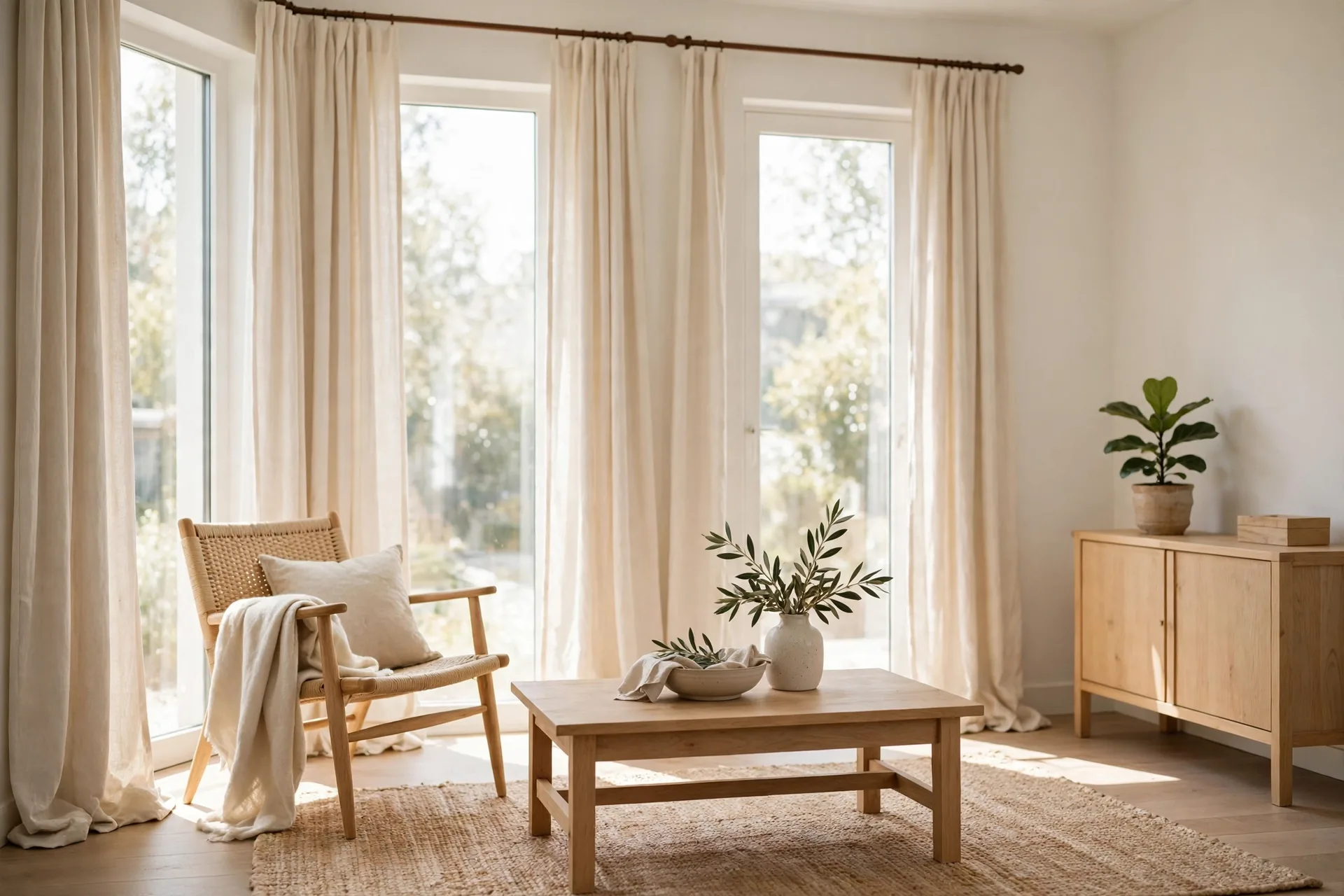
Best Cream Curtains
Cream curtains warm a room without the hardness of white, but the wrong shade can look yellow, gray, or dirty. This guide sorts cream from white and ivory, then matches panels to bedrooms, living rooms, and dining rooms.
The best cream curtains are the ones that match the room's light job first and the shade second. A sheer cream panel suits a living room that needs soft daylight, a blackout-lined cream panel suits a bedroom that needs darkness, and a short cream panel suits a kitchen window that needs eye-level privacy. Pick by lining and weight before you fall for a shade name, because two panels both called cream can behave very differently once hung.
Cream sits between white and beige: warmer than white, lighter than beige, with a yellow cast that softens a room without darkening it. That warmth is the whole point, and it is also the risk. In a bright room with warm wood and soft light, cream glows. In a dim room with gray light, the same cream can look dull or dirty. This guide sorts cream from white and ivory, explains why cream yellows and how to slow it, and matches panels to bedrooms, living rooms, and dining rooms.
Cream picks by room and light job
Blackout cream suits bedrooms that must stay dark, sheer cream suits bright living rooms, and short cream cafe panels suit kitchen and bathroom windows. The picks below are grouped by room and light job, not by brand. Check fiber content, lining, heading, and care label on the listing for the panel you choose. Cream shows every mark, so washability matters as much as shade.
As an Amazon Associate, we earn from qualifying purchases.
| Pick | Type | Lining | Best for |
|---|---|---|---|
| 1 | Sheer cream voile panels | Unlined | Bright living rooms that need soft daylight |
| 2 | Light-filtering cream linen-blend panels | Unlined | Relaxed living rooms with texture |
| 3 | Room-darkening cream cotton panels | Standard lining | Bedrooms that need rest without full blackout |
| 4 | Blackout cream thermal panels | Blackout lining | Bedrooms that must stay dark |
| 5 | Cream blackout panels with a linen look | Blackout lining | Formal living rooms and dining rooms |
| 6 | Short cream cafe panels | No lining stated | Kitchen and bathroom windows at eye level |
1. Sheer cream voile panels: best for a bright living room that needs soft daylight
- Best for: A living room that needs daylight kept soft, with a warm glow rather than bare glass.
- Key features: Sheer cream voile face, unlined fall, light-filtering opacity, gentle drape.
- Pros: Brightens without glare, keeps the room feeling open, warm cream glow in daylight.
- Cons: Little privacy at night once indoor lights are on, no darkness alone, shows dust sooner than a darker panel.
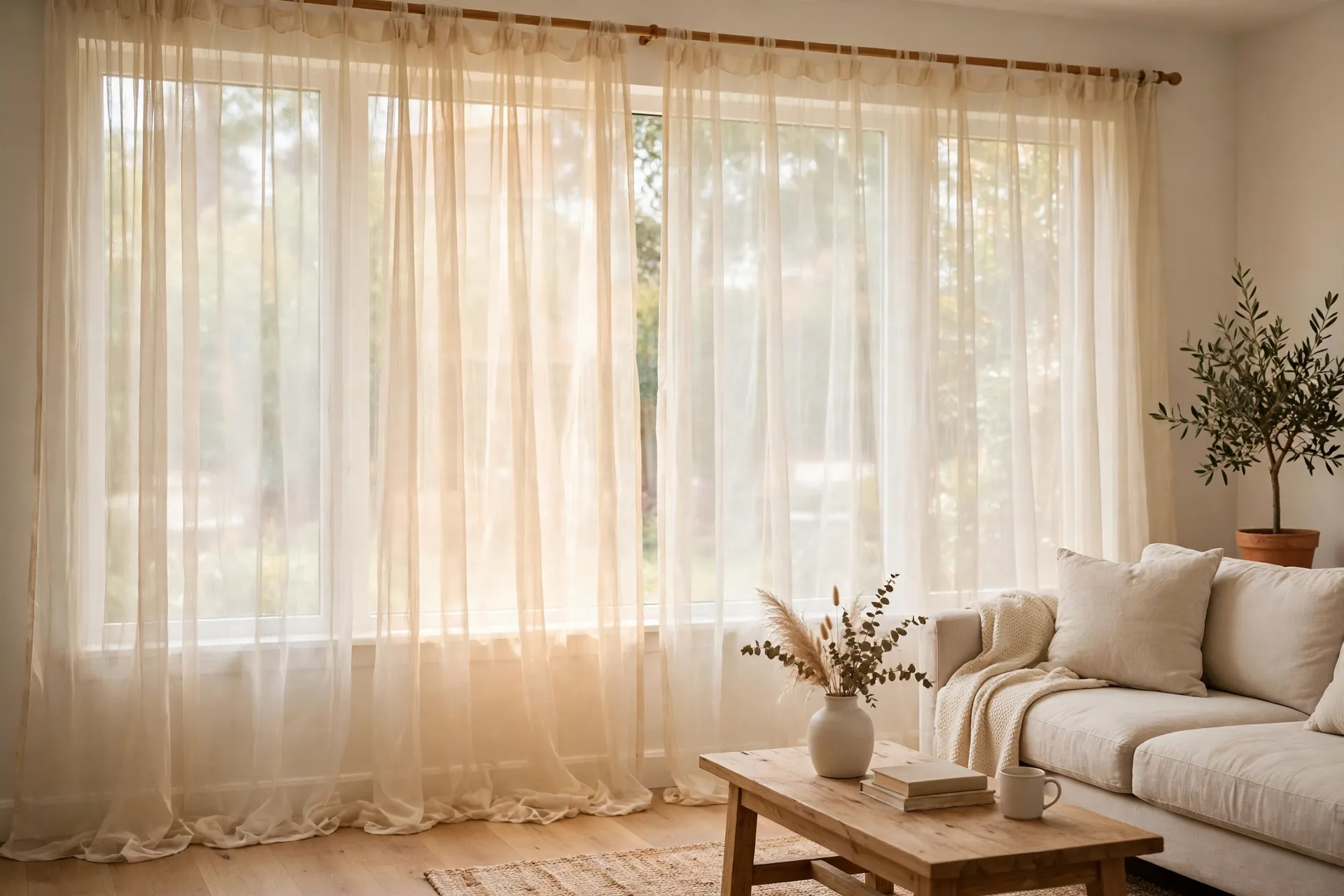
2. Light-filtering cream linen-blend panels: best for a relaxed living room with texture
- Best for: A living room where texture matters as much as light, and a flat panel would look plain.
- Key features: Linen-blend face with a visible weave, unlined fall, light-filtering opacity, soft natural drape.
- Pros: Texture that reads well up close, daytime privacy from the street, relaxed fall for informal rooms.
- Cons: Wrinkles show more than on a flat weave, needs steaming after washing, not a darkness panel.
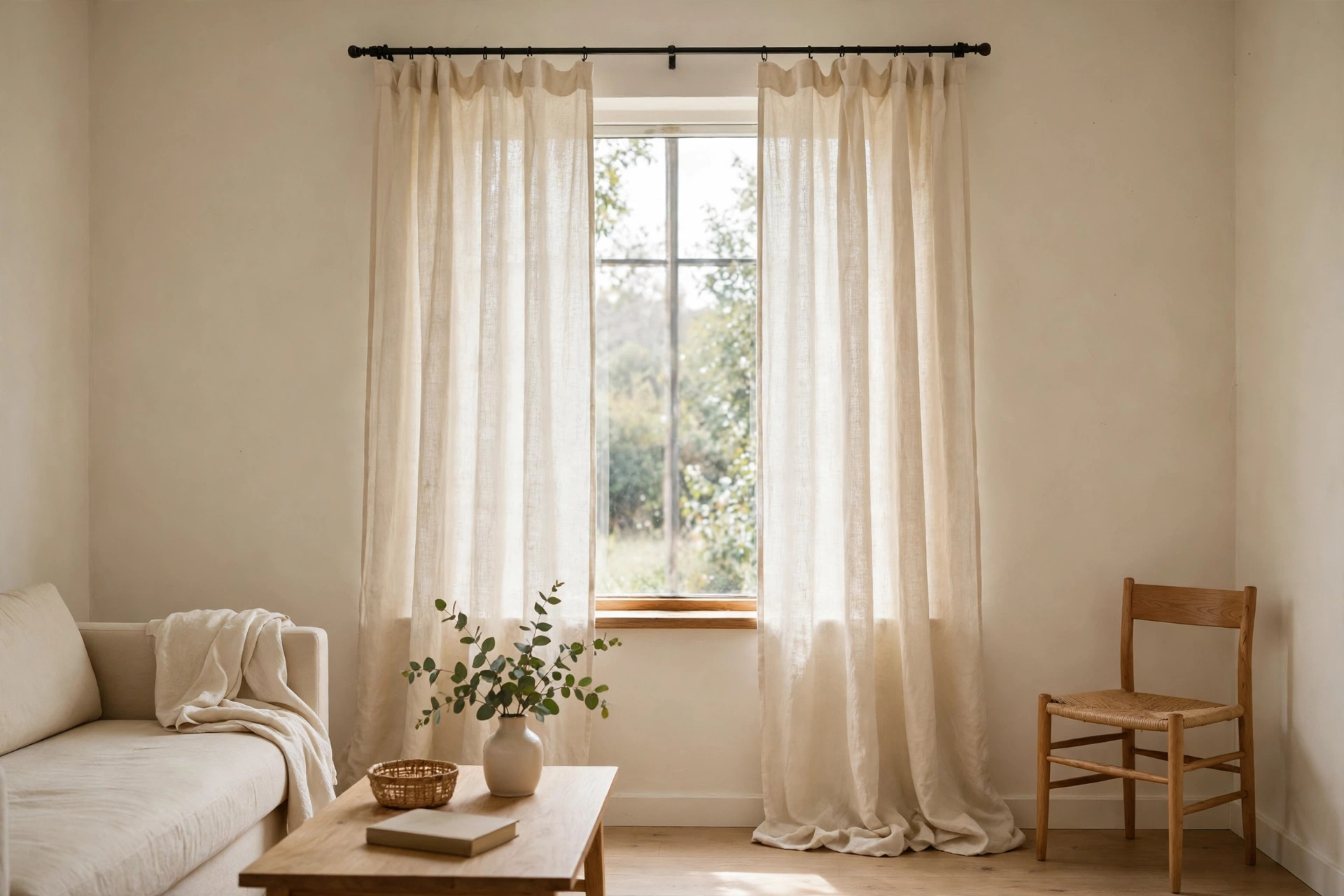
3. Room-darkening cream cotton panels: best for a bedroom that needs rest without full blackout
- Best for: A bedroom where morning light should be dimmed, not shut out entirely.
- Key features: Cotton-blend face with a standard lining, room-darkening opacity, fuller fall than an unlined panel.
- Pros: Dimmed mornings without a cave-dark room, cotton face that washes at home, good daytime privacy.
- Cons: Light still leaks at the sides and top, lining adds weight and washing bulk, cream face still marks easily.
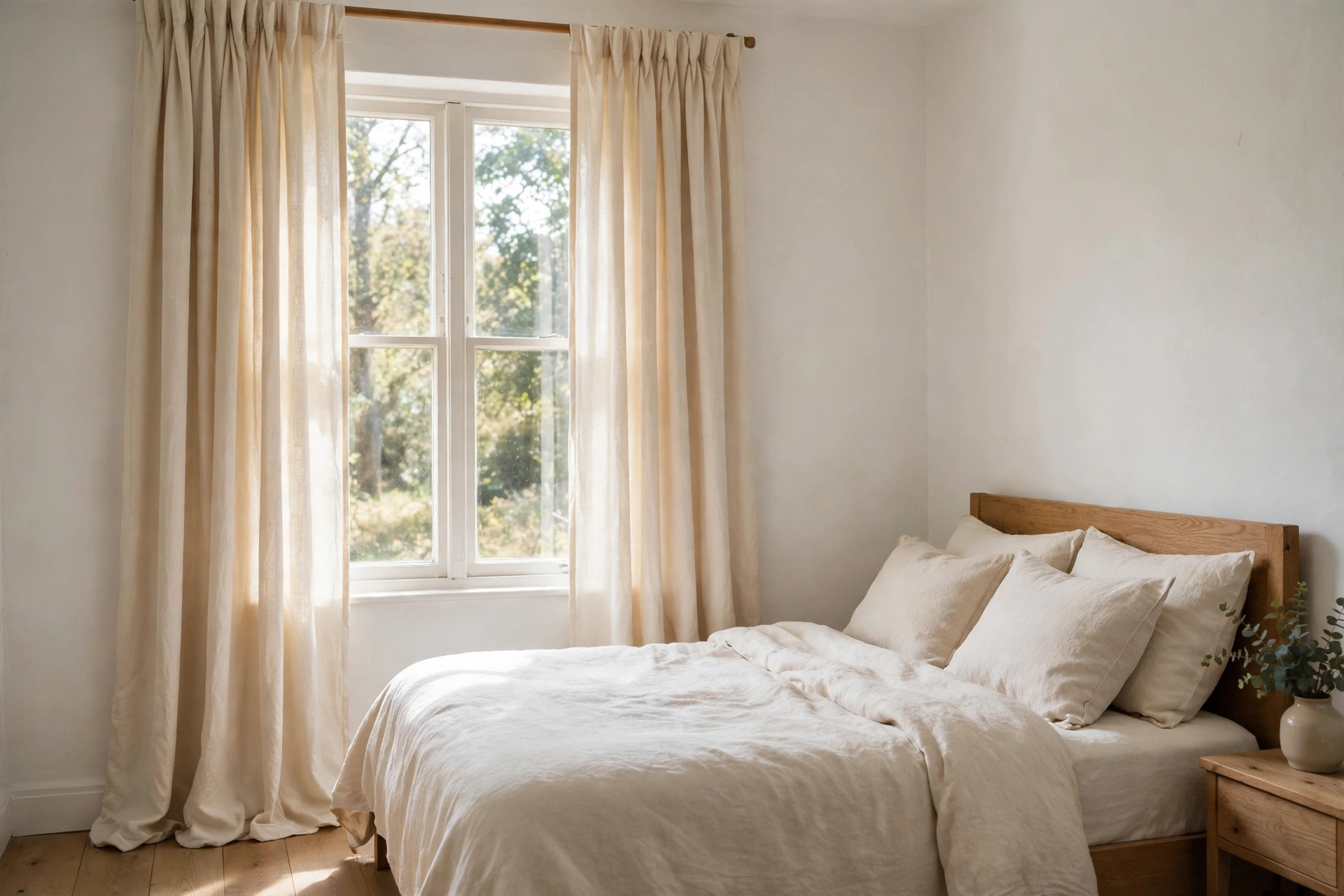
4. Blackout cream thermal panels: best for a bedroom that must stay dark
- Best for: A bedroom where sleep comes first, including rooms facing street light or early sun.
- Key features: SimpleHome cream panels, 100% blackout, black back, thermal insulation, triple-weave 100% polyester, grommet heading, 52 by 84 inches, 2 panels.
- Pros: Strongest darkness of any cream type, helps with drafts at the window, keeps the room private at night.
- Cons: Heaviest cream type, so rod and brackets must be firm, needs full closed coverage, check the care label.
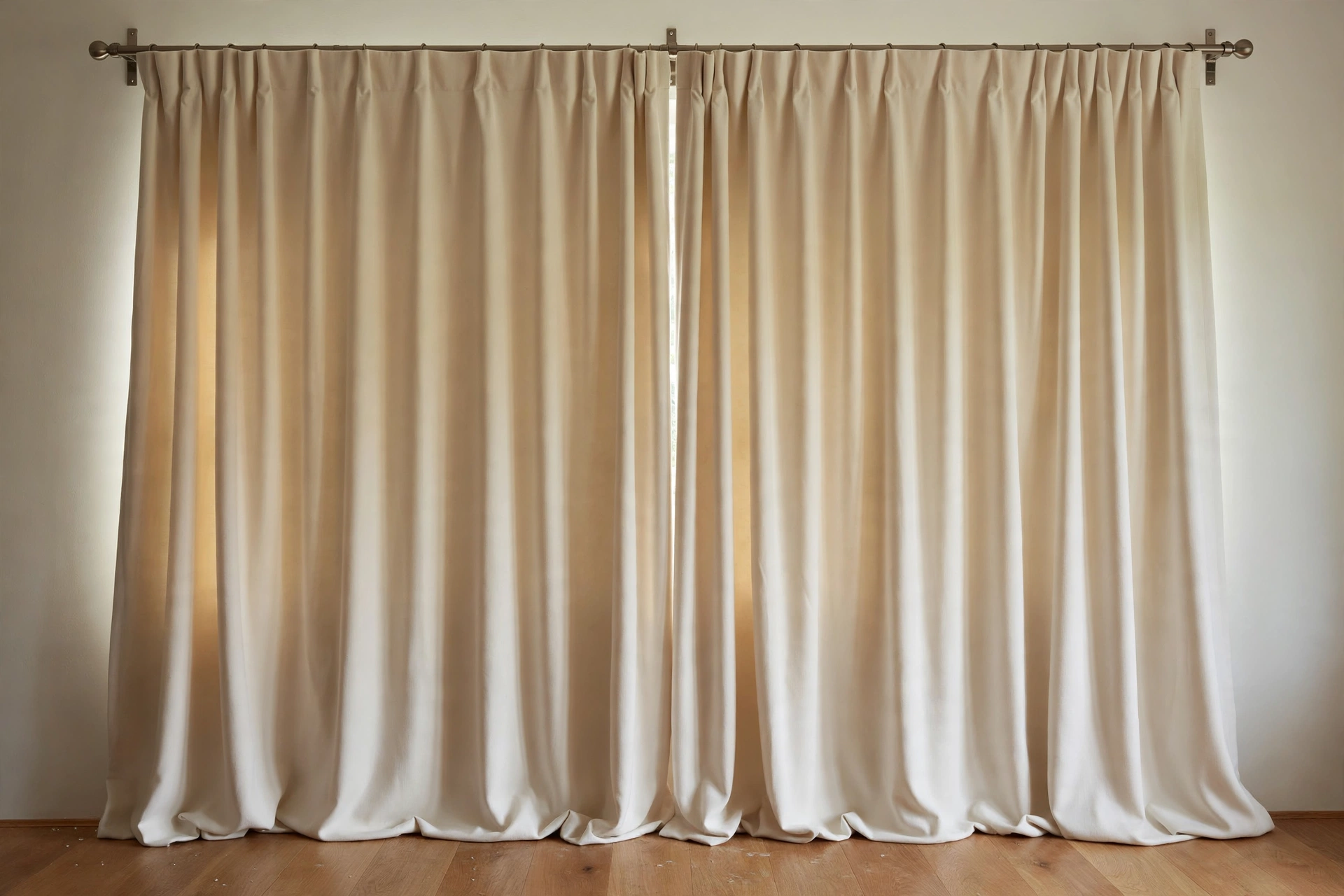
5. Cream blackout panels with a linen look: best for a formal living room or dining room
- Best for: A formal room where a linen surface is wanted, but the room also needs evening privacy or darkness.
- Key features: Linen-look face with a blackout lining, plain restful color, heading that draws fully shut.
- Pros: Linen texture inside the room with darkness behind it, suits formal rooms, good evening privacy.
- Cons: Heavier than an unlined linen-look panel, stacks wider when open, the linen look is a texture, not real linen.
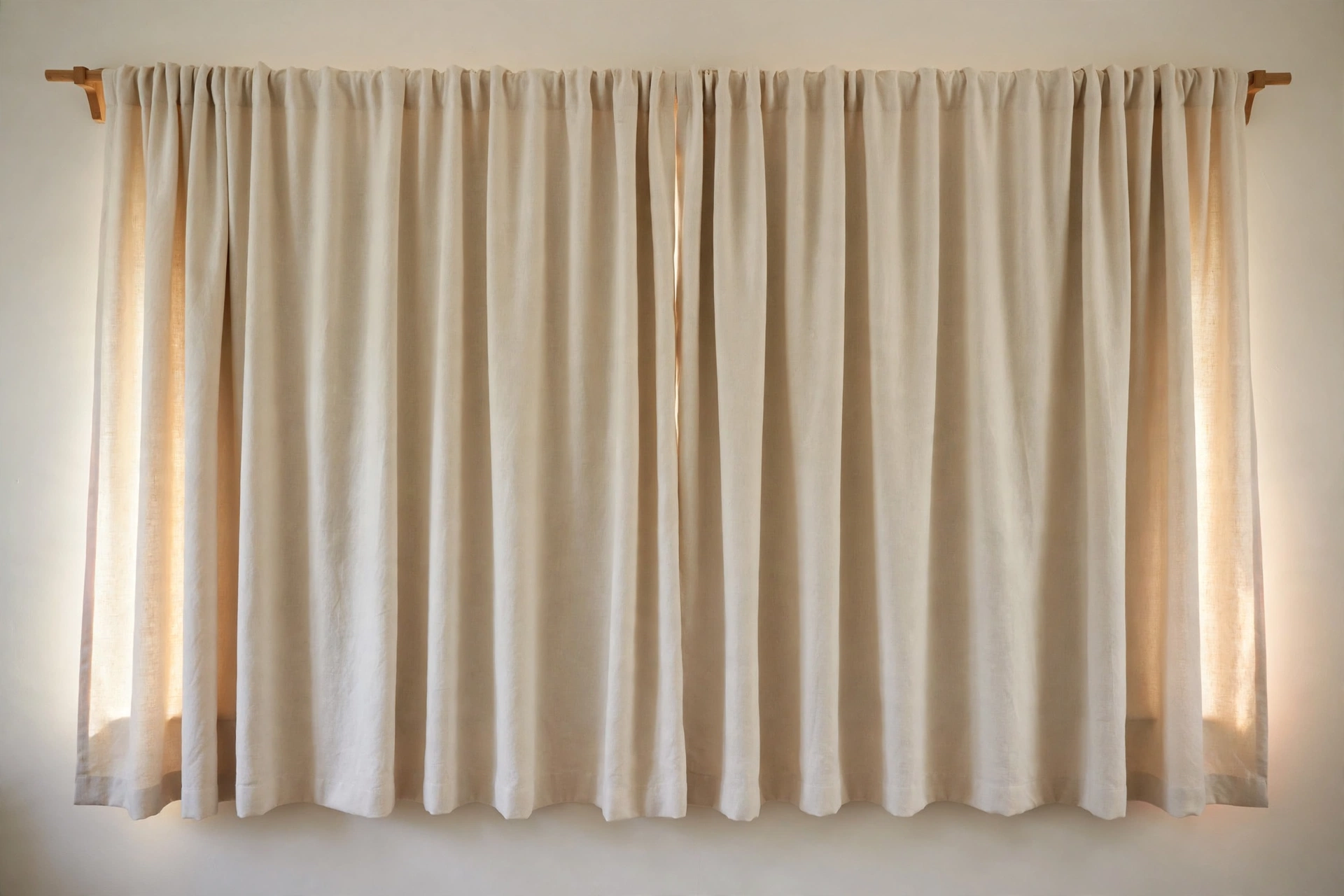
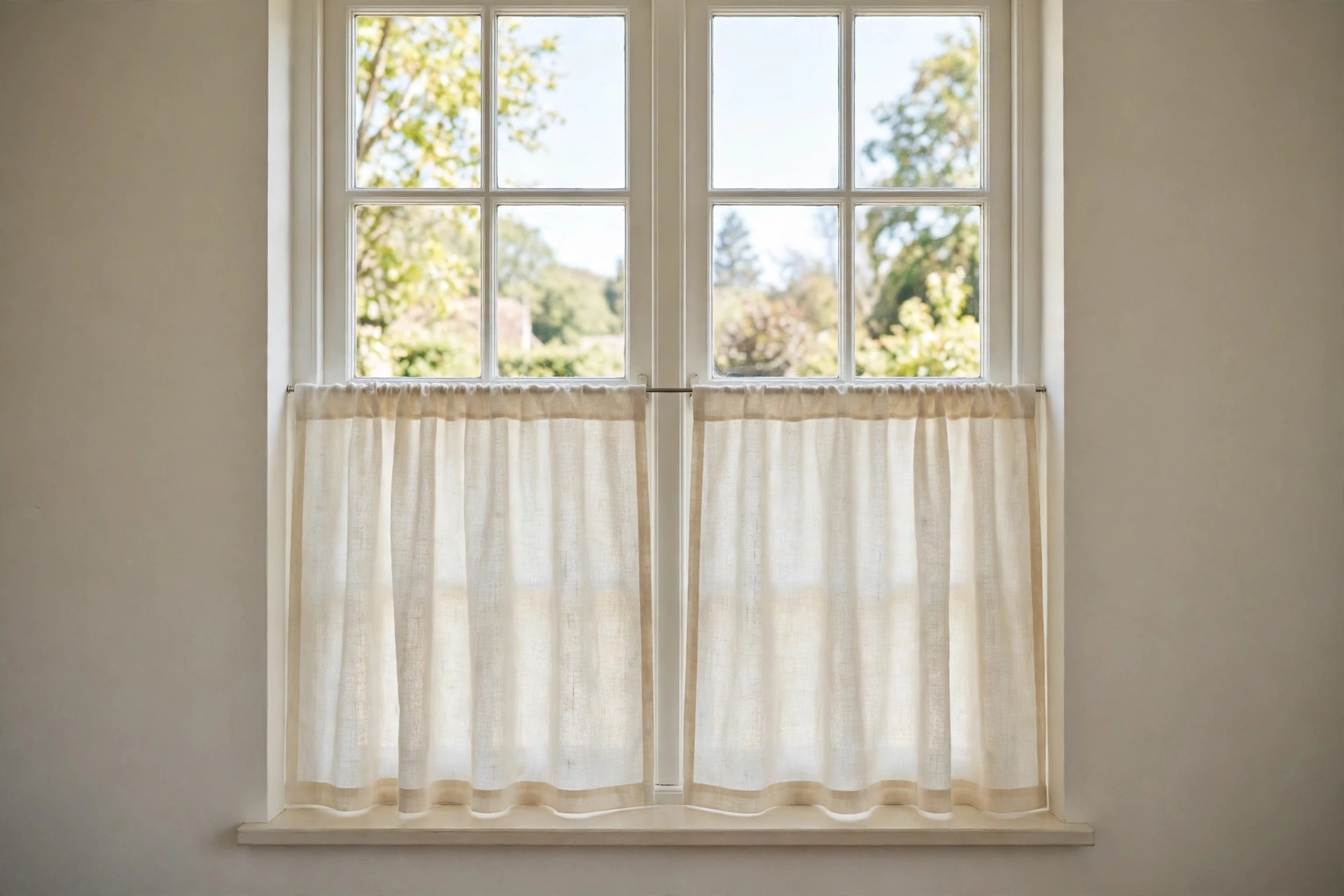
6. Short cream cafe panels: best for a kitchen or bathroom window that needs eye-level privacy
- Best for: A kitchen or bathroom window where the bottom half needs cover and the top half stays open to light.
- Key features: Short cream linen-blend face, cafe length covering the lower window only, semi-sheer light filtering, back tab and rod pocket hang.
- Pros: Eye-level privacy without losing daylight, short length stays clear of sinks, washes often without fuss.
- Cons: No privacy above the panel, no darkness, suits only windows where the top half can stay bare.
Cream, white, and ivory side by side
Cream, white, and ivory are three different shades, and the difference shows most when they sit next to each other. White is the brightest and coolest of the three, a clean sheet-of-paper white that can look sharp or stark. Ivory is a step warmer: still close to white, with a faint yellow or beige cast that softens it. Cream is warmer again, a pale yellow shade that reads clearly as warm, not white. Put simply, white is cool and bright, ivory is white with a whisper of warmth, and cream is warm on purpose. Some ivories lean brown rather than yellow, so check the ivory swatch against both a yellow cream and a brown wood tone before deciding.
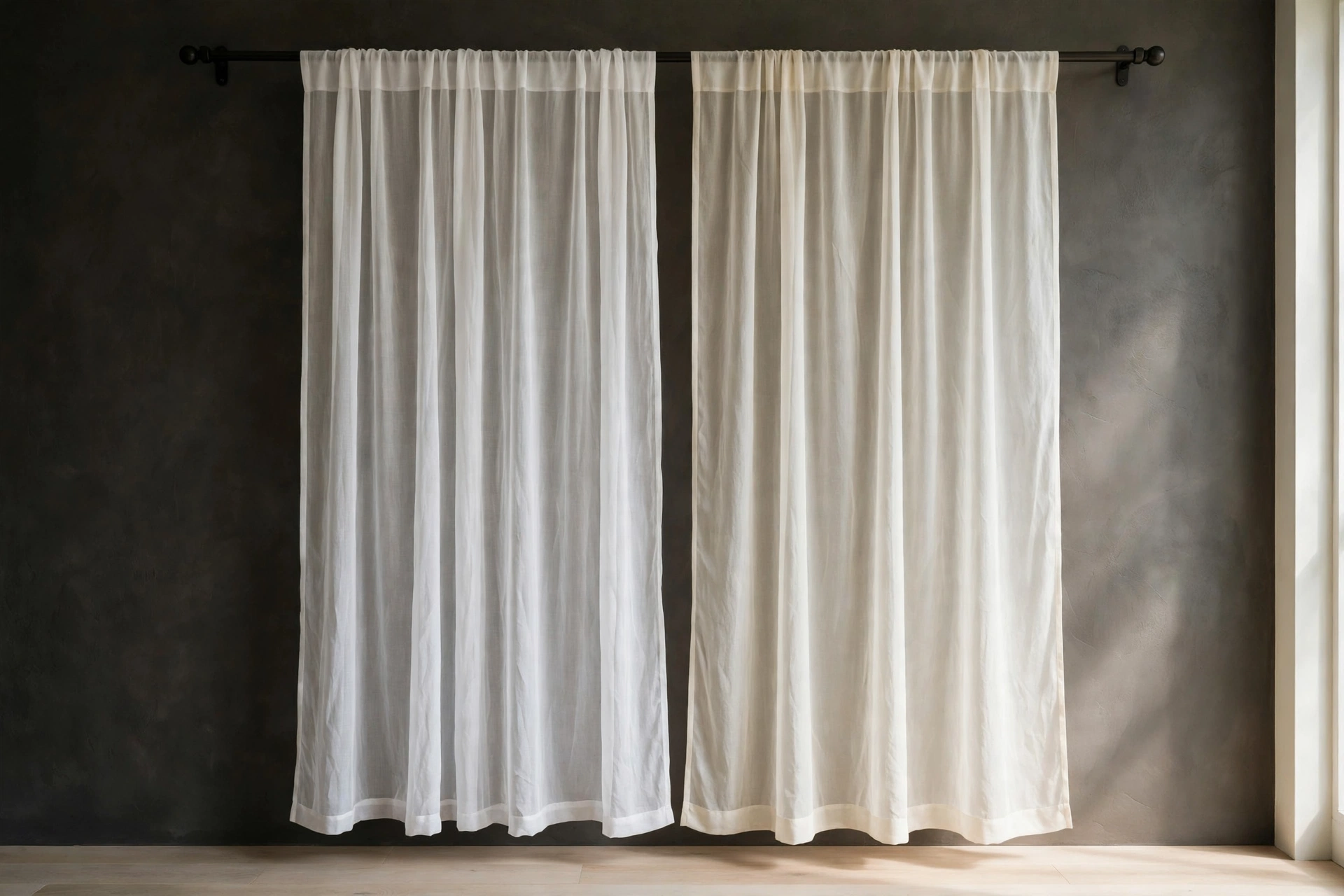
That order matters when you match panels to a room. A white panel beside warm wood or warm wall paint can look cold and separate, while cream ties those warm tones together. An ivory panel beside bright white trim can look almost white, which suits a room where you want softness without an obvious yellow cast. Listing names are not exact, though: one maker's cream can be another maker's ivory, and a panel photographed in warm light can look warmer than it is in your room. Judge the shade by a swatch in your own light, not by the name on the listing.
Testing a cream swatch before you order
A swatch test takes a few minutes and saves the most common cream disappointment: a panel that looked warm online and looks yellow, gray, or dirty at home. Hold the swatch against your wall, your trim, and your sofa in daylight, then again under the lamps you use in the evening. Cream shifts more than darker colors do, because its warmth comes from a small amount of yellow that different lights pull out differently. A swatch that glows beside a warm wall can look flat beside a cool gray wall, and a swatch that matches in daylight can turn yellow under warm bulbs.
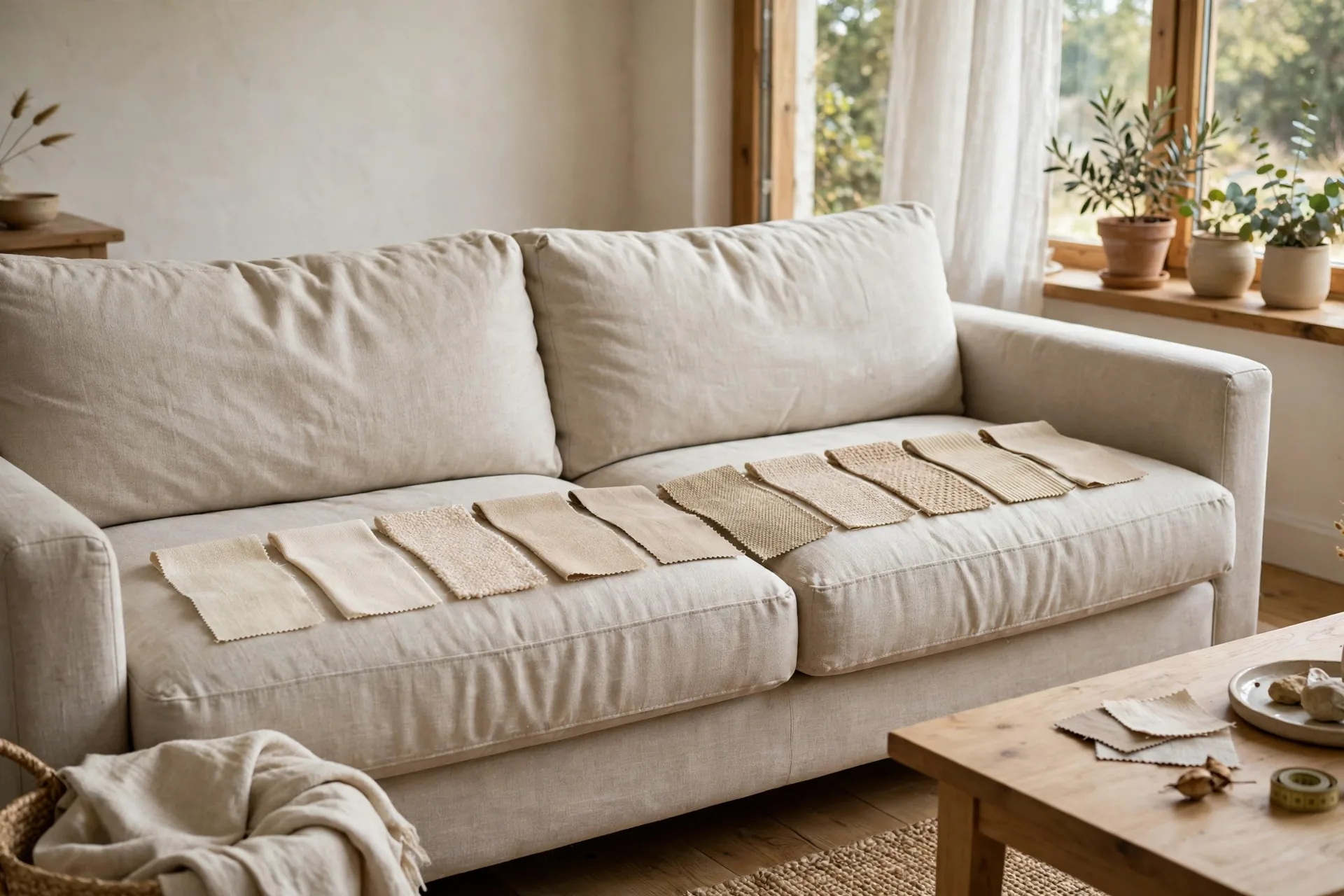
Test the swatch beside the largest warm and cool surfaces in the room, not against a white sheet of paper, which flatters every cream. If the room has both warm wood and cool gray furniture, hold the swatch beside each in turn and pick the cream that offends neither. Order one panel first when the shade matters more than the saving on a set, hang it, and live with it for a day before ordering the rest. That single-panel test answers the only question that matters: what this cream looks like in this room, in this light.
Why cream turns yellow, and how to slow it
Cream turns yellow for a few plain reasons, and most of them can be slowed, though none can be stopped entirely. Strong sun fades and yellows light fabrics over time, especially on a south-facing or west-facing window that takes afternoon sun. Heat does similar damage, so a panel that hangs against hot glass or above a radiator yellows faster than one with air moving behind it. Chlorine bleach is the fastest way to yellow a cream panel: it strips the finish and leaves a yellow cast that washing will not remove. Age alone also deepens cream, as fibers and finishes change slowly even in a kind room.
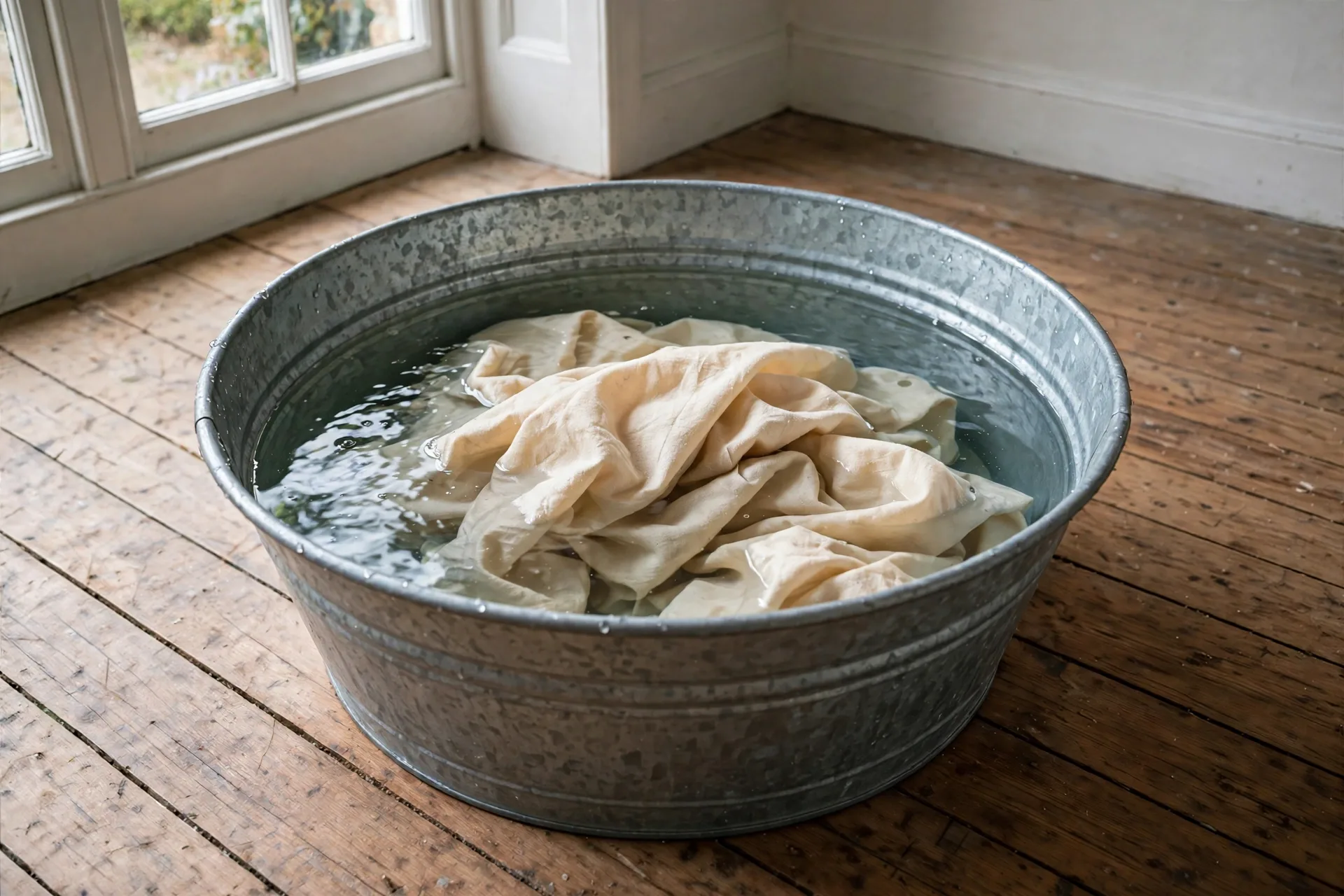
Slowing it down is mostly a matter of removing the causes you can control. A lining or a separate liner behind the cream face takes the worst of the sun before it reaches the face fabric, which is the single best protection for a sunny window. Washing in cool water with a mild detergent, and skipping chlorine bleach entirely, keeps the finish intact; an oxygen-based brightener made for colors is the safer choice when a panel needs lifting, and the care label is the rule for whether it suits that fabric. Even with all of that, a cream panel in a sunny room will warm over the years, so buy cream expecting a gentle change, not a frozen shade.
Cream that stays clean in a busy home
Cream shows dust, marks, and splashes sooner than any darker color, so a cream panel needs a cleaning plan, not just a washing label. Dust settles on the folds and along the bottom hem first, and a quick vacuum with a soft brush head every few weeks keeps it from grinding into the weave. Treat a mark as soon as you see it: blot it gently with a damp cloth and mild detergent, never rub, because rubbing pushes the mark deeper and can shine the fabric. Wash the panels before a mark sets, and wash both panels of a pair together so they age the same shade.

Choose the fabric for the room's traffic, not just for the look. A machine-washable cotton or polyester cream panel suits a family room, a hallway window, or any room where hands touch the fabric, because it can go through the wash often without a trip to the cleaner. A delicate linen-blend or dry-clean-only cream panel suits a formal room that sees gentle use, where washing is rare and the panel stays clean by position rather than by washing. Keep cream away from the dirtiest spots in a room: not beside a door that hands brush, not above a radiator that lifts dust, and not where a pet sleeps against the glass.
Lining a cream panel by the job it must do
The lining decides what a cream panel actually does, because the cream face itself only decides the color. An unlined cream panel filters light and gives daytime privacy, but it will not darken a room or hold much heat, and it shows its weave against the light. A standard lining adds body, helps the folds fall evenly, protects the face from sun, and gives stronger daytime privacy, which suits a living room that needs cover without darkness. A blackout lining is a separate, denser layer that blocks most light through the fabric itself, which is what a bedroom or media room needs when darkness is the point. A thermal lining sits behind the face and helps slow heat loss at the window and soften drafts, which suits a cold room or a drafty window better than a standard lining alone.
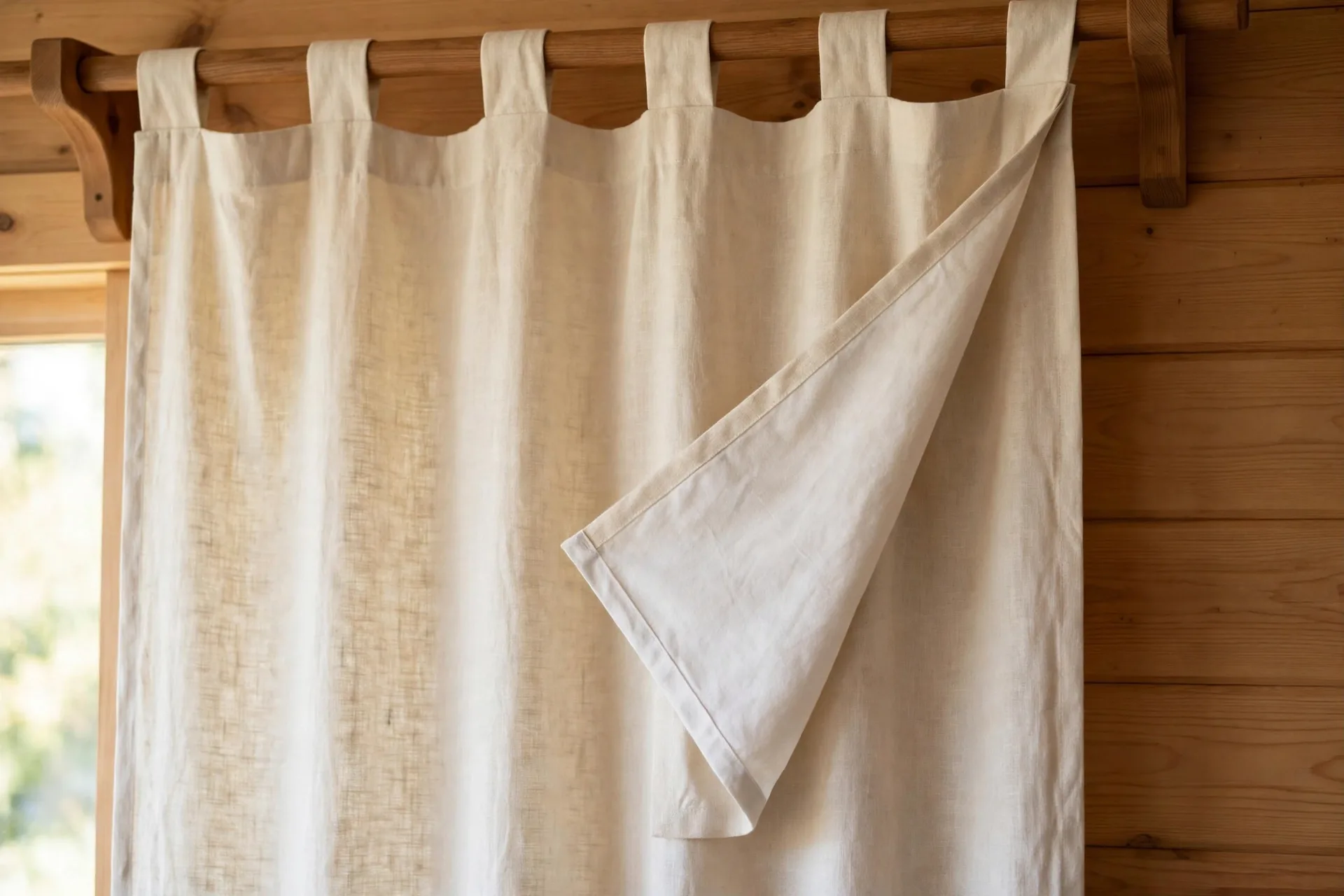
Match the lining to the job, not to the thickest option on the listing. A living room that needs soft daylight gets worse, not better, with a blackout lining, because the room loses the glow that cream was bought for. A bedroom that needs darkness gets no help from a standard lining, because light still passes through it at dawn. Check the listing for the lining by name: a panel that says blackout in its title but names no blackout lining in its details may only be room-darkening, so read past the title to the lining line before you order. For the full darkness job, see Best Blackout Curtains, and for the warmth job, see Best Thermal Insulated Curtains.
Cream in a bedroom that still sleeps dark
A cream bedroom needs darkness first and warmth second, which means the lining matters more than the shade. A blackout-lined cream panel gives both sides of the job: a warm cream face inside the room and darkness behind it. Hang the rod 6 to 12 inches past the frame on each side, so closed panels overlap the frame, and choose total panel width of 1.5 to 2 times the rod width for a standard look, 2 to 2.5 times for a full look, 2.5 to 3 times for pinch pleat, and 2 to 2.5 times for sheer, so folds stay full when closed.
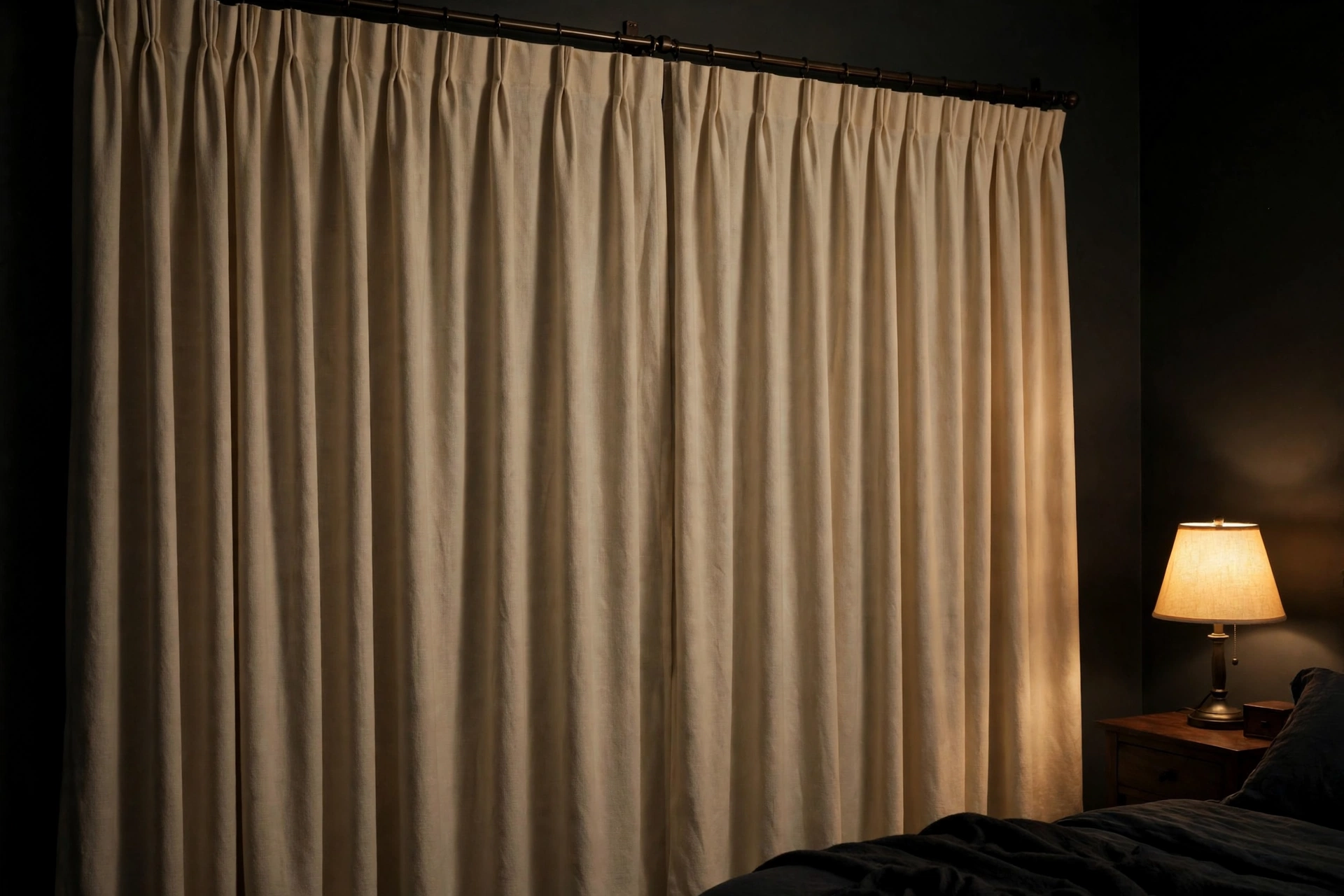
Light leaks most often at the sides, at the top, and through the center gap, so check the closed coverage in daylight before you decide the panel has failed: a gap at the edge is a hanging problem, not a fabric problem, and a wider rod or a return to the wall often fixes it.
Cream has one bedroom advantage over white: it softens the first light at dawn instead of glaring, so a room that wakes gently suits cream better than a stark white panel. It has one bedroom cost as well: a cream face shows dust and marks more plainly than a darker panel, so a bedroom panel that never gets washed will not stay cream. Pick a machine-washable cream panel for a bedroom that gets daily use, and keep the blackout lining in mind when you wash, because some linings need gentler care than the face. For room-wide bedroom advice, see Best Curtains for Bedroom. A cream sheer layered over a blackout panel gives daytime softness with night darkness, as the layering guide shows.
Cream in a living room that stays bright without glare
A living room suits cream best when the panel filters light rather than blocking it, because the room's job is daylight, not darkness. A sheer or light-filtering cream panel takes the hard edge off direct sun, keeps the room bright, and gives daytime privacy from the street, all while the cream warmth ties wood, rug, and sofa together. Hang panels high and wide, so the window looks larger and the panels stack clear of the glass when open, and let the cream glow do the work that a darker panel would do with pattern or color.
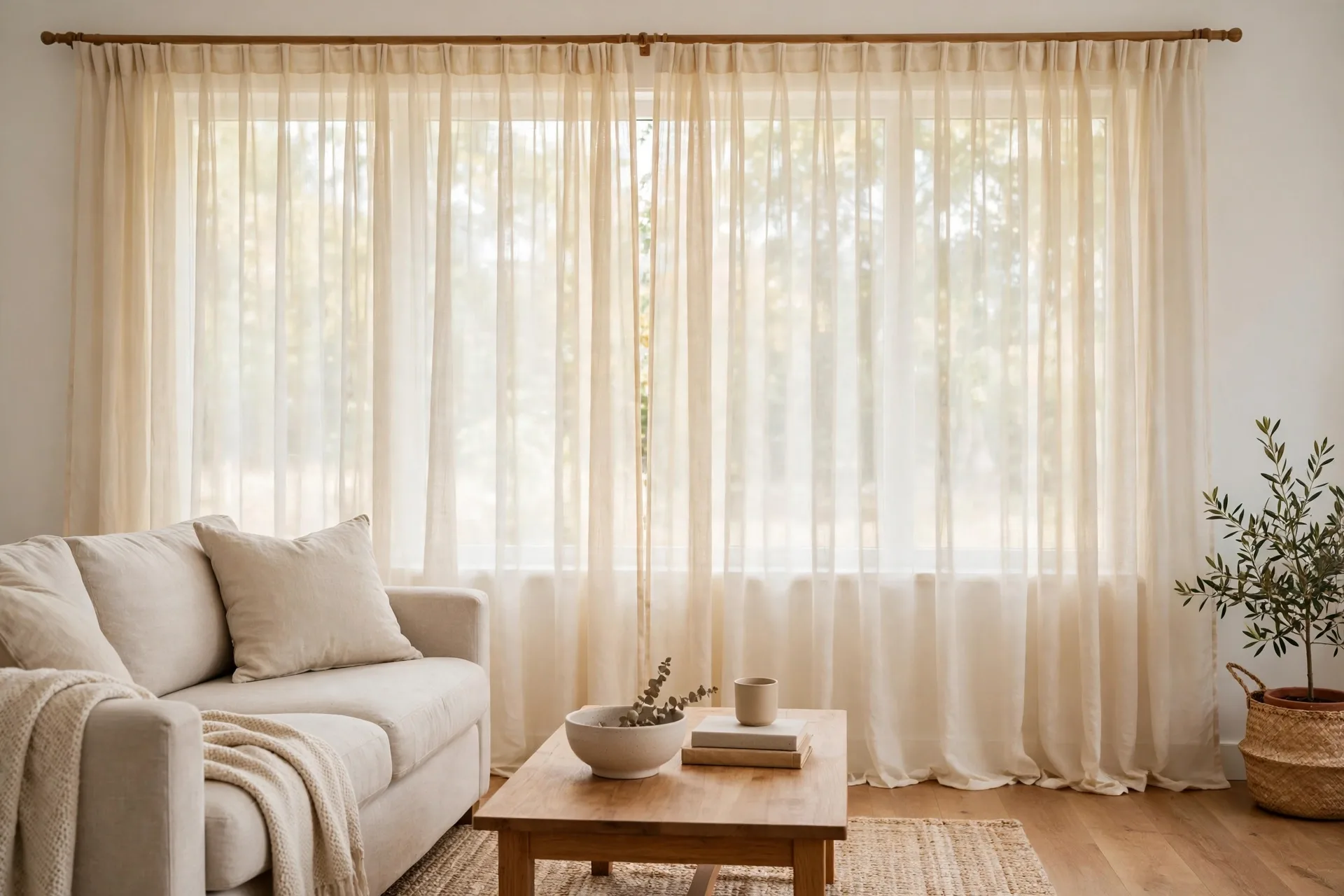
Cream turns yellow where sun, heat, and time work on it together: a south-facing or west-facing window gives the panel strong afternoon sun, and an unlined cream face shows that change sooner than the same panel in a shaded room. A lining behind the cream face slows the yellowing, shields furniture and floors from sun, and adds body so the folds fall evenly, without dulling the brightness. Wash the panels as the care label directs, and keep them out of harsh sun where you can, so the cream stays cream instead of drifting toward yellow. After dark, the see-through problem still applies: a cream panel that looks solid from the street in daylight can show shapes inside once the lamps are on, so a lining or a heavier panel in front of it still matters at night. For room-wide living room advice, see Best Curtains for Living Room.
Cream in a dining room that suits long meals
A dining room suits cream well, because meals feel calmer in soft, even light than in harsh glare, and cream warms a room without the heaviness of a dark panel. A light-filtering or standard-lined cream panel softens midday sun without turning the room dark, and the warm shade suits wood tables and plain walls. Length is practical as well as pretty: panels that just touch the floor look calm and finished, while panels that pool on the floor collect dust and get stepped on near chairs, so a floor-kissing length suits a dining room better than a puddle.
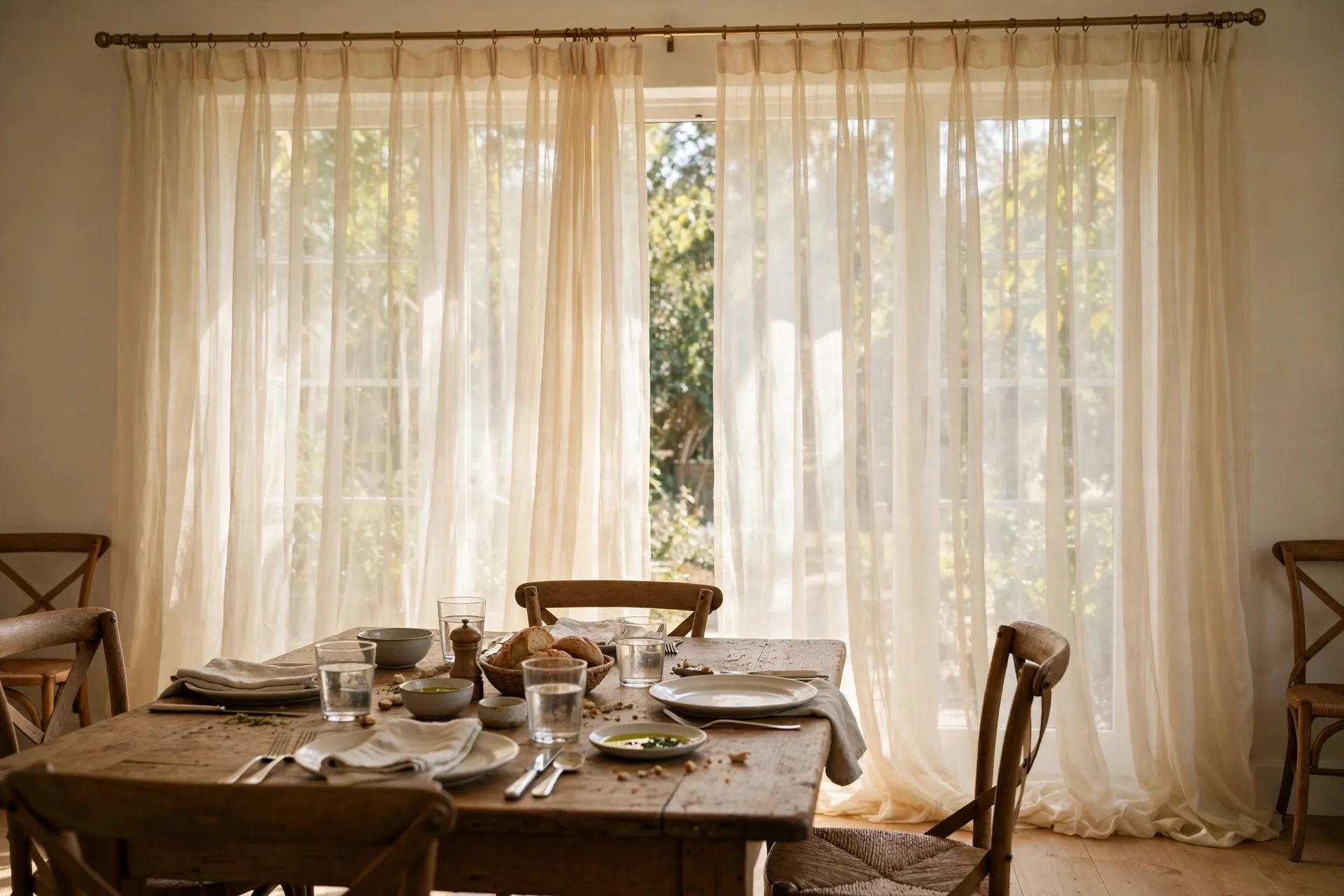
Think about steam and splashes before you choose. A dining room near a kitchen gets more steam, cooking smells, and the odd splash than a living room, so a washable cream panel is easier to live with there than a dry-clean-only one. A cream panel in a dining room also needs a lining decision: an unlined cream panel glows nicely by day but gives little evening privacy, while a standard lining adds privacy and body without darkening the room. Keep the pattern quiet in a dining room, because the table, food, and people are the focus, and a bold pattern on the window fights with them.
Cream on a small or dark window
Cream can rescue a small or dark window, but only when the panel stays light and the room has some daylight to work with. A sheer or light-filtering cream panel on a small window lets in every bit of available light while softening the view, and a cream panel hung high and wide makes the window look larger than it is, because the eye reads the panel span, not the glass span. Keep the fabric light and the heading simple on a small window: a heavy lined panel swallows a small window, while a light cream panel frames it.
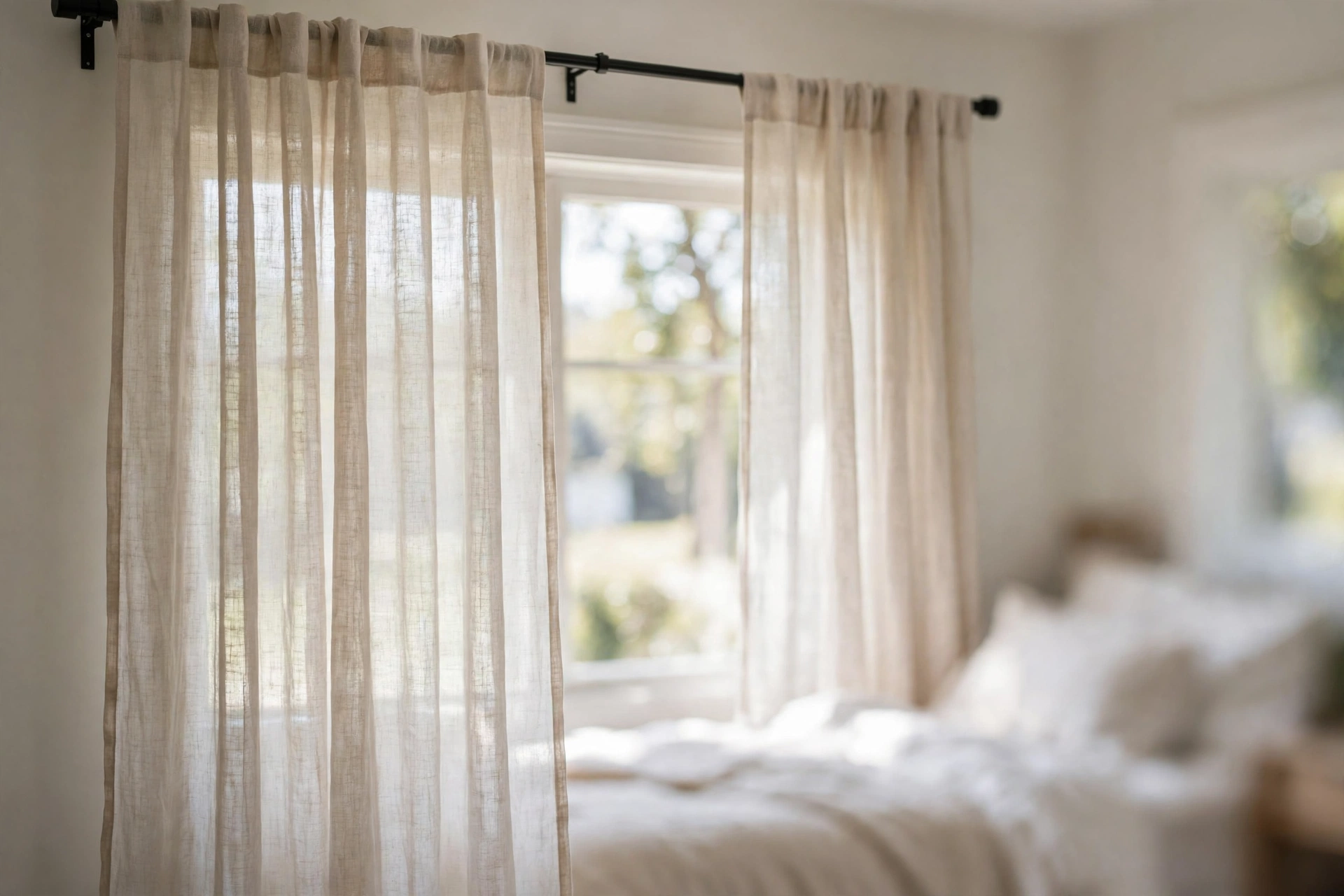
In a truly dark room, cream has a limit worth knowing. A room with little daylight and cool gray light will not make cream glow, and the panel can read as dull or dingy no matter how warm its shade name sounds. In that room, check the swatch in the room's actual light before ordering, and consider whether a lighter, brighter panel suits the room better than cream. If the room gets some daylight but feels dim, a sheer cream panel nearest the glass with the wall painted in a warm white helps more than a heavier cream panel, because the sheer lets light through while the warm wall stops the cream from looking gray by comparison.
Patterns, texture, and headers on a cream ground
A cream ground takes pattern and texture well, because the pale base lets both show without shouting. A subtle texture, like a woven linen blend, a slub, or a fine tone-on-tone stripe, gives a cream panel depth that a flat panel lacks, and it hides dust and creases better than a smooth face. A bold pattern on cream needs more care: a large print can dominate a small room, and a busy pattern fights with patterned rugs or upholstery, so a plain cream panel is the safer pick in a room that already has pattern, while a printed cream panel suits a plain room where the window can carry the interest.
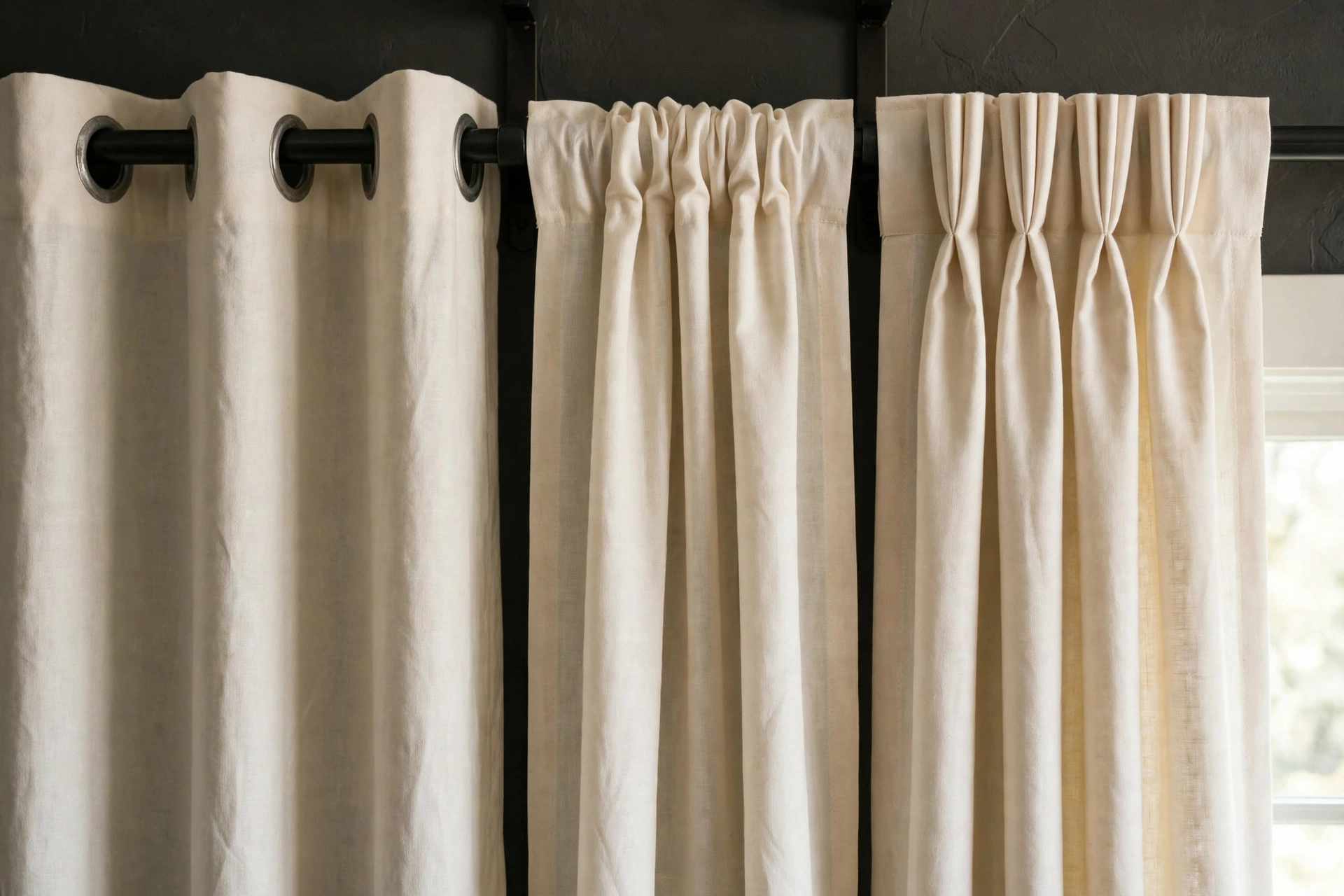
Headers change how cream hangs and how it wears. A grommet heading slides freely and suits a panel that opens and closes daily, while a rod-pocket heading suits a panel that mostly stays in place, because rod-pocket panels slide less freely than grommet panels. A back-tab heading sits between the two, with a clean fall and no visible rings, and a pinch-pleat heading gives neat, tailored folds that suit a formal room. Match the header to how the panel will be used, not just to how it looks on the listing, and check that the rod diameter suits the heading: a rod-pocket panel needs a rod slim enough to slide, while a grommet panel needs a rod that fits its rings without binding.
Rods, fullness, and length for cream panels
Cream panels need the same rod, fullness, and length rules as any panel, with one extra care: a cream panel shows a thin, flat hang more plainly than a dark panel does. Choose total panel width of 1.5 to 2 times the rod width for a standard look, 2 to 2.5 times for a full look, 2.5 to 3 times for pinch pleat, and 2 to 2.5 times for sheer, so folds stay full when closed, and check that the rod is rated for the panel weight, because a lined or blackout-lined cream panel is heavier than it looks. Brackets must be fixed into solid wall or proper anchors, and a wide span needs a center support, or the rod will bow and the cream panels will sag toward the middle, which shows at once on a pale fabric.
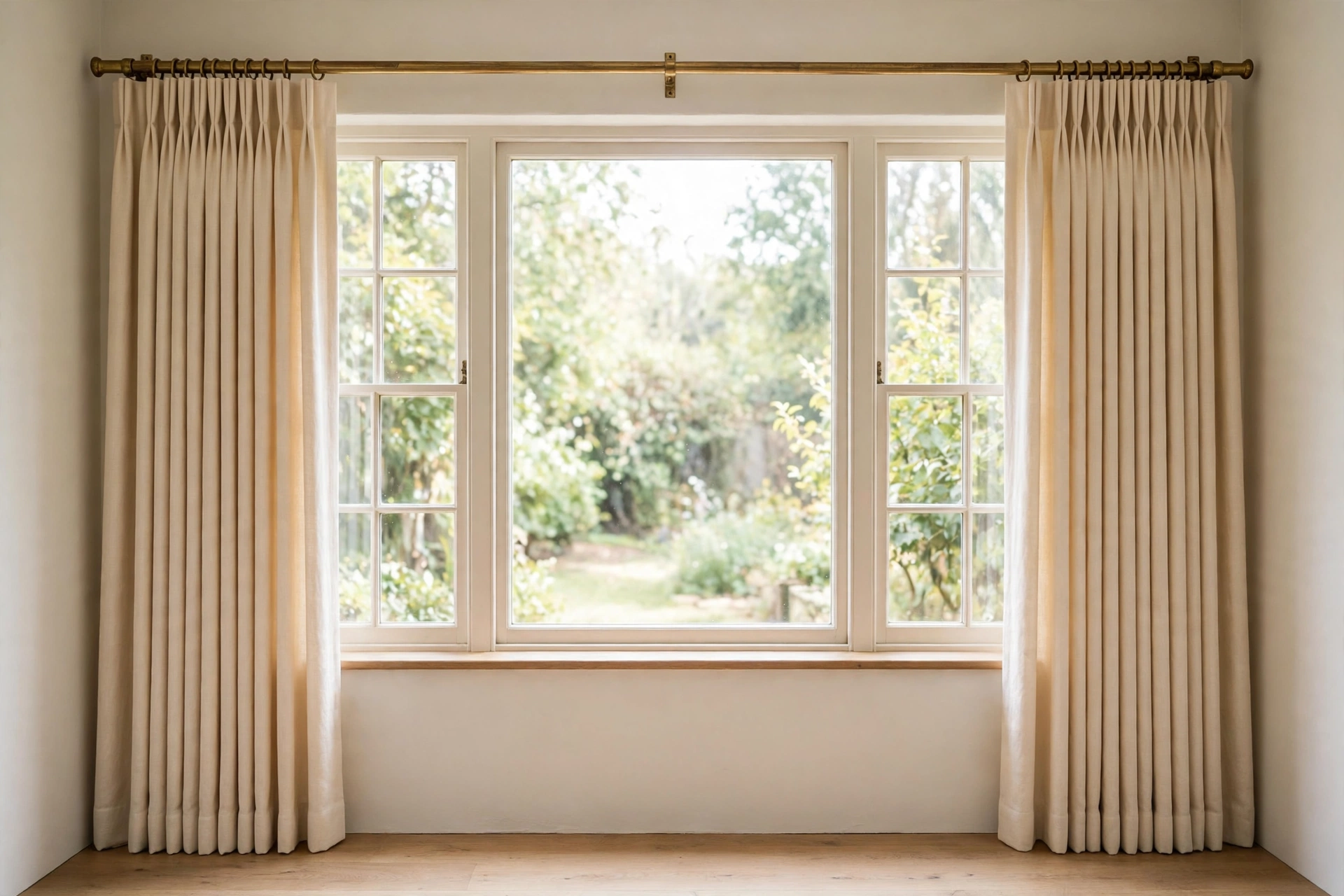
Length follows the room, not the panel. Floor-length panels suit living rooms, bedrooms, and dining rooms, with a float finish, about half an inch above the floor, as the easiest length to clean around, or a kiss finish, just touching the floor, for a neater look. Short cafe lengths suit kitchens and bathrooms, where the bottom half needs cover and the top half should stay open. Measure the drop in three places and use the shortest reading, so no panel drags, and measure with the flooring and rug in place, because a thick rug raises the floor line. For the measuring steps, see How to Measure for Curtains, and for hanging, see How to Hang Curtains.
Mistakes that make cream look dingy or flat
Most cream disappointments come from a few avoidable mistakes, not from the shade itself. Ordering by the shade name without a swatch is the first: one maker's cream is another maker's ivory, and a panel that looked warm online can look yellow or gray at home. Washing with chlorine bleach is the second: it yellows cream fast, and the damage does not wash out. Hanging an unlined cream panel on a sun-blasted window without a lining is the third: the sun fades and yellows the face, and the panel looks tired within a season. Choosing a heavy blackout lining for a living room that needed glow is the fourth: the room goes dark, and the cream was bought for nothing.
Two more mistakes show up after the panels are hung. A thin, flat hang, with too little fullness, makes cream look like a sheet pulled tight, because pale fabric shows every flat stretch. And washing one panel of a pair without the other makes the pair age two different shades, which shows plainly on cream. Avoid all six by testing a swatch, skipping chlorine bleach, lining for sun, matching lining to the room's job, ordering full width, and washing pairs together. Cream rewards that care by staying bright for years; it punishes shortcuts faster than any darker color would.
Frequently asked questions about cream curtains
Cream questions come down to shade, yellowing, lining, and washing. Get those four right for the room.
Is cream the same as ivory or off-white?
Cream is not the same as ivory or off-white, though listings sometimes use the names loosely. White is the brightest and coolest, ivory is white with a faint warm cast, and cream is warmer again, a pale yellow shade that reads clearly as warm. Off-white is a general term that can cover ivory, cream, and other pale shades, so it tells you less than the exact shade name. Compare swatches side by side in your own light, because one maker's cream can be another maker's ivory.
Will cream curtains make my room look yellow?
Cream curtains can make a room look yellow when the shade is too warm for the room's light, or when the panel has yellowed with sun, heat, or bleach. Test a swatch in daylight and under your evening lamps before ordering, and pick a cooler cream when the room already has warm wood and warm walls. Keep chlorine bleach away from cream entirely, and use a lining on a sunny window to slow sun yellowing.
Do cream curtains work in a bedroom?
Cream curtains work in a bedroom when the lining fits the sleep job. A blackout-lined cream panel darkens a bedroom well while keeping a warm face inside the room. An unlined or standard-lined cream panel dims light but will not darken a bedroom at dawn, so it suits a room where gentle waking matters more than full darkness. Hang panels to overlap the frame when closed, so light does not leak at the sides.
Are cream curtains hard to keep clean?
Cream curtains need more cleaning attention than darker panels, because dust and marks show sooner on a pale face. Vacuum with a soft brush head every few weeks, blot marks as soon as you see them, and wash both panels of a pair together. A machine-washable cream panel suits a busy home far better than a dry-clean-only one, because it can go through the wash often without a trip to the cleaner.
Should cream curtains be lined or unlined?
A cream panel should be lined when the room needs darkness, privacy at night, sun protection, or body in the folds, and unlined when the room needs soft daylight and a light feel. A standard lining suits a living room that needs cover without darkness, a blackout lining suits a bedroom or media room, and a thermal lining suits a cold or drafty window. Match the lining to the job, not to the thickest option on the listing.
Do cream curtains fade in sunlight?
Cream curtains can fade and yellow in strong, direct sun, and pale shades show the change sooner than deep colors. A standard lining behind the cream face slows fading by taking the worst of the sun before it reaches the face fabric. On a south-facing or west-facing window, a lining is worth having even when darkness is not the job, because it protects both the panel and the furniture near the window.
What colors go with cream curtains?
Cream curtains go with warm wood, soft whites, sage green, dusty blue, warm gray, and natural linen tones, because cream ties warm neutrals together without the hardness of white. In a room with cool gray walls and cool light, test the swatch first, because cream can look flat beside cool surfaces. Keep the pattern quiet when the room already has pattern, and let a plain cream panel with a visible weave carry the texture. Charcoal is the best dark accent for cream, and dark cherry wood complements it well.
Can cream curtains go in a kitchen or bathroom?
Cream curtains can go in a kitchen or bathroom as short cafe panels, where the bottom half needs cover and the top half stays open to light. Choose a machine-washable cream panel for those rooms, because steam, splashes, and cooking smells reach the fabric often. A full-length cream panel suits neither room well, because it hangs where splashes and steam collect, and it is harder to wash often.
How do I wash cream curtains without yellowing them?
Wash cream curtains in cool water on a gentle cycle with a mild detergent, and never use chlorine bleach, which yellows cream fast. An oxygen-based brightener made for colors is the safer choice when a panel needs lifting, and the care label on your panel is the rule for whether it suits that fabric. Dry panels away from direct sun, and iron or steam on the right setting while slightly damp to remove creases.
Are cream curtains good for small rooms?
Cream curtains suit small rooms when the panel stays light and the room has daylight to work with, because a sheer or light-filtering cream panel lets light through while making the window look larger. Hang the panel high and wide so the window reads bigger than the glass. In a truly dark room with cool light, cream can look dull, so test the swatch in the room's actual light before ordering.
This guide is research-based curation: we compared maker specifications, published reviews, and current prices. Read how we choose.