 Best
Curtain Fabric Types Explained
Linen, cotton, velvet, polyester, silk, and sheer all hang differently, filter light differently, and ask for different care. This guide compares them side by side so you can pick by room and by light, not by name alone.
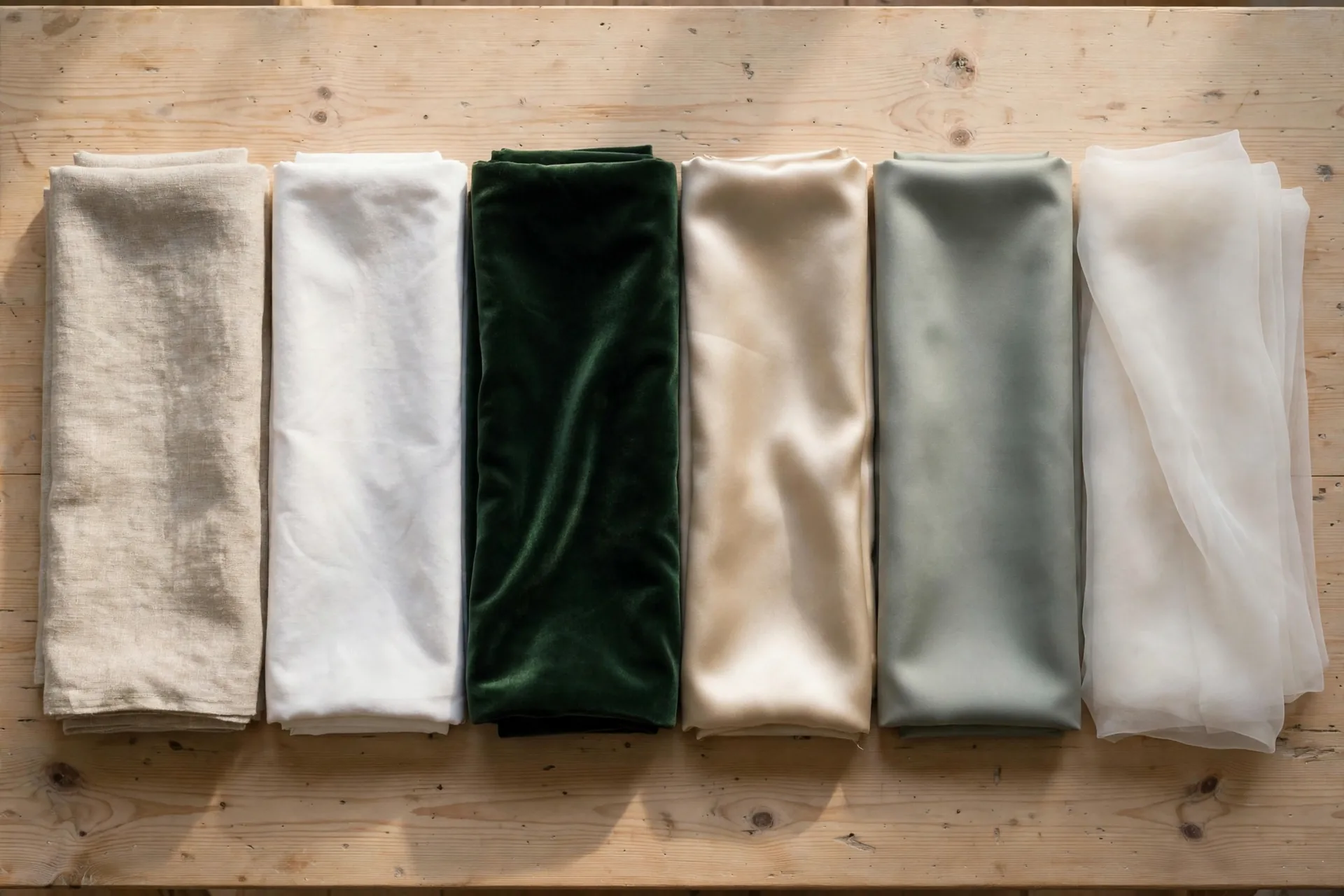
Curtain fabric types come down to six names most buyers meet: linen, cotton, velvet, polyester, silk, and sheer. Linen and cotton are natural fibers with a soft, relaxed fall. Velvet is heavy and warm. Polyester is the easy care workhorse, often made to copy natural fabric. Silk varies in weight by weave, from light charmeuse-like falls to heavier dupioni-style panels, with a gentle sheen, but it is delicate in strong sun. Sheer is not one fiber at all, but a thin, see-through weave made from several fibers. The right pick depends on what the room needs: light, night privacy, washing, and sun.
This guide compares the six side by side, explains how to spot a look-alike, covers sun and fading, and explains lining. Where a topic has its own full guide here, this article keeps its part short and points you there.
Six curtain fabrics compared at a glance
No single fabric wins every job, so the table below gives the short version of the whole guide. A fabric that filters light well is not always the fabric that gives night privacy, and a fabric that looks rich is not always the fabric that survives a sunny window or a frequent wash.
| Fabric | Light | Privacy | Care | Best room |
|---|---|---|---|---|
| Linen | Soft, uneven filtered light; unlined linen does not darken a room | Daytime privacy in a medium weight; little night privacy unlined | Wrinkles show; check the label, as some panels need dry cleaning and some wash gently | Living room, dining room, and relaxed bedrooms with a lining |
| Cotton | Ranges from light-filtering to fairly dense, depending on weave and weight | Fair daytime privacy in a medium weight; night privacy needs a lining or a second layer | Usually the easiest natural fabric to wash at home; check the label first | Living room, kitchen in a short washable panel, and family rooms |
| Velvet | Blocks much light on its own because of its dense pile, though edges still leak light | Strong privacy, day and night, once closed | Heavy to handle and often dry clean only; check the label | Bedroom, formal living room, and media room |
| Polyester | Ranges from sheer to blackout, depending on weave and backing | Depends on weave: sheer polyester gives daytime privacy only, dense polyester gives strong privacy | Resists wrinkling and holds color well; often machine washable, but check the label | Busy family rooms, rentals, and sunny rooms |
| Silk | Soft filtered light with a gentle sheen; does not darken a room on its own | Light daytime privacy in a medium weight; little night privacy unlined | Delicate; often dry clean only, and strong sun can weaken and fade it | Formal living room and formal dining room away from harsh sun |
| Sheer | Lets most daylight through and softens glare | Daytime privacy only; shapes show from outside at night once indoor lights are on | Light to handle and often washable; check the fiber on the label | Living room layered over a heavier panel, and rooms that are not overlooked |
Two cautions sit behind every row. Weave and weight matter as much as fiber, and lining can change a row completely: an unlined linen panel and the same linen face with a blackout lining are different curtains in practice.
Other fabrics you will meet
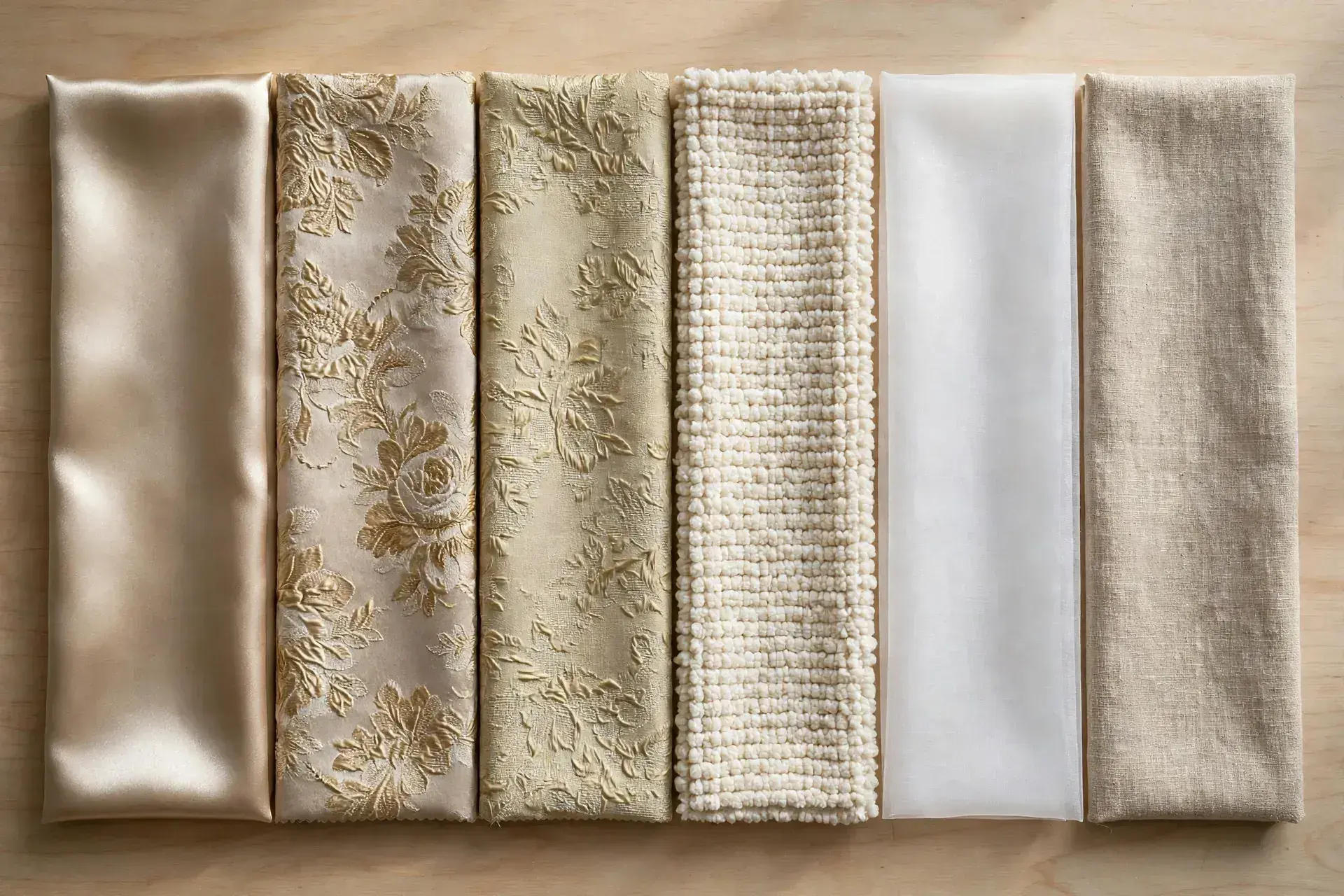
Beyond the six, buyers meet five more names in shops. Satin and brocade or jacquard are pattern and weave families, chenille is the softer pile alternative to velvet, organza is the third sheer weave beside voile and chiffon, and blends mix fibers to balance feel and care. The table below uses the same four columns as the main table, so each new name can be compared on the same terms.
| Fabric | Light | Privacy | Care | Best room |
|---|---|---|---|---|
| Satin | Soft filtered light with a sheen; does not darken a room alone | Light daytime privacy; little night privacy unlined | Delicate; often dry clean only, check the label | Formal living room and formal bedroom away from harsh sun |
| Brocade and jacquard | Woven pattern dims daylight more than a plain light weave; does not black out a room alone | Fair to strong daytime privacy; night privacy needs a lining | Heavy; often dry clean only, check the label | Formal living room and formal dining room |
| Chenille | Blocks much light from its soft pile, though edges still leak light | Strong privacy, day and night, once closed | Heavy; check the label, as many panels need dry cleaning | Living room and bedroom where soft warmth is wanted without a formal velvet look |
| Organza | Lets most daylight through with a crisp, clear finish | Daytime privacy only; shapes show at night once indoor lights are on | Light to handle; often washable, check the fiber on the label | Living room layered over a heavier panel, and formal rooms needing a crisp sheer |
| Blends | Varies with the mix, from light-filtering to fairly dense | Varies with the mix; check weave and lining, not the blend name alone | Usually easier to wash and less prone to wrinkling than the pure natural fiber, check the label | Busy family rooms and rooms needing an easier-care natural look |
UV-resistant and solution-dyed fabrics are a separate sun answer. UV-resistant fabrics are made or treated to hold up better in strong sun than untreated fabric, and solution-dyed fibers carry color through the fiber rather than only on the surface, so color holds longer on a sunny window. They suit a sunny window well, but they are not fade proof, and a lining or a sheer shield still helps on a harsh window.
Outdoor fabrics, usually acrylic or treated cotton, are made for covered outdoor spaces, where they resist fading and damp better than indoor fabrics. They are not the first pick for an indoor room, because their firmer hand suits a patio or covered porch better than a soft indoor drape, but they are the right family when the window treatment itself sits outdoors.
For a lower-impact natural pick, organic cotton and linen are the lower-impact natural options. Panels carrying the OEKO-TEX STANDARD 100 label for textiles tested for harmful substances have been tested for harmful substances, which is a label check you can add to the fiber and care checks above.
How to tell real fabric from a look-alike label
The fiber content line on the listing or the sewn-in label is the only reliable check, because a product name can promise more than the fabric delivers. A panel sold as linen may be a blend or linen look, usually polyester made to copy the slub texture of linen. A panel sold as silk may be a blend or a polyester satin, and a panel sold as velvet may be cotton, polyester, or crushed velvet, each with a different pile and weight.
Read the fiber line before you judge the panel by its title, photo, or price. Pure linen is woven from flax. A linen blend keeps some linen texture with more stability. Linen look keeps the style with the easiest care, but lacks the feel of flax. Cotton look and silk look panels work the same way: they copy the surface while behaving like polyester underneath.
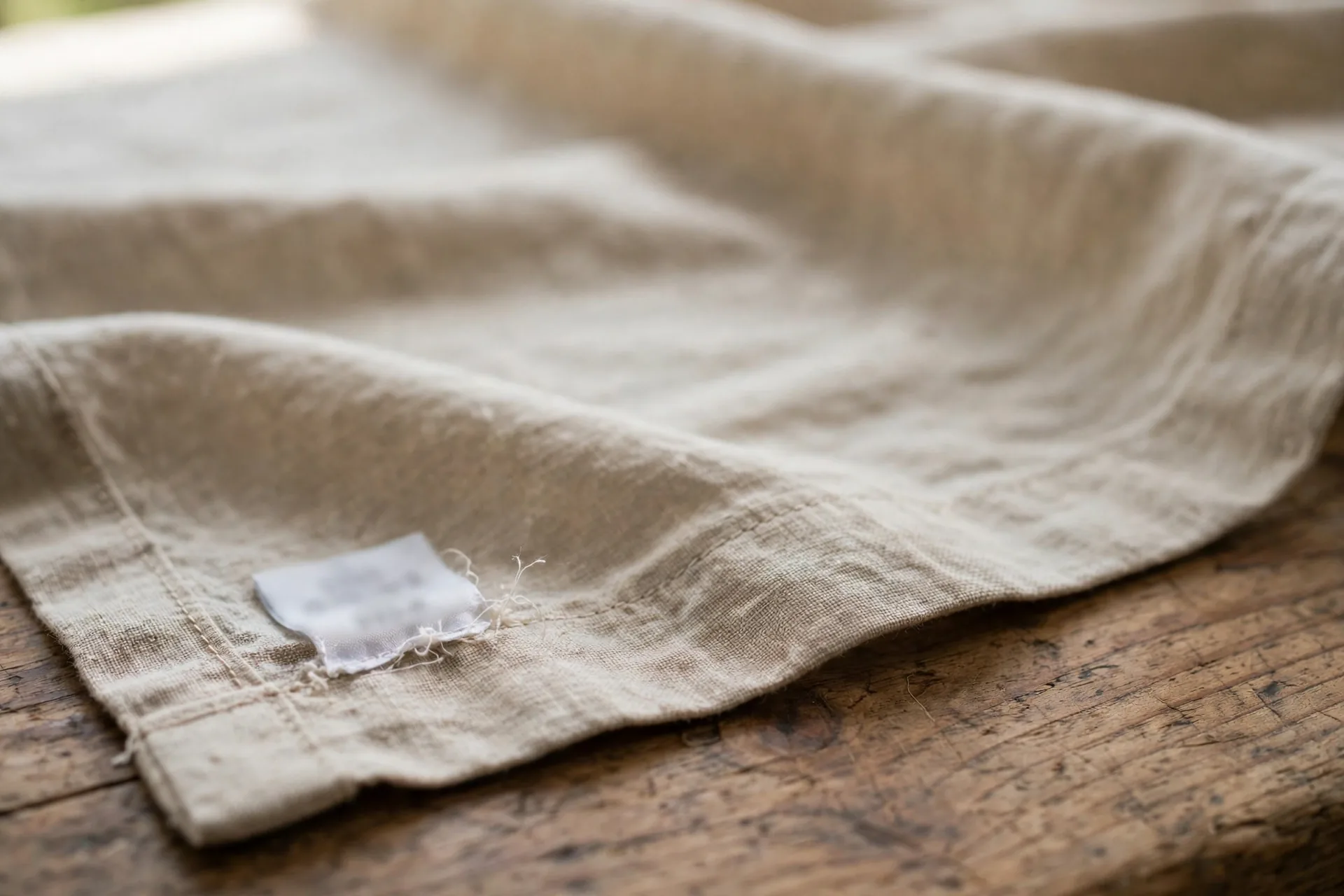
A swatch, where one is offered, is the second check. Hold it up to daylight and to lamplight and feel the weight. It will show the true color, the texture, and whether the weave is open or dense, even though a small square hangs differently from a full panel. If no swatch is offered, order one panel first where that is practical.
Linen and cotton: natural fabrics that breathe and wrinkle
Linen and cotton are the two natural fabrics most buyers meet first, suiting rooms where soft light and a relaxed feel matter most. Linen gives a warm, uneven glow and shows small slubs in the weave. Cotton is smoother and comes in the widest range of patterns and colors. Both breathe and soften with washing and use.
The trade-off is creasing and care. Linen wrinkles more than any other fabric here: creases after washing, folding, or sitting bunched to one side are normal, not a fault.
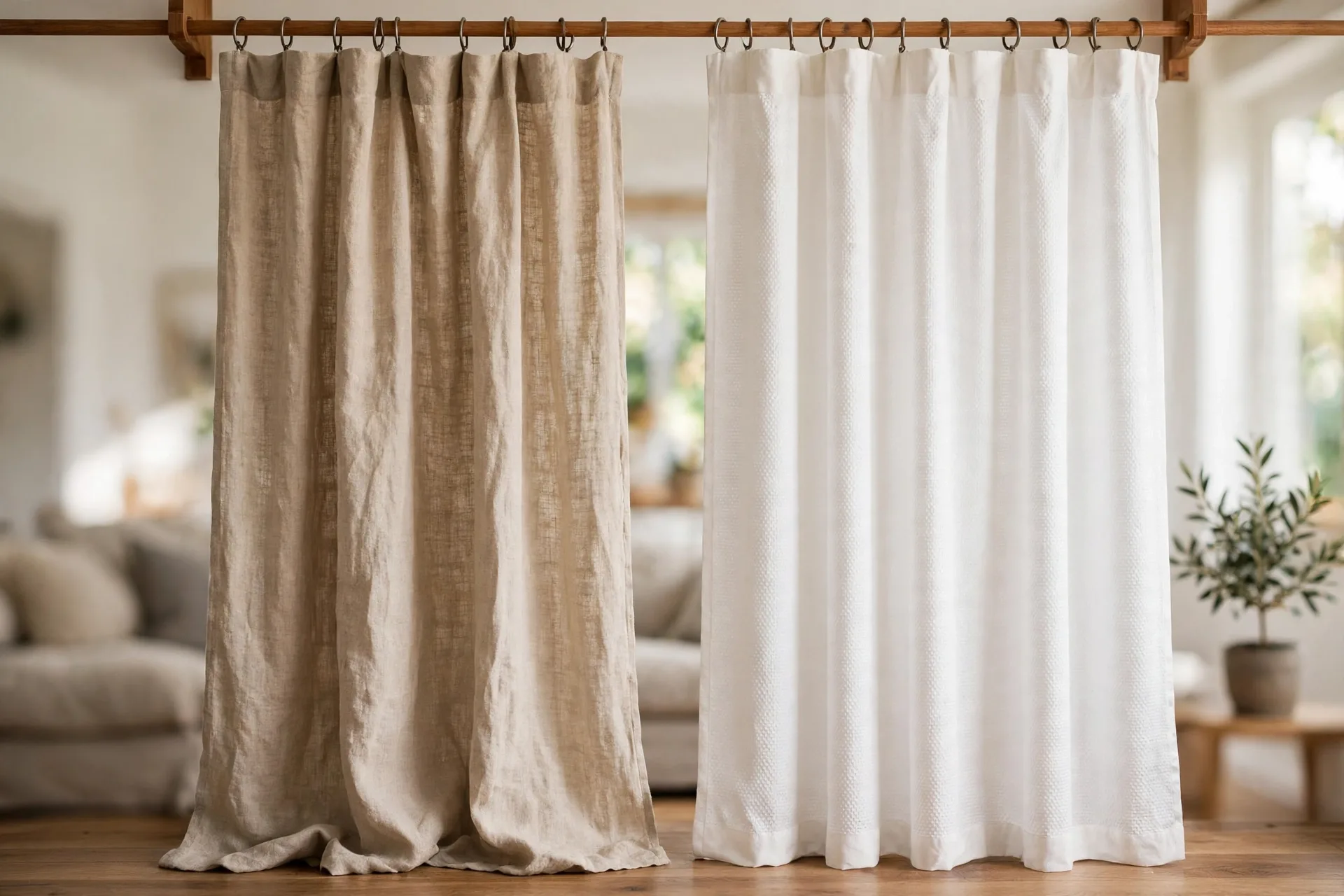
Cotton wrinkles less than linen but more than polyester, and a panel washed often will need steaming to look crisp again. Blends ease both problems, with a smoother fall and less creasing.
For rooms, linen suits a living room or dining room where soft daylight is the point, and a bedroom where a lining adds the darkness linen alone cannot give. Cotton suits a family living room and a short kitchen panel washed often, and any room where pattern matters. For linen alone, including wrinkling, shrinking, and washing, see Best Linen Curtains. For washing steps by method, see How to Wash Curtains.
Velvet and silk: heavy and delicate fabrics that need a plan
Velvet is heavy, so it needs a strong rod and solid anchors, and silk is delicate, so it needs a room away from harsh sun and steam. Velvet and silk sit at opposite ends of the weight scale, but both reward a little planning and punish a careless pick. Velvet is a dense pile fabric with a deep color that changes as light moves across it. It blocks much light on its own and adds warmth to a cold wall. Silk varies in weight by weave, from light charmeuse-like falls to heavier dupioni-style panels, with a gentle sheen that suits formal rooms.
Velvet also muffles sound, useful on a street-facing wall, and its dense pile traps air against the glass, which helps soften drafts in a cold room. For velvet in full, see Best Velvet Curtains.
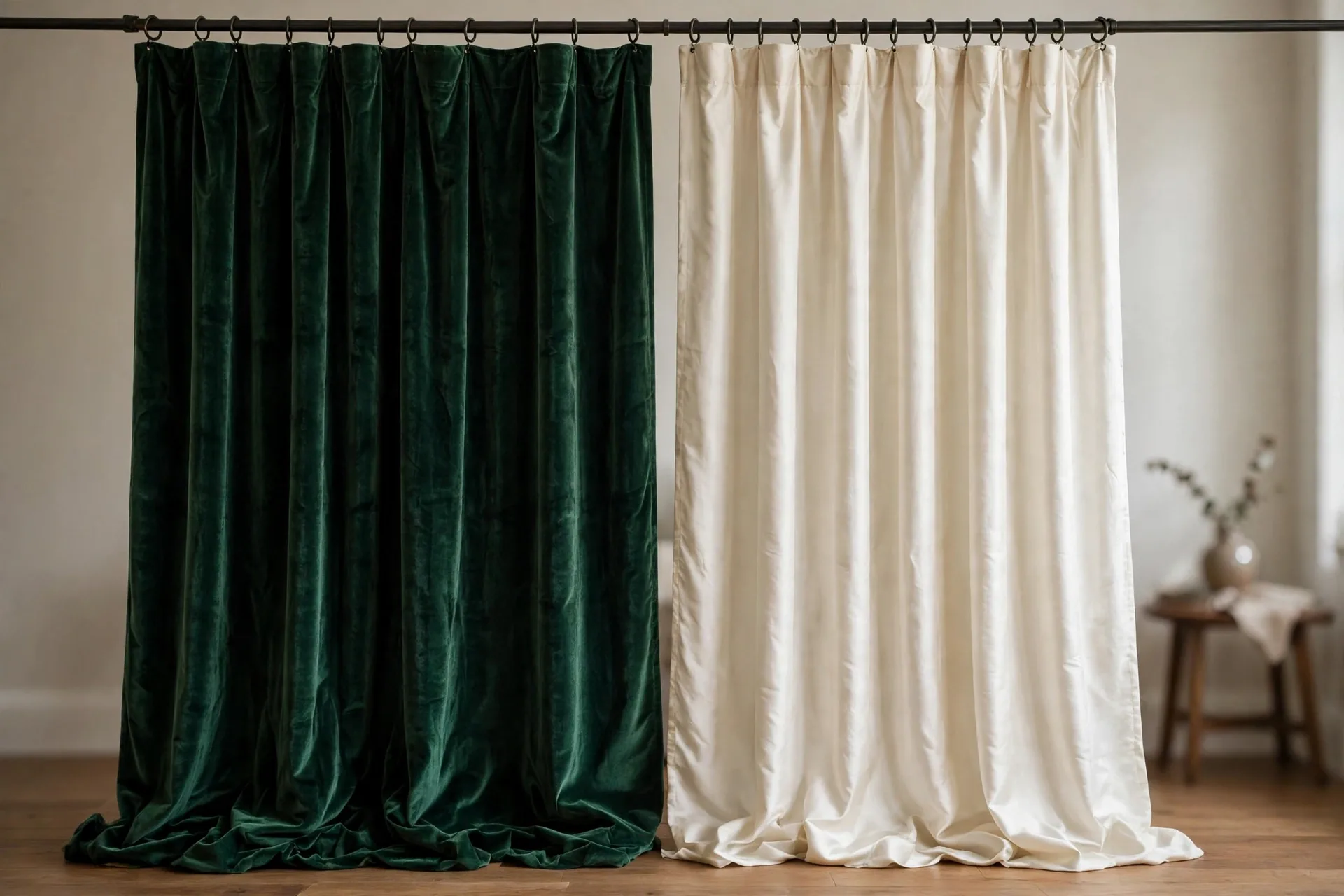
Their care needs differ sharply from linen and cotton. Velvet stacks wide when open. Its pile can mark where it is pressed the wrong way, and many velvet panels need dry cleaning. Silk is delicate differently: strong sun can fade and weaken it, moisture can spot it, and it usually needs dry cleaning, so it suits a room away from harsh sun and steam.
For rooms, velvet suits a bedroom where darkness and warmth help sleep, a formal living room with tall windows, and a media room. Silk suits a formal living room or dining room with gentle light, opened and closed less often. If a sunny window is the only option for silk, a lining or a sheer layer in front of the glass is what keeps the silk usable.
Polyester and sheer weaves: easy care and soft light
Polyester and sheer weaves are the practical pair here, and they are easy to confuse because sheer is a weave, not a fiber. Polyester resists wrinkling, holds color well in sun, and often washes at home. It is used for everything from sheer voile to dense blackout panels, so the weave and the backing decide the job, not the fiber name alone.
Sheer weaves are thin and see-through, made from voile, chiffon, or a fine polyester or cotton weave.
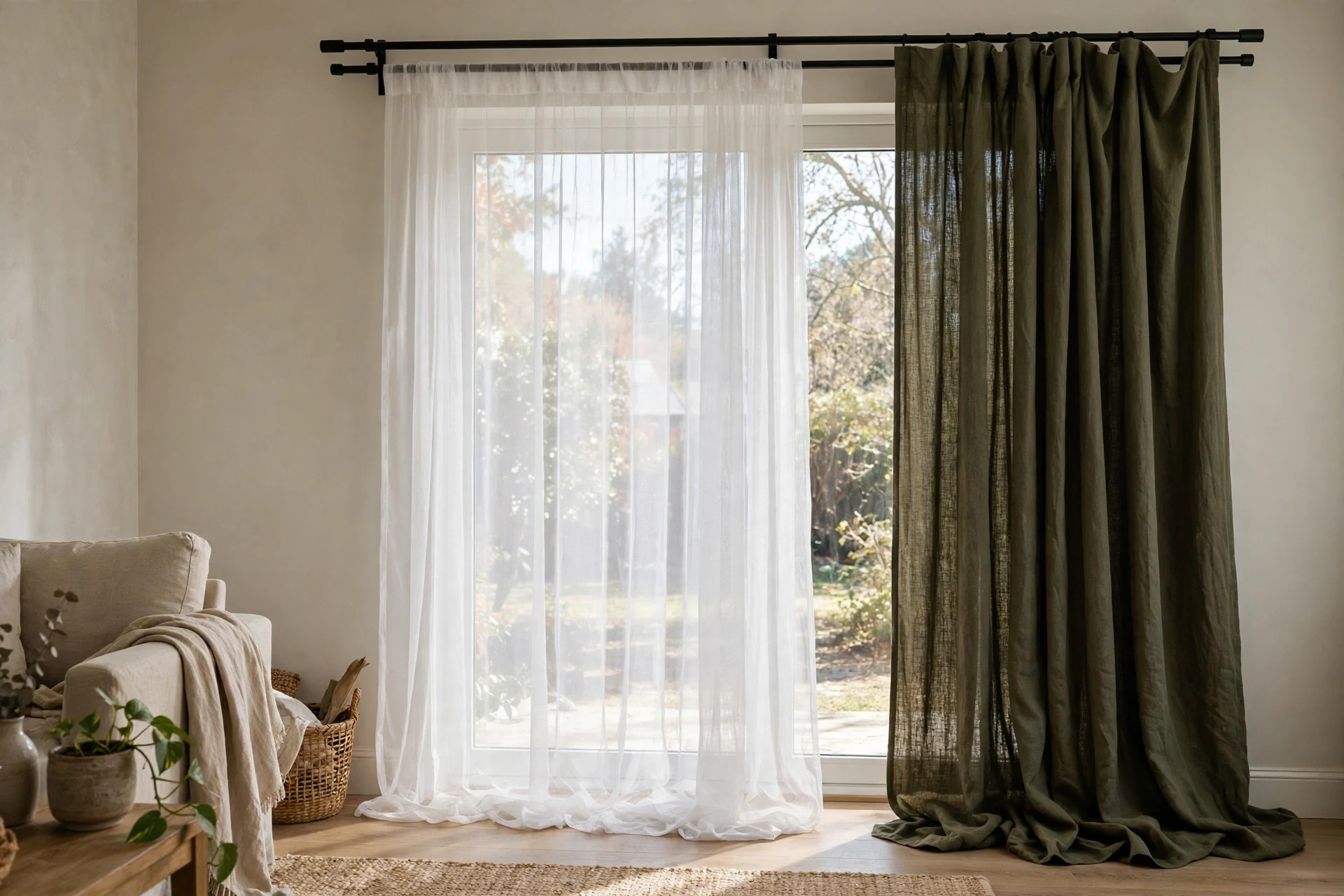
They soften daylight and give daytime privacy, since a person outside sees a soft glow rather than a clear view. They do not give night privacy on their own: once indoor lights are on, shapes show through, so a street-facing room needs a heavier panel or a lining for the evening. Layering works well: a sheer nearest the glass for the day, with a heavier panel in front for the night.
For rooms, polyester suits a busy family room, a rental, and a sunny room where color holding matters. Sheer suits a living room that needs daylight without a bare window and a room that is not overlooked. For the full sheer story, including sheer, semi-sheer, and light-filtering levels, see Best Sheer Curtains.
Sun, fading, and which fabrics tire first at a sunny window
Silk tires first in strong, direct sun: color fades and the fiber itself can weaken, so a silk panel on a south- or west-facing window in the Northern Hemisphere, or a north- or west-facing window in the Southern Hemisphere, needs a lining or a sheer layer to survive. Sun is the hardest test a curtain faces, and it treats each fabric differently. Unlined linen and cotton also fade faster in harsh sun than on a shaded window, though more slowly than silk.
Polyester and velvet hold up better in sun, but neither is immune. A thin unlined polyester panel on a harsh window will still fade over time, and velvet color can soften on the sun-facing side. The rule is the same for every fabric: the stronger and longer the direct sun, the more protection the panel needs.
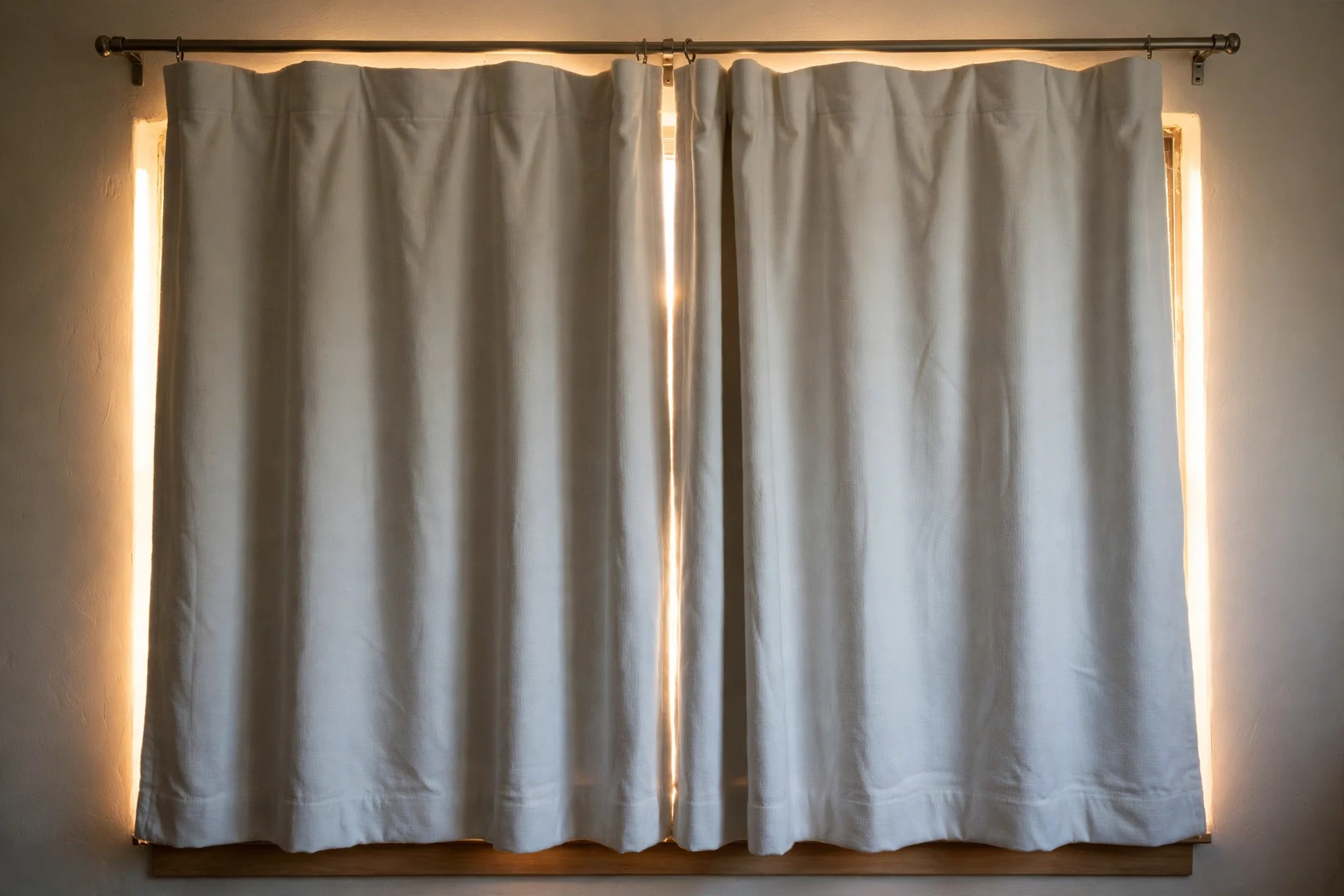
Protection comes in three forms: a lining, a sheer layer nearest the glass that can stay closed through the day while the main panel stays open, or a blind or shade behind the curtain. If a window gets harsh sun for most of the day, pick a fabric that holds color well, add a lining, and accept that even a protected panel will age faster there than on a shaded window.
Damp rooms need a different check. Polyester generally resists mildew and damp better than natural fibers, while linen and cotton can hold moisture and need air and washing to stay fresh. Kitchens and bathrooms therefore need a washable, moisture-tolerant pick, usually a short cotton or polyester panel, rather than a dry clean only fabric that cannot be washed after steam and splashes.
Lining, interlining, and a separate liner: what each layer actually does
Lining is the layer sewn to the back of a panel, and it changes light, privacy, drape, and life span more than most buyers expect. A standard lining adds body, helps folds fall evenly, protects the face from sun, and adds daytime privacy. A blackout lining blocks most light and gives the strongest night privacy, turning a linen or cotton face into a bedroom curtain. A thermal lining adds insulation but does not automatically black out a room, and a room-darkening lining dims daylight strongly without blocking it fully.
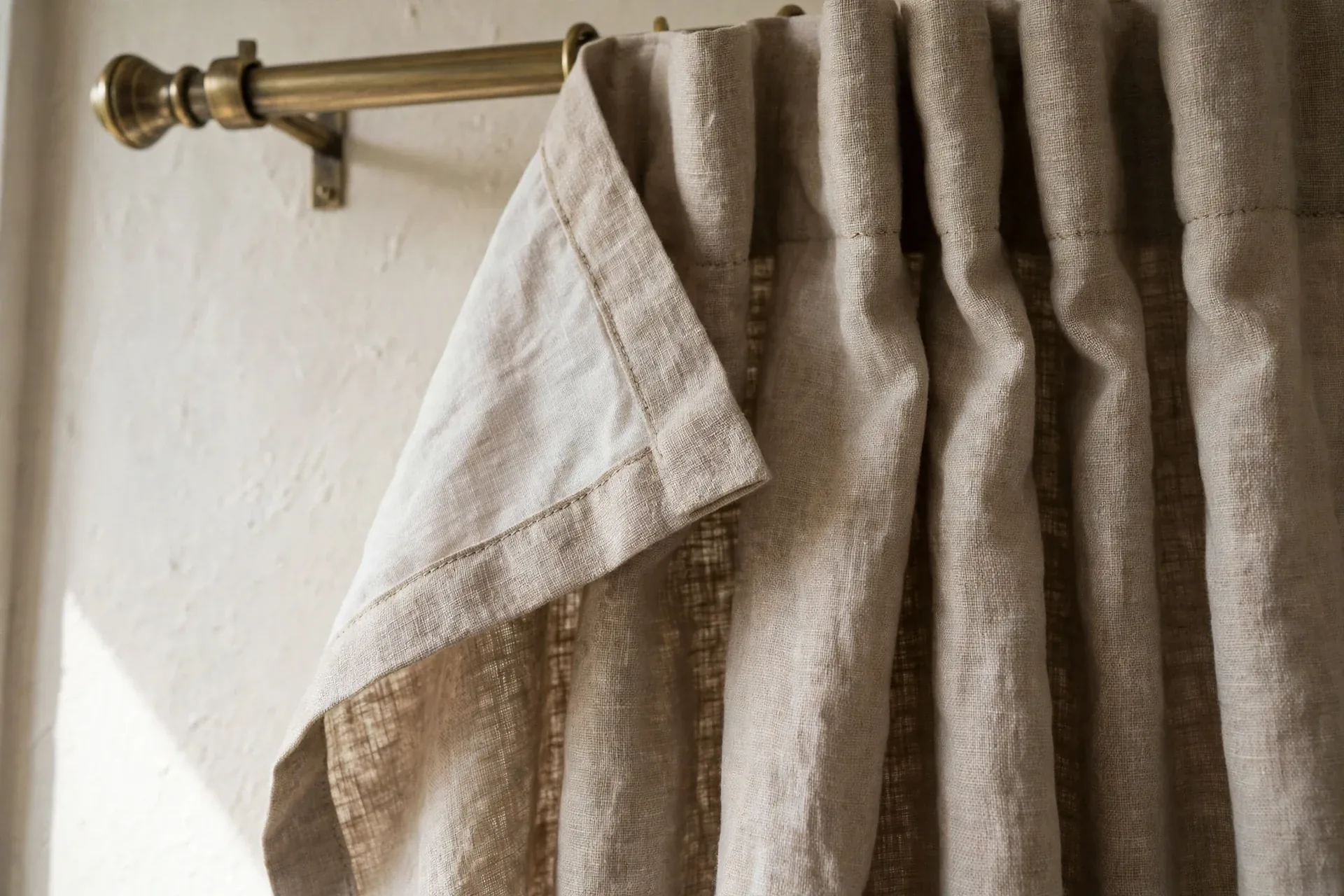
Interlining is a thicker layer sewn between the face and the lining. It adds fullness and weight, helps a light fabric hang in richer folds, and is common on heavier, formal curtains and on velvet. It also adds bulk, so an interlined panel stacks wider when open and needs a stronger rod.
Blackout itself is made in two main ways. Triple-weave blackout weaves three layers together into one fabric, with no separate coating on the back. Foam or acrylic-coated blackout adds a coating to the back of the face fabric. You can tell which a panel uses from the label and the back of the panel: a woven back with no smooth coating points to triple weave, while a smooth, slightly coated feel on the back points to a coated backing. Either construction can block most light, and the label and the backing, not the word blackout alone, tell you which one you are buying.
A separate liner hangs behind the main curtain on its own rod or track, rather than being sewn in. It is the most flexible option: it lets you keep a face fabric you like and add darkness or insulation behind it, and it can be taken down and washed on its own. The cost is a second rod or track and a wider stack when open. For darkness in full, see Best Blackout Curtains, and for insulation in full, see Best Thermal Insulated Curtains.
Matching fabric to bedroom, living room, and sunny windows
The fastest way to pick a fabric is to name the room job first. A bedroom needs darkness and night privacy above all else. Unlined linen, cotton, silk, or sheer will not darken a bedroom well on their own. A bedroom setup needs a dense fabric such as velvet, a blackout lining, or a separate blackout liner. Light leaks most often at the sides, the top, and the center gap, so the panel must close fully and the rod must extend past the frame on each side. For the full bedroom setup, see Best Curtains for Bedroom.
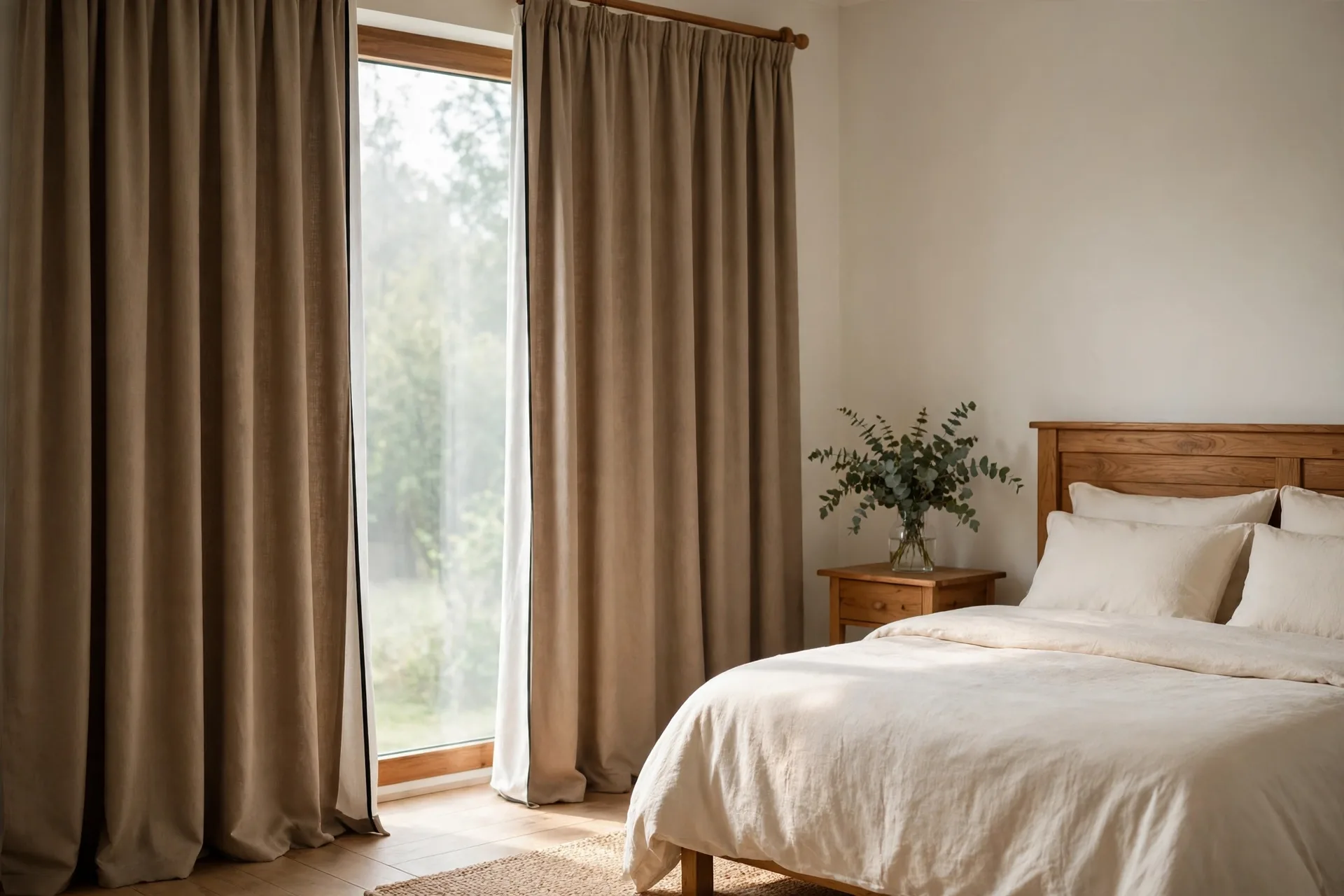
A living room needs a different balance: soft daylight, daytime privacy, and a panel that looks good open and closed. A medium weight linen, cotton, or polyester panel in a light-filtering weave meets that brief for most living rooms. If the room faces a street and is used after dark, add a lining or layer a sheer nearest the glass with the heavier panel in front. For the full living room guide, see Best Curtains for Living Room.
A sunny window needs a fabric that holds color and a layer that shields it, so polyester and lined cotton or linen suit it better than unlined silk. A room used for television needs glare control without darkness, so a light-filtering fabric suits it better than a blackout panel. A room near a kitchen needs a washable fabric, so cotton or polyester in a short panel suits it better than dry clean only velvet or silk. For kitchen setups in full, see Best Kitchen Curtains.
Weight, drape, and fullness: why the same fabric can look thin or rich
Two panels in the same fabric can look completely different on the window, and the difference is usually weight, drape, and fullness rather than color. Weight is how heavy the fabric feels in the hand. A light fabric floats in a breeze, suiting a sheer or relaxed linen panel. A medium fabric falls in soft folds and suits most living rooms. A heavy fabric such as velvet falls in deep, still folds and suits a formal room or a bedroom. Too light a fabric looks thin, while too heavy a fabric can sag and pull the anchors.
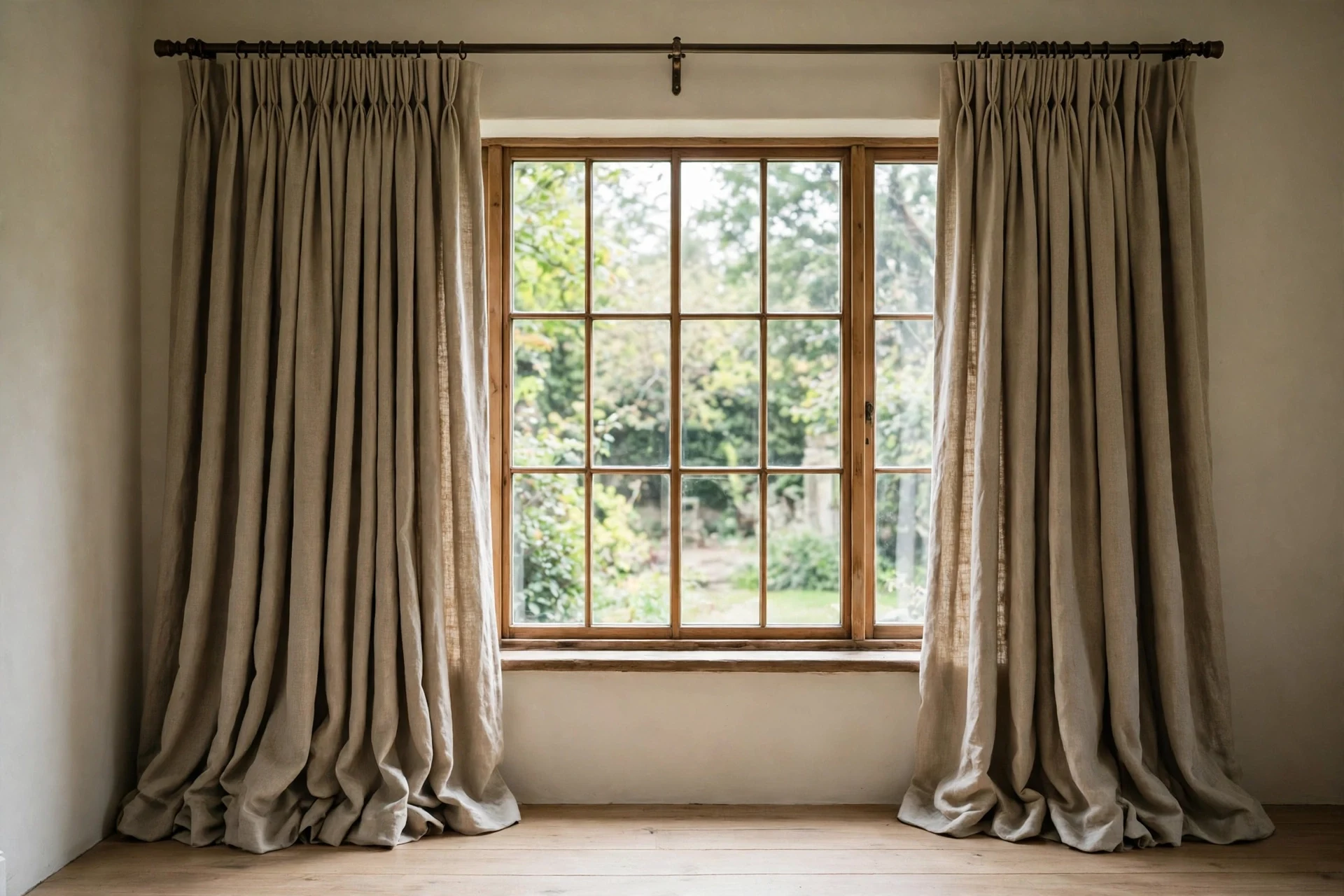
Drape is how the fabric falls from the rod. Linen falls in soft, uneven folds, cotton in neater folds, velvet in deep folds that hold their shape, silk in smooth, fluid folds, and polyester evenly, which suits a panel opened and closed daily. A lining or interlining adds body and stops a light fabric from looking limp.
Fullness is how much fabric covers the window when closed. Too little fabric looks thin and flat, with gaps between folds. Total panel width of about 1.5 to 2 times the rod width gives standard fullness, 2 to 2.5 times gives a full look, pinch pleat suits 2.5 to 3 times, and sheer suits 2 to 2.5 times. The basis is the rod width, not the window width, so measure from the rod, and a wide window needs an extra panel rather than two thin panels stretched across it. For length and width steps, see Curtain Sizes, How to Measure for Curtains, and How to Hang Curtains.
Fabric mistakes that show up after the first wash or first summer
The most common fabric mistake is buying by name and finding the behavior does not match. A buyer who wanted real linen and bought linen look misses the feel of flax. A buyer who wanted darkness and bought unlined linen gets a bright bedroom. A buyer who wanted a washable panel and bought dry clean only silk gets a cleaning bill with every wash. Each is a label mistake, avoided by reading the fiber line and the care label before ordering.
The second common mistake is forgetting night privacy. A sheer panel that looks solid in daylight can turn see-through at night once indoor lights are on, most often in street-facing rooms, and the fix is a lining or a second layer. The third mistake is forgetting sun: a silk or unlined natural panel on a harsh window fades faster than on a shaded window, and the fix is a lining or a sheer shield, chosen at the start.
The fourth mistake is forgetting weight and rod strength: a lined velvet panel needs a stronger rod than the same panel unlined, and a heavy panel on a light rod sags and slides badly. The fifth mistake is washing without reading the label. Pure linen can shrink, heat makes the risk worse, and a panel that already just touches the floor will show even a small amount of shrinkage.
A short fabric checklist before you order
Start with the room job: darkness, soft daylight, privacy, warmth, or easy washing, and name the one job that matters most. Then read the fiber line and the care label, and confirm whether the panel is pure fiber, a blend, or a look-alike, and whether it washes at home or needs dry cleaning. Then check the light job: sheer, light-filtering, room-darkening, or blackout, and whether that result comes from the fabric alone or from a lining.
Next, check the sun, the weight, and the rod: a harsh window needs a lining or a sheer shield, a lined or heavy panel needs a stronger rod, and a wide window needs enough total width for full folds. Then check the length against the floor, allowing for shrinkage risk on a natural fabric that already just touches the floor.
On budget, polyester and cotton sit at the budget-friendly end, silk, pure linen, and custom velvet sit at the high end, and the other fabrics sit between them. Blends are the usual mid-price compromise, giving some natural feel with easier care at a middle cost.
Finally, order a swatch where one is offered, and look at it in daylight and at night. If the panel fails any check, change the fabric or add a lining or a layer rather than hoping the room will forgive it.
Frequently asked questions about curtain fabric types
The questions people ask most about curtain fabric types cover bedrooms, sun, washing, lining, and which fabric suits each room.
Which curtain fabric is best for a bedroom?
A bedroom needs darkness first, so a dense fabric such as velvet, or any face fabric with a blackout lining or liner, suits a bedroom best. Unlined linen, cotton, silk, or sheer will not darken a bedroom well alone.
Which curtain fabric is best for a living room?
A medium weight linen, cotton, or polyester panel in a light-filtering weave suits most living rooms. If the room faces a street and is used after dark, add a lining or layer a sheer with a heavier panel.
What is the difference between linen and linen look?
Real linen is woven from flax and shows natural slubs, a dry feel, and a relaxed drape. Linen look is usually polyester made to copy that texture, with less wrinkling and easier care, but without the feel of flax.
Which curtain fabric fades least in sun?
Polyester holds color well in sun, making it a strong pick for a sunny room, but no unlined fabric is fade proof on a harsh window. A lining or a sheer shield protects any face fabric, and silk needs that protection most.
Are sheer curtains a fabric type or a weave?
Sheer is a weave, not a single fiber. Sheer panels can be made from voile, chiffon, fine cotton, fine linen, or fine polyester, and the fiber decides how the panel washes and wears.
Do velvet curtains need a lining?
Velvet blocks much light on its own, but a lining still helps: it protects the pile from sun, adds body, and improves night privacy at the edges. A lined velvet panel lasts better on a sunny window.
Can cotton curtains be machine washed?
Many cotton panels can be machine washed, and cotton is usually the easiest natural fabric to wash at home, but the care label on the panel you bought is the rule. Lined and blackout-backed panels often need different care from the same fabric unlined.
Which curtain fabric is easiest to care for?
Polyester is usually the easiest fabric to care for: it resists wrinkling, holds color well, and often washes at home. Cotton is next, while linen wrinkles more, velvet is heavy and often dry clean only, and silk needs the most careful handling.
What lining should I choose for a bedroom?
A blackout lining suits a bedroom best, blocking most light and giving the strongest night privacy. A standard lining will not darken a bedroom well, and a thermal lining adds insulation without giving darkness.
How do I choose between a sewn-in lining and a separate liner?
A sewn-in lining suits a panel that will stay as one setup. A separate liner suits a panel you already like, adding darkness or warmth behind it and washing on its own, at the cost of a second rod or track.
Are linen or cotton curtains better?
Linen suits a room where soft, uneven light and a relaxed feel matter most, while cotton suits a room where pattern, smoother folds, and easier home washing matter most. Linen wrinkles more and can shrink with heat, while cotton wrinkles less and is usually the easiest natural fabric to wash at home. Neither wins for every room: pick linen for relaxed daylight and cotton for a busy family room or a washable kitchen panel.
Which curtain fabric blocks the most light?
Velvet with a blackout lining blocks the most light, because dense pile plus a blackout construction leaves the least light to leak through, apart from gaps at the sides, top, and center. A blackout lining or liner on any face fabric comes next, and it matters more than the face fabric alone: triple-weave fabric and foam or acrylic-coated backing are the two blackout constructions, and both block most light when the panel closes fully. Unlined linen, cotton, silk, or sheer will not darken a room well on their own.
This guide is research-based curation: we compared maker specifications, published reviews, and current prices. Read how we choose.