 Best
Best Organza Curtains
Organza is stiff, shiny, and formal where voile is soft. This guide sorts the fibers, the rooms that suit it, and the care that keeps its shape.
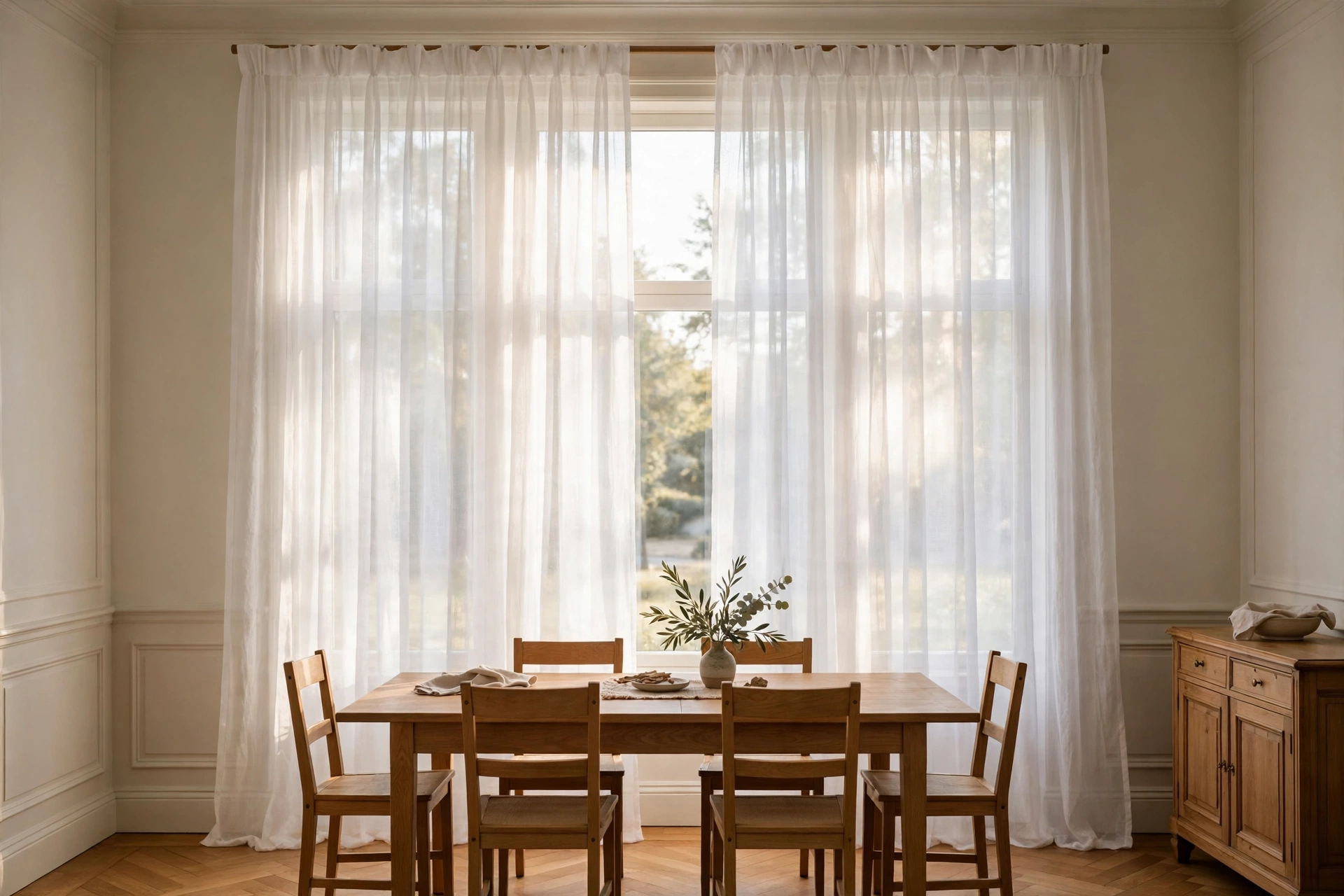
The best organza curtains are crisp, sheer, and lightly shiny, so they hold their shape at the window, catch light in a formal room, and give soft daylight without the soft, flowing drape of voile. Organza suits a dining room or a formal living room best, where its stiffness reads as polish rather than as a flaw.
It also suits warm climates, because it is lightweight and breathable and keeps rooms from feeling enclosed, and it resists dust buildup and static, so it stays cleaner between washes than many sheers.
Organza looks delicate, but it behaves differently from other sheers. It holds folds instead of falling softly, it shines instead of staying matte, and it snags and creases if it is handled roughly.
Organza curtain picks by job
The two picks below are the only ready-made organza panels that checked out: a printed GOHD panel and a green leaf-print Breling panel. No pick names a size here, because sizes vary by listing and must be confirmed on the listing before you order. Check the fiber, the finished width and length, the header, and the care label on the listing for the panel you choose.
As an Amazon Associate, we earn from qualifying purchases.
| Pick | Type | Light job | Best for |
|---|---|---|---|
| 1 | Printed organza panels | Sheer | A dining room or bedroom that needs detailed sheers |
| 2 | Green leaf-print organza panels | Sheer | A room that needs color in the sheer layer |
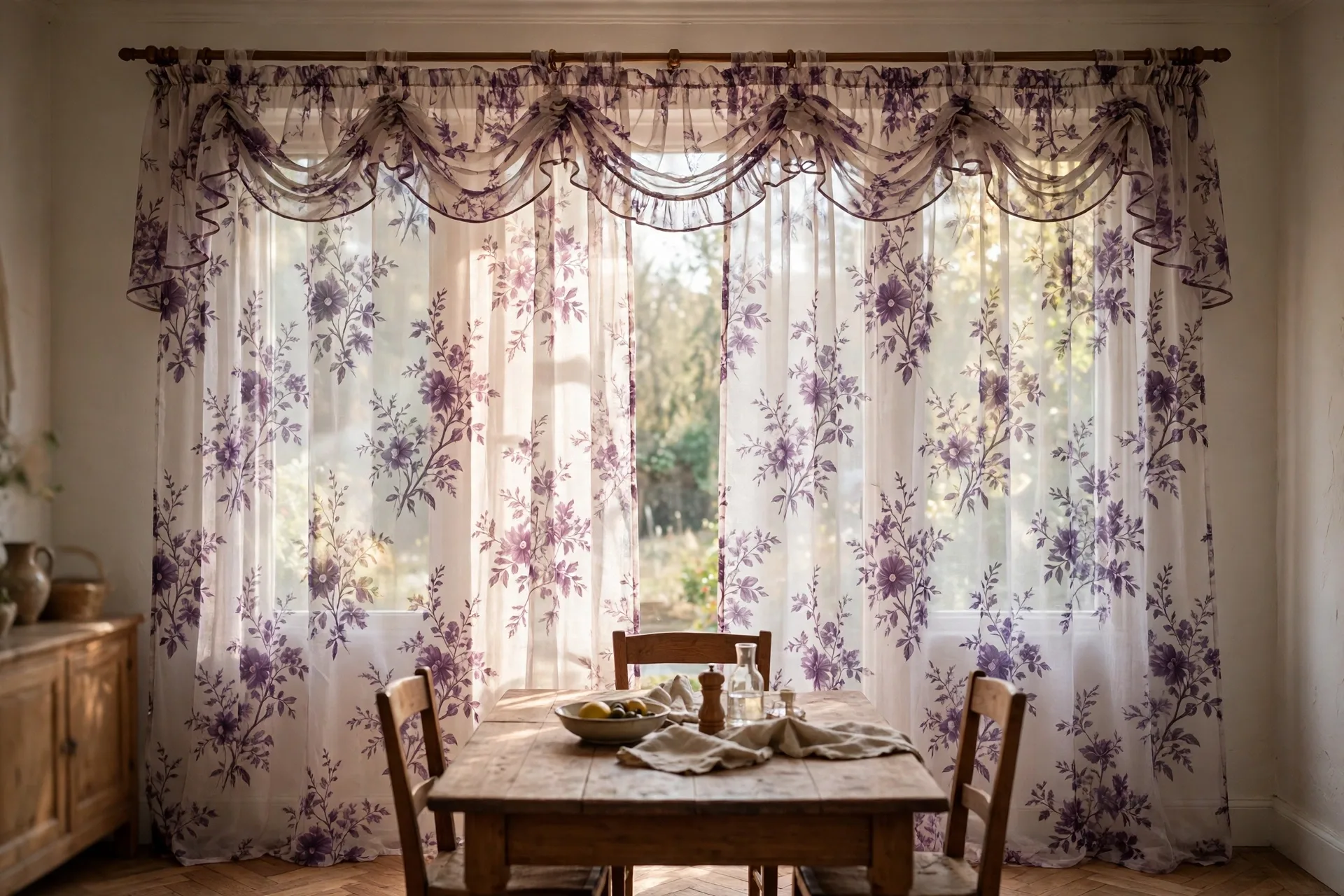
1. Printed organza panels: best for a dining room or bedroom that needs detailed sheers
Best for: A dining room or bedroom where the sheer layer carries the decoration and needs floral detail without heaviness.
Key features: GOHD Roman Romance burnout floral print on an organza and voile ground, sheer light-filtering fall, taffeta backing in a matching color, attached 18-inch fancy valance, rod pocket header.
Pros: The print shows clearly on a crisp fabric, with the solid print standing out against the sheer ground, the taffeta backing gives daytime privacy the organza alone would not, the attached valance dresses the top of the window in one piece.
Cons: The detail is a burnout print, not embroidery, so it will not suit a room where stitched detail matters, the taffeta backing is not blackout, so light still comes through, a large floral print can dominate a small window. Choose the color on the page: Purple is shown, Sand is the paler choice.
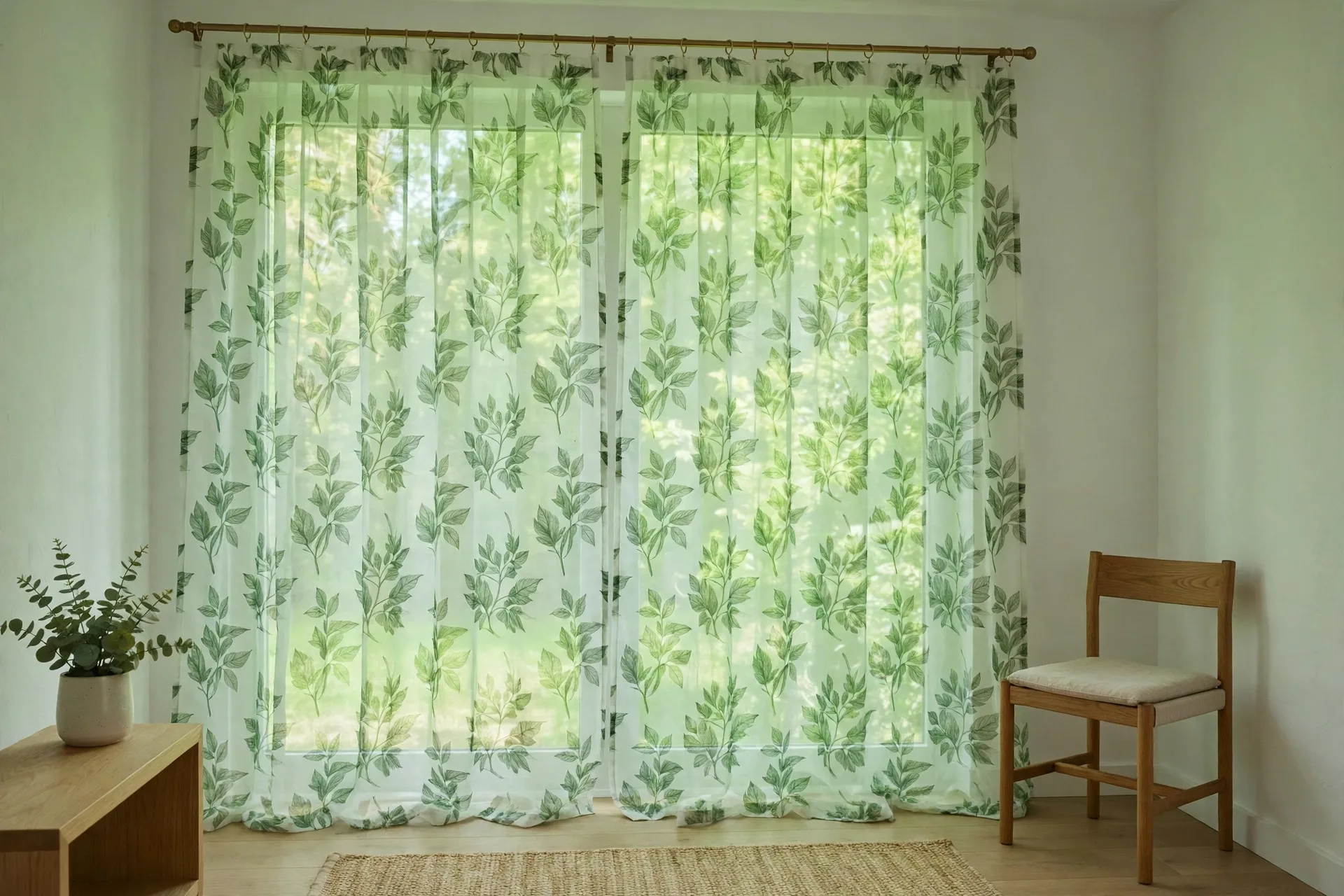
2. Green leaf-print organza panels: best for a room that needs color in the sheer layer
Best for: A room with plain walls and plain furniture, where a green sheer with a leaf print gives the window its color.
Key features: Breling organza panels with a printed green leaf design, sheer light-filtering fall, crisp, light hand, rod pocket header.
Pros: Green glows when daylight is behind it, the leaf print gives the sheer layer its pattern without a heavy curtain, suits a relaxed room better than a formal one.
Cons: The color is a leaf print, not a solid jewel tone, so it reads casual rather than formal, deep green can fade in strong sun, so keep it out of all-day sun, the shown size is short, so check the length on the page before ordering.
What organza is, in plain words
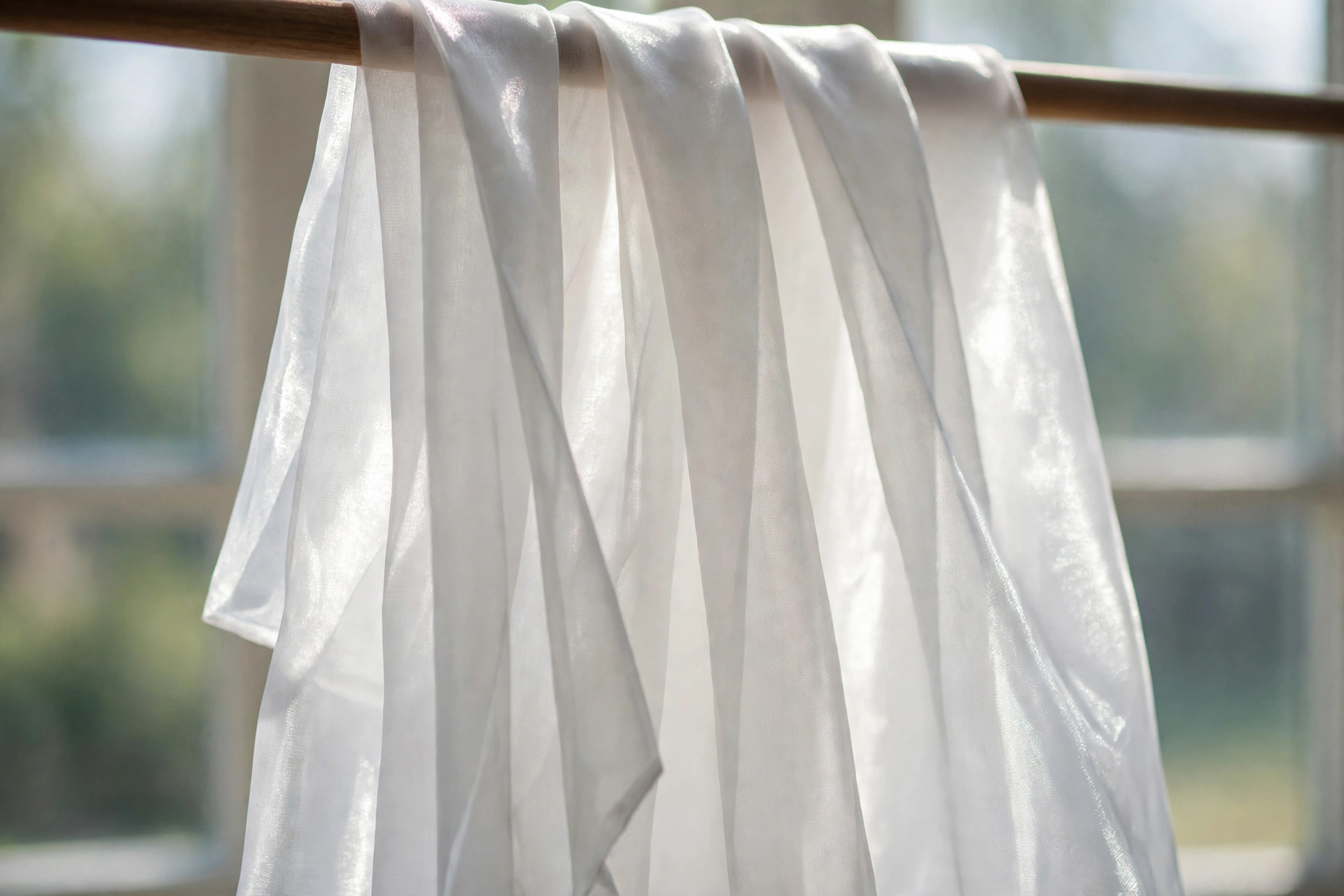
Organza is a light, sheer, plain-weave fabric with a crisp hand, a slight shine, and a stiffness that makes it hold its shape at the window. The weave is fine and tight, so organza lets daylight through in a soft glow, screens the view by day, and keeps its folds instead of falling into soft waves.
Organza is made from silk, polyester, or nylon, and sometimes from a blend, and the fiber changes the feel, the care, and the cost, while the crispness stays.
Ready-made organza curtains are rare: most organza sold today is fabric by the yard, not finished panels, so the choice in ready-made panels is narrow and the two picks in this guide are the genuine ready-made panels found. Silk organza in particular is sold as fabric by the yard, not as ready-made curtains, so a silk organza panel usually means sewing it yourself or having it made. Silk organza is the original form, with a soft glow and a delicate hand. Polyester organza is the most common ready-made form, with a firmer crispness and easier care. Nylon organza is light and strong, with a similar shine, but it needs low heat in washing and ironing.
Organza differs from voile in drape and shine. Voile is soft, smooth, and matte, with a flowing drape that suits relaxed rooms. Organza is stiff, shiny, and structured, with a drape that holds folds and suits formal rooms. Organza differs from tulle in weight and finish: tulle is a net with an open mesh, while organza is a woven fabric with a closed, even weave.
Silk, polyester, and nylon organza side by side
Silk organza is the most luxurious of the three, with a soft glow, a smooth hand, and a crisp shape that holds beautifully at the window. It suits a formal dining room or a bedroom where the fabric itself is part of the luxury, and it pairs well with silk, wood, and formal furniture. Its trade-offs are care and sun: silk organza usually needs dry cleaning, it can mark with water, and strong sun weakens it over time.
Polyester organza is the most practical of the three, with a firm crispness, a clear shine, and easy care.
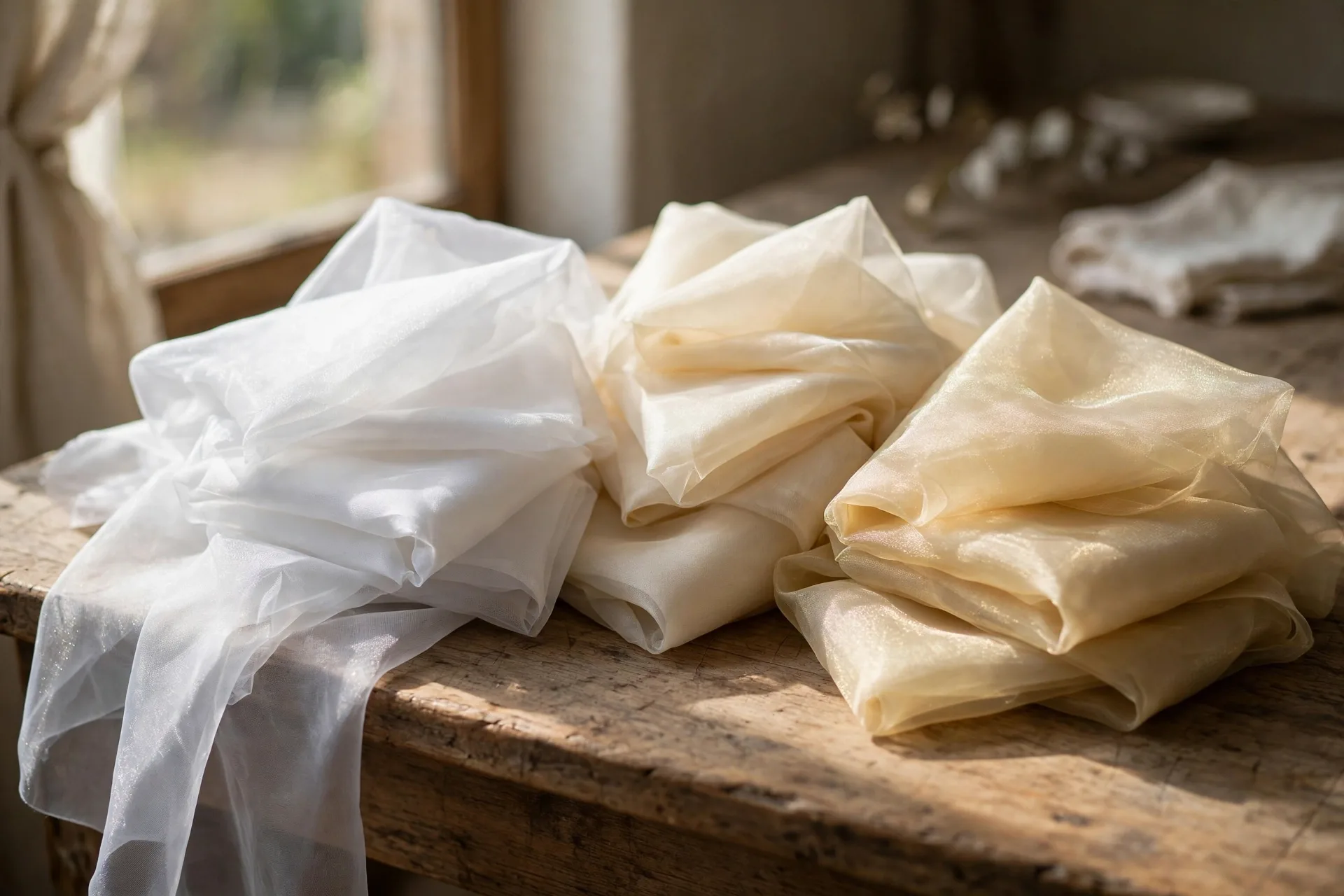
It can usually be machine washed on a gentle cycle in cool water, it resists wrinkles better than silk, and it holds color in sun better than silk. It suits everyday formal rooms, dining rooms that are used often, and living rooms where the sheer layer opens and closes daily.
Nylon organza sits between silk and polyester in feel, with a light, strong weave and a similar shine.
Nylon organza is also the stiffest and crispest of the three, and it resists water better than silk or polyester, which suits it to decorations and outdoor events. Viscose organza is another fiber worth knowing: it comes mostly in muted pastels with plant motifs, suits relaxed and traditional rooms, is rarely made from 100 percent viscose because it wrinkles, and is usually blended with polyester for shape. Weight changes the drape as well: a lighter organza falls more delicately, while a heavier organza holds more volume and structure, so check the weight on the listing where the drape matters. It is durable and holds its shape well, but it is sensitive to heat: high heat in washing, drying, or ironing can damage nylon organza, so it needs cool water, low heat, and a pressing cloth. Nylon organza suits a room where the panel is handled gently and washed rarely.
Organza colors, shine, and pattern choices
Soft neutrals suit organza best for most rooms, because they let the shine and the crispness do the work without a strong color fighting the formality. White, cream, and beige organza suit classic and minimalist rooms, and they keep daylight bright. Silver and gold organza suit a formal room where a metallic hint lifts the window, and they catch lamplight in the evening. A pale blush or pale gray organza adds a soft tint without darkening the room.
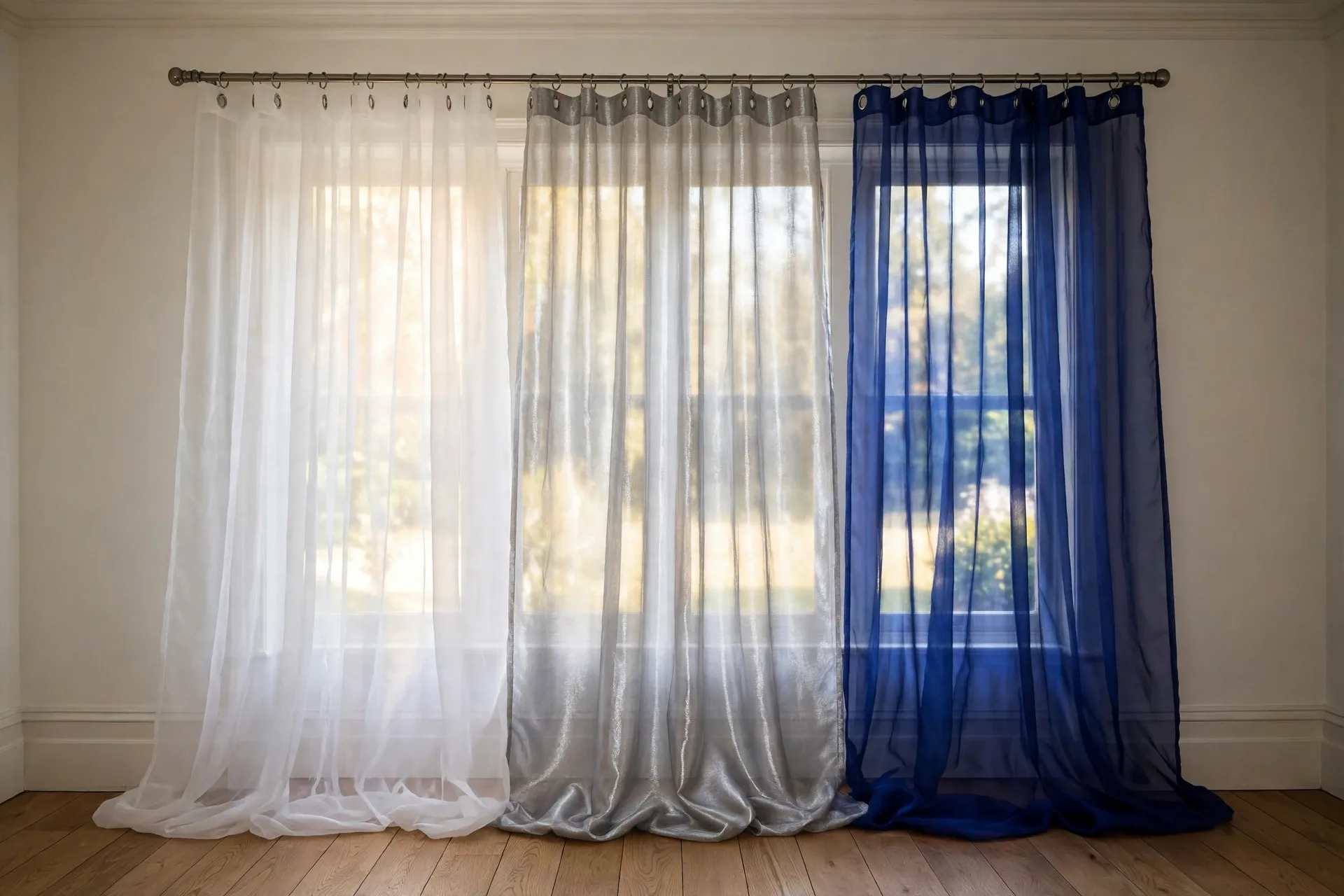
Deep colors suit organza in a formal room where the sheer layer is the accent. Royal blue, deep red, and emerald organza glow when daylight is behind them, and they give a dining room its color without a heavy curtain. Keep deep organza out of all-day sun, because deep colors fade fastest, and check the color in daylight, because a screen shifts deep tones toward black or toward blue.
Mirror organza adds a slight shimmer for bold and glamorous rooms, and a red organza panel makes a strong accent in a monochrome room. Matte organza reflects little light and reads as strict and classic, while shiny organza catches light and brightens a dark room. Chameleon organza shifts color with the angle of the light, and rainbow organza runs one color into another in vertical stripes, so hanging panels in several colors at once gives a layered color effect. Texture goes further than print: perforated organza carries cut-out patterns, jacquard organza carries a raised relief pattern, and flocked organza carries a soft velvety raised pattern on the sheer ground. Sequins, beads, and taffeta pair with organza as decoration, especially in a bedroom. Check swatches in different lighting before ordering, because organza can look brighter in some light than in others, and printed designs can fade or wash out over time.
Organza in formal rooms: dining room and living room
A dining room is the room where organza works hardest, because meals feel better in soft, even light, and organza gives that light with a formal finish. Hang one of the two ready-made picks in this guide on a dining room window, with a closing panel behind it for evening privacy, so the room feels dressed for long meals without shutting out daylight. A silk organza made to order suits a formal dining room where the table is wood and the chairs are upholstered, while a polyester organza made to order suits a dining room that is used daily and washed often. For dining room light and fabric, see Best Curtains for Dining Room.
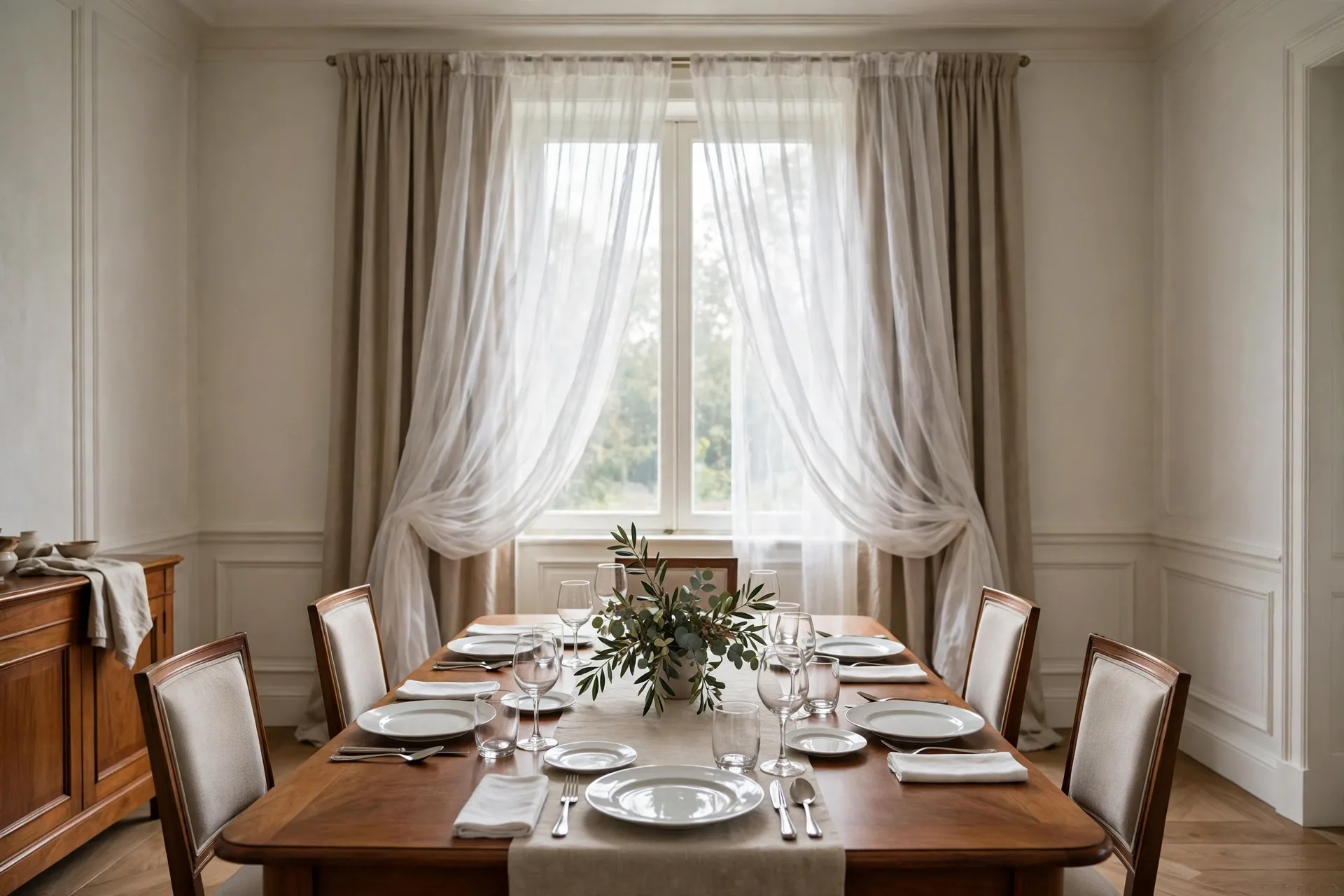
A formal living room suits organza where the room is used for guests and the window should look tailored. A plain polyester organza panel made to order in white or cream gives a polished sheer layer that suits wood, plain walls, and formal furniture, while a crushed organza made to order gives a modern edge without a pattern. A valance or swag in organza made to order suits a tall living room window, where it frames the top without covering the view.
Organza works in more rooms than the formal pair: a home office suits minimalist sheer organza panels that keep the room professional and open, and organza makes a good room divider, for example between a dining room and a kitchen area. A window scarf in organza frames a window gracefully as a decorative dressing, short cafe-style organza suits a smaller window, and ceiling-mounted organza makes a room feel taller.
Organza in a bedroom without losing sleep
Organza in a bedroom needs a closing layer, because organza gives no darkness and no night privacy on its own. Hang organza on the inner rod or track, closest to the glass, so it softens morning light when the heavy panel is open, and hang a blackout or room-darkening panel on the outer rod, so it closes at night for sleep and privacy. That order matters: organza inside, closing panel outside.
Choose the organza for the day look, not for the night job.
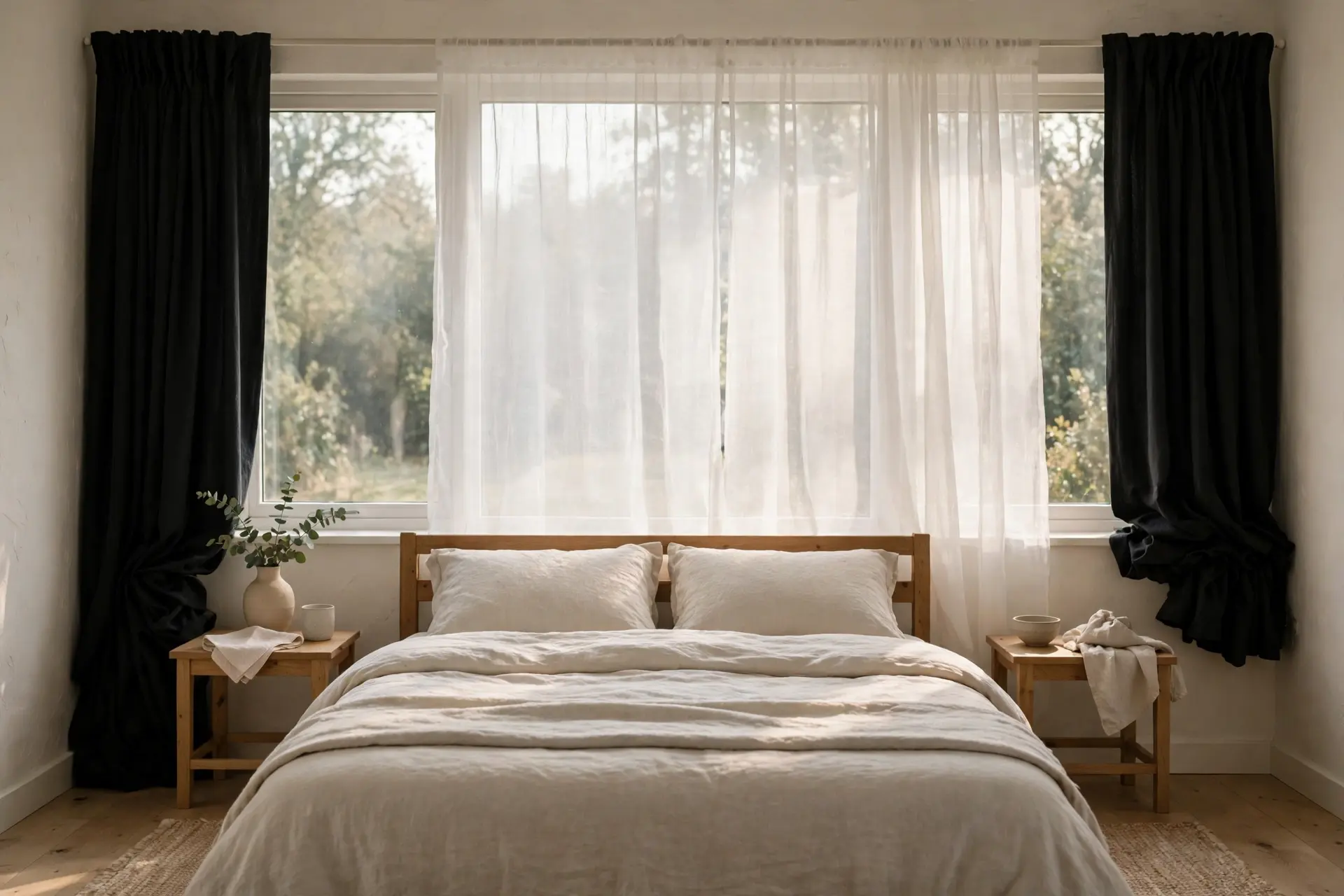
A plain white or ivory organza made to order suits a calm bedroom, while an embroidered organza made to order suits a bedroom where the sheer layer shows during the day. A pastel organza made to order suits a bedroom where the walls are pale, while a silver organza made to order suits a bedroom with cool tones.
A bedroom that faces the street needs the closing panel to close fully, with no gap at the center, because organza will not hide the gap at night. A bedroom on an upper floor with no facing windows can use a lighter closing panel, but it still needs one.
A nursery is another room where organza earns its place: fairy-tale prints and a canopy of organza over a crib suit a child's room, with a thicker curtain or Roman blind behind it for midday sleep. For bedroom sleep jobs, see Best Curtains for Bedroom, and for the full darkness job, see Best Blackout Curtains.
Layering organza the right way round
Layering organza means hanging a sheer organza layer and a closing layer on the same window, so the window does two jobs. The organza goes on the inner rod or track, closest to the glass, and stays closed by day for soft light and daytime privacy. The closing panel goes on the outer rod or track, closest to the room, and stays open by day, stacked clear of the glass, then closes at night for privacy and darkness.
A double rod is the simplest layering hardware, with one rod for each layer, and it suits most windows.
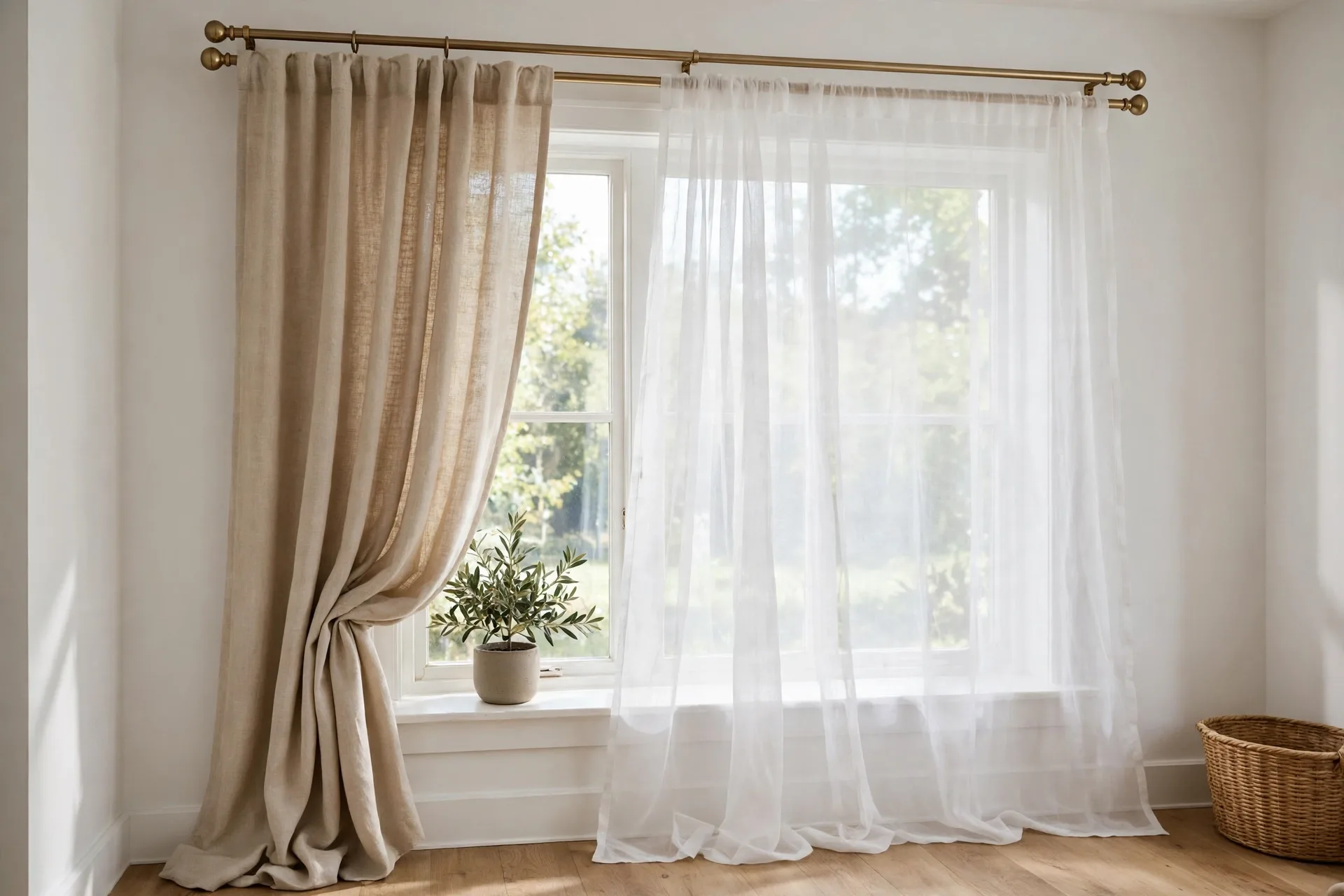
A double track suits wide windows and sliding doors, because the carriers glide smoothly and the layers stack neatly. Leave enough space between the rods so the crisp organza does not catch on the closing panel when it opens and closes.
Linen pairs well with organza as a closing layer, because the linen gives texture and weight behind the crisp sheer. Roman curtains and blinds pair well too, especially in a bedroom where the Roman blind gives morning shade behind the organza. Grommet headings suit organza as well: the eyelets gather small folds, let the rod sit close to the ceiling, and come off easily for washing.
Match the closing panel to the room, not to the organza. A bedroom needs a blackout or room-darkening panel, a dining room needs a lined or light-filtering panel, and a street-facing room needs a panel that closes fully. Keep the organza plain when the closing panel has a pattern, and keep the closing panel plain when the organza has embroidery or a print, because two patterns fight.
Snags, sun, and other organza risks
Snagging is the main organza risk, because the fine, tight weave catches on rough surfaces, hooks, jewelry, and pet claws, and a pulled thread shows at once on a sheer fabric. Handle organza gently, keep it away from rough walls and sharp hardware, and check hooks and rings for burrs before hanging. A snag cannot be fixed by pulling the thread back, because the weave is too fine, so prevention matters more than repair. Keep organza out of a room where children or pets brush past the window daily, or hang it where it is out of reach.
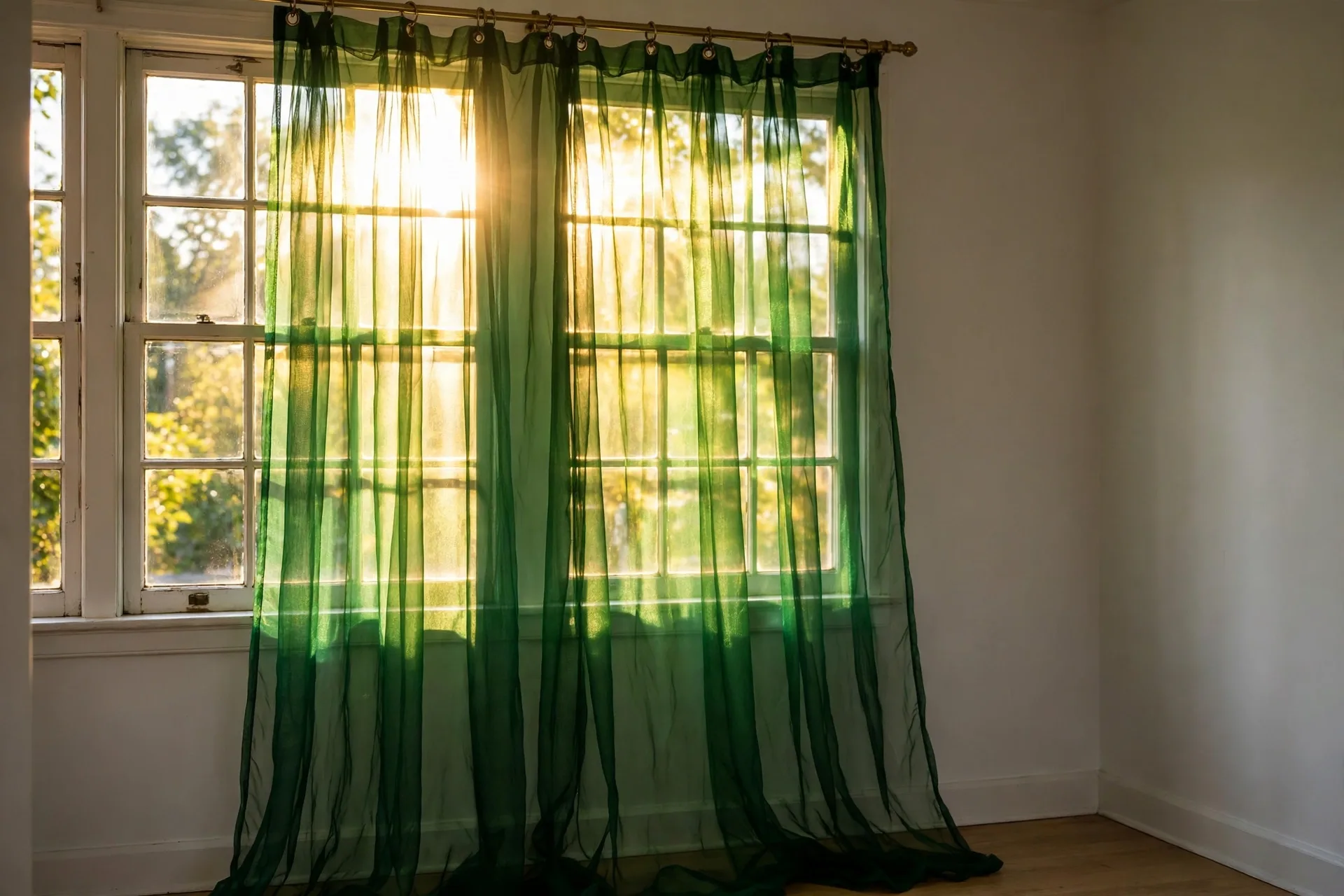
Sun is the second organza risk, because strong sun fades color and weakens fibers, and silk organza weakens fastest. A south-facing window fades deep organza in a season, and a silk organza in all-day sun can weaken at the folds. Keep organza out of all-day sun where you can, or pair it with a closing panel that shields it during the brightest hours.
A UV-filtering window film also helps, because it cuts the fading from prolonged sun exposure, and layering with heavier curtains extends the life of delicate panels.
Washing and caring for organza without spoiling the crispness
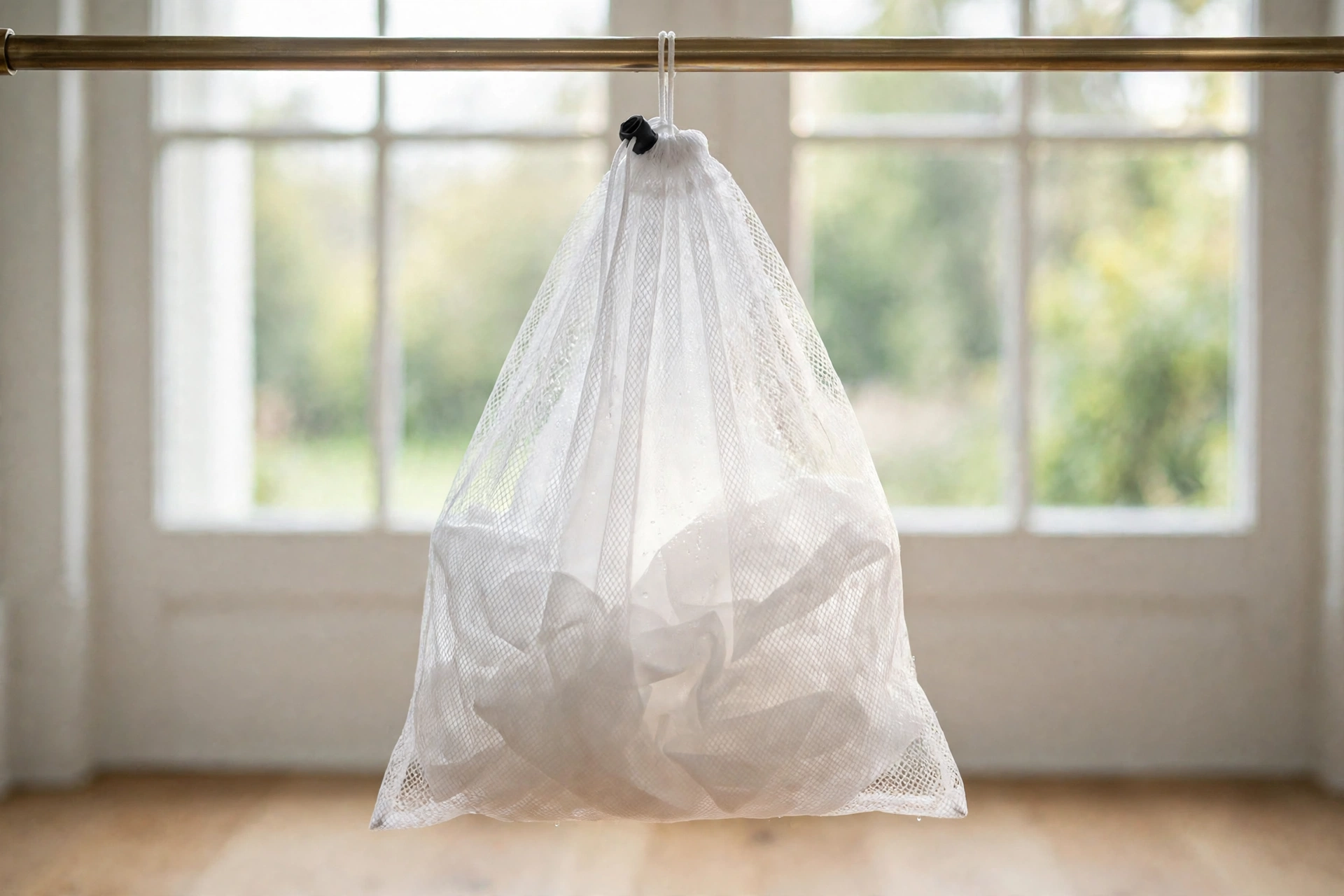
Washing organza needs a gentle hand, because the crispness that makes it beautiful is also what makes it vulnerable. Put each organza panel in a mesh laundry bag before it goes in the machine, so hooks, zips, and other items cannot snag the fine weave. Wash polyester organza on a gentle cycle in cool water with a mild detergent, and never use bleach, because bleach weakens the fibers and yellows white organza.
Silk organza needs dry cleaning, and nylon organza needs cool water and low heat.
Hand washing suits embroidered organza best, because the embroidery can catch in a machine even inside a bag. Soak the panel in cool water with a mild detergent, swirl it gently, rinse in clean cool water, and press out water without wringing.
Dry organza by hanging it back at the window while it is still slightly damp, so the weight of the damp fabric pulls out creases as it dries.
Store organza by rolling it rather than folding, because rolling prevents creases, and keep it in a breathable fabric bag that keeps dust and moisture away. Hang stored panels where you can to prevent deep folds, and place tissue paper between folds where folding is needed. Do not tumble dry organza on high heat, and do not iron it on a high setting. If ironing is needed, use a low heat setting, a pressing cloth, and the reverse side, and never use steam on organza, because steam can mark the fabric and spoil the crispness.
Some care guides allow a steamer on organza, but this guide keeps the cautious line and skips steam, because it can mark the fabric.
Organza mistakes that make a room look stiff or bare
The most common organza mistake is using it in a relaxed room, where its stiffness and shine read as cold and dressy, and voile would have suited the room better. The second is trusting organza alone at night, then finding silhouettes show from the street once indoor lights are on. The third is washing organza loose in the machine, where it snags and comes out with pulls that cannot be fixed.
Other mistakes follow from color and handling: picking a deep color for a south-facing window, where it fades fast; hanging organza on a rough or burred hook, where it snags on the first day; and folding organza tightly in storage, where it creases.
Polyester organza also forms small folds poorly, so it suits small windows in small rooms badly, where the panel cannot gather into the folds that make it look dressed. A further mistake is layering organza over organza hoping for privacy, where two sheer layers still show silhouettes at night.
Frequently asked questions about organza curtains
Most organza questions come down to fiber, formality, and care.
What is the difference between organza and voile?
Organza is stiff, shiny, and structured, with a crisp drape that holds folds and suits formal rooms. Voile is soft, smooth, and matte, with a flowing drape that suits relaxed rooms. Both are sheer and both soften daylight, but organza holds its shape where voile falls softly, and organza shines where voile stays matte.
Is silk or polyester organza better?
Silk organza is better where luxury matters most, as in a formal dining room, because its soft glow and hand are unmatched. Polyester organza is better where easy care matters most, as in a dining room used daily, because it washes gently, resists wrinkles, and holds color in sun better. Check the care label, because silk organza usually needs dry cleaning.
Do organza curtains give privacy at night?
No, organza does not give reliable privacy at night, because indoor lights shine through the sheer fabric and silhouettes show from outside. Organza gives daytime privacy, when the outside is brighter than the inside. For night privacy, layer organza with a blackout, room-darkening, or lined panel that closes at night.
Can organza curtains be machine washed?
Polyester organza can usually be machine washed on a gentle cycle in cool water, inside a mesh laundry bag, with a mild detergent. Silk organza needs dry cleaning, and nylon organza needs cool water and low heat. Never use bleach, never wring organza, and check the care label before any wash.
Does organza snag easily?
Organza can snag easily, because its fine, tight weave catches on rough surfaces, hooks, jewelry, and pet claws. Handle it gently, check hooks and rings for burrs before hanging, and keep it away from rough walls and high-traffic edges. A snag on organza is hard to fix, so prevention matters more than repair.
Where should organza curtains be used?
Organza suits formal rooms best: a dining room, a formal living room, an entryway, or a tall window that needs a formal finish. It suits a bedroom only as a day layer behind a closing panel. It suits a relaxed family room poorly, where its stiffness reads as cold, and it suits a kitchen poorly, where steam and splashes reach it daily. A short panel kept well away from the stove can work in a kitchen, but steam and splashes still make it a poor everyday choice there.
This guide is research-based curation: we compared maker specifications, published reviews, and current prices. Read how we choose.