 Best
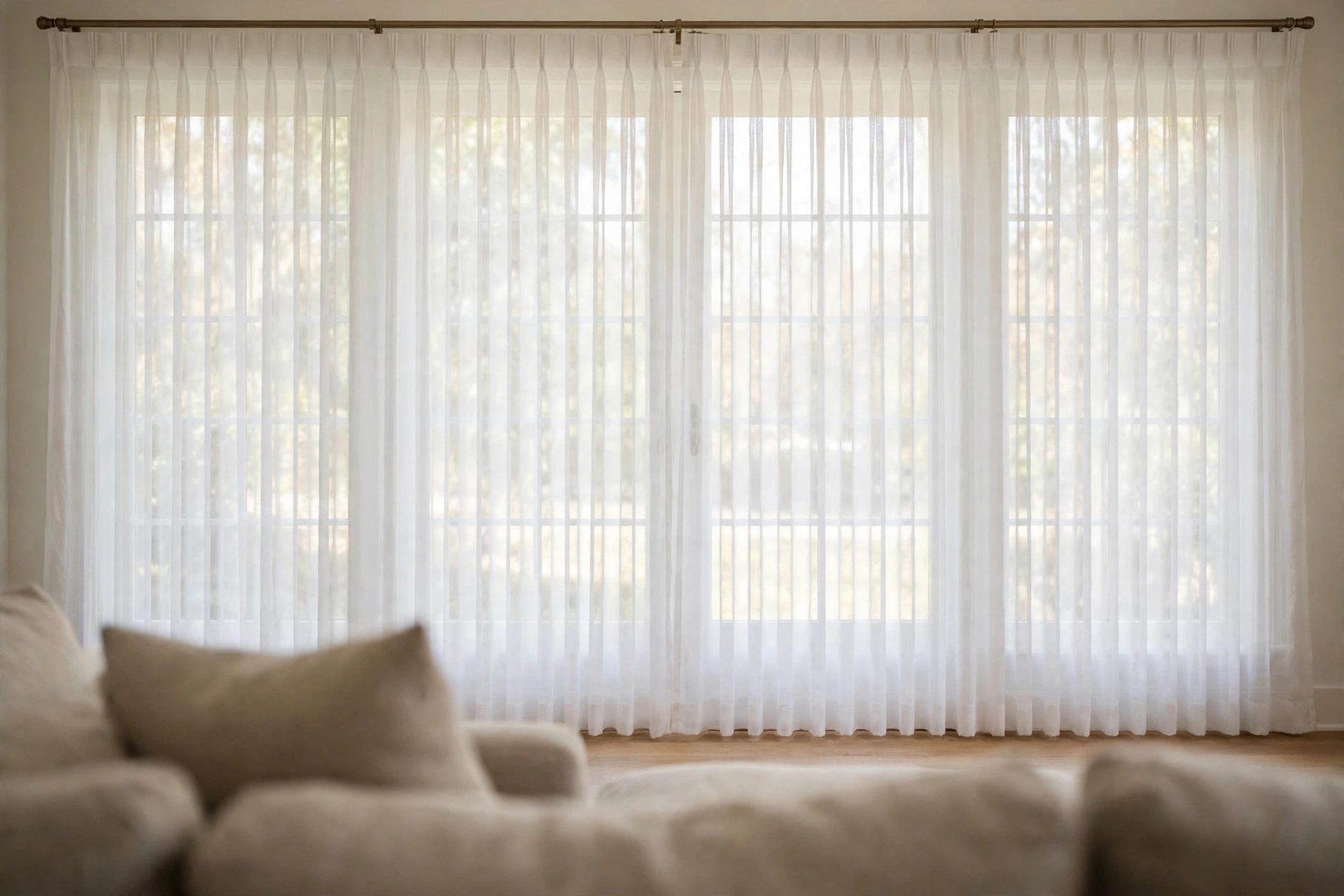
Best Sheer Curtains
Sheer curtains soften daylight and keep a room bright, but they do not give night privacy on their own. This guide sorts sheer, semi-sheer, and light-filtering fabrics by privacy level.
Sheer curtains alone do not give night privacy. That fact needs to come first, because it shapes every choice that follows. In daylight, a sheer panel softens sun, blurs the view in, and keeps a room bright. After dark, with lamps on inside and darkness outside, the same panel shows shapes and movement to anyone outside. If you need a bedroom or a street-facing room to stay private at night, plan a second layer from the start.
This guide is for living rooms and bedrooms that need soft light. It explains the three fabric levels in plain words, sorts picks from lightest to densest cover, and covers layering basics, washing, and wrinkles.
Best sheer curtains for soft light at home
The lightest sheers suit bright living rooms that want daylight and a soft view, while the densest sheers suit street-facing windows that need daytime privacy. The picks below run from lightest to densest cover, in privacy-level order. Each pick is labeled with its level, so you can match it to the level you chose. Pick 2 is 54 × 96 in; Picks 4 and 6 are 52 × 84 in, while the other picks vary by listing, so confirm width and length on the listing, and use the measure guide linked at the end, before you order.
As an Amazon Associate, we earn from qualifying purchases.
Comparison at a glance: sheer curtains
| Pick | Best for | Key feature |
|---|---|---|
| OWENIE White Voile Sheer Panels | bright living rooms and bedrooms where daytime light matters most and a night layer is already in place. | Light voile weave for soft, even daylight |
| NICETOWN White Voile Sheer Curtains | bedrooms that want gentle morning light and a soft, dressed window during the day. | Lightweight voile for soft, filtered light |
| H.VERSAILTEX Linen-Look Sheer Panels | living rooms that want texture and warmth without losing daylight. | Linen-blend weave with a relaxed, textured surface |
| NICETOWN White Sheer Linen Curtains | living rooms and bedrooms where curtains open and close often. | Grommet top that slides smoothly along a rod |
| MIULEE Privacy Sheer Panels | street-facing windows and rooms close to neighbors where daytime screening matters most. | Denser light-filtering weave, described on listings as non-see-through in daylight (daylight use only, not night privacy) |
| HOMEIDEAS White Privacy Semi Sheer Curtains | family living rooms and bedrooms that need a plain, easy-care daytime screen. | Denser white weave for daytime screening |
1. OWENIE White Voile Sheer Panels - Best for maximum brightness (Privacy level 1)
- Best for: bright living rooms and bedrooms where daytime light matters most and a night layer is already in place.
- Key features: Light voile weave for soft, even daylight.
- Pros: Keeps the room bright and open; Softens harsh daylight without darkening the room; Easy to pair with blinds or heavier drapes.
- Cons: Low daytime cover, among the lightest in this guide; No night privacy on its own.
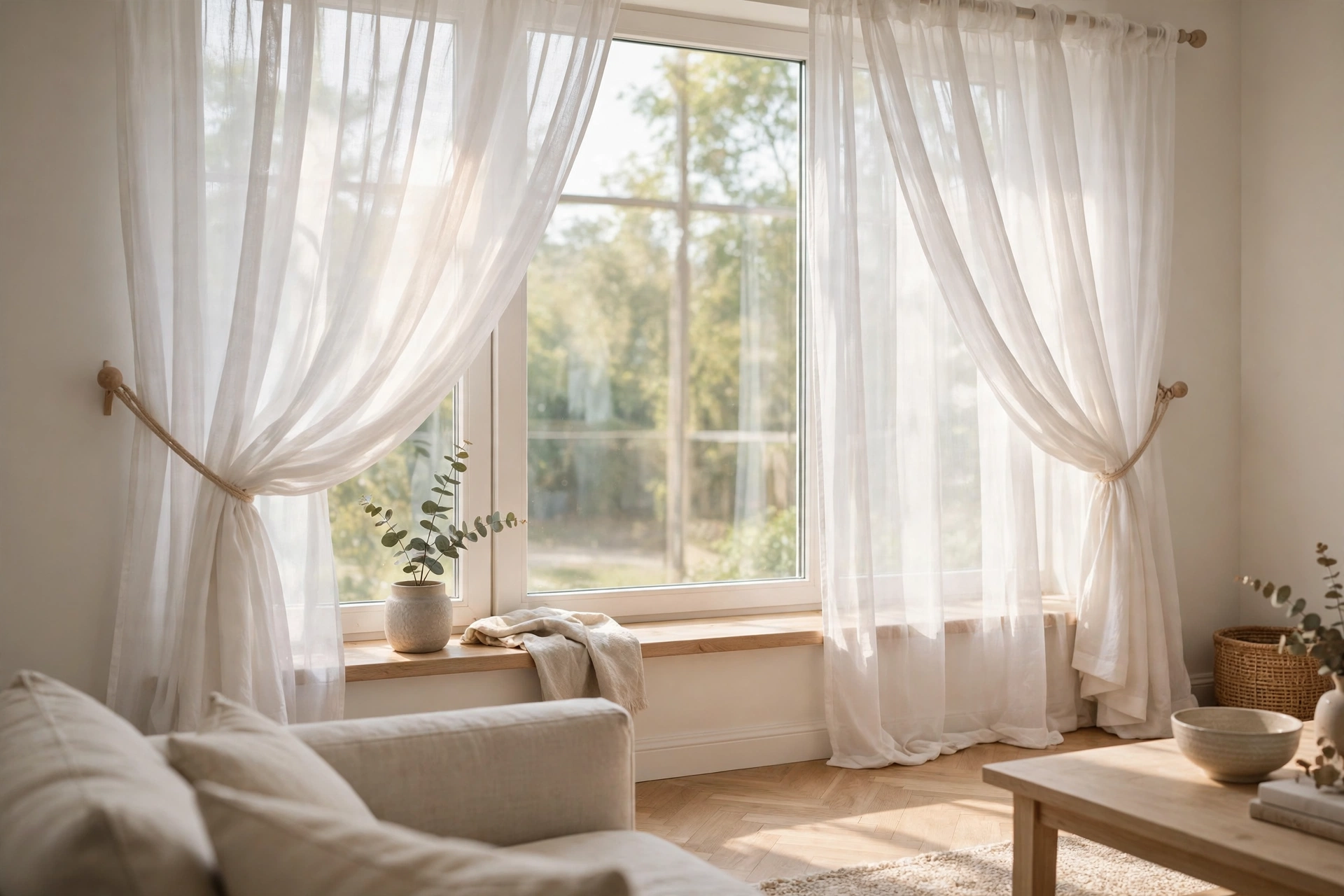
2. NICETOWN White Voile Sheer Curtains - Best for soft bedroom light (Privacy level 1)
- Best for: bedrooms that want gentle morning light and a soft, dressed window during the day.
- Key features: Lightweight voile for soft, filtered light; Rod pocket heading; 2 panels, each 54" wide x 96" long.
- Pros: Creates a soft, calm bedroom feel in daylight; Pairs neatly with blackout drapes for night; Long 96" drop suits tall windows.
- Cons: Very light cover, like other voile in this guide, so only for rooms with a night layer; Rod pocket panels slide less freely than grommet panels.
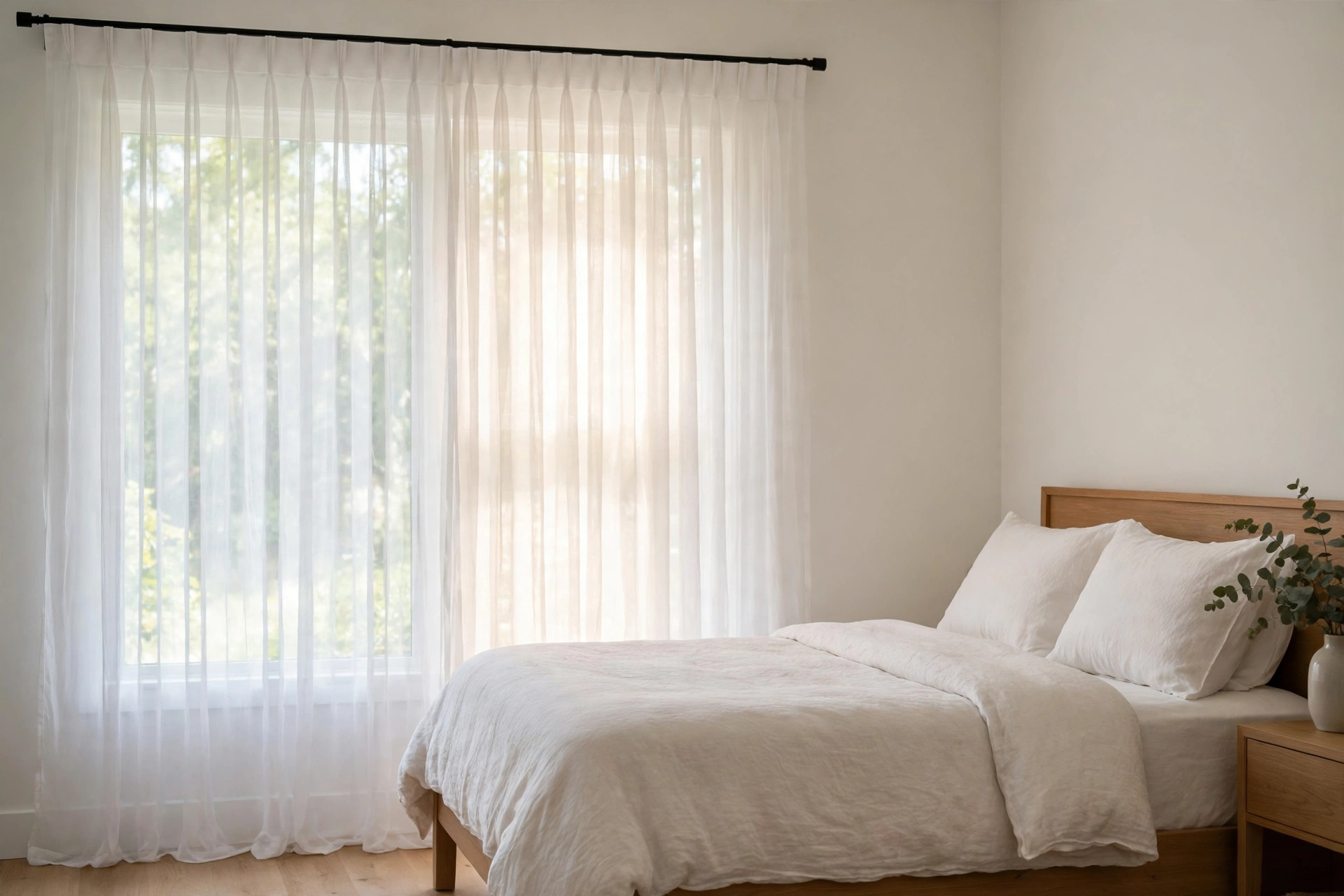
3. H.VERSAILTEX Linen-Look Sheer Panels - Best for a natural living room look (Privacy level 2)
- Best for: living rooms that want texture and warmth without losing daylight.
- Key features: Linen-blend weave with a relaxed, textured surface; Neutral tones that sit well with wood and natural fabrics.
- Pros: Looks less flat than plain voile; Good middle ground for light and daytime cover; Suits modern, rustic, and coastal rooms.
- Cons: Slightly less bright than plain voile; Still needs a night layer for full evening privacy.
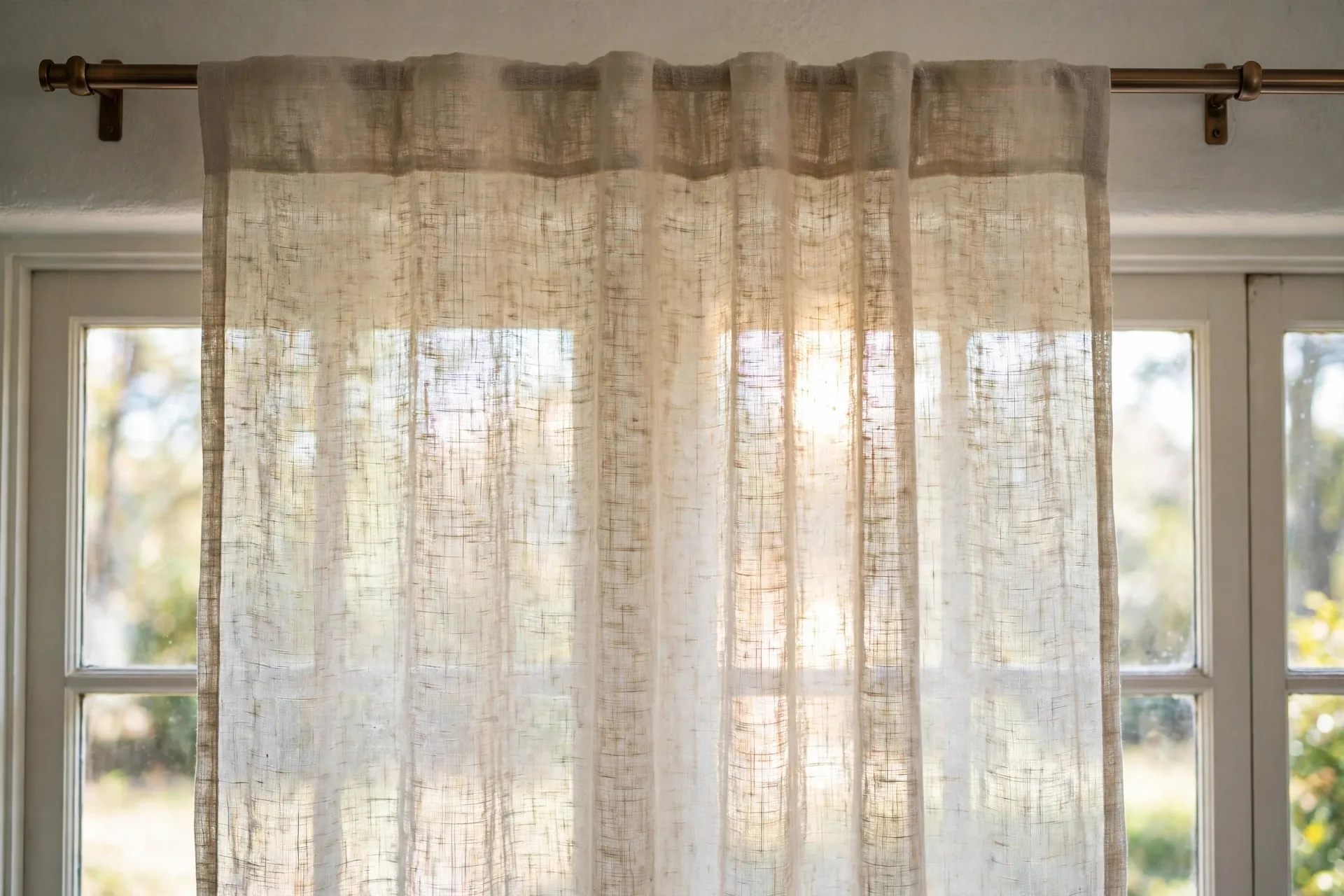
4. NICETOWN White Sheer Linen Curtains - Best for easy daily use (Privacy level 2)
- Best for: living rooms and bedrooms where curtains open and close often.
- Key features: Grommet top that slides smoothly along a rod; Sheer linen texture in white, 2 panels, each 52" wide x 84" long; Semi-sheer fall.
- Pros: Easy to open, close, and adjust during the day; Bright, simple style that suits many rooms; Works well as the daytime layer in front of an inside-frame blind.
- Cons: Grommets give a more casual look than pleated headers; No night privacy on its own.
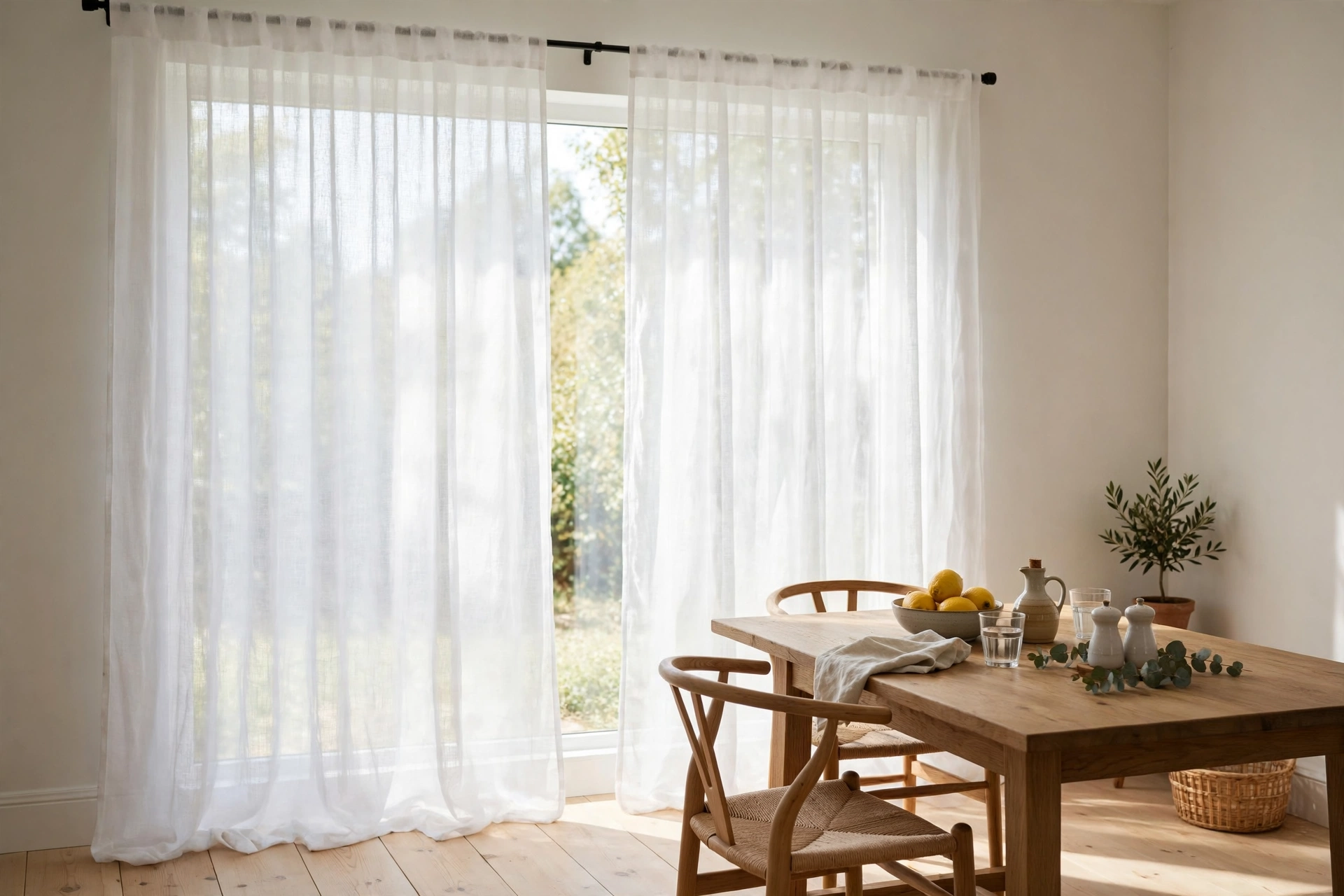
5. MIULEE Privacy Sheer Panels - Best for daytime privacy (Privacy level 3)
- Best for: street-facing windows and rooms close to neighbors where daytime screening matters most.
- Key features: Denser light-filtering weave, described on listings as non-see-through in daylight (daylight use only, not night privacy); 3-inch rod pocket heading.
- Pros: Strongest daytime cover among the picks here; Keeps the room bright while blurring the view in; Good first pick for a ground-floor living room.
- Cons: Less airy than plain voile; Still not a night privacy solution on its own.
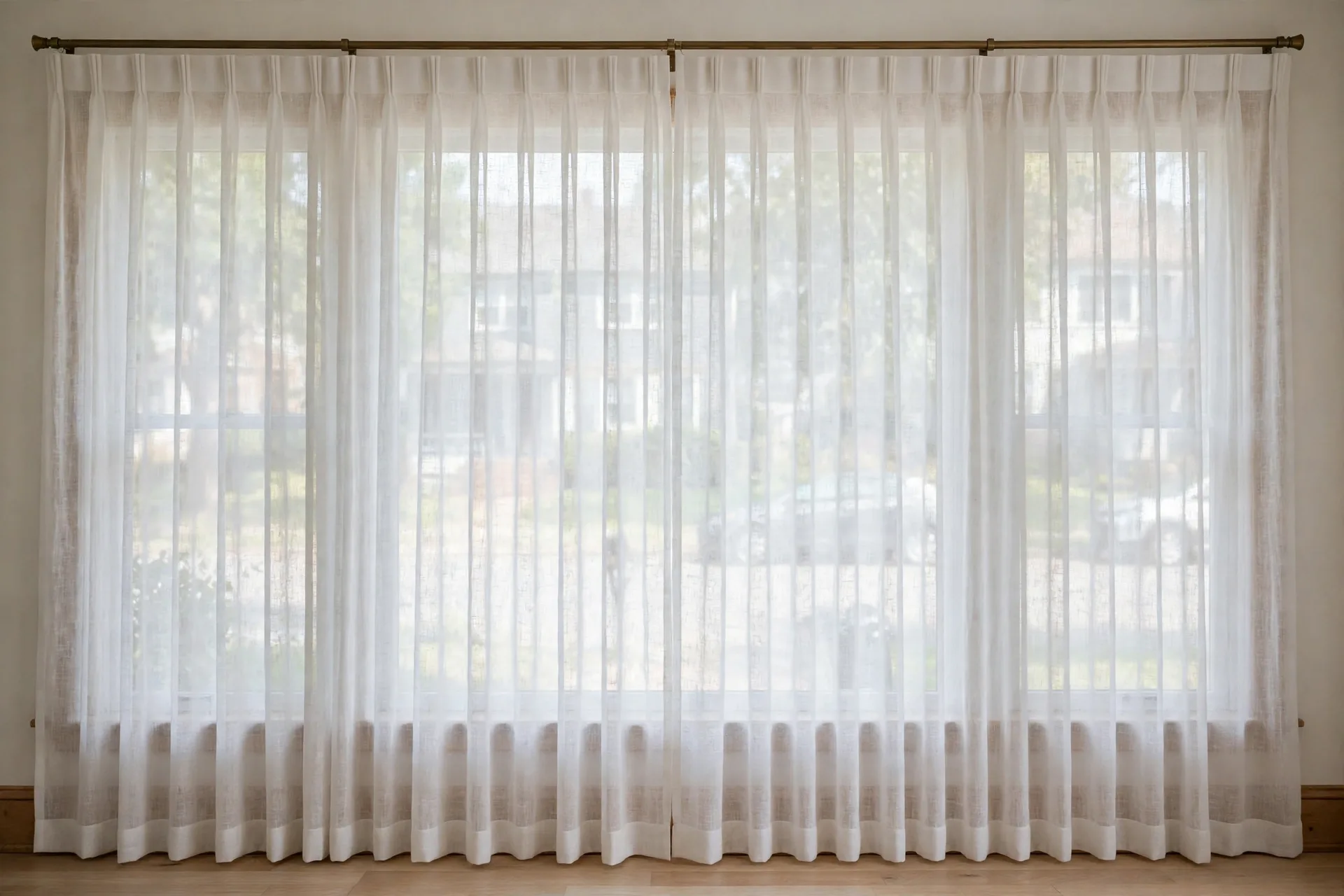
6. HOMEIDEAS White Privacy Semi Sheer Curtains - Best for simple everyday rooms (Privacy level 3)
- Best for: family living rooms and bedrooms that need a plain, easy-care daytime screen.
- Key features: Denser white weave for daytime screening; Rod-pocket top; 2 panels, each 52" wide x 84" long; Non-see-through privacy, light-filtering finish.
- Pros: Straightforward look with no pattern to match; Better daytime cover than thin voile; Easy to live with in busy rooms.
- Cons: Rod-pocket panels slide less freely than grommet panels; No night privacy on its own.
Night privacy comes first
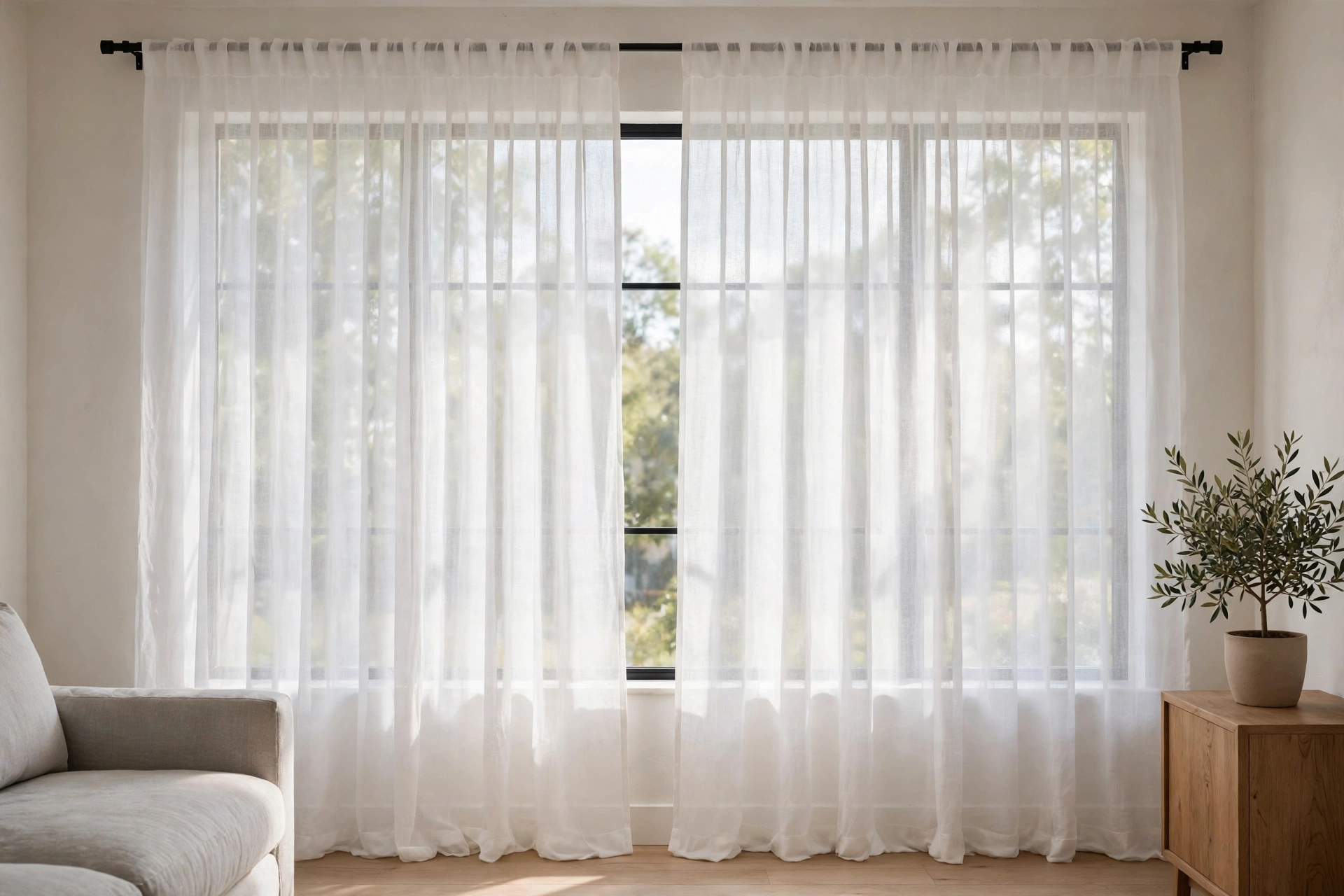
Sheer curtains give no night privacy on their own. Use them for daytime softness, and add a closing layer for night.
Daytime privacy and night privacy work in opposite ways, and that is why so many buyers feel misled. During the day, outside light is stronger than indoor light, so a sheer panel scatters light and hides detail from the street. At night, indoor lamps become the stronger light, and the sheer panel then reveals what is inside. A person outside may see a silhouette or movement. Very thin voile shows the most. A denser panel shows less, but it still should not be trusted as a night privacy layer on its own.
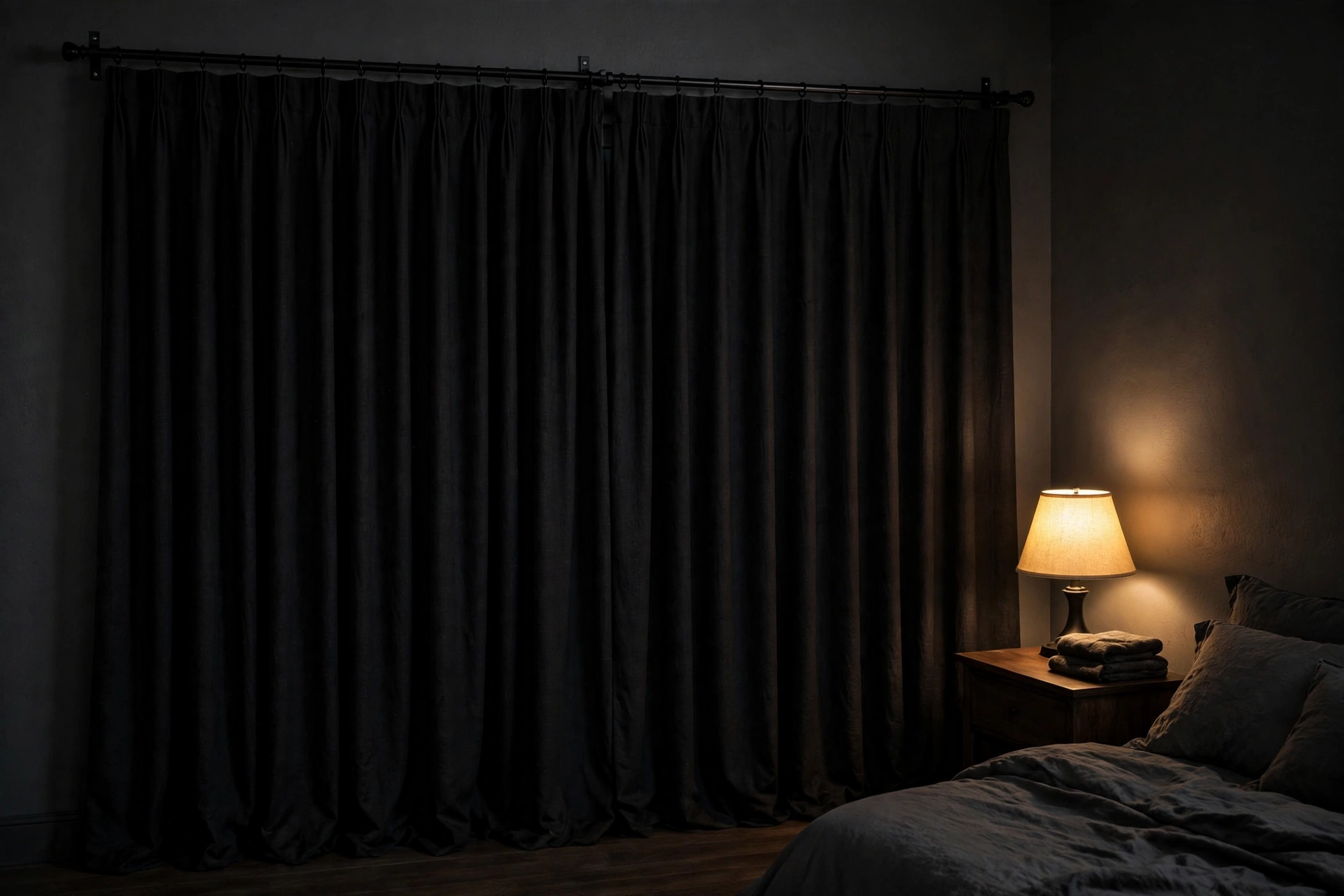
Use this simple test before you buy. If a stranger could stand on the sidewalk or in a neighboring garden and look toward a lit window, assume they can see in through sheers alone. That test is most urgent for bedrooms, ground-floor rooms, and windows close to a path or a neighboring house. For those windows, buy sheers for daytime softness and add a closing layer for night. A blind, a shade, or a blackout curtain that closes at dusk all do that job. Upper-floor windows set far back from the street are less exposed, but they still lose privacy once lamps are on, because they can be seen from neighboring upper floors, a hill, or a tall building across the street, so do not treat height alone as cover.
Sheer, semi-sheer, and light-filtering in plain words
Sheer means the thinnest, most see-through fabric. Semi-sheer means a denser weave that still lets light through. Light-filtering means a still denser weave that softens light more and gives more daytime privacy. Think of it as three steps on one scale. As you move from sheer to light-filtering, the room gets a little less bright, glare drops, and the view in gets harder to read during the day. Night privacy does not jump to full cover at any step.
Voile is the classic sheer fabric. It is light, smooth, and drapes in soft folds.
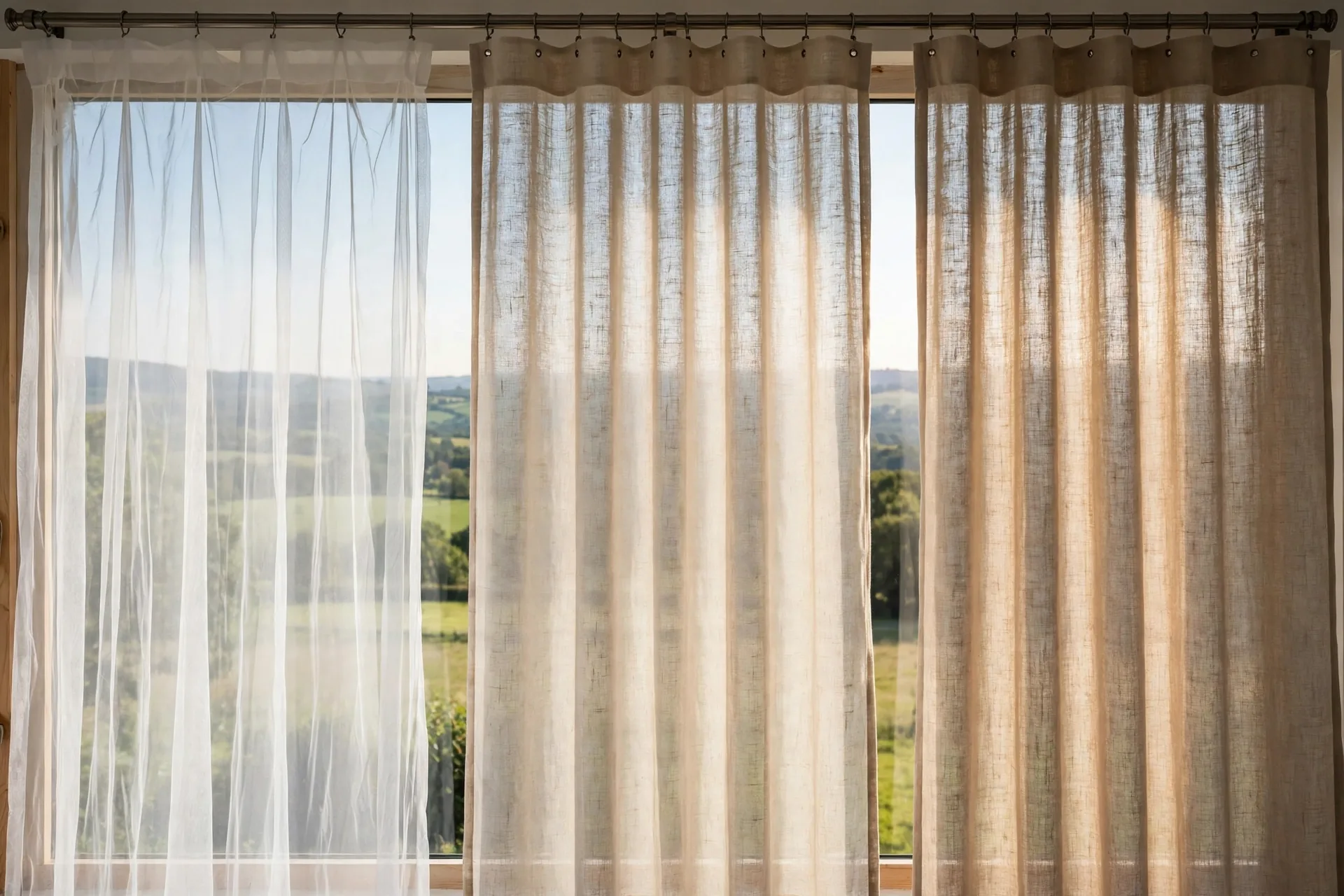
It suits rooms where brightness matters most and the window is not overlooked at close range. Linen-look fabric, usually a polyester blend made to look like linen, has a slubbed texture and a more relaxed, natural feel. It suits living rooms with wood, rattan, or neutral soft furnishings. True linen sheers feel softer and more textured than polyester voile, but they wrinkle more and need gentler care, so many buyers choose a linen-look blend for everyday rooms.
Color changes how sheer a panel looks. White and ivory let the most light through and look brightest. The same weave in gray, taupe, or black reads darker and more solid, and it can cut glare more, but it also dims the room a little. If you want maximum brightness, stay pale. Pattern also matters. Lace and embroidered sheers add decoration, and the pattern can break up a view, but open lace still leaves gaps in cover. Treat lace as a style choice, not a privacy upgrade.
Choose by privacy level, not by looks alone
Pick your privacy level first, then choose a fabric and color inside that level. This order avoids the most common regret: a beautiful panel that leaves a bedroom exposed at night.
Level one is maximum light, lowest daytime cover. Choose plain voile in white or ivory. This level suits upper-floor rooms, windows facing a private garden, and rooms where the view out matters more than screening. It also suits rooms that already have a blind or shade for night. Do not choose this level for a ground-floor street-facing bedroom and expect it to be enough.
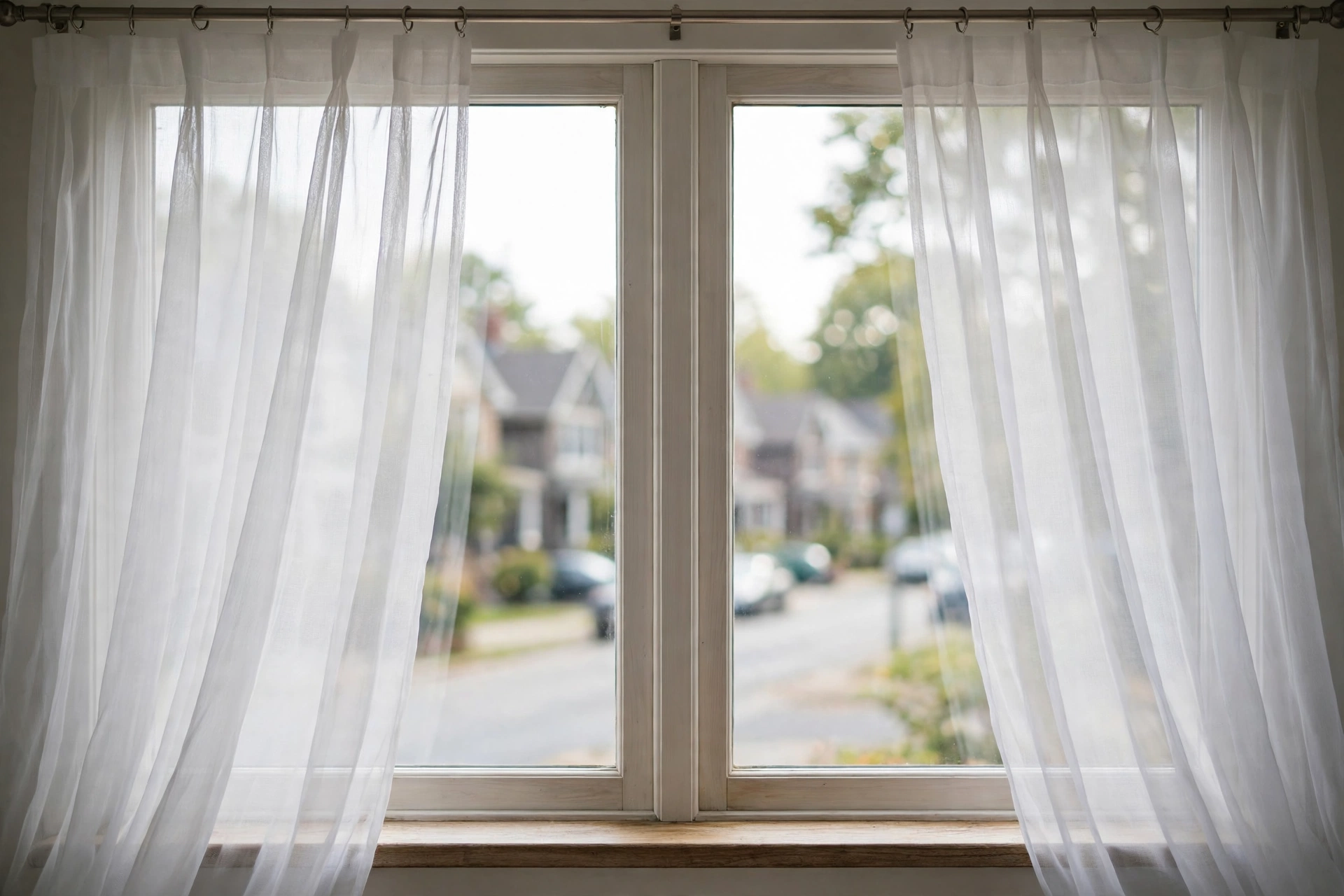
Level two is soft light with better daytime cover. Choose semi-sheer fabric, often a linen-look weave. This suits most living rooms and many bedrooms used during the day. It softens glare, blurs shapes from outside in daylight, and still keeps the room bright. It still needs a night layer where night privacy matters.
Level three is the most daytime cover a sheer family can give. Choose light-filtering fabric, described on listings as non-see-through or privacy sheer. That label is a listing description for daylight use, not a promise of night privacy. This suits street-facing windows, rooms close to neighbors, and sunny rooms where glare is a daily problem. The room will be a little less bright than with voile, but daytime screening is clearly stronger. Even at this level, add a closing layer at night.
For a living room, level two is often the best starting point, because living rooms need glare control without darkness. For a bedroom, start from the night question instead: if the room is slept in and lit at night, the night layer matters more than the sheer itself.
Layer sheers for night privacy without losing daytime light
Layering means using sheers for the day and a closing layer for the night. When there is no blind inside the frame, the sheer hangs closest to the glass. When a blind sits inside the frame, the blind is closest to the glass and the sheer hangs in front of it as the daytime layer, with any heavier drape outermost. During the day, the sheer stays closed and the outer layer stays open, so light filters in softly. At dusk, close the outer layer. That layer can be a blind, a shade, or a heavier drape on a second rod or track.
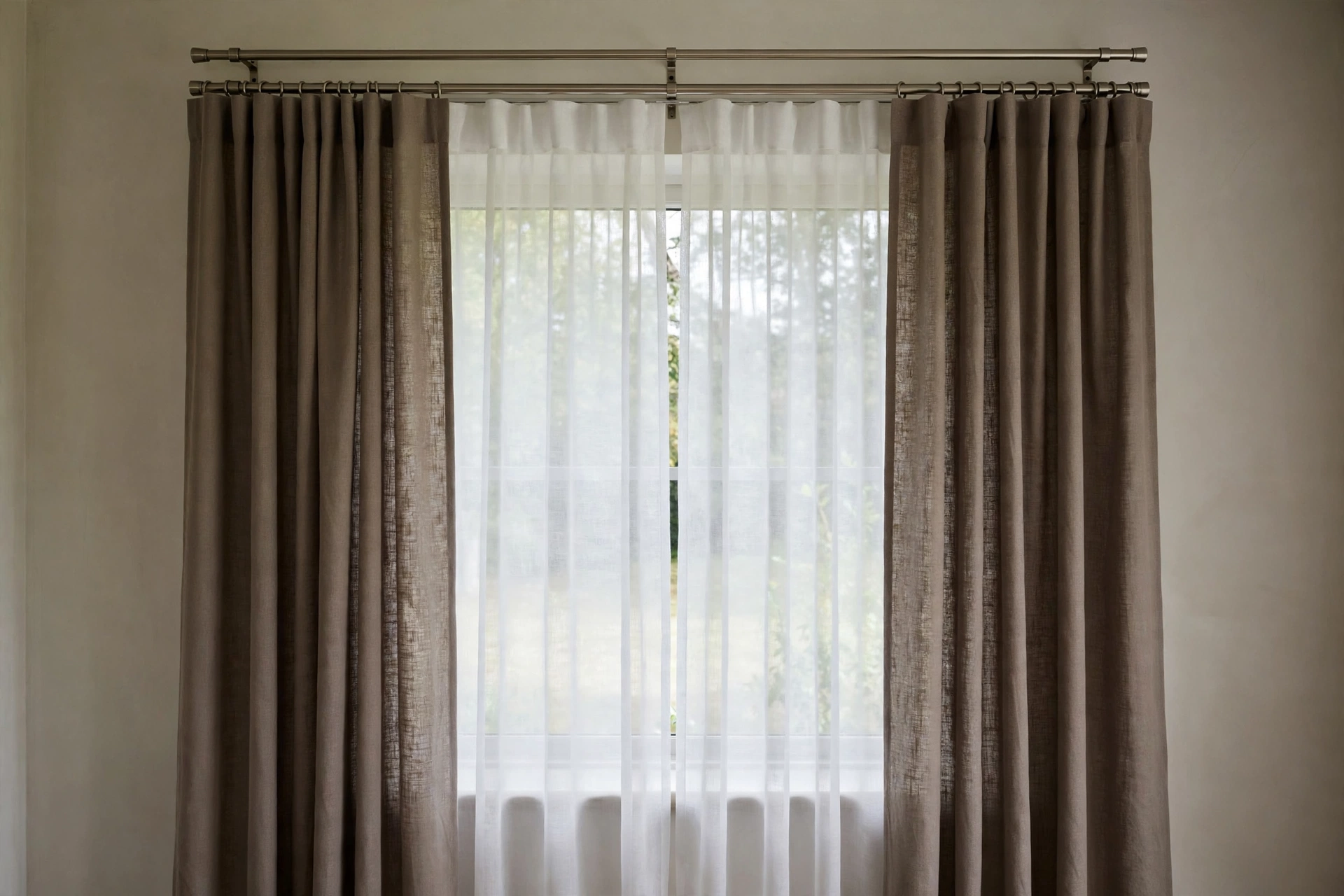
In a living room, close the sheer during bright hours for screening. Opening it for a clear view removes that screening, so open it only when privacy is not needed at that moment. In a bedroom, close the sheer in the morning for soft light, then close the outer layer at night for darkness and privacy. If you only have one rod now, a double rod or a blind fitted inside the frame gives you the second layer without replacing the sheer. Keep the sheer full enough, at about 2 times the rod width in total, to drape in folds when closed. Closing the outer layer before the sun reaches the glass also helps keep heat out in summer, as described in the energy guidance on window coverings from the U.S. Department of Energy.
How to pick fabric, color, and header
Pick fabric for feel, color for brightness, header for daily use.
Fabric sets the feel of the room. Polyester voile is the easiest everyday choice: it resists wrinkles better than natural fiber, washes well, and holds its shape. Cotton voile feels softer and more matte, but it wrinkles more. Linen-look blends, explained in full in the linen curtains guide, give texture with easier care than true linen. True linen looks beautiful, but it wrinkles fast and needs gentle washing.

Color sets brightness. White and ivory maximize light and suit small or dark rooms. Soft gray or natural flax tones calm a bright, sunny room. Dark sheers look striking, but they dim the room, so use them as an accent rather than a default for a dark room. For a whole-home plan covering several rooms, one neutral sheer repeated across rooms often looks calmer than a different color in each room.
Header sets how the panel hangs and moves. A grommet top slides easily and suits rooms where curtains open and close daily. A rod pocket gathers softly and suits a panel that mostly stays closed, because it slides less freely. A back-tab header gives a gathered, tailored look. Check the listing for the header before ordering. For fullness, buy total panel width of about 2 times the rod width for standard fullness, so the sheer gathers in folds when closed instead of stretching flat.
Washing sheers and keeping wrinkles down
Most polyester voile and linen-look panels can be machine washed on a gentle, cool cycle, but always read the care label first, because blends and lace need gentler care. The wash, dry, and iron symbols on that label follow the care symbols explained by GINETEX under the international ISO 3758 care labeling standard. Washing sheers is simple, but wrinkles are the part that needs the most care. Wash sheers on their own or in a mesh bag, so hooks and rough fabrics do not snag the weave. Skip harsh bleach on white sheers unless the label allows it.

Dry sheers by hanging them damp. Hang them straight back on the rod while still slightly damp, and gravity will pull out many creases as they dry. If creases remain, use a steamer on a low setting or a cool iron, and test a hidden edge first. Do not use high heat on polyester voile. Lace, embroidered, and true linen sheers need the gentlest setting. If you hate ironing, choose polyester voile or a crushed texture that is meant to look softly creased.
Wrinkles also come from packing. New panels often arrive creased. Hang them for a day before you judge them.
Mistakes that make sheers look flat or wrong
Buying too little fabric is the top mistake. A sheer needs folds to look soft and to screen well. Measure the window, then buy enough panels to total about 2 times the rod width, so they gather, not just span the glass. Hanging the rod too low and too narrow is the second mistake. A rod set close to the ceiling (4 to 6 inches above the frame) and wider than the frame (6 to 12 inches past each side) lets panels stack to the sides and makes the window look taller.
Choosing sheers alone for a night-private room is listed third here, but it is the warning this guide opens with, for a reason. The fourth mistake is matching sheers to wall color instead of light: test color in daylight, not only on a phone or computer screen. The fifth mistake is ignoring the header. A rod-pocket panel on a rod you open daily will frustrate you. Match the header to how often you move the curtain, not only to how it looks in a photo.
More sheer fabrics: gauze, chiffon, organza, and silk
Gauze, chiffon, organza, and silk each give a different kind of sheer, so the choice is about feel and formality as much as light. Gauze is soft and slightly open in weave, with a relaxed, almost crinkled fall that suits casual rooms. Chiffon is finer and smoother, with a fluid drape that moves well and suits a dressed window. Organza is crisp and holds its shape, so it stands a little away from the glass and suits formal rooms. Silk sheer is the softest and most lustrous of the four, but it needs the gentlest care and fades sooner in strong sun, so it suits shaded rooms better than a south-facing window.
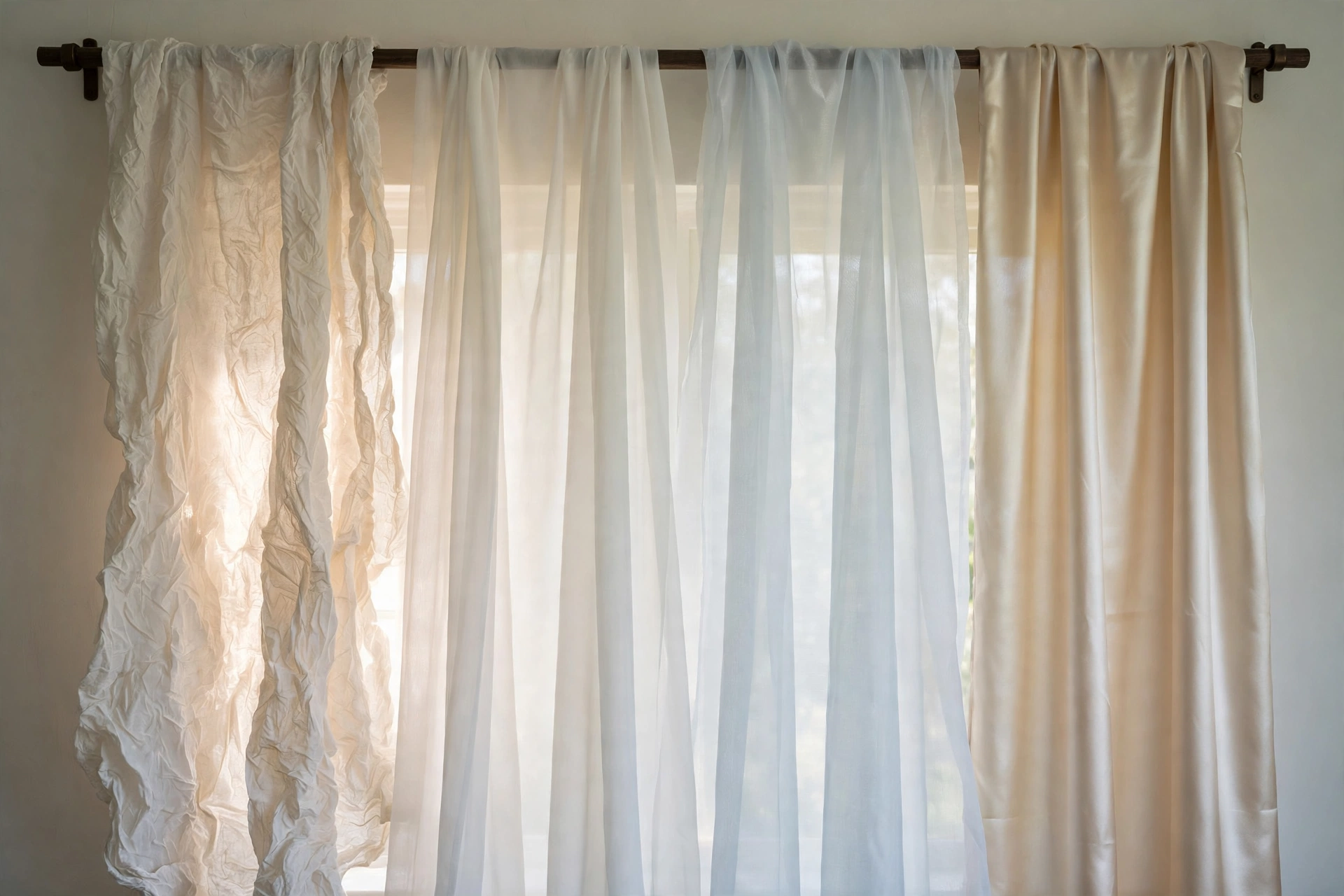
Care follows the fiber. Polyester versions of gauze and chiffon wash at home on a gentle cycle, while silk and many organza panels need gentler handling and a careful read of the care label. If a room gets daily use and frequent washing, a polyester gauze or chiffon will hold up with less fuss than silk.
Prints, stripes, tints, and scalloped edges
Printed, striped, tinted, and scalloped sheers change the look of a window without changing how a sheer works. A print adds pattern to a plain room, a tint washes the daylight with color, and a scalloped edge softens the hem where a straight hem would look plain. An ombre panel, darker at one end and paler at the other, suits a room where you want pattern without a repeating motif, and it reads best with the darker end at the bottom, so the fade looks like depth rather than dirt.
Stripes are the most useful pattern for small windows, because vertical stripes draw the eye upward and make a window look taller. Keep the stripe narrow and quiet in a small room, and let a bolder stripe carry a large window. Tinted sheers need a daylight test, since a tint that looks pale on a listing can color a whole room once the sun is behind it, so check the color in your own light before ordering a full set.
Which sheer length suits which window
Sill-length sheers suit kitchens, bathrooms, and windows above furniture, floor-length sheers suit living rooms and bedrooms, and puddled sheers suit only formal rooms where panels stay closed. A sill-length panel ends just above the sill, so it clears radiators and countertops. A floor-length panel ends just above the floor or just touching it, which suits tall windows and rooms where the curtain is part of the furnishing. A puddled panel carries extra length that pools on the floor, which looks soft in a formal room but collects dust and trips feet in a hallway or a room where panels move daily.
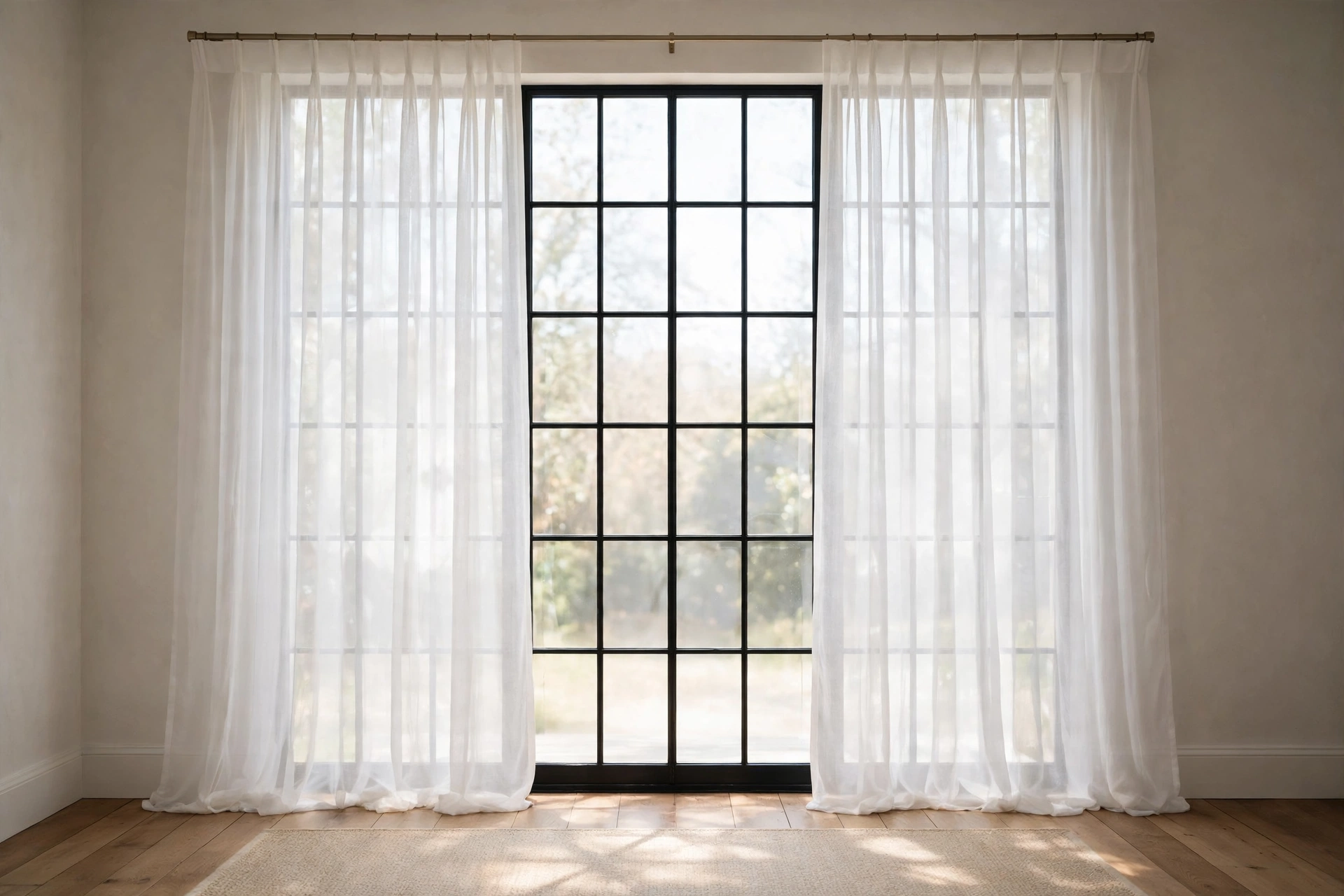
Measure from the rod to the point you want the hem to land, and order by that drop rather than by a standard length alone. If a panel will be opened and closed every day, floor length is the safer choice, since a puddle catches on feet and furniture.
Short sheers for kitchens and cafe windows
Short cafe sheers suit kitchens, because they cover the lower half of the window, leave the upper half open for light, and stay clear of countertops, sinks, and steam. A cafe sheer hangs from a rod set halfway up the window, or from the middle rail of a tall window, and ends at or just below the sill.
Moisture is the kitchen problem to plan for. Steam, cooking smells, and splashes settle on fabric near a stovetop or sink, so choose an easy-care polyester voile that washes at home, and wash it more often than a living-room sheer. Keep sheers away from an open flame and off the stovetop itself, and pick a short drop that cannot brush a hot surface.
Sheers as a room divider or a window liner
A sheer panel also works as a room divider or as a liner inside a heavier curtain, because it softens light while still letting it through. As a divider, a sheer hung from a ceiling track or a tension rod across an open doorway gives a sense of separation without blocking daylight between two parts of a room.
As a liner, a sheer sewn or hung inside a heavier drape softens the light that reaches the room when the outer curtain is open, and it gives daytime screening when the outer curtain is drawn back.
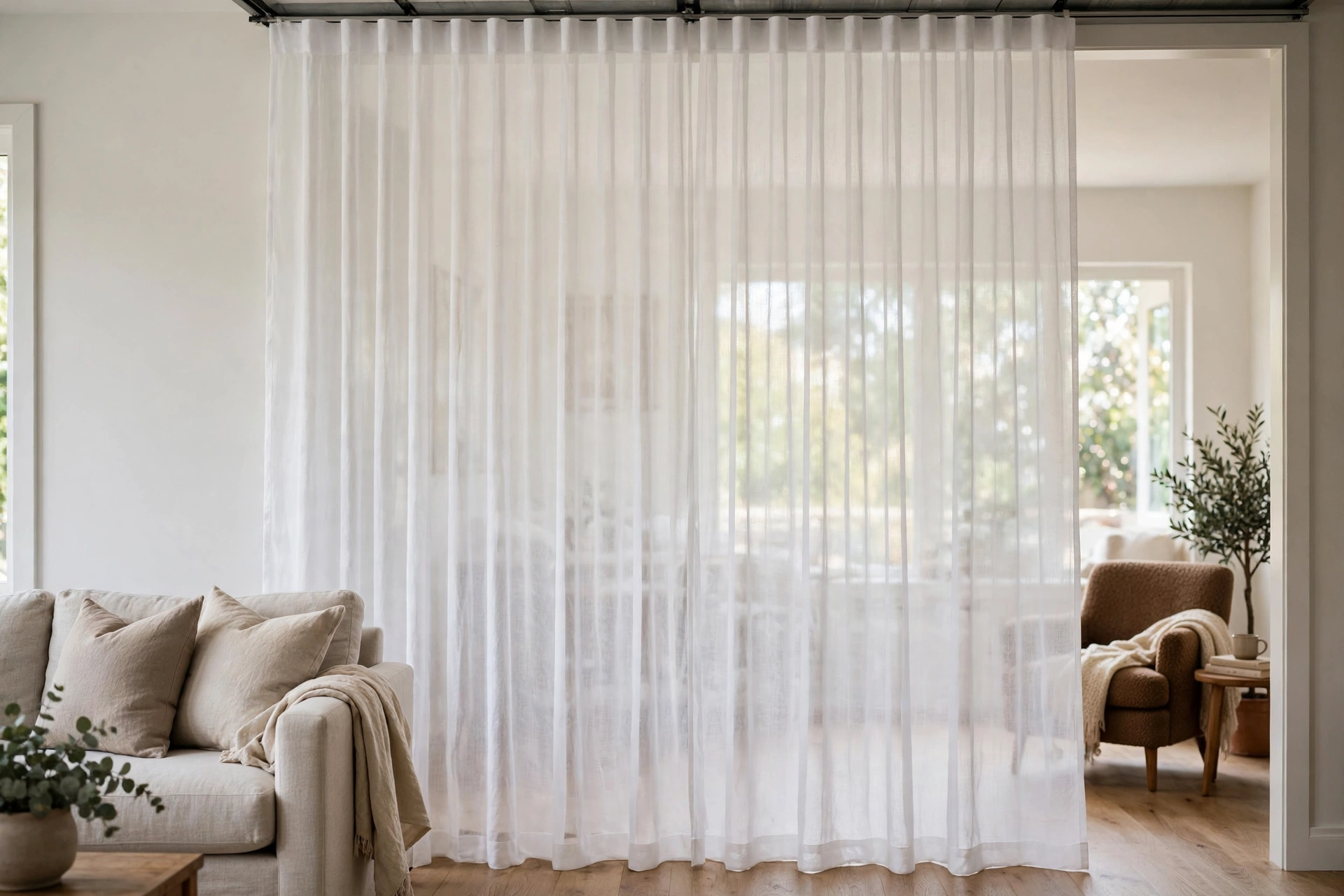
Check that the sheer and the outer panel move on separate rods or tracks, so each can be opened on its own.
Sheers in homes with pets and children
Sheers in a home with pets or children need tough, washable fabric and safe cords, because claws, muddy paws, and small hands test a thin panel daily. A denser polyester weave stands up to claws better than fine silk or loose gauze, and it washes clean after muddy paws. A float-length hem that ends just above the floor avoids paws and feet catching the fabric.
Cords need the same care as fabric. In a child room, keep the crib away from the window and choose cordless operation where you can, following the safety guidance on window covering cords from the U.S. Consumer Product Safety Commission. A cordless sheer removes the loop a child could reach, which matters more than any pattern or color choice.
How many panels for a narrow or small window
A narrow window needs the same fullness rule as a wide one, worked from the rod width rather than guessed from the window alone. Start with the rod: a window 30 inches wide with the rod set 5 inches past the frame on each side gives a 40-inch rod. At about 2 times the rod width, that window needs about 80 inches of fabric in total.
Divide that total by one panel width and round up. Two panels of 42 inches each give 84 inches, which covers the 80 inches with soft folds to spare.
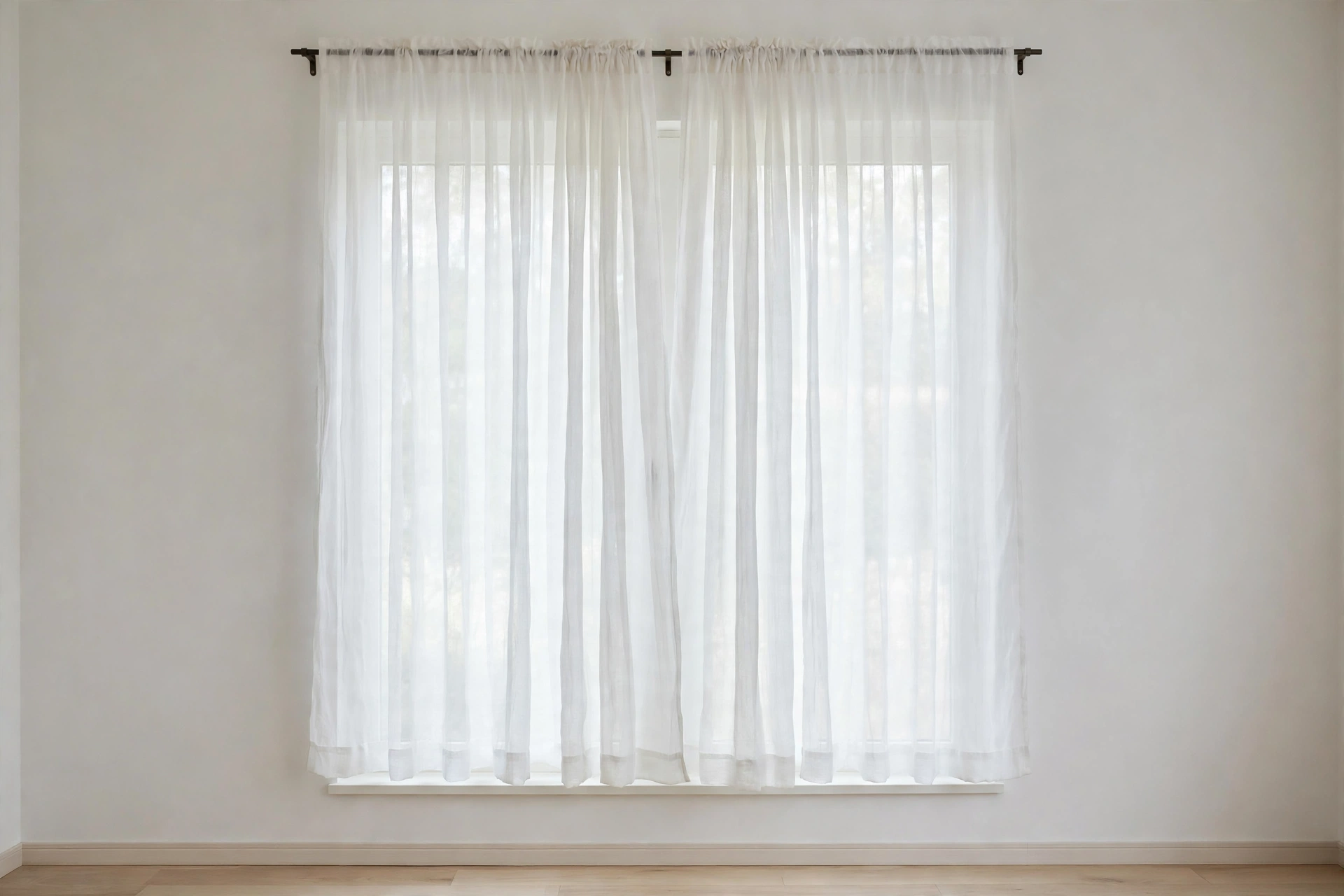
A single narrow panel stretched flat across the same rod would look thin and screen poorly, so two panels beat one wide panel for a small window, and a very narrow window still needs at least two panels to gather properly.
Sun, glare, and UV: what sheers do and do not protect
Sheers cut glare and soften sunlight, but they do not block ultraviolet light fully, so they slow sun damage to furniture rather than stopping it. A denser light-filtering weave screens more sun than thin voile, and closing a heavier layer or a lining in the strongest afternoon sun protects floors and fabrics far better than a sheer alone.
In a sunny room, pair the sheer with a closing layer for the hours when sun falls straight through the glass, and turn cushions and rugs now and then so any fading spreads evenly rather than settling in one bright patch. If fading is already visible on floors or sofa arms, the window needs a denser layer, not a thinner sheer.
Hardware beyond the header: tracks, tension rods, and ceiling mounts
Tracks, tension rods, and ceiling mounts each suit a different sheer problem that a wall rod does not solve. A ceiling-mounted track suits wide windows and sliding doors, because it carries weight across a long span and lets panels stack fully clear of the glass. A tension rod suits a light sheer inside a window recess, because it needs no drilling and holds by pressure alone.
Tension rods suit renters and short cafe sheers best, but they hold light fabric only, so a heavy lined panel or a wide span will slip or sag.
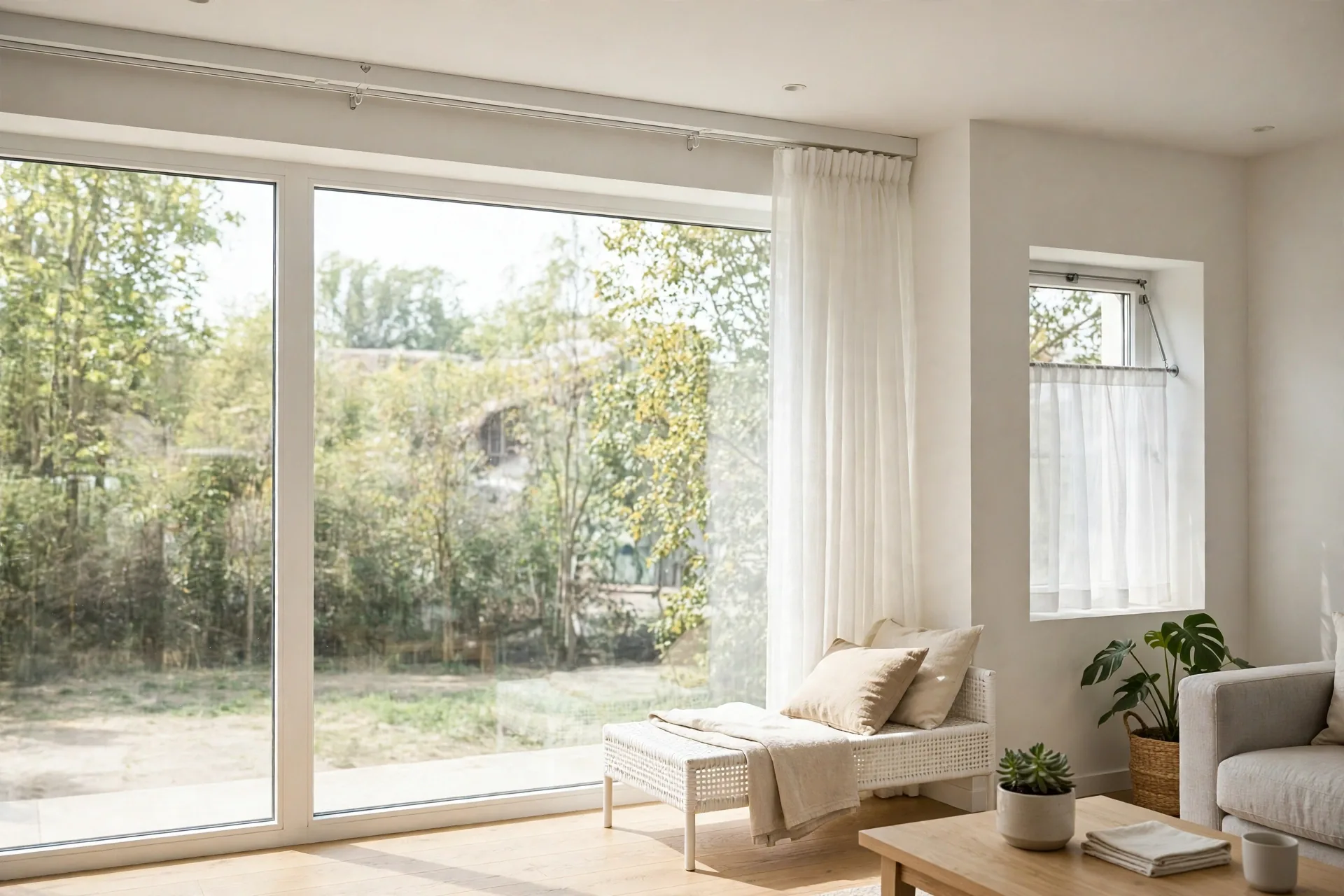
For a no-drill hang, test the rod empty first, then with one panel, then with the full set, and move to drilled brackets if it slips. A ceiling mount needs anchors into solid ceiling structure, so it is not a no-drill option in most homes.
Sheers for sliding doors, French doors, and wide windows
Sliding doors, French doors, and wide windows need sheers that stack fully clear of the opening, or the door will catch the fabric every time it moves. Hang the rod or track well past the frame on each side, so open panels sit on wall rather than glass, and choose enough panels to cover the full width with folds when closed.
For a sliding door, a ceiling track or a long wall rod with panels that glide freely works better than a rod-pocket panel that drags, because the door moves daily. French doors need panels that clear the handles and the swing, so measure past the handle before ordering, and keep the hem floating just above the floor so it never catches under the door.
Tiebacks: when they help and when they get in the way
Tiebacks suit sheers that stay open for most of the day, because they hold soft fabric to the sides and leave the middle of the window clear. Use them where the view matters more than screening, and where the panel can stay gathered without being pulled open and closed often.
Tiebacks do not suit a sheer that provides daytime privacy, since a tied-back panel screens nothing while it is held aside.

In that case leave the panel closed across the glass during the day, and use tiebacks only in the evening when the closing layer takes over. Match the tieback to the fabric weight, since a heavy cord tieback can crease fine voile where it grips.
Frequently asked questions about sheer curtains
Most sheer questions come down to privacy, light, and layering for the night.
Do sheer curtains give privacy at night?
No, not on their own. At night, indoor light makes the room the bright side, so shapes and movement show through sheers. Use a blind, shade, or heavier drape that closes at night for night privacy, and keep sheers for daytime softness.
Do sheer curtains give daytime privacy?
Yes, in daylight they give useful daytime privacy. Outside light is stronger than indoor light during the day, so a sheer panel scatters light and blurs detail from outside. Denser semi-sheer and light-filtering panels give more daytime cover than thin voile. Someone standing close to the glass may still see movement.
Are sheer curtains good for street-facing windows?
They are good for daytime use on street-facing windows, but only as part of a layered window. Choose a semi-sheer or light-filtering panel for stronger daytime screening, and add a closing layer for night. A thin voile alone on a ground-floor street window will feel too exposed if passers-by walk close to the glass.
Can I use sheer curtains in a bedroom?
Yes, if night privacy and sleep are covered by a second layer. Sheers give soft morning light and a calm daytime look. Pair them with a blind, shade, or heavier drape for night privacy. For sleep darkness, choose a blackout drape or blackout-lined blind as that night layer. Do not rely on sheers alone for sleep.
How do I wash sheer curtains without ruining them?
Wash on a gentle, cool cycle where the care label allows it, in a mesh bag and away from rough fabrics. Hang panels damp on the rod so creases fall out as they dry. Use low heat for a steamer or iron.
Why do my sheer curtains look wrinkled after washing?
Thin fabric creases easily, and tumble drying on high heat sets creases in. Hang panels damp, avoid high heat, and steam or cool-iron only if needed. Polyester voile and crushed textures hide wrinkles better than crisp linen.
Do dark sheer curtains block more light than white sheers?
Yes, in the same weave, a darker color lets less light through and reads more solid. White and ivory give the brightest room. If glare is the main problem, a denser weave matters more than color alone.
Grommet or rod pocket: which header is better for sheers?
Grommet is better if you open and close the curtains often, because rings slide freely. Rod pocket is better for a soft, gathered look on a panel that mostly stays closed. Match the header to daily use, not only to looks.
Final choice: start with privacy, then light
Start with privacy, then light, and the rest of the choice gets simple. Decide first whether the window needs night cover, daytime screening, or just softness. That decision picks your privacy level. Then pick a fabric and color inside that level, a header that matches how often you move the panel, and enough width for soft folds. For a bright living room, a semi-sheer linen-look panel (H.VERSAILTEX) is a safe middle pick. For a street-facing room, a denser panel (MIULEE for daytime screening, HOMEIDEAS for a plain everyday room) gives stronger daytime cover. For a bedroom, choose the sheer for daytime: a denser semi-sheer or light-filtering panel for a ground-floor or street-facing room, a lighter voile only where the room is not overlooked in daylight, and always with a night layer that closes fully. Measure first with the steps in how to measure for curtains and hang with the steps in how to hang curtains.
Where a listing describes a fabric as non-see-through or privacy sheer, this guide repeats that as a listing description for daylight use, not as a promise of night privacy.
This guide is research-based curation: we compared maker specifications, published reviews, and current prices. Read how we choose.