 Best
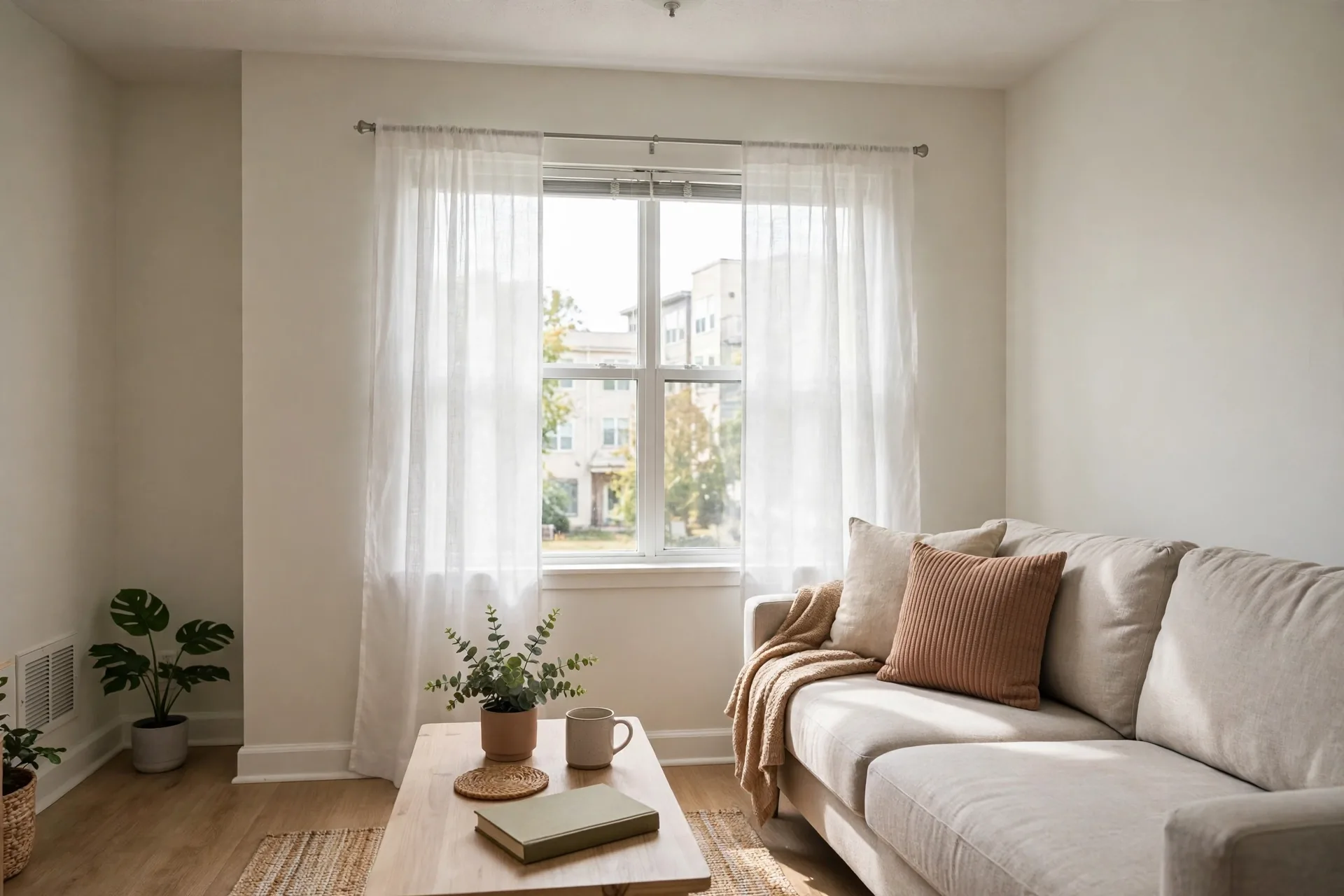
Best Curtains for Renters
Renters need curtains that hang without damage, move to the next home, and wash easily. This guide sorts hardware, weight, and rooms by job.
Renters need curtains that hang without damage, move to the next home, and wash easily, and those three needs change the answer from a homeowner's answer. A panel that needs a drilled rod, a heavy lined set that no tension rod holds, or a trendy print that ages badly all fail the renter test, even if they suit an owned home. This guide sorts no-drill hardware by what it actually holds, rooms by job, and the move-out routine, with six picks grouped by job.
Renter picks by job
Sheer tension-rod panels suit a first rental, blackout rod-pocket panels suit rented bedrooms and sleep, and cafe tiers suit rental kitchens and bathrooms. The picks are grouped by the renter job each one fits, not by brand. Check fabric, heading, hardware fit, opacity, and the care label on the listing for the panel you choose.
As an Amazon Associate, we earn from qualifying purchases.
| Pick | Type | Hardware | Best for |
|---|---|---|---|
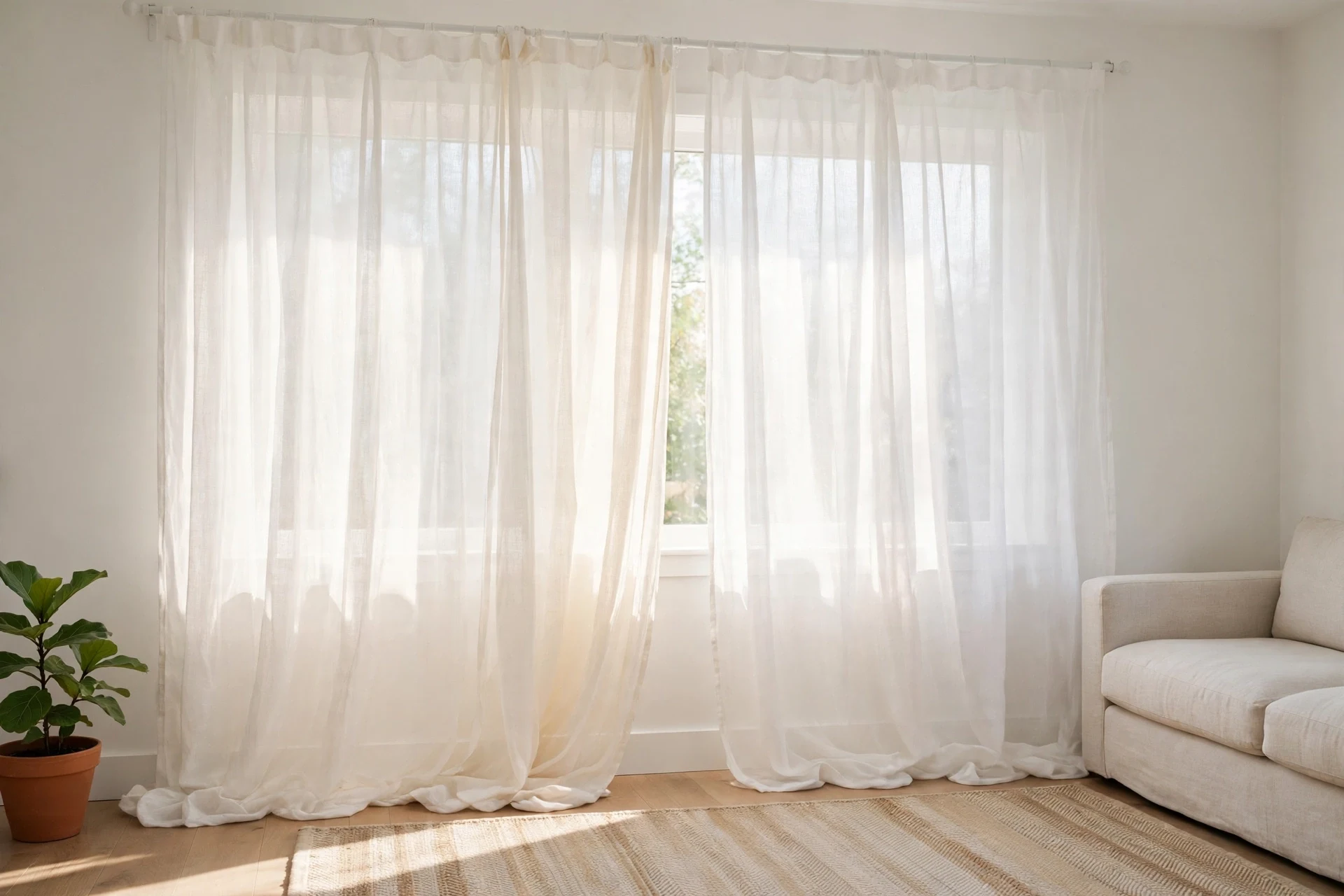
| 1 | Sheer tension-rod panels | Tension rod | Light and daytime privacy in a first rental |
| 2 | Light-filtering grommet panels | Tension rod or existing rod | Living rooms without drilling |
| 3 | Blackout rod-pocket panels | Existing track or rod | Rented bedrooms and sleep |
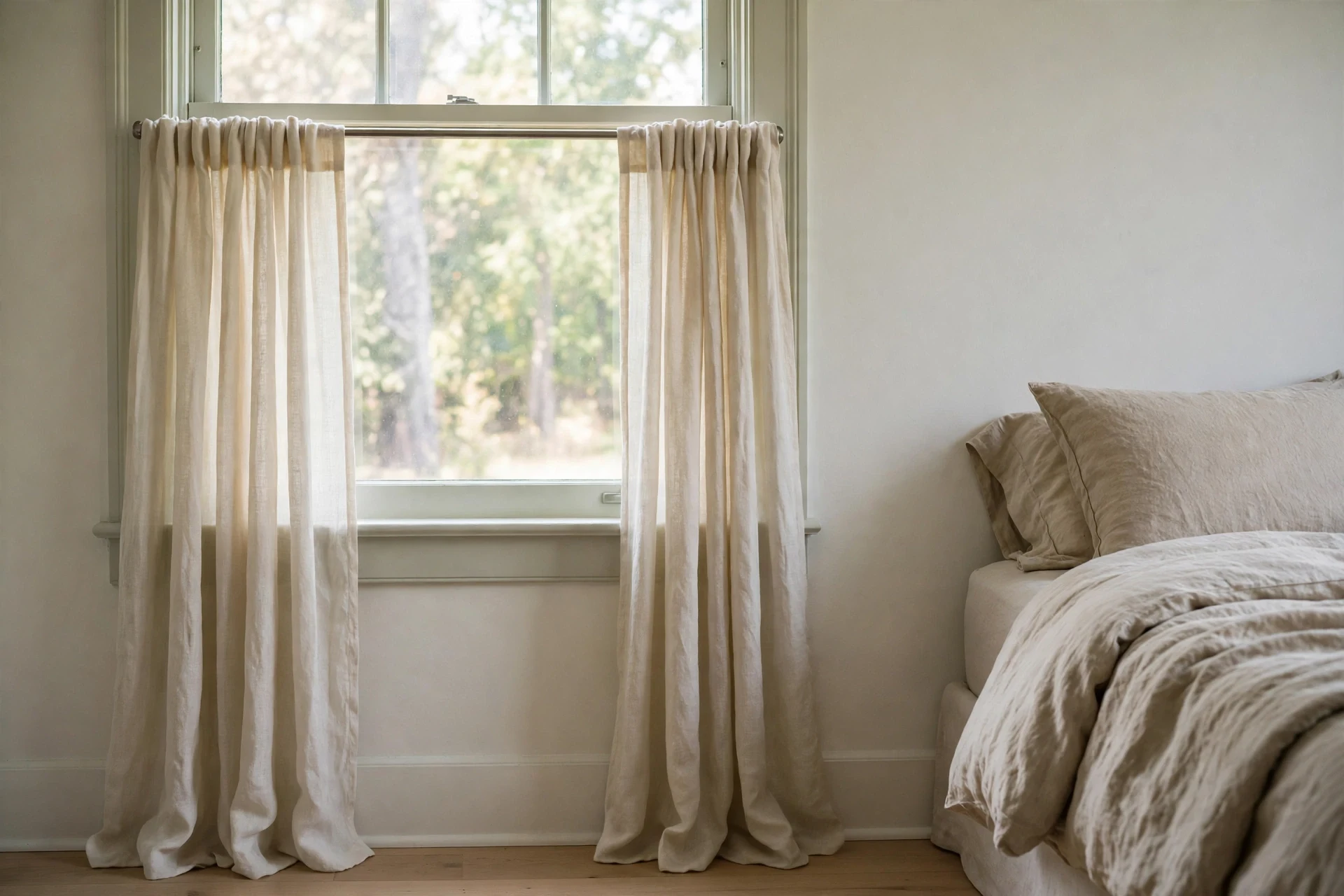
| 4 | Cafe tier panels | Tension rod | Rental kitchens and bathrooms |
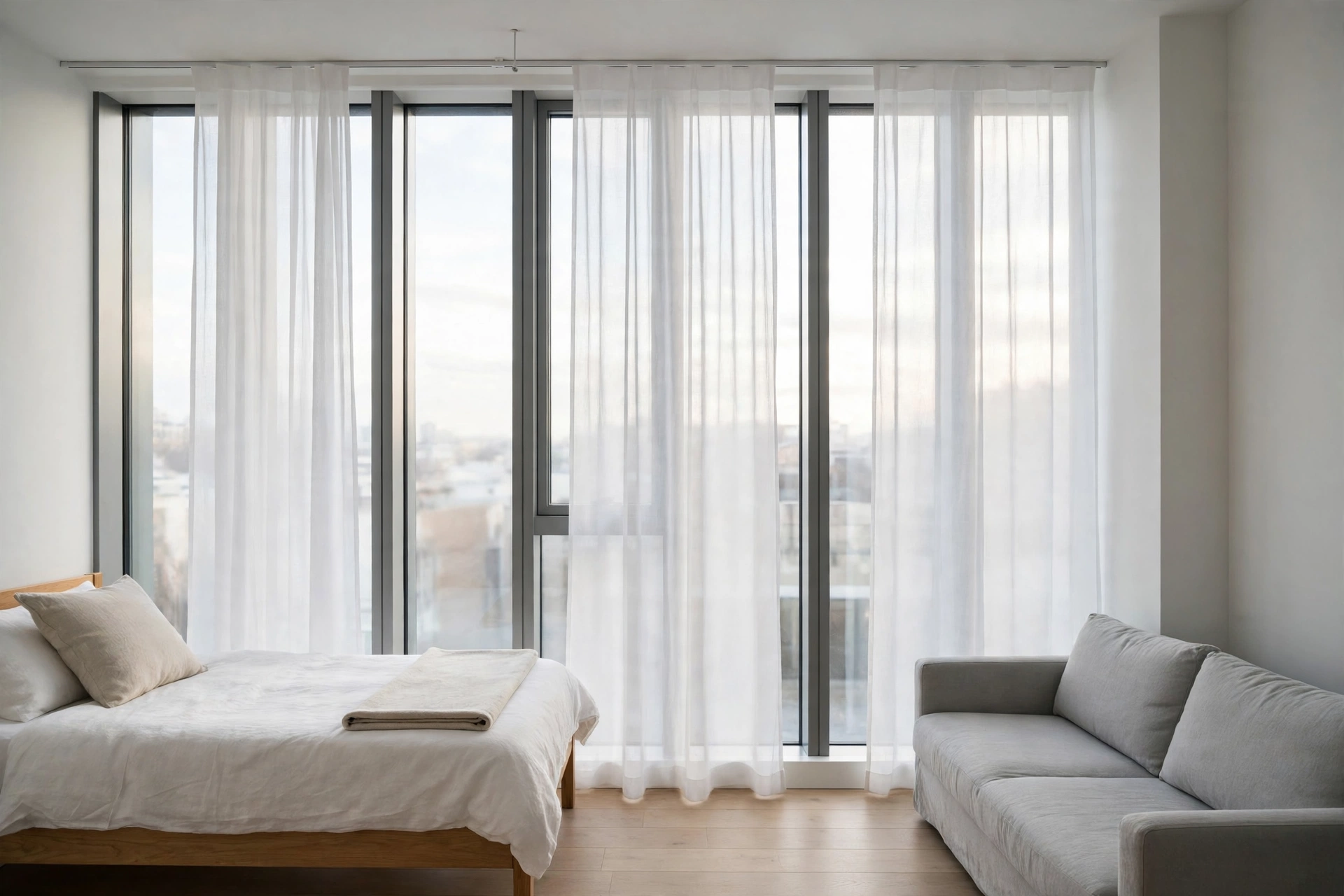
| 5 | Lightweight ceiling-height sheer panels | Tension rod or existing track | Small studios that need height |
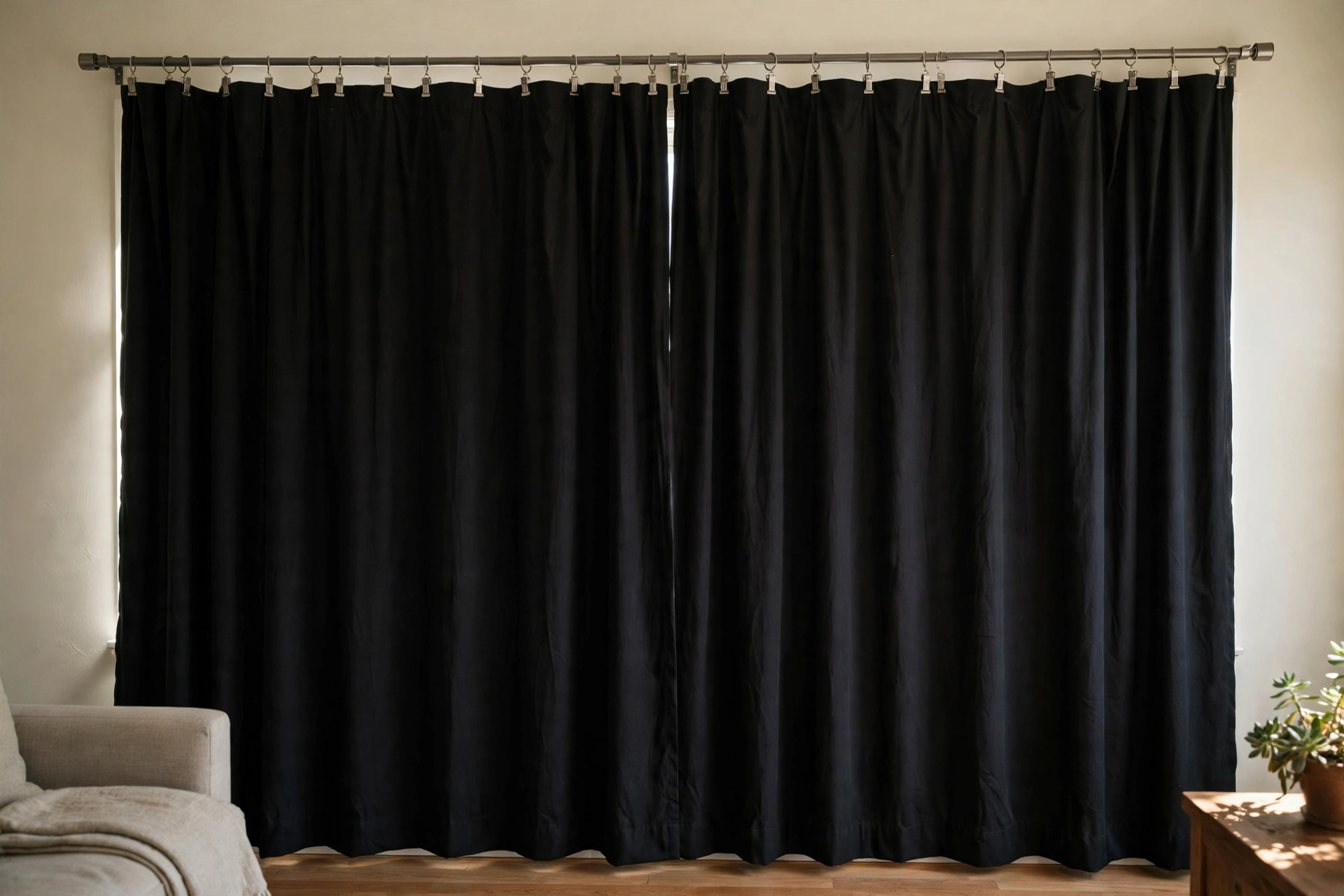
| 6 | Machine-washable blackout panels with clip rings | Clip rings on existing rod | Long stays and moving day |
1. Sheer tension-rod panels: best for light and daytime privacy in a first rental
- Best for: A first rental where the windows are bare, the budget is small, and daylight matters more than darkness.
- Key features: Sheer voile face, rod-pocket or clip-ring heading, light weight, full-length or sill-length fall, daytime privacy.
- Pros: Cheapest way to dress a bare window, hangs in minutes on a tension rod with no holes, keeps the room bright, light enough for any tension rod.
- Cons: No night privacy on a street-facing window, no darkness for sleep, can look thin if hung with too little fullness.

2. Light-filtering grommet panels: best for living rooms without drilling
- Best for: A rented living room where the panels must open and close daily and no drilling is allowed.
- Key features: Light-filtering face, grommet heading, medium weight, full-length fall, smooth slide on a rod.
- Pros: Slides easily for daily use, softens daylight without darkening the room, grommet folds look tidy in a living room.
- Cons: Needs a rod it can slide on, so a narrow tension rod suits only light grommet panels, limited darkness at night, check the weight before trusting a tension rod.
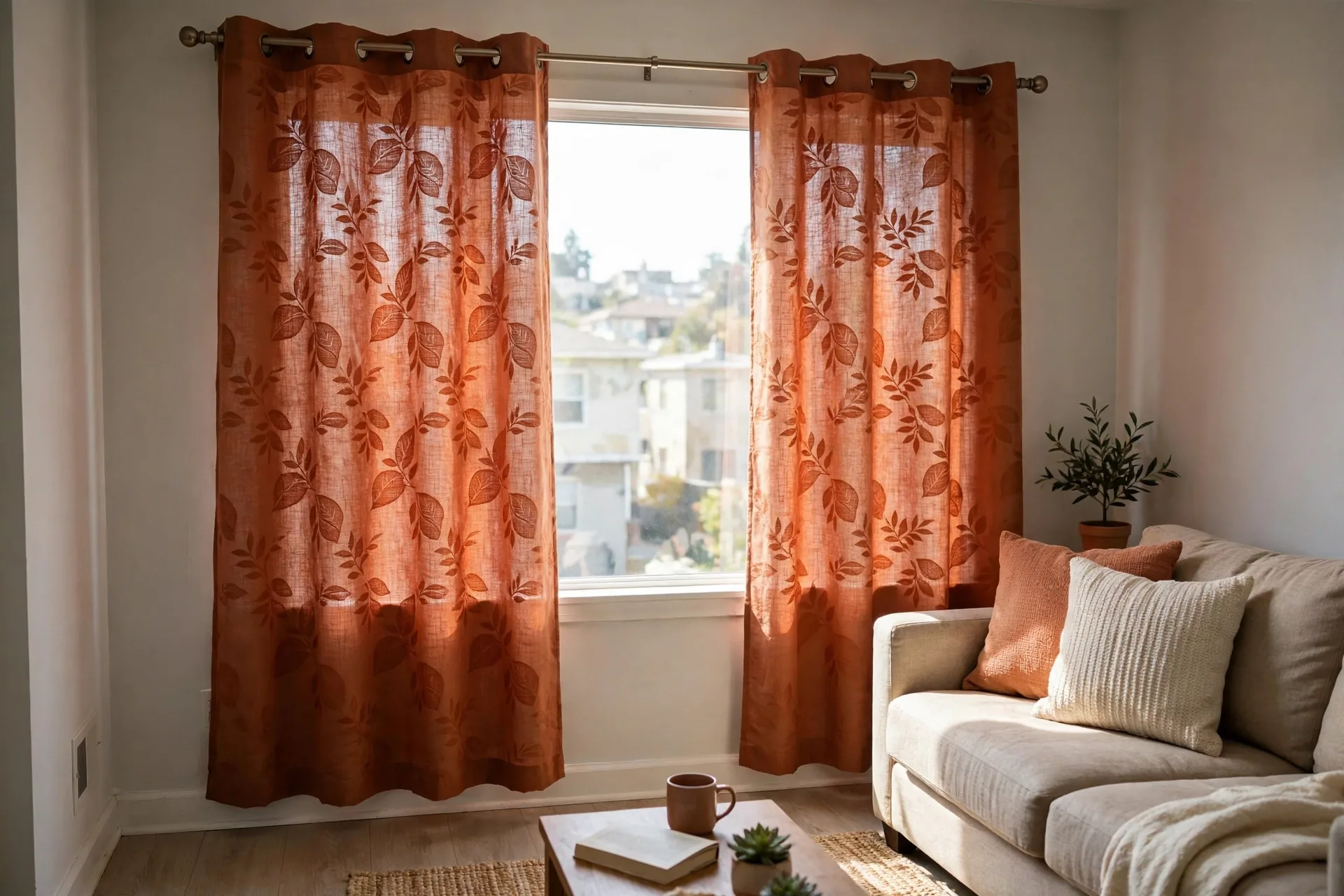
3. Blackout rod-pocket panels: best for rented bedrooms and sleep
- Best for: A rented bedroom where sleep matters and the window already has a track or a rod left by a previous tenant.
- Key features: Blackout face or sewn-in blackout liner, rod-pocket heading, full-length fall, darkness and slowed cold air.
- Pros: Full darkness for sleep without buying new hardware, uses what is already on the wall, slowed cold air helps a cold rented bedroom.
- Cons: Rod pocket grips the rod, so it suits panels that stay drawn rather than daily sliding, heavy lined versions need a strong rod, not a tension rod.
Choose the 84-inch length on the page for a full-length fall.
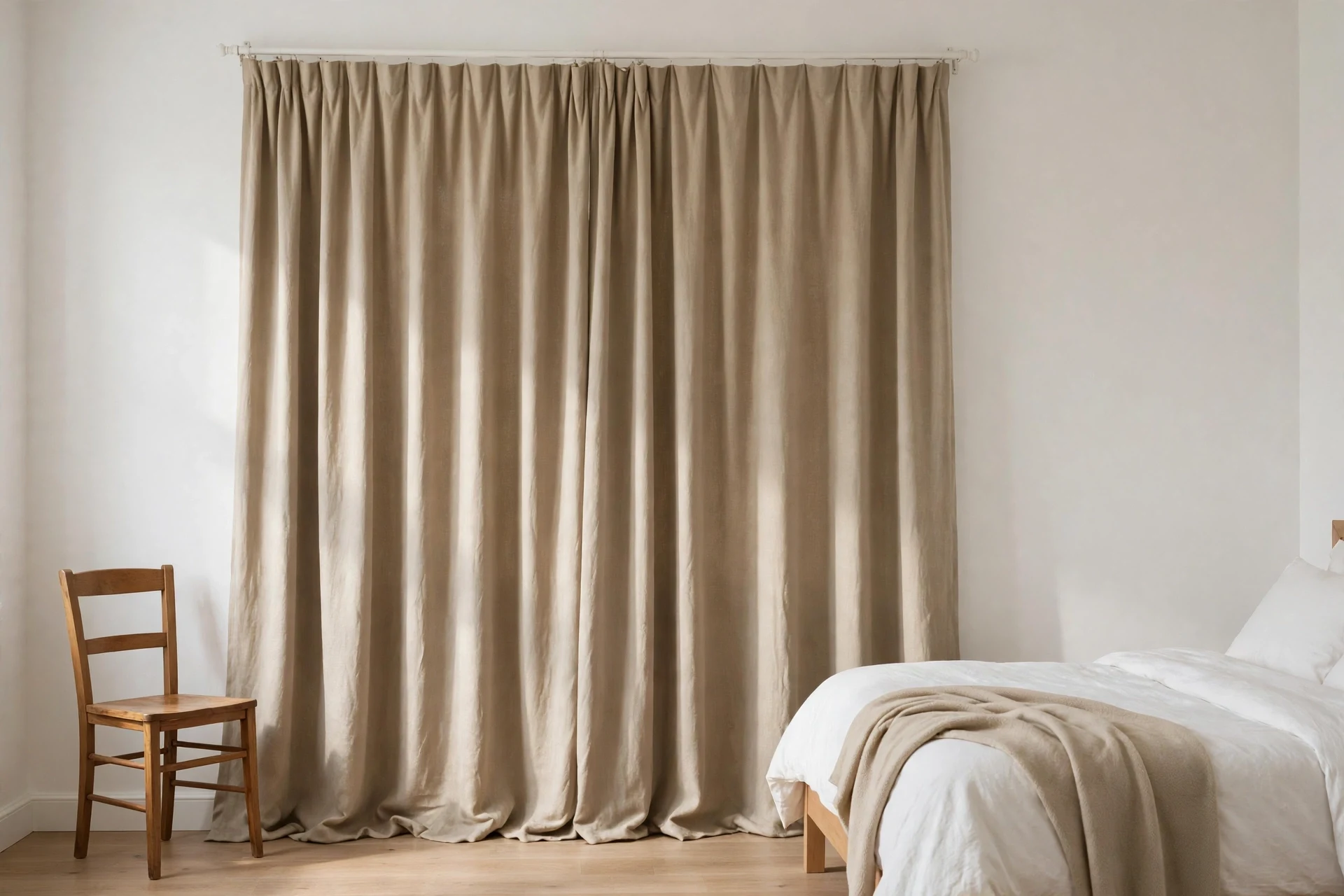
4. Cafe tier panels: best for rental kitchens and bathrooms
- Best for: A rental kitchen or bathroom where privacy is needed at eye level, light is needed above, and drilling is not wanted.
- Key features: Short tier length, rod-pocket heading, light-filtering face, light weight, tension-rod fit.
- Pros: Hangs in minutes on a tension rod with no holes, stays clear of splashes and benches, light enough for any tension rod, easy to wash often.
- Cons: No night privacy alone on a street-facing window, needs a second layer for darkness, short length suits kitchens and bathrooms, not bedrooms.
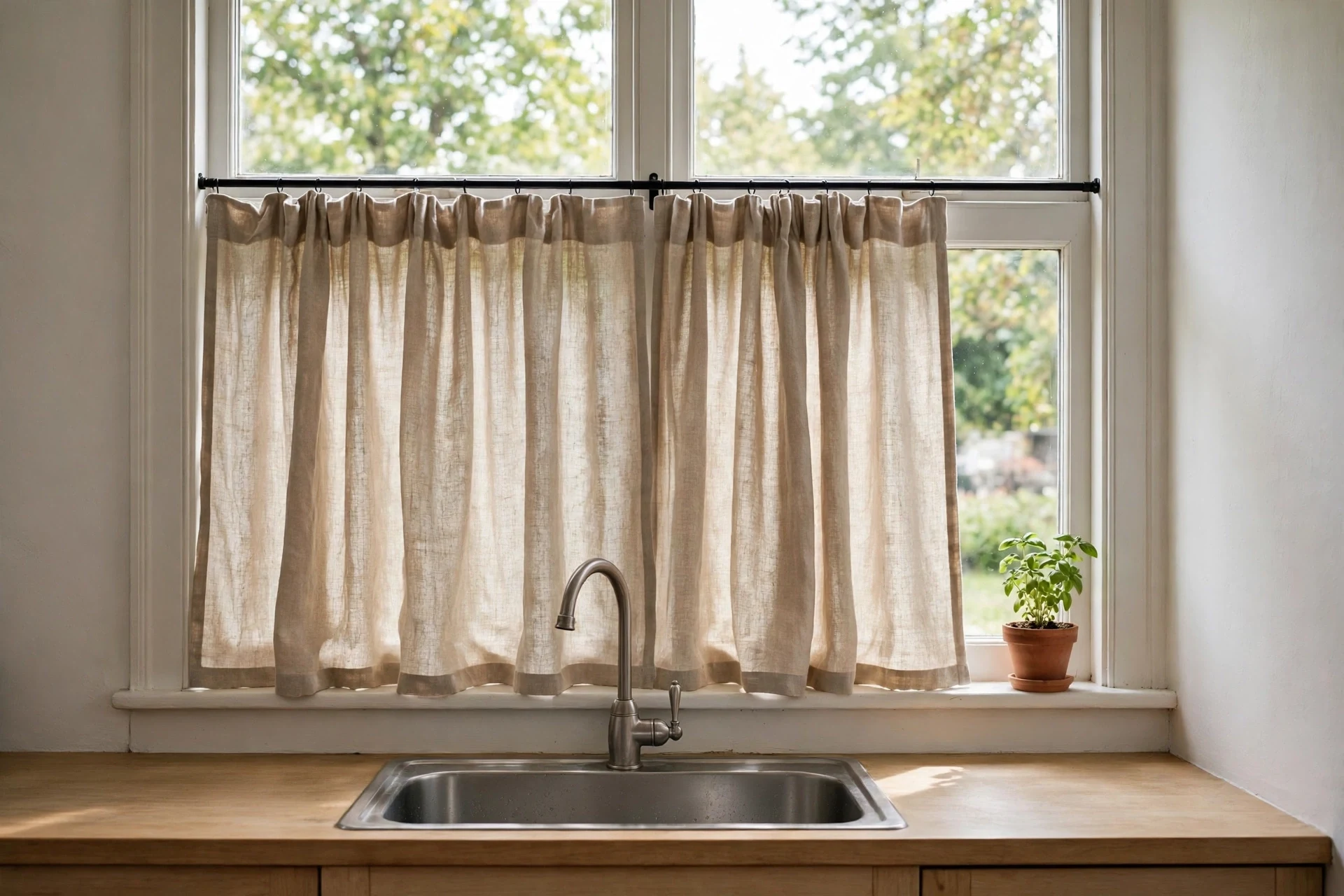
5. Lightweight ceiling-height sheer panels: best for small studios that need height
- Best for: A small studio where the room feels cramped and a full-height sheer makes the ceiling read higher.
- Key features: Lightweight sheer face, full ceiling-to-floor length, rod-pocket or clip-ring heading, light weight.
- Pros: Makes a small room feel taller and lighter, keeps daylight while softening the view, light enough for a tension rod or an existing track.
- Cons: No night privacy alone, needs a second layer for sleep where the studio bed faces the window, floor-length sheers need washing more often near the floor.
Choose a neutral color on the page; the link opens the hot pink version.
6. Machine-washable blackout panels with clip rings: best for long stays and moving day
- Best for: A longer rental where the panels must survive years of washing and then pack cleanly for the next home.
- Key features: Topfinel pinch pleat panels, linen blend (30% linen, 70% polyester), blackout coated lining, 100% blackout, machine washable cold, 2 panels, 40 by 108 inches, hooks and rings included, clip rings one of 4 options, adjustable hang.
- Pros: Washes at home between tenancies, adjustable hooks raise or lower the hang by 1 inch for the next window, blackout suits sleep and shift work, rings slide easily for daily use.
- Cons: Clip rings add small hardware to keep track of at move-out, blackout panels are heavier than sheers, so check the rod weight before hanging, remove clips before washing.
Short stay or long stay: the decision that changes everything
How long you will stay decides the hardware answer before any panel is chosen. A short stay, under about two years, favors tension rods, clip rings, and panels that come down cleanly, because the cost of drilling, patching, and repainting outweighs the benefit of a perfect rod.
A long stay, several years or more, favors proper rods and brackets, because the daily ease of a well-hung panel over years outweighs the one-time patching at move-out.
A long stay also favors investing in a layered system: sheers for day, blackouts for night, hung on rods you will take with you when you move. Small nail holes from proper brackets patch in minutes with filler and a touch of matching paint, and that small job is the price of years of easy sliding.
The middle ground is a rental where the stay is uncertain. There, the smart buy is panels that work on both systems: a light-filtering panel with a grommet or clip-ring heading that hangs on a tension rod now and on a proper rod later, in a plain color that suits the next home as well as this one.
Proper rods are a long-stay bargain, because they move with you when you leave. Each rod means 4 to 6 small holes per window, and patching those with spackle takes about 10 minutes per window at move-out.
Second-hand curtains deserve a check before buying: inspect them for mold, which usually shows brown, black, or yellow, before you bring them home.
No-drill hardware that actually holds
Tension rods are the renter's first tool, and they work well within their limits. A tension rod grips the inside of the window frame by spring pressure, needs no holes, and comes out cleanly at move-out. It suits light sheers, light-filtering panels, and short cafe tiers on narrow to medium frames. Its limits are weight and span: a heavy lined panel or a very wide window can slip, sag, or fall, so test the rod with the panel before trusting it, and choose a wider-diameter tension rod for a wider window. For hanging steps, see How to Hang Curtains.
Adhesive hooks suit light valances and sheers on smooth, clean surfaces, but they suit light fabric only, and they need curing time after sticking before any weight hangs on them. Magnetic rods suit metal window frames only, and their hold depends on the magnet strength and the frame, so test with the panel before trusting them. Clip brackets that grip an existing blind headrail suit panels where a blind already hangs, because they use the blind's own mounting rather than new holes.
Ceiling tension tracks suit room dividers in studios, where a rod across a doorway or an open room divides off a sleeping or working zone without drilling. In every case, the rule is the same: test the hardware with the actual panel, loaded as it will hang, before trusting it overnight, because a rod that holds in an empty test can still slip or fall under a full panel's weight.
No-sew panels are an instant removable option: iron-on hem tape plus clips on a tension rod gives a finished panel with no sewing and no holes.
Weight honesty: heavy panels need a real rod
Weight is where renter curtain plans fail most often, because a heavy panel looks light in a listing photo and feels heavy only when it arrives. Heavy panels include felt-core noise panels, lined blackout panels, and full-height velvet, and none of them belong on a light tension rod or an adhesive hook. A tension rod that suits a sheer will slip under a lined blackout set, and an adhesive hook that suits a valance will peel under a lined panel.
Match the rod to the panel weight before hanging.
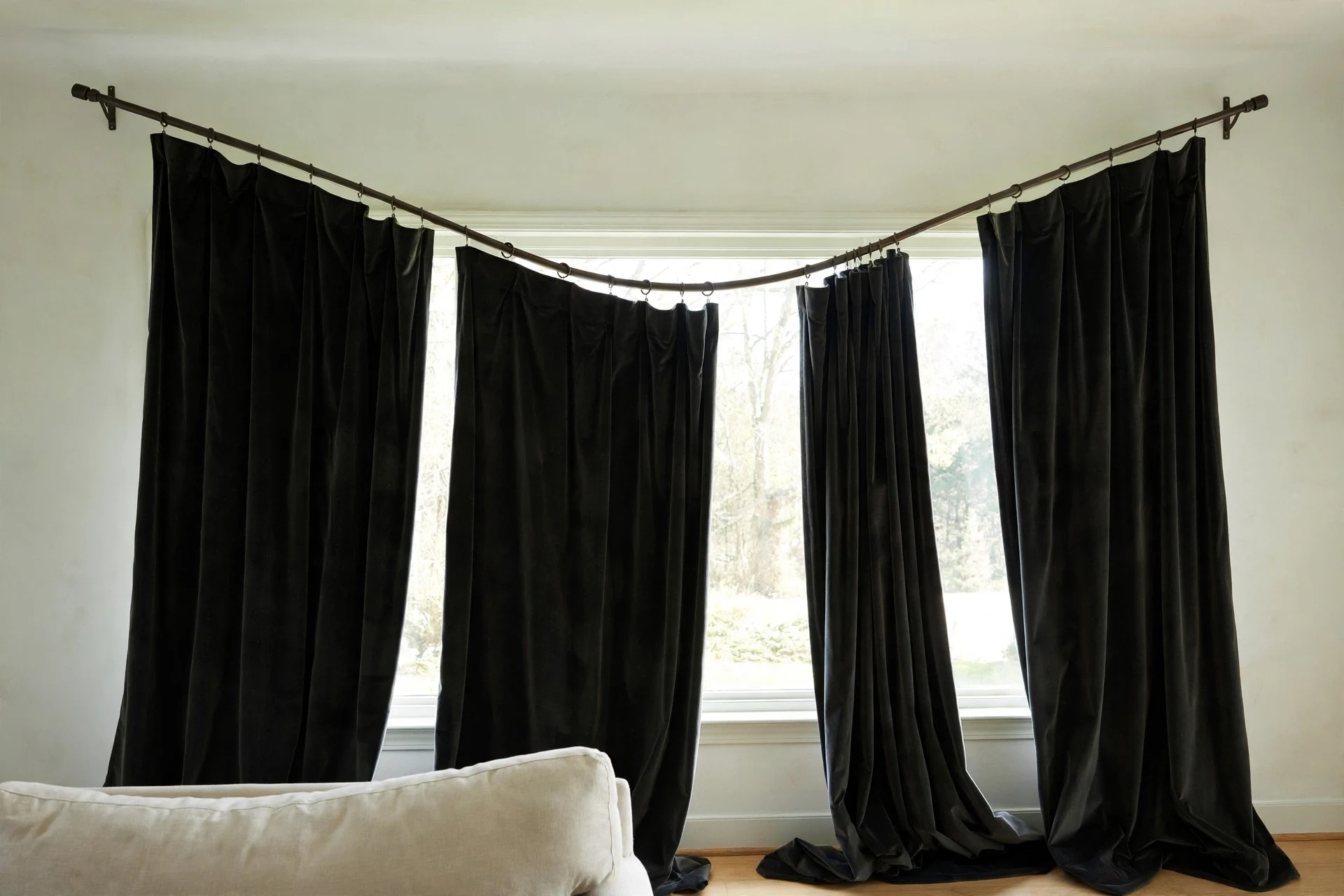
Light sheers and cafe tiers suit tension rods. Light-filtering grommet panels suit a wider-diameter tension rod on a narrow frame, or a proper rod on a wide one. Lined blackout panels, velvet, and any multi-layer panel need a proper rod with firm brackets fixed into solid wall or proper anchors, and a center support on a wide span. Where the lease forbids drilling, the honest answer is a lighter panel, not a heavier panel on weaker hardware: choose a light-filtering panel on a tension rod and add a blackout blind or shade for sleep.
Existing hardware helps most here. Many rentals already have tracks, rods, or blind headrails left by previous tenants, and those mounts were fixed properly once, so a panel that fits them avoids new holes entirely. Check what is already on the wall before buying anything: a track takes a hook heading, a rod takes grommets or rings, and a blind headrail takes clip brackets.
No-drill hardware has weight limits worth checking before you buy: tension rods hold about 5 to 15 lbs depending on diameter, adhesive hooks about 2 to 8 lbs depending on the surface, and magnetic rods about 3 to 10 lbs depending on magnet strength.
Light, privacy, and space: the three renter trade-offs
Every renter curtain decision trades light, privacy, and space against each other, and no single panel gives all three fully. Sheers give light and daytime privacy and keep a small room feeling open, but give no night privacy and no darkness. Blackouts give privacy and darkness, but darken a small room and make it feel smaller if hung in a dark color. Light-filtering panels sit in the middle: soft daylight, daytime privacy, moderate space cost, and no night privacy alone.
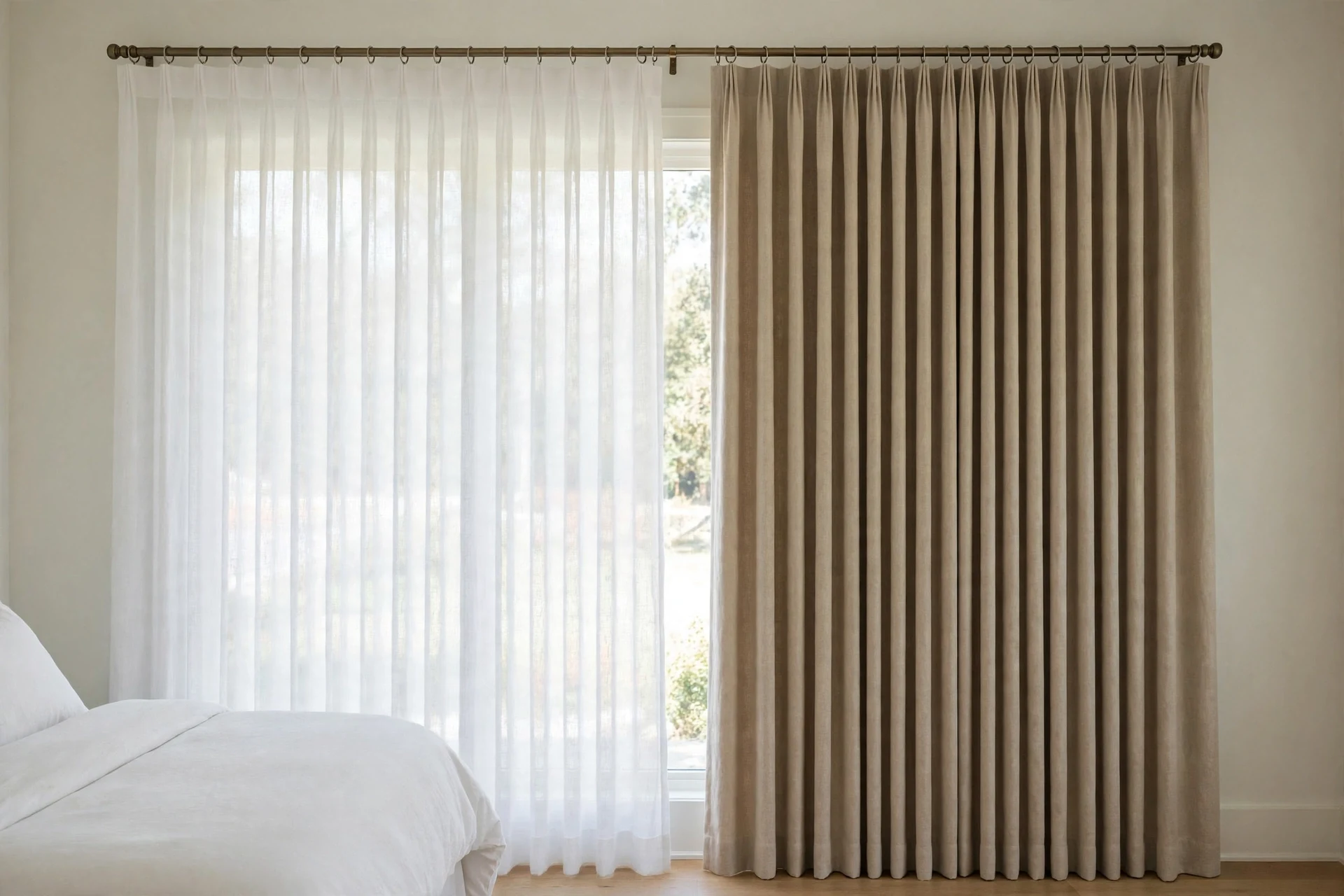
Small rooms need one more trade-off: visual weight. A dark, heavy panel in a small rented room dominates the wall and makes the room feel smaller, while a light panel in a color close to the wall color makes the room feel larger. For length choices across rooms, see Curtain Sizes.
Trendy patterns are a space trade-off too, in time rather than in inches. A bold teal or a busy trellis that looks fresh on day one can date fast and dictate the whole room's colors, while a plain sheer and a plain blackout in white, cream, or soft gray suit every room the panels move to next. Renters move, and plain panels move with them, while a bold pattern bought for one room's walls may suit no room in the next home.
Vertical stripes add a height illusion in small rentals: narrow to medium stripes at moderate contrast, paired with high mounting, draw the eye upward without shouting.
Rooms: bedroom sleep, living light, kitchen and bathroom short, studio divider
Bedrooms in rentals need sleep first. A blackout panel on an existing track or rod gives darkness without new holes, and a sheer behind it gives daytime privacy without darkness. Where the bedroom window faces a street, add the noise-softening benefit of a heavier panel only where the hardware holds it, and keep cords out of reach where children sleep. For room-wide bedroom advice, see Best Curtains for Bedroom.

Living rooms in rentals need light first. A light-filtering grommet panel on a tension rod or an existing rod gives soft daylight and daytime privacy, slides easily for daily use, and suits most living room styles. For room-wide living room advice, see Best Curtains for Living Room.
Kitchens and bathrooms in rentals need short panels. A cafe tier on a tension rod gives eye-level privacy and light above, stays clear of splashes and benches, and washes often without fuss. Choose a quick-drying fabric for a bathroom, and a mid-tone or small pattern for a kitchen sink window. A full-length panel in a rental kitchen gets sat on, splashed, and pulled, while a short panel avoids all three.
Studios and open rooms need dividers. A ceiling tension track or a rod across a doorway with light panels divides off a sleeping zone or a working zone without drilling, and a lightweight ceiling-height sheer keeps the divided room feeling open rather than boxed in. A heavy divider panel suits a work zone that needs quiet, but it needs a track or a proper rod, and a light sheer suits a sleeping zone that needs light.
Warmth without new curtains is possible on a budget: a rolled towel on top of the rail works as a makeshift valance closing the top gap, an extra fleece layer pinned behind the curtain adds warmth, and a DIY window insulator kit costs less than double glazing while cutting drafts.
Freestanding rod systems and ceiling tension tracks work as studio dividers with no wall mounting at all, which suits a rental where even adhesive hooks are unwelcome.
Asking the landlord, and what already hangs there
Leases vary, and the lease is the document that decides what is allowed, so read it before drilling anything. Many leases allow small changes such as hanging curtains with proper brackets, on the condition that holes are filled at move-out, while some leases forbid any wall anchors at all. Where the lease is silent or unclear, ask in writing before drilling, and keep the answer, because a written yes protects the deposit better than a remembered conversation.
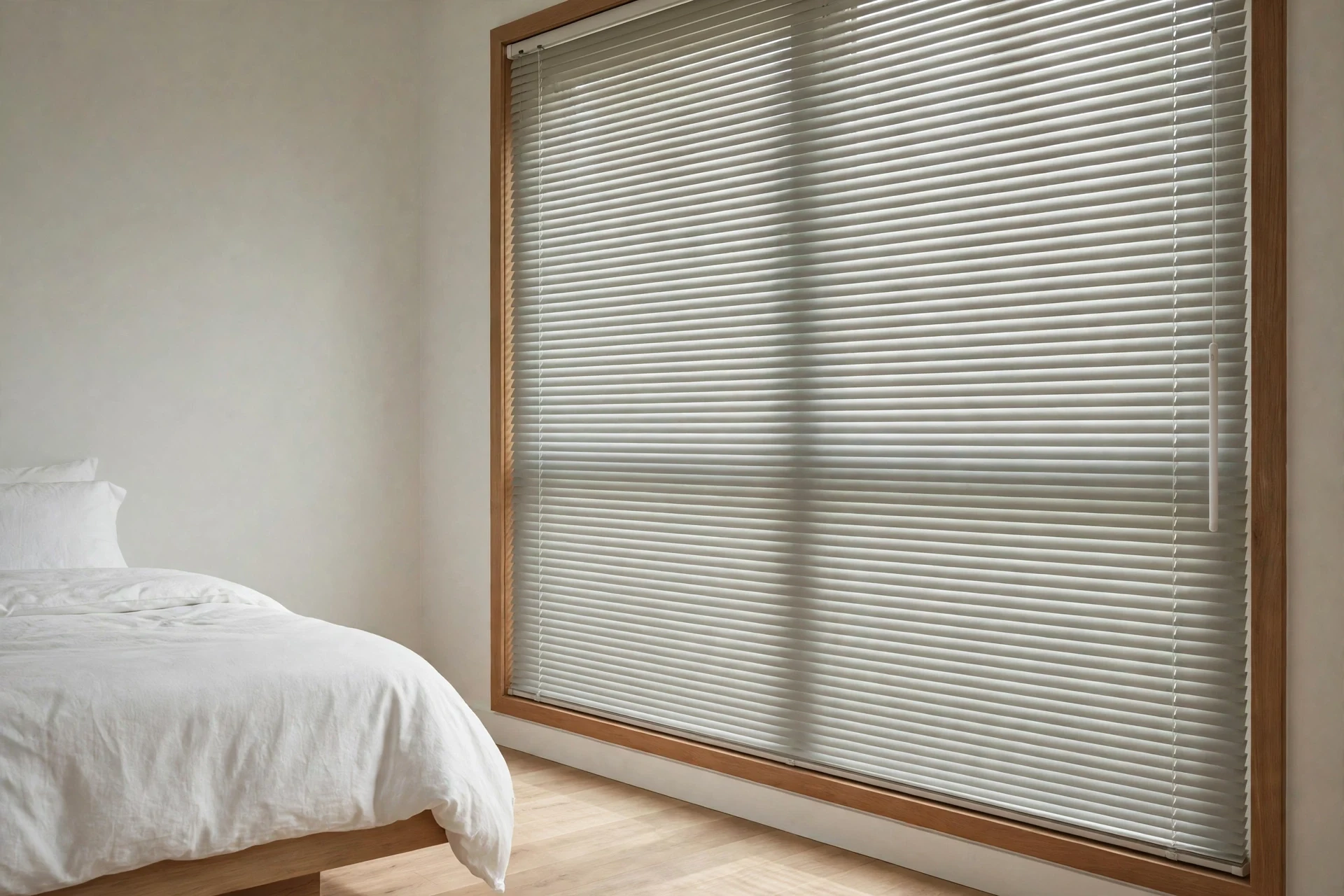
What already hangs there matters as much as the lease. Many rentals come with blinds, vertical blinds, or tracks left by previous tenants, and those should be kept as the base layer where they work, because they already solve part of the job and removing them creates a storage problem. Layer sheers or blackouts over existing blinds rather than replacing them, and keep the blinds' cords safe: cordless blinds suit homes with small children best, and a cord cleat keeps a corded blind's cords out of reach where children use the room.
Warmth is a landlord conversation worth having too. A rented home with single glazing or leaky frames loses heat at the windows, and floor-length lined panels slow that loss noticeably, while sill-length panels leave the wall below the sill cold. A landlord who will not reglaze may still agree to sealing cold-air leaks, and a tenant who hangs floor-length panels over a leaky window gets a warmer room either way.
Where curtains were present at move-in and are listed in the tenancy agreement, the landlord maintains them and repairs damage from fair wear and tear. Whether a landlord must agree to a minor change like installing curtains depends on the place and the lease. Check your tenancy agreement and ask in writing, because rules differ by place and by lease.
Moving out: removal, patching, and packing
Moving out starts with removal in the reverse order of hanging. Take panels down first, then rods, then brackets, then hooks, and clean each piece as it comes down, because a panel packed dirty stays dirty. Tension rods compress out of the frame with a twist and come out cleanly, adhesive hooks warm gently and stretch slowly off the wall rather than ripping, magnetic rods lift off the frame, and clip brackets unclip from the blind headrail.
Patching is a small job done well.

Fill each bracket hole with filler, let it dry, sand it smooth, and touch it with matching paint, and a small hole disappears entirely. Photograph each wall after patching, so the move-out condition is documented. A tension-rod home needs no patching at all, which is the tension rod's best argument for a short stay.
Packing protects the next home's curtains. Fold panels cleanly, keep each panel's rings, clips, and hooks in a labeled bag with that panel, and pack rods in their longest length rather than forcing them into a short box. Wash panels before packing where the label allows, because a panel packed clean starts clean in the next home, and a panel packed with kitchen grease sets its stains during storage.
Adhesive strips come off cleanly if you warm the adhesive with a hair dryer first and stretch the strip slowly along the surface to release it, rather than pulling it straight out. A fast, cold pull is what takes paint with it.
Mistakes renters make with curtains
The most common renter mistake is hanging a heavy panel on weak hardware. A lined blackout set on a light tension rod slips, sags, or falls, and the damage costs more than the proper rod would have. Match the rod to the panel weight, and choose a lighter panel where drilling is forbidden, rather than forcing a heavy panel onto hardware that cannot hold it. The second mistake is drilling before reading the lease, which risks the deposit over a rod that a tension rod could have held.
The third mistake is buying a bold pattern for one room that suits no room in the next home. Plain sheers and plain blackouts move with the tenant, while a bold print bought for one wall's color may clash everywhere next. The fourth mistake is dark, heavy panels in a small room, which make the room feel smaller and darker, where light panels and a high, wide hang would have opened it up.
The fifth mistake is forgetting night privacy. A sheer-only rental looks bright by day and see-through by night on a street-facing window, and the first evening reveals the problem. Plan the night layer before buying, not after: a blind, a shade, or a blackout panel that draws after dark, layered over the sheer.
Frequently asked questions about curtains for renters
Most renter questions come down to hardware, weight, and the move-out. Get those three right and the rest follows.
Can renters hang curtains without drilling?
Yes. Tension rods grip the inside of the window frame by spring pressure, adhesive hooks suit light valances and sheers on smooth surfaces, magnetic rods suit metal frames, and clip brackets grip an existing blind headrail. All four come out cleanly at move-out.
What is the best curtain for a rental bedroom?
A blackout panel on an existing track or rod gives darkness for sleep without new holes, layered over a sheer for daytime privacy. Where no track or rod exists, a light-filtering panel on a tension rod plus a blackout blind or shade for night gives the same result without drilling.
Do tension rods hold blackout curtains?
A tension rod holds light blackout panels on a narrow frame, but a heavy lined blackout set can slip, sag, or fall on a light tension rod.
Should renters keep the blinds already in the rental?
Yes, where they work. Existing blinds already solve part of the privacy and light job, and layering sheers or blackouts over them beats replacing them. Photograph broken or filthy blinds at move-in and tell the landlord before replacing anything, because a broken blind found at move-in is the landlord's repair, not the tenant's.
What color curtains suit a rental best?
Plain colors in white, cream, or soft gray suit a rental best, because they suit every room the panels move to next and make small rooms feel larger. A bold pattern bought for one room's walls may clash everywhere in the next home.
How do you hang curtains high and wide in a rental?
Mount the rod high above the frame and wide past it, so the window reads larger and the open panels stack on the wall rather than on the glass. A tension rod cannot mount past the frame, so it suits an inside mount, while a proper rod or an existing track gives the high and wide hang. In a small room, the high and wide hang makes the room feel taller and larger.
Can you take curtains with you when you move?
Yes, and renters should plan for it. Choose plain panels in standard lengths that suit many windows, pack each panel's rings, clips, and hooks in a labeled bag with that panel, wash panels before packing where the label allows, and note each panel's window and heading on the bag.
How do you patch curtain rod holes at move-out?
Fill each hole with filler, let it dry, sand it smooth, and touch it with matching paint, and a small hole disappears entirely. A tension-rod home needs no patching at all, which is the tension rod's best argument for a short stay.
Are curtains or blinds better for renters?
Both suit renters, and they suit different jobs. Blinds give precise light control and a compact fit, while curtains give softness, warmth, and a finished look. Layering both gives the best result: blinds for precise control, curtains for softness and warmth.
Do curtains help keep a rented home warm?
Yes, modestly. Floor-length lined panels slow cold-air leaks and heat loss at a window noticeably, while sill-length panels leave the wall below the sill cold. Curtains slow heat loss, they do not insulate a window the way glazing does. For the full warmth job, see Best Thermal Insulated Curtains.
For other curtain types, see Best Window Curtains.
This guide is research-based curation: we compared maker specifications, published reviews, and current prices. Read how we choose.