 Best

How to Wash Curtains
Start with the care label, then match the wash to the fabric. This guide covers machine washing, hand washing, steaming, and dry cleaning, plus drying, wrinkles, and how often to wash.
Most curtains can be washed at home if you start with the care label and match the method to the fabric. Sturdy unlined cotton and polyester curtains usually take a gentle machine wash, delicate fabrics do better by hand or with steam, and lined, coated, or heavily embellished curtains are often safest at the dry cleaner. This guide walks through the routine in order: read the label, dust and spot clean, wash by the right method, dry and reshape, and set a washing rhythm that fits each room. For choosing curtain types in the first place, Best Window Curtains sets out the main types side by side.
Read the Care Label Before Anything Else
The care label decides the method, and it beats any general advice in this guide. Look for it sewn into a side hem or near the heading, and read the washing, drying, and ironing symbols together, not just the first one. A tub symbol with a hand inside means hand wash only, a crossed-out tub means do not wash at home, and a circle means professional cleaning, sometimes with a letter inside that tells the cleaner which process and solvent to use. The label also states the highest safe water temperature and whether tumble drying or ironing is allowed at all. These symbols follow care symbols explained under the international ISO 3758 system, so the same tub, circle, and square marks mean the same care steps wherever they appear.
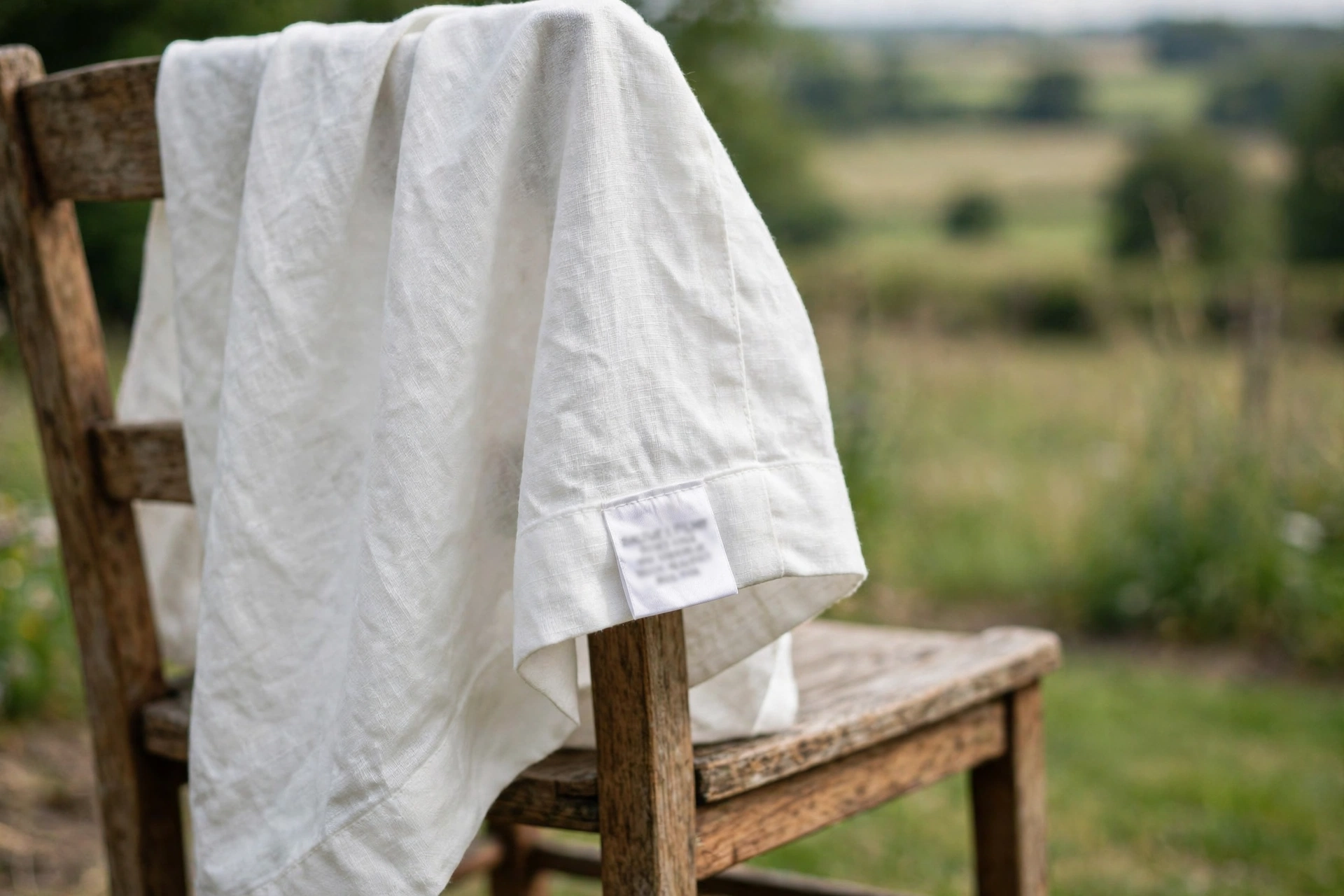
If the label is missing, faded, or cut off, treat the curtains as delicate until you know more. Unlined plain curtains in a sturdy fabric are the best candidates for a gentle home wash, while anything lined, coated, pleated into a fixed shape, or trimmed with beads, tassels, or embroidery should go to a cleaner who works with drapery. Guessing wrong on a lined or coated curtain is how a wash ends with puckered seams or a cracked backing, and that damage does not wash out.
Two label details are easy to miss. First, the face fabric and the lining can carry different care rules, and the stricter rule wins. Second, a label describes the curtain as it left the maker, so a curtain lined, shortened, or re-trimmed at home no longer matches its label exactly, and the safe move is to treat the altered curtain by its most delicate part.
Washing by Fabric at a Glance
Use the care label first, and use this table as the quick lookup for the fabric in front of you. The symbols on the label follow care symbols explained under the international ISO 3758 system, so check the tub, drying, and ironing marks for the panel you own before following any row below.
| Fabric | Method | Water and heat | Drying |
|---|---|---|---|
| Sheer | Machine on a gentle cycle, after a pre-soak in cool water with diluted detergent, drained before washing, or hand wash | Cool water, gentle cycle, low spin | Hang to dry away from sun and direct heat, rehang slightly damp if the label allows |
| Cotton | Machine wash on a gentle cycle, alone or with similar light items | Cool water, gentle cycle, low spin, mild liquid detergent | Hang slightly damp, or lowest dryer heat only if the label allows, taken out while still slightly damp |
| Linen | Hand wash in cool water, lifting and lowering without scrubbing, twisting, or wringing | Cool water only, no heat | Hang slightly damp away from sun and direct heat, iron while slightly damp only if the label allows |
| Velvet | Hand wash or steam if not marked dry clean only; some polyester velvet machine-washes on a gentle cycle. Dry clean if the label says so. | Cool water for hand washing, steam lightly against the pile, no heat pressed into the pile | Hang to dry away from direct heat, do not wring |
| Silk, lined, and embellished | Dry clean at a cleaner experienced with drapery | No home wash heat, keep heat off coatings and linings | Return from the cleaner pressed, rehang and check the fit |
| Polyester | Machine wash on a gentle cycle, alone or with similar light items | Cool water, gentle cycle, low spin, mild liquid detergent | Hang slightly damp, or lowest dryer heat only if the label allows, taken out while still slightly damp |
Dust and Vacuum Between Washes to Delay a Full Wash
Regular dusting keeps curtains cleaner for longer, and it is the cheapest part of curtain care. Curtains hang in moving air all day, so dust settles into folds and along hems.
Use an upholstery brush attachment on a low setting, and work from the top down so loosened dust falls onto fabric you have not cleaned yet. Hold the fabric lightly with one hand so the nozzle does not pull or stretch it, and pay attention to the top folds near the heading and the hem, where dust collects.
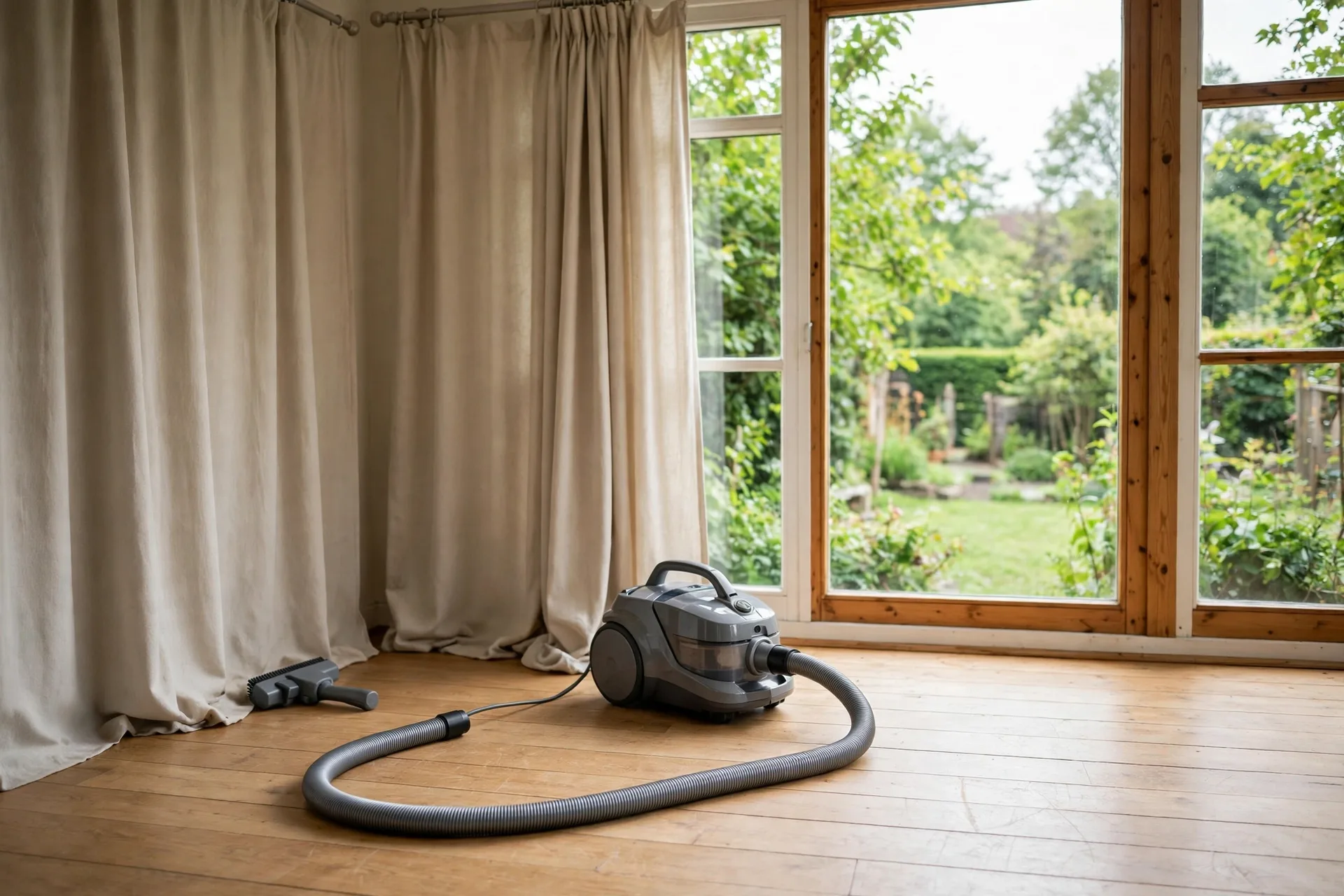
Vacuuming also tells you when a full wash is due. If dust still shows after vacuuming, if the fabric smells stale after airing, or if light-colored panels look gray in the folds, the curtains have moved past dusting and need washing.
For pet hair and quick dusting between vacuuming, a lint roller or a microfiber cloth along the folds lifts hair and fine dust without a full wash. For a light panel that gets sucked into the nozzle, stretch a piece of hosiery over the wand: air still passes, but the fabric stays out of the nozzle.
Get Curtains Ready for the Wash: Hooks, Folds, and Spot Checks
Good preparation prevents most wash-day damage, and it starts before the curtains leave the rod. Take off every hook, ring, clip, and pin, and let out any heading tape cords so the heading lies flat. Metal fittings can snag fabric and dent a drum, plastic fittings can crack, and a bunched heading washes unevenly and dries with set creases. How to Hang Curtains covers mounting positions if brackets or hooks need attention while the curtains are down.
Measure each panel before washing, length and width, and write the numbers down. Natural fibers can shrink, and a lining can shrink at a different rate from the face fabric, so a before-and-after measure is the only way to know whether a wash changed the fit.
Then check for stains and weak spots. Treat spots early, while they are fresh, by blotting, never rubbing, with a clean cloth and a little mild detergent mixed in cool water. Test any cleaning mix on a hidden corner first, such as the reverse of a hem, and wait to see whether color shifts before treating the visible fabric. Leave strong bleach out unless the label clearly allows it.
Test every method below on a hidden corner first, and stop if color shifts. For grease, blot with a little mild detergent in cool water, working from the edge of the mark inward, then blot again with clean cool water, rather than rubbing the mark wider. For odor, sprinkle baking soda over the dry fabric, leave it to sit, then vacuum it off, or mist lightly with plain water and let the panel air before it goes back up. For ink, dab, never rub, with rubbing alcohol on a clean cloth, only if the label allows it, and only after the hidden-corner test shows no color shift. If a velvet spot test shifts color, stop and take the panel to a drapery cleaner rather than treating the visible fabric. That fallback protects the pile and the color when a home mix is not safe for that panel.
Machine Washing Curtains Without Shrinking or Creasing Them
Machine washing suits sturdy unlined curtains whose label allows it, and the gentle settings matter more than the detergent brand. Wash curtains on their own, or with a few similar light items, and keep the drum no more than half full so large panels have room to move. Fold each panel loosely before loading, and use a mesh laundry bag for light panels that could snag.
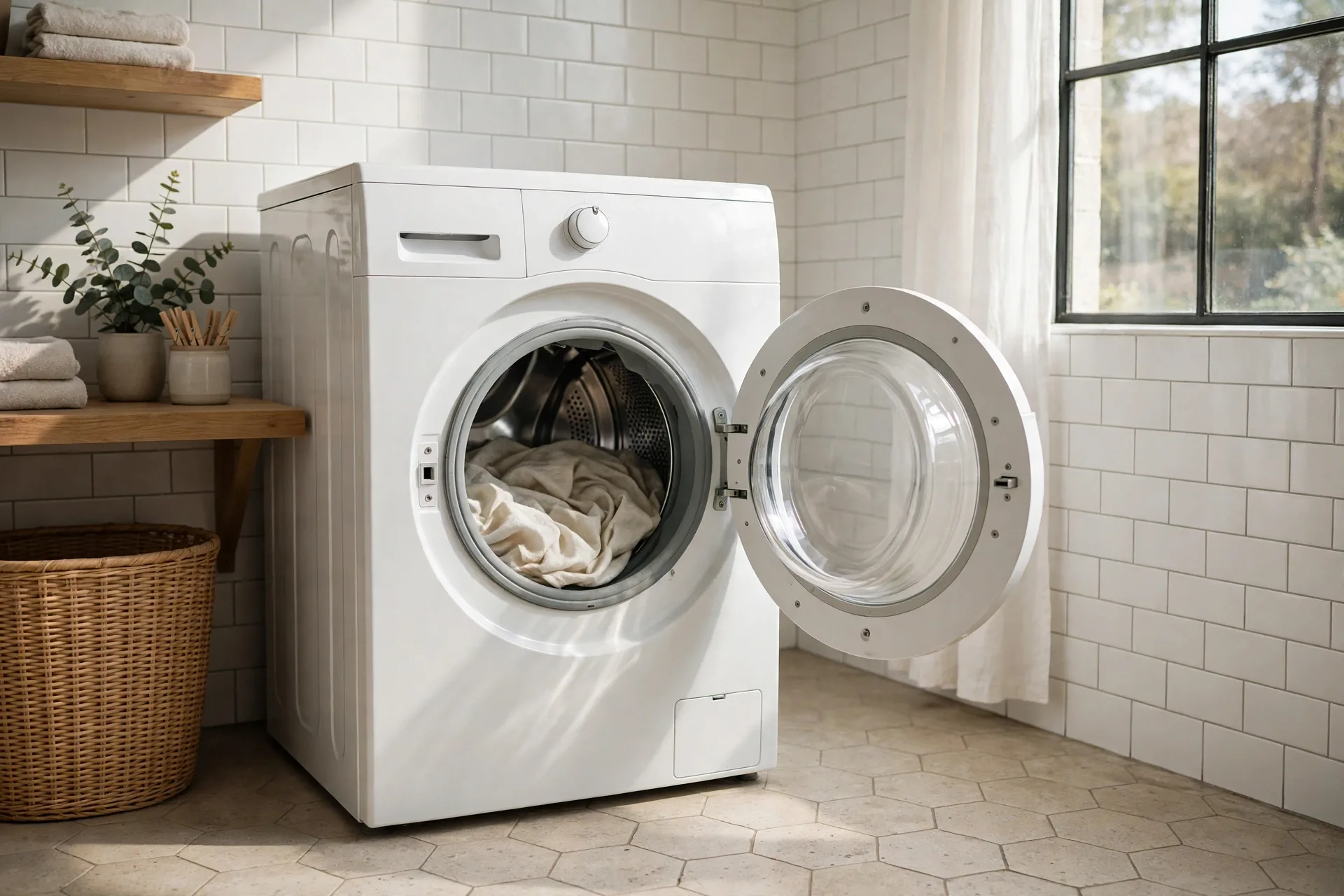
Use cool water, a gentle or delicates cycle, a low spin, and a mild liquid detergent, and let the label set the exact temperature where it gives one. Cool water protects color and limits shrinkage, a gentle cycle reduces pulling on seams and headings, and a low spin leaves less creasing and less strain on heading tape. For sheer panels, the same gentle settings apply. Best Sheer Curtains covers sheer types and light control in more depth.
Two machine habits cause most trouble. The first is washing a pair together with heavy items such as towels or jeans, which drag and twist lighter panels. The second is choosing a hot or fast cycle to get them really clean, which trades a little extra cleaning for shrinkage, fading, and set wrinkles.
Skip fabric softener, since it can leave residue, especially on synthetic fabrics. Take panels out promptly after washing, so they do not sit creased in the drum. Polyester follows the same gentle, cool, low-spin machine routine, unless its label says otherwise. If panels are too big for the machine to move freely, use a larger machine, or steam or dry clean them instead.
Hand Washing Curtains in a Tub or Basin
Hand washing is the middle path between a machine wash and the dry cleaner, and it suits delicate fabrics and panels whose label says hand wash only. Fill it with cool water and a small amount of mild detergent, stir until the detergent dissolves, then lower the panel in and let it soak briefly. Gently move the fabric through the water by hand, lifting and lowering it, without scrubbing, twisting, or wringing, which strains seams and sets wrinkles.
Rinse in clean cool water, changing the water until it runs clear and no slippery detergent feel remains. Press water out against the side of the tub or in a rolled clean towel, rather than wringing it out. Wringing twists headings out of shape.
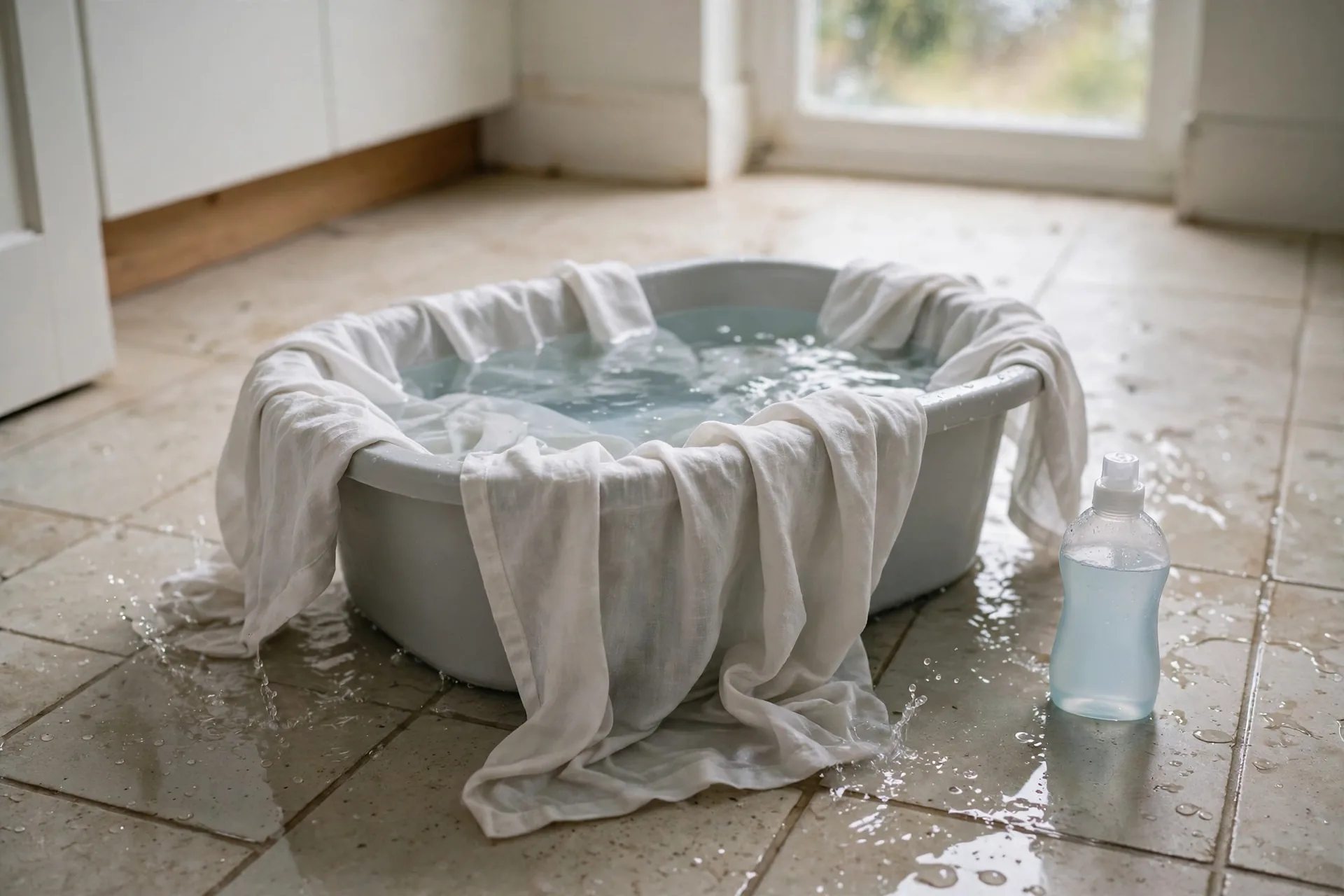
Linen is one fabric where hand washing earns its care, since heat is its main shrinkage risk and a cool hand wash keeps temperature fully in your control. Best Linen Curtains covers linen texture, blends, and room use in more depth, while this guide stays with the washing routine itself. Velvet pile also needs a gentle hand, since rubbing flattens pile and heat risks the finish.
For velvet, hand wash or steam a velvet panel if it is not marked dry clean only, and dry clean it if the label says so. For velvet in full, see Best Velvet Curtains.
Steaming Curtains While They Stay on the Rod
Steaming refreshes curtains without taking them down, and it is the best option between full washes. A handheld steamer, held a few inches from the fabric and moved slowly down each panel, relaxes wrinkles, lifts dust, and freshens the smell of a room. Check the label first, since some coated or delicate fabrics do not take steam, and test a hidden corner before steaming a full panel.
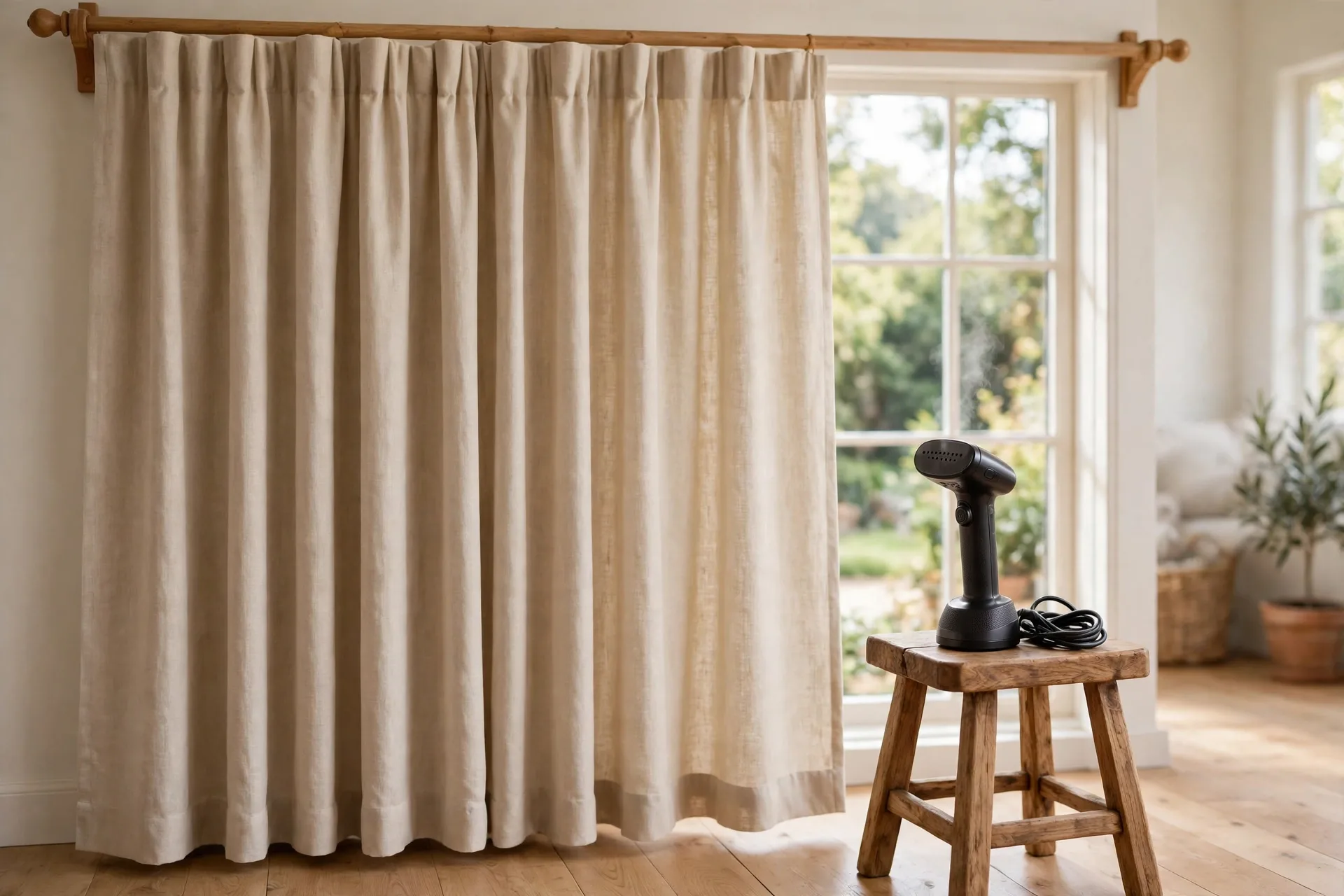
Steaming suits sheers and light panels well, and it suits velvet pile when used lightly against the direction of the pile to lift it, rather than pressed flat into it. Steam does not replace washing for stained or greasy curtains, since it loosens dirt without rinsing it away.
Two cautions keep steaming safe. First, keep heat off coated backings and thermal linings, since heat can crack or melt a coating and the damage is permanent. Second, keep the steamer moving and never hold it in one spot, since standing steam can soak a panel and leave a water mark on delicate fabric. If the label shows a do not steam symbol, do not steam that panel, and use vacuuming or dry cleaning instead.
When Dry Cleaning Is the Safer Call
Dry cleaning is the safer call whenever water itself is the risk, and the label usually says so plainly. Silk, lined curtains, interlined curtains, heavily embellished curtains, and any panel marked dry clean only belong at a cleaner experienced with drapery, not a general laundry counter. Water can make some dyes bleed, some weaves pucker, and some linings shrink away from the face fabric, and none of that shows until the panel is dry and back on the rod.
Take the full set, not just the stained panel, so both panels come back matching. Point out stains and loose hems before cleaning, and ask how the panel will be pressed.
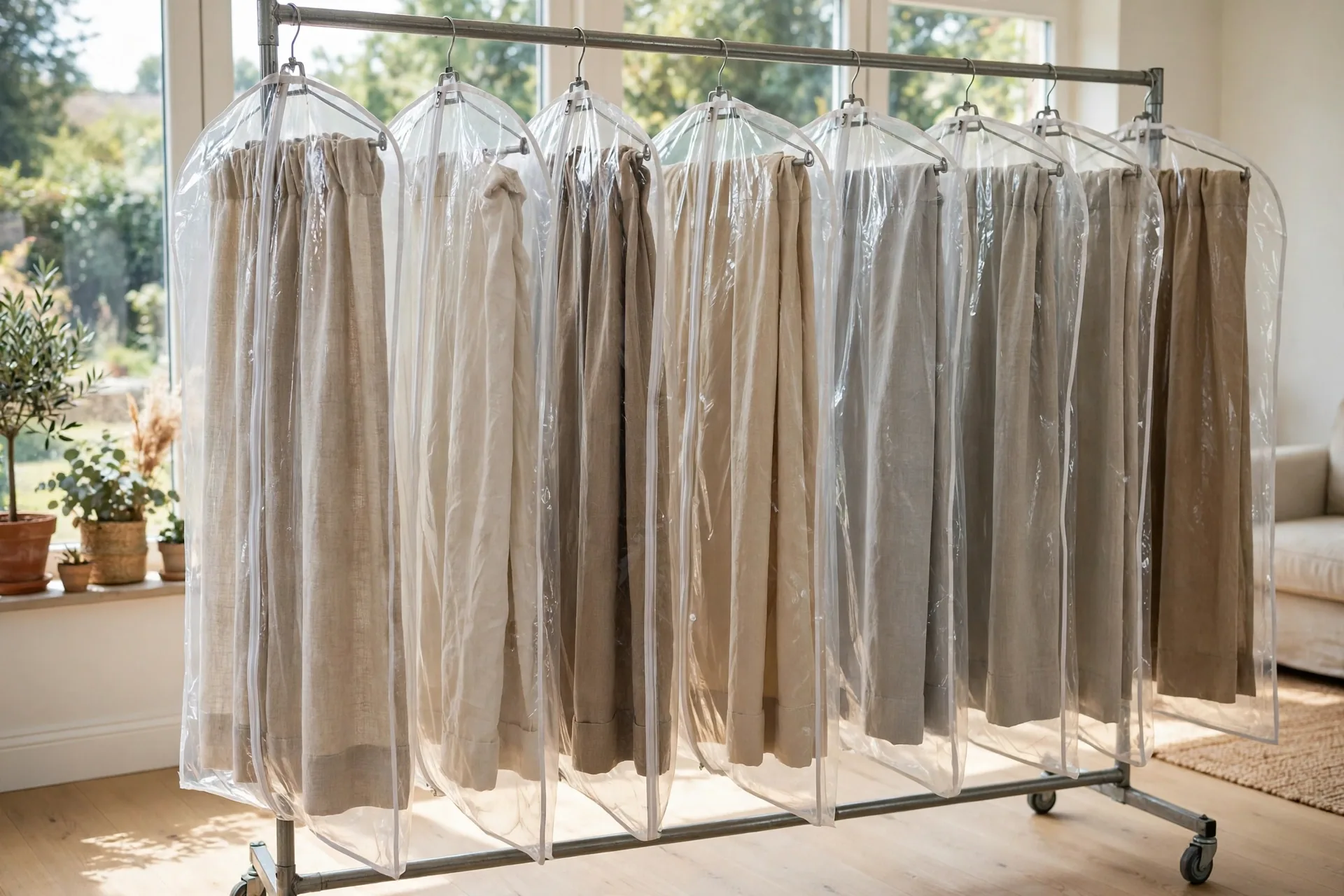
Cost and timing are part of the choice, and they favor planning ahead. Dry cleaning takes longer than a home wash and needs a window left bare or covered another way for a few days, so wash lined or formal curtains in a quiet week rather than the day before guests arrive.
Blackout Backing, Linings, and Heat: What to Watch
Blackout backing and linings change the washing rules, because the coating or second layer reacts to heat and handling differently from plain cloth. Heat is the main risk: a hot wash, a hot dryer, or a hot iron on the coated side can crack, peel, or stiffen a blackout coating, and a cracked coating lets light through in patches that no wash can fix. A lining can also shrink at a different rate from the face fabric, which pulls seams, puckers the hem, and makes a panel hang unevenly. Follow the blackout label's temperature and drying limits exactly.
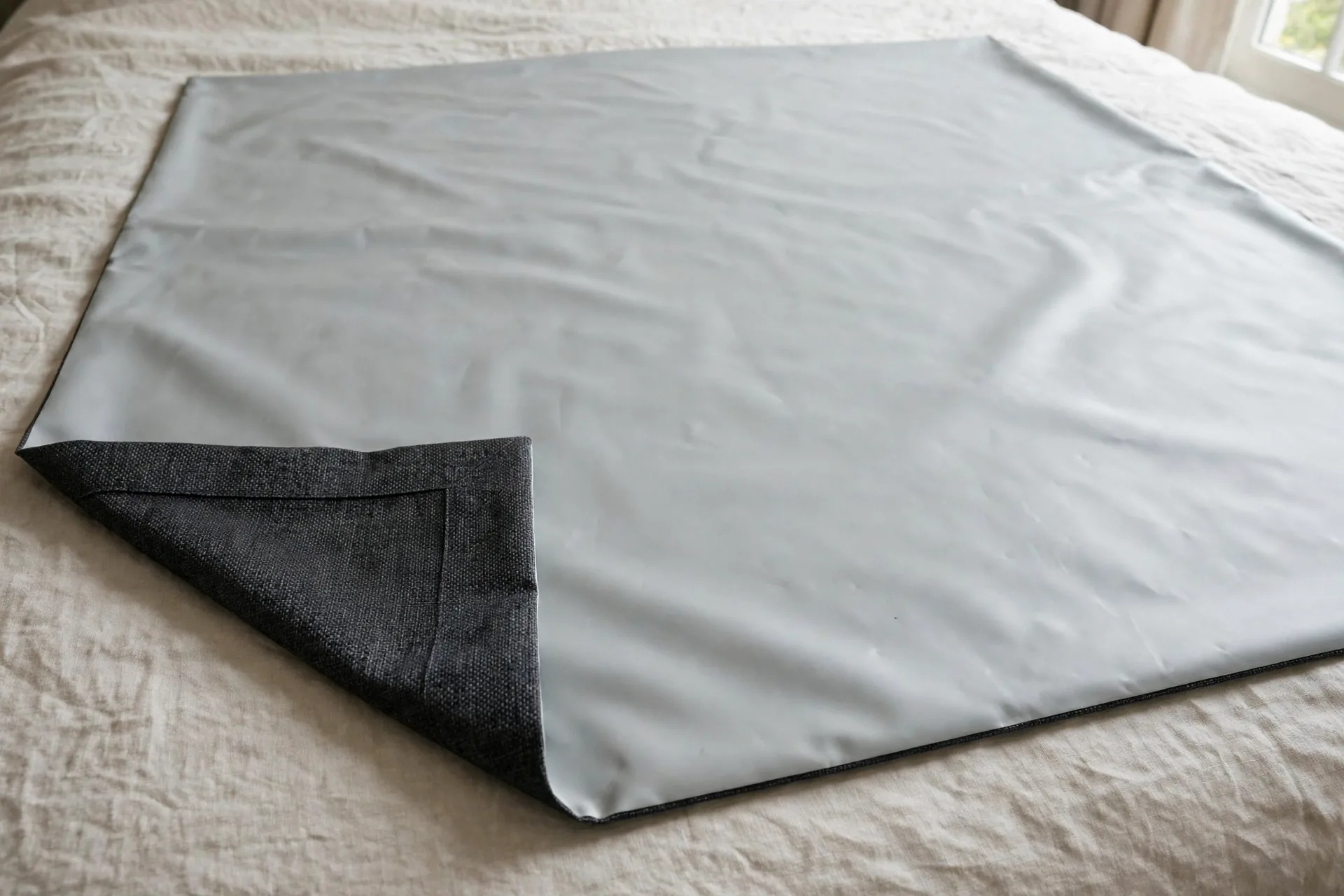
Where the label allows a home wash, keep it cool, gentle, and low spin, and never soak a coated panel for a long stretch, since soaking can soften some coatings and linings. Dry coated panels away from direct heat, and iron only on the face side if the label allows it. Best Blackout Curtains covers blackout types, light blocking, and room use in more depth, while the washing rule here stays simple: cool, gentle, no direct heat on the backing. For fabric types in full, see Curtain Fabric Types Explained.
Thermal linings carry a similar warning, with one extra detail. A thermal coating can stick to itself when wet or warm, so keep coated surfaces apart while drying. Best Thermal Insulated Curtains covers thermal types and draft sealing in more depth.
Drying, Reshaping, and Smoothing Out Wrinkles
Drying decides how curtains look after washing, and hanging them back while slightly damp is the simplest way to a smooth finish. The weight of damp fabric pulls folds straight as it dries, which beats ironing a fully dry, deeply creased panel. Rehang damp only where the maker permits and where damp fabric cannot transfer moisture to walls, woodwork, or flooring. Avoid direct sunlight while drying, since strong sun fades color and weakens fibers, and avoid radiators and heaters, since direct heat shrinks natural fibers and risks coated backings.
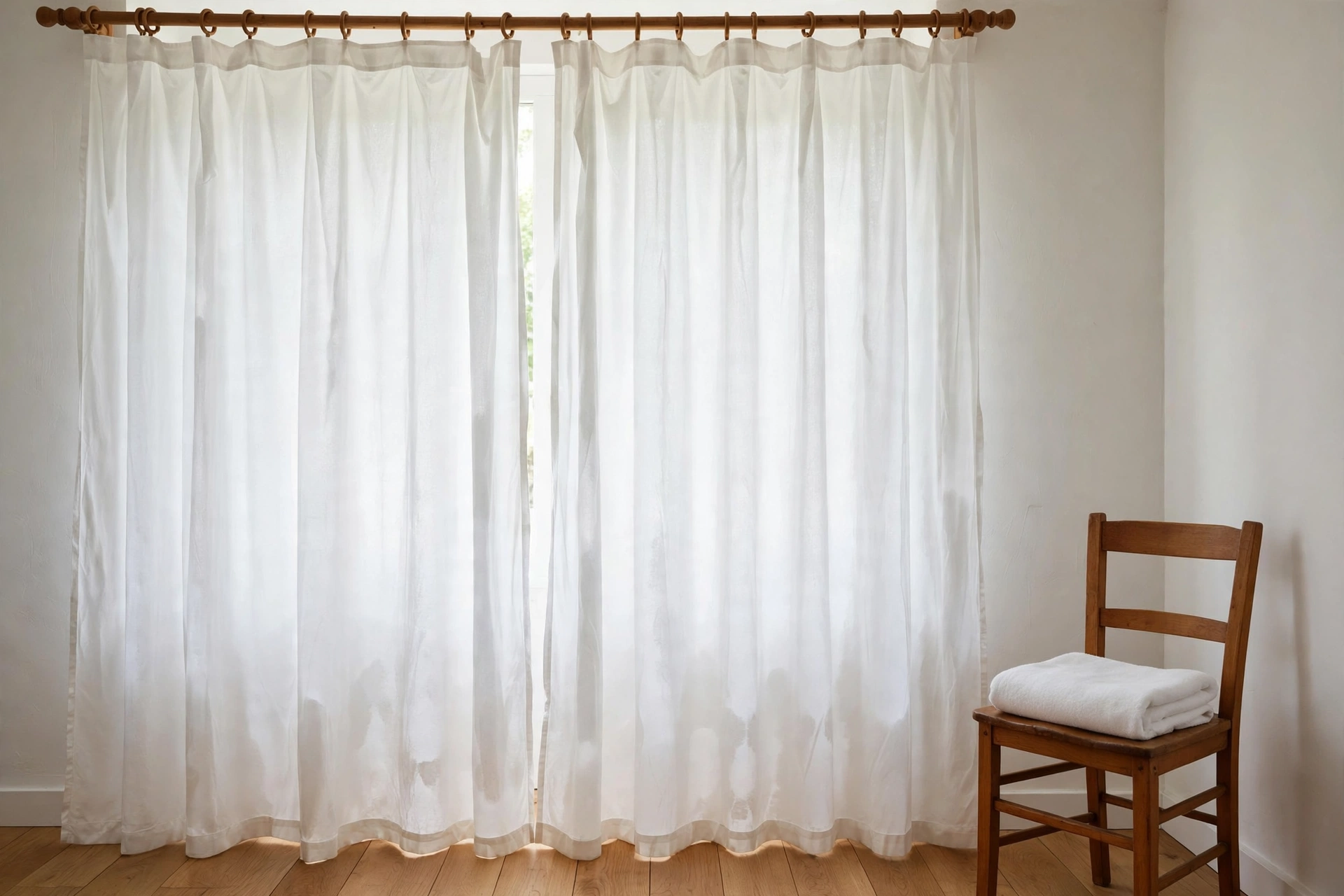
If the label allows a dryer, use the lowest heat setting, take panels out while still slightly damp, and hang them at once. A dryer left running to full dryness sets wrinkles hard and adds heat that coated or natural-fiber panels do not need. For panels that must not go in a dryer, lay heavy panels flat on clean towels for a short while to draw off excess water, then hang them to finish.
Wrinkles left after drying have three fixes, in order of gentleness. First, hang the panel and let its own weight work for a day, smoothing folds by hand. Second, steam lightly, holding the steamer off the fabric and moving slowly. Third, iron on the reverse side at the lowest setting the label allows, with a pressing cloth over delicate or pile fabrics, and never iron a coated backing. Linen wrinkles more than most fabrics, and ironing it while slightly damp gives a smoother result.
After rehanging damp, dress folds evenly and steam-train pronounced pleats, holding the steamer off the fabric and shaping each fold so it falls straight as it dries.
How Often Each Room's Curtains Need a Wash
How often curtains need washing depends on the room, not on a single rule for the whole house. For low-use rooms, a full wash once or twice a year is enough, while kitchens, homes with pets, and road-facing windows need washing more often, every few months, with visible signs as the decider. Vacuum weekly in high-dust rooms and every few weeks elsewhere. Best Curtains for Bedroom covers bedroom light, privacy, and sleep needs in more depth, while the washing rhythm here follows use: wash sooner if dust, smell, or gray folds survive vacuuming.

Living rooms gather cooking smells from nearby kitchens, pet hair, and everyday dust, so they often need the more frequent end of the range. Best Curtains for Living Room covers living room light and privacy needs in more depth. Kitchen curtains, bathroom curtains, and curtains near a stove or a busy door need washing most often, since grease, steam, and touch marks build fast, and short washable panels suit those spots better than long formal ones.
Set the rhythm by signs, not by the calendar alone. Wash when vacuuming no longer lifts the dust, when a panel smells stale after a day of airing with the window open, when light colors look gray in the folds, or when allergy symptoms rise in a room with fabric that has not been washed in a while. Keep a note of each room's last wash date with the care label notes.
A Wash-Day Routine You Can Repeat
Vacuum, take down, remove hardware, measure, spot treat, wash by the label, dry and rehang damp, then check the fit. A wash-day routine turns a chore into a repeatable job, and it runs the same way for one window or a whole room.
Work in this order for each window:
- Vacuum the hanging panels, top to bottom, with an upholstery brush on low.
- Take panels down, remove hooks, rings, and clips, and let out heading tape cords.
- Measure length and width, note the numbers, and check seams, hems, and heading tape.
- Spot treat marks by blotting with mild detergent in cool water, tested on a hidden corner first.
- Wash by the label method: gentle machine wash, hand wash, steam, or dry clean.
- Dry away from sun and direct heat, and rehang slightly damp, smoothing folds by hand.
- Check the fit against the before-wash measurements, and note the date and method for next time.
Rehanging deserves the same care as washing: hooks back in the same pockets, panels on the same sides, and folds dressed evenly before the fabric dries fully. How to Hang Curtains covers rod and bracket positions if anything moved while curtains were down.
Washing Mistakes That Shorten Curtain Life
Most curtain damage comes from a small set of avoidable mistakes, and each one has a simple fix. Washing without reading the label tops the list, since one hot or fast cycle can shrink a natural-fiber panel or crack a coating that a gentle wash would have kept safe. Washing lined or coated curtains as if they were plain cloth runs close behind, for the same reason: two layers that shrink differently, or a coating that hates heat, need the stricter rule, not the face fabric rule.
Other common mistakes are easy to spot once named. Leaving hooks and rings in place snags fabric and dents drums. Overfilling the drum rubs panels and traps detergent in folds. Hot water and high spin trade a little cleaning for shrinkage and set wrinkles. Wringing twists headings out of shape. Drying in direct sun fades color, and drying on direct heat shrinks fibers and risks coatings. Ironing a coated backing, or ironing pile flat without a pressing cloth, flattens or cracks the very finish the curtain was bought for.
A last mistake is washing too rarely, then washing hard to make up for it. Gentle and regular beats harsh and rare.
Frequently Asked Questions About Washing Curtains
Can all curtains go in the washing machine?
No, not all curtains can go in the washing machine. Sturdy unlined curtains whose label allows machine washing do well on a gentle cycle in cool water with a low spin. Delicate, lined, coated, and embellished panels often need hand washing, steaming, or dry cleaning instead.
How often should curtains be washed?
For low-use rooms, a full wash once or twice a year is enough, while kitchens, homes with pets, and road-facing windows need washing more often, every few months. Vacuum weekly in high-dust rooms and every few weeks elsewhere, and wash sooner when dust, smell, or gray folds survive vacuuming.
What water temperature is safest for curtains?
Cool water is the safest general choice for curtains, since it protects color and limits shrinkage across most fabrics. The care label states the highest safe temperature for each set, and that limit wins over any general rule. Hot water should stay out of curtain washing unless the label clearly allows it for that fabric.
Can blackout curtains be washed at home?
Some blackout curtains can be washed at home, and some cannot, so the label decides. Where home washing is allowed, keep it cool, gentle, and low spin, and keep heat away from the coated side when drying and ironing. Many blackout and lined curtains are dry clean only.
How do I clean curtains without taking them down?
Vacuum curtains in place with an upholstery brush on a low setting, working top to bottom, or steam them lightly with a handheld steamer held a few inches from the fabric. Both methods freshen panels and relax wrinkles without a full wash. They do not rinse away stains or grease.
Why did my curtains shrink after washing?
Curtains usually shrink because hot water, high dryer heat, or a fast aggressive cycle tightened natural fibers, or because a lining shrank at a different rate from the face fabric. The fix next time is cool water, a gentle cycle, a low spin, and air drying away from direct heat.
Should curtains go in the dryer?
Only curtains whose label allows tumble drying should go in the dryer, and then only on the lowest heat setting, taken out while still slightly damp and hung at once. Most curtains dry better hanging, since the weight of damp fabric pulls folds straight.
How do I get wrinkles out of curtains after washing?
Hang curtains while slightly damp and smooth the folds by hand, letting their own weight pull wrinkles out as they dry. For wrinkles that remain, steam lightly or iron on the reverse side at the lowest setting the label allows, with a pressing cloth over delicate or pile fabrics. Ironing linen while slightly damp gives a smoother result than ironing it fully dry.
What should I do if curtains have no care label?
Treat curtains with no care label as delicate until you know more. Vacuum and spot clean first, and test any wash method on a hidden corner before washing a full panel. Unlined sturdy curtains may take a gentle cool wash, while lined, coated, pleated, or embellished curtains should go to a drapery cleaner for advice.
This guide is research-based curation: we compared maker specifications, published reviews, and current prices. Read how we choose.