 Best
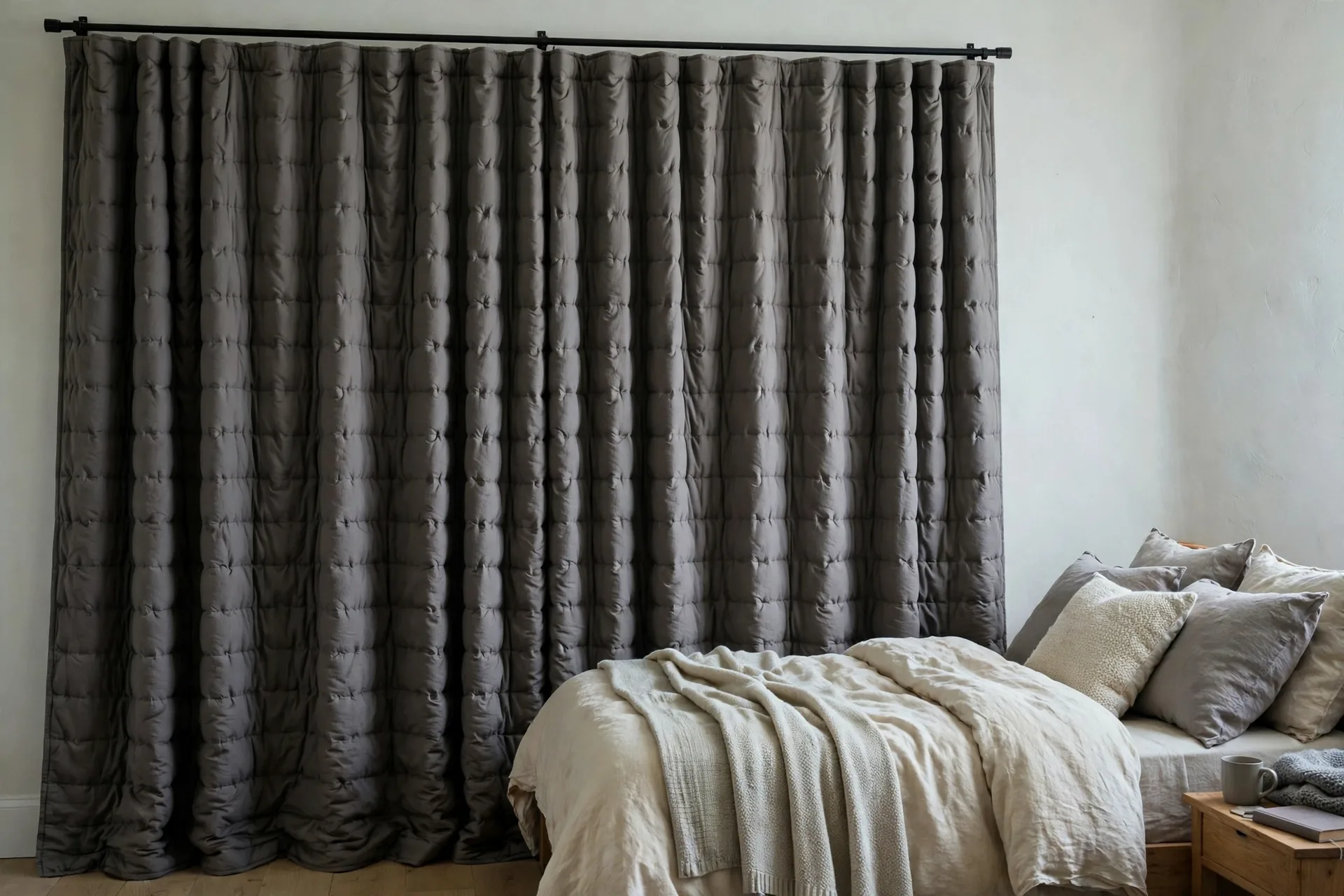
Best Thermal Insulated Curtains
Thermal curtains slow heat loss in winter and heat gain in summer, but they do not seal a drafty window. This guide splits winter and summer picks by job, covers door curtains, and shows how to hang them so they work.
If your room feels cold near the window in winter or hot near the glass in summer, a thermal curtain can help. It will not fix the window itself, and that limit matters more than any single pick on this page.
A good thermal curtain slows heat moving through glass. It traps still air between fabric and glass, and a dense core or liner slows heat transfer further. In summer, a light backing helps bounce sun heat back out. In winter, a heavy, gap-free curtain helps hold room heat in. Winter and summer do not need the same curtain at their best, so this guide keeps winter and summer picks apart, with one mid-weight compromise noted for year-round use.
Use this guide for the heat and cold job. If darkness is the main job, read Best Blackout Curtains instead. If the room itself drives the choice, read Best Curtains for Bedroom or Best Curtains for Living Room. For sizing and hanging, read How to Measure for Curtains and How to Hang Curtains.
The honest limit: what thermal curtains do and do not do
Thermal curtains slow heat loss and heat gain. They do not seal a drafty window, and they do not fix a bad window.
That distinction should shape what you buy. If cold air blows in around the frame, through a cracked seal, or under a warped sash, fabric alone will not stop it. Weatherstripping or a window repair comes first, and curtains come second. Once the worst leaks are dealt with, a heavy curtain that covers the whole window, overlaps in the middle, and hangs close to the wall can make the room feel far more even.
The same limit applies in summer. A thermal curtain can cut heat from a sun-facing window, but it cannot cool a room on its own. It is one layer in a comfortable room, not a replacement for shade, ventilation, or cooling.
Fit is the other limit buyers miss. A short, narrow panel with gaps at the sides and top lets air move around it, and moving air carries heat with it. A panel that runs high, wide, and long, and meets its partner in the middle with no gap, traps still air and slows heat moving through the window.
As an Amazon Associate, we earn from qualifying purchases.
Dense triple-weave panels suit cold, drafty rooms; light-backed panels suit sun-facing rooms that heat up; and the extra-wide panel suits sliding doors and very wide windows. The seven picks below fall into three groups. Cards 1 to 4 are winter picks for cold, drafty rooms, Cards 5 and 6 are summer picks for rooms that heat up in the sun, and Card 7 covers sliding glass doors and very wide windows. Read the best-for line first, then check panel count, size and care label on the listing before you order.
Comparison at a glance: thermal curtains
| Pick | Best for | Key feature |
|---|---|---|
| NICETOWN Triple-Weave Thermal Curtain | a cold room where the window feels cold to stand near, and where you want a simple, widely available thermal panel. | triple-weave construction with a dense middle layer, grommet top for easy sliding, machine washable fabric,… |
| Best Home Fashion Thermal Blackout Curtain | buyers who want one dependable winter curtain for a main bedroom or living room window, with strong light blocking as a bonus. | triple-weave polyester with a dense dark yarn layer, back tab and rod pocket top, machine washable fabric, wide size and… |
| Deconovo Thermal Insulated Blackout Curtain | covering several windows on a budget, or trying thermal curtains in one cold room before committing to the whole house. | satin front with a sewn-in black blackout liner, thermal insulated, noise reducing, grommet top; check the care label for the cycle, wide color… |
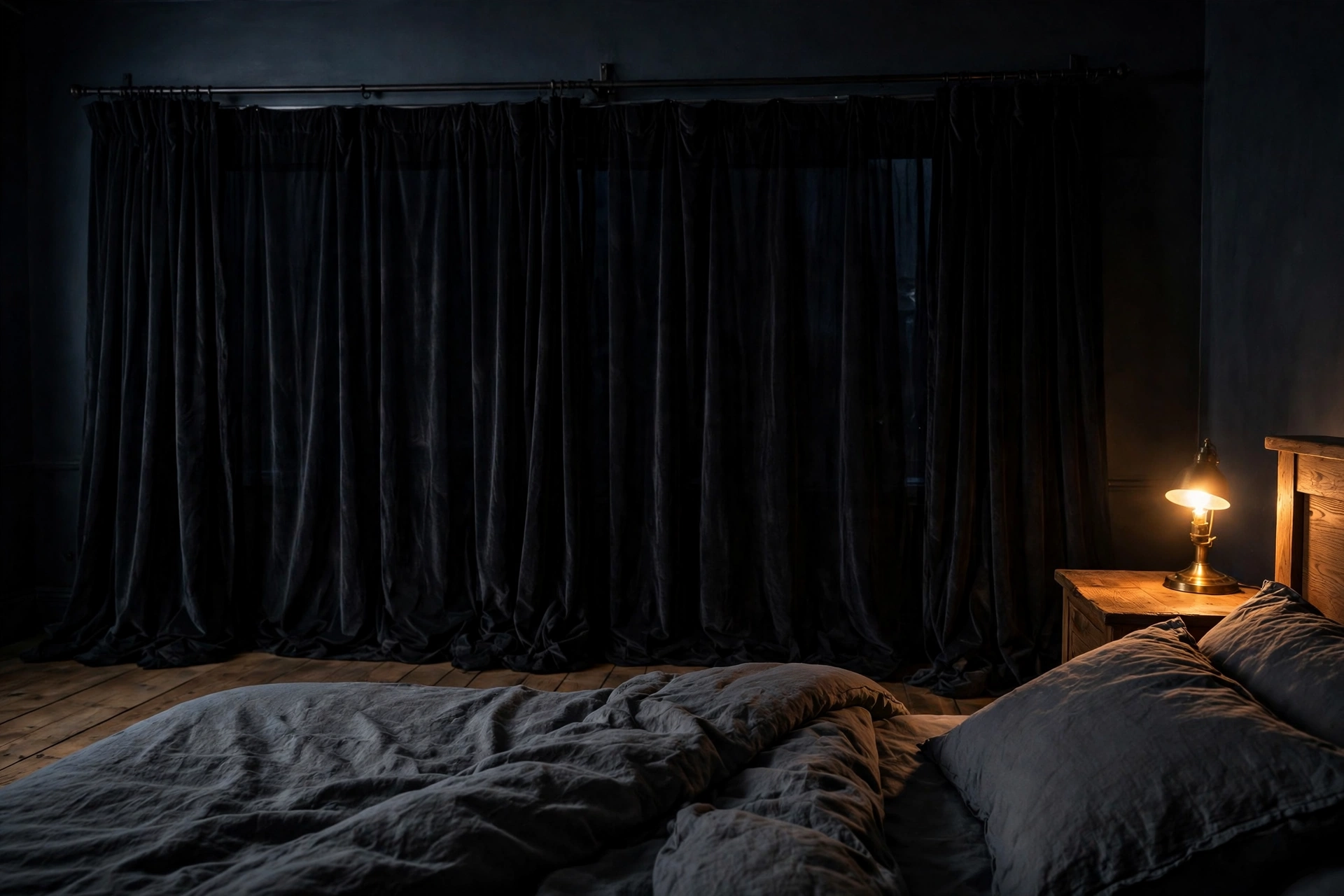
| Dreaming Casa Thermal Velvet Curtains | a cold living room or bedroom where you want a heavy, soft drape that looks warm and feels substantial when closed. | Black velvet face fabric with a thermal-insulated build, rod pocket and back tab headings,… |
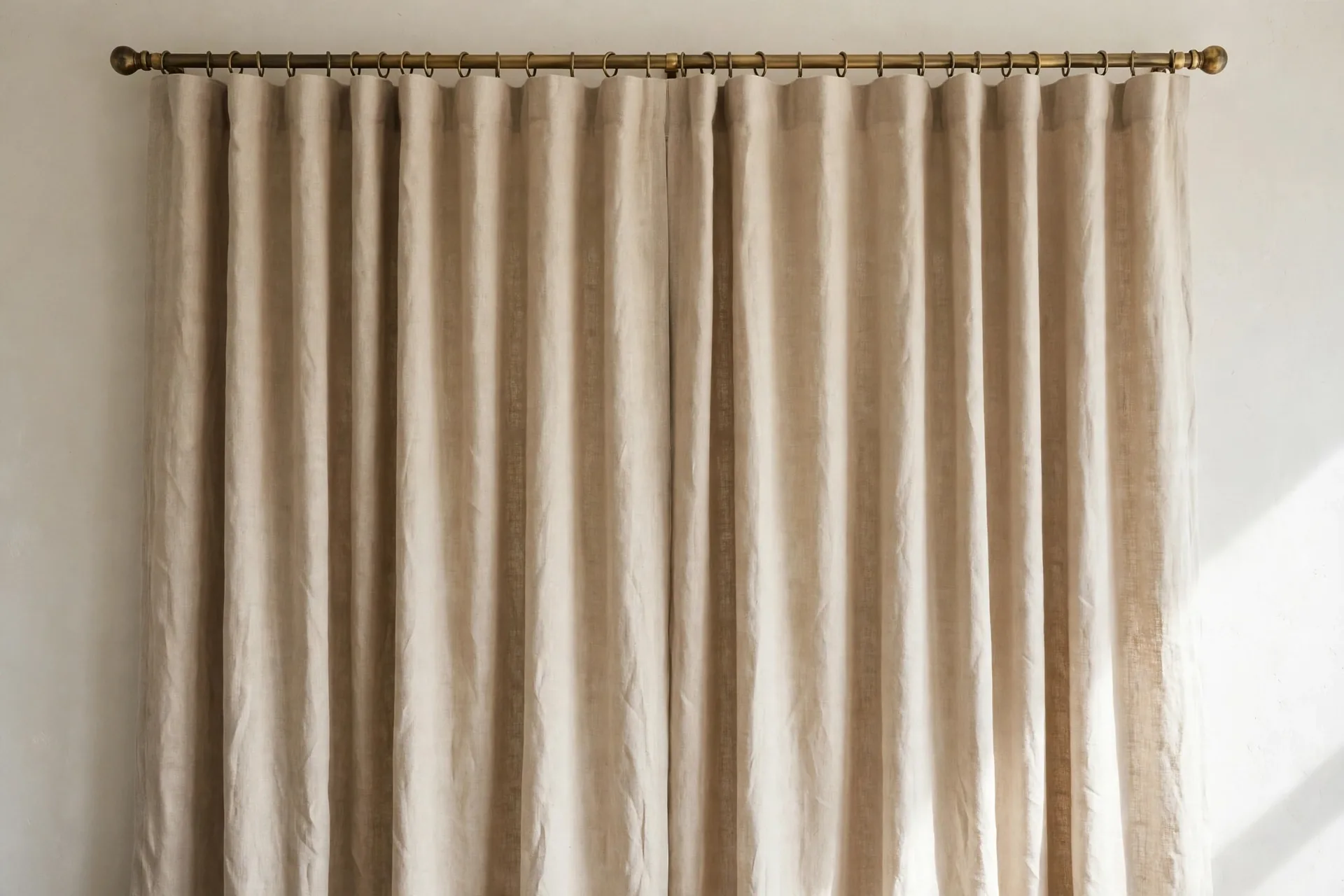
| BGment Linen Blackout Curtains | a south-facing or west-facing room that heats up in the afternoon, where you want thermal help plus strong light control. | Linen blackout fabric with a thermal-insulated build, rod pocket heading |
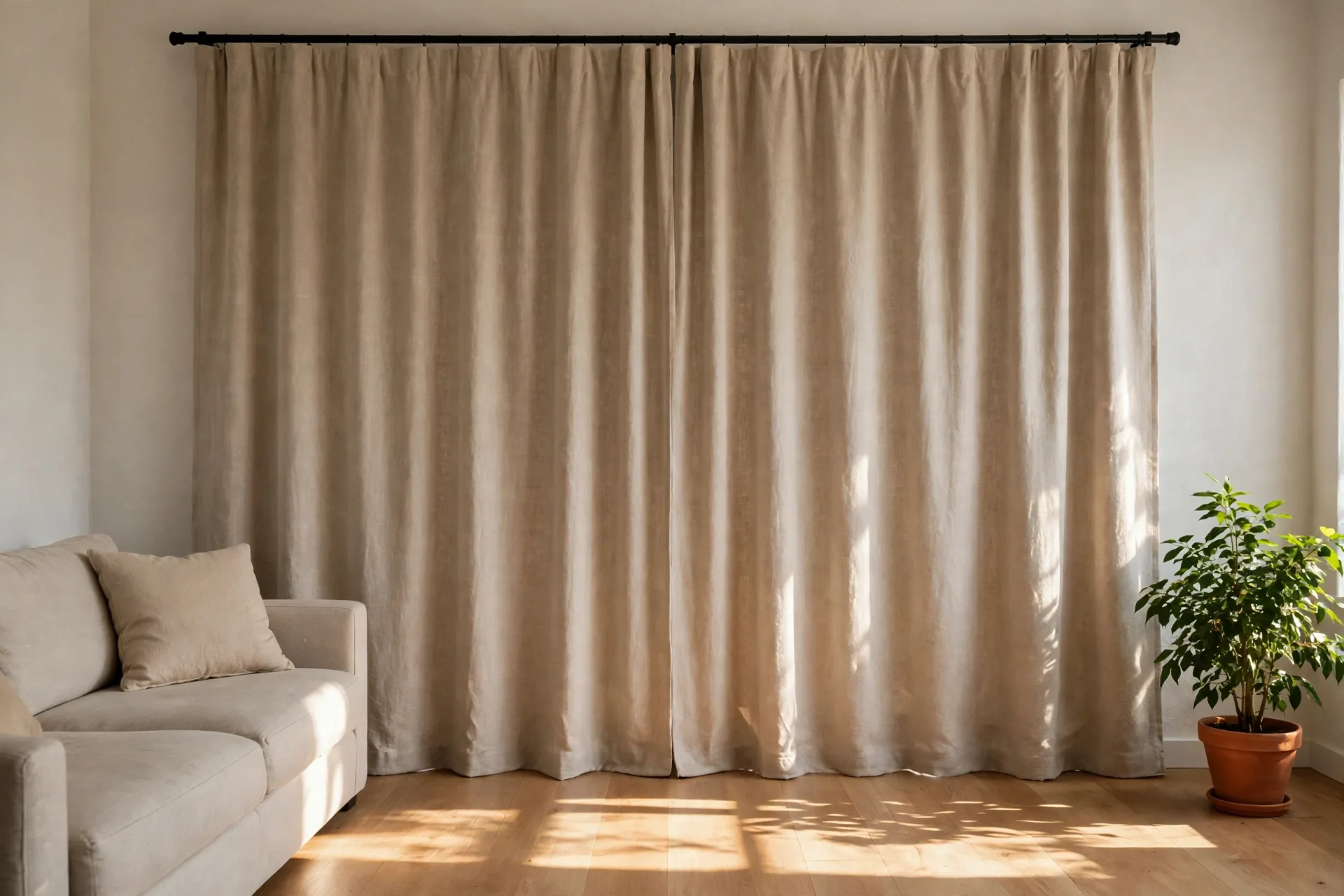
| BOODII Linen Blackout Curtains | a sun-facing room where heat builds up in the afternoon and you want full darkness plus thermal help. | Linen blend fabric, 100% blackout as the seller states, thermal-insulated build, back tab heading |
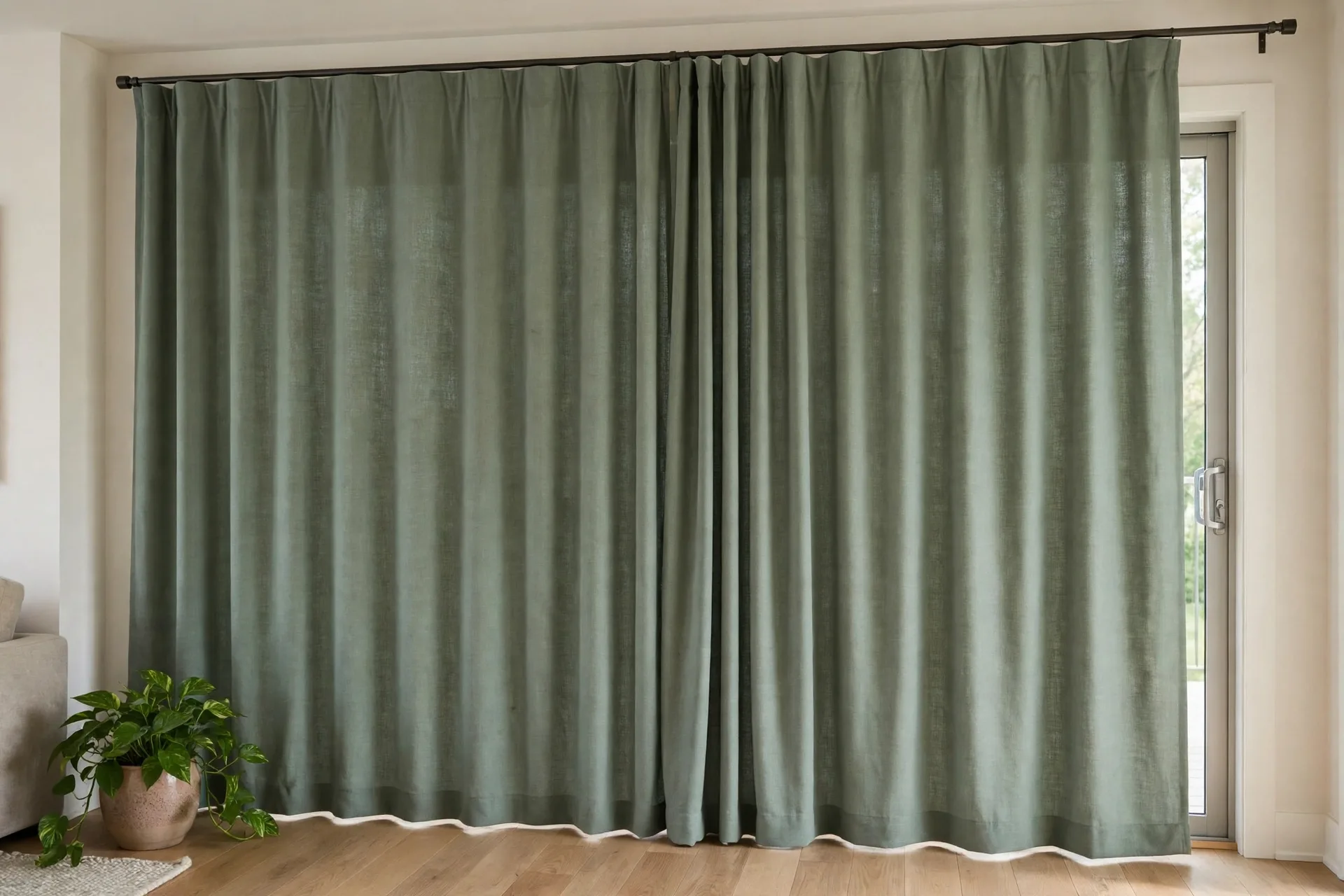
| NICETOWN Extra Wide Patio Door Curtain | a sliding glass door or a very wide window where standard panels leave a gap in the middle. | extra wide triple-weave panel, grommet top, machine washable fabric, same color on both sides |
1. NICETOWN Triple-Weave Thermal Curtain - Best for cold, drafty windows
What sets it apart: this is the draft-first pick. It is chosen for cold, drafty windows first, not for looks or for summer heat.
- Best for: a cold room where the window feels cold to stand near, and where you want a simple, widely available thermal panel.
- Key features: triple-weave construction with a dense middle layer; grommet top for easy sliding; machine washable fabric; wide color range.
- Pros: Dense triple-weave build suits cold rooms well; Slides easily on a standard rod; Easy to wash and keep in use through winter; Plenty of colors for bedrooms and living rooms.
- Cons: Light colors let more light through and can look thinner than dark colors, so pick a dark or mid color if light control matters as well as warmth; Needs full coverage and overlap in the middle to work well, so a single narrow panel is not enough for a wide window.
Panel count: confirm on the listing whether you are buying one panel or a pair before you order. A single panel on a wide window leaves a gap that undoes the benefit.
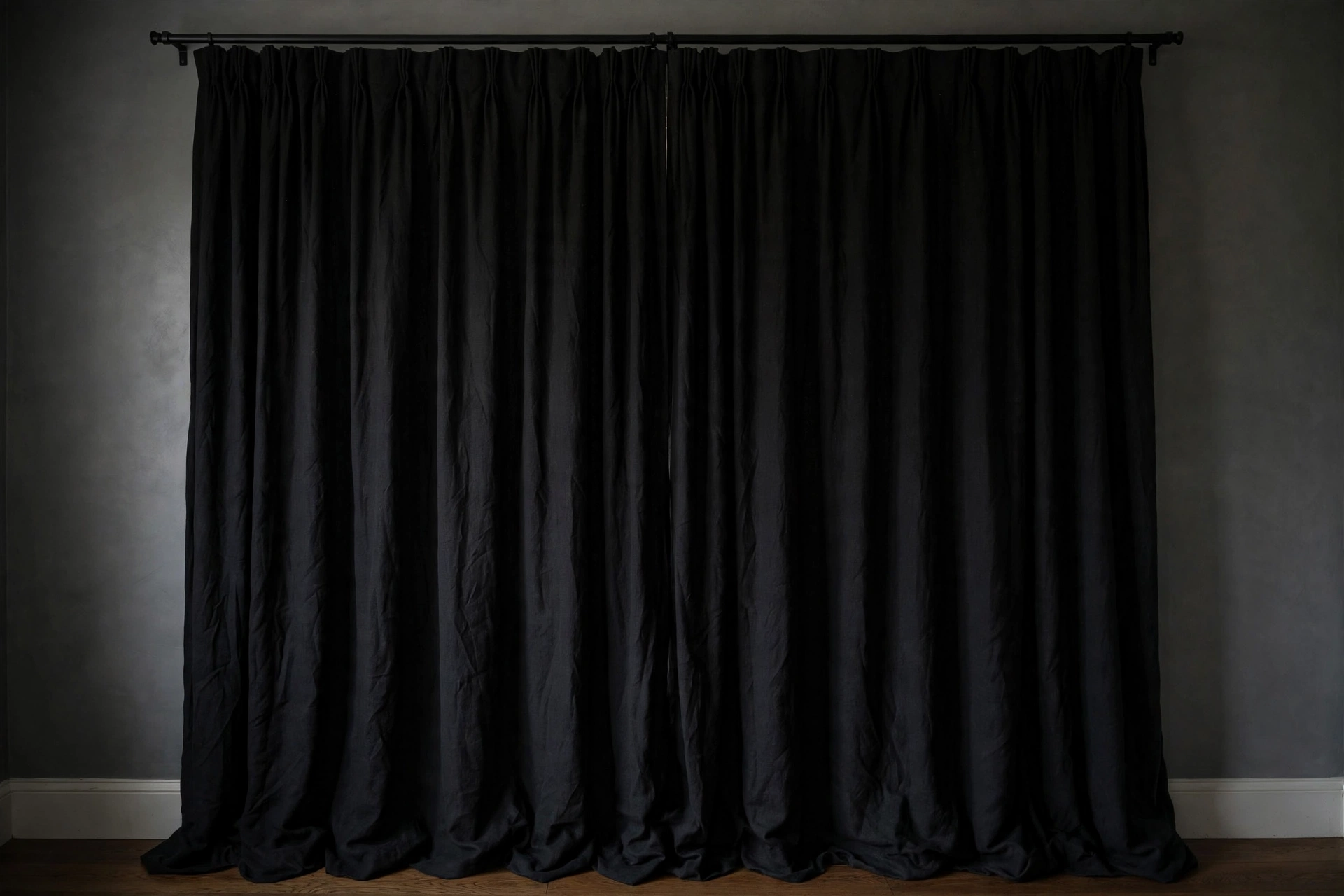
2. Best Home Fashion Thermal Blackout Curtain - Best all-round winter pick
What sets it apart: this is the all-round winter pick, balanced for a main bedroom or living room, where Card 1 is aimed at the coldest, draftiest window.
- Best for: buyers who want one dependable winter curtain for a main bedroom or living room window, with strong light blocking as a bonus.
- Key features: triple-weave polyester with a dense dark yarn layer; back tab and rod pocket top; machine washable fabric; wide size and color range.
- Pros: Strong all-round thermal and light-blocking build; Drapes well and suits a main room; Machine washable, so winter dust and marks are easy to deal with; Wide size range covers many standard windows.
- Cons: The back shows the same color as the front. That is a plain fact, not a fault, but the street view will show the curtain color rather than a neutral white; Creases can be hard to remove after washing, so steam or a low iron may be needed.
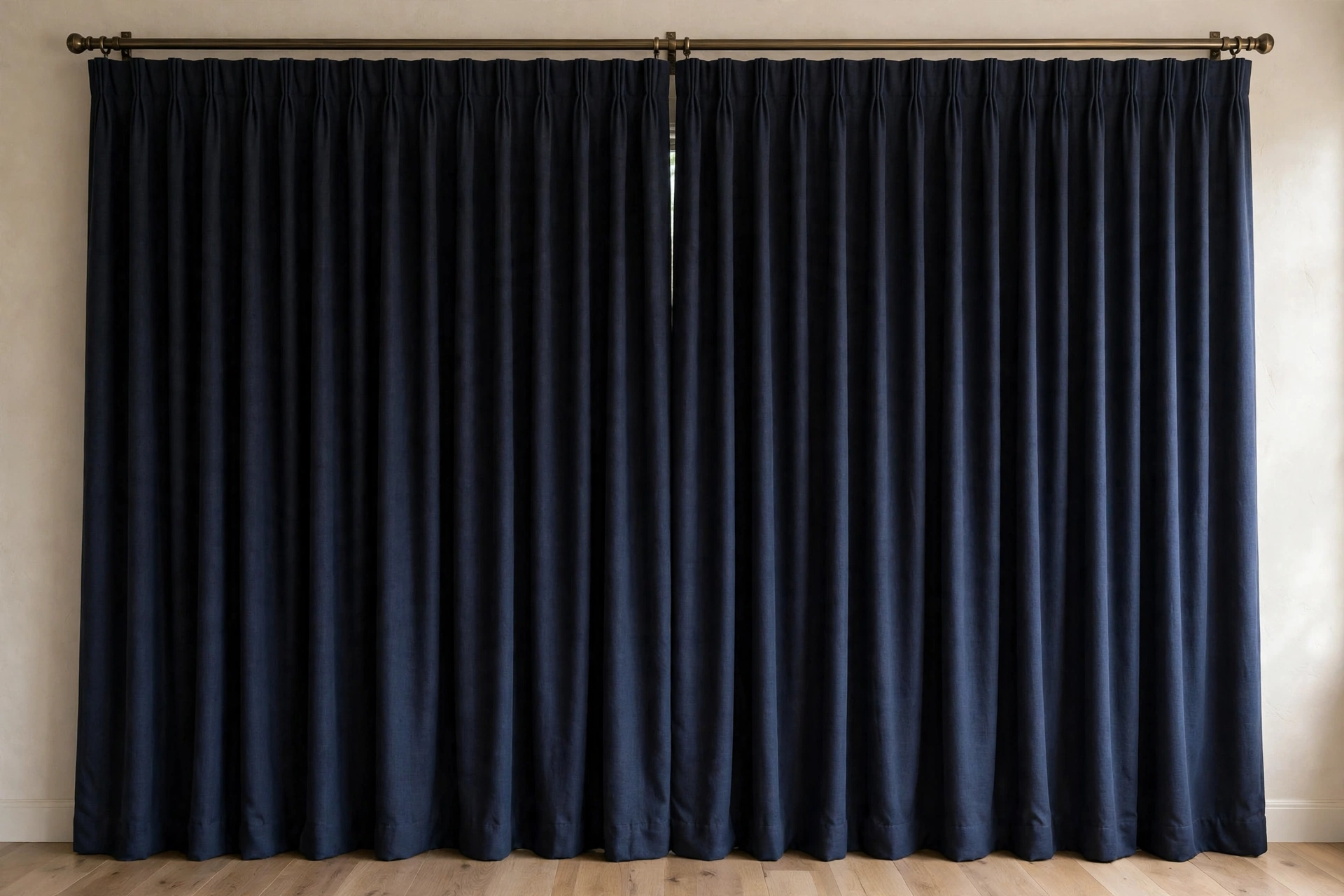
3. Deconovo Thermal Insulated Blackout Curtain - Best budget winter pick
What sets it apart: this is the budget winter pick, chosen for covering several windows at lower cost, with a lighter feel than the heavier winter picks.
- Best for: covering several windows on a budget, or trying thermal curtains in one cold room before committing to the whole house.
- Key features: satin front with a sewn-in black blackout liner; thermal insulated; noise reducing; grommet top; check the care label for the cycle; wide color range.
- Pros: Low cost for a thermal panel with a sewn-in blackout liner; Simple to hang; Works well as a first thermal curtain for a cold bedroom.
- Cons: Fabric feels lighter than premium heavy panels; Check whether the listing price is for one panel or a pair before you order, so you do not end up short.
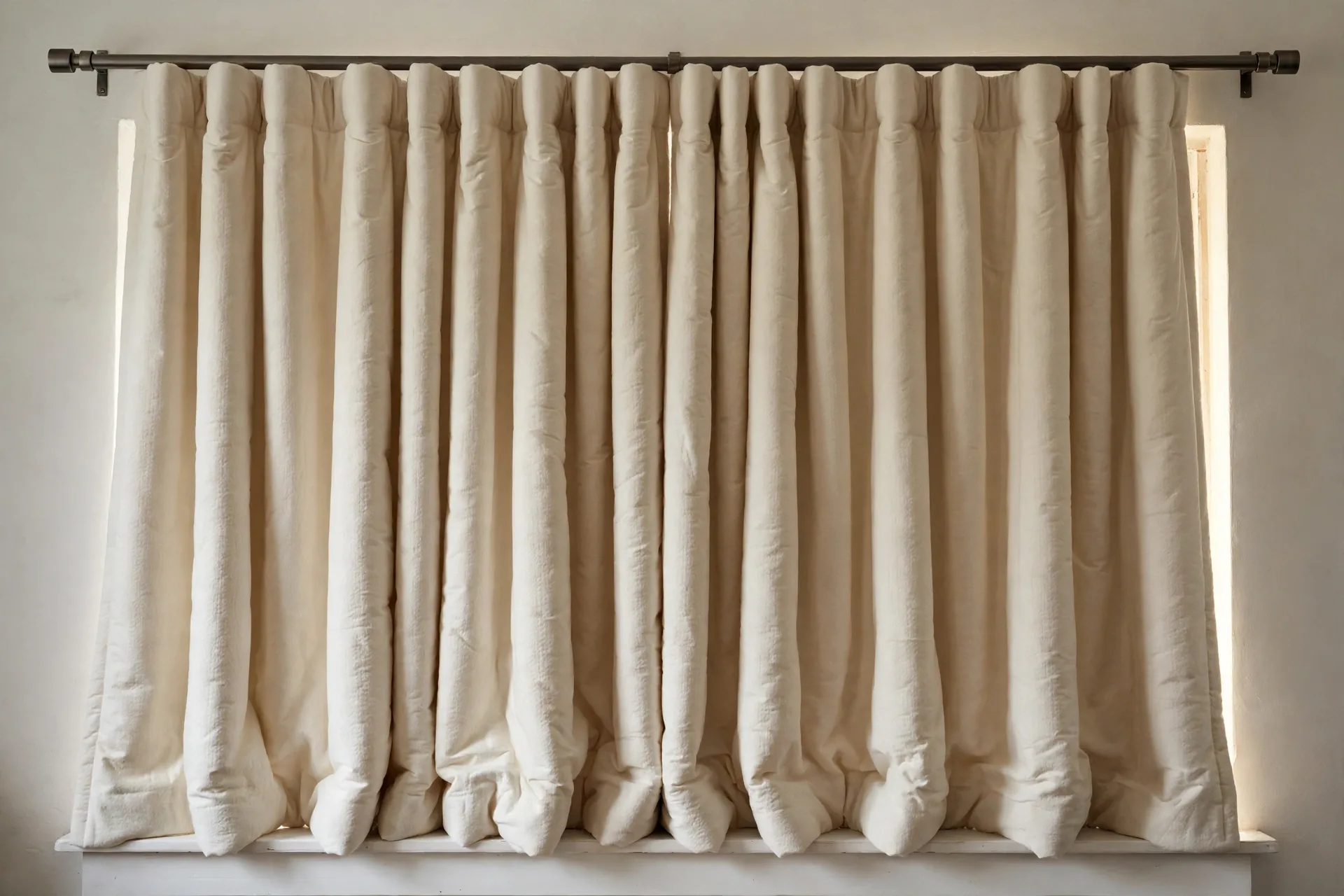
4. Dreaming Casa Thermal Velvet Curtains - Best heavy winter feel
What sets it apart: this is the heavy winter pick, a black velvet face with a thermal-insulated build, in rod pocket and back tab headings, sold as 2 panels of 52 by 96 inches.
- Best for: a cold living room or bedroom where you want a heavy, soft drape that looks warm and feels substantial when closed.
- Key features: Black velvet face fabric with a thermal-insulated build; rod pocket and back tab headings; 2 panels; each 52" wide x 96" long.
- Pros: Heavy velvet drape suits cold rooms and formal living rooms; Soft face fabric looks less plain than flat polyester; Feels substantial when drawn across a cold window.
- Cons: Heavier than standard panels, so it needs a sturdy rod and hardware; Velvet needs more care than plain washable polyester, so check the care label before you buy.
Panel count: 2 panels, each 52" wide x 96" long in the verified black variant; check the listing for other colors and sizes.
5. BGment Linen Blackout Curtains - Best for hot, sunny rooms
What sets it apart: This is the linen-look summer pick: thermal-insulated blackout fabric in a linen face, so it suits a living room that needs heat help without a flat polyester look. For summer, choose a light colorway: a dark face alone absorbs more heat and is not a good summer choice.
- Best for: a south-facing or west-facing room that heats up in the afternoon, where you want thermal help plus strong light control.
- Key features: Linen blackout fabric with a thermal-insulated build; rod pocket heading; 2 panels; each 52" wide x 84" long.
- Pros: Thermal-insulated blackout build suits hot rooms as well as cold ones; Linen look suits living rooms better than flat polyester; Rod pocket hang is simple and neat.
- Cons: Rod pocket panels slide less freely than grommet panels; Like all curtains, it works best when closed before peak sun, not after.
Panel count: 2 panels, each 52" wide x 84" long in the verified variant; check the listing for other colors and sizes.
6. BOODII Linen Blackout Curtains - Best for sun-facing rooms where heat builds up
What sets it apart: This is the full-blackout thermal pick in a linen blend: 100% blackout as the seller states, with a thermal build, in a linen-look face. Light can still leak at the edges, so hang it wide and let the panels overlap in the middle.
- Best for: a sun-facing room where heat builds up in the afternoon and you want full darkness plus thermal help.
- Key features: Linen blend fabric; 100% blackout as the seller states; thermal-insulated build; back tab heading; 2 panels; each 52" wide x 63" long.
- Pros: Full blackout plus thermal help in one panel; Linen blend look suits living rooms better than flat polyester; Back tab hang gives a neat, tailored fall.
- Cons: 63" length is short for tall windows, so measure first; Blend fabric, not pure linen.
Panel count: 2 panels, each 52" wide x 63" long in the verified variant; the 63" length suits shorter windows, so measure before ordering.
7. NICETOWN Extra Wide Patio Door Curtain - Best for sliding glass doors
The panel is the same color on both sides, so the street-facing side shows the curtain color, not white.
If the door is used many times a day, hang the panel so it stacks fully clear of the doorway when open. To stop dragging, measure the drop from the rod to the floor, then choose a length that clears the floor by a small amount and clears the door handle when the panel slides past it. A panel that pools on the floor at a door will catch, drag, and stay open. For French doors, two panels that meet in the middle often work better than one wide panel, because each side can move on its own and each side can clear its own handle. No separate French-door pick is listed here: use the same wide triple-weave type, split into two panels meeting in the middle.
- Best for: a sliding glass door or a very wide window where standard panels leave a gap in the middle.
- Key features: extra wide triple-weave panel; grommet top; machine washable fabric; same color on both sides.
- Pros: Wide panel covers a sliding door without a middle seam gap; Triple-weave build gives thermal help in both winter and summer; Grommets spread the weight and slide well on a sturdy rod.
- Cons: One wide panel may not give full darkness on its own, so add a second panel or a liner if darkness matters; Needs a strong rod and solid hardware because of its width and weight.
For a sliding door, check the listing for panel count: you need enough total width to cover the closed door plus overlap, not just one panel the width of one door leaf.
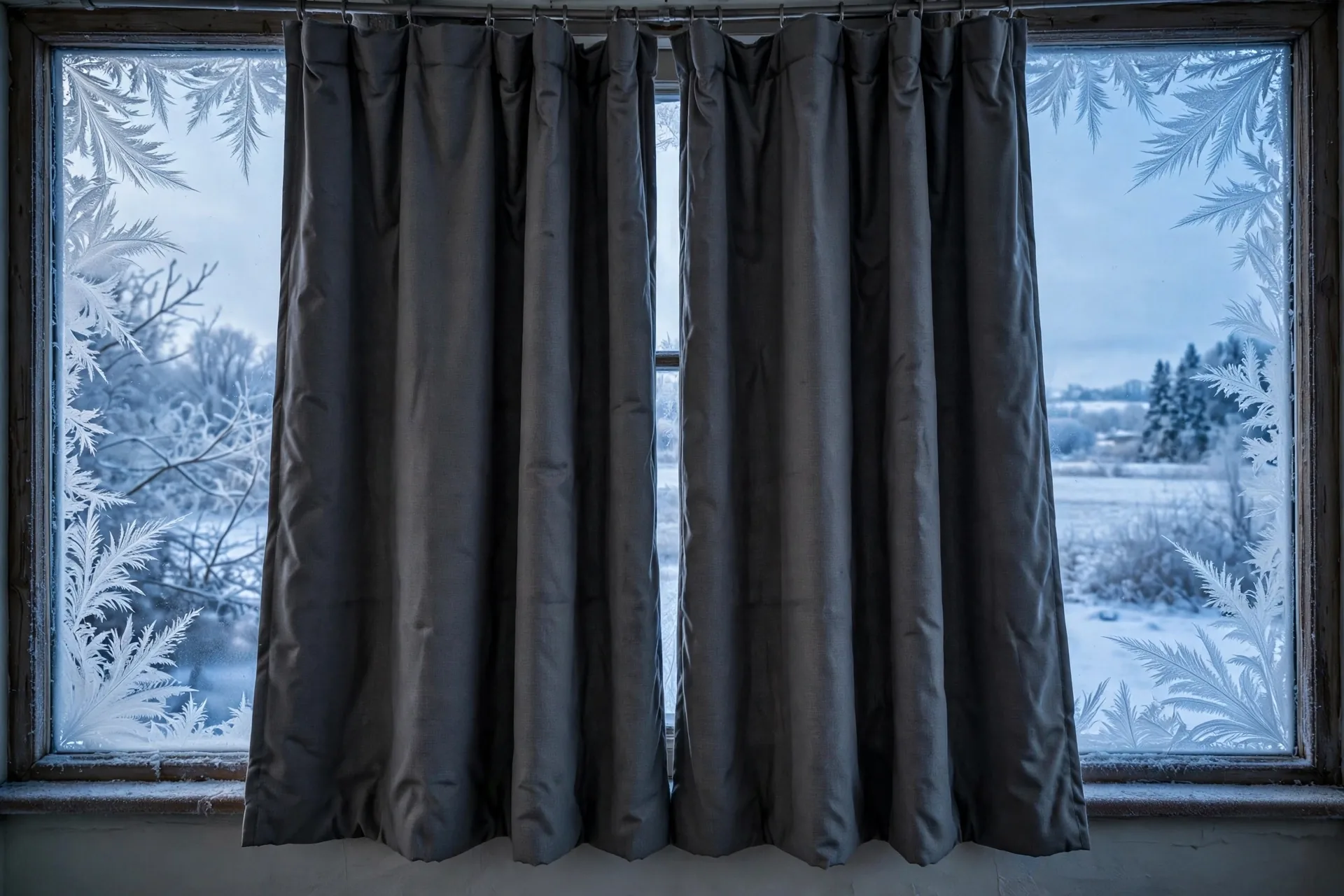
Winter picks that fight cold and drafts
For winter, pick weight, fullness, and coverage over color or pattern. A dense triple-weave fabric, a sewn-in liner, or a foam backing all add a layer between room air and cold glass, and a floor-length drop stops cold air pooling at the bottom of the window. The one exception is a window over a sink or radiator: there, use a sill length that clears the countertop or vent, and never let a panel block a radiator or heater vent.
Summer picks that fight heat gain
For summer, pick a light or white backing, a dense weave, and full coverage of sun-facing glass. The side facing the glass should reflect heat rather than soak it up. Close these curtains before the sun hits the window, not after the room is already hot.
Door curtains that cover glass doors without dragging
A glass door leaks heat in both seasons because it is mostly glass, and a standard window panel is often too narrow to cover it. A wide door panel, or two panels that overlap well in the middle, is the fix. The panel must clear the handle and the floor, and it must slide freely, or it will stay open and do nothing.
How to hang thermal curtains so they seal instead of just hanging
A thermal curtain only works well when it seals the window. Hang it high, wide, long, and close to the wall, with no gap in the middle.
Mount the rod 4 to 6 inches above the frame, not on it, so the panel covers the top edge where warm air escapes. Extend the rod 6 to 12 inches past each side of the frame, taking the smaller end for a narrow window or tight wall and the larger end for a wide window or bulky fabric, so the panel covers the frame edges too and stacks clear of the glass when open. Let the panel reach the floor or the sill, not stop halfway down the glass, so cold air cannot pool and spill out underneath. With two panels, overlap them in the middle so no gap shows when closed.
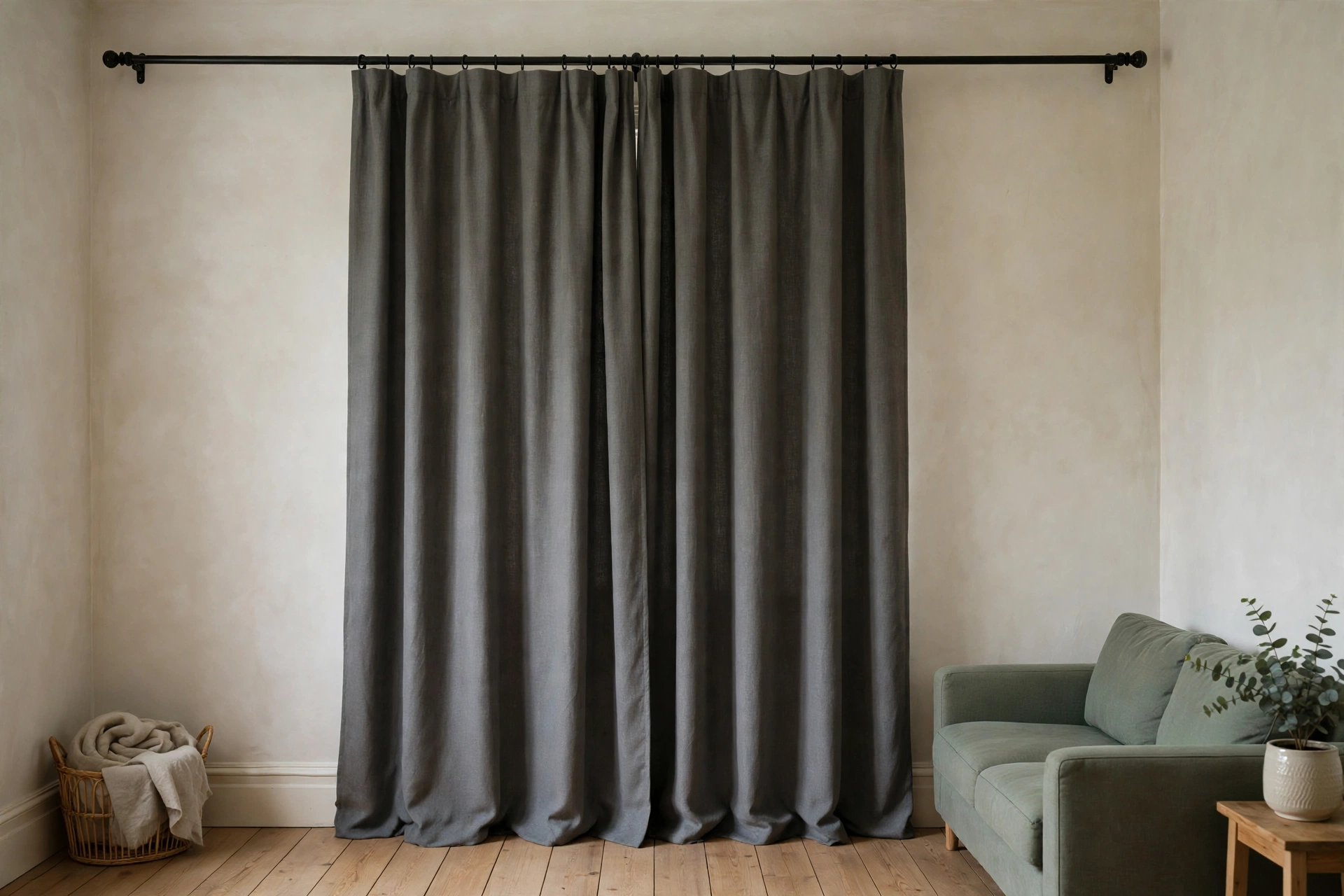
A wrap-around rod helps most. It curves back to the wall at each end, so side drafts have less room to slip past. Look for a wrap-around rod type when you buy the rod; no specific rod is picked in this guide. Grommet tops slide easily but leave small gaps at the top. The grommet picks in this guide are chosen for easy sliding. If drafts are your main problem, look for a back-tab or pinch-pleat version of the same curtain type, or add a liner, because that top seals better. Heavy panels sag on a weak rod, and a sagging panel opens gaps at the top.
Exception: if a radiator, heater vent, or sink sits under the window, do not use floor length there. Use a sill length that clears the vent or countertop, and never let a panel block a radiator or heater vent.
Close winter curtains at dusk and open them on sunny winter mornings, so you gain sun heat by day and trap room heat at night. In summer, do the reverse: close sun-facing curtains before the sun hits the glass.
How to choose fabric, liner, and backing without getting fooled
Thermal performance comes from layers, not from the word thermal on the listing. Be wary of a listing that calls a single thin layer thermal with no liner or dense weave behind it.
Triple-weave means three layers woven together, with a dense middle layer that blocks light and slows heat. A sewn-in liner is a separate layer stitched behind the face fabric, and it often gives the strongest thermal and darkening result.
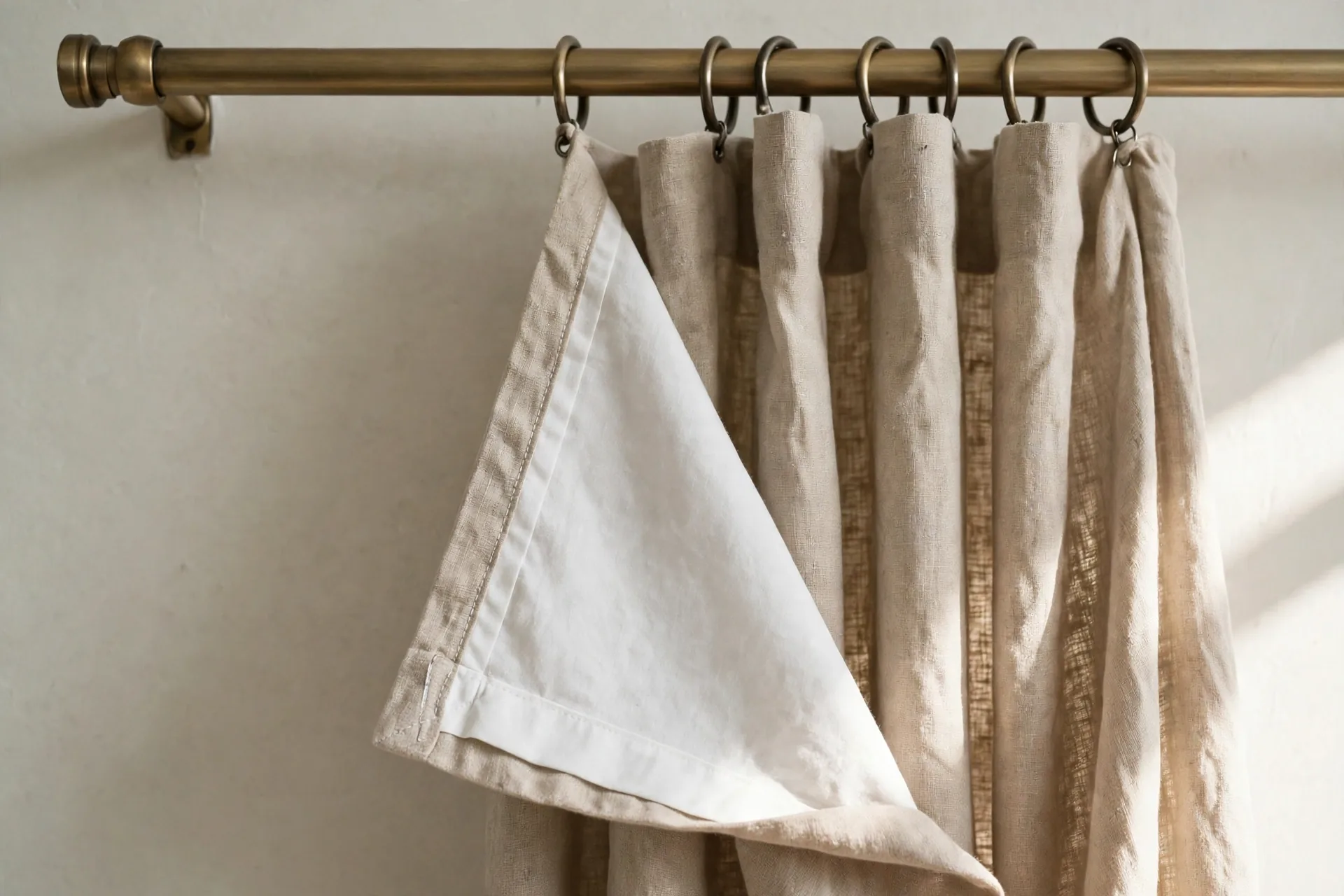
Foam backing is a thin foam layer on the back that adds insulation and gives a clean white face to the street, but it usually needs gentler care than plain fabric. Velvet and other heavy face fabrics add weight and drape, but weight alone does not prove insulation: a heavy sheer-look fabric with open weave will still let air through.
Color matters in summer and less in winter. A white or light backing reflects sun heat back out, which is what you want on a hot window. When a listing offers a light backing option, take it for sun-facing windows.
Treat maker claims with care. Any light-blocking or energy claim in a listing is a maker claim, not a measured result for your home. Your window size, climate, heating, and fit will change the result.
Check panel count before you order. Some listings sell one panel, some sell a pair, and a single panel on a wide window leaves a gap that undoes the benefit. Check header type, care label, and size range too, and measure before you buy.
Care that keeps the insulation working
Most triple-weave polyester panels in this guide are machine washable, which suits daily use. Wash on a cold gentle cycle with mild detergent, dry on low or hang to dry, then steam or iron on low. Avoid bleach and fabric softener on thermal linings, because both can damage coatings and backing.
Foam-backed and velvet panels need more care. Foam backing can crack or peel if washed hot or dried hot, and velvet can crush if handled roughly. For those, follow the care label exactly, even if it says dry clean only, and check the care symbols explained by GINETEX under the international ISO 3758 care labeling standard before washing, and budget for that cost before you buy. A thermal curtain that loses its backing loses much of its benefit.
Clean curtains once or twice a year in normal use, and more often in a dusty room or kitchen. After washing, rehang at the same height and width, and check that panels still overlap in the middle.

What to buy first if you can only cover one window
Start with the worst window, not the prettiest room. That is usually the largest, draftiest, or sunniest window. One well-fitted thermal curtain there will do more than thin panels on every window in the house.
If winter cold is the problem, pick a heavy triple-weave or lined panel in a dark or mid color, floor length, hung high and wide. If summer heat is the problem, pick a dense panel with a light backing for the sun-facing window, and close it before peak sun. If a glass door is the problem, pick the wide door panel first, because a door is often the largest single sheet of glass in a living room.
Then work through the rest of the house in order of window size and sun exposure, using the same hanging method on each window.
How much fabric width to order for a thermal curtain
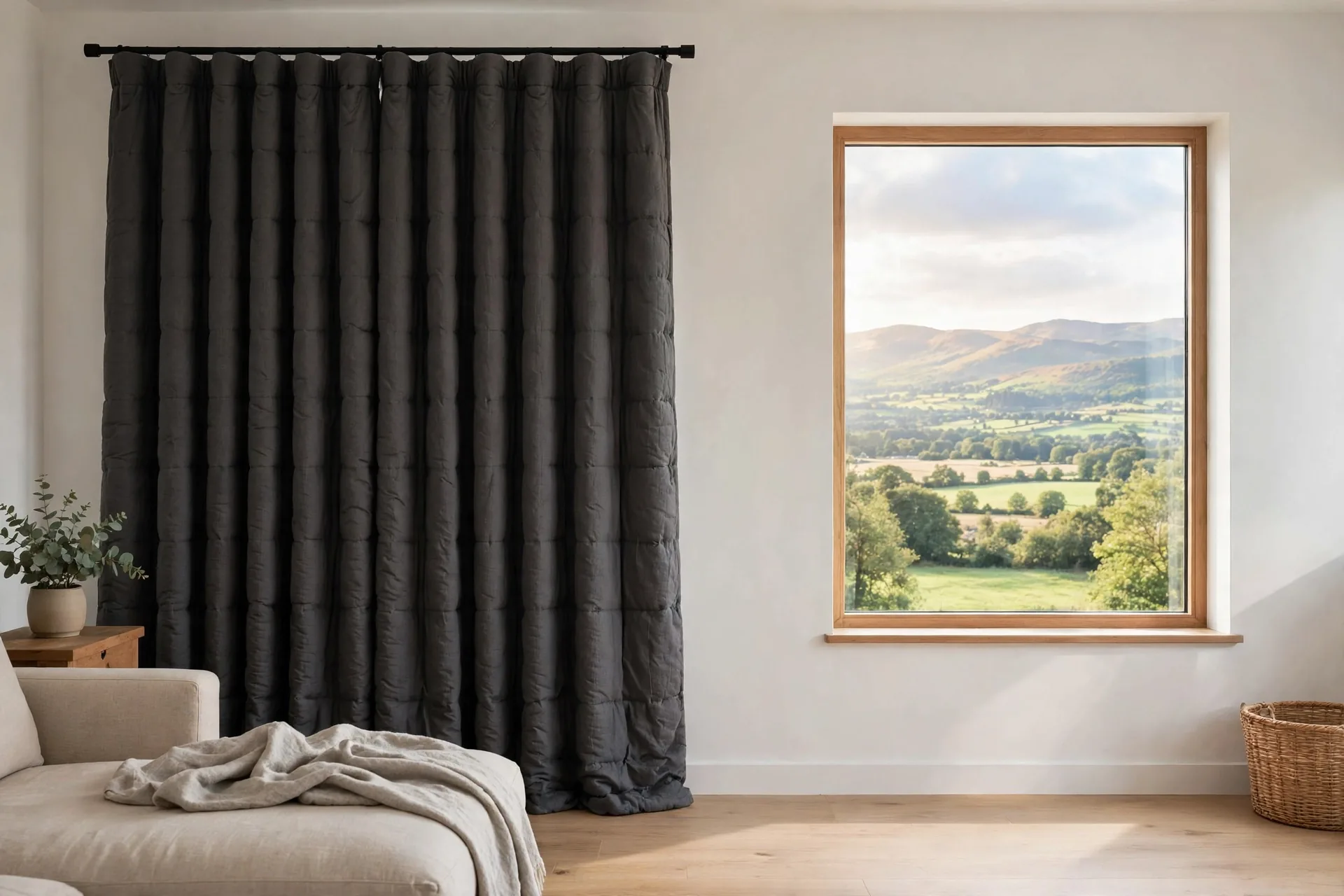
Order total panel width of about 2 times the rod width for standard fullness, so the closed panels meet and overlap slightly in the middle, with folds still showing when they are drawn. That rule is the one to size a thermal order by, because a panel that only just spans the window hangs flat, leaves gaps at the edges, and lets air move around it.
Measure the rod, not the glass, then multiply. A 60 inch rod needs about 120 inches of fabric in total across its panels, and a wide window or door needs more panels rather than one stretched panel. Thinner panels can take a little more fullness for a softer fall, while a very heavy lined panel can sit closer to the 2 times rule, since extra fabric stacks wide at the sides and can block the glass when open.
Check the listing for whether the stated width is for one panel or for the pair before you order, and add up the panels you will actually hang. If the total falls short of about twice the rod width, add another panel rather than hoping a narrow set will seal.
Thermal insulation without blackout: room-darkening builds
A thermal curtain does not have to black out the room to insulate it well. A light-color, room-darkening build with a thermal liner or a dense triple-weave core can hold heat in winter and cut sun heat in summer while still letting a soft glow through, which suits a living room that should stay bright by day.
Shop by build and colorway, not by darkness alone.
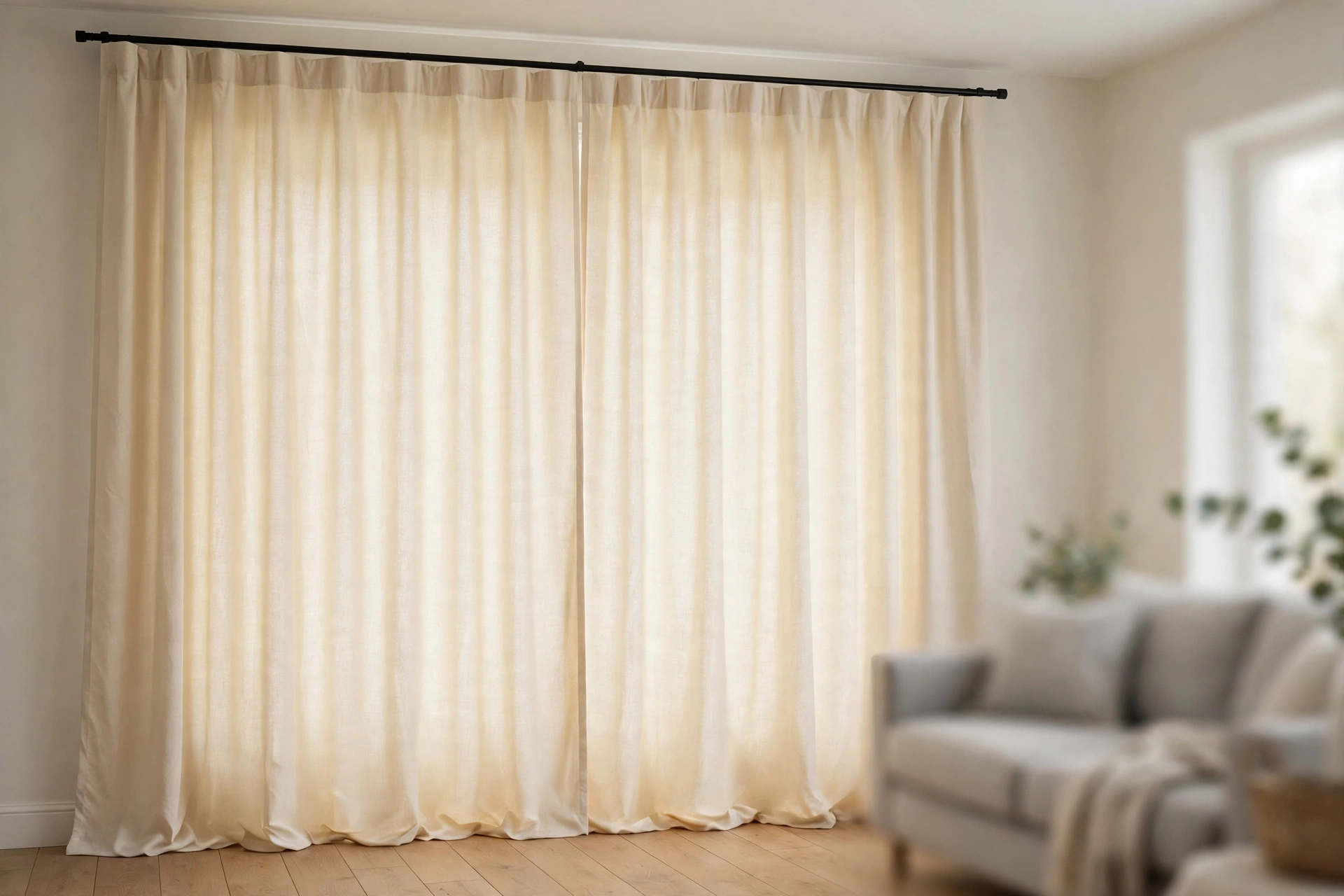
Look for a listing that describes a room-darkening face with a thermal liner or a dense weave, in a pale or mid color, and check that the lining, not just the color, does the insulating work. A dark panel with no thermal layer will darken the room without insulating it, and a pale thermal panel can insulate just as well as a dark one when the layers match.
Hang it the same sealed way as any thermal panel: high, wide, long, and overlapping in the middle. The lighter face changes the light in the room, not the hanging rules, and a gap at the center or sides will undo the insulation whatever color the fabric is.
How heat moves through a window
Heat moves through a window in three ways, and a thermal curtain slows all three a little rather than stopping any one of them outright. Conduction is heat passing straight through the glass and the fabric itself, convection is warm or cold air moving around the panel and carrying heat with it, and radiation is sun heat passing through the glass as light and warming what it lands on.
Each part of a good thermal set-up answers one of those routes. Dense fabric and a liner slow conduction by putting more material between room air and glass, a close, gap-free hang slows convection by trapping still air and keeping it from circulating, and a light backing in summer answers radiation by bouncing sun heat back out before it warms the room.
That is why fit matters as much as fabric. A thick panel with open sides still lets convection carry heat around it, and a light backing left open after the sun has already heated the room has little radiation left to reflect. Layers plus a sealed hang is the combination that covers all three routes.
Sealing the center gap and the edges
The center join and the top and side edges are where most thermal curtains leak, and a wrap-around rod alone does not close all of them. The full fix is a set of small hardware choices that close each gap in turn, fitted to the window you have.
For the center gap, magnetic closures that hold the two panels together when closed are the neatest answer, and a generous center overlap is the simpler one: order enough width for the panels to cross over each other rather than just meet.
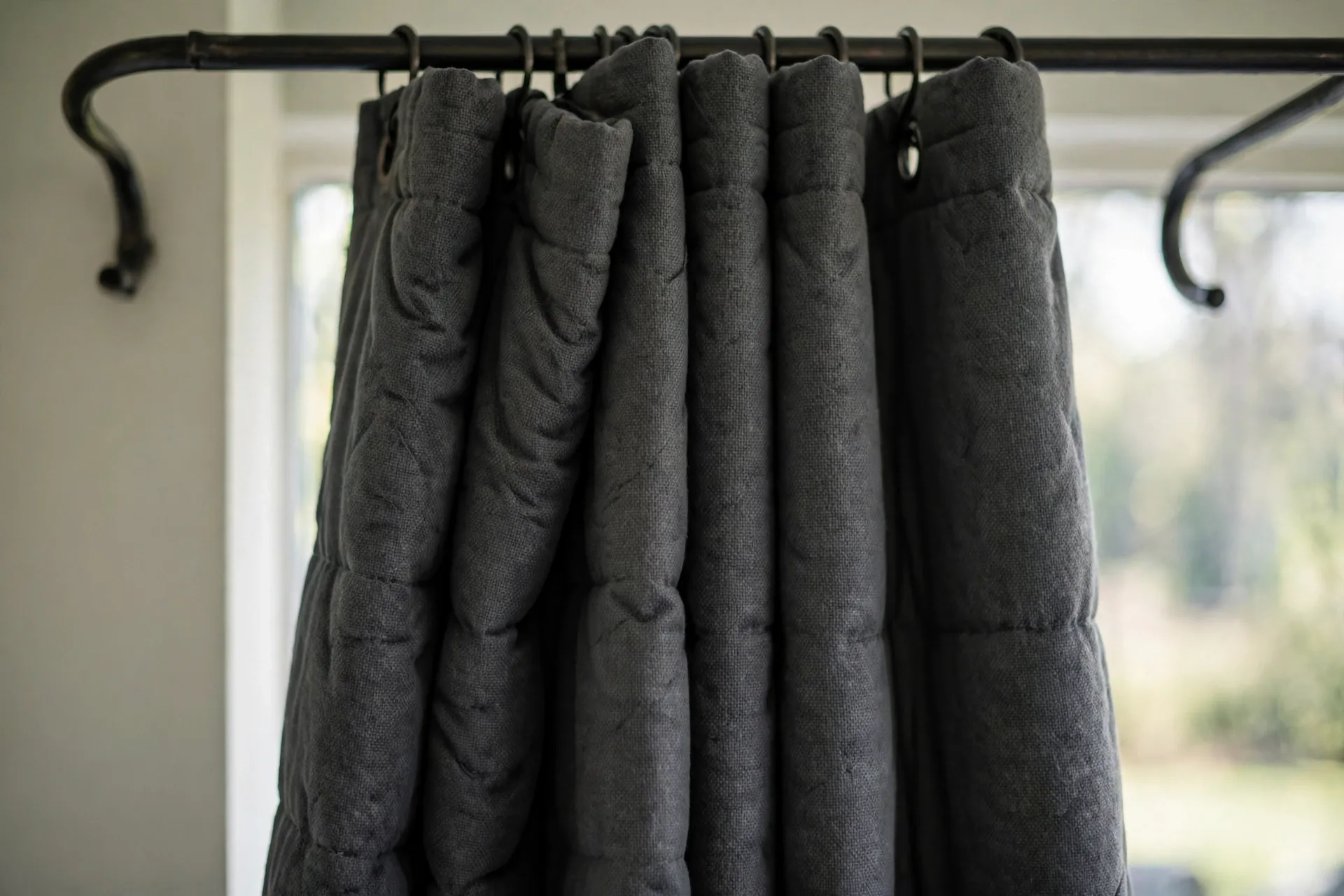
For the sides, return rods that bend back to the wall, and a rod mounted close to the wall, leave less room for air to slip past than a rod standing well clear of the wall.
For the top gap, a valance or cornice board fixed above the rod closes the space where warm air escapes, and a ceiling track does the same job by hanging the curtain from the ceiling itself with no gap above it. Check the header fits the hardware before you buy: a grommet panel needs a rod it can slide on, while a back-tab or pinch-pleat panel suits a track or a rod with rings, and a heavy lined panel needs brackets and a rod rated for its weight.
Thermal curtains for bay, picture, tall and arched windows
Odd windows need the thermal hang adapted to their shape, and ready-made panels do not always fit them. The rule stays the same, seal the whole opening, but the hardware and the order change with the window.
A bay window is best dressed section by section, with a rod or track following each angled facet so every pane gets its own sealed panel, and a picture window, which is often wide and fixed, needs enough panels to cover its full width with a center overlap, hung high and wide like any other thermal window. A very tall window needs a long drop that still reaches the floor, and a ceiling track can help there by removing the top gap on a tall wall.
An arched window, where the top curves, and any window no ready-made size fits, is a made-to-measure job: order panels cut to the shape and drop of that window rather than forcing a standard size to fit, and ask the maker how the top of the arch will be closed, since an open curve above a straight rod leaves a gap that leaks heat all winter.
Thermal curtains compared with cellular shades and blinds
Curtains sit in the middle of the window-insulation ladder, above a bare blind and below a dedicated insulating shade used on its own. A lined, well-sealed curtain insulates noticeably better than a single blind, because it adds layers and traps a pocket of still air across the whole window, while a bare slatted blind leaves gaps between slats that air moves through freely.
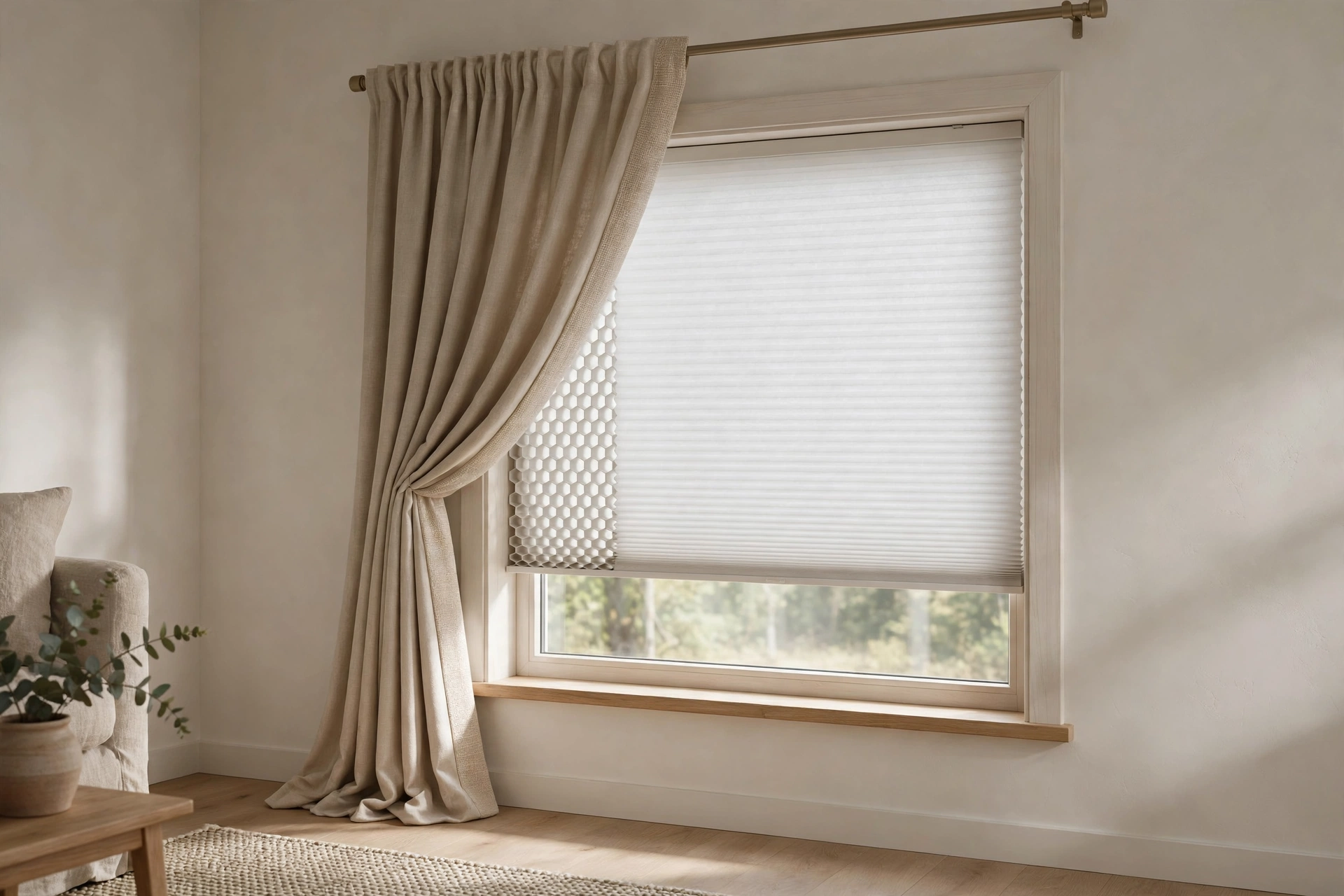
Cellular shades sit a step above curtains for insulation alone, because their honeycomb cells trap air in small pockets across the glass, and they fit inside the frame where a curtain cannot always reach. That does not make curtains the wrong choice: a curtain also gives darkness, privacy and a finished look in one purchase, and it layers well over a shade or blind for a room that needs both insulation and light control.
Judge the combination, not just the single product. A cellular shade inside the frame with a lined curtain over it is the strongest common set-up for a cold window, a lined curtain alone is a sound middle step, and a blind alone is best thought of as a light and privacy layer that needs a curtain or shade beside it before it can be called insulation.
Does a thermal curtain soften sound?
A thermal curtain softens sound in a room, but it does not block it. Heavy fabric and layers absorb some sound energy and take the edge off echo and sharp everyday noise, so a room with lined curtains feels quieter and less hollow than the same room with bare glass, and that softening is a real benefit even though it is not soundproofing.
Mass and layers do the work: a dense lined panel absorbs more than a thin unlined one, and a curtain plus a liner, or a curtain over a blind, absorbs more than either layer alone. Low traffic rumble is the hardest sound to touch, because it travels through the wall and the window frame as much as through the air, while voices and higher sounds in the room itself soften more readily.
If street noise is the main problem, treat curtains as one softening layer and look at the window itself as well: a worn seal, a rattling sash or single glazing will let in more noise than any curtain can absorb, and those fixes come before buying heavier fabric for sound alone.
Condensation behind a closed thermal curtain
A tightly closed thermal curtain can cause condensation on the glass behind it, because the sealed pocket of air cools against cold glass and the moisture in room air settles there. A little misting on a cold morning is common, but water that sits, drips onto the sill, or leaves dark marks is a warning to change the routine, not to live with it.
The fix is air and habit, not removing the curtain.
Open the curtains for part of the day so the glass warms and dries, air the room briefly even in winter, and keep the panel from sitting hard against wet glass for days at a time.

In a damp room, check behind the panels through winter and wipe the sill and frame dry when you find moisture, since mold grows where water sits undisturbed.
If condensation keeps returning on one window, look at the window and the room before blaming the curtain: a failed seal, a room that is never aired, or a lot of moisture from cooking and bathing will overwhelm any curtain routine, and those causes need attention in their own right.
Summer night ventilation: open at night to vent heat
In summer, the other half of the closed-curtain habit is opening up at night. Close sun-facing curtains before the sun hits the glass through the day, then open the curtains and the window at night when the outside air is cooler, so trapped heat can escape instead of sitting in the room until morning.
That day-night rhythm is the habit behind the advice to keep coverings closed in summer to cut heat gain, as set out in the energy guidance on window coverings from the U.S. Department of Energy, which also describes opening coverings on sunny winter mornings to let sun heat in. The same rhythm works in reverse in winter: open for sun by day, close at dusk to trap the warmth.
Vent only when it is safe and practical to do so, and close up again before the sun returns. A room left open into a hot morning warms up fast, so the night opening is worth little unless the curtains go back across the glass before the sun hits it.
Thermal fabrics beyond polyester, linen and velvet
Polyester, linen blends and velvet cover most thermal listings, but they are not the only fabrics that can carry a thermal build. Cotton, fleece, chenille and other natural-fiber builds all appear as thermal curtains, and each brings a different feel and care routine to the same insulating job.
Cotton thermal panels feel soft and breathable and usually wash well, but cotton alone insulates little, so look for a cotton face with a thermal liner or a dense triple-weave core behind it.
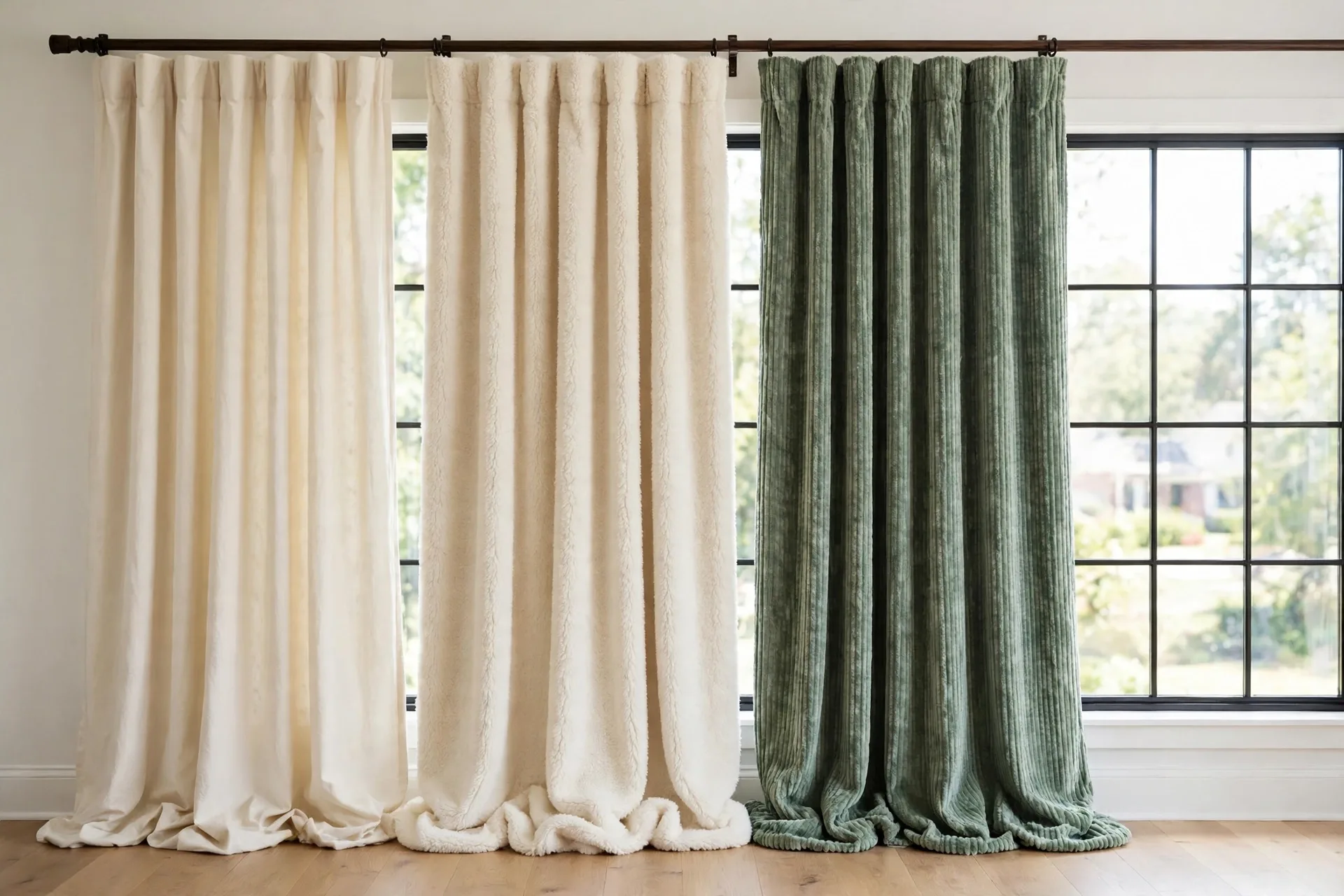
Fleece and chenille feel warm and heavy to the touch, which suits a cold bedroom, but both are bulky when open, need a sturdy rod, and should be checked against the care label before washing.
Natural-fiber thermal builds, such as a linen or cotton face over a thermal lining, suit rooms where a synthetic look feels wrong, and the lining does the insulating work while the face sets the look. Whatever the face fabric, judge the panel by its layers and its hang: a single thin layer in any fiber, sold as thermal with nothing behind it, will not insulate the way a lined or triple-weave panel does.
Frequently asked questions about thermal curtains
Most thermal questions come down to drafts, heat, and how much a thermal panel can actually do.
Do thermal curtains really work?
Yes, in the sense that matters: they slow heat moving through glass. They trap still air, add dense layers, and, in summer, reflect sun heat with a light backing. They do not seal a window or replace a repair, and a badly fitted panel will do far less than a well-fitted one.
Do thermal curtains stop drafts?
They reduce the cold feel near a window, but they do not stop air leaking through the frame itself. Fix gaps with weatherstripping or a repair first, then add a full, floor-length curtain hung close to the wall to trap the remaining cold air behind the fabric.
Do thermal curtains work in summer?
Yes, if the backing is light or reflective and the curtain is closed before the sun hits the glass. A dark, thin curtain closed after the room is already hot will do little. For a sun-facing room, choose a dense weave with a light backing and keep it closed through peak sun.
What is the difference between thermal curtains and blackout curtains?
A thermal curtain is built to control temperature with layers, a liner, or a foam backing. A blackout curtain is built to block light. Most thermal curtains also block light well, but many blackout curtains have no thermal layer at all. If darkness is the main job, read Best Blackout Curtains. If temperature is the main job, stay here.
What fabric or liner is best for insulation?
Look for triple-weave fabric, a sewn-in liner, or a foam backing, in that order of simplicity. Triple-weave suits most rooms and washes easily. A sewn-in liner often gives the strongest result. Foam backing gives a clean street view but needs gentler care. Avoid a single thin layer sold as thermal with no layer behind it.
Should thermal curtains touch the floor?
For winter, floor length is best, because it stops cold air pooling and spilling out underneath. For a sill-length window over a sink or radiator, sill length is fine, but the panel must still cover the frame and overlap in the middle. Never let a panel block a radiator or heater vent.
Can one set of curtains work all year?
Yes, as a compromise, not as the best winter set and the best summer set at once. Pick a dense panel with a light backing and hang it well: closed at night in winter, closed against sun in summer. The closest pick in this guide to that compromise is the BOODII linen blackout panel in Card 6, because its full blackout and thermal build work for summer heat as well as winter cold and its dense build works for winter. A very heavy velvet set may feel too much in a hot summer room, so a mid-weight triple-weave set is often the better year-round choice.
This guide is research-based curation: we compared maker specifications, published reviews, and current prices. Read how we choose.