 Best

How to Hang Curtains Without Drilling
You can hang curtains without a single hole in the wall, but only if the method matches your surface and your curtain weight. This guide compares all six ways and shows the limits of each.
You can hang curtains without drilling a single hole, and the method that works is the one that matches your wall surface and your curtain weight. A tension rod suits a narrow recess with a light panel, tap-in brackets suit wooden trim with a heavier panel, and adhesive hooks suit a smooth painted wall with a sheer. Pick the method from the surface first, check the weight second, and the curtains will stay up.
Each of the six methods holds a different weight, fits a different surface, and fails in a different way when it is asked to do too much. This guide walks through all six step by step, with the surface check that comes first, the weight and width limits for each method, the cure time adhesive needs, and how to take everything down again without leaving a mark.
Pick your no-drill method in one minute
Tension rods suit a standard frame, tap-in brackets suit the heaviest no-drill load, and adhesive hooks suit light panels on smooth walls. If you have not chosen a method yet, the comparison table on Best No-Drill Curtain Rods sorts the five rod methods by surface, width, and weight. Pick your method there, then use the sections below as the how-to for the method you chose.
Check the surface before you choose anything
Every no-drill method depends on the surface it grips, so check the surface before you buy anything: what is it made of, is it smooth or textured, and is it dry.
Wooden window trim is the friendliest surface for no-drill hanging, because tap-in brackets pin into the top of the trim itself. The trim needs to be real wood, between about half an inch and one inch wide, and it should be plain painted or stained wood rather than hardwood like oak, which resists the pins.
Trim made from PVC, MDF, or metal will not take pins, and neither will crown molding, so check the material before you count on brackets.
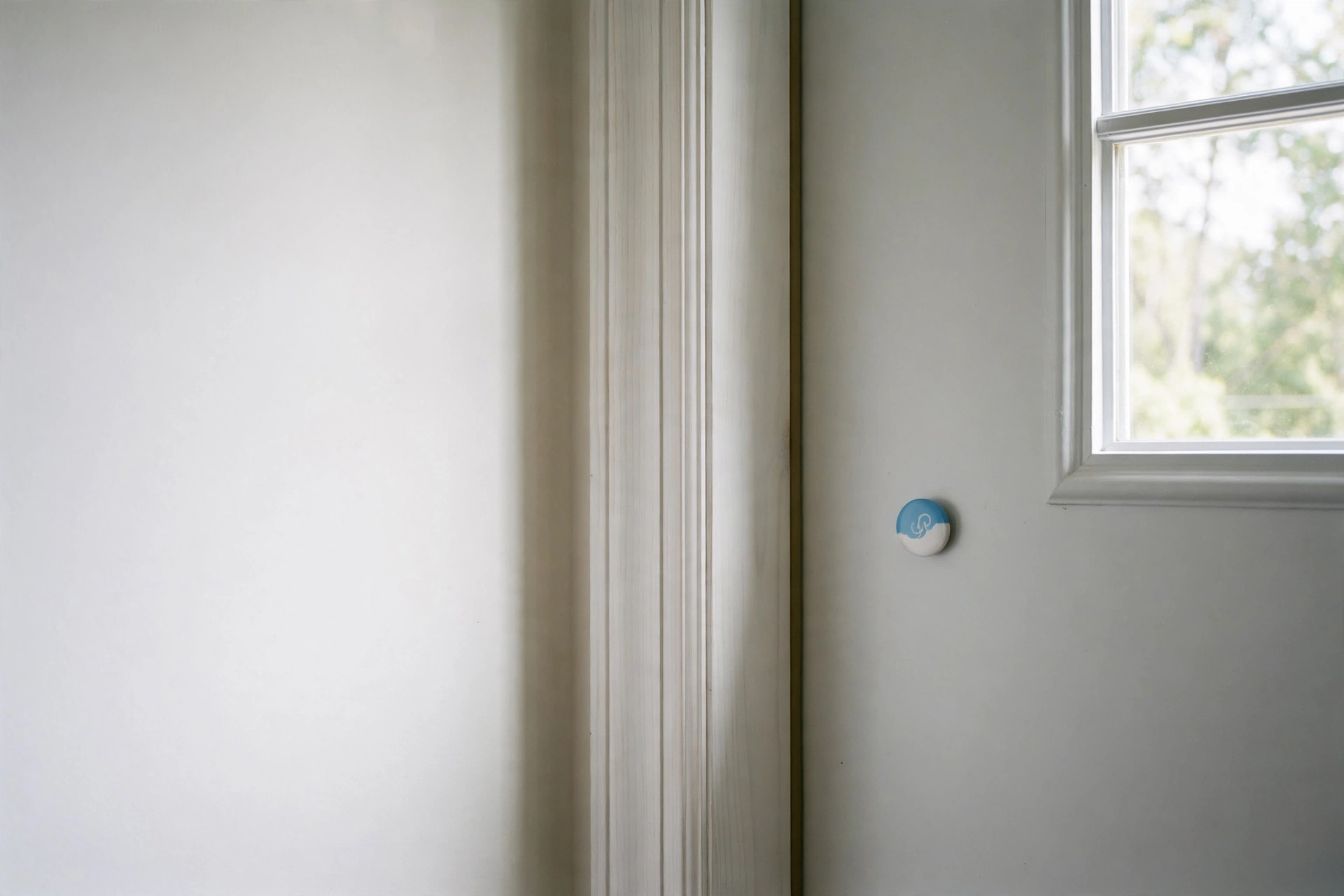
Smooth painted drywall suits adhesive hooks and nothing else on this list, and only where the paint is sound. Run a finger across the paint: if it feels chalky, flaky, or soft, adhesive will pull the paint off with it. Textured walls, wallpaper, bare brick, and fresh paint that has not fully cured all reject adhesive, and a steamy bathroom weakens the bond over time, so a bathroom window is a poor place for hooks. For a steel door or a metal frame, test with a fridge magnet first: if the magnet sticks firmly, a magnetic rod will grip, and if it slides or falls, the metal is aluminum or stainless steel and magnets will not hold it.
Tension rods: the inside-the-frame fix
A tension rod is a spring-loaded rod that wedges inside the window frame, and it is the simplest no-drill method of all, because it needs no hardware on the wall and no tools. It suits cafe curtains, bathroom windows, and narrow recesses with light panels, and it is the safest first choice in a rented home or a dorm room, where the rules often forbid anything attached to the wall.
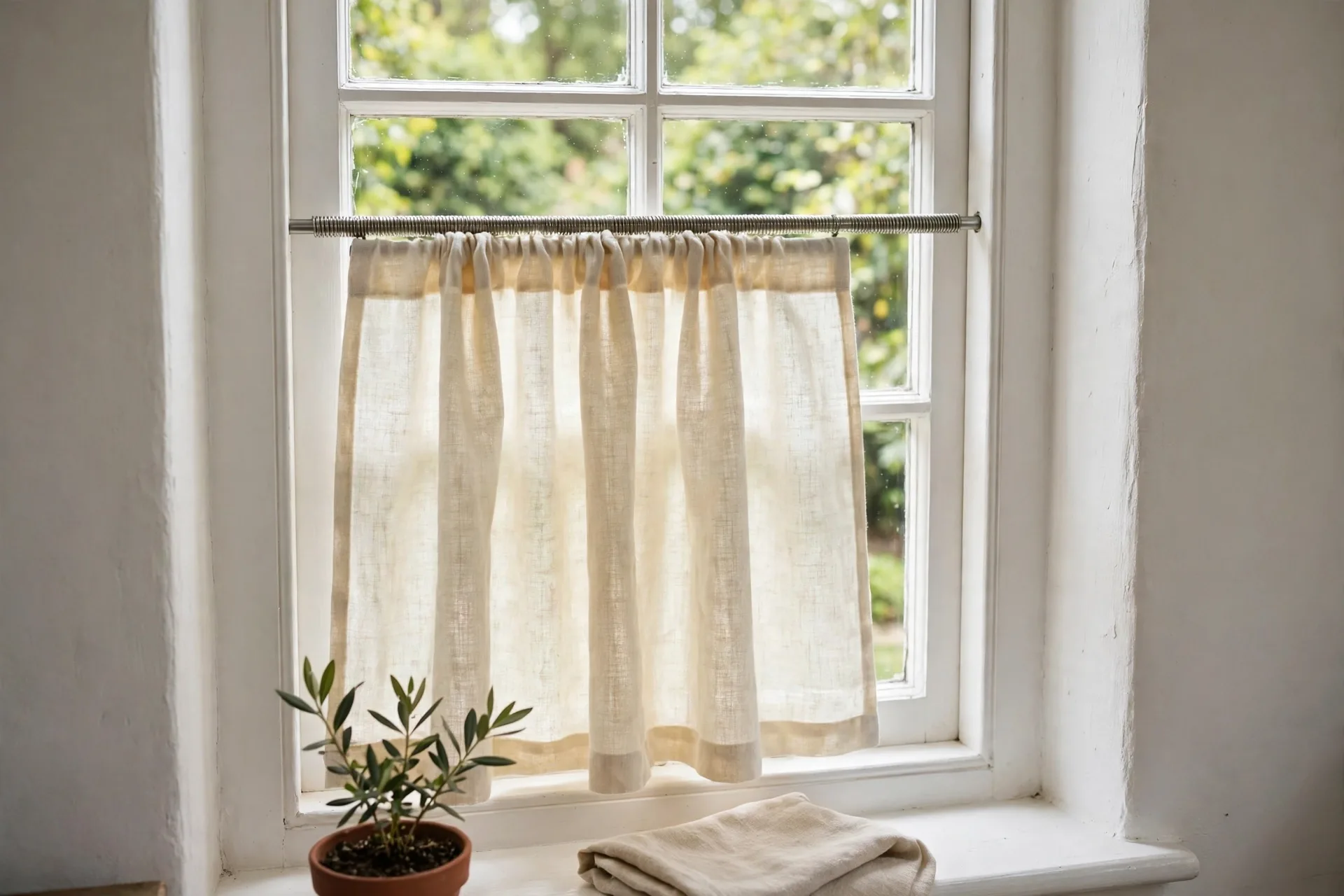
Measure the inside width of the window frame first, then buy a rod whose size range covers that measurement, with room to spare on both sides of the range. A rod stretched to its absolute limit holds weakly, so the middle of the range is where the hold is strongest. Thread the curtain onto the rod before you fit it. Hold one end against one side of the frame, compress the rod, set the other end in place, and let the spring expand until the rod sits snug. Check with a level, then give the rod a firm tug downward in the middle: if it moves, twist it a little tighter and test again.
Tension rods have a firm ceiling: they hold light sheers, voile, and cafe panels well, and they bow in the middle and slip over time under lined or blackout weight.
The spring itself slips over time as well, so a tension rod that held for months can start to slide, and it needs re-tightening now and then to keep its grip. A rod that keeps slipping is carrying more than its spring can hold, and the fix is a lighter panel or a different method. For the sheer job in full, see Best Sheer Curtains.
Adhesive hooks: light panels on smooth walls
Adhesive hooks hold a light curtain rod on a smooth painted wall with no hardware at all, and they are the only no-drill method that lets you hang a rod on a plain wall with no trim and no recess to grip. They suit sheers and cafe curtains on a smooth wall, and they are the method most people reach for first, because the hooks are cheap and the install looks easy. The install is easy, but the weight limit is the lowest on this list, so treat the rating on the package as a hard ceiling, not a rough guide.
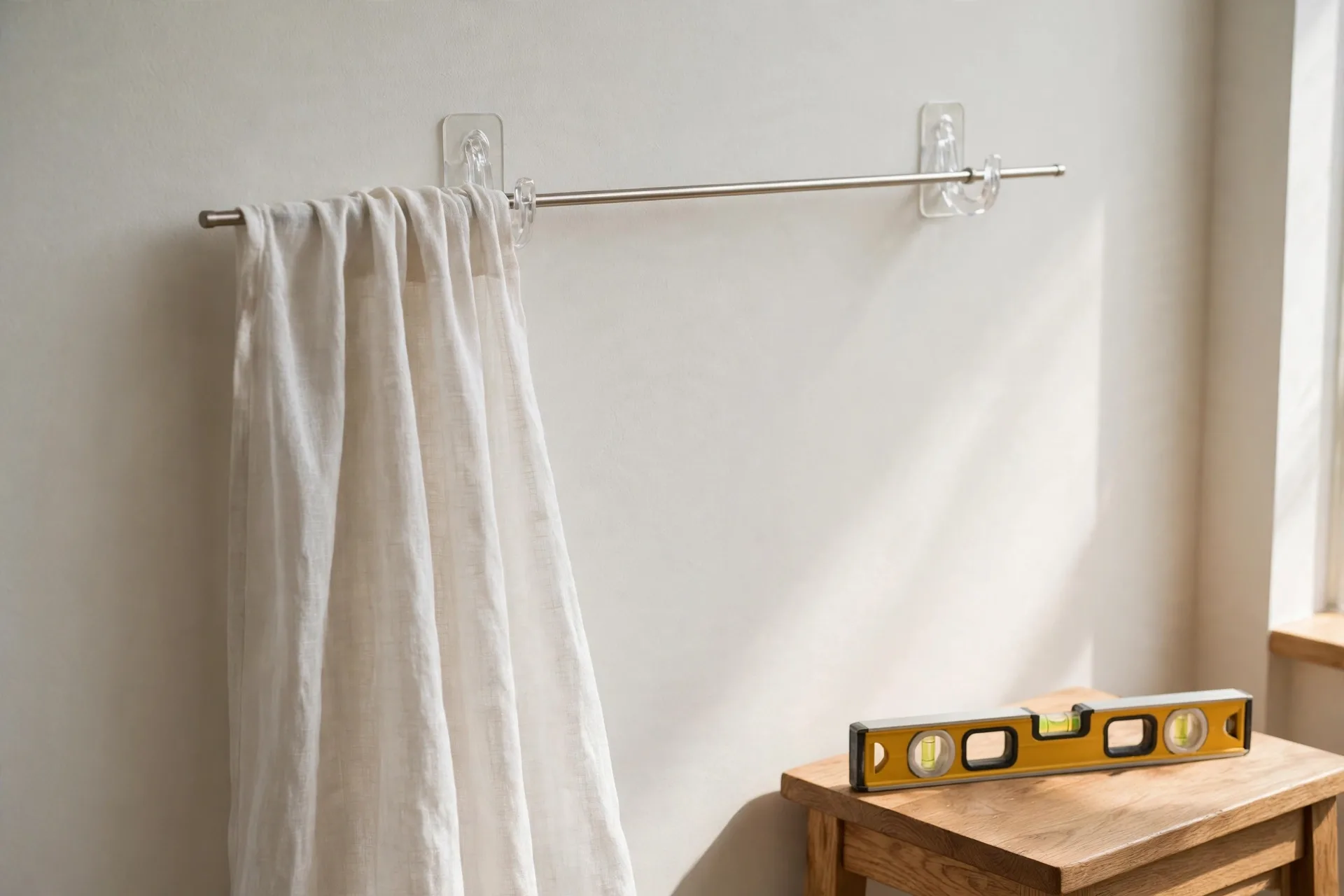
Clean the wall first with a damp cloth or isopropyl alcohol, and let it dry fully, because dust, grease, and cooking film all weaken the bond. Mark both hook spots with a pencil and a level before you stick anything down, because this is the one no-drill method that makes you measure. Peel the backing, press each hook firmly against the wall for about 30 seconds, and then wait for the adhesive to cure before you hang any weight on it. Cure time varies by maker, and the difference matters: some makers say 30 to 60 minutes is enough, while others say a full day. Follow the package on the hooks you bought, and when two sources disagree, wait the longer time, because a hook loaded too early can fail weeks later even if it feels solid on the day. Rest a slim rod across the hooks, keep the total load inside the rating, and add a third hook in the middle for any window wider than about 30 inches, so the rod does not bow between the two end hooks.
Adhesive hooks fail on textured walls, wallpaper, bare brick, and fresh paint, and they weaken in steam, so skip them for a bathroom window. They also limit your rod choice, because the rod must be slim enough to sit in the hook.
High-quality hooks stay attached for months to a few years, so plan on replacing them when the bond weakens rather than loading them past their life.
Skip white plastic versions where the finish matters, because they read as cheap against a painted wall, and remember that hooks only fit very narrow diameter rods.
Keep the rod about 4 to 6 inches above the frame, so the panel hangs at the right length from a hook-placed rod.
Adhesive hooks can also carry a curtain with no rod at all: a lightweight cafe rod or small-diameter dowel rested across the hooks carries rod-pocket or back-tab curtains, and clip rings attached to the curtain top edge hook directly onto a series of adhesive hooks.
With no rod, the curtain hangs closer to the wall, so length measurement must be precise: a hem that drags catches and pulls, and fabric that is too short puts undue downward stress on the hooks.
Capacity stays limited by the rating of a single hook, so weight must be distributed evenly: for a wider window, three hooks, one on each end and one in the center, give stability, but the curtain material between hooks must stay well below the individual hook maximum rating.
Tap-in trim brackets: the strongest no-drill hold
Tap-in brackets are the strongest no-drill method, and they are the only one that can carry lined drapes and blackout panels without drilling. Each bracket is a small metal cradle with built-in steel pins on its underside, and it fixes to the top of your wooden window trim the way a thumbtack fixes to a corkboard: a few taps with a hammer and the pins seat into the wood.
Check the trim first.
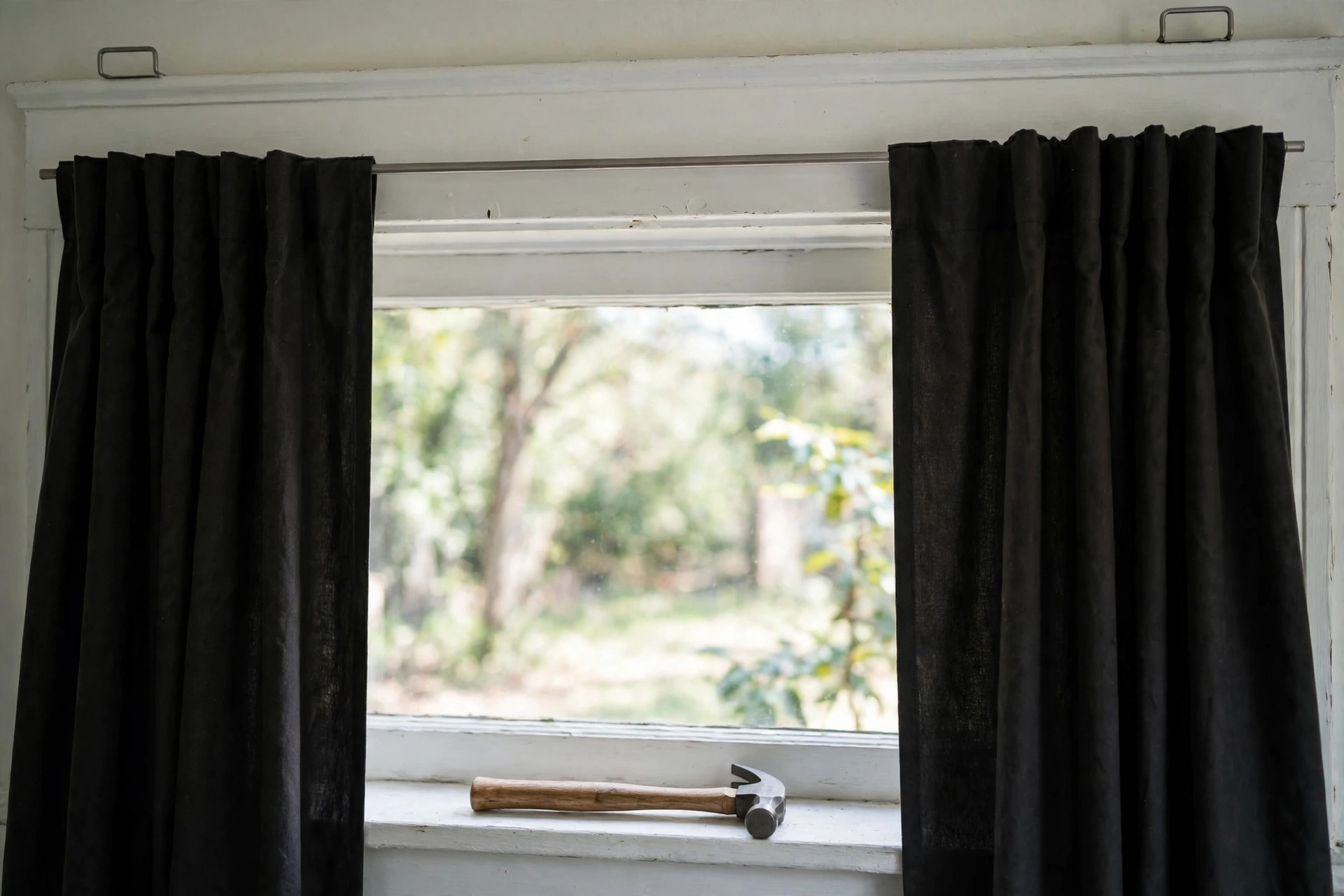
It must be traditional wooden trim, between about half an inch and one inch wide, and the brackets are not recommended for oak, PVC, MDF, metal trim, or crown molding. The pins need softwood they can bite into, and they will not seat properly in hard or synthetic trim. Hold the bracket at the top corner of the window trim, right where the trim meets the wall, and tap it in with a hammer until it sits snug. Repeat on the other side, set a level across both brackets, and then thread the curtains onto the rod and set the rod into the cradles. That is the whole job, and most people finish both brackets in under a minute each, with no measuring, because the corner of the trim sets the position for you.
Clip-on brackets that clip onto the window frame are a related option where the trim will not take pins, though they need a frame edge they can grip.
Tap-in brackets project a set distance from the wall: single brackets project about 3 inches, and double brackets about 4 inches, which lets sheers hang behind drapes on the same fitting.
Rod diameter follows the fabric: a 5/8-inch rod suits sheers and lighter curtains, while a 1-inch rod handles heavy drapes.
Double brackets layer sheers behind drapes on the same trim, so one fitting gives the day layer and the night layer together.
Each bracket supports up to 20 lb, which covers most blackout panels and lined drapes. The trade-off is small: the pins leave tiny holes in the top of the trim when the brackets come off, but the holes are pin-sized and hidden where nobody sees them. For the darkness job that needs this kind of hold, see Best Blackout Curtains.
Magnetic rods: steel doors and metal frames only
A magnetic rod attaches to a steel door or a metal window frame in seconds, with no tools, no adhesive, and no marks of any kind. It is the right method for exactly one situation, a window set into a steel door, and the wrong method for every other surface, because magnets only grip steel.
Test the surface first with a fridge magnet. If the magnet holds firmly, the door or frame is magnetic steel and a magnetic rod will grip.
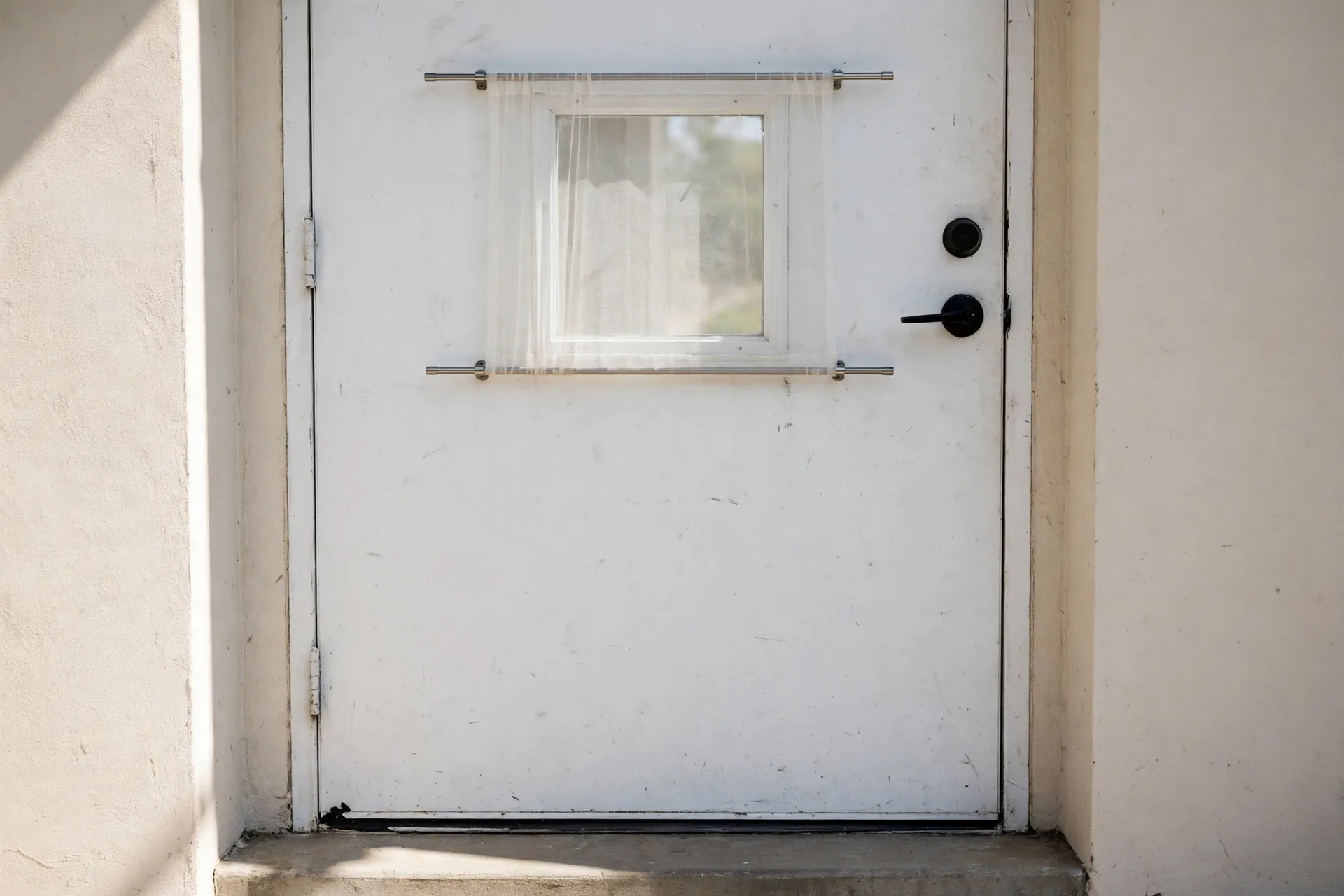
If the magnet slides or falls, the metal is aluminum or stainless steel, or the surface is wood or vinyl, and no magnetic rod will hold on it. Measure the frame width, slide the curtain onto the rod before you fit it, adjust the rod to the width you need, and press both magnetic ends flat against the metal, checking with a level. For a door curtain, fit a rod above the window and a second rod below it, so the fabric stays flat and does not swing when the door opens.
Capacity varies by model, from about 5 lbs for a slim rod up to about 30 lbs for a heavy-duty one, so match the rod to your curtain weight and check the rating on the package before you buy. The removal is the easiest of any method here: lift the rod off, wipe the metal, and there is nothing to patch, fill, or clean.
Twist-fit rods: the lock-in-place middle ground
A twist-fit rod is the lock-in-place cousin of the tension rod, and it fills the gap between a tension rod and a drilled rod. It expands to press against both sides of a window frame, then locks with a twist, so the hold is firmer than a spring alone and it carries light to medium panels, commonly rated from about 5 to 20 lbs.
Measure the inside frame width first, the same as for a tension rod, and buy a rod whose size range covers your measurement with room to spare.
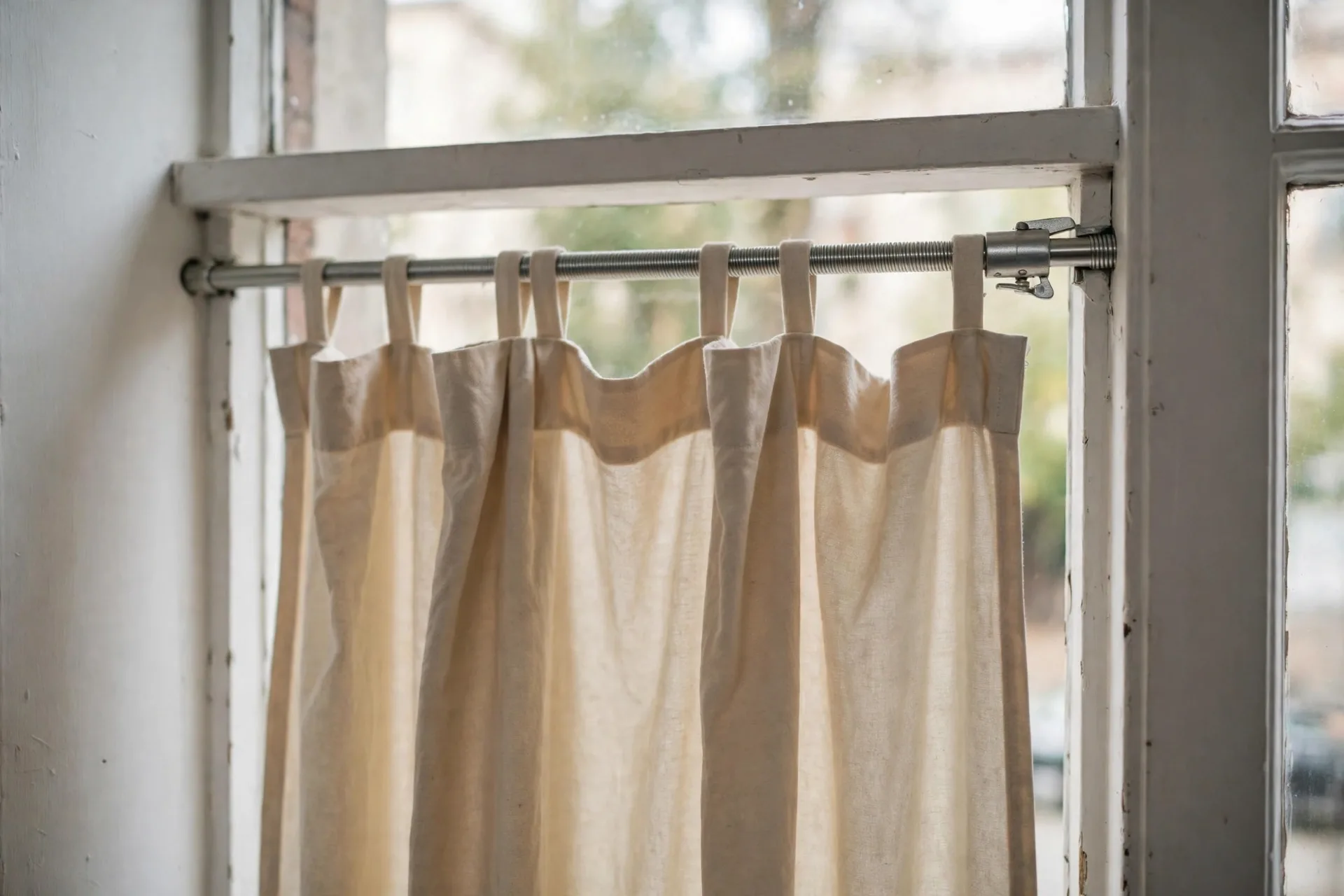
Twist the rod to extend it slightly wider than the opening, slide the curtain onto the rod, fit it inside the frame, and twist until it locks tight. Pull-test it before you walk away: grip the rod in the middle and pull down firmly, then tug each end sideways. If it holds without shifting, it is set, and if it moves, twist it a little tighter and test again.
Twist-fit rods suit windows where a tension rod slips but the panels are still too light to justify drilling, such as a medium-weight cotton panel in a rented flat. They still live inside the frame, so they cannot hang a rod high and wide above the window the way brackets can, and they still bow under heavy drapes. For the full hanging steps when drilling is allowed, see How to Hang Curtains.
Hook-and-loop strips: a sixth method for light panels
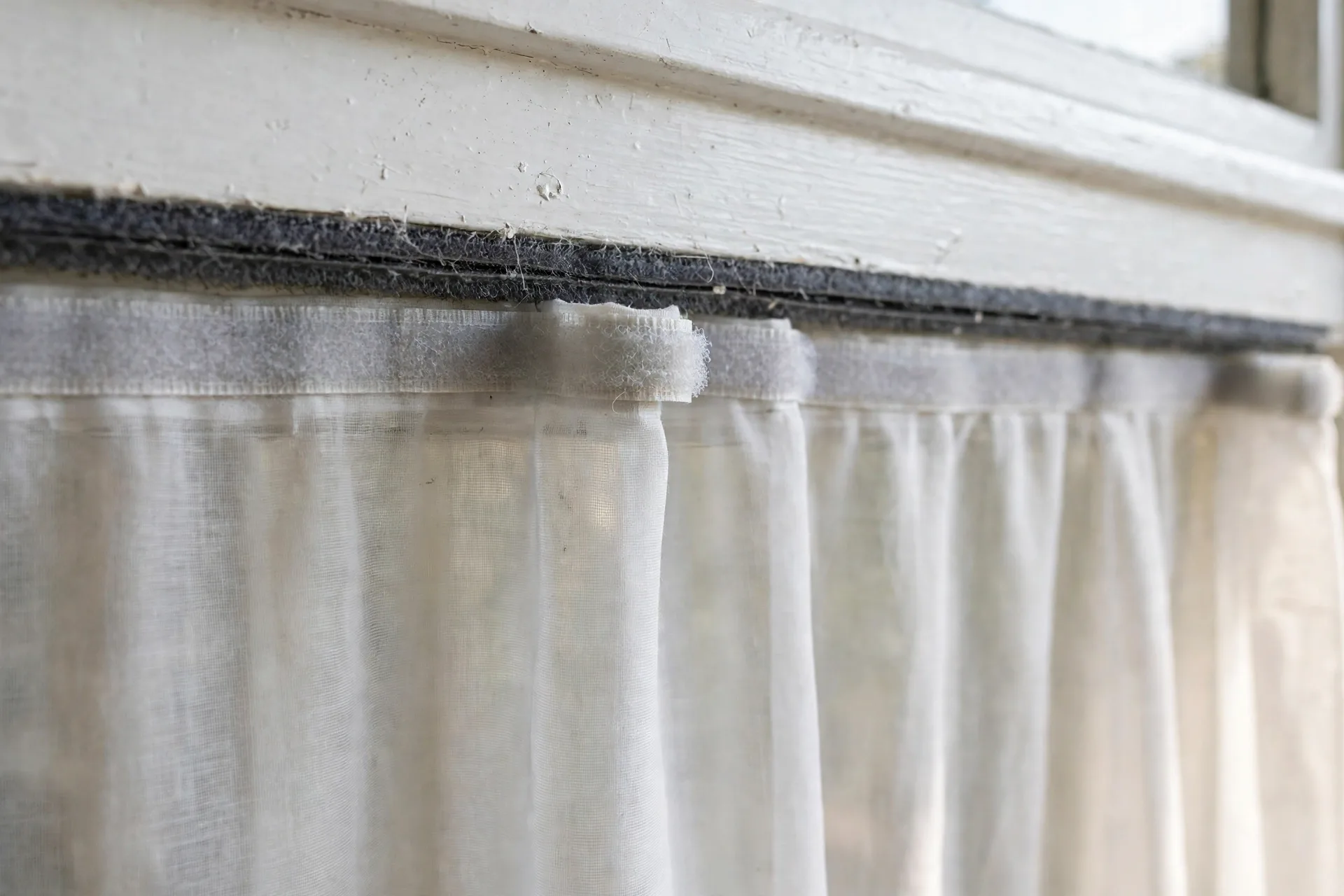
Hook-and-loop strips are the sixth no-drill method, and they suit lightweight curtains where no rod is wanted at all. One strip fixes to the top edge of the window frame, and the matching strip is sewn or adhered to the back of the curtain heading, so the panel hangs straight from the frame. Professional-grade strips suit tented curtains in sunrooms and conservatories, and industrial-strength versions support panels up to about 10 pounds. The hold depends on the bond: press both strips firmly along their full length, and keep the panels light, because a heavy panel peels the strip away from the frame.
Weight and width limits no-drill hardware cannot cross
Every no-drill method has a ceiling, and the ceiling is set by the grip, not by the rod. A rod can be as thick and strong as you like, but if the grip holding it to the wall is a spring, a magnet, or a strip of adhesive, the grip decides how much weight the window can carry. Weigh your curtains before you choose, because guessing is how rods end up on the floor.
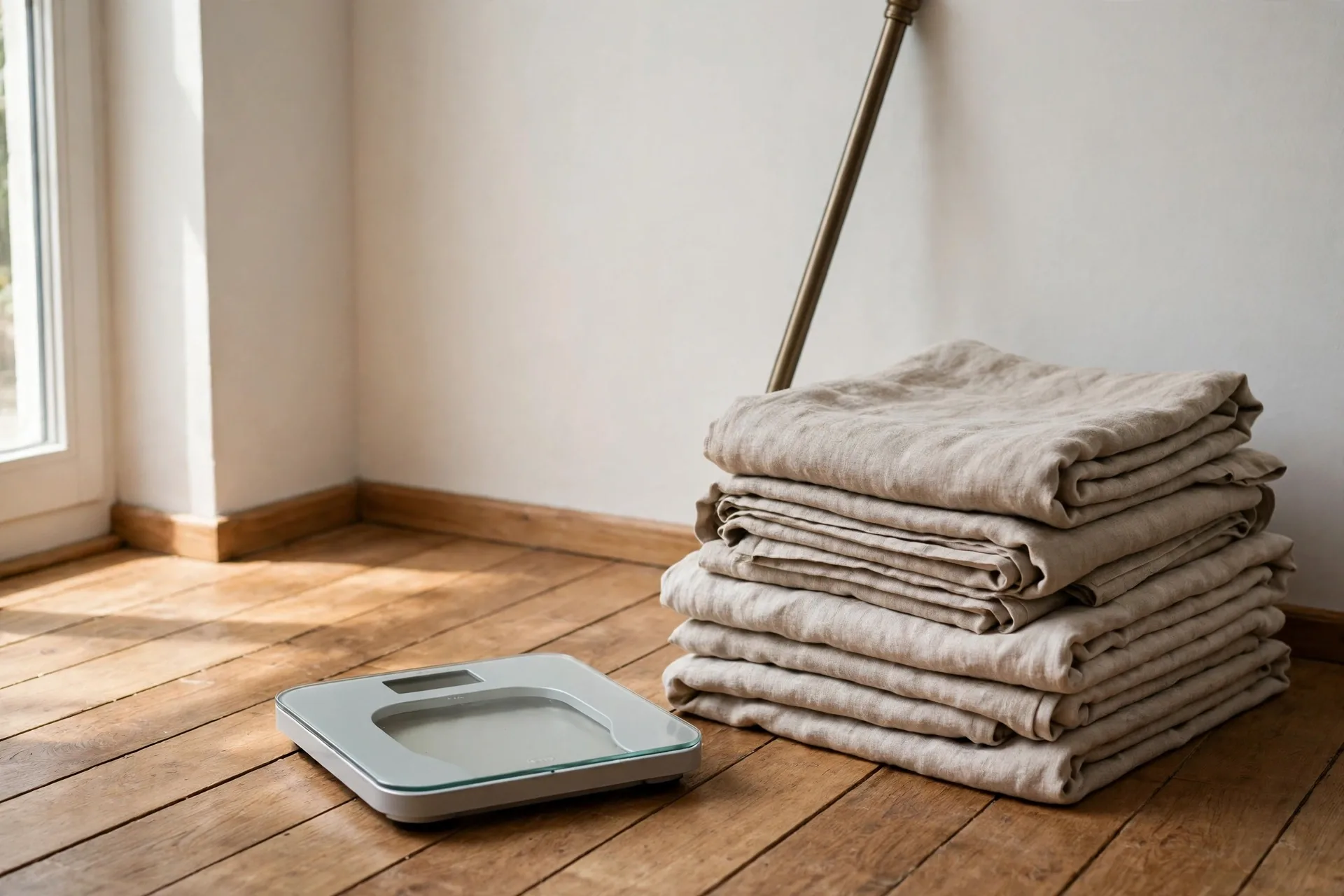
Weigh the pair together on a bathroom scale, then add the weight of the rod itself, because the hardware carries both.
Sheer, cotton, linen, voile, and lightweight polyester suit no-drill methods, while a thick heavy blackout curtain or tapestry-weight fabric exceeds the shear strength of temporary adhesives and fails, so match the fabric to the method before buying.
Heading matters by method as well: rod pockets or back tabs suit a dowel or wire, while grommets or tab tops slip easily onto adhesive hooks or clip directly to a tension wire with curtain rings. A pair of unlined sheers is usually light enough for any method here, a pair of lined cotton panels is usually past what adhesive hooks and tension rods can hold, and a pair of lined blackout panels is usually past every method except tap-in brackets. Width matters as much as weight: a long rod bows in the middle even when the total weight looks modest. Add a tap-in center support bracket for any no-drill rod setup wider than about 37 inches, and add a third adhesive hook in the middle for any hook setup wider than about 30 inches. For the measuring steps that set the width, see How to Measure for Curtains.
When the numbers do not fit any method, change the plan instead of overloading the hardware: a lighter panel or a drilled bracket beats a heavy panel on a hook rated for a sheer.
Taking it all down without leaving a mark
No-drill hardware earns its keep twice: once when it goes up without holes, and again when it comes down without damage. Each method has its own removal, and the removal is where most of the damage happens, so take it slowly.
Lift a tension rod or a twist-fit rod out by compressing it first, then easing one end free, rather than yanking it sideways, which can scuff the frame.
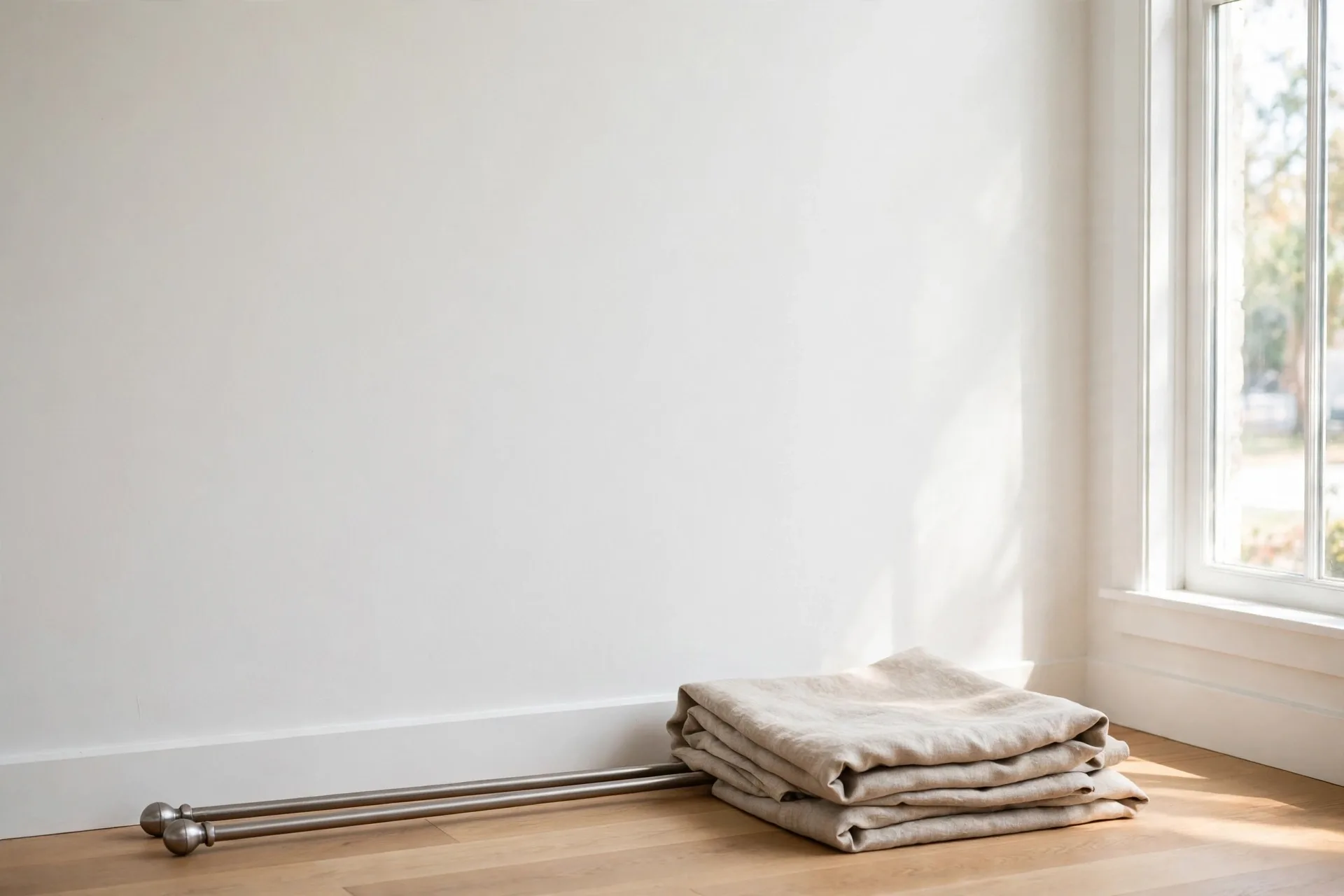
Pull adhesive hooks off by following the package instructions, which usually means pulling the release tab straight down along the wall, slowly, until the strip stretches and lets go. Never peel a hook straight off the wall, because that is what pulls paint and leaves a patch. Tap-in brackets lift straight up off the trim, and the pin holes they leave are tiny and hidden on the top face of the trim; fill them with a dab of wood filler if the trim is bare wood, or leave them, since they sit where nobody looks. Magnetic rods lift straight off the metal, and a wipe with a damp cloth clears any dust line they leave behind. Renters should read the lease before hanging anything, because the lease decides what no-drill means, and the renter guide covers the full decision.
Mistakes that end with curtains on the floor
The most common mistake is skipping the weight check and hanging lined panels on hooks rated for sheers, which holds for a day or a week and then fails all at once. The second is sticking adhesive hooks to a dusty or greasy wall, or to fresh paint, and loading them before the adhesive has cured, which gives a bond that feels solid and then lets go. The third is buying a tension rod at the very end of its size range, where the spring has almost no travel left, so the grip is weak from the first day.
Other mistakes follow from the surface: tap-in brackets forced into oak or PVC trim, where the pins cannot seat and the bracket sits crooked; magnetic rods pressed onto aluminum, where they slide off the moment the curtain is drawn; and twist-fit rods fitted to a frame that is wider at the top than at the bottom, so the rod grips at one height and slips at another. Each of these is avoidable at the surface check, which is why the check comes before anything is bought.
Curtains can also hang over blinds without drilling, where the blinds already cover the glass and the curtain adds softness, though the same weight and surface limits apply.
Frequently asked questions about hanging curtains without drilling
Most no-drill questions come down to the surface, the weight, and the removal, and to which method fits a rented home.
Can I hang blackout curtains without drilling?
Yes, where the window has wooden trim, because tap-in brackets support up to 20 lb, which covers most blackout panels. Adhesive hooks and tension rods will not carry blackout weight, so a blackout panel on those methods will slip or fall. Check the weight of your panels against the bracket rating before you buy.
What is the best no-drill method for a rental?
Adhesive hooks and tension rods are the best no-drill methods for a rental, because they need no tools, leave little to no damage, and come down cleanly. Tap-in brackets are also renter-friendly where the window has wooden trim, since the pin holes are tiny and hidden on the top of the trim. Check your lease first, because some landlords forbid even pin holes.
How much weight can adhesive hooks hold for curtains?
A large adhesive hook is commonly rated for about 5 lbs, and some heavy-duty hooks are rated up to 5 to 7 lbs per hook. That covers sheers, voile, and light cafe panels, and it does not cover lined or blackout panels. Add a third hook in the middle for windows wider than about 30 inches, and never load a hook past the rating printed on its package.
How long should adhesive hooks cure before I hang curtains?
Follow the package on the hooks you bought, because cure time varies by maker: some makers say 30 to 60 minutes is enough, while others say a full day. When in doubt, wait the longer time, because a hook loaded too early can fail weeks later even if it feels solid on the day. Clean the wall first and press each hook firmly for about 30 seconds before the cure time starts.
Do tension rods fall down easily?
A tension rod falls when it is overloaded or fitted at the end of its size range, because the spring cannot hold the weight or has too little travel left to grip. Fitted in the middle of its size range with a light panel, a tension rod stays put.
Can magnetic curtain rods hold heavy curtains?
A magnetic rod can hold a heavier panel than most people expect, with heavy-duty models rated up to about 30 lbs, but only on magnetic steel. It will not grip wood, vinyl, drywall, aluminum, or stainless steel at all. Test the door or frame with a fridge magnet first.
Will tap-in brackets damage my window trim?
Tap-in brackets leave tiny pin holes in the top of the wooden trim, about the size of a thumbtack hole, and the holes sit on the top face where they are hidden. They do not crack or split sound softwood trim when tapped in straight. They are not recommended for oak, PVC, MDF, or metal trim, where the pins cannot seat properly.
For other hanging help, see Best Window Curtains.
This guide is research-based curation: we compared maker specifications, published reviews, and current prices. Read how we choose.