 Best
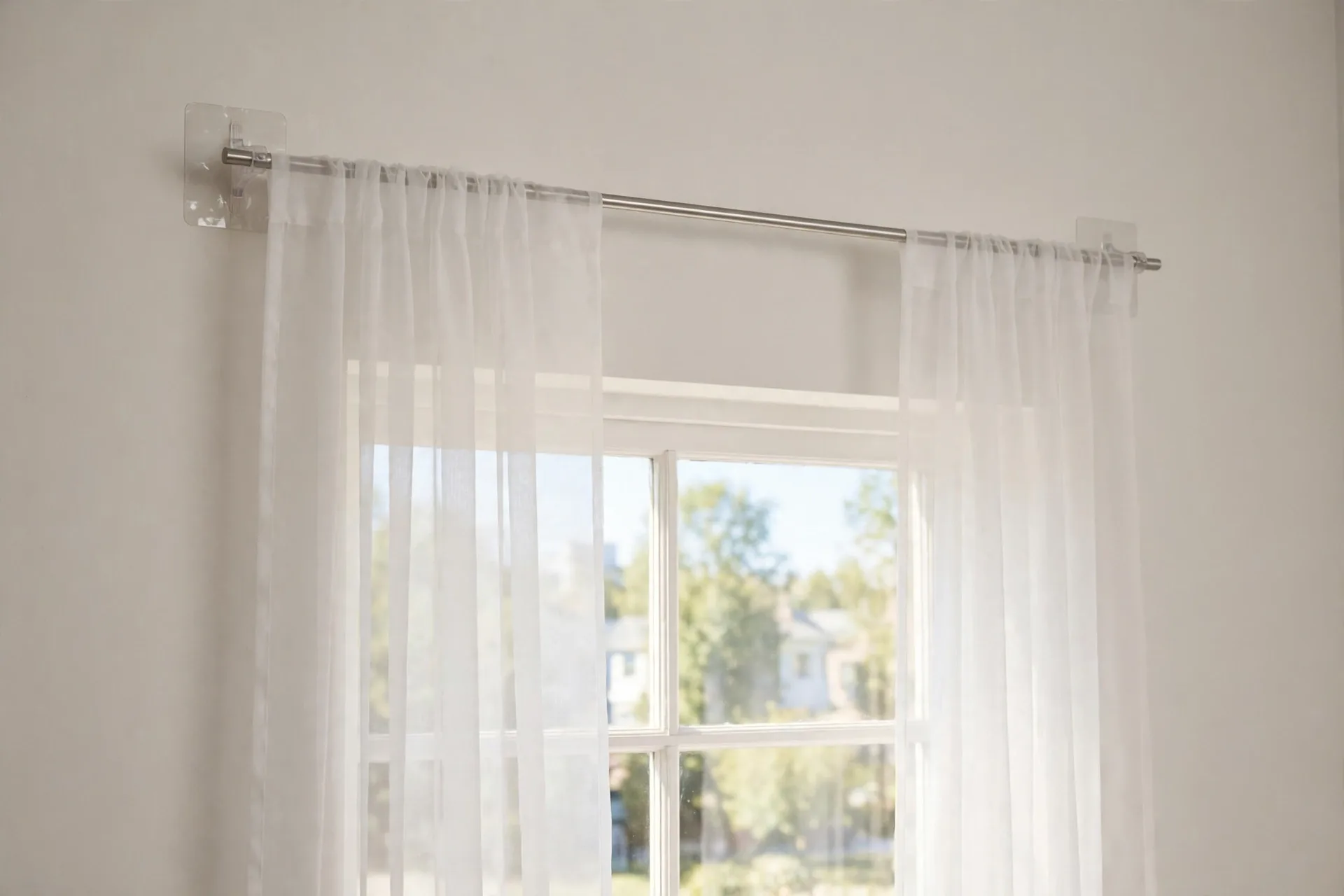
Best No-Drill Curtain Rods
No-drill rods work when the mounting method matches the wall, the width, and the weight. Pick the method first, then the rod.
The best no-drill curtain rod is the one whose mounting method matches your wall, your window width, and your curtain weight, because every no-drill method has a surface it grips and a load it cannot hold. A tension rod suits a narrow frame with light curtains, adhesive brackets suit a smooth wall with medium curtains, tap-in brackets suit a solid window trim, magnetic rods suit a metal door, and twist-fit rods suit a frame that can take a locking twist. Pick the method from the decision table first, then pick the rod, and the curtains stay up.
No-drill rods hang curtains without screws, nails, or holes in the wall, which is why renters, dorm rooms, and anyone who cannot or will not drill reach for them. The six methods in this guide are tension, adhesive hooks and brackets, tap-in trim brackets, magnetic rods, twist-fit rods, and hook-and-loop strips for lightweight curtains where no rod is wanted at all, and each one grips a different surface and carries a different load.
No-drill curtain rod picks by mounting method
A twist-fit tension rod suits a narrow frame with light to medium curtains, tap-in brackets suit solid wood trim with medium curtains, and adhesive brackets suit a smooth wall, with the heavy-duty set for a wider window with heavier curtains. The picks below are grouped by mounting method, not by brand. No pick names a maker or a size here, because those vary by listing and must be confirmed on the listing before you order. Check the mounting method, the width range, the weight rating, and the surface the listing requires before you order.
As an Amazon Associate, we earn from qualifying purchases.
| Pick | Type | Method | Best for |
|---|---|---|---|
| 1 | Adhesive bracket rod set with standard rod | Adhesive brackets | A renter hanging a standard rod on a smooth wall |
| 2 | Tap-in trim bracket set | Tap-in trim brackets | A window with solid wood trim and medium curtains |
| 3 | Twist-fit tension rod set | Twist-fit | A narrow window frame with light to medium curtains |
| 4 | Adhesive hook set for an existing rod | Adhesive hooks | Hanging a rod you already own without drilling |
| 5 | Heavy-duty adhesive bracket set | Adhesive brackets | A wider window with heavier curtains on a smooth wall with no wood trim |
| 6 | Wrap-around double rod set, no-drill hidden base | No-drill hidden base | A bedroom that needs darkness without drilling |
A note on tension and magnetic picks: tension rods and magnetic rods are not listed as full picks in this guide. Use the decision table below to decide whether tension or magnetic is your method, then check the span and weight cut-offs in the per-method sections against the listing before you order.
1. Adhesive bracket rod set with standard rod: best for a renter hanging a standard rod on a smooth wall
- Best for: A renter who wants a normal-looking rod on a smooth painted wall, with no holes and no tools.
- Key features: Adhesive brackets that stick to a clean smooth wall, standard rod in the set, brackets sized for common rod diameters, peel-and-stick mount.
- Pros: Looks like a drilled rod once hung, no tools and no holes, removes cleanly from a smooth wall when the strips are pulled right.
- Cons: Needs a smooth clean surface and a full cure time before loading, not suited to textured walls.
Use the adhesive brackets only (no drilling), the box also contains screws and anchors for a drilled install, which this article's method does not use. Choose a size on the page.
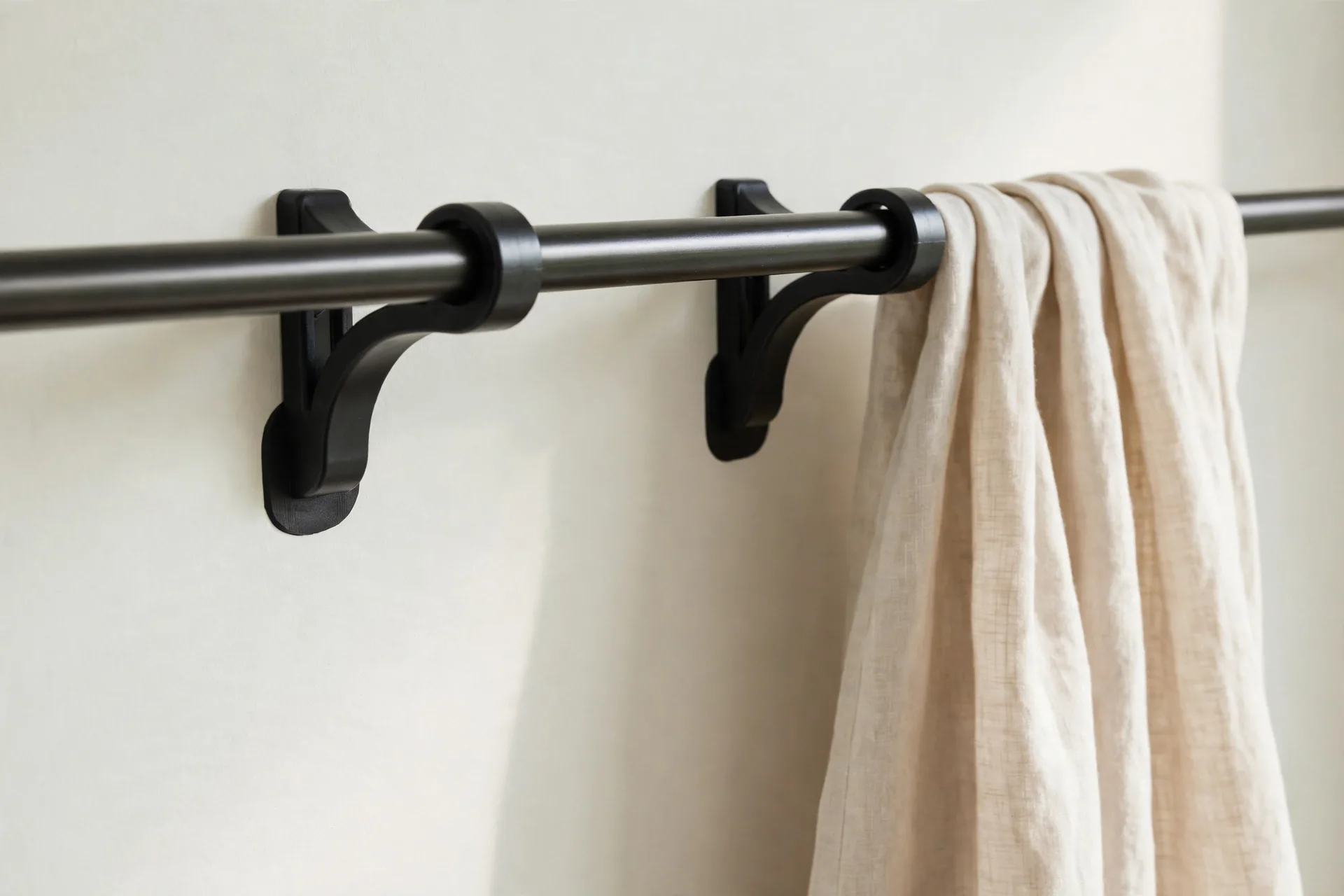
2. Tap-in trim bracket set: best for a window with solid wood trim and medium curtains
- Best for: A window with solid wood trim where the brackets tap into the top of the trim and hold a standard rod.
- Key features: Brackets that tap into the window trim with no screws, fits a standard rod diameter, holds medium-weight curtains, no wall holes.
- Pros: Stronger than adhesive on a suitable trim, installs in seconds with no tools, leaves only tiny pin holes hidden on the top of the trim.
- Cons: Needs solid wood trim of the right shape and depth, does not fit thin, rounded, or plastic trim.
Brackets only, pair with a rod up to 1 inch in diameter (rod not included). A center support bracket is needed where the brackets sit more than 30 inches apart, per the listing. Not for hardwood such as oak, PVC, MDF, metal, or plastic trim — the pins need softwood they can bite into.
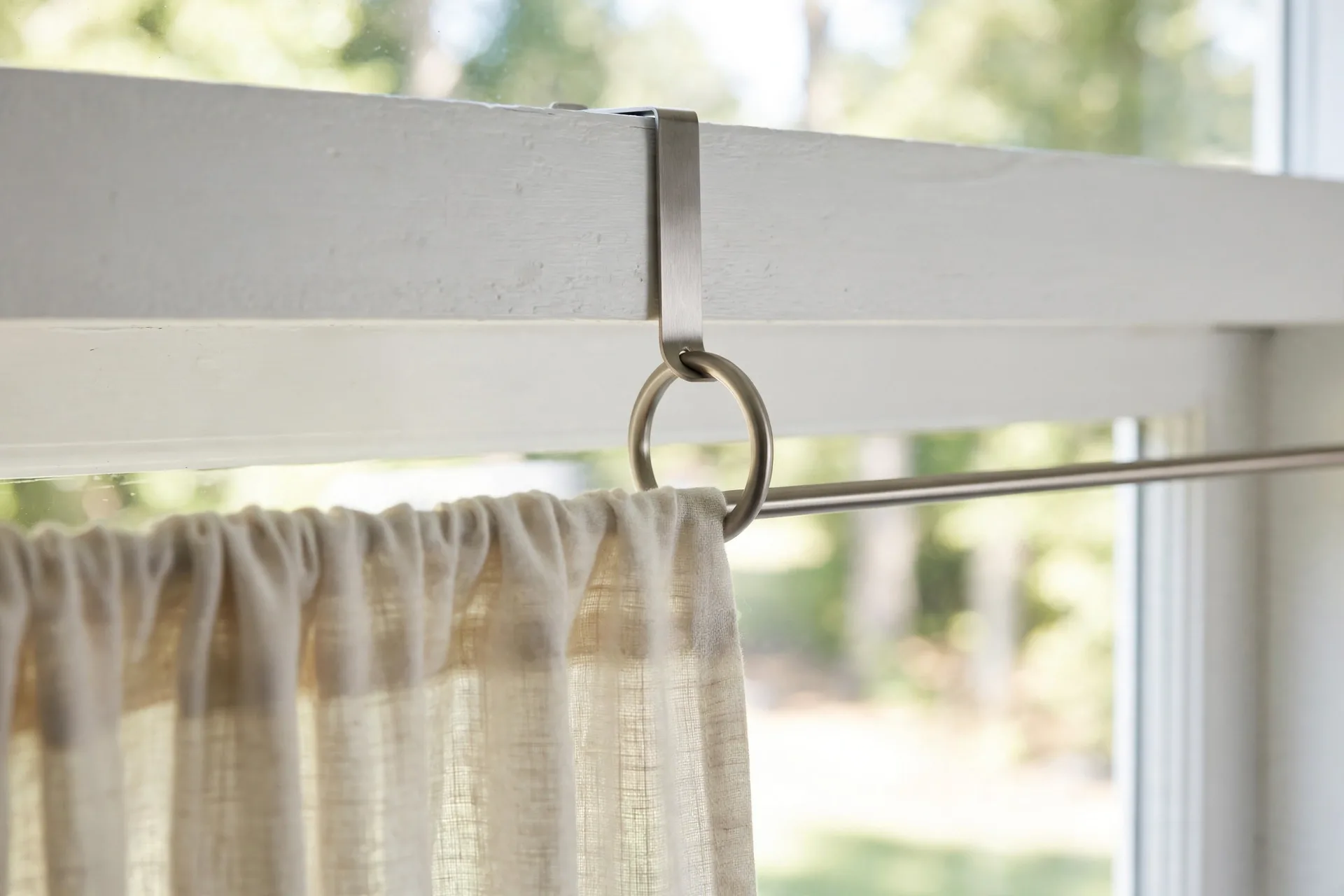
3. Twist-fit tension rod set: best for a narrow window frame with light to medium curtains
- Best for: A narrow window or a small opening where a rod must lock inside the frame with no brackets at all.
- Key features: Twist-to-lock mechanism that extends and locks, decorative round finials, adjustable from 28 to 48 inches.
- Pros: No brackets, no adhesive, no trim needed, installs and removes in seconds, twist finials lock the rod firmly without tools.
- Cons: Limited to narrow spans, a wide span or a heavy curtain makes the rod bow or slip.

4. Adhesive hook set for an existing rod: best for hanging a rod you already own without drilling
- Best for: A household that already owns a rod and only needs a damage-free way to mount it.
- Key features: Adhesive hooks sized for common rod diameters, strong strips rated for the load, mounts on a smooth wall or tile.
- Pros: Keeps a rod you already own in use, cheaper than a full set, hooks remove cleanly with the right release method.
- Cons: The hooks must match the rod diameter exactly.
Use 2 brackets per rod (13 lb per pair), check the rod diameter against the 0.39 to 0.78 inch range first.
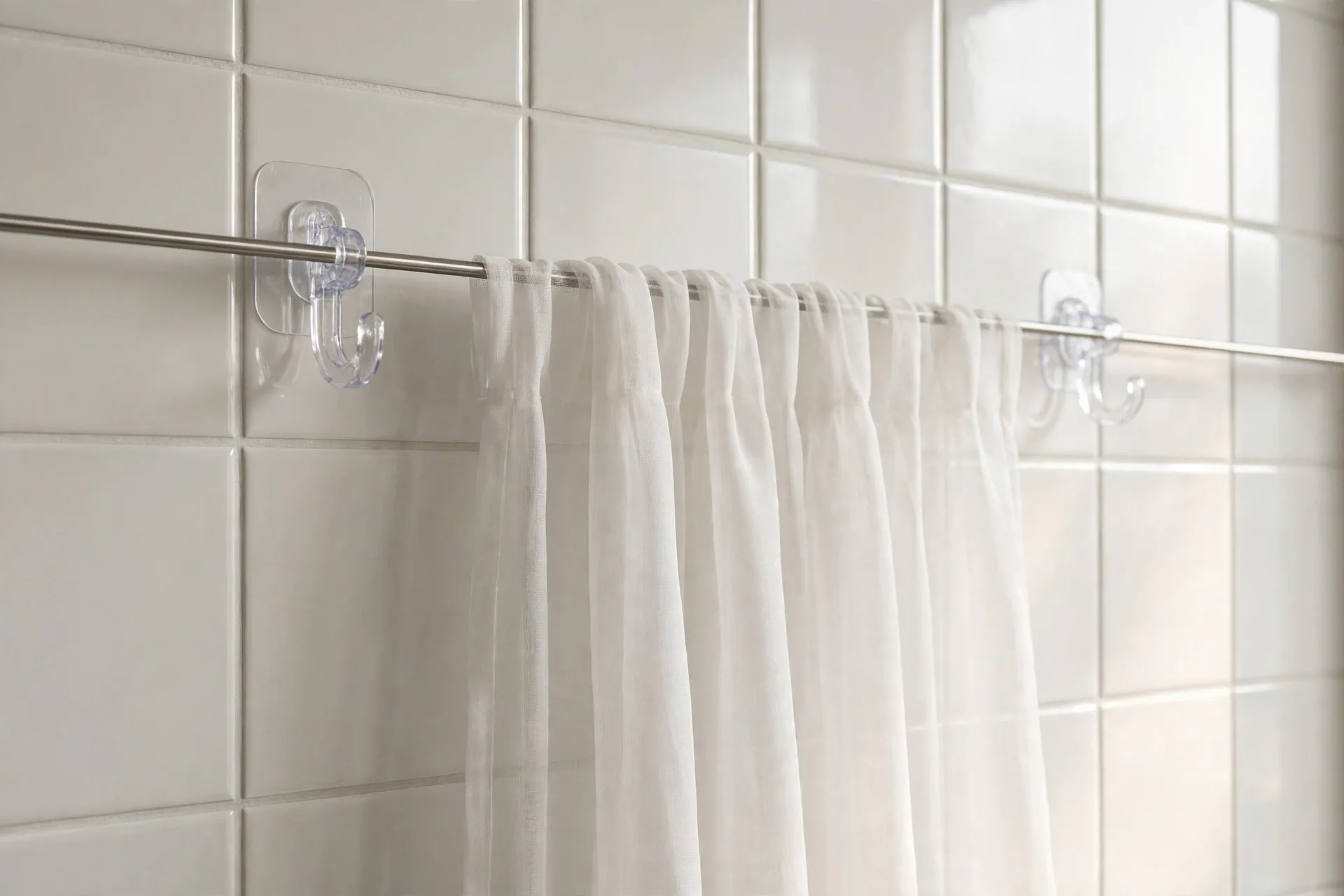
5. Heavy-duty adhesive bracket set: best for a wider window with heavier curtains on a smooth wall with no wood trim
- Best for: A wider window on a smooth wall with no wood trim for tap-in brackets, where the curtains are heavier than a basic adhesive set can hold.
- Key features: Adhesive brackets rated to 20 lb, 6-pack with extra brackets for wider spans, fits rods from 0.2 to 1.2 inches, peel-and-stick mount.
- Pros: More load margin than a basic adhesive set, suits a wider window with a heavier panel, still no drilling and no holes.
- Cons: Needs a larger smooth area and a full cure time, still not suited to textured walls or brick.
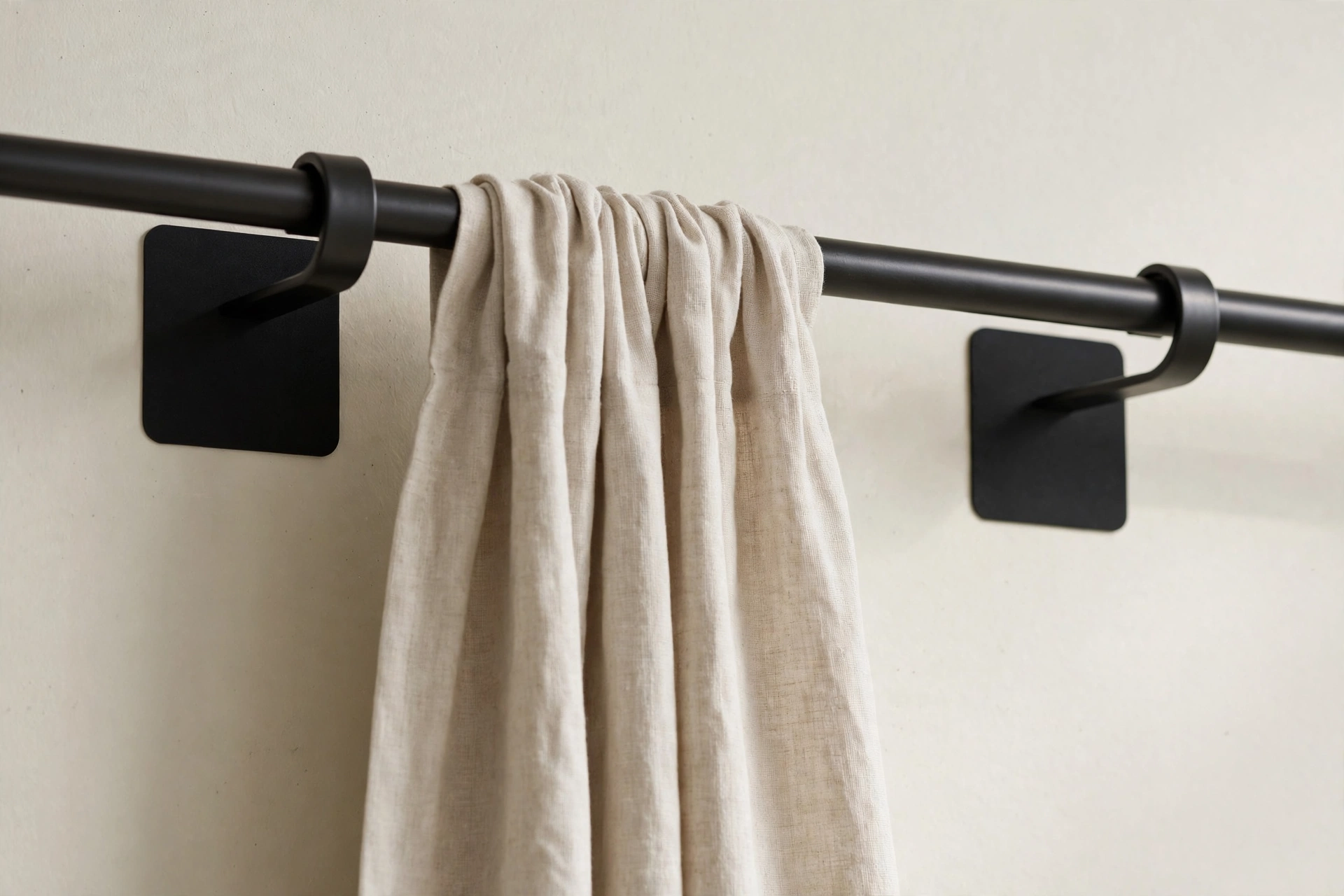
6. Wrap-around double rod set, no-drill hidden base: best for a bedroom that needs darkness without drilling
- Best for: A bedroom where blackout curtains must hang without drilling and the side light gaps must close.
- Key features: Wrap-around ends that bring the fabric back to the wall, double rods for blackout panels over sheers, no-drill hidden mounting base, 22 lb rating.
- Pros: Wraparound ends cut the side light leak that ruins blackout, double rods carry sheers behind blackout panels, no drilling and no visible brackets.
- Cons: The hidden base must suit the wall, so check the mounting instructions on the listing before ordering, the wraparound ends add leverage on the mounts, so keep the curtains within the 22 lb rating.
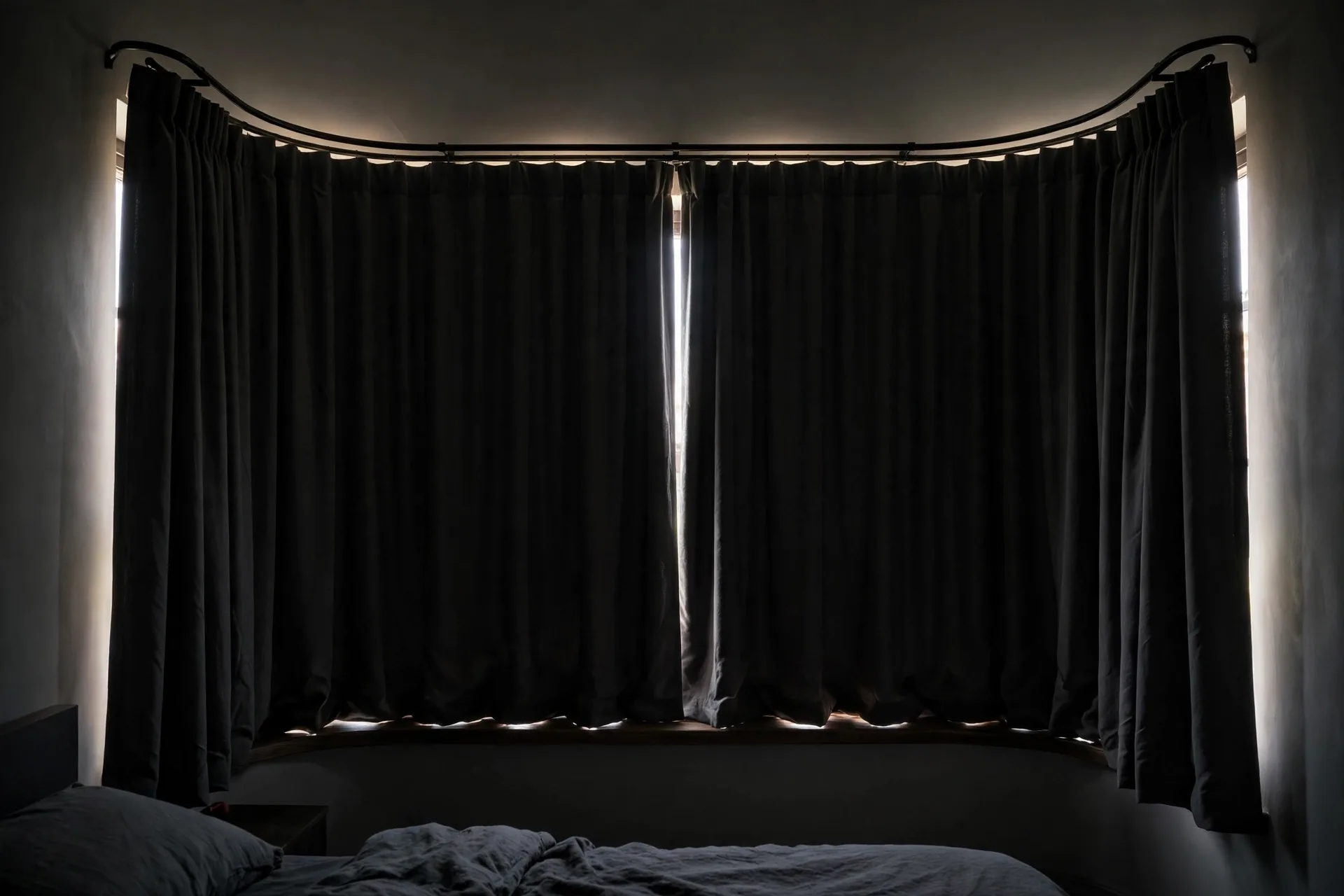
The method decision table: tension, adhesive, tap-in, magnetic, and twist-fit
The table below is the decision this guide owns: each method matched to the surface it grips, the width it spans, the weight it carries, and how it comes off. Find your surface first, then your width, then your weight, and the method follows. Hook-and-loop strips are not in this table, because they hang the panel straight from the frame with no rod.
| Method | Best surface | Width | Weight | Removal |
|---|---|---|---|---|
| Tension | Inside a solid window frame | Narrow to medium | Light to medium | Lift out, no mark |
| Adhesive hooks and brackets | Smooth clean wall, tile, glass | Narrow to wide | Light to medium, heavy with rated set | Peel strips, clean release |
| Tap-in trim brackets | Solid wood window trim | Narrow to medium | Light to medium, and heavy lined drapes | Tap out, no holes in the wall |
| Magnetic | Metal door or steel frame | Narrow | Light | Lift off, no mark |
| Twist-fit | Inside a solid window frame | Narrow | Light to medium | Untwist, lift out |
Read the table by ruling methods out rather than by picking a favorite. A textured wall rules out adhesive, a non-metal door rules out magnetic, a thin or plastic trim rules out tap-in, a wide window rules out tension and twist-fit, and a heavy lined curtain rules out every method except tap-in trim brackets, a rated adhesive set, or a drilled rod. The method that survives all four checks, surface, width, weight, and removal, is the right one.
Rod material is a choice of its own: metal, plastic, and wood all appear in no-drill sets, and the material decides how much weight the rod itself can carry before the mount is even tested.
Most no-drill rods can be removed and reused when rearranging or moving, so follow the specific removal instructions for adhesive-backed parts to avoid residue or surface damage, wipe the surface and inspect for scuffs after removal, and store the rod flat to prevent warping.
Tension rods: where they hold and where they slip
A tension rod holds by pushing outward against two opposite surfaces inside a window frame, with a spring or a twist lock keeping the pressure on. It suits a narrow to medium frame with light to medium curtains: sheers, voile, light cotton, and cafe panels. It installs in seconds, removes in seconds, and leaves no mark at all.
A tension rod slips where the frame is too wide, the surfaces are not parallel, or the curtains are too heavy. A wide span bends the rod in the middle and the spring cannot hold the bow, so the rod drops.
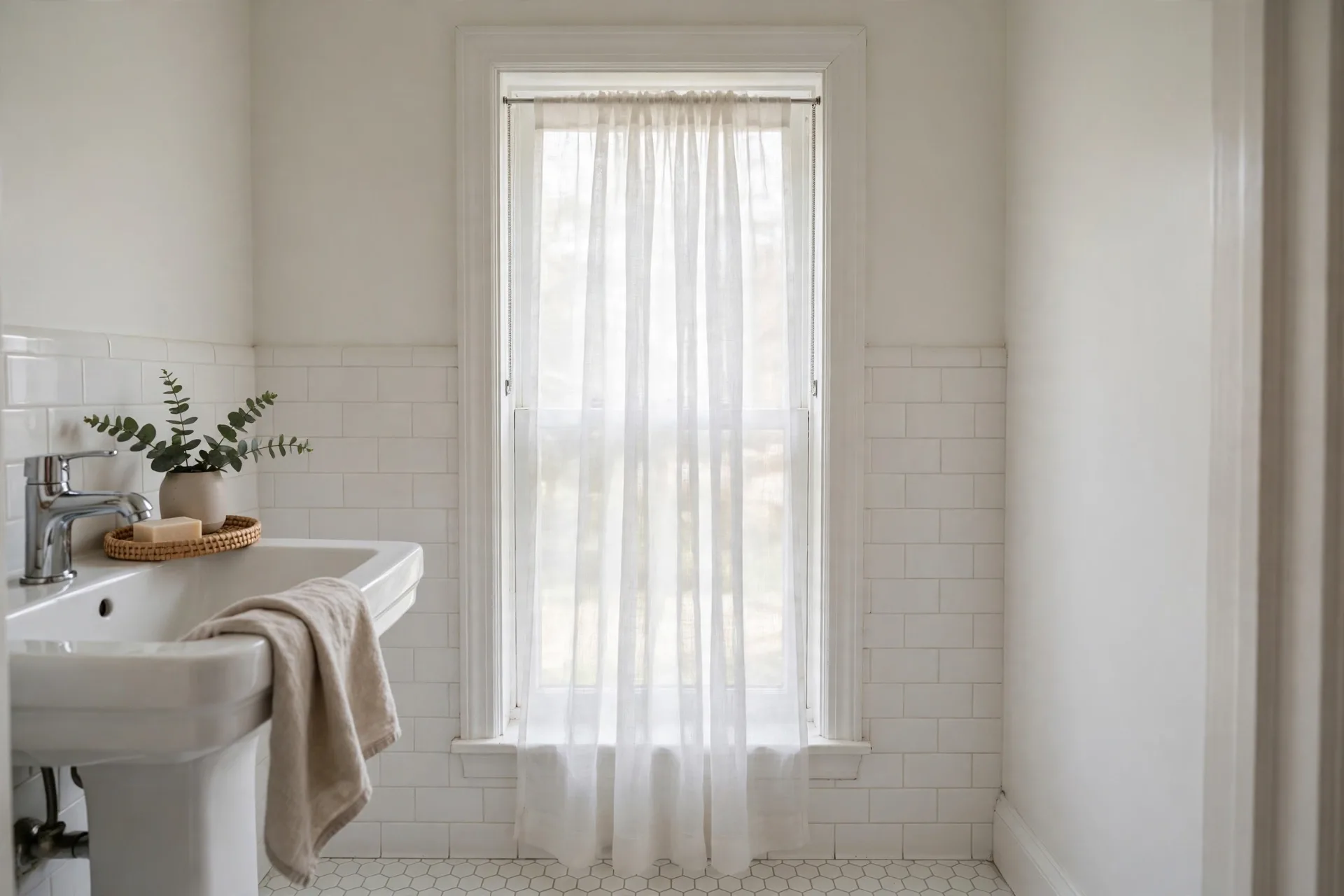
A frame with angled or uneven sides gives the end caps nothing flat to press against, so the rod twists out. A heavy lined or blackout curtain pulls the rod down faster than the spring can resist, and the rod falls, often at night. Test a tension rod by hanging the real curtains and pulling down gently on the middle: if the rod bows or the end caps shift, the span or the weight is too much.
Do not over-tighten the rod either: over-tightening leaves small indentation marks on soft paint or wallpaper, so use the included rubber end caps to cushion the contact, and check the tension periodically, re-tightening gradually rather than cranking hard.
After installation, gently tug the rod to make sure it is securely in place before hanging the curtains.
Tension rods work beyond windows too: shower, closet, and doorway use all suit a tension rod where the span is short and the load is light.
Adhesive hooks and brackets: the surface test that comes first
Adhesive hooks and brackets stick to the wall with strong strips and hold a standard rod, and they suit smooth clean walls, tile, and glass with light to medium curtains, or heavier curtains where the set is rated for the load. The surface test comes before anything else: wash the surface, dry it fully, and press a strip on a test spot, because adhesive only grips a surface it can fully contact.
Give the adhesive its full cure time before hanging the rod, because a bracket loaded too soon never reaches its rated strength.

Most strips need a day or more to cure fully, and loading them early is the most common reason an adhesive fitting fails. Check the weight rating on the listing and count the rod plus the curtains together, because the rating covers the whole load. Add an extra pair of brackets on a wide window rather than stretching two brackets across a long span. To remove, pull the strip slowly along the wall as the maker directs, never yank the bracket straight off, because a straight pull can take paint with it.
Cure time varies by set: most strips need a day or more, but some sets need up to 72 hours before loading, so follow the time on the listing for the set you bought.
Adhesive clips are a rod-free method: the clips attach directly to the wall or frame and hold the fabric with no rod, which gives a minimalist look, though they work best in dry environments, because humidity weakens the adhesive.
Removable strip hooks are another adhesive option: the strips stick to the wall, the rod sits in holders attached to the strips, and they suit sheers, lightweight curtains, or valances, with clean removal when the strips are pulled as directed.
Prepare the surface before sticking anything down: clean the wall or frame to remove dust and grease so the adhesive bonds, using isopropyl alcohol to remove residues and oils that would weaken the bond.
Avoid adhesive solutions in high-humidity areas or extreme temperatures, because damp and heat both weaken the bond over time.
Check the diameter as well: self-adhesive brackets fit rods from 0.6 to 1.5 inches, so measure the rod before ordering the brackets.
One qualification matters: this guide says adhesive suits a smooth painted wall, but some adhesive sets are rated for glass or tile only and not for painted walls, so check the surfaces the listing names before buying.
Removal is usually clean, though some adhesive may leave residue, so test the release method on a hidden spot first where the wall finish matters.
Test the mount before loading it: give the rod a gentle tug after the cure time, and only then hang the curtains.
Tap-in trim brackets: no holes in the wall, but not every trim qualifies
Tap-in trim brackets tap into the top edge of the window trim and hold a standard rod, with no screws and no holes in the wall. They suit a window with solid wood trim that is flat on top, deep enough to take the bracket, and sound enough to hold it. The bracket taps in with a light knock, the rod sits in the bracket, and the curtains hang like a drilled rod.
Not every trim qualifies, and the check takes a minute.
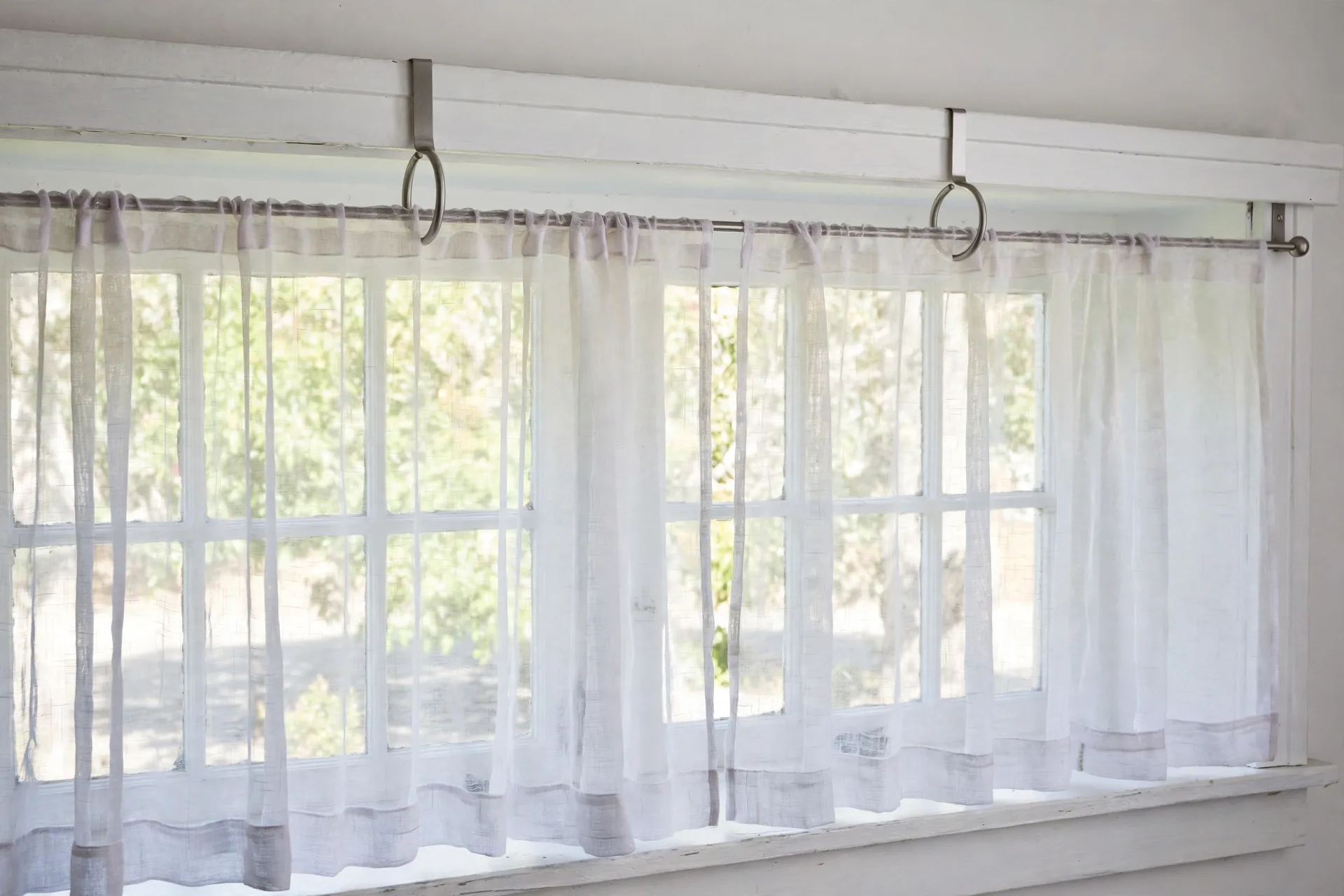
The trim must be wood, not plastic or foam, because a soft trim crushes under the bracket and a plastic trim cracks. The trim must be flat on top and deep enough for the bracket to seat fully, because a rounded or shallow trim lets the bracket rock. The trim must be firmly fixed to the wall, because a loose trim pulls away under the curtain load. If the trim fails any of these checks, tap-in is the wrong method, and adhesive or tension is the safer answer.
Magnetic rods: metal doors and frames only
A magnetic rod holds by magnets that grip a metal door or a steel frame, and it suits a metal door, a steel-framed window, or an appliance panel where nothing else can fix without drilling. It installs by placing the rod on the metal and letting the magnets take hold, and it removes by lifting it off, with no mark at all. It suits light curtains best: sheers, voile, and light panels on a door window or a small metal-framed opening.
A magnetic rod only works where the surface is actually magnetic.
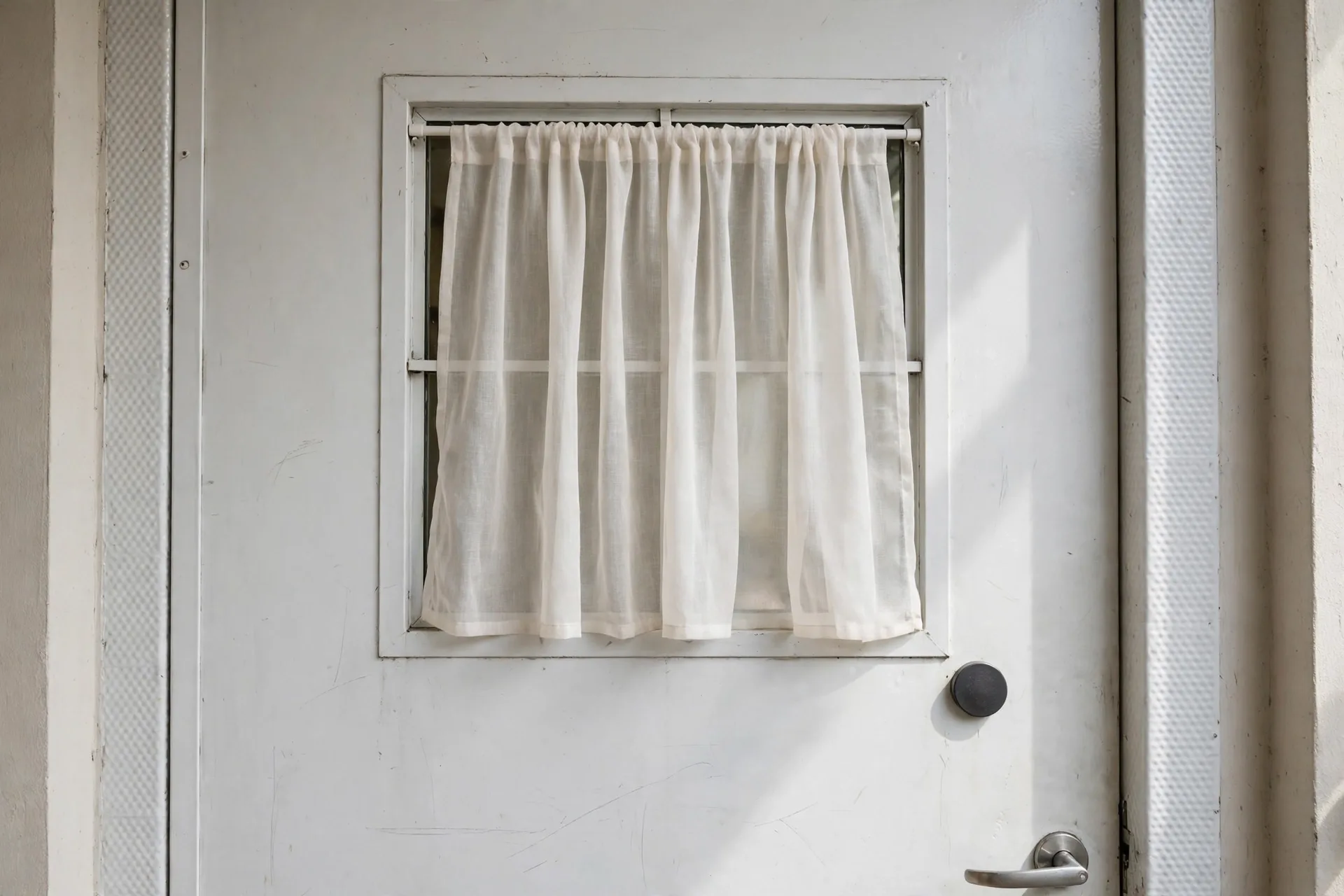
A wooden door, an aluminum frame, a plastic frame, and a stainless steel door that is not magnetic all give the magnets nothing to grip, and the rod falls. Test the surface first with a fridge magnet: if it does not stick firmly, a magnetic rod will not hold either. A magnetic rod also suits narrow spans only, because the magnets sit at the ends and a long rod sags in the middle. Keep the curtains light and keep the span short.
On a metal door, a 2-pack of magnetic rods mounts top and bottom, holding the panel flat so it does not swing when the door opens.
Twist-fit rods: the tool-free rod that locks inside the frame
A twist-fit rod extends by twisting and locks inside the window frame with a cam mechanism, holding by pressure like a tension rod but with a firmer lock. It suits a narrow window frame with light to medium curtains, and it installs with no tools, no brackets, and no adhesive. The end caps are non-slip and non-scratch, so the frame stays unmarked, and removal is an untwist and a lift out.
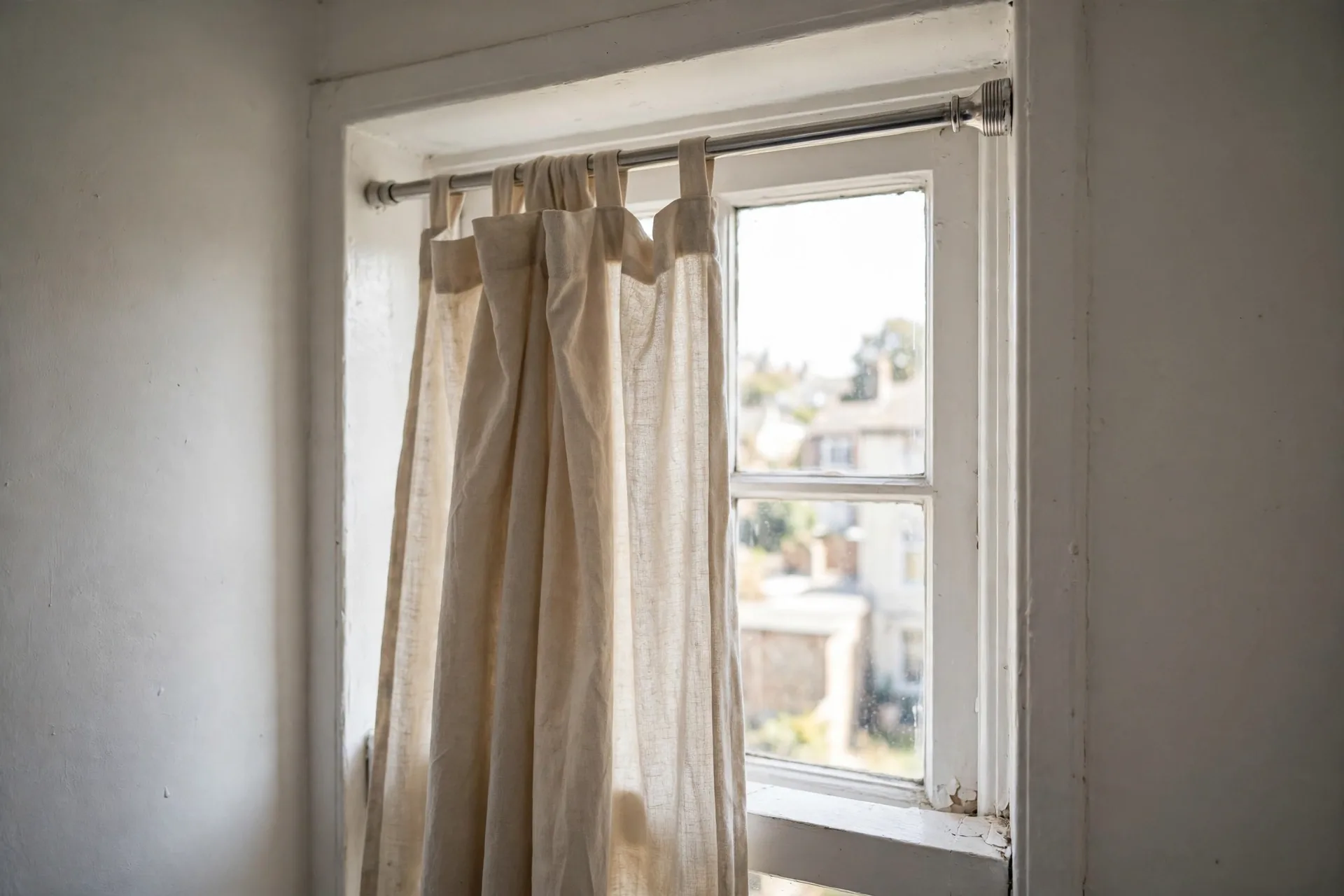
A twist-fit rod suits narrow spans best, because the locking mechanism holds a short rod firmly but a long rod bows under its own length and the lock cannot hold the bow. Keep the curtains light to medium, and test the lock by pulling down gently on the middle after fitting: if the rod shifts, the span is too wide or the frame sides are not parallel. A twist-fit rod beats a basic spring tension rod where the frame is narrow and the curtains are medium weight, because the cam lock resists the slow slip that a spring rod suffers over time.
Lease and wall checks before you hang anything
Read the lease before hanging anything, because the lease decides what no-drill means in your home. Most leases allow tension and magnetic rods without question, because they leave no mark at all. Most leases allow adhesive brackets, because they remove cleanly from a smooth wall, but some leases ban adhesive on painted walls, because a bad removal can take paint. When the lease is silent, ask the landlord in writing and keep the answer, because a written yes protects the deposit and a verbal yes does not.

Check the wall as carefully as the lease. Wash the surface where an adhesive bracket will sit, and let it dry fully, because dust and grease are the most common reasons adhesive fails. Check the paint is sound, because adhesive on flaking paint pulls the paint off with the bracket. Check the trim is solid before tapping a bracket into it, because a split trim fails under load. Check the frame is square before fitting a tension or twist-fit rod, because a frame that tapers lets the rod slip. Photograph the wall, the trim, and the frame before hanging, so the condition at move-in is on record, and photograph them again at removal, so the deposit return has proof.
Textured walls, brick, and fresh paint: the hard cases
Textured walls defeat adhesive, because the strips only touch the high points of the texture and the contact area is too small to hold a rod. A lightly textured wall may hold a light sheer on a rated adhesive set, but a heavily textured wall will not hold any adhesive bracket reliably, and the honest answer is tension inside the frame, tap-in on the trim, or magnetic on a metal door.

Brick defeats every no-drill method except tension inside a frame, because no adhesive sticks reliably to rough brick and no magnet grips it and no trim exists to tap into. A brick wall around a window usually still has a frame to tension into, and that is the method to use. Fresh paint defeats adhesive for a different reason: paint needs weeks to cure fully, and adhesive applied to fresh paint bonds to paint that has not yet hardened, so the bracket peels the paint off when it is removed. Wait for the paint to cure fully before using adhesive, and use tension or tap-in in the meantime.
When no-drill is the wrong answer
No-drill is the wrong answer when the curtains are heavy and the window is wide, because every no-drill method has a load limit and a heavy lined drape on a wide span exceeds all of them.
Where no rod method fits, a no-drill cellular or honeycomb shade is a non-rod alternative: it tension-mounts inside the frame and gives blinds-level light control and insulation without a curtain rod at all.
A drilled rod into studs or rated anchors is the only fitting that holds that load safely, and a no-drill rod bought anyway will fall, often taking paint or trim with it.
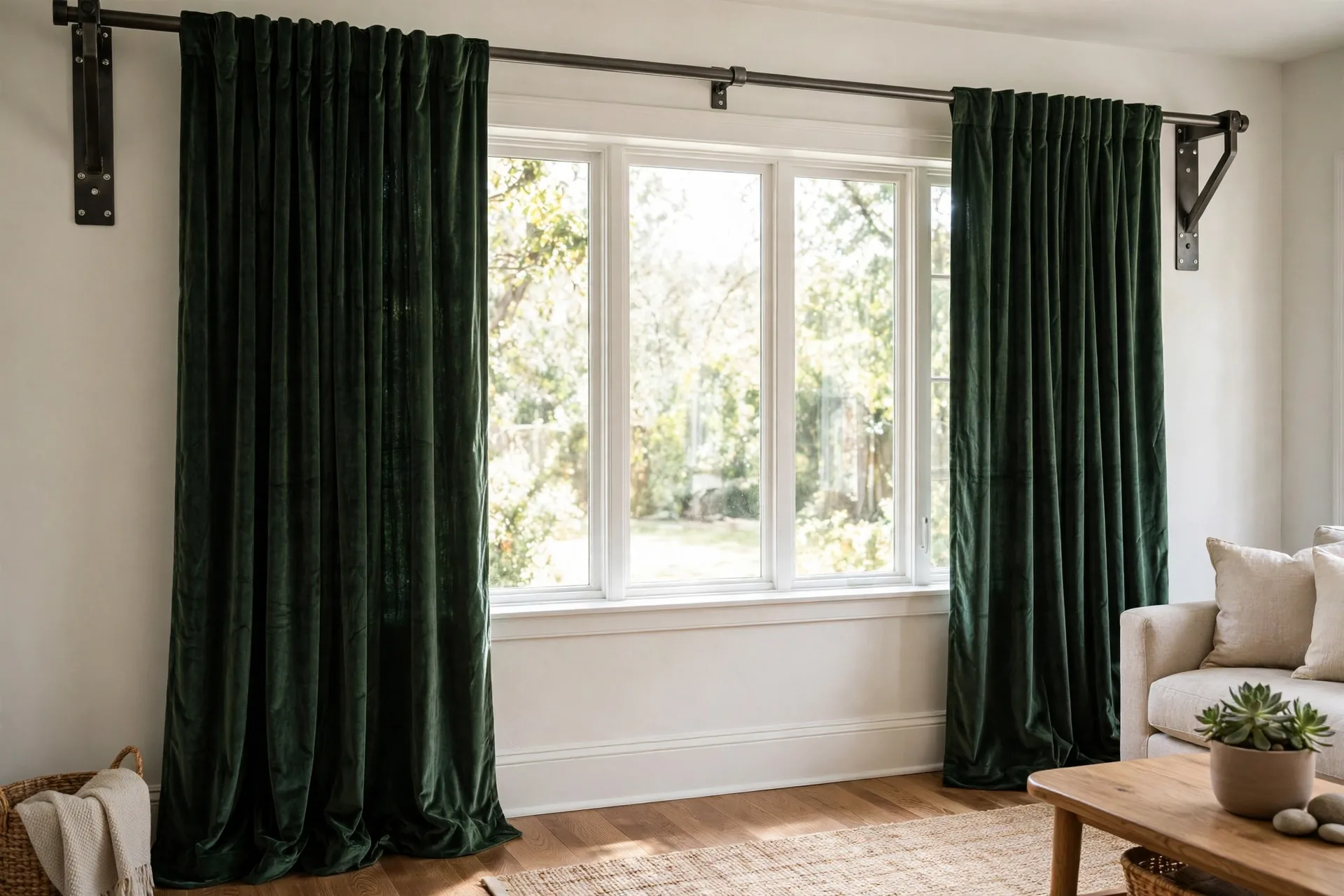
No-drill is the wrong answer when the curtains must slide daily across a wide opening, because no-drill fittings loosen under daily drawing and the rod slips a little further each week. It is the wrong answer when the household includes small children who may pull on the curtains, because a no-drill rod that falls is a hazard a drilled rod is not. And it is the wrong answer when the lease actually allows drilling, because a drilled rod holds more, lasts longer, and costs less than a rated no-drill set. For hanging with drilling in full, see How to Hang Curtains.
Frequently asked questions about no-drill curtain rods
Most no-drill questions come down to which method fits the wall and whether the curtains will stay up.
Will a no-drill curtain rod hold heavy curtains?
A no-drill rod holds heavy curtains only where the method is rated for the load: a heavy-duty adhesive set on a smooth wall can hold a heavier panel, while a basic tension rod cannot hold a heavy lined drape. Count the rod plus the curtains together against the rating on the listing.
Do adhesive curtain rod brackets damage walls?
Adhesive brackets do not damage a smooth sound wall when they are removed the way the maker directs, by pulling the strip slowly along the wall. They can damage a wall where the paint is flaking, where the paint is fresh and uncured, or where the bracket is yanked straight off.
How long do adhesive brackets need to cure?
Most adhesive strips need a full day or more to reach their rated strength, and the exact time is on the listing. Do not hang the rod and curtains before the cure time is up, because a bracket loaded too soon never reaches its rated strength.
Can I use a tension rod for blackout curtains?
A tension rod suits light to medium curtains, and most blackout curtains are too heavy for it, especially lined blackout panels. A light unlined blackout panel on a narrow frame may hold, but test it by hanging the real curtains and pulling down gently on the middle.
Do magnetic curtain rods work on any door?
No, magnetic rods work only on a metal surface that is actually magnetic. Test the door with a fridge magnet first: if it does not stick firmly, a magnetic rod will not hold. Wooden doors, aluminum frames, plastic frames, and non-magnetic stainless steel all give the magnets nothing to grip.
What is the strongest no-drill curtain rod method?
The strongest no-drill method depends on the surface. On a smooth wall, a heavy-duty adhesive bracket set rated for the load is the strongest. On a solid wood trim, tap-in brackets are the strongest. Inside a frame, a twist-fit rod with a cam lock is stronger than a basic spring tension rod.
Which no-drill rod should I buy for a rental?
Buy a method that leaves no mark on the wall you have: tension and magnetic rods leave no mark at all, adhesive brackets remove cleanly from a smooth wall, and tap-in brackets leave only tiny pin holes hidden on the top of the trim. Read the lease first and ask the landlord in writing where it is silent.
Why did my tension rod keep falling down?
A tension rod falls when the span is too wide, the curtains are too heavy, the frame sides are not parallel, or the spring has lost its tension over time. Shorten the span, lighten the curtains, or switch to a twist-fit rod with a cam lock.
For the full curtain range, see Best Window Curtains.
This guide is research-based curation: we compared maker specifications, published reviews, and current prices. Read how we choose.