 Best
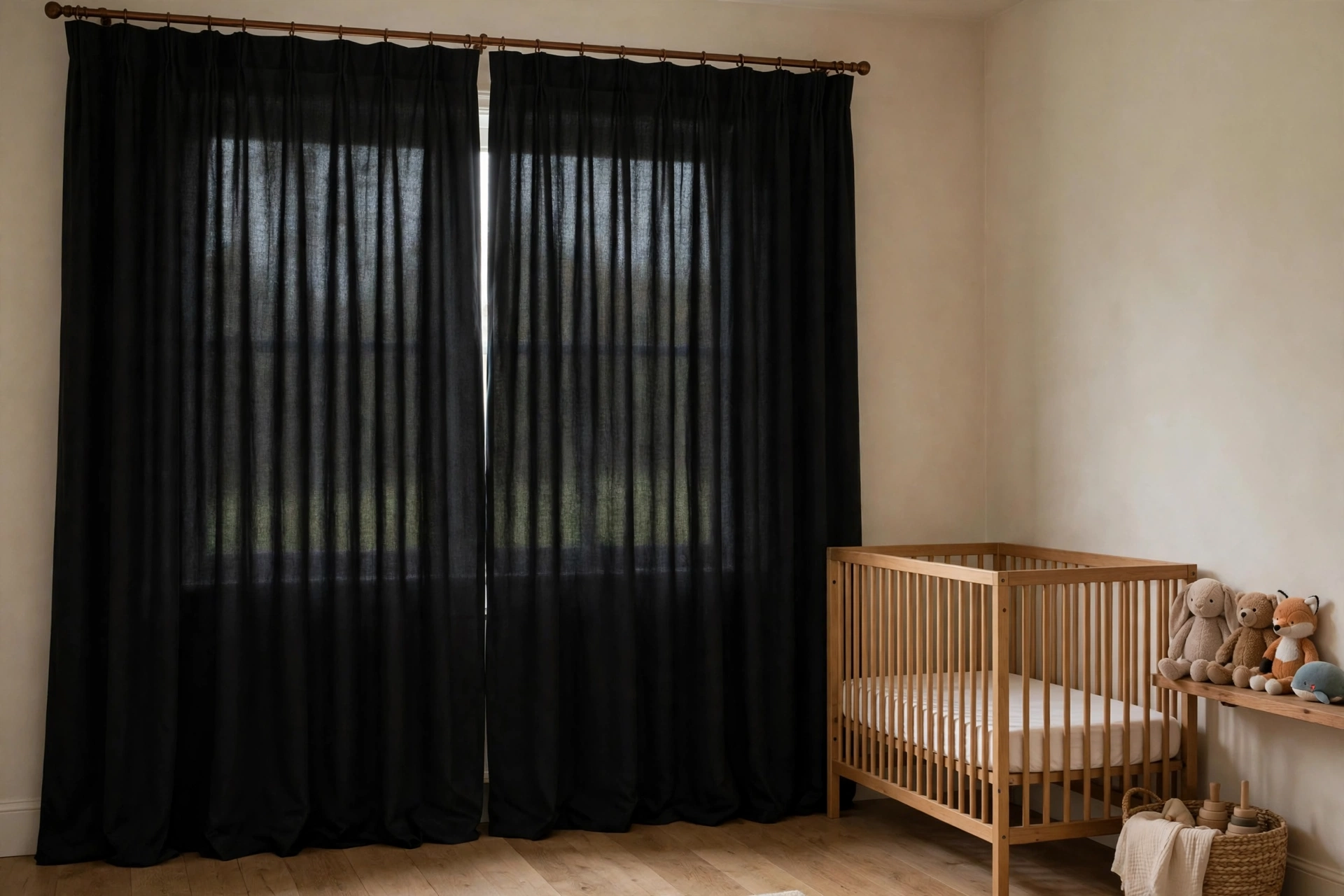
Best Curtains for Nursery
The best curtains for nursery rooms give a baby darkness for naps without cords, pooling fabric, or hard-to-wash cloth near the crib. This guide sorts blackout and room darkening panels by safety, length, and wash care.
The best curtains for nursery rooms are cordless blackout panels, hung wide enough to close fully, cut to a length that cannot pool where a child stands, and made from fabric you can wash often. Darkness helps a baby settle for a nap, but only when the treatment itself is safe.
This guide is for babies aged 0 to 3, and it covers nap darkness, cordless hanging, crib placement, safe lengths, washable fabric, and light gaps.
Nursery picks by nap job
Blackout curtains suit daytime naps in a bright room, thermal blackout suits a cold or sunny nursery, and short blackout panels suit a small window or a window over furniture. The picks below are grouped by nap job, not by brand. Check lining, heading, fabric, care label, and finished length on the listing, and confirm the heading is cordless or fully out of reach before you hang it.
As an Amazon Associate, we earn from qualifying purchases.
| Pick | Type | Lining | Best for |
|---|---|---|---|
| 1 | Deconovo Blackout Curtains with Black Liner | Blackout lining | Daytime naps in a bright room |
| 2 | Tommy Hilfiger Bold Stripe Lined Blackout Curtains | Blackout lining | A main nursery with a soft, quiet feel |
| 3 | NICETOWN Blackout Thermal Insulated Room Darkening Drapes | Thermal lining | A cold or sunny nursery window |
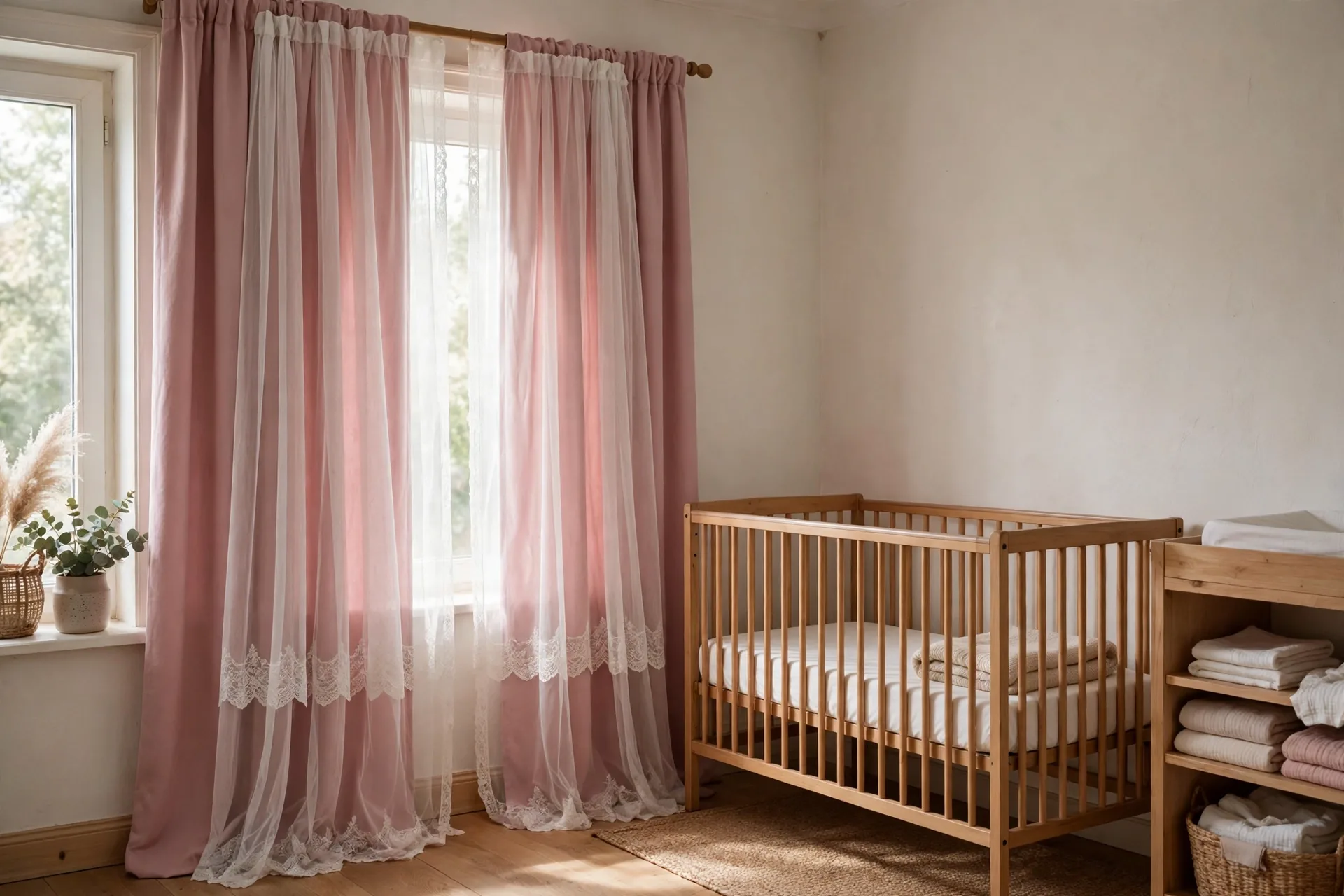
| 4 | SOFJAGETQ Pink Blackout Curtains with Sheer Overlay | Blackout lining, over a sheer layer | Daylight by day and nap darkness on demand |
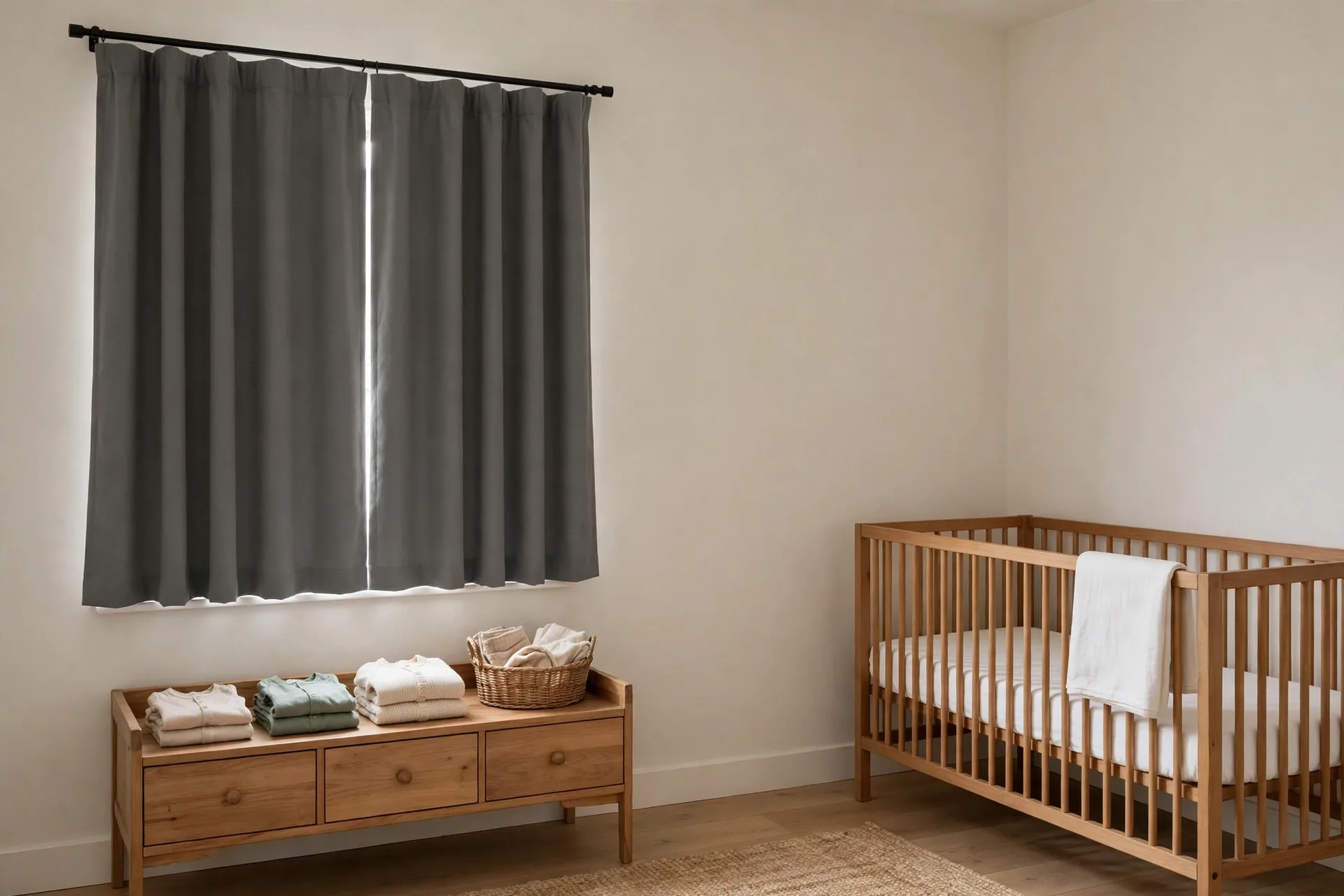
| 5 | DWCN Short Blackout Curtains for Small Windows | Blackout lining | A short window or a window over furniture |
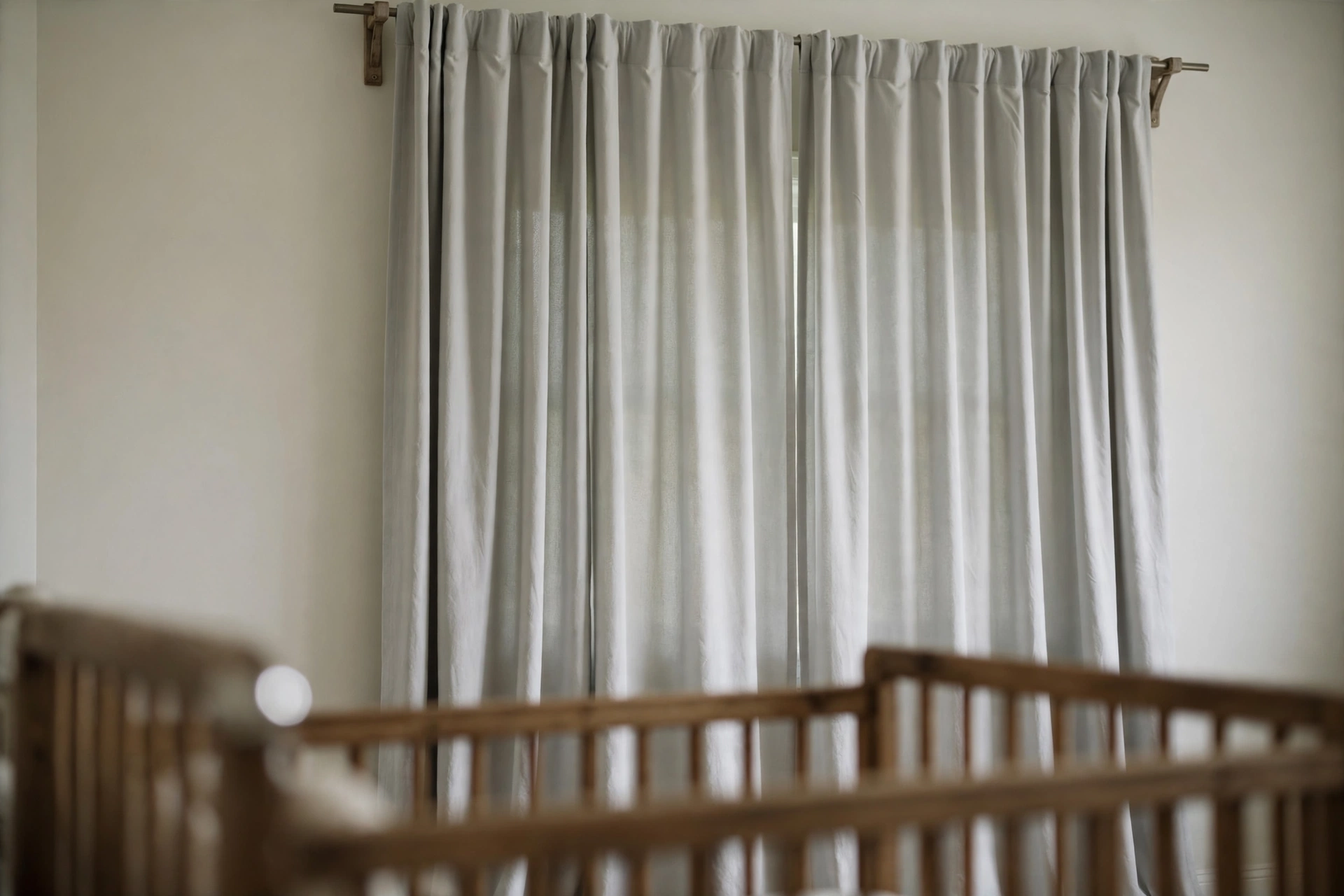
| 6 | ChrisDowa 100% Blackout Curtains with Black Liner | Blackout lining | Frequent washing in a small nursery |
1. Deconovo Blackout Curtains with Black Liner: best for daytime naps in a bright room
- Best for: A nursery where morning sun or street light keeps breaking naps.
- Key features: Polyester face, blackout lining, grommet heading, plain color.
- Pros: Strong nap darkness when closed fully, smooth daily sliding.
- Cons: Heavier than an unlined panel, so the rod must be firm, light leaks at the edges unless the rod runs past the frame.
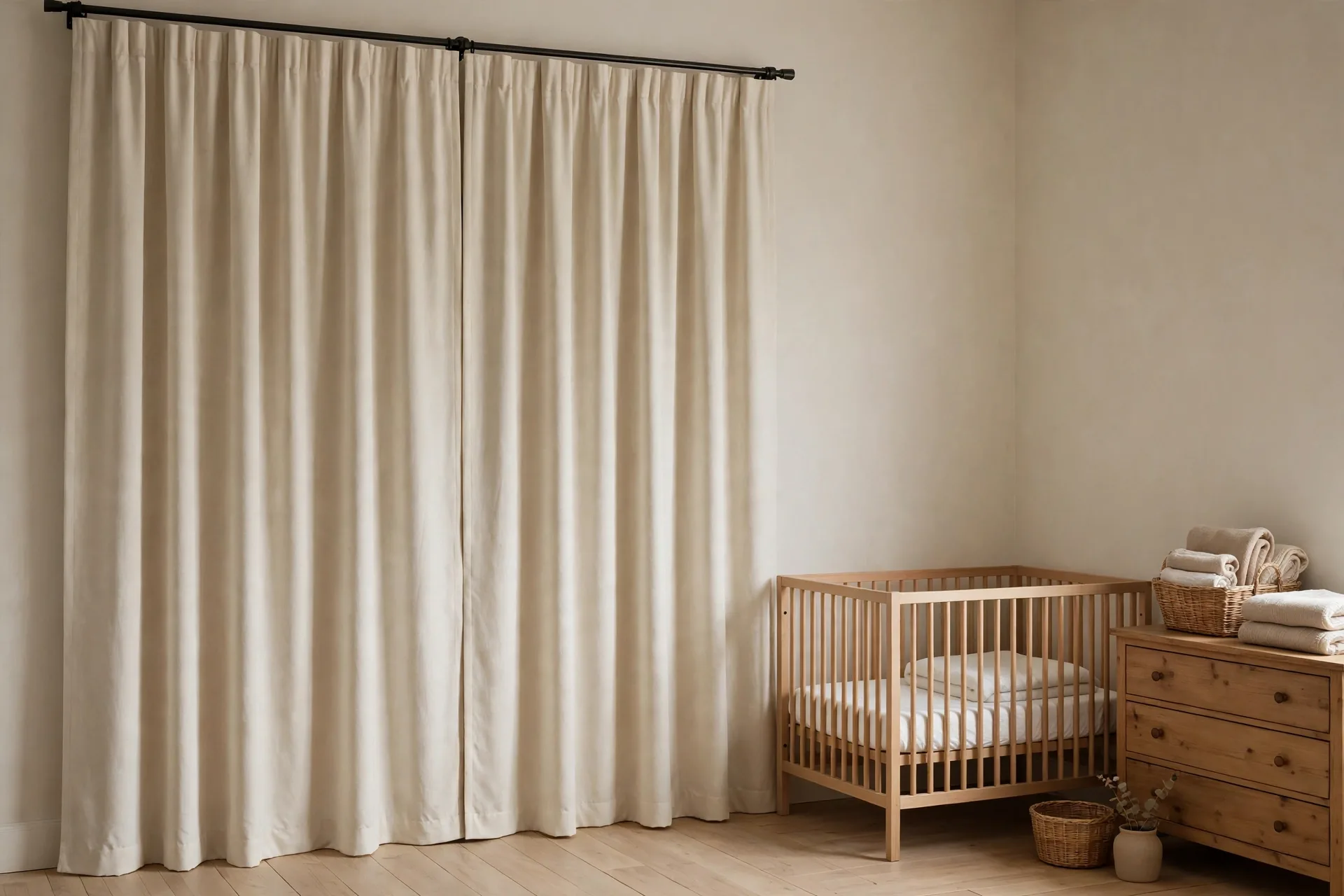
2. Tommy Hilfiger Bold Stripe Lined Blackout Curtains: best for a main nursery with a soft, quiet feel
- Best for: A main nursery where a softer hand matters, drawn mainly at naps and at night.
- Key features: Cotton face, blackout lining, rod-pocket heading, bold stripe pattern in dark gray
- Pros: Softer feel than plain polyester, strong darkness from the blackout lining.
- Cons: Rod-pocket panels slide less freely than grommet panels, care may be gentler than polyester care, striped pattern, not plain.
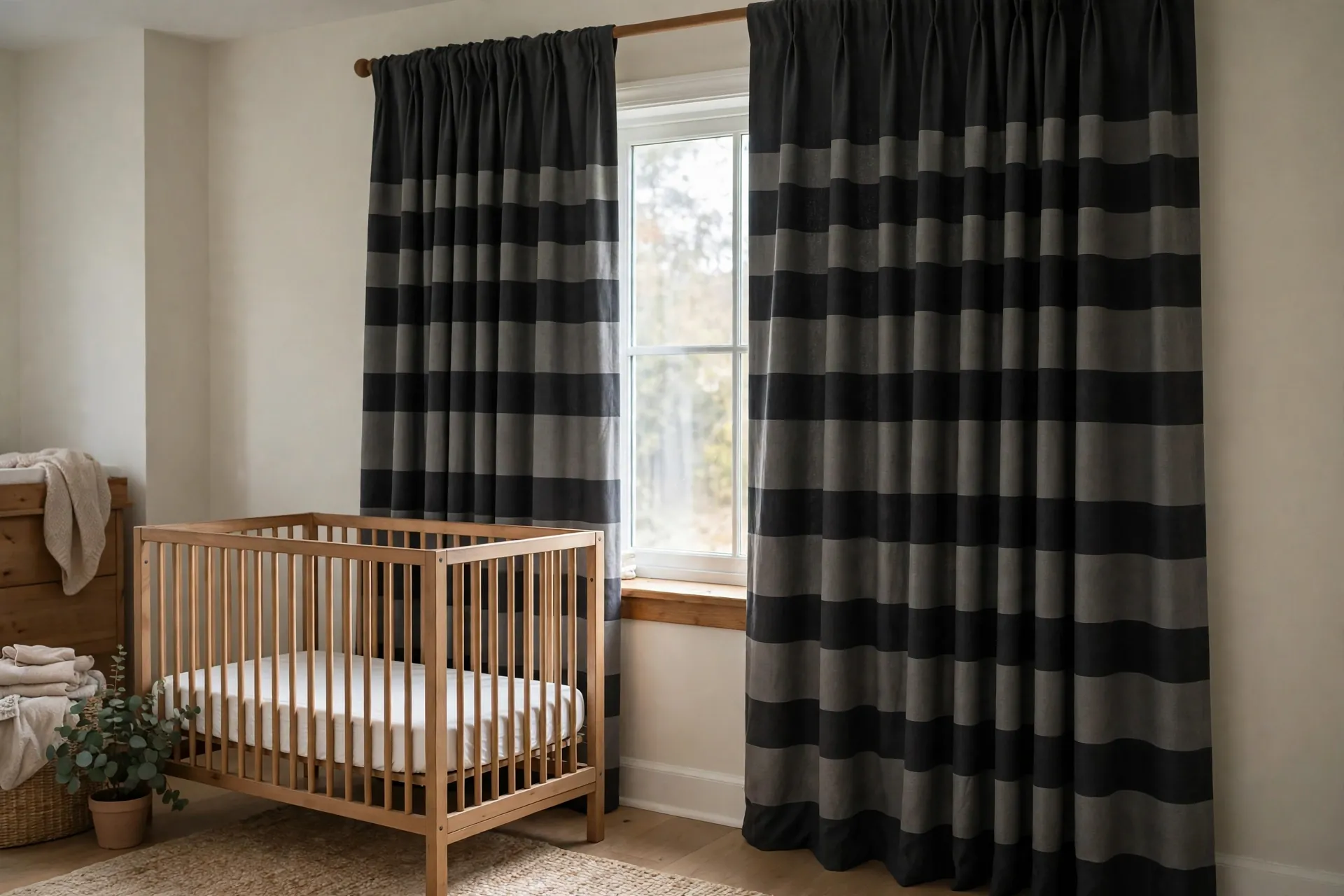
3. NICETOWN Blackout Thermal Insulated Room Darkening Drapes: best for a cold or sunny nursery window
- Best for: A cold or sunny nursery window where softened daylight is still welcome.
- Key features: Polyester face, thermal lining, room-darkening light level, Dark Mallard color.
- Pros: Helps soften drafts and strong sun, dims daylight well.
- Cons: Room darkening is not full blackout, heavier than an unlined panel.
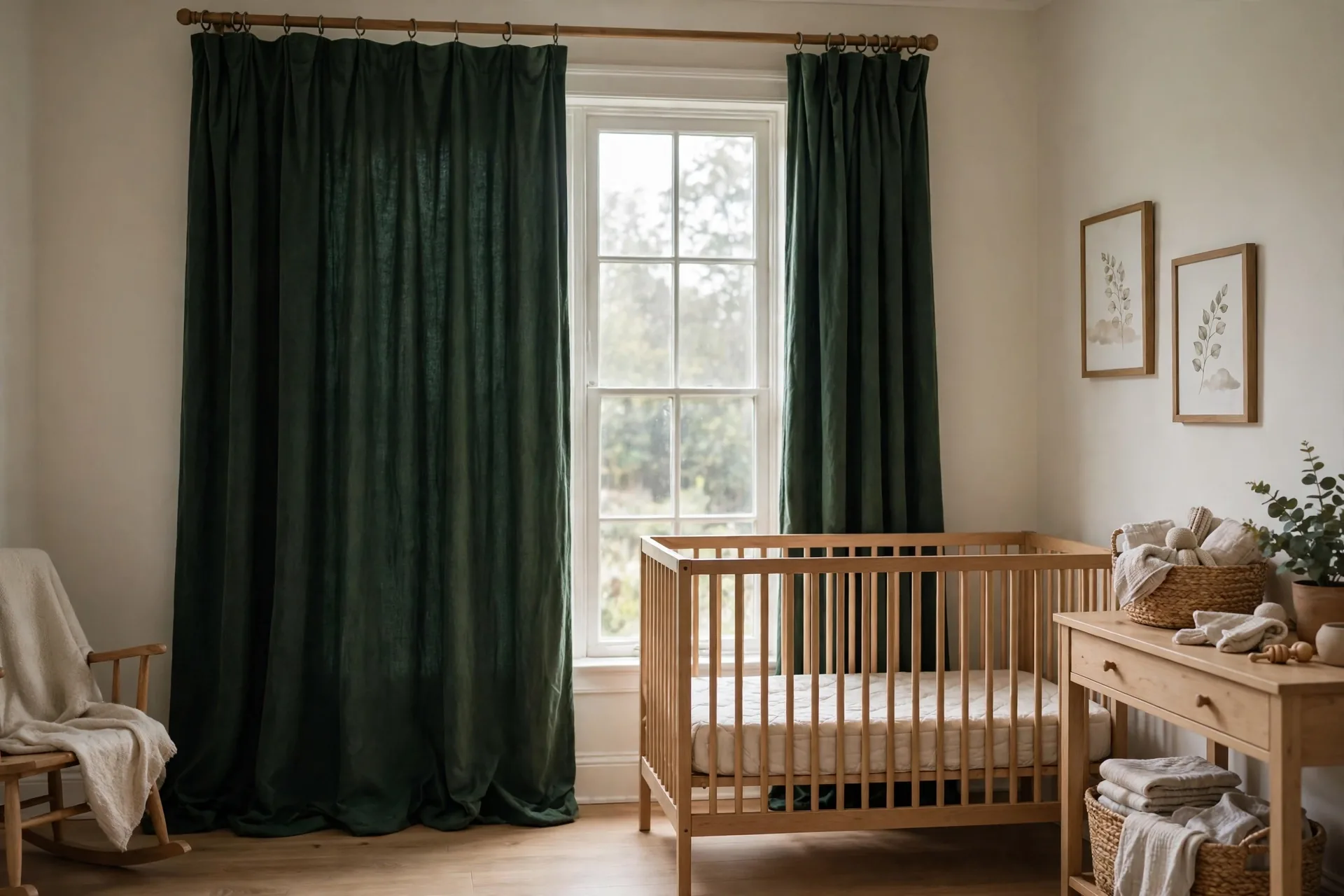
4. SOFJAGETQ Pink Blackout Curtains with Sheer Overlay: best for daylight by day and nap darkness on demand
- Best for: A nursery that should stay bright between naps, with darkness on demand at nap time.
- Key features: Blackout panel with a crushed sheer layer sewn in, not separate panels, 3-inch rod pocket, thermal-insulated, pink with lace trim, 52 by 84 inches, 2 panels
- Pros: Soft daylight through the sheer between naps, full nap darkness when the blackout layer closes.
- Cons: The sheer layer is sewn in and cannot hang on its own, pink with lace trim, so it suits a pink nursery rather than a neutral one.
5. DWCN Short Blackout Curtains for Small Windows: best for a short window or a window over furniture
- Best for: A short window, or a window over furniture, where a long panel could be reached.
- Key features: Polyester face, blackout lining, sill length, plain color.
- Pros: Stays clear of a standing child and of furniture below, strong darkness for a small window.
- Cons: Suits a short window only, check the finished drop on the listing.
6. ChrisDowa 100% Blackout Curtains with Black Liner: best for frequent washing in a small nursery
- Best for: A small nursery where panels collect dust and marks, and washing cannot wait for a dry cleaner.
- Key features: Polyester face in light gray, blackout lining, machine washable care where the listing states it.
- Pros: Light gray keeps a small room bright when open, face shows no busy pattern near a crib.
- Cons: Pale fabric shows marks sooner than dark fabric, washability depends on the care label, not on the word washable in a title.
Cordless hanging and a crib kept clear of the window
Cordless hanging is the first nursery rule, because a cordless treatment removes the cord hazard rather than hiding it. The U.S. Consumer Product Safety Commission advises that cordless window coverings are the safest choice in homes where young children are present. For curtains, that means a plain grommet, rod-pocket, back-tab, or track heading with no pull cord, looped cord, or long tieback cord within reach.
Crib placement is the second half of the same rule.
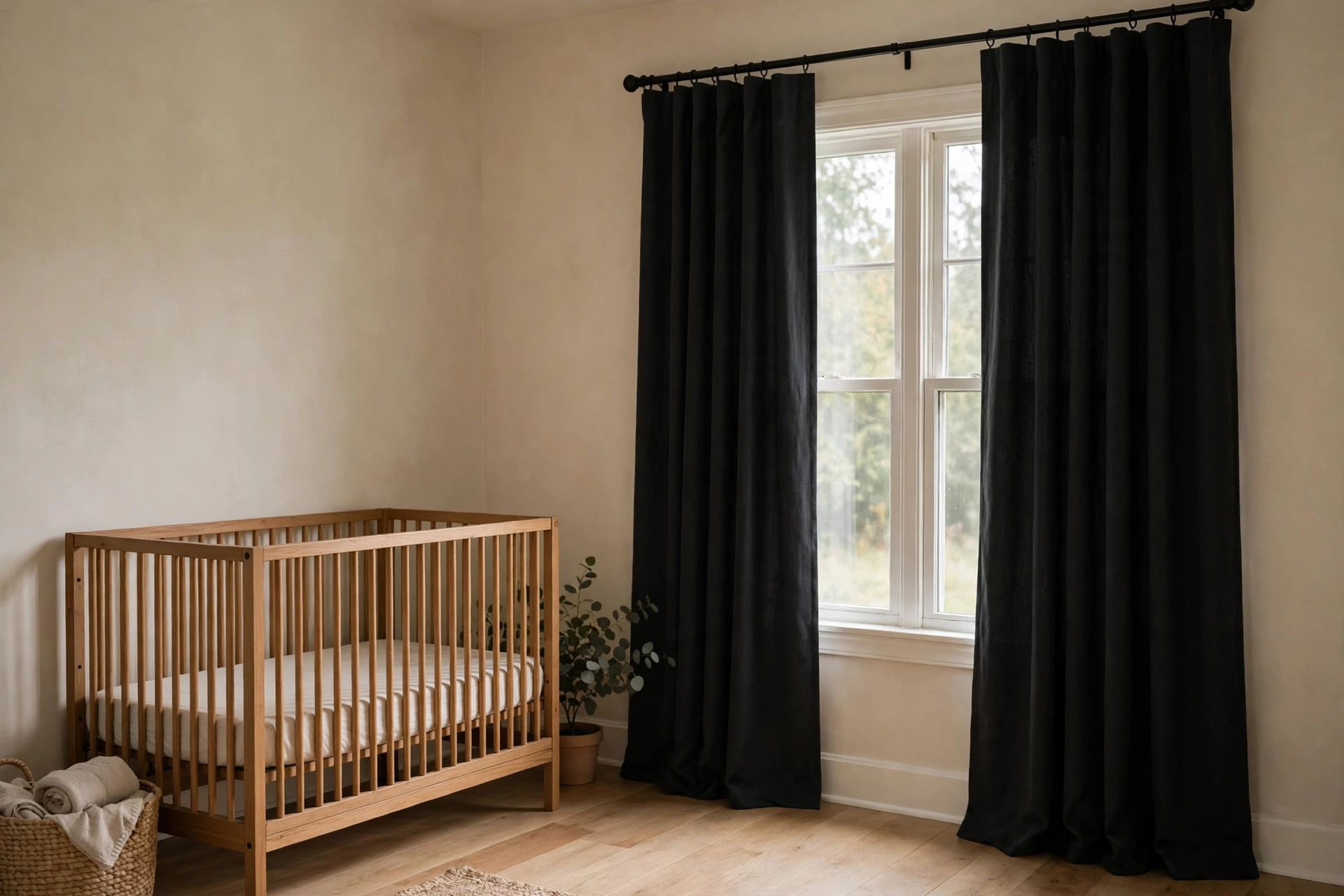
Keep the crib, changing table, toy storage, and any climbable furniture away from the window, cords, rods, and hanging fabric. A child who can stand in a crib or climb onto nearby furniture can reach further than the room plan suggests. Put the crib against a wall without a window where the room allows it, and leave a clear gap between the crib and the curtain.
Check the whole window from the crib side before the room is finished, and move or remove any blind cord, monitor cable, lamp cord, or tieback a small hand could pull. Fix brackets into a stud or a proper wall anchor, so the rod cannot be pulled down.
Check the flame-retardant label on the panel, and keep curtains away from heaters and hot lamps, because fabric near a heat source is a fire risk whatever the label says.
Check the whole house, not just the nursery: older corded coverings in guest rooms, living areas, and grandparents' homes carry the same risk, and tying a cord in a knot or hooking it up does not equal a cordless covering.
Blackout or room-darkening for naps
Blackout fits most nursery naps, because a blackout lining blocks most light through the fabric, while room-darkening only dims daylight. A baby who naps in a bright room or near a street light will settle more easily behind a blackout panel, and the same panel serves night sleep. Room-darkening suits a nursery where the light problem is mild, or where a thermal lining is the main reason for the panel.
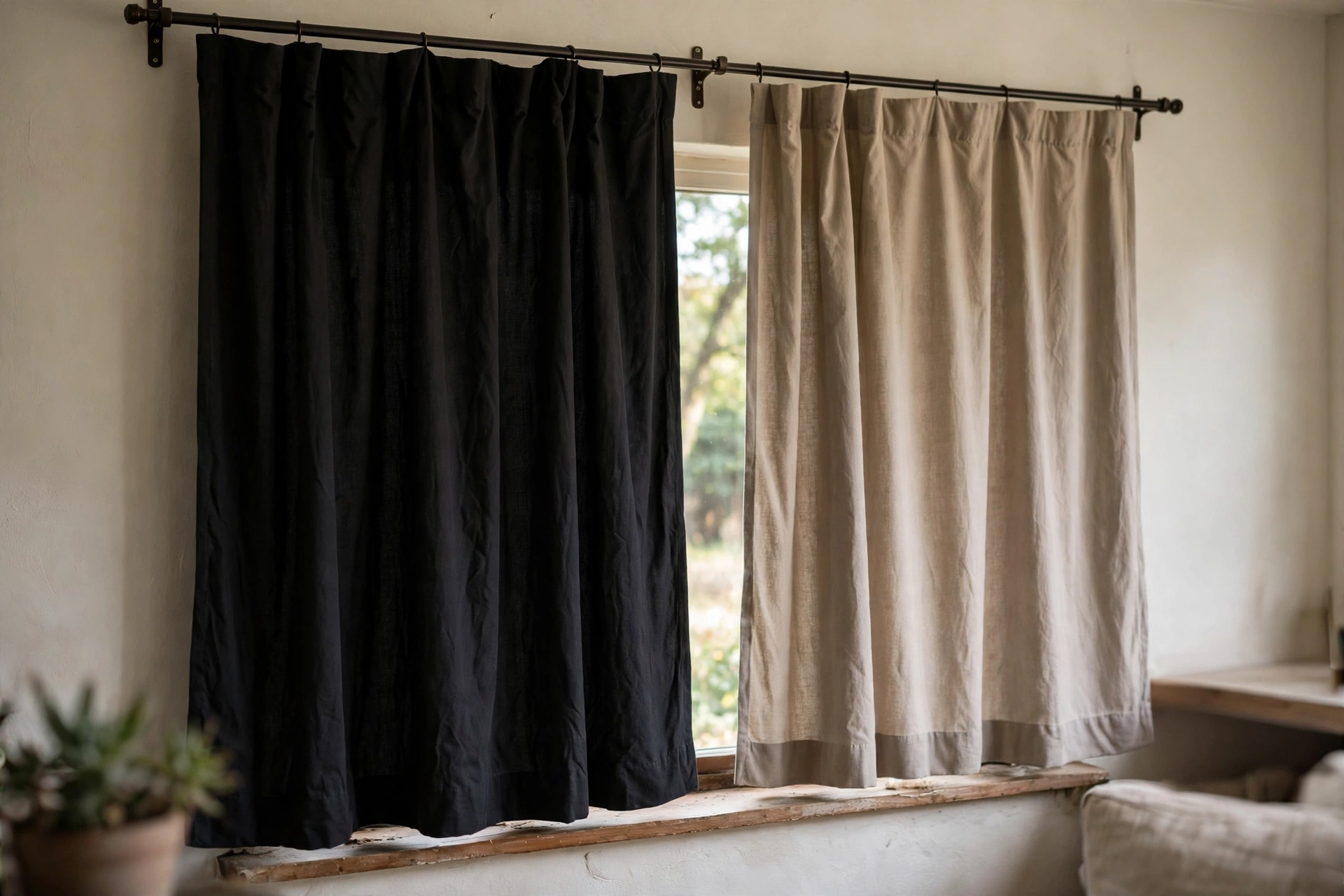
Color alone does not decide the result. A dark panel without a blackout lining still lets light through the weave, and a pale panel with a true blackout lining still darkens well. Read the lining line, not the color name, and be wary of a listing that calls a panel blackout without naming a blackout lining. For the full darkness job, see Best Blackout Curtains.
A separate liner is a useful middle step. If you already own a plain panel you like, a blackout liner behind it can give nap darkness, but only if it closes fully with the panel and the combined weight still suits the rod.
How hanging closes light gaps
Hanging closes light gaps more than fabric choice does, because even a blackout panel leaks light at the sides, at the top, and through the center gap where two panels meet. Hang the rod wider than the frame on each side, so closed panels overlap the frame, and high enough that no open strip sits above the panel. Choose total panel width well beyond the rod width, so folds stay full and the center meets without a gap.
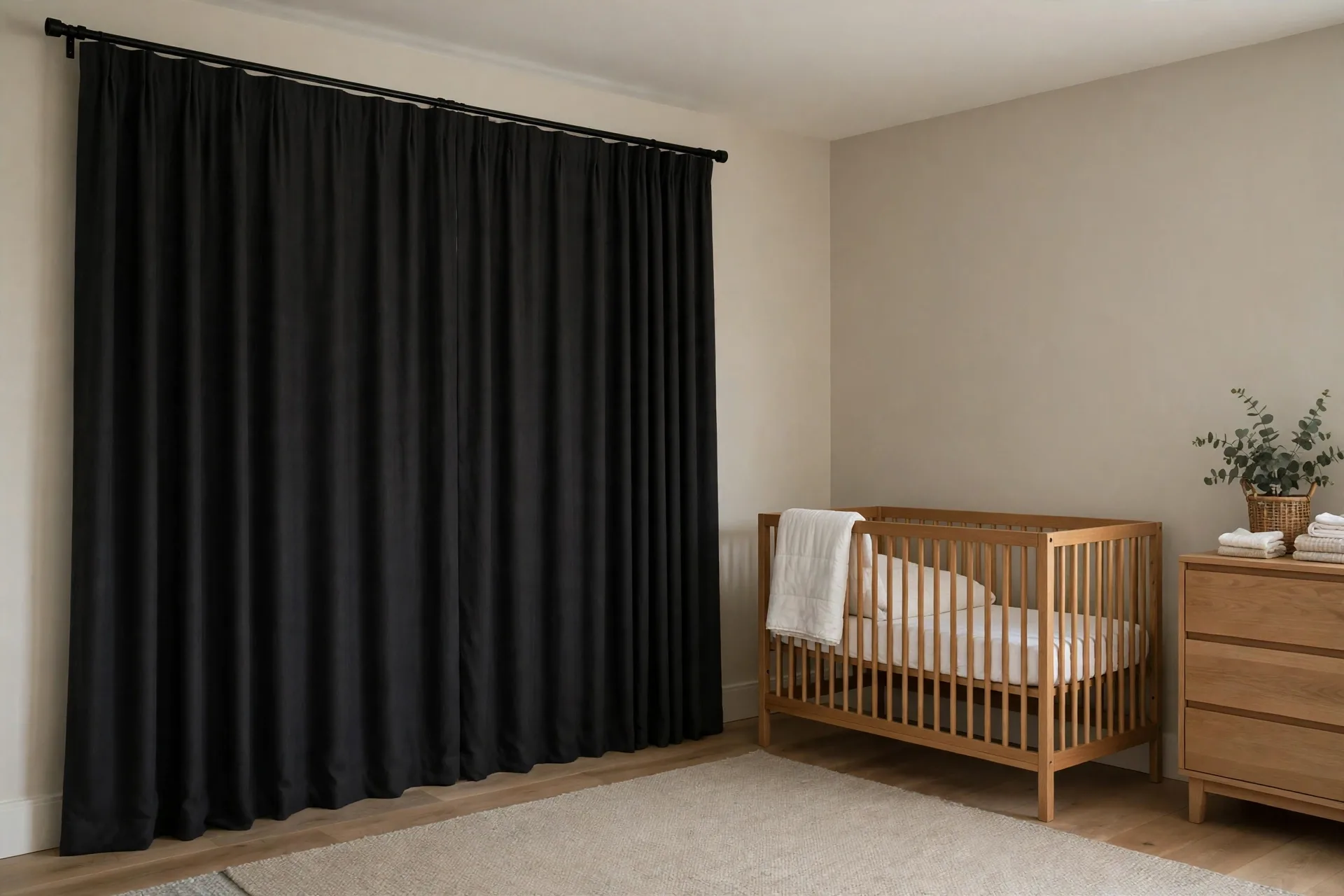
A wraparound rod or a ceiling-mounted track helps at the sides, because it brings the panel closer to the wall. A valance can cover a top gap, but only where it carries no cord, loop, or dangling trim a child could reach. For rod placement, see How to Hang Curtains.
Test the result at nap time. Close the panels as you would for a nap, stand where the crib will sit, and look for light strips at the sides, the top, and the center. If one window stays uncovered, its light can undo a blackout panel on the next window, so cover every window in the nap room to the same standard.
The brightest spot is often light reflected off a nearby wall, dresser, or changing table, not the window itself, so check the room from the crib's view when hunting gaps.
For near-total darkness, pair an inside-mounted blackout shade with outside-mounted blackout curtains on a wraparound track, so the shade covers the glass and the curtains cover the edges.
Length that stays clear of a standing child
A nursery length stays clear of a standing child, because pooling fabric on the floor invites pulling, tripping, and climbing. Never choose a puddle length in a nursery, where extra fabric pools on the floor, and never let a panel hang where a child standing in a crib or on nearby furniture can grab it and pull. The safest length depends on where the window sits, not on a single rule for every room.
For a window in open wall space away from the crib, a panel ending just above the floor stays clear of the floor itself.
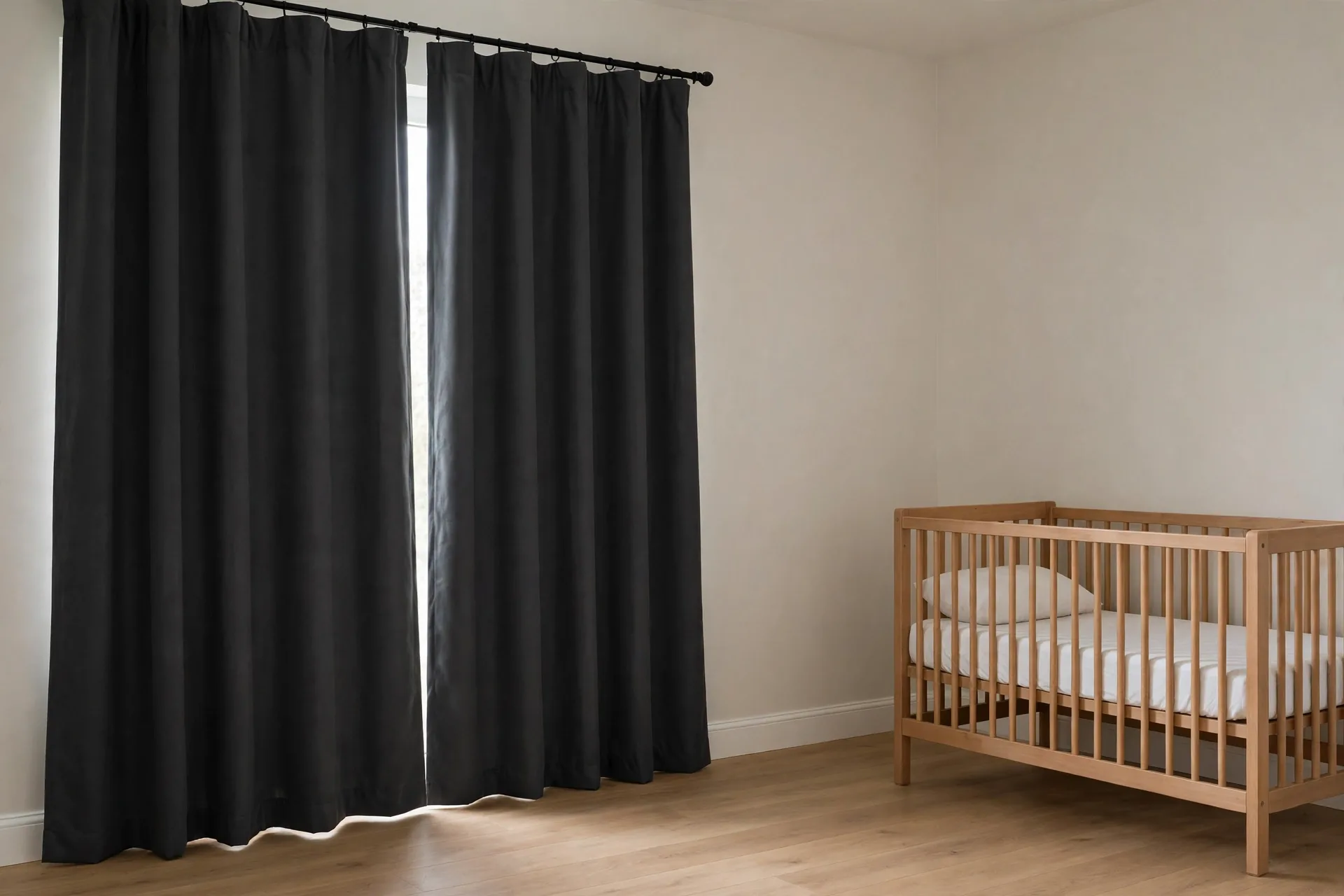
For a window within reach, or above furniture a child could climb, a sill length panel is safer, because it ends at the sill. For a window above a radiator or heater, keep the panel clear of the heat source as well as clear of the child.
A shorter panel is also quicker to take down, wash, and rehang. Measure the finished drop on the listing, not just the heading size, because heading and hem change where the panel actually ends. For length choices, see Curtain Sizes, and for measuring steps, see How to Measure for Curtains.
Washable fabric and a simple nursery wash routine
Washable fabric is a nursery essential, because nursery curtains collect dust, milk, and hand marks faster than curtains in any other room. Polyester blackout panels are often the easiest pick for washing, where the label allows machine washing, while cotton-blend panels may need gentler care. The care label on the panel you buy is the rule, not the fabric name alone.
A simple routine keeps fabric fresh.
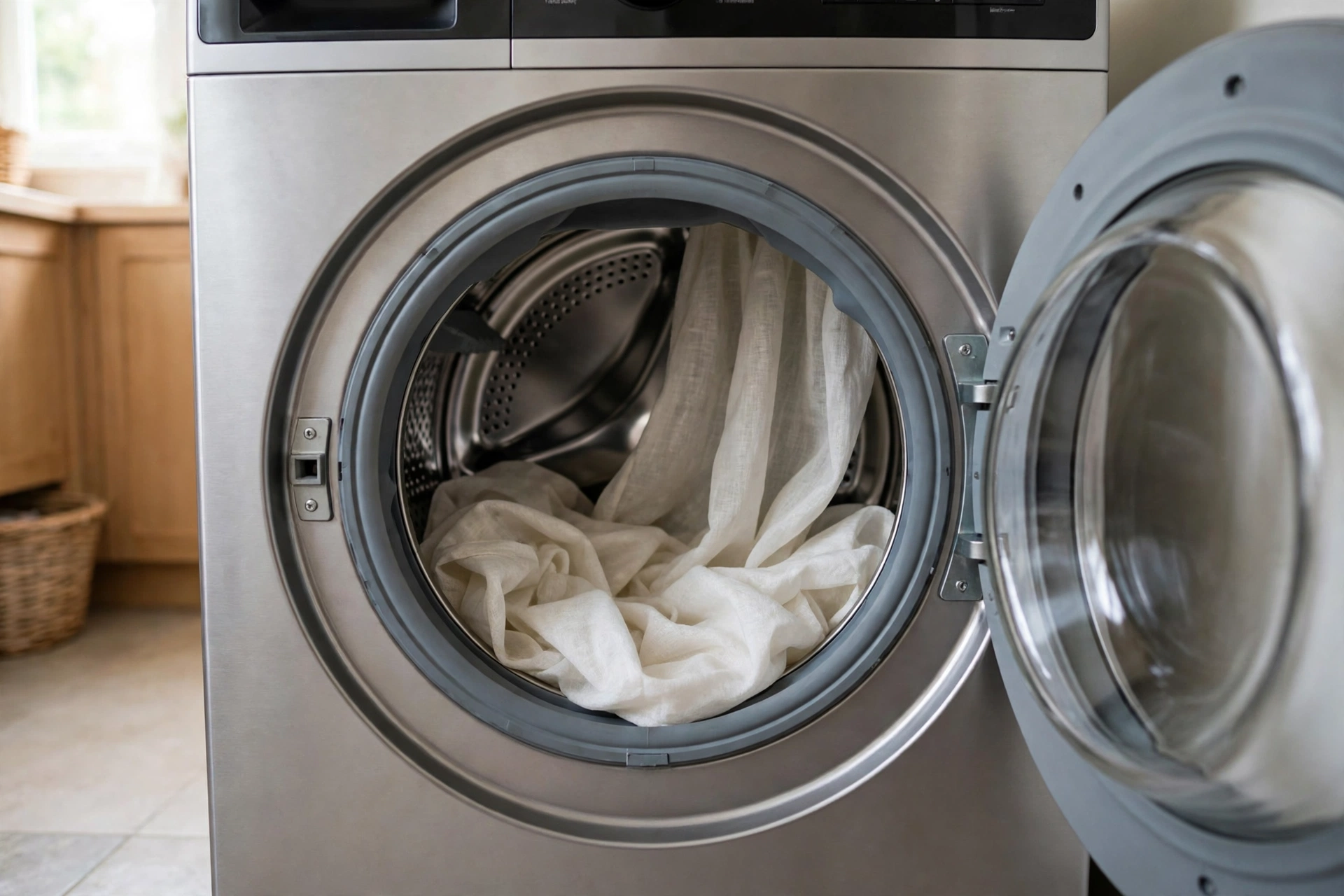
Vacuum panels gently with a soft brush head between washes, wash on the cycle the label states, and dry them fully before rehanging, because a damp panel in a small, often shut room can smell stale. Air new panels in another room first if they carry a strong new fabric smell.
Fabric labels deserve a plain reading. The OEKO-TEX STANDARD 100 label means the textile was tested for harmful substances, so check what a claimed label covers on that listing, and do not assume one panel carries a label because another panel from the same range does.
New curtains can carry a chemical smell or off-gassing from PVC or foam backing, so air panels in another room for several days before hanging, and check for certified fabric tested for harmful substances.
Washable fabric matters more if the baby is dust-sensitive, and blinds collect less dust than thick curtains, so keep the nursery fabric washable and the wash routine simple.
Color and pattern for a calm nursery
A calm nursery color helps a baby settle, because a plain, soft color gives the eye nothing busy to follow when the lights go down. Pale gray, soft white, and muted sage keep a small nursery bright when open, while a deep navy or dark gray gives a restful wall of color when closed. The lining, not the face color, decides darkness.
Pattern needs a lighter hand in a nursery. A small, quiet print, such as tiny stars, can suit a nursery wall, but a large, high contrast print can dominate a small room at nap time.
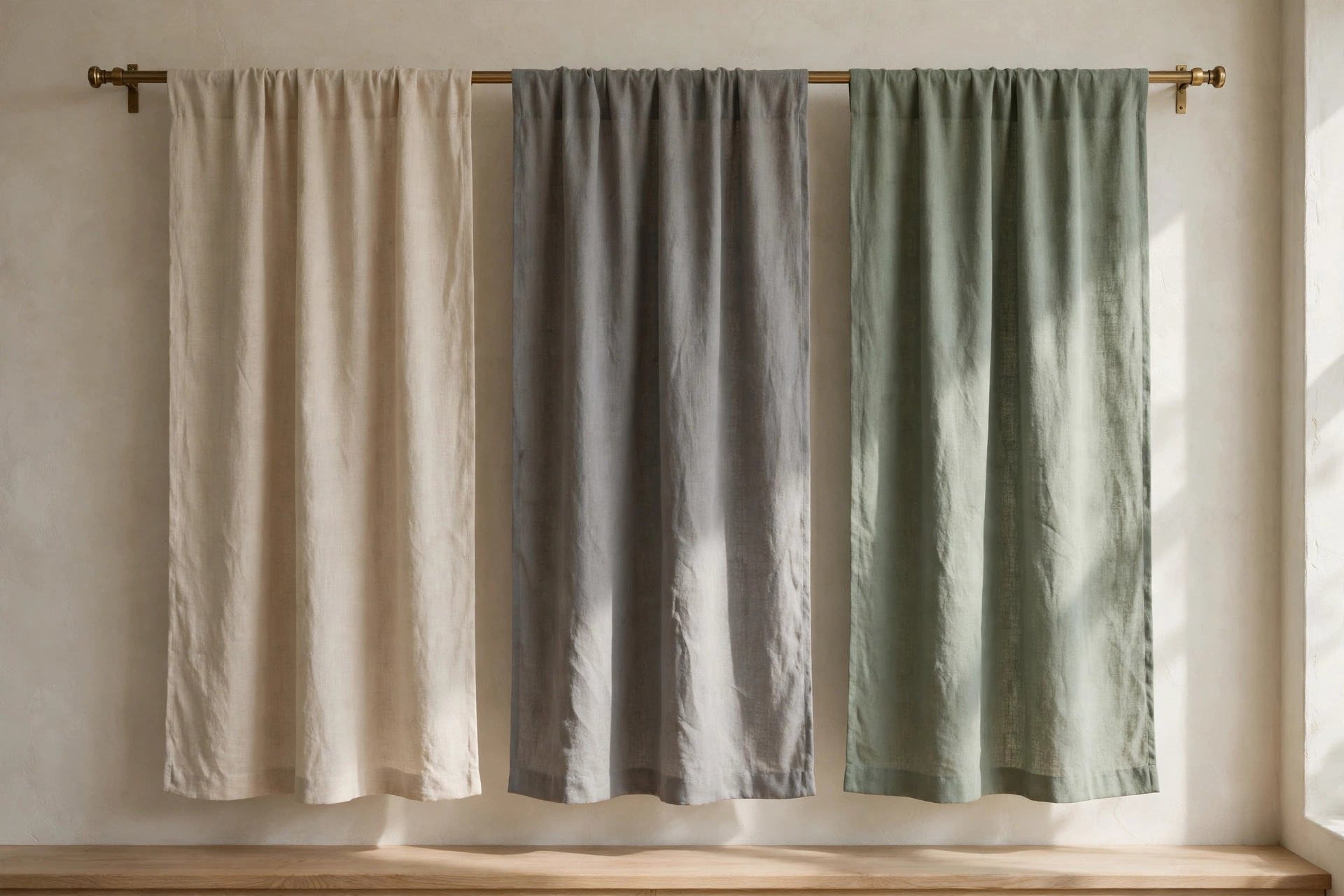
A plain panel is safer where bedding or wall art already carry pattern. For a plain fabric comparison, see Best Linen Curtains, and for a restful bedroom, see Best Curtains for Bedroom.
Pale fabric shows dust and marks sooner than dark fabric, so a pale panel needs washing more often. If washing will be hard in your home, a mid gray or muted sage hides everyday marks better than white.
White shades block slightly less light than dark shades from the same line, so a very sunny room may still need a liner even with a white shade in place.
Day sleep and night sleep need different darkness
Day sleep needs the strongest darkness in a nursery, because daylight is the light a nap must beat, while night sleep needs steady darkness that lasts until morning. A blackout panel serves both jobs. For a day nap, close it fully and check the side and center gaps. For night sleep, the same full close keeps street light and early morning sun out, and gives privacy after dark.
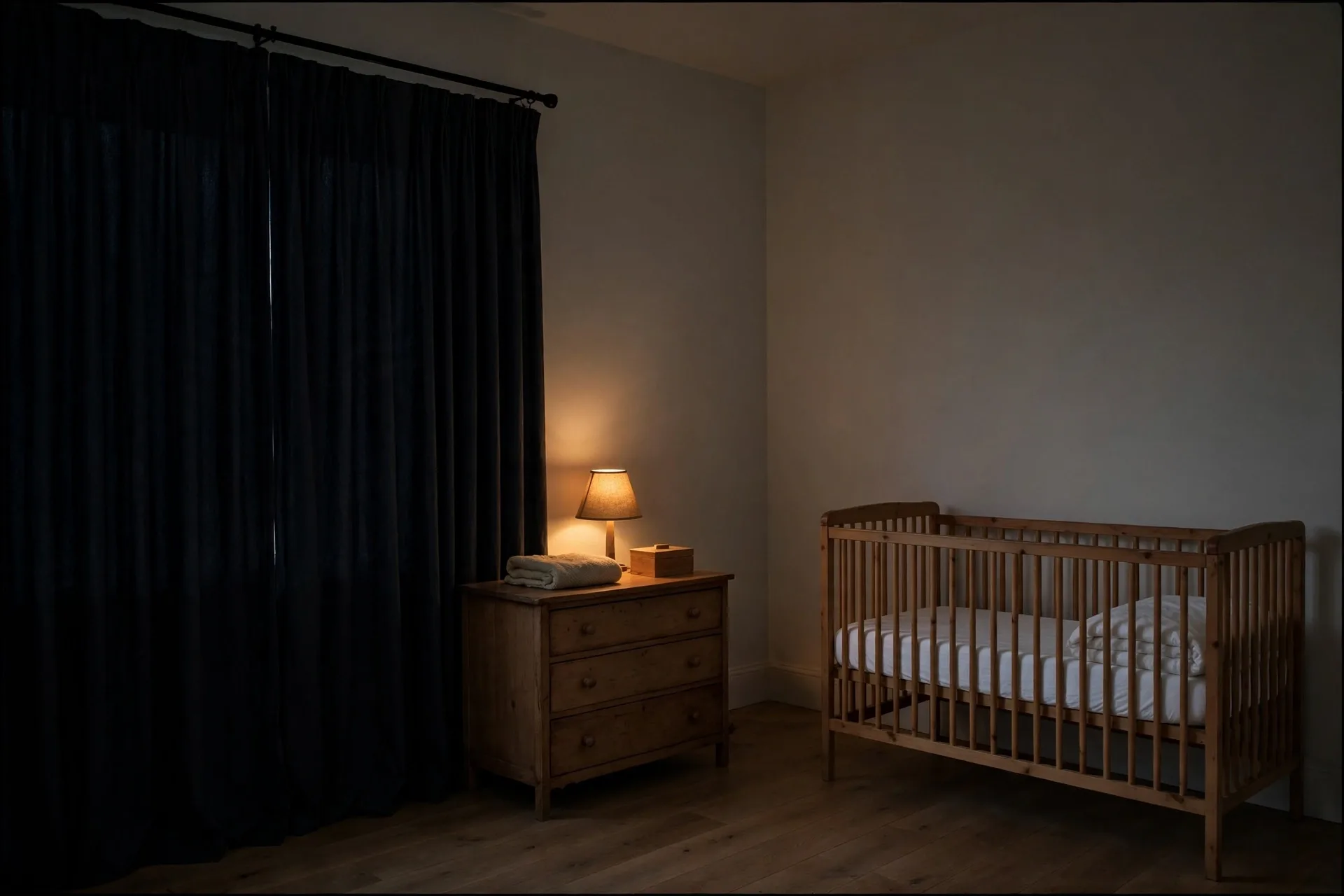
A sheer day layer changes this balance. Between naps, the sheer alone gives soft daylight and daytime privacy, and at nap time the blackout layer closes over it. That pair suits a nursery that doubles as a play room. For sheer daylight, see Best Sheer Curtains.
Match the treatment to the hours the room is actually used. A nursery used only for sleep can stay in blackout all day, while a nursery that is also a play space benefits from a day layer that keeps the room usable between naps.
Summer early sunrise wakes a baby before wake time, so keep the room dark until wake time rather than letting dawn set the schedule.
Noise softening at a nursery window
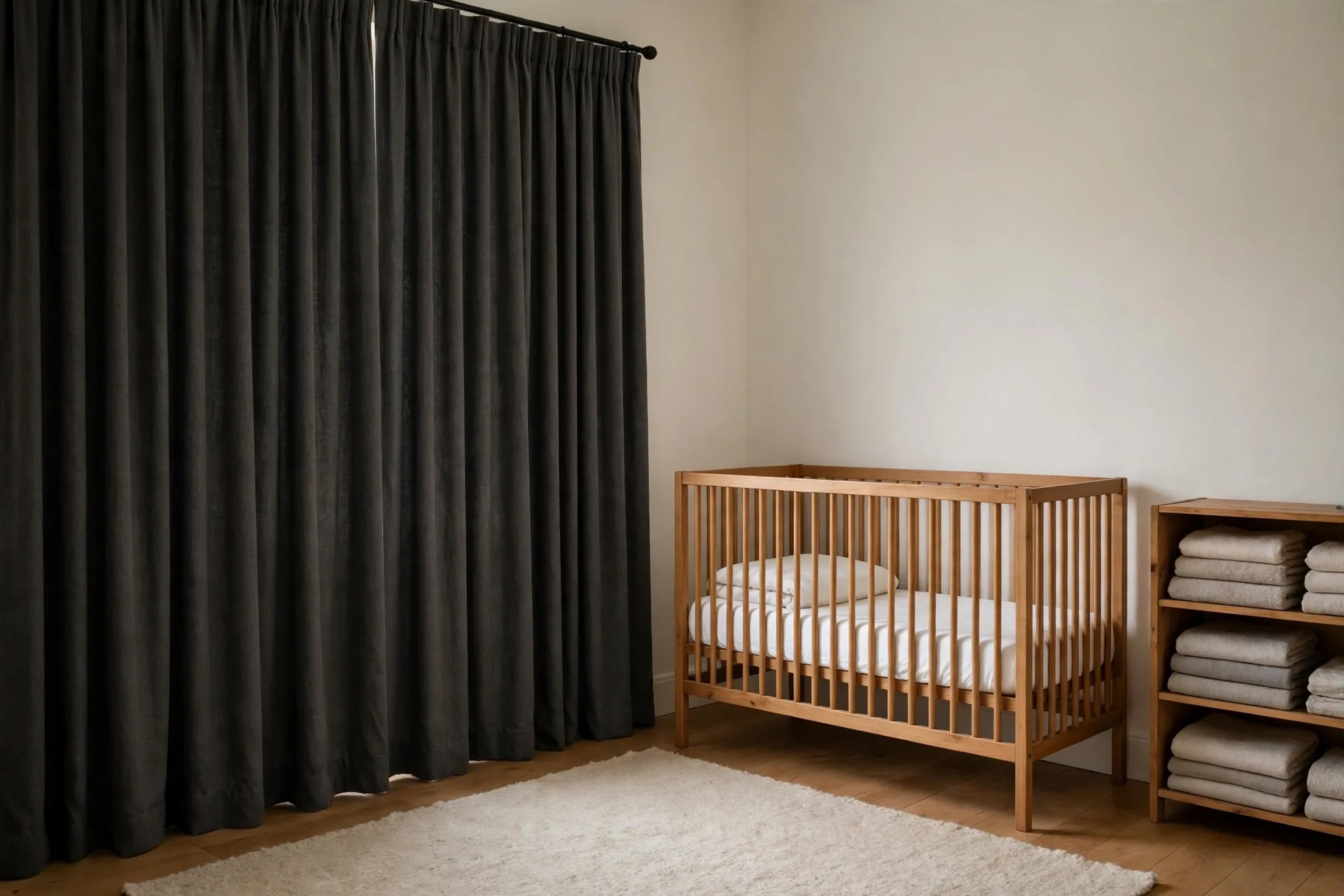
Curtains soften noise at a nursery window, because heavy, lined fabric absorbs echo and takes the hard edge off everyday sound. Full coverage helps too, because a panel covering the whole window and frame leaves fewer gaps for sound to pass around it.
Curtains do not block noise, and they do not soundproof a window. Street traffic or a barking dog will still be heard, and gaps at the sides, top, and center leak sound in the same way they leak light. Buy for a quieter feeling room, not for silence.
Warmth and sun control at a nursery window
A nursery window loses heat in winter and gains heat in strong sun, and a lined curtain helps with both jobs in a modest way. A thermal lining slows heat loss and softens drafts, which suits a cold or drafty window better than an unlined panel. It adds weight, and it does not darken a room on its own, so pair it with the light job you need. For the full warmth job, see Best Thermal Insulated Curtains.
Sun control matters too.
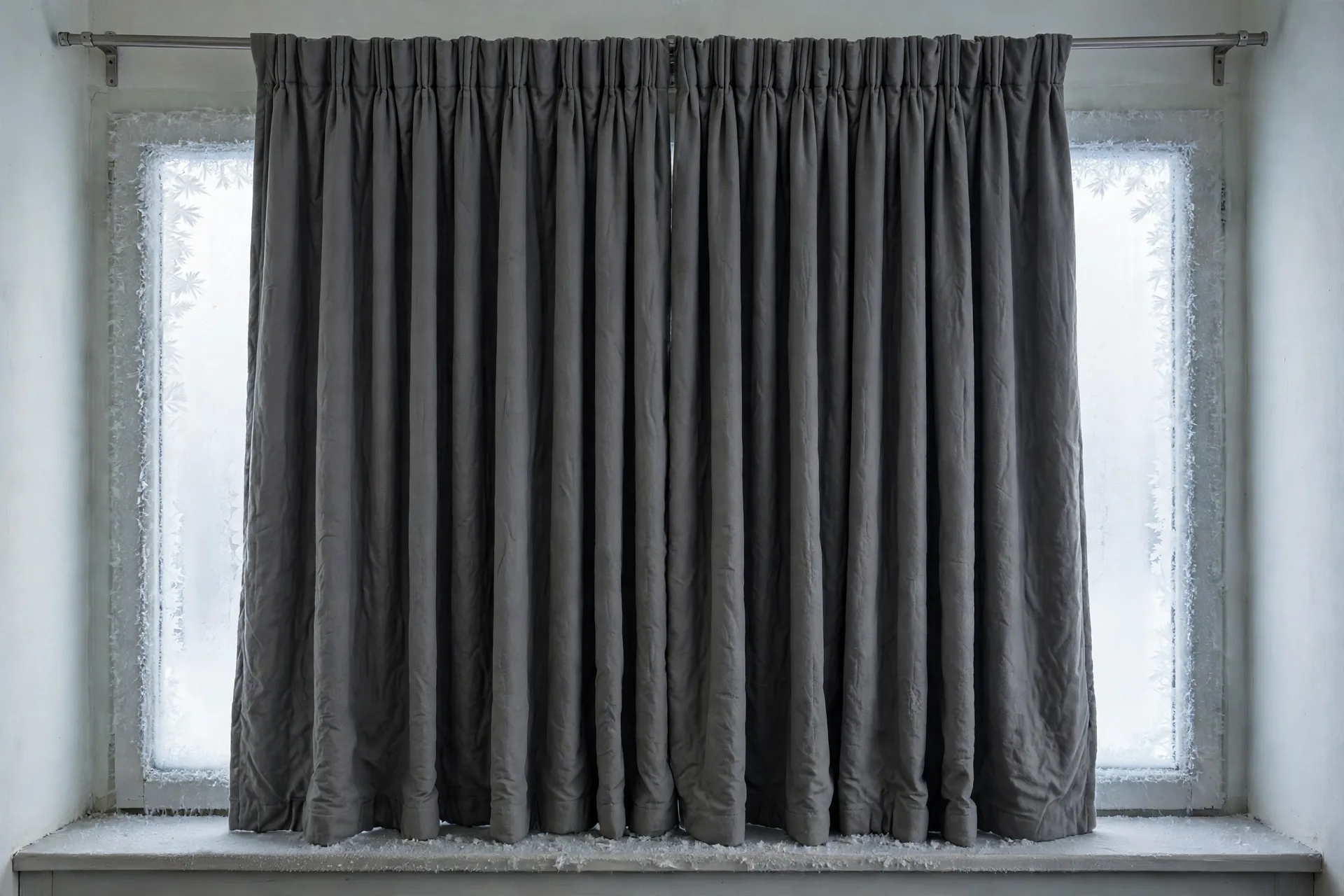
Strong sun can overheat a small room and fade bedding, and a lined panel closed during the hottest part of the day slows that heat. In a sun-facing nursery, check the room temperature at nap time, and ventilate between naps, because a closed panel in a hot room can trap warmth as well as light.
A curtain helps at the window, but it does not replace a well-fitting window or a draft seal. Judge a thermal panel by comfort at the window, not by a heating claim, and check the listing for what the lining is actually claimed to do.
UV-blocking fabric protects skin and slows fading, which suits a nursery window that takes strong sun through the day.
Measuring and hanging a nursery window
Measuring a nursery window starts with the rod, not the fabric, because the rod decides how much darkness the panel can give. Measure the window width, then add rod extension past the frame on each side, so closed panels overlap the frame. Measure from the rod to the finished length you want, and check that length against the crib and furniture positions. For measuring steps, see How to Measure for Curtains.
Hanging follows the same safety first order. Fix brackets into a stud or a proper anchor, fit a center support on a wide span, and hang the rod high and wide enough to clear the frame. Test the close before the baby sleeps in the room, and check from the crib side for any cord or reachable fabric. For hanging steps, see How to Hang Curtains.
Order a swatch where one is offered, and look at it in daylight and in nap time dimness, because a color that looks soft in bright light can look darker in a dim nursery. If the window is not standard, measure each part separately and choose the length that stays clear at every point.
Quiet grommets matter for night adjustments: no clinking when opening or closing during night feeds keeps the room calm.
A motorized or smart option suits a nursery: quiet motors with nap-time schedules open and close hands-free when you are holding the baby.
Mistakes that leave a nursery bright or within reach
A nursery stays bright when panels stop at the frame edge, when two panels just meet in the middle, or when one window is covered and the next is left bare. Fix the rod width, the panel width, and every window in the room before blaming the fabric.
A nursery stays within reach when the crib sits against the window wall, when a tieback cord, blind cord, or monitor cable hangs near the crib, or when a long panel pools near furniture a child can climb. Move the furniture, remove the cord, and shorten the panel, and recheck the room from the crib side after every change.
A third mistake is buying by color instead of by lining. A dark panel without a blackout lining will not give nap darkness, and a pale panel with a true blackout lining will, so read the lining line first. A fourth mistake is buying a panel that cannot be washed, because it will stay dirty or stay down while it waits for cleaning.
Frequently asked questions about nursery curtains
Most nursery questions come down to cords, lining, length, and washing. Get those right, and the rest gets simpler.
Are blackout curtains safe for a nursery?
Blackout curtains are safe for a nursery when they are cordless and the crib sits well away from the window. The U.S. Consumer Product Safety Commission advises cordless window coverings where young children are present, so choose a plain heading with no pull cord or looped cord.
Should nursery curtains be blackout or room darkening?
Blackout suits most nursery naps, because a blackout lining blocks most light through the fabric, while room-darkening only dims daylight. Room-darkening suits a nursery where the light problem is mild, or where a thermal lining is the main reason for the panel. Read the lining line on the listing, because color alone does not decide darkness.
What length is safest in a nursery?
The safest nursery length is the one that cannot pool where a child stands or climbs. For a window away from the crib, a panel ending just above the floor stays clear of the floor. For a window within reach, a sill length panel is safer. Never choose a puddle length in a nursery.
Do nursery curtains need to be machine washable?
Machine washable panels make life simpler, because nursery panels collect dust and marks fast, but washability depends on the care label of the panel you buy. Check the label before you order, and dry panels fully before rehanging.
Can nursery curtains block street noise?
Nursery curtains can soften noise, but they cannot block street noise or soundproof a window. Heavy, lined fabric absorbs echo, and full coverage leaves fewer gaps for sound to pass around. Expect a quieter feeling room, not silence.
Should the crib go under the window?
The crib should not go under or beside a nursery window. Keep it against a wall without a window where the room allows it, and leave a clear gap between the crib and the curtain.
What color is best for nursery curtains?
A plain, soft color suits most nurseries, because it gives the eye nothing busy to follow at nap time. Pale gray, soft white, and muted sage keep a small room bright when open. The blackout lining decides darkness, so choose the face color for the room and let the lining do the darkening work.
When should nursery curtains change as a child grows?
Nursery curtains should be rechecked as soon as a child can climb or reach the window, because a length and crib position safe for a baby may not stay safe for a toddler. Move furniture away again, shorten any panel within reach, and remove any cord within reach.
For other curtain types, see Best Window Curtains.
This guide is research-based curation: we compared maker specifications, published reviews, and current prices. Read how we choose.