 Best
Curtains vs Blinds: Which One Fits Your Room?
Blinds give finer daily control of light and privacy. Curtains give softness, warmth, and fuller darkness. This guide compares both, room by room, so you can pick with confidence.
Blinds win when you need small daily changes to light and privacy, curtains win when you want softness, warmth, and fuller darkness, and many rooms work best with both together. That short version holds for most homes, but the right pick still changes from room to room. This guide sets out what each one is, how they compare on the points buyers actually weigh, and a simple path to a decision you will not regret.
Start with the job, not the look. A covering that looks right but leaves a bedroom bright at night, or leaves a cook reaching past damp fabric to open a window, has failed at its main task. Read the comparison, then check the room table for the room you are covering.
What curtains and blinds actually are
Curtains are fabric panels that hang from a rod or a track and fall in folds beside or across a window. When open, the fabric stacks at the sides, so a curtain needs wall space on each side to clear the glass fully. When closed, the panels meet in the middle or draw to one side and cover the glass with cloth. The fabric and the lining decide much of the result: a sheer panel filters daylight, a heavier lined panel blocks more light and holds more warmth, and a blackout lining is made to shut light out.
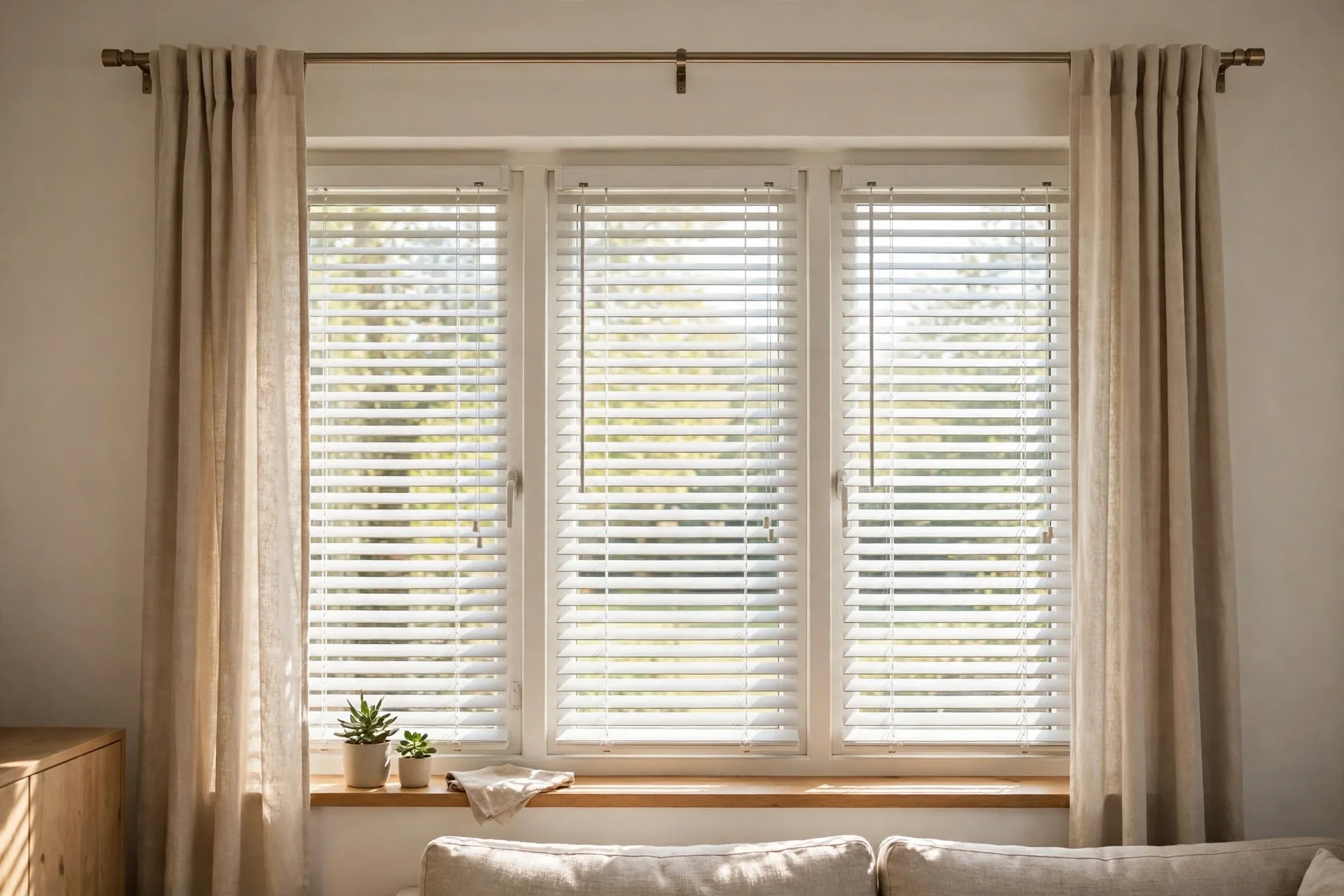
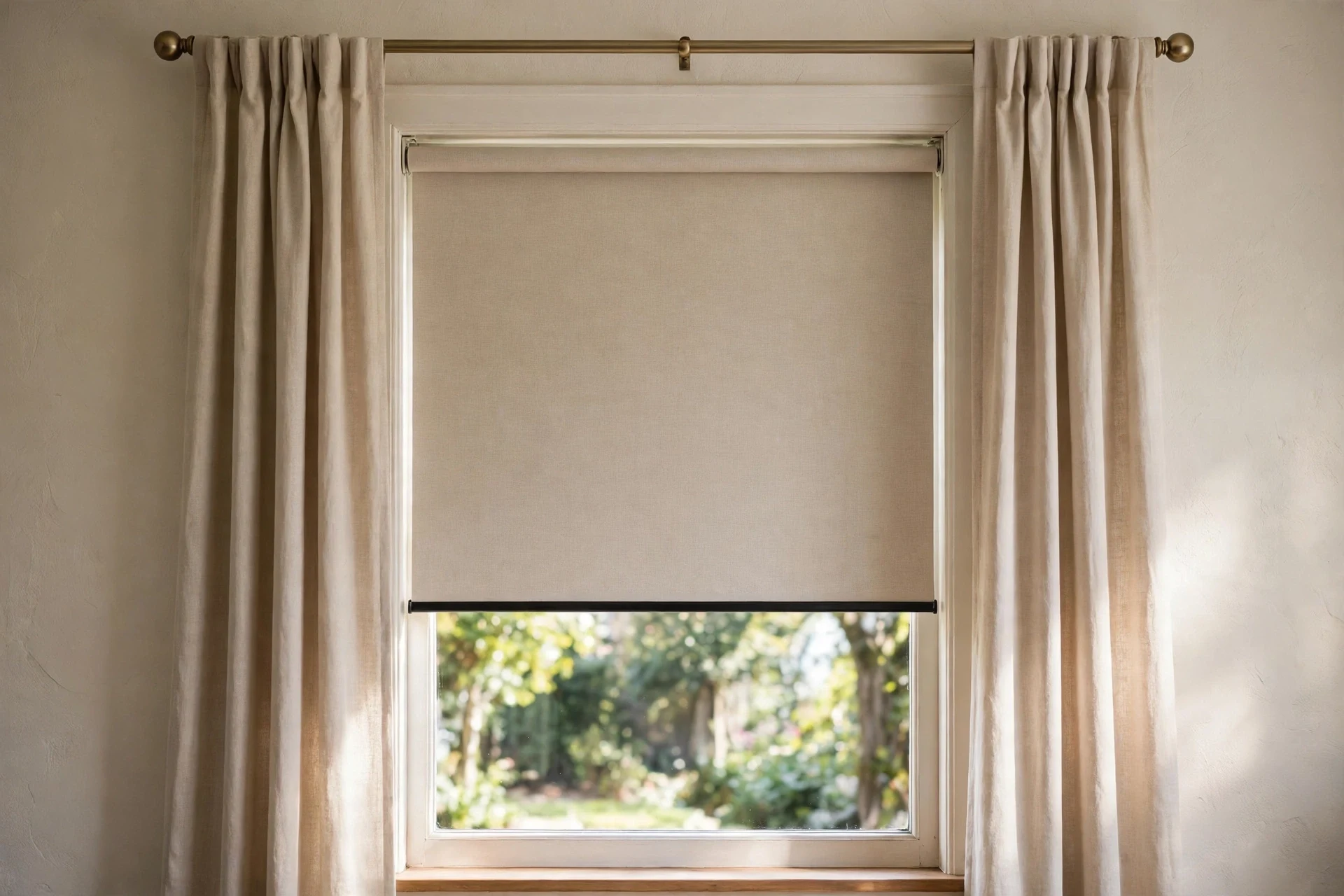
Blinds are firmer coverings that sit close to the glass and adjust by tilting, raising, or drawing to one side. A Venetian blind has horizontal slats that tilt to let in more or less light. A vertical blind has upright vanes that suit wide openings and sliding doors. A roller blind is a single sheet that rolls up or down. A cellular blind, also called a honeycomb blind, is made of honeycomb-shaped cells that trap pockets of air when lowered, and it folds flat into pleats when raised.
Two more blind types change the cleaning picture. A Roman blind is soft fabric that folds into horizontal pleats as it rises, so it behaves more like a curtain than a hard blind: it cannot be wiped down like slats and usually needs professional cleaning, and its folds still soften light more than a flat roller sheet. A mini blind is a narrow-slatted version of a Venetian blind for smaller windows, with the same tilt control but more slats to dust. A shade is not a blind: a shade is a single panel of fabric that rises and falls as one piece, with no slats or vanes to tilt.
Blinds take little room at the sides, which helps on small windows and windows set into a tight recess, but they leave small gaps at the edges where light and air can slip past.
The mount matters for both. Curtains usually hang on the wall above and beyond the frame, so the fabric can overlap the frame and cover the edges. Blinds often use an inside mount, close to the glass, which gives a neat fit but makes edge gaps harder to avoid. Before you order either one, measure each window on its own, since frames are rarely identical across a house: How to Measure for Curtains covers the numbers for curtains.
Curtains vs blinds at a glance
Curtains win on softness, warmth, and full darkness; blinds win on fine daily light control and easy cleaning. The table below sums up the full comparison in one place. It describes typical results, not promises for every fabric or blind on the market, since lining, fabric weight, and fit change the outcome.
| Point | Curtains | Blinds |
|---|---|---|
| Light control | Broad control: open, closed, or filtered through a sheer layer. Fine steps through the day are hard with one layer alone. | Fine control: tilt slats or lower a roller partway to change light in small steps. |
| Privacy | Full privacy when closed. Little middle ground with one layer: open means visible, closed means dark. | Adjustable privacy: tilted slats can let light in while blocking a clear view in. |
| Cost | Wide range. Ready-made panels sit at the lower end, while made-to-measure fabric, lining, and hardware push the total up. | Wide range. Basic blinds sit at the lower end, while made-to-measure, wood, or motorized versions push the total up. |
| Cleaning | Taken down and washed or cleaned as the care label directs. Heavier fabrics need more effort and drying time. | Dusting and wiping in place. Slats collect dust between each one, so cleaning is frequent but light. |
| Insulation | Stronger in most cases, since lined fabric traps a layer of air and can overlap the frame at the sides. | Weaker in most cases, since slats and edge gaps let air pass. Cellular blinds trap air better than flat slats. |
| Materials | Cotton, polyester, velvet, and linen, compared in full in Curtain Fabric Types. Cotton and linen breathe and wash well but take in moisture and dry slowly in damp rooms; polyester resists wrinkles and holds color but still holds grease and steam smells; velvet is heavy and warm but needs gentler cleaning and stays out of wet rooms. | Wood, faux wood, aluminum, and vinyl, also called PVC. Faux wood, aluminum, and vinyl stand up to moisture and wipe clean, which suits kitchens and bathrooms; wood looks warm but can warp if it stays damp, and slats of any material still need dusting. |
| Style | Soft, warm, and decorative. Fabric, color, and fold shape set the mood of the room. | Clean, neat, and minimal. Lines and material set the look, with less softness than fabric. |
Two cautions sit behind the table. A lining changes the curtain row a lot: an unlined sheer and a lined blackout panel behave like different coverings. Fit changes the blind row a lot: a blind that stops short of the frame will leak more light than one fitted close to it.
Pick by what bothers you most
Ask what bothers you most about the window today, and let that answer pick the type. If screen glare or shifting sun through the day is the problem, blinds suit you best, because you can tilt the slats a little at noon and a little more in the evening without shutting the room in. If sleep is the problem, curtains suit you best, because a lined panel hung past the frame shuts out more light at the edges than slats alone.
Next, ask how often you will adjust the covering. Blinds reward a person who tweaks light through the day. Curtains reward a person who wants a simple morning and evening routine: open in the morning, close at night, with little in between.
Then ask about water, steam, and grease. Kitchens and bathrooms punish fabric. Steam, splashes, and cooking grease settle into cloth and are slow to clean out, while a wipe-clean blind shrugs them off. That single point settles many kitchen and bathroom choices on its own. Damp fabric left in a steamy room can also develop mold or mildew, which is a further reason to favor a wipe-clean blind where steam is constant.
Last, look at the wall and the window shape. Curtains need side space for stacked fabric and a rod fixed above the frame. A window above a counter, a shallow recess with no side wall, or a door that swings into the window wall can all make curtains awkward. Blinds need little side space and sit close to the glass, so they fit those spots with less fuss.
Blinds are usually faster and simpler to fit than curtains. A blind needs only its brackets and headrail fixed to the frame or the wall, while a curtain needs a rod or track, brackets, and rings or another heading fitting, all lined up above and wider than the frame. A blind fitted as an inside mount leaves small light gaps at the edges, while a blind fitted outside the frame covers more of the frame but sticks out from the wall, and curtains hung past the frame cover the edges best. For mounting positions in detail, see How to Hang Curtains.
What each room tends to need
Rooms do not all want the same covering, and most homes end up with a mix. The room table below gives the usual lean for each room, with the reason in short form.
| Room | Usual lean | Why |
|---|---|---|
| Bedroom | Curtains, or both layered | Darkness and a restful feel matter most, and lined curtains shut out more light at the edges. |
| Living room | Curtains, or both layered | Softness and a finished look matter most, and floor-length fabric suits larger windows. |
| Kitchen | Blinds | Wipe-clean surfaces suit steam, splashes, and grease, and blinds stay clear of counters. |
| Bathroom | Blinds | Moisture suits wipe-clean materials, and blinds give privacy without damp fabric. |
| Home office | Blinds | Tilted slats cut screen glare while keeping the room bright through the day. |
| Dining room | Either, by room size | Curtains suit larger rooms and evening meals; blinds suit small rooms where wall space is tight. |
| Sliding door or wide opening | Vertical blinds, or curtains on a long track | Blinds draw clear of the doorway; curtains need generous stack space to clear it. |
| Small window or tight recess | Blinds | Little side space is needed, and the blind sits close to the glass. |
| Nursery | Curtains, or cordless blinds | Blackout helps daytime naps, and cordless controls keep loops out of reach. |
Window shape can settle the choice where the room does not. Bay windows suit curtains on a bay track or individual blinds on each section, since one straight treatment rarely fits the angles. Arched windows suit blinds fitted to the straight lower section with the arch left bare, or curtains hung above the arch, since a blind cannot follow the curve. Floor-to-ceiling and tall windows suit floor-length curtains, which soften the height, or vertical blinds, which draw clear without a long drop of fabric to manage.
Bedrooms deserve a longer note, because sleep raises the stakes. A lined curtain that overlaps the frame on all sides gives the fullest darkness from fabric alone. A flush-fitted blackout roller blind is the blind-side answer to the same edge-light problem: fitted close to the frame, it shuts out light at the edges nearly as well as a lined curtain, and it suits a bedroom where softness matters less than darkness. The bedroom guide covers the sleep jobs in full: Best Curtains for Bedroom. Living rooms reward fabric for a different reason: the room is seen by guests and used through the evening, so softness, color, and a floor-length fall carry more weight than they do in a kitchen, as set out in Best Curtains for Living Room. For the home as a whole, Best Window Curtains gives the main curtain types side by side.
Layering both instead of picking one
Layering means using a blind close to the glass and curtains on a rod or track outside it, so each covering does the job it does best. The blind handles daily light and privacy: tilt the slats for glare in the afternoon, close them for privacy, and raise them when you want the full view. The curtains handle the evening and the look of the room: draw them for darkness, warmth, and a finished frame around the window. Neither one has to stretch beyond what it does well.
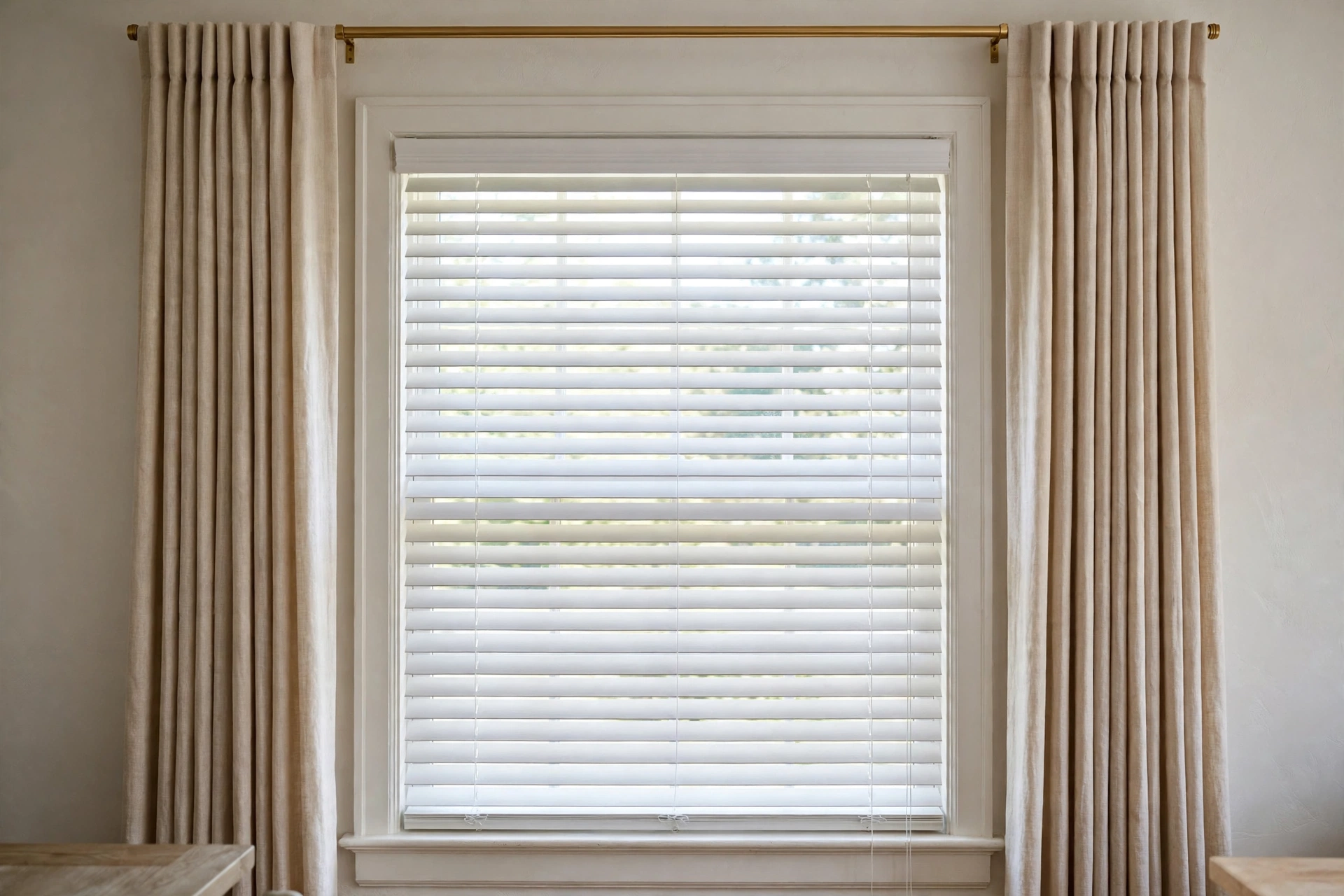
The usual order is blind inside, curtains outside. The blind mounts as an inside mount or close to the glass, and the curtain rod sits above and wider than the frame, so open curtains stack clear of the blind and do not block its cords or controls. How to Hang Curtains covers mounting positions and the checks that keep two coverings from fouling each other.
Layering also gives a middle setting that one covering alone struggles to offer. A sheer curtain over a blind softens daylight while the blind stays ready for glare. A blackout curtain over a blind gives full night darkness while the blind covers daytime privacy. That middle setting is why bedrooms and living rooms, where both daylight and night darkness matter, are the rooms where layering shows up most.
Layering costs more than one covering, since you buy and fit two items per window. A sensible way to handle that is to layer only the rooms where both jobs matter: the bedroom for sleep, and perhaps the living room for evening privacy. Other rooms can take one covering each, chosen by the room table. For layered pairs in full, see How to Layer Curtains.
Cleaning, wear, and upkeep over time
Curtains need a wash day, blinds need a dusting habit, and the difference matters more over years than on the first week. Most curtains can be vacuumed with an upholstery tool between washes, then taken down and washed or cleaned as the care label directs. Light fabrics, such as linen, dry fast and go back up with little fuss. Heavy lined curtains take longer to wash, dry, and rehang, and some need professional cleaning.
Blinds need no wash day, but they need regular dusting.

Dust settles on each slat, and a quick wipe with a cloth or a vacuum brush keeps them fresh. Faux wood and aluminum stand up to moisture and wiping well, which is part of why they suit kitchens and bathrooms. Wood blinds need more care around moisture and can warp if they stay damp. The weak points of blinds are moving parts: cords, chains, tilt gears, and brackets wear with daily use, and a bent slat shows at once. A curtain has almost no moving parts to fail.
Pets and small hands change the wear picture. Cats climb fabric and pull at hems, dogs brush past low panels, and both leave hair that shows on dark cloth. In a busy family room, a wipe-clean blind often wins on upkeep alone, even when curtains would look softer.
So which lasts longer overall? Curtains tend to last longer overall, because they have almost no moving parts to fail, while a blind depends on cords, chains, and tilt gears that wear with daily use. What ends a curtain is usually slow wear: fabric fading in strong sun and thinning or fraying after repeated washing. What ends a blind is usually a working part: a bent slat, a worn cord or chain, or a tilt gear that no longer holds the slats level. A well-kept curtain can outlast several blind mechanisms, but a blind in a dry room that is rarely adjusted can also last for years without trouble.
Sunlight also wears both types, but in different ways. Strong sun fades curtain fabric over time, and sun-facing windows show it first. It can also dull the finish on blinds, and it fades furniture, rugs, and wood floors near the window, so a covering that blocks direct sun protects more than the window itself: lined curtains and closed blinds both cut the sun that reaches the room, with curtains giving the fuller shield when drawn across the whole frame.
Warmth, sound, and the quiet differences
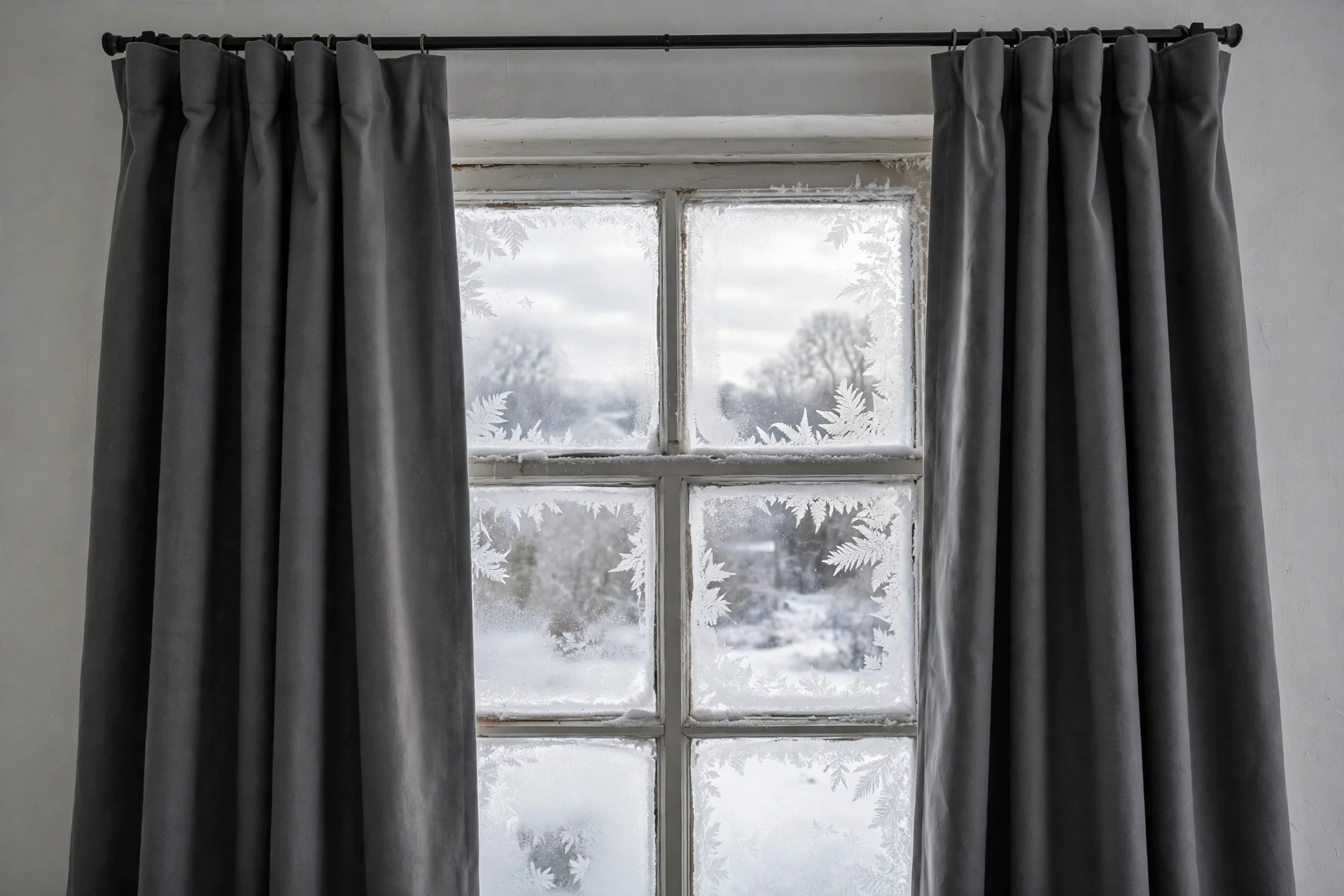
Lined curtains keep a room warmer in cold weather than most blinds, because fabric and lining trap a layer of air against the glass and the panel can overlap the frame at the sides and bottom. Thermal lining adds to that effect, and the thermal guide explains how lining and fit work together: Best Thermal Insulated Curtains.
Blinds insulate less well in most cases, for a simple reason: slats leave gaps, and a blind fitted as an inside mount leaves a path for air at the edges.
Cellular blinds do better than flat slats, because each honeycomb pocket holds a small pocket of air, but they still sit in an inside mount and cannot overlap it the way a curtain can. If warmth is the main reason for covering a window, curtains are the stronger starting point.
In summer the question flips from keeping heat in to keeping heat out. A lined curtain drawn across the glass blocks direct sun and holds a layer of still air at the window, while a light-colored or reflective blind tilted against the sun bounces much of that heat back before it warms the room. Either choice used well can ease pressure on cooling and energy bills, but neither one replaces insulation or shading outside the glass. For the seasonal habit behind that choice, see energy guidance on window coverings from the U.S. Department of Energy.
Sound follows a similar pattern. Heavy fabric softens echo and takes the edge off street noise in a room, which is one reason bedrooms and living rooms feel calmer with curtains. Hard slats reflect sound rather than absorbing it, so a room with blinds alone can sound sharper and emptier. Neither covering soundproofs a room, but fabric makes a room feel quieter in a way that is easy to notice on the first evening after hanging it.
Child safety, pets, and rented homes
Looped cords on blinds are the safety point to take seriously. A looped cord or chain can form a loop that a small child can reach, and safety guidance in many countries now favors cordless blinds, wand controls, or motorized blinds in homes with young children, in line with safety guidance on window covering cords from the U.S. Consumer Product Safety Commission. If you already have corded blinds, keep cords short, fit cleats or tension devices that hold cords taut and out of reach, and keep cots, beds, and climbable furniture away from windows so a child cannot reach the cord. Curtains have no such loop by nature, which makes them the simpler choice in a nursery, though long tiebacks and cords used to hold curtains should still be kept out of reach.
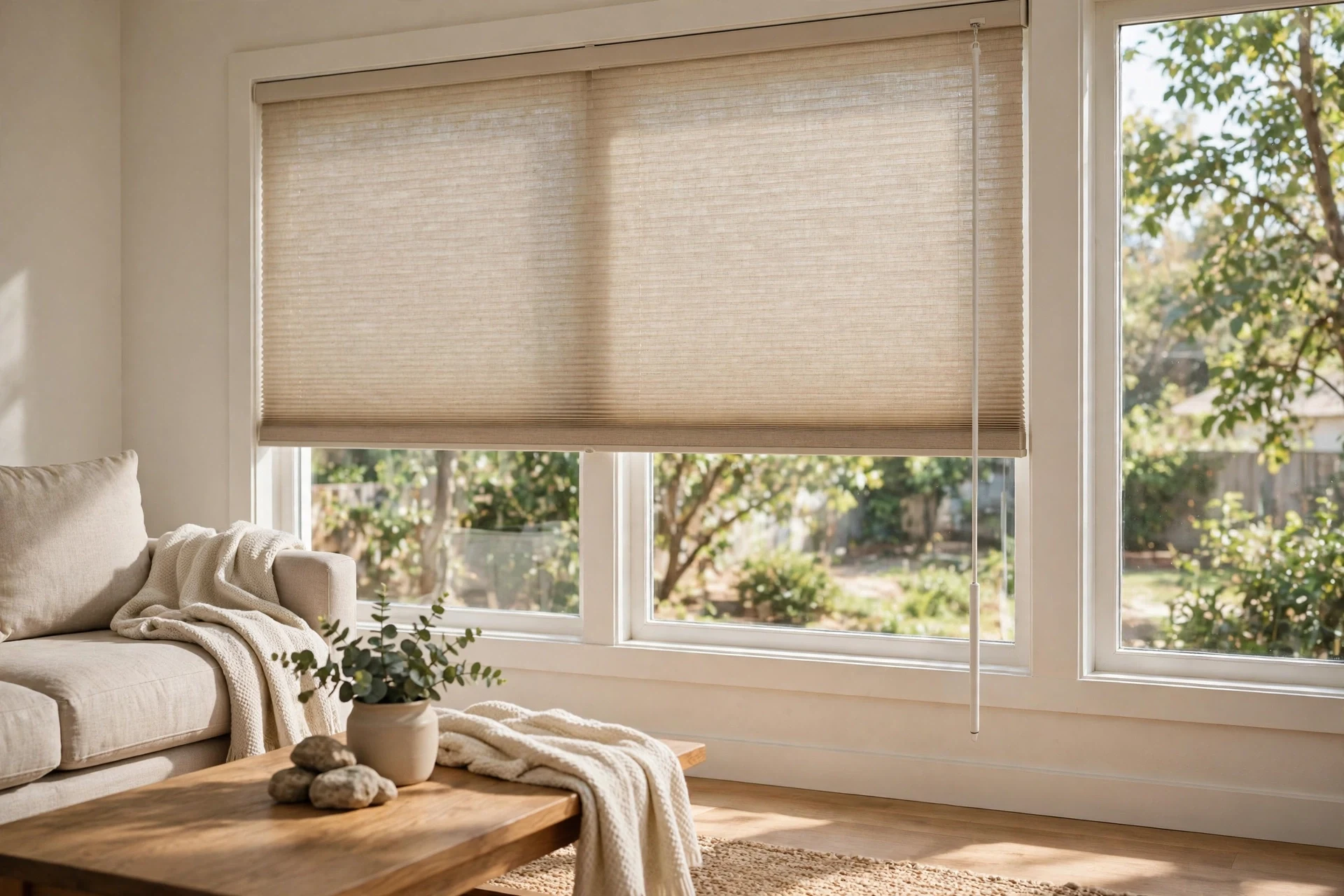
Pets need a related check. A cord dangling near a window invites chewing and tangling, and a low curtain hem invites climbing. Cordless controls remove the cord problem for both children and pets. For cats that climb, a blind with firm slats may survive better than a light sheer, while a heavy curtain may survive better than a thin one.
Motorized and smart controls change the daily habit for both types. A motorized blind or curtain track runs from a remote or an automated schedule, so there are no cords to reach for, positions repeat exactly each day, and a double track can move a sheer and a blackout layer on their own schedules. The gain is convenience and safety rather than light control itself, since the fabric and fit still decide how much light gets through.
Renters face a different limit: the walls. Many rental agreements restrict drilling, and even where drilling is allowed, the next home may have different windows. Blinds that use an inside mount need fewer anchors and leave smaller marks, and tension rods and no-drill curtain rods let curtains hang without holes at all, though they suit lighter fabrics and narrower spans best. Before you drill, check the agreement and ask the landlord where the rules are unclear. Standard sizes help, since a panel bought for one rental can move to the next: Curtain Sizes.
Mistakes that spoil an otherwise good choice
Five mistakes spoil an otherwise good choice: curtains ordered too narrow for folds, blinds alone in a bedroom with no plan for edge light, fabric hung in a wet bathroom, a rod fixed tight to the frame, and a layered pair fixed without checking that each part moves freely. Curtains ordered to the width of the window, with no extra fabric for folds, hang flat when closed and leave gaps at the sides. Blinds ordered for a bedroom on their own, with no plan for edge light, leave a sleeper staring at bright lines around the frame at dawn. Fabric hung in a wet bathroom grows damp and spotted, while a blind hung where a curtain was needed for warmth leaves a cold room feeling bare.
Fit mistakes spoil both types. A curtain rod fixed tight to the frame stops open panels clearing the glass, so the window looks smaller and the room darker. A blind that cannot raise fully, because a handle or a vent sits in its path, ends up half used and resented. A layered pair fixed without checking that each one moves freely ends up with curtains snagging the blind cord. Measure twice and check the path of each moving part before you order.
A simple way to settle it for your window
Settle it room by room, not for the whole house at once. Pick the room that bothers you most, measure that window, check the anchors the room allows, and start there.
Frequently asked questions about curtains vs blinds
The questions people ask most about curtains vs blinds cover privacy, light control, cost, cleaning, and which rooms suit each one.
Are curtains or blinds better for privacy?
Blinds give better daytime privacy, because tilted slats block the view in while letting light through. Curtains give full privacy when closed, but with one layer there is little middle ground: open means visible, closed means dark. For a street-facing room used through the day, blinds lead.
Which blocks more light for sleep?
Lined curtains block more light for sleep in most rooms, because the panel can overlap the frame and cover the edges where slatted blinds leak. A blackout lining with a full overlap gives the fullest darkness from fabric alone. The fullest result of all is a blackout blind close to the glass with a blackout curtain over it. For sleep jobs in detail, see Best Curtains for Bedroom.
Can you put curtains over blinds?
Yes, and it is a common setup in bedrooms and living rooms. Mount the blind close to the glass and the curtain rod above and wider than the frame, so open curtains stack clear of the blind. Check that the blind cord or wand moves freely and that the curtain does not snag it.
Which is cheaper, curtains or blinds?
Basic blinds usually cost less per window than curtains, because they use less material and simpler hardware. The range for both is wide, and the comparison flips at the top end: made-to-measure curtains with lining and good hardware, and made-to-measure or motorized blinds, can each cost far more than a basic version of the other. Compare the full fitted total for your window, including rod or track and lining.
Which is easier to clean, curtains or blinds?
Blinds are easier to clean little and often, since dusting and wiping happen in place with no taking down. Curtains are easier to clean thoroughly, since most can be taken down and washed, but the wash day itself takes more effort, and heavy lined panels take longer to dry and rehang.
Are blinds safe in a home with small children?
Cordless blinds, wand controls, and motorized blinds are the safer choices in a home with small children, because they remove the looped cord. If corded blinds are already fitted, use cleats or tension devices to hold cords out of reach, keep cords short, and move cots and climbable furniture away from windows.
Do curtains or blinds keep a room warmer?
Curtains keep a room warmer in most cases, because lined fabric traps air against the glass and can overlap the frame to cut edge leaks. Cellular blinds trap air better than flat slats but still sit in an inside mount, so they insulate less than a well-fitted lined curtain.
Which is better for a rented home?
Blinds often suit a rented home better, because inside-mount blinds need fewer anchors and tension or no-drill rods let light curtains hang without holes. Check the rental agreement before drilling, and favor standard sizes that can move with you to the next home. The bedroom guides hub collects room advice that renters often reuse: Bedroom Guides.
What works best for a sliding door?
Vertical blinds usually work best for a sliding door, because the vanes draw clear of the doorway and do not block the door path. Curtains can work well too, on a long track with generous stack space at the side the panels draw to, so the door opens fully without pushing fabric aside.
Which lasts longer, curtains or blinds?
Curtains tend to last longer overall, because they have almost no moving parts to fail. A curtain usually ends through fabric fading in strong sun and wear from repeated washing, while a blind usually ends through a bent slat or a worn cord, chain, or tilt gear.
Are curtains or blinds better for large windows?
Floor-length curtains usually suit large windows best, because the fabric softens the scale of the glass and makes the wall feel finished, while vertical blinds are the practical alternative where the opening is very wide or a door must stay clear.
Do curtains or blinds add value to a home?
Curtains tend to add more perceived warmth and finish to a room, which buyers notice, while blinds give a clean, tidy finish that suits a modern look. Neither one adds value on its own: fit, condition, and whether the covering suits the room matter more than the type.
This guide is research-based curation: we compared maker specifications, published reviews, and current prices. Read how we choose.